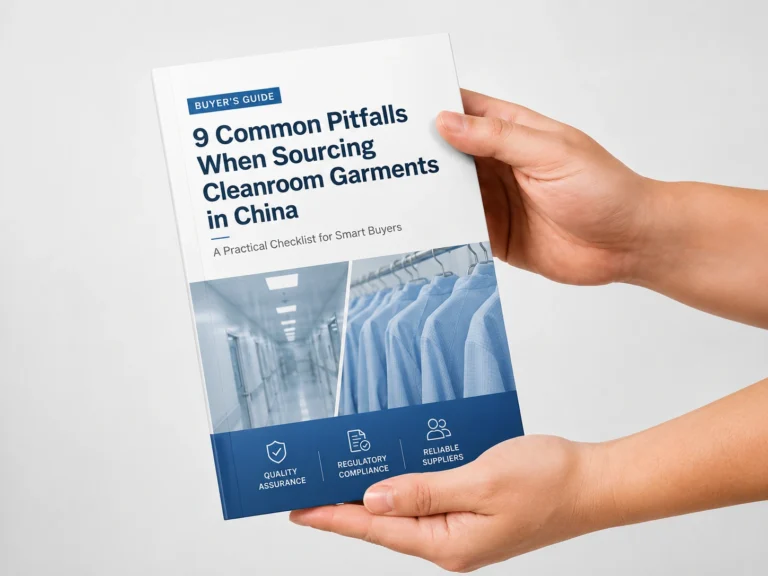
A QA-focused technical guide for GMP material entry into Grade A/B zones—covering peel-and-pass logic, packaging integrity risks, and audit-defensible controls aligned with EU GMP Annex 1 expectations.

Sterilite üretim sırasında sağlanır, ancak kontaminasyon olaylarının çoğu üretim sırasında meydana gelir. aseptik transfer—when materials move from uncontrolled areas to Grade C, then B, and finally A. Without redundant barriers, the mop packaging surface can act as a carrier for particulates and bioburden.
Pratikte, steril paspas ambalajı functions as a controlled boundary: the outer bag is stripped at the interface, while the inner bag remains sterile until the point of use. This is the operational basis of soy ve geç.
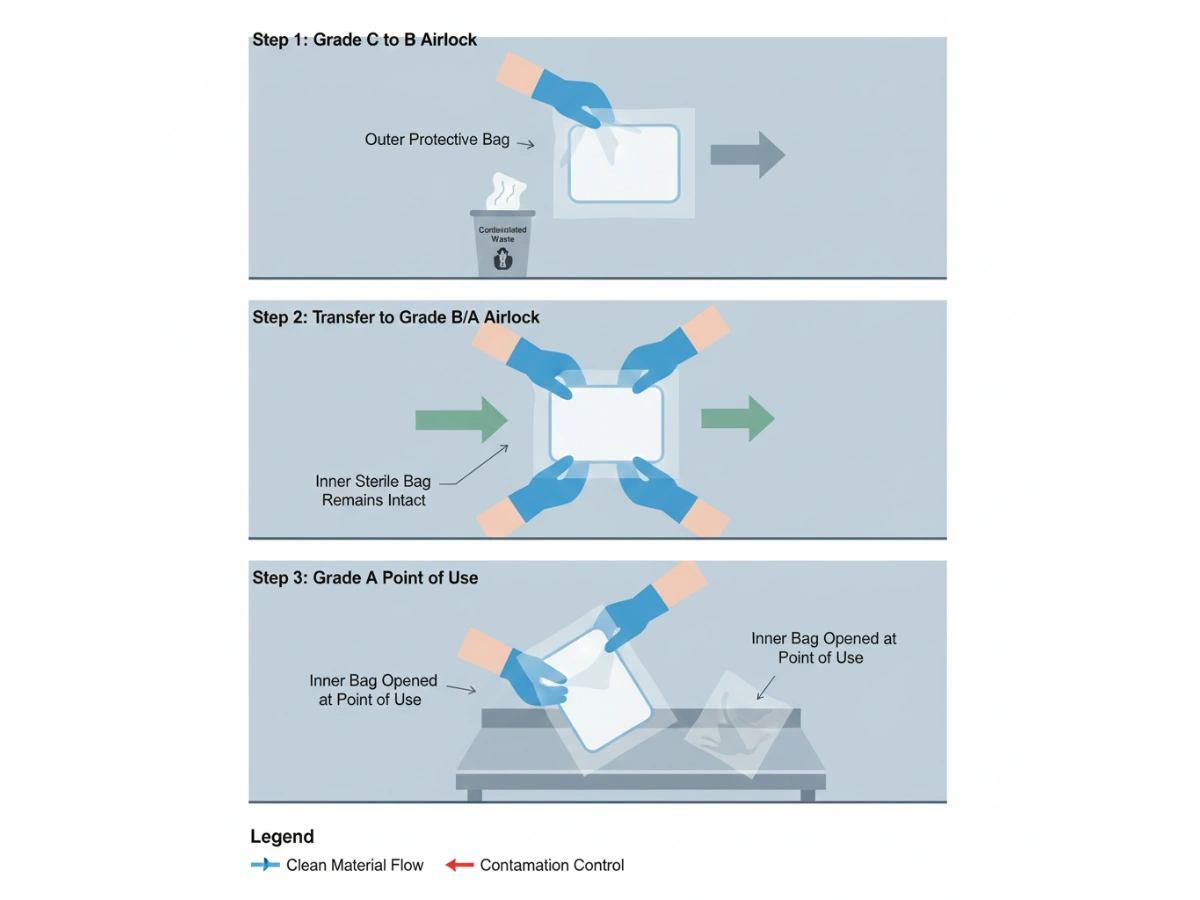

For Grade A/B operations, the core question is not “sterile at release,” but “sterile at point-of-use.” Double-bagging reduces transfer variability by removing the external surface at the boundary rather than relying on wipe-down success every time.

Use this simplified logic to align packaging selection with grade, transfer method, and validation burden. For Grade A/B, an engineered barrier is typically preferred over manual disinfection dependence.
| Karar Faktörü | Tek Torbalı Ambalaj | Çift Torbalı Ambalaj |
|---|---|---|
| Aktarım kontrolü | Doğrulanmış silme ve disiplin gerektirir | Soy ve geçir, sınırdaki kontaminasyonu ortadan kaldırır |
| Arıza modu | Tek başarısızlık noktası | Yedekli steril bariyer katmanları |
| Denetimin savunulabilirliği | Büyük ölçüde SOP yürütme kanıtlarına bağımlı | CCS için daha güçlü tasarlanmış kontrol anlatımı |
| Operasyonel iş yükü | Daha yüksek (dezenfeksiyon, izleme, sapmalar) | Daha düşük (standartlaştırılmış sınırda şerit işlemi) |