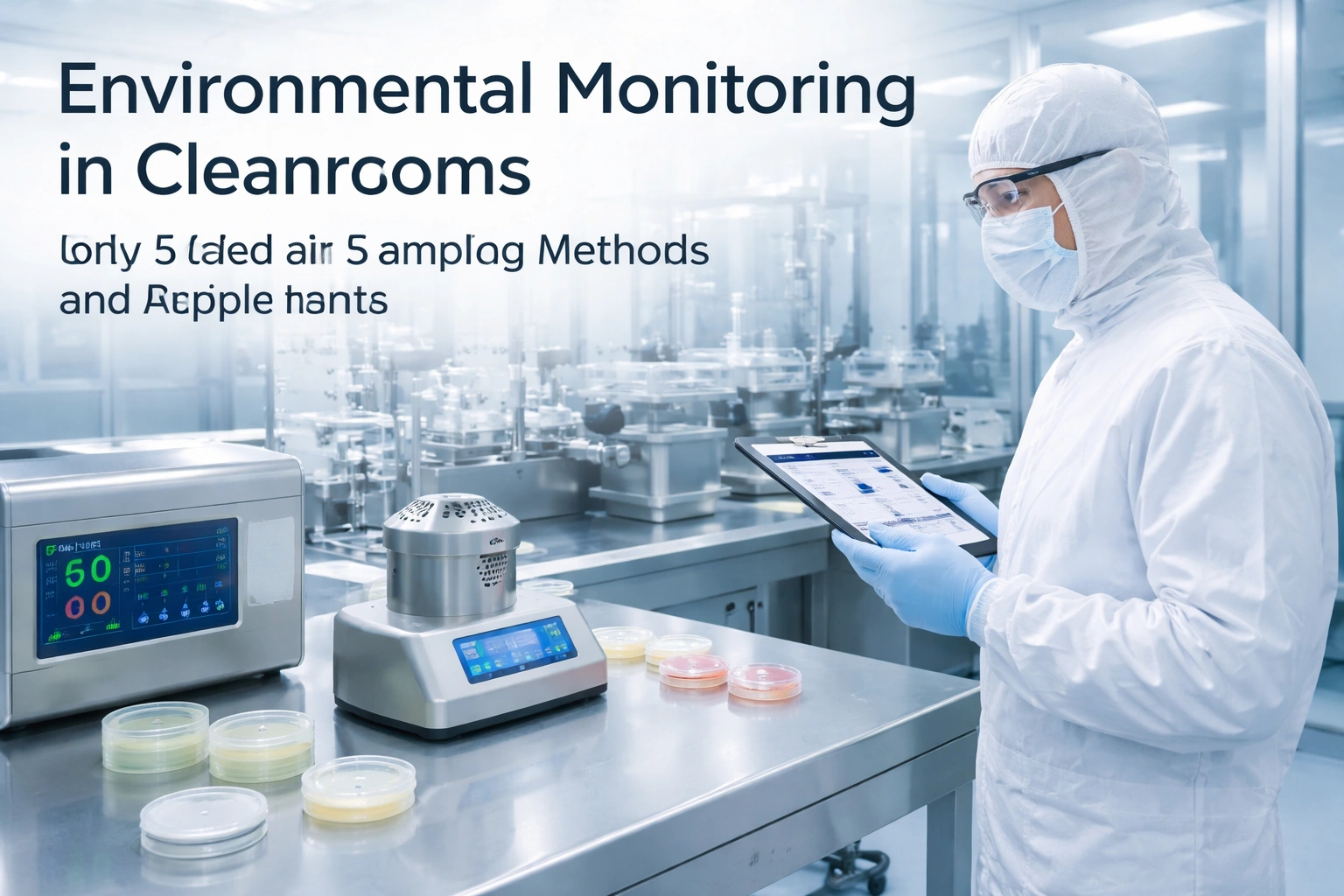
GMP Temiz Odalarında Çevresel İzleme Neden Önemlidir?
Güçlü HVAC sistemlerine, onaylanmış temizlik programlarına ve eğitimli personele sahip, iyi tasarlanmış temiz odaların bile kanıt olmadan kontrol altında kalacağı varsayılamaz. Çevresel izleme, rutin çalışma sırasında kirlilik seviyelerinin tanımlanmış beklentiler dahilinde kalıp kalmadığını göstererek bu kanıtı sağlar.
Etkili bir EM programı mikrobiyal kontrolü, partikül kontrolünü, araştırmaya hazır olmayı, prosesin anlaşılmasını ve sürekli iyileştirmeyi destekler. Aynı zamanda oda sınıflandırması arasında doğrudan bir bağlantı oluşturur, personel kıyafeti, personel eğitimi, hava akışı görselleştirmesi, doğrulama yaşam döngüsü, Ve temizleme etkinliği.
| EM Bileşeni | Neyi Ölçer? | Neden Önemlidir? |
|---|---|---|
| Parçacık izleme | Canlı olmayan havadaki partikül seviyeleri | Hava temizliğinin ve HVAC performansının doğrulanmasına yardımcı olur |
| Aktif hava örneklemesi | Canlı havadaki mikroorganizmalar | Oda havasındaki mikrobiyal kontaminasyon riskini tespit eder |
| Plakaları yerleştir | Zamanla pasif olarak yaşanabilir serpinti | Operasyonlar sırasında maruziyetin değerlendirilmesi için kullanışlıdır |
| Temas plakaları / çubukları | Yüzey mikrobiyal kontaminasyonu | Temizlik ve dokunma disiplininin etkinliğini gösterir |
| Trend incelemesi | Zaman ve dilimlerde yinelenen modeller | Daha büyük arızalar meydana gelmeden önce risk tespitini destekler |
Uygulanabilir ve Uygulanamaz İzleme
Çevresel izleme genellikle hem uygulanabilir hem de uygulanamaz yöntemleri içerir. Bunlar birbiriyle ilişkilidir, ancak birbirlerinin yerine kullanılamazlar. Bir oda, özellikle personel davranışı, temizlik uygulamaları veya müdahale kontrolleri zayıfsa, partikül beklentilerini karşılayabilir ve yine de mikrobiyal risk gösterebilir.
| İzleme Türü | Örnekler | Ana Kullanım |
|---|---|---|
| Uygulanamaz izleme | Partikül sayaçları, havadaki partikül testi | Temiz oda hava sınıflandırmasını ve dinamik kontrolü doğrular |
| Uygulanabilir izleme | Aktif hava örnekleyicileri, yerleştirme plakaları, temas plakaları, swablar | Mikrobiyolojik kontaminasyon risklerini tespit eder |
GMP'ye hazır temiz oda desteğine mi ihtiyacınız var?
Midposi, temiz oda giysileri ve farmasötik ve kontrollü ortamlar için tasarlanmış GMP odaklı ürün çözümleriyle kontaminasyon kontrol programlarını destekler.
Temiz Odalarda Yaygın EM Örnekleme Yöntemleri
Numune alma yöntemleri oda sınıfına, aktivite düzeyine, ürün maruziyetine, müdahale sıklığına ve araştırma ihtiyaçlarına göre seçilmelidir. İyi programlar yalnızca neyin örneklendiğini değil aynı zamanda her yöntemin neden uygun olduğunu da tanımlar.
Tipik yöntemler şunları içerir:
- Havadan canlı olmayanların gerçek zamanlı izlenmesi için parçacık sayaçları
- Uygulanabilir havadan izleme için aktif hava örnekleyicileri
- Operasyonlar sırasında pasif canlı izleme için plakaları yerleştirin
- Ekipman, duvarlar, çalışma yüzeyleri ve eldivenler için temas plakaları
- Düzensiz veya teması zor yüzeyler için temizleme
Görsel Açıklama: EM Örnekleme Stratejisi
Güçlü bir çevresel izleme haritası, kritik bölgelerde, destek alanlarında, personel temas noktalarında ve dinamik müdahale lokasyonlarında hangi yöntemlerin kullanıldığını göstermelidir.
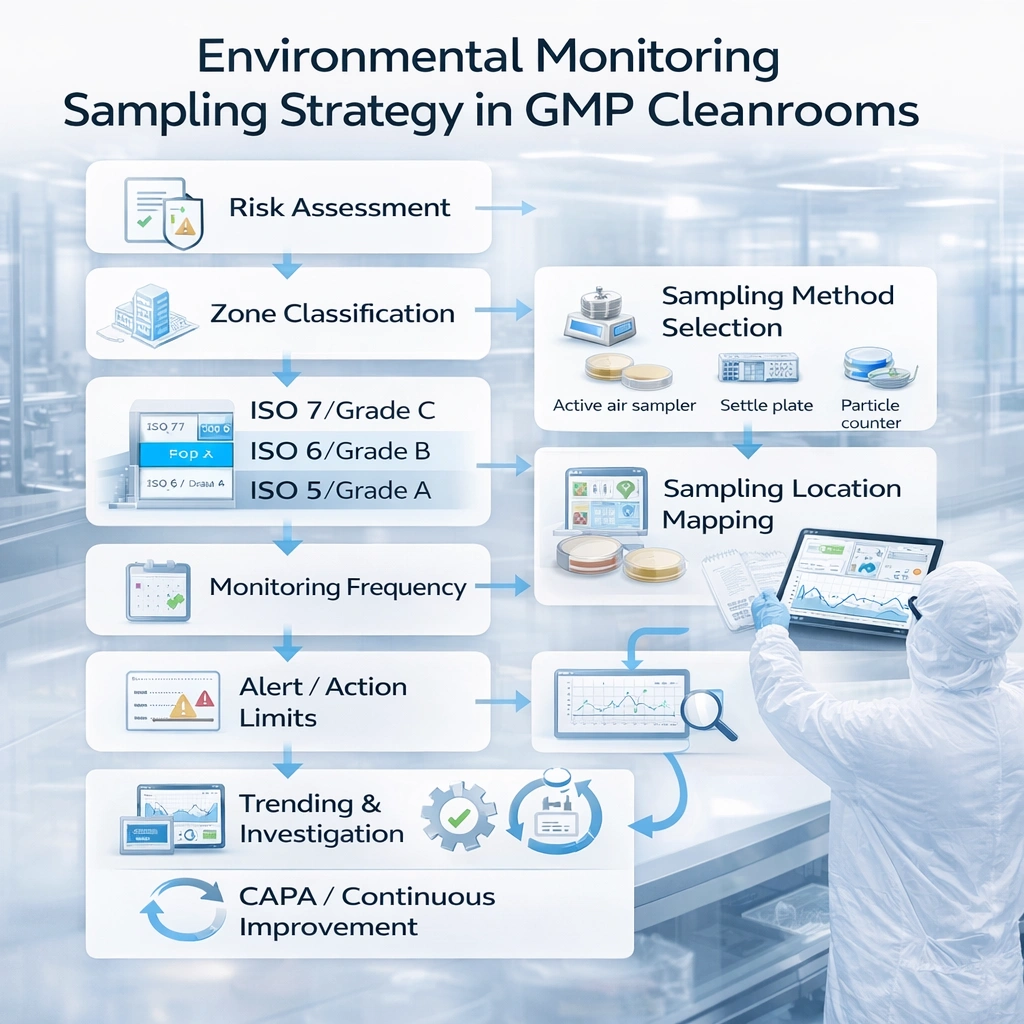
EM Konumları ve Örnekleme Frekansı Nasıl Tanımlanır?
İzleme yerleri asla rastgele olmamalıdır. Kirlenme riskini, kritik hava akışı yollarını, müdahale bölgelerini, operatörün varlığını, malzeme akışını ve geçmiş olay modellerini yansıtmalıdırlar.
Yüksek değerli numune alma yerleri genellikle şunları içerir:
- Kritik işlem noktaları
- Açık ürün maruz kalma bölgeleri
- Eldivenin parmak uçları ve kolları
- Müdahale bölgelerinin yakınındaki ekipman yüzeyleri
- Transfer kapakları ve malzeme giriş noktaları
- Daha önce gezi geçmişi olan alanlar
- Her sabit konum için gerekçeyi tanımlayın
- Hareketsiz ve operasyonel izleme arasındaki farkı ayırt edin
- Kritik veya yüksek müdahale alanlarında daha yüksek örnekleme yoğunluğu kullanın
- Düzen, ekipman veya süreç değişikliklerinden sonra konum uygunluğunu gözden geçirin
Uyarı Sınırları ve Eylem Sınırları
Çevresel izlemenin en yanlış anlaşılan kısımlarından biri, uyarı limitleri ile eylem limitleri arasındaki farktır. Uyarı sınırları, koşulların değişebileceğine dair erken uyarılardır. Eylem sınırları, tanımlanmış araştırma ve yanıt gerektiren daha ciddi bir sapmayı gösterir.
| Limit Türü | Amaç | Tipik Tepki |
|---|---|---|
| Uyarı sınırı | Alışılmadık bir değişime veya olumsuz eğilime işaret eder | Son verileri gözden geçirin, tekrarlanabilirliği onaylayın, katkıda bulunan faktörleri değerlendirin |
| Eylem sınırı | Önemli sapmayı veya kontrol arızasını gösterir | Resmi araştırmayı başlatın, CAPA'yı tanımlayın, ürün ve süreç etkisini değerlendirin |
İyi tasarlanmış limitler risk bazlı olmalı ve geçmiş veriler, oda sınıflandırması, süreç kritikliği ve düzenleyici beklentilerle desteklenmelidir. Başka bir siteden gerekçesiz olarak kopyalanan sınırlamalar genellikle zayıf kontrol mantığı oluşturur.
Trend, Araştırma ve CAPA
EM verilerini toplamak yeterli değildir. Bir izleme sisteminin gerçek değeri, kalıpları belirleme, zamanında araştırmayı tetikleme ve CAPA kararlarını destekleme yeteneğinden gelir. Trend incelemesi tekil sapmaların ötesine bakmalı ve tekrarlanan sinyallerin yapısal zayıflıklara işaret edip etmediğini sormalıdır.
Trend incelemesi sıklıkla şunları değerlendirir:
- Konuma göre tekrarlanan etkinlikler
- Vardiya ile ilgili veya personel ile ilgili modeller
- Temizleme sıklığı ve kirlenme tekrarı
- Oda durumları ve kampanya türleri arasındaki farklar
- Mikrobiyal iyileşmede mevsimsel veya operasyonel değişiklikler
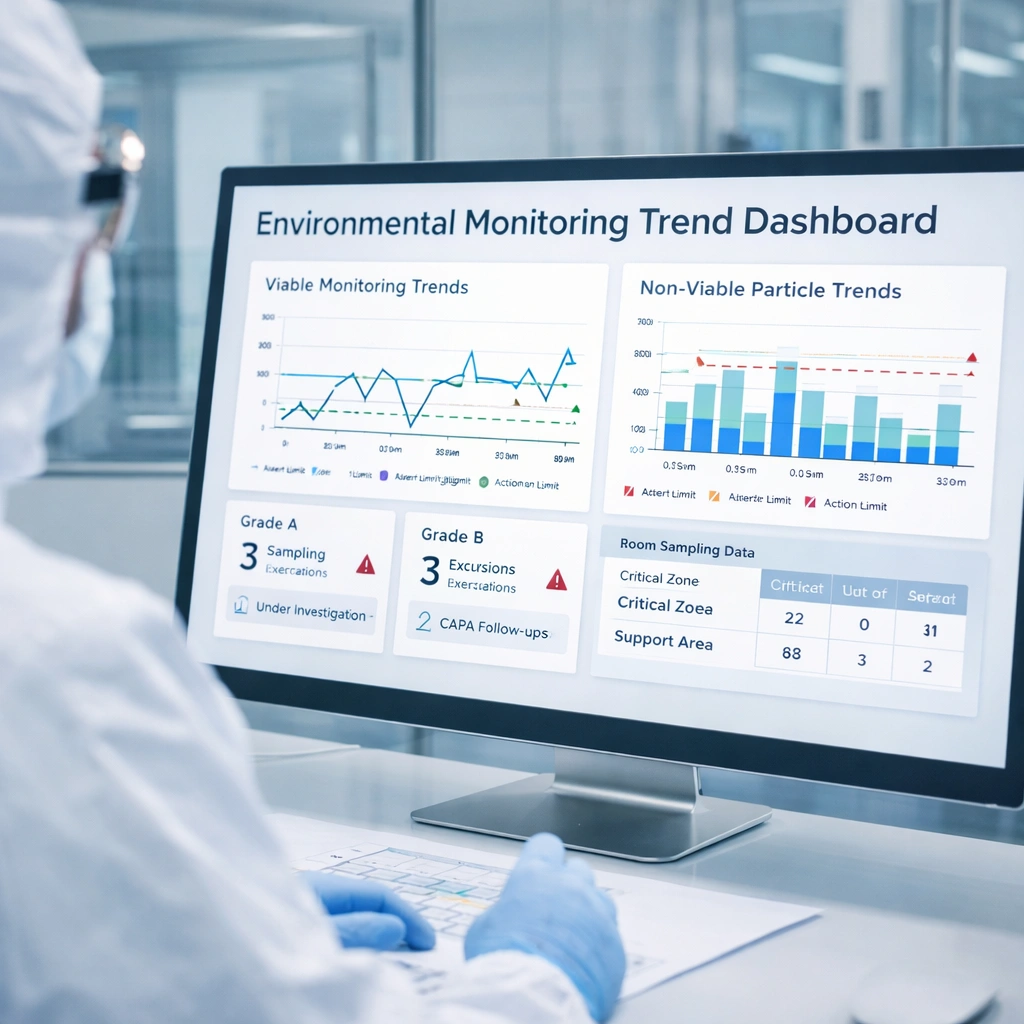
Görsel Açıklama: EM Trend Kontrol Paneli
Bir veri panosu, QA ekiplerinin odaya, bölgeye, yönteme, operatör etkinliğine ve vardiyaya göre kurtarma trendi oluşturmasına yardımcı olabilir. Bu, soruşturmayı daha hedefe yönelik ve kanıta dayalı hale getirir.
Yaygın Çevresel İzleme Hataları
Pek çok zayıf EM programı, örneklemenin olmaması nedeniyle değil, strateji, yorumlama ve izlemenin zayıf olması nedeniyle başarısız olur.
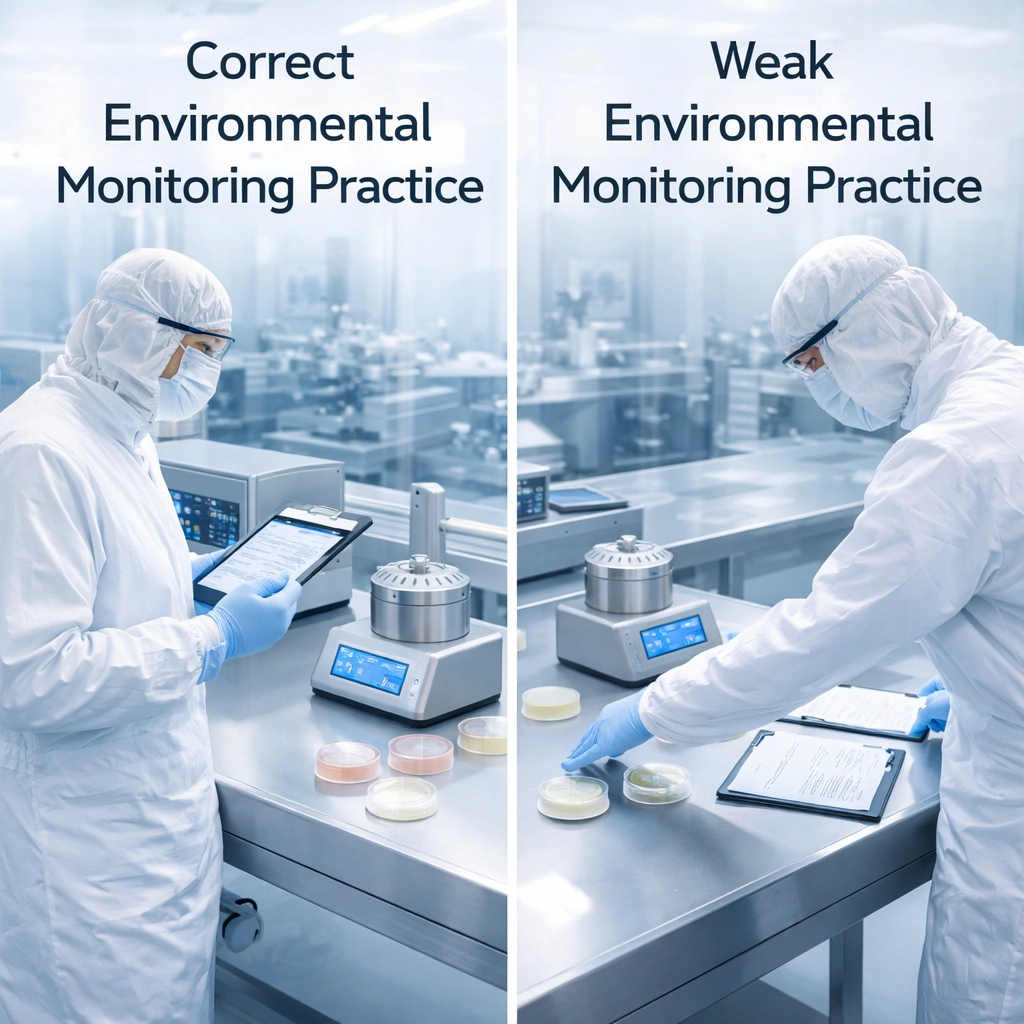
Görsel Açıklama: Doğru ve Zayıf EM Uygulaması
Açık bir karşılaştırma, tanımlanmış araştırma yollarına sahip risk bazlı izleme ile yanıt kalitesi düşük genel örnekleme programları arasındaki farkı gösterebilir.
| Zayıf Uygulama | Neden Risklidir? | Daha İyi Yaklaşım |
|---|---|---|
| Mantıksız örnekleme | Konumlar en yüksek riskli noktaları gözden kaçırabilir | Proses ve hava akışına bağlı risk bazlı saha seçimini kullanın |
| Yalnızca eylem sınırlarına tepki verme | Kötüleşmenin erken sinyallerini kaçırıyor | Uyarı düzeyindeki eğilimleri ve yinelenen sinyalleri inceleyin |
| Geziden sonra minimum araştırma | Temel nedenler çözümsüz kalıyor | Gezi incelemesini personel, hava akışı, temizlik ve süreç faktörleriyle ilişkilendirin |
| Eğitim veya davranışla bağlantı yok | İnsan faktörü kalıpları gizli kalıyor | EM verilerini önlük, eğitim ve müdahalelerle çapraz inceleme |
Denetçilerin Bir EM Programında Genellikle Neleri Aradıkları
Denetim sırasında denetçiler nadiren yalnızca ham sayımlara odaklanır. Tam izleme sisteminin gerekçeli, kontrollü ve uygulanabilir olup olmadığına bakarlar. Buna saha seçimi, sıklık gerekçesi, limit belirleme, araştırma kalitesi ve CAPA takibi dahildir.
Denetçiler sıklıkla şunları talep eder:
- EM programı SOP'ları ve örnekleme haritaları
- Uyarı ve eylem sınırı mantığı
- Odaya veya kampanyaya göre trend raporları
- Gezi araştırmaları ve CAPA kayıtları
- EM'yi kontaminasyon kontrol stratejisine bağlayan kanıtlar
- Eğitim, temizlik, hava akışı ve müdahale kontrolü ile korelasyon
Yüksek Performanslı EM Programı için En İyi Uygulama Modeli
En güçlü çevresel izleme sistemleri çeşitli özellikleri paylaşır:
- Risk bazlı örnekleme tasarımı
- Uygulanabilir ve gerçekleştirilemez hedefler arasındaki net ayrım
- Tanımlanmış uyarı ve eylem mantığı
- Yalnızca olay incelemesi değil, rutin trend incelemesi
- Kalite güvencesi, operasyonlar ve mikrobiyolojiyi içeren işlevler arası araştırma
- Doğrudan bağlantı personel eğitimi, temizlik, hava akışı performansı, Ve denetim hazırlığı
Çevresel izleme, bağımsız bir mikrobiyoloji faaliyeti yerine daha geniş bir kontaminasyon kontrol bilgi sisteminin parçası olduğunda en iyi sonucu verir.
Midposi ile Kontaminasyon Kontrol Programınızı Güçlendirin
Explore cleanroom garments and GMP-focused product solutions designed for pharmaceutical, biotech, and controlled manufacturing environments.
Sıkça Sorulan Sorular
Temiz odada çevresel izleme nedir?
Çevresel izleme, kontrollü ortamlarda canlı ve cansız kontaminasyonu tespit etmek, trendini belirlemek ve araştırmak için kullanılan bir GMP programıdır.
Uygulanabilir ve uygulanamaz izleme arasındaki fark nedir?
Canlı olmayan izleme, havadaki parçacıkları ölçerken, canlı izleme, aktif hava numunesi alma, çökeltme plakaları ve yüzey numunesi alma gibi yöntemlerle mikroorganizmaları tespit eder.
Uyarı ve eylem sınırları neden önemlidir?
Uyarı sınırları erken sapmayı gösterirken, eylem sınırları araştırma ve belgelenmiş müdahale gerektiren daha ciddi bir sapmanın sinyalini verir.
EM örnekleme yerleri nasıl seçilmelidir?
Konumlar risk bazlı olmalı ve kritik süreç noktaları, hava akışı davranışı, personel faaliyetleri, müdahale bölgeleri ve tarihsel gezi düzenleriyle bağlantılı olmalıdır.
Zayıf bir EM programı genellikle neye benzer?
Zayıf programlar genellikle gerekçesiz örnekleme yapar, verileri etkili bir şekilde trende sokmada başarısız olur, yetersiz araştırma yapar ve sonuçları temizlik, davranış veya süreç kontrolleriyle ilişkilendirmez.
Çevresel izleme oda sınıflandırmasının yerine geçer mi?
Hayır. Oda sınıflandırması ve çevresel izleme birbiriyle ilişkilidir ancak farklıdır. Sınıflandırma beklenen temizliği tanımlarken EM, kullanım sırasında kontrolün etkili olup olmadığını kontrol eder.
EM personel eğitimiyle nasıl bağlantılıdır?
İnsan davranışı sıklıkla EM sonuçlarını etkiler. Tekrarlanan geziler, yeniden eğitim gerektiren önlük, hareket, müdahale veya aseptik disiplin sorunlarına işaret edebilir.
Denetçiler bir EM programından ne bekliyor?
Denetçiler genellikle açık örnekleme gerekçesi, eğilim analizi, uyarı ve eylem sınırı mantığı, soruşturma kalitesi, CAPA takibi ve kirlenme kontrol stratejisiyle bağlantı bekler.