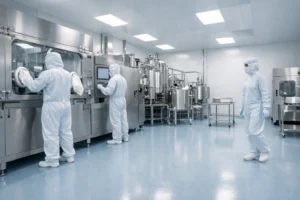
غلط ایم او پی کی تفصیلات صرف بجٹ کو ضائع نہیں کرتی ہیں - یہ ماحولیاتی نگرانی میں ناکامیوں ، آڈٹ کے نتائج اور مہنگے تحقیقات کے چکروں کو متحرک کرتی ہے۔ اپنے وینڈر کے سرچ بار میں "کلین روم یموپی" (دو الفاظ) ٹائپ کریں اور آپ کو صارف کے گریڈ مائکرو فائبر یموپی کو کٹ کناروں کے ساتھ مل سکتا ہے جو ذرات کو آئی ایس او کلاس 5 ایئر فلو میں بہاتا ہے۔ "کلین روم یموپی" (ایک لفظ) کی تلاش کریں اور آپ کو جی ایم پی مینوفیکچرنگ کے لئے درست مہر والے ، کم لنٹ فارماسیوٹیکل گریڈ ٹولز کی توثیق کرنے کا زیادہ امکان ہے۔ یہ وینڈر کی عدم مطابقت نہیں ہے - یہ لسانی علیحدگی ہے جو حقیقی تکنیکی امتیازات کا نقشہ بناتی ہے۔ آئی ایس او 14644 اور EU GMP ضمیمہ 1 آرٹ کی بند کمپاؤنڈ ٹرم کے طور پر "کلین روم" استعمال کریں۔ عام صفائی کرنے والے سپلائرز اور لغات غیر منظم جگہوں کے دو الفاظ کے طور پر "صاف کمرے" کو برقرار رکھتے ہیں۔ یہ سمجھنا کہ کون سا اصطلاح اشارہ کرتا ہے کہ کون سی مصنوعات کی تصریح خریداری کی غلطیوں کو روکتی ہے جو تعمیل میں ناکامی کا باعث بنتی ہے۔ یہ گائیڈ وضاحت کرتا ہے کہ اصطلاحات تقسیم کیوں موجود ہے ، اس کی وضاحت کرتی ہے کہ عملی طور پر ہر اصطلاح کا اصل مطلب کیا ہے ، اور وضاحتیں لکھنے کے لئے فیصلہ سازی کا فریم ورک فراہم کرتا ہے جو دواسازی کی درجہ بندی کے آلودگی کو کنٹرول کرتے ہیں۔
کیوں "کلین روم یموپی" اور "کلین روم یموپی" کو مختلف طریقے سے تلاش کیا جاتا ہے
ہائفن/جگہ کس طرح تلاش کے طرز عمل کو متاثر کرتی ہے
The terminology split isn’t arbitrary—it reflects how different user groups conceptualize “clean” spaces. Users searching “clean room mop” (two words) typically fall into three categories: facility managers in light industrial settings (packaging warehouses, electronics assembly), general janitorial purchasers seeking “cleaner than normal” floors, and first-time pharmaceutical procurement staff who haven’t yet learned the regulated terminology. These searches often surface consumer-grade microfiber mops, commercial janitorial supplies, and general-purpose cleaning equipment—products designed for visual cleanliness but not validated for particle control or disinfectant compatibility.
Searchers using “cleanroom mop” (one word) signal familiarity with regulated environments. This term correlates strongly with ISO classification queries (“ISO 5 cleanroom mop,” “Grade A mopping”), GMP compliance searches, and pharmaceutical vendor sites. The closed compound “cleanroom” acts as a technical filter: users employing this spelling are more likely to understand particle concentration limits, environmental monitoring requirements, and the need for sealed-edge construction. Vendor sites serving pharmaceutical manufacturers overwhelmingly adopt “cleanroom” as the category taxonomy, reinforcing the term’s association with compliance-grade products.
Geographic Differences (US vs Europe)
یوروپی ریگولیٹری زبان ایک لفظ کے طور پر "کلین روم" پر معیاری ہے۔ EU GMP ضمیمہ 1 - پورے یورپی یونین میں جراثیم سے پاک دواؤں کی مصنوعات کی تیاری کے لئے پابند ضابطہ - اپنے متن میں "کلین روم" کا استعمال کرتا ہے اور واضح طور پر درجہ بندی اور قابلیت کے پروٹوکول کے لئے آئی ایس او 14644 کا حوالہ دیتا ہے۔ اس ریگولیٹری مستقل مزاجی کا مطلب ہے یورپی دواسازی کی خریداری کی ٹیمیں ، کیو اے ماہرین ، اور سہولت انجینئرز کو صحیح پیشہ ورانہ اصطلاح کے طور پر "کلین روم" سے پہلے سے طے شدہ ہے۔ برطانیہ کی سہولیات پوسٹ بریکسٹ اس کنونشن کو جاری رکھیں ، کیونکہ یوکے جی ایم پی رہنمائی انیکس 1 زبان کو آئینہ دار کرتی ہے۔
امریکی استعمال میں زیادہ تغیرات ظاہر ہوتے ہیں۔ جبکہ آئی ایس او 14644 (جس کا عنوان ہے "کلین رومز اور اس سے وابستہ کنٹرول ماحول") دنیا بھر میں تکنیکی معیار ہے ، امریکی جنرل انگریزی لغات جیسے میریریم-ویبسٹر ہیڈ ورڈ انٹری کے طور پر "کلین روم" کو برقرار رکھتے ہیں۔ اس سے لسانی رگڑ پیدا ہوتی ہے: ایف ڈی اے کی رہنمائی دستاویزات اور سی جی ایم پی کے ضوابط واضح طور پر ایک ہجے کا حکم نہیں دیتے ہیں ، جس کی وجہ سے امریکی دواسازی کی جگہوں پر مخلوط استعمال ہوتا ہے۔ تاہم ، بین الاقوامی معیارات کے ساتھ ہم آہنگ ہونے کے لئے ریگولیٹڈ انڈسٹریز (فارماسیوٹیکل ، میڈیکل ڈیوائس ، ایرو اسپیس) کی خدمت کرنے والے امریکی دکاندار آئی ایس او اصطلاحات اور مارکیٹ کی مصنوعات کی پیروی کرتے ہیں۔ عملی طور پر نتیجہ: جب ایف ڈی اے سے متاثرہ سہولیات کے لئے وضاحتیں لکھتے ہو تو ، آئی ایس او 14644 سے ملنے کے لئے "کلین روم" (ایک لفظ) کا استعمال کریں اور یقینی بنائیں کہ وینڈر تلاش کے نتائج جنوری کی فراہمی کے بجائے تعمیل گریڈ کی مصنوعات کو لوٹائیں۔

انڈسٹری جرگون اختلافات (عمومی صفائی بمقابلہ اعلی درجے کے کلین رومز)
غیر منظم صنعتوں میں-کھانا خدمت ، مہمان نوازی ، تعلیم ، لائٹ مینوفیکچرنگ-"صاف ستھرا کمرہ" دو الفاظ کے طور پر ظاہر ہوتا ہے جب حفظان صحت سے زیادہ اعلی معیارات کو برقرار رکھنے والی جگہوں کو بیان کرتے ہیں لیکن ذرہ گنتی کی ضروریات کے بغیر۔ اسپتال کے راہداری کو ہاؤس کیپنگ ایس او پیز میں ایک "صاف ستھرا کمرہ" قرار دیا جاسکتا ہے ، جس سے اسے مریضوں کے کمروں یا سرجیکل سوٹ سے ممتاز کیا جاتا ہے ، لیکن اس استعمال سے آئی ایس او کی درجہ بندی یا جی ایم پی کی تعمیل کا مطلب نہیں ہے۔ ان بازاروں کی خدمت کرنے والے درآمدی سپلائی دکاندار "کلین روم ایم او پی" کا استعمال کرتے ہیں تاکہ وہ دواؤں کے ماحول کے ل suitable موزوں مصنوعات کی نشاندہی کریں تاکہ انہیں دواسازی کی درجہ بندی کی حیثیت سے رکھا جاسکے۔
Pharmaceutical and biotech professionals use “cleanroom” as a term of art with specific regulatory meaning. When a contamination control specialist says “cleanroom,” they’re referencing an ISO 14644-qualified space with defined particle concentration limits, validated HVAC systems, and documented environmental monitoring. “Cleanroom mop” in this context signals a tool designed for that regulatory framework: sealed-edge construction to prevent fiber shedding, materials compatible with pharmaceutical disinfectants (70% IPA, hydrogen peroxide, quaternary ammonium compounds), and often gamma irradiation or autoclave sterilization for use in Grade A/B areas. The terminology functions as professional shorthand—procurement specs that specify “cleanroom mop” immediately exclude consumer products and focus vendor responses on compliance-grade tools.
عام طور پر کیا "صاف کمرے کی یموپی" سے مراد ہے
عام صاف ماحول (غیر ISO علاقوں) کے لئے
"کلین روم یموپی" (دو الفاظ) عام طور پر مائکرو فائبر یا روئی کی ایم او پیز کی وضاحت کرتا ہے جو خالی جگہوں کے لئے دربان سپلائی چینلز کے ذریعے فروخت ہوتا ہے جہاں صفائی کی اہمیت ہوتی ہے لیکن ذرہ شمار نہیں ہوتا ہے۔ یہ وہ MOPs ہیں جو آپ کو ہسپتال کے دالان ، اسکول کیفے ٹیریا ، لائٹ مینوفیکچرنگ پیکیجنگ رومز ، اور آفس ماحول میں ملیں گے۔ ان سیاق و سباق میں "کلین روم" کے عہدہ کا مطلب ہے "ایک معیاری سہولت سے زیادہ صاف" - بیٹر حفظان صحت ، زیادہ بار بار موپنگ ، شاید جراثیم کش استعمال - لیکن آئی ایس او 14644 قابلیت یا جی ایم پی کی توثیق کی سختی کے بغیر۔
ان ایم او پیز میں اکثر معیاری کٹ ایج کی تعمیر ہوتی ہے: تانے بانے کی پٹیوں یا مائکرو فائبر لوپ کو بے نقاب ، نامکمل کناروں کے ساتھ پشت پناہی سے منسلک کیا جاتا ہے۔ اگرچہ مٹی کو ہٹانے اور فرش کی سطحوں پر جراثیم کش استعمال کرنے کے لئے موثر ہے ، لیکن استعمال کے دوران کٹے ہوئے کناروں اور ریشوں کو کاٹتے ہیں۔ مواد کم پارٹیکولیٹ کارکردگی سے زیادہ لاگت اور استحکام کو ترجیح دیتے ہیں۔ آپ کو پالئیےسٹر-کپٹن کے مرکب ، معیاری تجارتی گریڈ مائکرو فائبر (کلین روم بنے ہوئے نہیں) ، اور روایتی سلائی نظر آئے گی جو ذرہ کے جال پیدا کرتی ہے۔
مائکرو فائبر/ہاؤس کیپنگ کلیننگ ٹولز
مائکرو فائبر موپس کو "کلین روم" ٹولز (دو الفاظ) کے طور پر مارکیٹنگ کی گئی ہے (دو الفاظ) ایک درمیانی زمین پر قبضہ کرتے ہیں: روایتی سٹرنگ موپس سے بہتر لیکن دواسازی کی درجہ بندی نہیں۔ یہ سطح کے رابطے کو بڑھانے اور کپاس کے مقابلے میں مٹی کے پک اپ کو بہتر بنانے کے لئے بٹی ہوئی مائکرو فائبر لوپ یا فلیٹ مائکرو فائبر پیڈ استعمال کرتے ہیں۔ مائکرو فائبر مواد خود کپاس کے مقابلے میں کم ذرات تیار کرتا ہے اور بہتر جراثیم کشی برقرار رکھنے کی پیش کش کرتا ہے ، جس سے یہ ایم او پی ماحول کے ل suitable موزوں ہوجاتے ہیں جہاں حفظان صحت ضروری ہے لیکن آئی ایس او کی درجہ بندی کی ضرورت نہیں ہے۔
تاہم ، تعمیراتی تفصیلات ان کی حدود کو باقاعدہ استعمال کے ل. ظاہر کرتی ہیں۔ زیادہ تر صارفین مائکرو فائبر موپس استعمال کرتے ہیں:
- کٹے یا پابند کناروں کو مہر بند کناروں کے بجائے ، فائبر ختم ہونے کی اجازت دیتا ہے اور وقت کے ساتھ ساتھ بہا جاتا ہے
- معیاری پالئیےسٹر مرکب (80/20 polyester-polyamide) optimized for cost, not low-lint performance
- Velcro or pocket attachments with hook-and-loop fasteners that trap particles and can’t withstand repeated autoclave cycles
- No particle generation testing—vendors provide no data on lint shedding or particle release rates
- Basic disinfectant compatibilitymaters میتیریلز بلیچ اور کوآرٹنری امونیم مرکبات کو برداشت کرتے ہیں لیکن دواسازی کی گریڈ ڈس انفیکٹینٹ گردش (الکوحل ، پیرو آکسائڈس ، اسپورسائڈلز) کے لئے ان کی مطلوبہ ایپلی کیشن میں ایکسل کی توثیق نہیں کی جاتی ہے۔ وہ درجہ بندی کی جگہوں ، گاؤننگ روم کے اینٹرومز ، یا دواسازی کی سہولیات میں راہداریوں کی حمایت کرنے والے علاقوں کے باہر پیکیجنگ والے علاقوں کے لئے بالکل مناسب ہیں - لیکن خود کلین رومز کے لئے نہیں۔
لیبز ، اسکولوں ، دفاتر ، پیکیجنگ روم کے لئے موزوں ہے
دو لفظی "کلین روم یموپی" کو ایسے ماحول میں اپنی مناسب طاق ملتی ہے جن کو بغیر کسی باقاعدہ نگرانی کے بہتر معیاری حفظان صحت کی ضرورت ہوتی ہے۔ یونیورسٹی کے ریسرچ لیبز حیاتیاتی نمونے تیار کرنے والی (لیکن جی ایم پی کے تحت دواسازی کی تیاری نہیں) ، فوڈ پیکیجنگ کی سہولیات سینیٹری کے حالات کو برقرار رکھنے (لیکن جراثیم سے پاک پروسیسنگ نہیں) ، اور الیکٹرانکس اسمبلی شعبوں کو جامد اور مجموعی آلودگی سے بچانے والے (لیکن آئی ایس او کلاس کی حدود کو پورا نہیں کررہے ہیں) بغیر کسی فارماسٹیکل گریڈ کی وضاحتوں کی ضرورت کے بغیر اپ گریڈ شدہ دربان ٹولز سے تمام فائدہ۔
ان ترتیبات میں لاگت کو اپنایا جاتا ہے۔ مہر بند دواسازی کلین روم موپس کے لئے ایک اعلی معیار کے مائکرو فائبر ایم او پی سسٹم کی لاگت $ 15– $ 30 فی ایم او پی ہیڈ کے مقابلے میں $ 50– $ 150 ہے۔ روزانہ 10،000 مربع فٹ پیکیجنگ کی سہولت کے ل the ، بچت کافی حد تک اور جائز ہے ، کیونکہ ذرہ گنتی کی نگرانی نہیں کی جاتی ہے اور جگہ آئی ایس او کی درجہ بندی نہیں ہوتی ہے۔ کلید پہچان رہی ہے جب یہ تصریح کافی ہے جب اس سے تعمیل کا خطرہ پیدا ہوتا ہے۔
ذرہ حساس ماحول کے لئے ڈیزائن نہیں کیا گیا ہے
بنیادی ڈیزائن منقطع: "کلین روم موپس" (دو الفاظ) مکینیکل صفائی کی کارکردگی اور بصری نتائج کے ل optim بہتر بنائیں ، جبکہ "کلین روم موپس" (ایک لفظ) آلودگی کنٹرول اور ریگولیٹری تعمیل کے لئے بہتر بنائیں۔ کٹ کنارے کی تعمیر جو کسی ہسپتال کے راہداری سے مٹی کو ہٹانے کے لئے بالکل قابل قبول ہے لامینر ایئر فلو کے تحت ذرہ نسل کا ذریعہ بن جاتی ہے۔ مائکرو فائبر مرکب جو گندگی کو پھنسانے میں ایکسل کرتے ہیں جب کلین روم کا مظاہرہ کرنے کی ضرورت ہوتی ہے تو <ہر مربع میٹر موپنگ کے 100 ذرات جاری کیے گئے۔
تین تکنیکی خلاء دواسازی کے استعمال سے عمومی "کلین روم موپس" کو نااہل قرار دیتے ہیں:
- بے قابو ذرہ نسل: Without sealed edges and low-lint materials, these mops shed fibers that accumulate in unidirectional airflow, settle on product contact surfaces, and trigger environmental monitoring failures.
- Unvalidated disinfectant compatibility: Pharmaceutical cleanrooms rotate disinfectants (alcohols Monday/Wednesday, peroxide Tuesday/Thursday, bleach Friday, sporicidal weekly) to prevent microbial resistance. General mops may degrade under this regimen, releasing particles or harboring bioburden in damaged fibers.
- No sterilization pathway: Grade A/B pharmaceutical areas require sterile cleaning tools. General microfiber mops can’t withstand gamma irradiation (causes material breakdown) or repeated autoclave cycles (velcro attachments, pocket seams, and backing materials fail after 5–10 cycles).
If your environmental monitoring shows increasing particle counts correlated with mopping schedules, or if microbial surface sampling reveals post-cleaning contamination, the wrong mop specification is a likely cause—often traced back to purchasing “clean room” products when “cleanroom” tools were required.
What “Cleanroom Mop” Means in a GMP/ISO Context
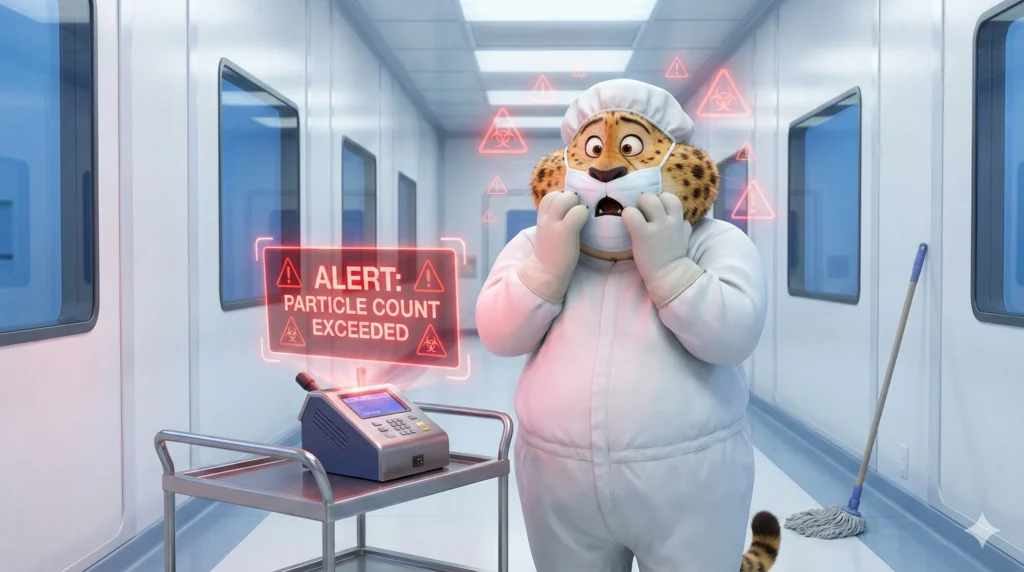
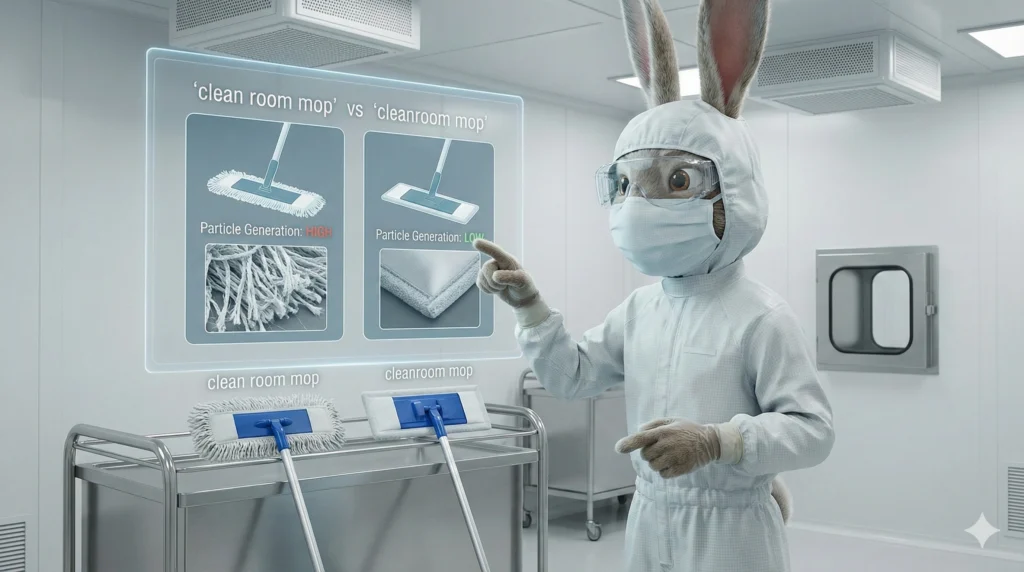
Figure 1: Material and construction comparison illustrating the fundamental difference between “clean room mop” and “cleanroom mop” products. Left: Consumer-grade microfiber mop with cut edges showing exposed fiber ends that shed particles during use—suitable for general janitorial applications but disqualified from pharmaceutical cleanrooms. Right: Pharmaceutical-grade cleanroom mop with sealed-edge polyester construction, heat-sealed perimeter encapsulating all fiber ends to prevent particle generation—validated for ISO Class 5–8 GMP manufacturing environments.
Defined by ISO 14644 & GMP Annex 1 Usage
ISO 14644-1 defines cleanrooms as controlled environments “in which the concentration of airborne particles is controlled, and which is constructed and used in a manner to minimize the introduction, generation, and retention of particles inside the room.” This three-part mandate—control airborne particles, prevent introduction, minimize generation—extends to every activity inside the cleanroom, including cleaning. The “cleanroom mop” (one word) exists specifically to meet this standard: it must not generate particles during use, must not introduce contamination from outside the space, and must support validated protocols that remove particles rather than redistribute them.
EU GMP Annex 1 operationalizes these principles for pharmaceutical manufacturing. The regulation requires that “cleaning materials used in Grade A/B areas should be sterile” and that “disinfectants and detergents should be monitored for microbial contamination.” Cleanroom mops for aseptic manufacturing must therefore support pre-sterilization (gamma irradiation, ethylene oxide, or autoclave), resist degradation from repeated disinfectant exposure, and enable validated cleaning workflows that maintain environmental monitoring compliance. The regulatory text consistently uses “cleanroom” as one word, reinforcing the term’s technical specificity.
Low-Lint, Sealed-Edge Construction
Sealed-edge construction is the defining physical characteristic of pharmaceutical-grade cleanroom mops. Rather than cutting fabric and exposing fiber ends, sealed-edge manufacturing uses heat-sealing, ultrasonic bonding, or continuous-edge knitting to encapsulate all fabric edges. This prevents fiber ends from fraying, catching on rough floor surfaces, or releasing particles into airflow. The difference is immediately visible: cut-edge mops show loose threads and fuzzy borders, while sealed-edge mops present smooth, continuous perimeters with no exposed fiber ends.
Knit construction matters as much as edge treatment. Pharmaceutical cleanroom mops use closed-loop knit polyester or polyester-blend fabrics where the knitting process creates continuous loops without cutting. The fabric is knitted as tubes or sheets, then converted into mop heads with all edges sealed. This construction yields particle generation rates below 100 particles ≥0.5 µm per square meter of mopping—validated through IEST-RP-CC003 or equivalent testing. Compare this to cut-edge microfiber mops generating 1,000–10,000 particles per square meter, and the contamination control difference becomes quantifiable.
Mop head attachment systems also receive sealed-edge treatment. Pharmaceutical mops use pocket-style frames where the mop head slides into a continuous fabric pocket, or hook-and-release systems with sealed attachment strips. No exposed Velcro, no hook-and-loop fasteners that trap particles, no threaded connections that loosen under repeated autoclave cycles.
Non-Shedding Materials Used in Pharmaceutical Areas
Polyester dominates pharmaceutical cleanroom mop construction—typically 100% polyester knit or polyester-cellulose blends (for specific absorbency requirements). Polyester offers the best combination of low-lint performance, chemical resistance, autoclave durability, and mechanical strength. The polymer structure resists fiber breakage during wringing and floor contact, preventing the particle shedding that occurs with natural fibers (cotton) or lower-quality synthetics.
For critical Grade A/B applications, some manufacturers use continuous-filament polyester: ultra-long fibers knitted into fabric without cutting or splicing. This eliminates short fiber ends entirely, reducing particle generation to the absolute minimum. The material cost is higher ($80–$150 per mop head versus $40–$70 for standard polyester knit), but the contamination control benefit justifies the expense in aseptic filling suites and isolator environments where a single particle excursion can halt production.
Absorbency-enhancing materials must also meet low-lint standards. Some pharmaceutical mops incorporate microdenier polyester (fibers <1 ڈینئر) یا بڑے موپنگ والے علاقوں میں سیال برقرار رکھنے میں اضافہ کرنے کے لئے ریون/سیلولوز کی کنٹرول شدہ مقدار۔ یہ اضافے بیس پالئیےسٹر ڈھانچے میں بنائے جاتے ہیں جس میں مہر بند تعمیر کے ساتھ پوری طرح سے برقرار رکھا جاتا ہے ، اس بات کو یقینی بناتے ہوئے کہ جاذب فائدہ سے ذرہ کنٹرول میں سمجھوتہ نہیں ہوتا ہے۔

ڈس انفیکٹینٹس کے ساتھ مطابقت (آئی پی اے ، کوٹ ، بلیچ ، ہائو)
دواسازی کے کلین رومز مائکروبیل مزاحمت کو روکنے کے لئے جراثیم کشی کو گھوماتے ہیں ، جس میں ایم او پی مواد کی ضرورت ہوتی ہے تاکہ ترتیب کی نمائش کا مقابلہ کیا جاسکے:
- 70 ٪ isopropyl الکحل (IPA): گریڈ A/B علاقوں میں روزانہ استعمال ؛ کچھ پولیمر میں سوجن اور ممکنہ انحطاط کا سبب بنتا ہے
- کوآٹرنری امونیم مرکبات (کوٹ): General disinfection; relatively mild but requires rinsing to prevent residue buildup
- Sodium Hypochlorite (Bleach, 500–5000 ppm): Broad-spectrum antimicrobial but oxidizes many materials
- ہائیڈروجن پیرو آکسائیڈ (3–6 ٪): Sporicidal agent for periodic deep cleaning; degrades cellulose and some polyester blends
Cleanroom-grade polyester mops are validated for this rotation. Manufacturers conduct compatibility testing: soak mop heads in each disinfectant at validated concentrations for 2× typical contact time, perform particle generation testing post-exposure, measure mechanical strength retention, and verify no fiber breakage or material degradation. Specification sheets document pass/fail for each disinfectant class, enabling procurement teams to match mop selection to their facility’s disinfectant rotation protocol.
Material compatibility extends beyond chemical resistance to functional performance. Some disinfectants (high-concentration bleach, strong peroxides) cause temporary stiffening or texture changes in polyester. If these changes impair the mop’s ability to maintain floor contact or release trapped particles during wringing, the material is unsuitable despite passing basic chemical resistance tests. Pharmaceutical mop vendors provide application notes specifying maximum disinfectant concentrations, required rinse protocols, and recommended change-out frequencies to maintain validated performance.
Compatible with Autoclavable Buckets & Handles
Cleanroom mops function as part of complete validated systems: mop heads + handles + buckets + carts, all qualified together. For Grade A/B use, every component must withstand 121°C steam autoclaving for 30 minutes without degradation. Polyester mop heads tolerate 50–100 autoclave cycles before material embrittlement requires replacement—dramatically better than microfiber mops (5–10 cycles) but still finite. Vendors specify autoclave service life in their qualification protocols.
Handle compatibility determines whether the complete mop system can be sterilized as a unit. Pharmaceutical mop handles use stainless steel (SS304 or SS316) or autoclave-grade polypropylene, with sealed construction that prevents water intrusion during steam cycles. Thread connections, if used, are sealed with autoclavable gaskets; most high-end handles eliminate threads entirely, using continuous-weld or friction-lock designs. The mop head attachment mechanism—typically a frame that clamps or slides onto the handle—must maintain secure connection through 50+ autoclave cycles without loosening or corroding.
For foundational contamination control principles and comprehensive cleaning tool selection, see the complete cleanroom mop guide covering materials, validation, and GMP workflows.
Technical Differences That Matter
Material selection determines particle generation, disinfectant compatibility, and service life—the three factors that drive total cost and compliance risk.
Material: Polyester vs Microfiber vs Foam
پالئیےسٹر (100% or polyester-dominant blends): The pharmaceutical industry standard. Continuous-filament or knit polyester with sealed edges generates <100 particles ≥0.5 µm per m² of mopping when properly manufactured. Polyester resists alcohols, quats, and moderate-concentration bleach/peroxide, withstands 50–100 autoclave cycles, and maintains mechanical integrity across 200–300 uses with proper laundering. Cost: $40–$150 per mop head depending on construction quality (standard knit vs continuous-filament). Best for: ISO Class 5–8 pharmaceutical manufacturing, medical device cleanrooms, biotech aseptic areas.
مائیکرو فائبر (polyester-polyamide blends, typically 80/20): Offers superior absorbency and soil pickup versus standard polyester but comes with trade-offs. Quality varies widely—pharmaceutical-grade microfiber uses sealed-edge construction and low-lint knitting, while commercial microfiber (the type marketed as “clean room” with two words) uses cut edges and sheds particles. Even sealed-edge microfiber generates 100–500 particles per m²—acceptable for ISO Class 7–8 but marginal for Class 5–6. Microfiber degrades faster under bleach and peroxide (30–50 autoclave cycles vs 50–100 for polyester) and requires more frequent replacement. Cost: $25–$80 per mop head. Best for: ISO Class 7–8 general manufacturing areas, gowning rooms, Grade C/D support spaces.
Foam (polyurethane or polyvinyl alcohol): Specialized use in high-purity electronics (semiconductor fabs) and specific pharmaceutical applications requiring ultra-smooth surface contact. Foam mops generate minimal particles (<50 per m²) because there are no fibers to shed, but absorbency is lower than polyester/microfiber and disinfectant compatibility is more limited. PVA foam dissolves in hot water, enabling single-use workflows; polyurethane foam can be autoclaved but degrades under bleach. Cost: $15–$40 per mop head (disposable PVA) or $60–$120 (reusable polyurethane). Best for: ISO Class 4–5 semiconductor cleanrooms, isolator maintenance, specialty pharmaceutical applications where low particle generation justifies the cost/limitation trade-off.
Manufacturing: Sealed-Edge vs Cut-Edge
Edge treatment is the binary dividing line between pharmaceutical-grade and general cleaning products. The manufacturing process determines whether the mop will shed particles or maintain its low-lint performance across hundreds of uses.
Sealed-Edge Manufacturing: Fabric edges are heat-sealed (thermoplastic melting), ultrasonically bonded (high-frequency vibration welding), or knit-closed (continuous-loop construction with no cut ends). The sealing process encapsulates fiber ends, preventing fraying and particle release. Sealed edges withstand the mechanical stress of wringing, floor abrasion, and repeated laundering without opening or degrading. Visual inspection reveals smooth, continuous borders; tactile examination shows no loose threads or fiber ends. Cost adder: $10–$30 per mop head versus cut-edge equivalent. Performance benefit: 10–100× reduction in particle generation. Pharmaceutical cleanrooms universally require sealed-edge construction for ISO Class 5–8 compliance.
Cut-Edge Manufacturing: تانے بانے کو کینچی ، روٹری بلیڈ ، یا ڈائی کاٹنے کے ساتھ شکل دینے کے لئے کاٹا جاتا ہے ، جس سے بے نقاب فائبر ختم ہوتے ہیں۔ کناروں کو تیز رفتار سے سلائی (سیرڈ) آہستہ آہستہ کرنے کے ل. ہوسکتا ہے لیکن ریشے اب بھی پھیلتے ہیں اور بہاتے ہیں۔ یہ صارفین اور تجارتی دربانوں کے لئے معیاری مینوفیکچرنگ کا طریقہ ہے کیونکہ یہ تیز ، سستا اور غیر پارٹیکل کنٹرول والے ماحول کے لئے کافی ہے۔ کٹ ایج موپس نے 1،000–10،000 ذرات کو فی mapping کے میوپنگ کے دو حصوں میں ڈال دیا-دو بار مہر بند مساویوں سے بھی بدتر تین احکامات پر۔ ان ایم او پیز کو دواسازی کے استعمال سے صرف ان کے ذرہ جنریشن پروفائل کے ذریعہ نااہل کیا جاتا ہے ، قطع نظر اس سے قطع نظر کہ مواد یا جراثیم کشی کی مطابقت۔
The cost difference ($10–$30 per mop head) is trivial compared to the operational cost of environmental monitoring failures, investigation cycles, and potential production holds triggered by particle excursions. Yet procurement errors persist—typically when buyers search “clean room mop” (two words) and receive cut-edge products that vendors market as “suitable for cleanrooms” without specifying ISO class limitations.
Cleanroom Classification: ISO 3–9
ISO 14644-1 classifies cleanrooms by airborne particle concentration limits. The classification you target determines which mop specification you need:
| آئی ایس او کلاس | Particles ≥0.5 µm/m³ (at rest) | Pharmaceutical GMP Grade | Mop Specification Required |
| ISO 3 | ≤35.2 | (special applications) | Foam or continuous-filament polyester; <50 particles/m² validated; gamma-sterilized |
| ISO 4 | ≤352 | (special applications) | Continuous-filament polyester; <50 particles/m² validated; gamma or autoclave sterilization |
| آئی ایس او 5 | ≤3,520 | گریڈ اے | Sealed-edge polyester; <100 particles/m² validated; sterile (gamma or autoclave) |
| ISO 6 | ≤35,200 | گریڈ بی | Sealed-edge polyester; <100 particles/m² validated; sterile (gamma or autoclave) |
| آئی ایس او 7 | ≤352,000 | گریڈ سی | Sealed-edge polyester or high-grade microfiber; <200 particles/m² validated |
| آئی ایس او 8 | ≤3,520,000 | گریڈ ڈی | Sealed-edge polyester or high-grade microfiber; <500 particles/m² validated |
| ISO 9 | ≤35,200,000 | (unclassified support) | High-grade microfiber; general low-lint construction acceptable |
The tighter the particle limit, the more critical sealed-edge construction and material selection become. ISO Class 5 (Grade A) aseptic processing areas have zero tolerance for particle-generating cleaning tools—a single mop shedding 1,000 particles per pass will cause immediate environmental monitoring failures and investigation cycles. ISO Class 7–8 (Grade C/D) areas have more margin, but over-specification wastes budget while under-specification creates compliance risk.
Particle Release Test Data (Include MIDPOSI Data if Available)

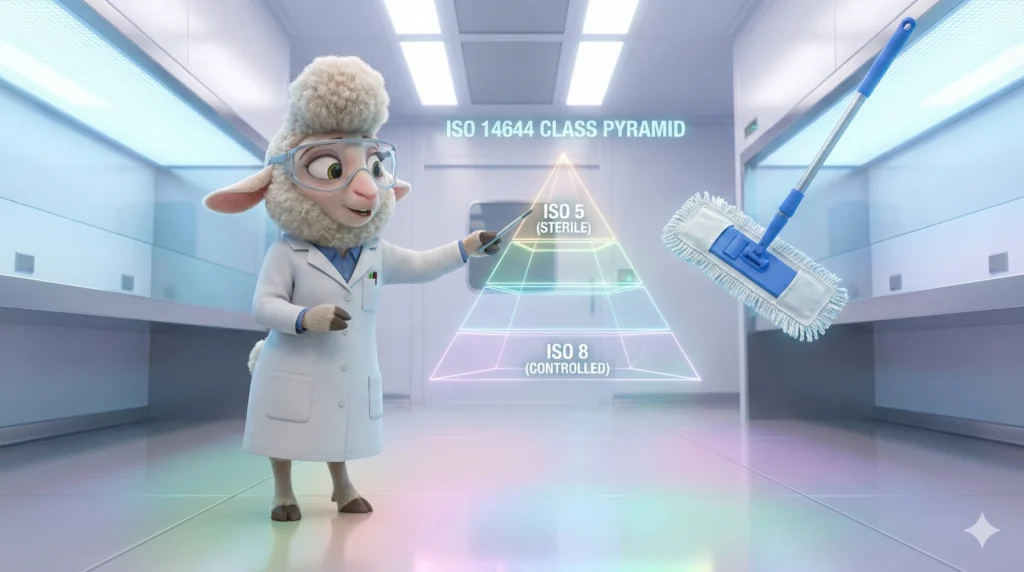
Figure 2: ISO 14644 cleanroom classification pyramid showing particle concentration requirements from ISO Class 3 (most stringent, ≤35.2 particles ≥0.5 µm/m³) to ISO Class 9 (least stringent, ≤35,200,000 particles/m³), with corresponding pharmaceutical GMP grades (A/B/C/D) and required mop specifications. Tighter particle limits demand stricter mop construction: ISO 5 (Grade A) requires sealed-edge polyester generating <100 particles/m² with gamma or autoclave sterilization, while ISO 8 (Grade D) accepts sealed-edge polyester or high-grade microfiber with <500 particles/m² validation.
معروف دواسازی کی ایم او پی دکانداروں میں ذرہ نسل کے ٹیسٹ کے اعداد و شمار فراہم کیے جاتے ہیں جو فی آئسٹ-آر پی-سی سی003.4 ("کلین رومز اور دیگر کنٹرول شدہ ماحول کے لئے گارمنٹس سسٹم کے تحفظات") یا مساوی پروٹوکول ہیں۔ جانچ کا طریقہ کار: ایم او پی سر کو ڈی آئی واٹر یا نمائندہ جراثیم کشی کے ساتھ مطمئن کریں ، معیاری اسٹروک پیٹرن اور دباؤ کا استعمال کرتے ہوئے ایک کنٹرول شدہ سطح کے رقبے (عام طور پر 1 m²) کا استعمال کرتے ہوئے ، آپٹیکل پارٹیکل کاؤنٹر کا استعمال کرتے ہوئے ہوا سے متعلق ذرہ کی حراستی کی پیمائش کریں ، موپنگ کے مربع میٹر میں ہر مربع میٹر جاری ہونے والے ذرات کا حساب کتاب کریں۔
دواسازی کی گریڈ موپس کے لئے عام نتائج:
- مہر بند پناہ گاہ: 60-120 ذرات ≥0.5 µm فی M²
- مہر بند کنارے مسلسل فلیمنٹ پالئیےسٹر: 30–80 ذرات ≥0.5 µm فی M²
- مہر بند پناہ گاہ: 60-120 ذرات ≥0.5 µm فی M²
- مہر بند مائکرو فائبر (فارماسیوٹیکل گریڈ): 100–300 ذرات ≥0.5 µm فی M²
- کٹ ایج مائکرو فائبر (تجارتی): 1،000–10،000 ذرات ≥0.5 µm فی M²
مڈپوسی کلین روم موپنگ سسٹم سیلڈ ایج نٹ پالئیےسٹر کی تعمیر کو پیدا کرنے کے لئے درست استعمال کرتے ہیں <100 particles ≥0.5 µm per m² of mopping, meeting ISO Class 5–8 requirements. Mop heads undergo particle release testing at third-party cleanroom certification labs with results documented in product qualification protocols. The sealed-edge manufacturing process and polyester material selection ensure consistent low-lint performance across 200+ uses when mops are laundered per specification (neutral detergent, no fabric softener, validated rinse cycles) and autoclaved within service life limits (50–100 cycles depending on autoclave frequency and disinfectant exposure).
Sterilization Method Compatibility (Gamma, EO, Autoclave)
گریڈ A/B دواسازی علاقوں میں جراثیم سے پاک صفائی کے اوزار کی ضرورت ہوتی ہے۔ نسبندی کا طریقہ جس کی آپ وضاحت کرتے ہیں اس سے یہ طے ہوتا ہے کہ کون سے ایم او پی مواد اور تعمیراتی اقسام مطابقت پذیر ہیں:
گاما شعاع ریزی: گرمی یا کیمیائی اوشیشوں کے بغیر SAL 10⁻⁶ حاصل کرتے ہوئے ، MOPs کو 25–50 Kgy آئنائزنگ تابکاری پر بے نقاب کرتا ہے۔ پالئیےسٹر گاما کو اچھی طرح سے برداشت کرتا ہے۔ مائکرو فائبر کچھ طاقت کے نقصان کو ظاہر کرتا ہے >40 kGy; foam degrades significantly. Advantage: vendor can supply pre-sterilized mops in sealed packaging, eliminating in-house sterilization workload. Disadvantage: single-use workflow (re-sterilization requires returning mops to vendor) and higher cost ($8–$15 per mop head for gamma sterilization service). Best for: facilities without autoclave capacity, single-use mop protocols, or when contamination risk justifies disposable workflows.
Ethylene Oxide (EO): Gas sterilization at 50–60°C, compatible with most polymers but requires aeration time (12–24 hours) to eliminate toxic residues. Rarely used for mops (more common for medical devices and heat-sensitive equipment) because autoclave is faster and doesn’t leave chemical residues requiring validation. Polyester and microfiber tolerate EO; foam compatibility varies by formulation.
Autoclave (Steam Sterilization): 121°C for 30 minutes (gravity cycle) or 15 minutes (pre-vacuum cycle), the most common in-house sterilization method for pharmaceutical cleanrooms. Polyester withstands 50–100 cycles; microfiber degrades faster (30–50 cycles); PVA foam dissolves (intentional for single-use protocols); polyurethane foam tolerates 20–30 cycles. Advantage: rapid turnaround (mops sterilized and ready for next shift), no vendor dependency, lowest cost per cycle ($0.50–$1.00 energy/labor cost). Disadvantage: requires validated autoclave, qualified cycles, biological indicator monitoring, and documented cycle records per 21 CFR 211.182. Best for: facilities with existing autoclave infrastructure, reusable mop protocols, and sufficient mop inventory to support laundering/sterilization rotation.
For detailed specifications on mop head materials and edge construction, see the mop head types guide covering polyester vs microfiber performance data, sealed-edge manufacturing processes, and selection criteria by ISO class.
Cleanroom Standard Requirements That Mops Must Meet
ISO 5–8 Contamination Control Standards
ISO 14644-1 establishes particle concentration limits that cleanroom mops must not compromise. The standard defines “at-rest” conditions (cleanroom operational with HVAC running but no personnel or processes active) and “operational” conditions (normal manufacturing activity). Mops are used during operational states, meaning their particle contribution adds to the existing background. For ISO Class 5 (≤3,520 particles ≥0.5 µm/m³), a mop generating 1,000 particles per m² of mopping can push localized particle counts above classification limits—especially in areas with reduced airflow velocity (floor-level dead zones, corners, behind equipment).
The standard also addresses microbial contamination, though particle limits are the primary classification criteria. ISO 14698 (“Cleanrooms and associated controlled environments — Biocontamination control”) provides bioburden control guidance, noting that viable particles (bacteria, fungi) adhere to non-viable particles and surfaces. A mop that sheds particles creates attachment sites for microorganisms, increasing both particle counts and microbial contamination risk. Pharmaceutical facilities typically set internal limits stricter than ISO minimums: a Grade A area (ISO 5 at rest) might require mop particle generation <50 per m² to maintain adequate contamination control margin.
GMP Annex 1 Environmental Cleaning Expectations
EU GMP ضمیمہ 1 (مؤثر اگست 2023) نے مواد کی صفائی اور ڈس انفیکشن کی توثیق کے لئے تقاضوں کو سخت کردیا۔ کلیدی دفعات:
- بانجھ پن کی ضرورت: "گریڈ A/B علاقوں میں صفائی اور ڈس انفیکشن کے لئے استعمال ہونے والے مواد کو جراثیم سے پاک ہونا چاہئے۔ جہاں مواد کی جراثیم کشی مناسب ہے ، طریقہ ، حراستی اور رابطے کے وقت کی وضاحت اور توثیق کی جانی چاہئے۔"
- صفائی پروگرام کی توثیق: "صفائی ستھرائی اور جراثیم کشی کو تحریری ، توثیق شدہ پروگرام کی پیروی کرنی چاہئے۔ مائکروبیل آلودگی کے لئے ڈس انفیکٹینٹس اور ڈٹرجنٹ کی نگرانی کی جانی چاہئے۔ dilutions کو پہلے صاف کنٹینرز میں رکھنا چاہئے اور صرف تعی .ن شدہ ادوار کے لئے ذخیرہ کرنا چاہئے جب تک کہ نس بندی نہ ہوجائے۔"
- ڈس انفیکٹینٹ گردش: "ایک سے زیادہ قسم کے جراثیم کشی کو ملازمت دی جانی چاہئے۔ مزاحم تناؤ کی ترقی کا پتہ لگانے کے لئے نگرانی باقاعدگی سے کی جانی چاہئے۔"
- اوشیشوں کو ہٹانا: "صفائی کے طریقہ کار کو باقیات کو مؤثر طریقے سے دور کرنے کے لئے ڈیزائن کیا جانا چاہئے اور اس کی توثیق کی جانی چاہئے۔ صفائی کے عمل میں ڈٹرجنٹ یا دیگر مواد کے استعمال کے لئے آلودگی سے بچنے کے لئے خاص نگہداشت کی ضرورت ہوتی ہے۔"
یہ ضروریات براہ راست ایم او پی تفصیلات پر اثر انداز ہوتی ہیں۔ "جراثیم سے پاک" کا مطلب ہے گاما-آئریڈیٹیڈ یا دستاویزی سال 10⁻⁶ کے ساتھ آٹوکلیویڈ۔ "توثیق شدہ" کا مطلب ہے دستاویزی جانچ کی جانچ پڑتال جس سے یہ ثابت ہوتا ہے کہ ایم او پی-بوکیٹ ڈس انفیکٹینٹ سسٹم مطلوبہ بائیوبرڈن کمی کو حاصل کرتا ہے (عام طور پر >3-log) without generating particles or leaving residues. “Rotation” means the mop must tolerate alcohols, quats, bleach, and peroxides without degrading. Facilities must document mop sterilization methods, change-out frequencies, particle generation data, and disinfectant compatibility in their cleaning validation protocols.
Why Consumer-Grade Microfiber Fails Compliance
Consumer microfiber mops fail pharmaceutical qualification on multiple fronts:
- Particle generation disqualification: Cut-edge construction sheds 1,000–10,000 particles per m², exceeding acceptable limits by 10–100× for ISO Class 5–8 environments.
- No sterilization pathway: ویلکرو منسلکات ، جھاگ کی پشت پناہی ، اور پولیمائڈ مرکب ریشوں کو 5-10 آٹوکلیو سائیکل کے بعد ہراساں کیا جاتا ہے۔ گاما شعاع ریزی سے طاقت میں کمی اور مادی خرابی کا سبب بنتا ہے۔
- Unvalidated disinfectant compatibility: مواد انفرادی طور پر بلیچ یا کوٹ کو برداشت کرسکتا ہے لیکن دواسازی کی گردش پروٹوکول (پیر کے الکحل ، منگل پیرو آکسائیڈ ، جمعہ بلیچ) کے تحت ناکام ہوجاتا ہے۔
- کوئی قابلیت دستاویزات نہیں: صارفین کے دکاندار کوئی ذرہ نسل کے ٹیسٹ کا ڈیٹا فراہم نہیں کرتے ، کوئی نس بندی کی توثیق ، کوئی کیمیائی مطابقت پذیر میٹرکس نہیں - دواسازی کیو اے ٹیموں کو ختم کرنا IQ/OQ/PQ پروٹوکول مکمل کرنے سے قاصر ہے۔
- مادی سراغ لگانے کے فرق: دواسازی کے ضوابط میں مادی سرٹیفیکیشن ، لاٹ ٹریس ایبلٹی ، اور صفائی کے اوزار کے ل control تبدیلی کا کنٹرول کی ضرورت ہوتی ہے۔ صارفین کے ایم او پیز میں ان کنٹرولوں کی کمی ہے۔
آڈیٹرز سہولیات کے معائنے کے دوران صارفین کے گریڈ کے ایم او پیز کو پرچم لگاتے ہیں کیونکہ تصریح کا فرق واضح ہے: اگر آپ کی صفائی ایس او پی کا حوالہ آئی ایس او 14644 اور جی ایم پی انیکس 1 ہے ، لیکن آپ کا ایم او پی سپلائر ذرہ جنریشن کا ڈیٹا یا نس بندی کی توثیق نہیں کرسکتا ہے تو ، آپ کے پاس ایک دستاویزات کا فرق ہے جو ریگولیٹری سکریٹنی سے بچ نہیں سکے گا۔
کلین روم یموپی توثیق & دستاویزات
فارماسیوٹیکل کلین روم موپس کو تین درجے کی اہلیت کی ضرورت ہوتی ہے:
IQ (تنصیب کی اہلیت): دستاویز ایم او پی کی وضاحتیں (مادی ساخت ، مہر بند تعمیر ، طول و عرض) ، بہت سارے نمبروں اور موافقت کے سرٹیفکیٹ کی تصدیق کریں ، نس بندی کے طریقہ کار اور سالی دستاویزات کی تصدیق کریں ، جسمانی نقائص (ڈھیلے دھاگوں ، خراب کناروں ، آلودگی) کا معائنہ کریں۔
OQ (آپریشنل قابلیت): توثیق شدہ صفائی کے نظام کے اندر بیان کردہ ایم او پی افعال کا مظاہرہ کریں۔ ٹیسٹ ڈس انفیکٹینٹ مطابقت (ہر ڈس انفیکٹینٹ قسم کے 10 سائیکلوں کے بعد کوئی انحطاط نہیں) ، آٹوکلیو کی بقا کی تصدیق کی تصدیق کریں (اگر لاگو ہونے پر 20 سائیکلوں کے بعد کارکردگی کا کوئی نقصان نہیں) ، IEST-RP-CC003.4 میں ذرہ نسل کی پیمائش کریں (<آئی ایس او 5-8 استعمال کے لئے فی M² 100 ذرات) ، مکینیکل سالمیت کی تصدیق کریں (رننگ کے دوران فائبر بہانے ، فرش سے رابطہ نہیں)۔
پی کیو (کارکردگی کی اہلیت): مکمل ایم او پی سسٹم (ایم او پی + بالٹی + ڈس انفیکٹینٹ + تکنیک) کو ثابت کریں اصل استعمال میں مطلوبہ آلودگی کنٹرول کو حاصل کرتا ہے۔ ماحولیاتی نگرانی سے پہلے اور صفائی کے بعد (ذرہ گنتی ، مائکروبیل سطح کے نمونے لینے) کا مظاہرہ کریں ، مظاہرہ کریں >3-log bioburden reduction, verify disinfectant concentration stability throughout cleaning cycle, validate that mopping doesn’t elevate particle counts above ISO class limits.
Documentation packages include manufacturer’s specifications and test data, certificates of analysis and conformance for each lot, sterilization certificates (gamma dose records or autoclave cycle documentation), change control procedures (what happens if manufacturer changes materials or processes), and periodic requalification schedules (annual particle generation verification, quarterly visual inspections).
Which Term Should Pharmaceutical Companies Use?
Terminology Used by FDA & WHO
FDA guidance documents for aseptic processing (“Sterile Drug Products Produced by Aseptic Processing — CGMP,” September 2004) reference “cleanrooms” without specifying one-word vs two-word spelling, but consistently use the closed compound “cleanroom” when discussing contamination control environments. The guidance defers to ISO 14644 for classification methodology, implicitly adopting ISO’s one-word terminology. FDA inspection guides and warning letters use “cleanroom” when citing cleanroom-related deficiencies, aligning with international regulatory language.
WHO Technical Report Series 1044, Annex 2 (“Good manufacturing practices for pharmaceutical products: main principles”) uses “cleanrooms” throughout and explicitly references ISO 14644 for classification. The document states: “Cleanrooms and clean air devices should be qualified and their performance routinely monitored. Qualification and monitoring should be performed in accordance with the principles given in ISO 14644.” This reinforces “cleanroom” as the correct term in international pharmaceutical manufacturing.
Recommended Naming for Procurement
Procurement specifications should use “cleanroom mop” (one word) to:
- Match regulatory language: آئی ایس او 14644 ، EU GMP ضمیمہ 1 ، اور WHO کی اصطلاحات کے ساتھ صف بندی کرتے ہوئے ، دکاندار کے ردعمل کو فارماسیوٹیکل معیارات پر پورا اترنے کو یقینی بناتے ہوئے۔
- فلٹر تلاش کے نتائج: ریگولیٹڈ انڈسٹریز انڈیکس مصنوعات کو "کلین روم موپس" کے طور پر پیش کرنے والے دکانداروں ؛ "کلین روم یموپی" (دو الفاظ) تلاش کرنے سے دستی فلٹرنگ کی ضرورت ہوتی ہے۔
- سگنل تکنیکی ضروریات: "کلین روم ایم او پی" دکانداروں سے بات چیت کرتا ہے کہ آپ کو مہر بند تعمیر ، ذرہ نسل کے اعداد و شمار ، نس بندی کی مطابقت ، اور قابلیت کی دستاویزات کی ضرورت ہے۔
- آڈٹ دفاع کی حمایت کریں: جب انسپکٹر خریداری کے ریکارڈوں کا جائزہ لیتے ہیں تو ، ریگولیٹری سے منسلک اصطلاحات کا استعمال کرتے ہوئے وضاحتیں تکنیکی قابلیت اور تعمیل کے ارادے کا مظاہرہ کرتی ہیں۔
تفصیلات کی زبان ٹیمپلیٹ:
"سپلائر آئی ایس او کلاس [5/6/7/8] کے لئے توثیق شدہ کلین روم موپس (سیلڈ ایج پالئیےسٹر کی تعمیر) فراہم کرے گا۔ مطلوبہ دستاویزات: ذرہ جنریشن ٹیسٹ ڈیٹا فی IEST-RP-CC003.4 دکھا رہا ہے <[50/100/200/500] ذرات ≥0.5 µm فی MAM MOPPING ؛ کیمیکل مطابقت کی توثیق 70 ٪ IPA ، کوآرٹنری امونیم مرکبات ، 3–6 ٪ H₂O₂ ، اور 500–5000 پی پی ایم سوڈیم ہائپوکلورائٹ کے لئے۔ نسبندی کی توثیق (گاما شعاع ریزی سے سال 10⁻⁶ یا آٹوکلیو مطابقت 121 ° C/30 منٹ کم سے کم 50 سائیکلوں کے لئے) ؛ مطابقت اور لاٹ ٹریس ایبلٹی کے مواد کے سرٹیفکیٹ۔
غیر تعمیل سپلائیوں کی خریداری کو روکنا
خریداری کے تین کنٹرول غلط تصریح ایم او پی خریداریوں کو روکتے ہیں:
1. Approved Vendor List (AVL): Qualify vendors before purchase orders are issued. Qualification criteria: vendor provides pharmaceutical-grade cleanroom products (not general janitorial supplies), documentation packages include particle generation data and sterilization validation, vendor has traceability and change control systems, and vendor serves other pharmaceutical/medical device manufacturers (verifiable references). Purchasing systems should block POs to non-AVL vendors for cleanroom consumables.
2. Specification-Driven Purchasing: Link purchase requisitions to master specifications. When a user requests “mops for Grade B cleanroom,” the system auto-populates the specification (sealed-edge polyester, <100 particles/m², gamma-sterilized, compatible with pharmaceutical disinfectant rotation) and routes to AVL vendors who have pre-qualified products meeting that spec. This prevents users from searching generic terms (“clean room mop”) and selecting non-compliant products.
3. Receiving Inspection: Verify incoming mops match specifications before releasing to cleanroom use. Visual inspection for sealed edges (no loose threads, continuous perimeters), documentation review (certificates of analysis, sterilization records, lot numbers), and periodic third-party testing (send random samples for independent particle generation verification). Reject lots that arrive without required documentation or show quality defects.
Common procurement failure mode: Facilities specify “cleanroom mop” correctly in master specifications but then allow individual departments to make ad-hoc purchases through general suppliers (Amazon Business, Grainger, Uline) searching “clean room mop.” These orders bypass AVL controls and introduce non-compliant products that fail during use.
How MIDPOSI Cleanroom Mop Meets the Pharma-Grade Definition
MIDPOSI cleanroom mopping systems are engineered specifically for pharmaceutical GMP compliance:
- Sealed-edge polyester construction: Knit polyester fabric with heat-sealed edges encapsulating all fiber ends, validated to generate <100 particles ≥0.5 µm per m² of mopping (tested per IEST-RP-CC003.4).
- ISO Class 5–8 qualified: Particle generation performance meets requirements for pharmaceutical Grade A/B/C/D areas; test data available in product qualification documentation.
- Pharmaceutical disinfectant compatibility: Validated for 70% IPA, quaternary ammonium compounds, 3–6% hydrogen peroxide, and sodium hypochlorite (500–5000 ppm); withstands pharmaceutical rotation protocols without degradation.
- Autoclave-compatible: Mop heads tolerate 50–100 steam sterilization cycles at 121°C/30 min; compatible with stainless steel and polypropylene handles/frames that survive equivalent autoclave duty.
- Complete system qualification: Mops integrate with validated bucket systems (dual- and triple-bucket configurations), frames, and carts to deliver turnkey GMP cleaning workflows.
- Documentation packages: Each lot includes certificates of analysis, material certifications, sterilization compatibility data (autoclave cycle limits), particle generation test reports, and traceability records supporting IQ/OQ/PQ protocols.
For complete cleanroom mopping systems including buckets, frames, and validated workflows, see the integrated system guide.
Summary Table — Clean Room Mop vs Cleanroom Mop
| Criterion | Clean Room Mop (Two Words) | Cleanroom Mop (One Word) |
| Terminology Origin | General English (dictionary standard) | ISO 14644 / GMP Annex 1 technical term |
| Target Environment | Non-ISO areas: offices, schools, packaging, light manufacturing | Pharmaceutical ISO 5–8 cleanrooms (Grade A/B/C/D) |
| Construction | Cut-edge fabric, exposed fiber ends | Sealed-edge polyester, encapsulated fiber ends |
| مواد | Cotton, standard microfiber, polyester blends | Knit polyester (100% or dominant blend), continuous-filament options |
| ذرہ نسل | 1,000–10,000 particles ≥0.5 µm/m² | <100 particles ≥0.5 µm/m² (ISO 5–8 validated) |
| Disinfectant Compatibility | Basic (bleach, quats); no rotation validation | Validated for pharmaceutical rotation (IPA, quats, bleach, H₂O₂) |
| نسبندی | Not autoclavable (5–10 cycles max); no gamma option | 50–100 autoclave cycles; gamma-sterilized options available |
| Regulatory Documentation | None (consumer product) | Particle data, chemical compatibility, sterilization validation, lot traceability |
| Cost per Mop Head | $15–$30 | $40–$150 |
| Service Life | 50–100 uses before visible degradation | 200–300 uses (with proper laundering/sterilization) |
| Suitable ISO Classes | ISO 9 / unclassified support areas only | ISO 5–8 (pharmaceutical manufacturing, medical device, biotech) |
| GMP Compliance | ❌ Fails Annex 1 requirements | ✅ Meets Annex 1 sterile cleaning tool requirements |
| Purchase Channels | Janitorial supply, general e-commerce (Amazon, Grainger) | Pharmaceutical cleanroom suppliers, specialized distributors |
| Qualification Documentation | ❌ No IQ/OQ/PQ support | ✅ Full IQ/OQ/PQ documentation packages available |
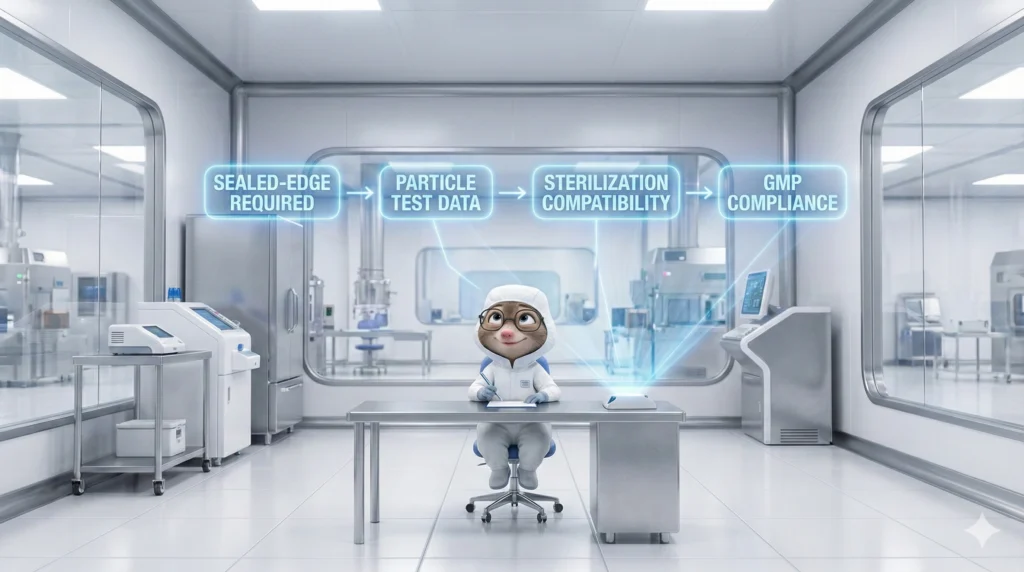
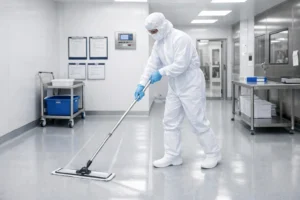
Figure 3: Pharmaceutical Grade B/C cleanroom showing proper GMP mopping operations with fully gowned operator using validated triple-bucket system, sealed-edge cleanroom mop, and controlled contamination control technique. This environment requires “cleanroom mop” (one word) specification—pharmaceutical-grade sealed-edge polyester tools validated for ISO 5–8 particle control, not general “clean room mops” (two words) designed for commercial janitorial use. Proper terminology ensures procurement delivers GMP-compliant tools that maintain environmental monitoring compliance and survive regulatory inspection.
Disposable Cleanroom Mop Pads
کے لئے بہترین: Single-use workflows, facilities without laundering infrastructure, high-contamination-risk areas requiring fresh tools per room.
Specifications: Pre-sterilized (gamma irradiation) sealed-edge polyester pads, individually packaged. Typical size 40–60 cm width, compatible with standard cleanroom mop frames. No laundering or re-sterilization required—use once and discard per pharmaceutical waste protocols.
پیشہ: Zero cross-contamination risk between rooms/batches, no laundering/sterilization workload, guaranteed sterility (SAL 10⁻⁶ from vendor), consistent performance (no degradation from repeated autoclave cycles).
cons: Higher cost per use ($8–$15 per pad vs $0.50–$1.50 per use for reusable), generates more waste (environmental impact, disposal cost), requires larger storage space for inventory.
Typical applications: ایسپٹیک بھرنے والے سوٹ (گریڈ اے/بی) جہاں آلودگی کا خطرہ واحد استعمال لاگت کا جواز پیش کرتا ہے ، کثیر مصنوعات کی سہولیات مہمات کے مابین کراس آلودگی کو روکتی ہیں ، محدود آٹوکلیو صلاحیت والی سہولیات یا کوئی جائز لانڈرنگ کے عمل کو نہیں۔
آٹوکلاویبل ایم او پی سسٹم
کے لئے بہترین: موجودہ آٹوکلیو انفراسٹرکچر ، دوبارہ استعمال کے قابل ایم او پی پروٹوکول ، لاگت سے حساس آپریشنز کے ساتھ سہولیات جو روزانہ بڑے فرش والے علاقوں کو تیار کرتی ہیں۔
Specifications. ایم او پی کے سر 121 ° C/30 منٹ پر 50–100 آٹوکلیو سائیکلوں کا مقابلہ کرتے ہیں۔ مکمل سسٹم میں ایم او پی ہیڈ ، ہینڈلز ، فریم اور اکثر بالٹی کارٹس شامل ہیں۔
پیشہ: Lowest cost per use ($0.50–$1.50 after amortizing mop head cost over 200–300 uses), rapid turnaround (mops sterilized overnight for next-day use), no vendor dependency for sterilization, reduced waste versus disposables.
cons: Requires validated autoclave cycles and maintenance, finite service life (mop heads replaced after 50–100 autoclave cycles as material embrittles), laundering infrastructure needed (or outsourced laundering service), inventory management (sufficient mops to support rotation while batches are in laundering/sterilization).
Typical applications: ISO Class 6–8 manufacturing areas (Grade B/C/D), facilities with daily cleaning protocols covering 1,000+ m² floor area, operations with qualified autoclave already supporting equipment/material sterilization.
Gamma-Irradiated Cleanroom Wipe-Mop
کے لئے بہترین: Critical Grade A environments, facilities requiring highest contamination control assurance, operations where documentation burden justifies premium cost.
Specifications: Pre-sterilized sealed-edge polyester mops, gamma-irradiated to SAL 10⁻⁶, supplied in validated sterile packaging with irradiation dose certificates. Often sold as mop heads + pre-saturated disinfectant packs (sterile IPA or sporicidal solution) for complete validated workflows.
پیشہ: Maximum sterility assurance (vendor-validated SAL 10⁻⁶, no in-house sterilization risk), complete documentation (irradiation certificates, certificates of analysis, lot traceability supporting regulatory audits), no autoclave workload.
cons: Highest cost per use ($10–$20 per mop depending on size/configuration), single-use only (no re-sterilization option), longer lead times (gamma sterilization batching may extend order fulfillment to 2–4 weeks).
Typical applications: Isolator cleaning (aseptic filling, lyophilization), Grade A aseptic core areas, high-value product manufacturing where contamination event cost far exceeds consumable cost, facilities without autoclave capacity or seeking to eliminate in-house sterilization validation burden.
Triple-Bucket GMP Mopping System
کے لئے بہترین: Complete turnkey solution for facilities building or upgrading cleanroom cleaning programs, operations requiring validated bucket segregation (Annex 1 Grade A/B/C compliance).
Specifications: Integrated system including sealed-edge polyester mop heads, stainless steel or polypropylene triple-bucket cart (disinfectant/rinse/waste segregation), press-type or roller wringer, autoclavable frames and handles. Systems are pre-qualified as complete units with IQ/OQ protocols provided.
پیشہ: Complete validated workflow (no need to separately qualify buckets, mops, wringers), designed for Annex 1 compliance (fluid segregation prevents disinfectant dilution and cross-contamination), typically includes training and SOP templates, one vendor for entire system (simplified procurement and change control).
cons: Higher upfront capital cost ($2,000–$5,000 per complete system vs $200–$500 for mops alone), requires floor space for triple-bucket cart, more complex operator training (validated sequence: disinfect → wring into waste → rinse → wring into waste → reload).
Typical applications: New pharmaceutical manufacturing facilities establishing GMP cleaning programs, existing facilities remediating environmental monitoring failures or audit findings related to cleaning validation, Grade A/B/C areas requiring Annex 1-compliant disinfectant segregation.
Explore MIDPOSI’s complete range of reusable cleanroom mopping systems including sealed-edge mop heads, autoclavable frames, and validated bucket configurations for ISO 5–8 pharmaceutical manufacturing.