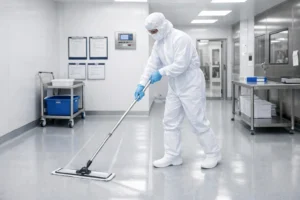
The cleanroom mop head isn’t just the business end of your cleaning tool—it’s the critical interface between contamination control and regulatory compliance. Pick the wrong material and you’ll see environmental monitoring failures, audit findings, and potential batch rejections. Choose correctly and you’ve got a validated component in your contamination control strategy that performs reliably across hundreds of sterilization cycles. This guide decodes the material science behind polyester sealed-edge, microfiber multi-layer, foam-core, and melt-blown nonwoven mop heads, explaining how fiber construction, edge treatment, and chemical compatibility determine particle generation rates, sterilization durability, and total cost of ownership. Whether you’re qualifying equipment for ISO Class 5 aseptic processing or optimizing Class 8 support-area cleaning protocols, you’ll find the technical specifications and decision frameworks to match mop head material to your facility’s contamination control requirements.
What Is a Cleanroom Mop Head? (ISO & GMP Definition)
A cleanroom mop head is a low-lint, validated cleaning substrate designed to remove particulate and microbial contamination from classified surfaces without introducing additional particles or viable organisms. Unlike conventional janitorial mops—which shed fibers, trap contaminants in open weaves, and degrade under industrial disinfectants—cleanroom mop heads use engineered materials (continuous-filament polyester, sealed-edge microfiber, closed-cell foam, or melt-blown nonwoven) that meet quantified particle generation limits and survive repeated sterilization cycles. EU GMP Annex 1 requires that “materials used in cleanrooms should be selected to minimize particle generation and be suitable for repeated application of disinfecting agents and sporicidal agents.” ISO 14644-14 provides the test methodology: mop heads undergo particle generation testing under simulated use conditions (mechanical stress, wet mopping motions) with acceptance criteria tied to the target ISO classification (Class 5 areas permit only 3,520 particles ≥0.5 µm/m³; Class 8 tolerates 3,520,000).
کلین روم موپ سر معیاری ایم او پی سے کس طرح مختلف ہیں
معیاری درار ایم او پی تین محاذوں پر کلین روم کی قابلیت کو ناکام بناتے ہیں۔ سب سے پہلے ، ذرہ نسل: کپاس کی لوپ اور کٹ اینڈ سٹرنگ موپس نے ہزاروں ریشوں کو فی اسٹروک بہایا-ایک آفس بریک روم میں قابل قبول ، ایک ایسپٹیک پروسیسنگ سویٹ میں تباہ کن جہاں آلودہ مصنوعات کا ایک ہی بیچ ایف ڈی اے کے انتباہی خطوں کو متحرک کرسکتا ہے۔ کلین روم ایم او پی ہیڈز فائبر کی رہائی کو ختم کرنے کے لئے مسلسل فلموں کی تعمیر (کسی کٹے ختم ہونے کے لئے کوئی کٹ نہیں) اور مہر بند کناروں (الٹراسونک ویلڈنگ ، لیزر کاٹنے ، تھرمل بانڈنگ) کا استعمال کرتے ہیں۔
Second, microbial harboring: conventional mops have open yarn loops and absorbent cores that trap bioburden, resist complete disinfection, and recontaminate surfaces during subsequent mopping. Cleanroom designs use smooth, non-porous materials or tightly knitted structures that release captured particles during laundering and don’t provide niches for microbial growth.
تیسرا ، کیمیائی استحکام: معیاری ایم او پیز دواسازی کے گریڈ ڈس انفیکٹینٹس (70 ٪ آئسوپروپائل الکحل ، 3–6 ٪ ہائیڈروجن پیرو آکسائیڈ ، 500–5000 پی پی ایم سوڈیم ہائپوکلورائٹ) کے تحت خراب ہوتی ہیں۔ ریشے تناؤ کی طاقت سے محروم ہوجاتے ہیں ، کناروں کو ختم کرتے ہیں ، اور ذرہ بہانے میں تیزی آتی ہے۔ کلین روم ایم او پی کے سروں میں ASTM D543 کیمیائی مزاحمت کی جانچ سے گزرنا ہے تاکہ جہتی استحکام ، رنگ برقرار رکھنے ، اور فائبر کی سالمیت کی تصدیق 50-200 کی نمائش کے چکروں میں ہو۔
آئی ایس او 14644 & EU GMP کی ضروریات جو MOP سروں کو متاثر کرتی ہیں
ISO 14644-14 defines particle generation testing protocols: cleanroom consumables (including mop heads) undergo mechanical stress simulations (wiping motions, abrasion) while particle counters sample the local environment at 0.5 µm and 5 µm size channels. The mop head passes if particle concentrations remain below the target ISO class limits during simulated operational conditions. For ISO Class 5 (Grade A/B pharmaceutical aseptic processing), this means near-zero shedding—fewer than 10 particles ≥0.5 µm per stroke under test conditions. Class 7 and 8 support areas accept slightly higher generation but still require low-lint materials with documented test data.
EU GMP Annex 1 (2022 revision) adds sterility and validation requirements. Grade A and Grade B zones require sterile disinfectants and cleaning tools prior to use—your mop head must either be pre-sterilized (gamma radiation, ethylene oxide gas, autoclave) with Sterility Assurance Level (SAL) 10⁻⁶ documentation, or laundered and autoclaved in-house per validated protocols. The regulation also mandates validated cleaning processes that “remove residues which may inhibit the disinfection process” and validated disinfection effectiveness using “more than one type of disinfectant” with “periodic use of a sporicidal agent.” Translation: your mop head material must survive aggressive chemical rotation (alcohols, peroxides, hypochlorites, quaternary ammonium compounds) without degrading or shedding particles. For foundational contamination control principles, start with understanding how ISO class limits drive equipment specifications.
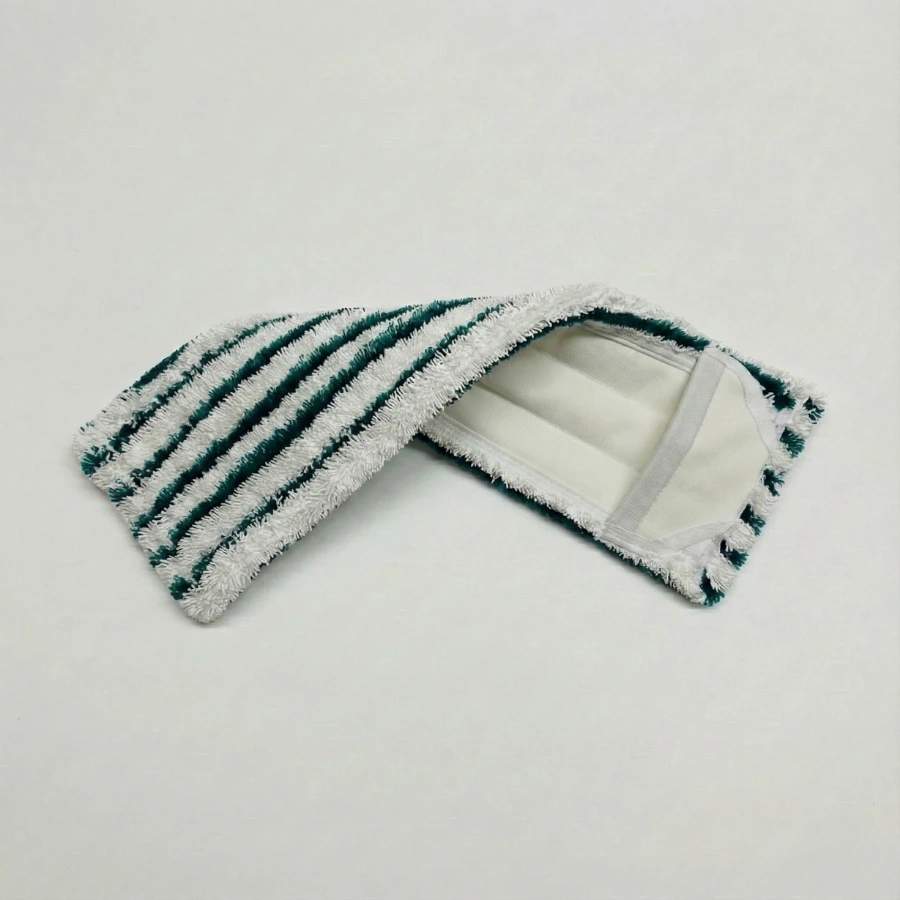
Why Mop Head Material Matters
Mop head material determines four performance characteristics that directly impact environmental monitoring compliance, validation workload, and total cost of ownership: particle generation rates, chemical compatibility, sterilization resistance, and absorbency efficiency. These aren’t abstract specifications—they’re the difference between passing an FDA inspection and receiving a 483 observation for “inadequate cleaning equipment qualification.”
Particle Generation (ISO 14644-14)
Particle generation is the primary failure mode for cleanroom mop heads. Every fiber junction, cut edge, and mechanical stress point is a potential particle source. Continuous-filament polyester knit releases fewer than 10 particles ≥0.5 µm per square meter of mopped surface under ISO 14644-14 test conditions; cut-pile cotton can release 10,000+ particles in the same area. The construction method matters: ultrasonic-welded sealed edges eliminate the frayed borders where conventional mops shed fibers; laser-cut microfiber prevents edge unraveling; heat-bonded nonwoven webs distribute stress across fiber-to-fiber bond points rather than concentrating it at seams.
Fiber diameter drives particle capture and shedding dynamics. Microfiber (defined as <1 ڈینیئر ، تقریبا 10 10 µm قطر) معیاری پالئیےسٹر (2–5 ڈینیئر ، 20–50 µm) کے مقابلے میں فی گرام کی سطح کا رقبہ رکھتا ہے ، جس سے ذرہ اٹھاو بہتر ہوتا ہے - لیکن صرف اس صورت میں جب فائبر کا ڈھانچہ برقرار رہتا ہے۔ اسپلٹ مائکرو فائبر (ستارے کے سائز کے کراس سیکشن کے ساتھ کیشکا چینلز تیار کرتے ہیں) گول مونوفیلمنٹ کے مقابلے میں ذرات کو زیادہ موثر انداز میں پکڑتا ہے لیکن لانڈرنگ کے دوران میکانکی نقصان کا زیادہ خطرہ ہے۔ پالئیےسٹر مسلسل تنت میں استحکام کو متوازن بناتا ہے جو کارکردگی کے ساتھ ہے: مائکرو فائبر سے زیادہ موٹا لیکن جب بھی مناسب طریقے سے بنا ہوا ہے تو کم لنٹ ، اور 150+ آٹوکلیو سائیکلوں میں رگڑنے کے لئے زیادہ مزاحم ہے۔
جراثیم کشی کے ساتھ کیمیائی مطابقت
Pharmaceutical contamination control strategies rotate multiple disinfectant chemistries to prevent microbial resistance: 70% isopropyl alcohol (bactericidal, fast-evaporating), 3–6% hydrogen peroxide (sporicidal, oxidizing), 500–5000 ppm sodium hypochlorite (broad-spectrum, corrosive), and quaternary ammonium compounds (residual activity, lower toxicity). Your mop head must survive all of them without fiber degradation, color fading, or dimensional change.
Polyester and polyamide (nylon) show excellent resistance to alcohols and quats but vary in oxidizer tolerance. Polyester withstands moderate hydrogen peroxide concentrations (up to 6%) and low-concentration bleach (500–1000 ppm) across 100+ cycles; higher bleach levels (>1%) accelerate yellowing and tensile strength loss. Polyamide degrades faster under oxidizers—a critical consideration for facilities using aggressive sporicidal protocols. Polyurethane foam resists alcohols well but shows reduced cycle life under sustained peroxide or bleach exposure (typically 20–50 cycles before visible deterioration versus 100–200 for polyester knit). Melt-blown polypropylene nonwovens handle most disinfectants but are often specified as single-use to avoid validation complexity.
ASTM D543 provides the test framework: expose mop head materials to your facility’s disinfectant concentrations at working temperatures for defined durations (simulating 50–200 use cycles), then measure changes in mass, dimensions, tensile strength, and visual appearance. Acceptance criteria should define maximum allowable degradation before replacement—typically <5% mass change, <2% dimensional change, and no delamination or fiber pull-out.
Sterilization Resistance (Autoclave / Gamma / EO)
Sterilization method compatibility determines whether your mop head can enter Grade A/B aseptic zones or remains limited to Grade C/D support areas. Autoclavable mop heads survive repeated 121°C steam cycles (30 minutes minimum) without shrinkage, fiber melting, or seam separation—polyester and certain polyamides excel here, with qualified cycle lives of 100–200 autoclave runs. Microfiber blends (polyester/polyamide) show variable performance; some shrink 3–5% after 50 cycles, requiring dimensional qualification and maximum-cycle limits in your validation protocol.
Gamma radiation sterilization (25–40 kGy dose to achieve SAL 10⁻⁶) suits single-use disposable mop heads or initial sterilization of reusable systems before first use. Polyester, polyamide, and polypropylene tolerate gamma doses without significant strength loss. Ethylene oxide (EO) gas sterilization works for temperature-sensitive materials but requires EO residual testing and aeration periods—less common for mop heads given autoclave availability in most GMP facilities.
Foam-core mop heads present a sterilization trade-off: polyurethane foam survives autoclaving but shows accelerated compression set (permanent thickness reduction) after 20–30 cycles, reducing fluid-holding capacity and mopping efficiency. Many foam-core products are supplied pre-sterilized (gamma or EO) as single-use consumables to avoid in-house autoclave validation complexity.
جاذب & Coverage Efficiency
Absorbency determines how much disinfectant solution the mop head holds and distributes across the target surface. Higher absorbency reduces the number of dipping cycles (fewer interruptions, faster cleaning), ensures consistent disinfectant contact time, and prevents streaking from inadequate fluid coverage. Microfiber leads in absorbency (6–8× its dry weight) thanks to capillary action in split-fiber channels. Polyester knit follows at 4–6×, and polyurethane foam ranges 5–7× depending on cell structure. Melt-blown nonwovens typically achieve 3–5× but are often pre-saturated by the manufacturer to ensure consistent disinfectant loading.
کوریج کی کارکردگی-سنترپتی یا مرئی مٹی سے پہلے ہر یموپی سر سے صاف فرش کا علاقہ-فی استعمال لاگت اور آپریٹر کی پیداواری صلاحیت سے متاثر ہوتا ہے۔ ایک ڈبل رخا پالئیےسٹر یموپی سر (جب ایک طرف گندگی کا شکار ہوتا ہے تو پلٹائیں) متبادل سے پہلے 50-100 m² کا احاطہ کرتا ہے۔ ایک واحد استعمال جھاگ پیڈ 20-30 m² سنبھال سکتا ہے۔ بڑے ایریا کلین رومز (دواسازی کی پیکیجنگ سوٹ ، میڈیکل ڈیوائس اسمبلی زون) کے لئے ، اعلی جاذب اور کوریج کا براہ راست ترجمہ ایم او پی کے سر کی کھپت اور کم ٹی سی او میں کم ہوتا ہے۔

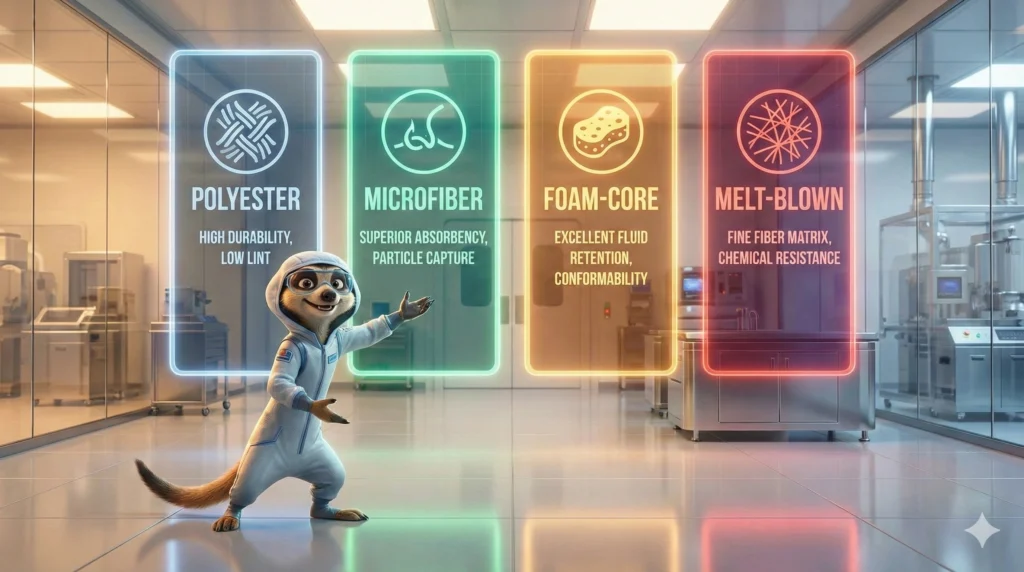
چترا 1: چار اہم کلین روم ایم او پی ہیڈ میٹریل اقسام کا مائکروسکوپک موازنہ۔ پینل 1 میں پالئیےسٹر سیلڈ ایج کی تعمیر کو مسلسل تنت بنے ہوئے اور سخت بنا ہوا کثافت کے ساتھ دکھایا گیا ہے جو ذرہ نسل کو کم سے کم کرتا ہے۔ پینل 2 الٹرا فائن اسپلٹ ریشوں کے ساتھ مائکرو فائبر ملٹی پرت کا ڈھانچہ دکھاتا ہے (<1 ڈینئر) اعلی جذب کے ل cap کیشکا چینلز بنانا۔ پینل 3 میں فوم کور اوپن سیل پولیوریتھین ڈھانچہ ظاہر کرتا ہے جو کنٹرول شدہ جراثیم کشی کی رہائی فراہم کرتا ہے۔ پینل 4 گرمی سے متعلق جنکشنوں کے ساتھ پگھلنے والی نون بون رینڈم فائبر ویب (1-5 µm قطر) کی وضاحت کرتا ہے۔ ان ساختی اختلافات کو سمجھنا ایم او پی ہیڈ میٹریل کو آئی ایس او کی درجہ بندی کی ضروریات اور جراثیم کُش پروٹوکول سے مماثل بنانے کے لئے اہم ہے۔
کلین روم یموپی سروں کی 4 اہم اقسام
پالئیےسٹر مہر بند یموپی سر
پالئیےسٹر مہر بند یموپی سروں میں فلیٹ پیڈ یا نلی نما مپ ترتیبوں میں بنا ہوا مسلسل فلیمنٹ پالئیےسٹر سوت (کوئی کٹ ختم نہیں ہوتا) استعمال ہوتا ہے ، جس میں الٹراسونک ویلڈنگ ، لیزر کاٹنے ، یا تھرمل بانڈنگ کے ذریعے کناروں کو سیل کیا جاتا ہے۔ اس تعمیر سے روایتی ایم او پیز میں بنیادی ذرہ ذریعہ کو ختم کیا جاتا ہے۔ مسلسل تنت کا ڈھانچہ ختم ہونے والے مقامات پر توجہ دینے کے بجائے پورے بنا ہوا تناؤ کو تقسیم کرتا ہے ، جس سے یہ ایم او پیز 100-200 آٹوکلیو سائیکلوں کو بغیر کسی کنارے کے خاتمے یا فائبر پل آؤٹ کے زندہ رہنے دیتے ہیں۔
آئی ایس او کلاس مناسبیت: ISO Class 3–8 (vendor data varies; best performers validated for Class 5–7). Polyester sealed-edge mops meet pharmaceutical Grade C/D requirements and many Grade B applications when properly laundered and autoclaved. They’re the workhorse of medical device cleanrooms, pharmaceutical packaging areas, and electronics assembly zones.
Sterilization Capability: Fully autoclavable at 121°C for 30 minutes, with qualified cycle life typically 150–200 runs before dimensional changes exceed acceptance criteria (<2% shrinkage). Compatible with gamma radiation sterilization (25–40 kGy) for single-use sterile variants. Some vendors supply pre-sterilized polyester mops with SAL 10⁻⁶ documentation for facilities without in-house autoclave capacity.
پیشہ: Longest cycle life among reusable mop heads (150–200 autoclave cycles = lowest per-use cost at scale). Excellent chemical resistance to alcohols, peroxides (up to 6%), and moderate bleach concentrations (500–1000 ppm). Sealed edges eliminate fiber shedding—critical for ISO Class 5–7 particle control. Available in multiple knit patterns (herringbone, plain weave, looped edges) to optimize fluid distribution or particle capture. Strong mechanical durability under repeated laundering and abrasion.
cons: Lower absorbency than microfiber (4–6× vs. 6–8×), requiring more frequent dipping for large-area mopping. Not pre-sterilized unless specified—requires in-house autoclave validation for Grade A/B use. Degrades faster under high-concentration bleach (>1% sodium hypochlorite) compared to polypropylene nonwoven. Knit construction can trap small particles in yarn interstices if not thoroughly laundered between uses.
Microfiber Multi-Layer Mop Heads
Microfiber mop heads use ultra-fine synthetic fibers (<1 denier, typically 10 µm diameter) in split or non-split configurations, often layered or laminated to balance particle capture with durability. Split microfiber—with star-shaped or wedge-shaped cross-sections creating capillary channels—excels at particle pickup: the channels trap particles mechanically and hold fluid via capillary action, achieving 6–8× absorbency. Non-split microfiber uses round monofilament and shows better abrasion resistance but lower fluid loading. Many cleanroom microfiber mops use a polyester/polyamide blend (80/20 or 70/30) to balance cleanability with chemical resistance.
Particle Performance: Superior particle capture compared to standard polyester thanks to higher surface area per gram and split-fiber channel mechanics. Under ISO 14644-14 testing, properly constructed sealed-edge microfiber releases <10 particles ≥0.5 µm per stroke—suitable for ISO Class 5–7 when edges are laser-cut or ultrasonically sealed. However, split microfiber is more vulnerable to mechanical damage during aggressive laundering; cycle life drops to 50–100 autoclave runs before fiber structure degrades and particle generation increases.
Fluid Loading: Highest absorbency among woven mop head types (6–8× dry weight), reducing dipping frequency and improving coverage efficiency. The capillary channels distribute disinfectant evenly across the mop surface, ensuring consistent contact time and reducing streaking—important for sporicidal agent application where contact time validation is critical.
Common Use Cases: ISO Class 5–7 pharmaceutical cleanrooms where high particle capture efficiency justifies shorter cycle life (aseptic processing support areas, isolator interiors, gowning room walls/ceilings). Medical device cleanrooms with moderate disinfectant protocols (IPA, quats, low-concentration peroxide). Facilities prioritizing single-pass cleaning efficiency over maximum reusable cycle count. Often specified for critical surface wiping (equipment exteriors, pass-through chambers) where particle capture matters more than durability.
حدود: Shorter cycle life than polyester knit (50–100 autoclave cycles typical; some shrink 3–5% after 50 runs). Split microfiber degrades faster under aggressive oxidizers (high-concentration peroxide, bleach)—polyamide component is particularly vulnerable. More expensive per unit than polyester sealed-edge. Requires careful laundry protocols to avoid fiber damage (low mechanical agitation, no fabric softeners, moderate temperatures).
Foam-Core Mop Heads
Foam-core mop heads use polyurethane or polyether foam substrates, often laminated with a thin microfiber or polyester outer layer for abrasion protection. The open-cell foam structure absorbs disinfectant solution and releases it gradually during mopping, providing even fluid distribution without pooling or streaking. This “controlled release” characteristic makes foam cores popular for sporicidal agent application where consistent surface contact time is essential for validation. Many vendors supply foam-core mops as single-use pre-sterilized consumables to sidestep the foam’s limited autoclave cycle life.
Even Disinfectant Release: The open-cell structure acts as a fluid reservoir, delivering consistent disinfectant coverage across the mopped surface. Unlike woven materials that can oversaturate in some areas and underlayer in others, foam maintains uniform fluid distribution—critical for validating sporicidal contact time per EU GMP Annex 1 requirements.
Sterile Disposable Option: Foam-core mops are commonly supplied pre-sterilized (gamma radiation or EO gas, SAL 10⁻⁶ documentation) as single-use consumables. This eliminates in-house autoclave validation workload and cross-contamination risk between batches—attractive for clinical trial manufacturers, multi-product facilities requiring batch segregation, and small biotech operations without validated laundry infrastructure. Vendors often package them in sealed sterile pouches pre-saturated with disinfectant (IPA, quat solutions) for turnkey Grade A/B use.
TCO Considerations: Foam-core disposables cost $10–$15 per unit versus $2–$4 per laundered cycle for reusable polyester—the 3–5× cost premium buys sterility assurance and eliminates validation overhead. For low-volume operations (small-batch manufacturing, R&D cleanrooms, pilot facilities), the higher per-use cost is offset by avoided laundry capital investment and QA validation labor. For high-volume production (multiple daily cleaning cycles, large floor areas), reusable polyester or microfiber delivers better TCO.
Reusable foam-core mops (autoclaved in-house) show compression set after 20–30 cycles—the foam loses thickness permanently, reducing fluid capacity and mopping efficiency. Chemical resistance is moderate: excellent with alcohols and quats, but hydrogen peroxide (>3%) and bleach (>500 ppm) accelerate foam degradation. Facilities using aggressive sporicidal rotation should specify single-use foam or switch to polyester knit for support areas.
Melt-Blown Nonwoven Mop Heads
پگھلنے والی نون وووین موپ سروں میں پولی پروپیلین یا پالئیےسٹر ریشوں کا استعمال اعلی درجہ حرارت پر ہوتا ہے اور الٹرا فائن بے ترتیب ویب (فائبر قطر 1–5 µm) میں اڑا دیا جاتا ہے ، پھر بیداری یا بنائی کے بغیر گرمی سے بانڈ کیا جاتا ہے۔ اس کے نتیجے میں مواد ہلکا پھلکا ، کم لنٹ (ننگا کرنے کے لئے سوت کا کوئی ڈھانچہ نہیں) ، اور تیار کرنے کے لئے سستا ہے۔ یہ واحد استعمال جی ایم پی ورک فلوز کے لئے مثالی ہے۔ الیکٹرانکس کلین رومز (سیمیکمڈکٹر فیبس ، ڈسک ڈرائیو اسمبلی) میں پگھل جانے والی نان ویوینز کا غلبہ ہے اور دواسازی کی پیکیجنگ والے علاقوں میں تیزی سے اپنایا جاتا ہے جہاں ڈسپوز ایبل ورک فلوز کراس آلودگی کے خطرے کو کم کرتے ہیں۔
سنگل استعمال جی ایم پی ورک فلوز: Melt-blown nonwoven mops eliminate the validation complexity of reusable systems: no laundry qualification, no autoclave cycle-life studies, no cross-contamination risk between product batches or manufacturing campaigns. Use once, discard, open a fresh sterile mop for the next cleaning cycle. This workflow suits contract manufacturers handling multiple API families, facilities with frequent product changeovers, and operations where cleaning validation burden outweighs consumable cost.
Compatibility with Sporicidal Agents: پولی پروپلین پر مبنی پگھلنے والی نون وینس الکوحل ، پیرو آکسائیڈز ، ہائپوکلورائٹس ، اور فینولکس کے لئے بہترین کیمیائی مزاحمت ظاہر کرتی ہے۔ فائبر سے فائبر گرمی سے بانڈڈ ڈھانچہ کیمیائی تناؤ کو سیونز یا سلائی کے بغیر تقسیم کرتا ہے جو جارحانہ جراثیم کشی کے تحت ناکام ہوسکتا ہے۔ تاہم ، پتلی مواد (عام طور پر 40–80 جی ایس ایم) مکینیکل رگڑ کے ساتھ تیزی سے کم ہوتا ہے۔ یہ ایم او پیز صرف واحد استعمال کے لئے مخصوص ہیں۔
لاگت & خطرہ تجارت: Per-unit cost is low ($3–$8 for pre-sterilized nonwoven mops) but still 2–4× higher than per-cycle cost of reusable polyester at scale. The trade-off calculation hinges on validation workload: if your QA team spends $5,000–$10,000 qualifying and requalifying a reusable mop system (particle generation testing, autoclave validation, laundry protocol, periodic requalification), single-use nonwovens pay back quickly. Conversely, a facility mopping 50+ areas twice daily (36,500 mop heads/year) faces $110,000–$290,000 annual consumable cost with disposables versus $15,000–$30,000 for reusables—TCO favors reusable systems at high volume.
Particle generation performance varies with manufacturing quality. Premium melt-blown nonwovens (tight fiber web, uniform bonding) achieve ISO Class 5–7 validation; lower-cost variants may only qualify for Class 8 support areas. Demand ISO 14644-14 test data from vendors and verify particle generation acceptance criteria match your target classification.

Figure 2: Decision tree for matching cleanroom mop head material to ISO classification requirements. ISO Class 5 (Grade A/B aseptic processing) demands sealed-edge polyester or microfiber with validated sterility assurance and <10 particles ≥0.5 µm per stroke. Class 6 accepts broader options including premium nonwovens while maintaining low-lint requirements. Class 7 permits all four material types with focus on chemical compatibility. Class 8 allows full material selection with TCO optimization priority. Use this framework to narrow material options based on your facility’s most restrictive ISO class, then apply disinfectant compatibility and sterilization method criteria for final selection.
How to Select the Right Cleanroom Mop Head (GMP Decision Guide)
Match by ISO Class (ISO 5, 6, 7, 8)
ISO Class 5 (Grade A/B pharmaceutical aseptic processing): Requires near-zero particle generation and validated sterility assurance. Specify sealed-edge polyester or sealed-edge microfiber with documented ISO 14644-14 test data showing <10 particles ≥0.5 µm per stroke. Pre-sterilized options (gamma, EO, or autoclave with SAL 10⁻⁶) eliminate in-house sterilization validation workload. Foam-core disposables work if supplied sterile and pre-saturated; avoid reusable foam due to compression set degradation. Melt-blown nonwovens qualify only if vendor provides Class 5 validation documentation.
ISO Class 6 (Grade B background areas, Grade C critical zones): Accepts both sealed-edge polyester and microfiber, plus high-quality foam-core and premium melt-blown nonwovens. Sterilization can be in-house autoclave (reusables) or vendor-supplied sterile consumables. Particle generation limits are less stringent than Class 5 but still require low-lint construction and sealed edges. This is the sweet spot for reusable polyester: validated performance, strong TCO, manageable autoclave cycle life.
ISO Class 7 (Grade C support areas, medical device assembly): وسیع پیمانے پر مواد کے اختیارات۔ پالئیےسٹر سیلڈ ایج ، مائکرو فائبر ، جھاگ کور (دوبارہ استعمال کے قابل یا ڈسپوز ایبل) ، اور پگھل جانے والی نان ویوینز سب مناسب کنارے کے علاج کے ساتھ مناسب کارکردگی کا مظاہرہ کرتے ہیں۔ ڈس انفیکشن (مکمل کیمیائی علاج) سہولت آلودگی کنٹرول کی حکمت عملی پر منحصر نسخے کی جگہ پر کافی ہوسکتا ہے ، حالانکہ بہت ساری دواسازی کی کاروائیاں ابھی بھی صفائی کے تمام ٹولز کو خودکار کرتی ہیں۔ کیمیائی مطابقت اور سائیکل کی زندگی پر توجہ مرکوز کریں بجائے اس کے کہ ذرہ نسل کم سے کم کم سے کم۔
آئی ایس او کلاس 8 (دواسازی کی پیکیجنگ ، گاؤننگ روم ، ہوائی جہاز): All four mop head types suitable. This is where TCO optimization matters most: high-volume daily mopping makes reusable polyester economically attractive ($2–$4 per cycle vs. $8–$15 per disposable). Melt-blown nonwovens work well for facilities prioritizing simplified workflows over per-use cost. Foam-core disposables may be over-specified (paying for sterility assurance you don’t need); reserve for batch-segregation scenarios or facilities without laundry infrastructure.

Match by Disinfectant Program
Alcohol-heavy protocols (70% IPA as primary disinfectant): All four material types show excellent IPA compatibility. Choose based on other factors (ISO class, sterilization method, TCO). Polyester and melt-blown nonwoven offer best long-term durability; microfiber and foam handle IPA well but may degrade faster under mechanical stress.
Peroxide-based sporicidal rotation (3–6% H₂O₂): Polyester sealed-edge excels (stable across 100+ cycles at 6% H₂O₂). Microfiber suitable if peroxide concentration stays ≤3% and cycle life expectations are modest (50–100 cycles). Foam-core degrades faster; limit to ≤3% peroxide or specify single-use. Polypropylene melt-blown nonwovens show excellent peroxide resistance but are typically single-use anyway.
Bleach (sodium hypochlorite) protocols (500–5000 ppm): Polypropylene melt-blown nonwoven shows best chemical resistance but is single-use. Polyester tolerates 500–1000 ppm across 100+ cycles; higher concentrations (>1%) cause yellowing and accelerated degradation. Microfiber (especially polyamide-blend) degrades quickly under bleach; avoid for facilities with >1000 ppm protocols. Foam-core limited to ≤500 ppm or single-use.
Quaternary ammonium compounds (quats): All material types compatible. Quats are gentler than oxidizers; choose based on ISO class and TCO rather than chemical resistance concerns. Note: quats can adsorb to cellulosic materials; stick with synthetic polyester/polypropylene cleanroom mop heads to avoid disinfectant binding that reduces effectiveness.
Multi-disinfectant rotation (Annex 1 compliance): Polyester sealed-edge handles the broadest chemical rotation without degradation. Specify polyester for facilities rotating IPA, moderate peroxide, low-concentration bleach, and quats. Microfiber acceptable if bleach is low-concentration or infrequent. Foam-core and melt-blown nonwoven work as single-use consumables (one mop per disinfectant type if needed) but higher cost.
Match by Sterilization Method (Autoclave, Gamma, EO, Chemical)
Autoclave (121°C steam, in-house processing): Polyester sealed-edge is the gold standard (150–200 qualified cycles). Microfiber acceptable (50–100 cycles; verify dimensional stability in qualification studies). Foam-core limited (20–30 cycles before compression set). Melt-blown nonwoven not typically autoclaved (specified as single-use).
Gamma radiation (vendor-supplied sterile): All four material types tolerate 25–40 kGy gamma sterilization without significant degradation. Common for single-use consumables: sterile foam-core, sterile melt-blown nonwoven, sterile polyester (initial sterilization for reusable systems). Vendor must provide dose-audit records and SAL 10⁻⁶ documentation.
Ethylene oxide gas (EO): درجہ حرارت سے حساس جھاگ کور مواد کے ل suitable موزوں ہے جو بار بار آٹوکلاونگ کا مقابلہ نہیں کرسکتے ہیں۔ دواسازی کی سہولیات میں آٹوکلیو کے پھیلاؤ کو دیئے جانے والے ایم او پی ہیڈز کے لئے کم عام۔ EO بقایا جانچ اور ہوا کی مدت کی ضرورت ہے۔ آٹوکلیو کے مقابلے میں لیڈ ٹائم اور پیچیدگی کا اضافہ کرتا ہے۔ صرف اس صورت میں وضاحت کریں جب آٹوکلیو دستیاب نہ ہو یا جھاگ کا مواد بھاپ سے بچ نہیں سکتا ہے۔
صرف کیمیائی ڈس انفیکشن (کوئی ٹرمینل نسبندی): آئی ایس او کلاس 7-8 سپورٹ ان علاقوں کے لئے قابل قبول ہے جہاں آلودگی کنٹرول کی حکمت عملی صاف کرنے کے اوزار کو اچھی طرح سے جراثیم کش (جراثیم سے پاک نہیں) کی اجازت دیتی ہے۔ تمام مادی اقسام کام کرتے ہیں۔ جاذبیت ، کوریج اور ٹی سی او کی بنیاد پر انتخاب کریں۔ گریڈ A/B Aseptic زون کے لئے قابل قبول نہیں ہے فی EU GMP ضمیمہ 1۔
استعمال کی فریکوئنسی سے میچ & ٹی سی او
High-volume facilities (multiple daily cleaning cycles, large floor areas): Reusable polyester sealed-edge delivers lowest TCO. Calculate annual mop head consumption (areas × mopping frequency × 365 days), then compare: polyester at $2–$4 per cycle (150–200 cycle life) versus disposables at $8–$15 per use. A facility mopping 20 areas twice daily consumes 14,600 mop heads/year—reusable polyester costs $29,000–$58,000 annually; disposables cost $117,000–$219,000. The $60,000–$160,000 savings justifies laundry and autoclave validation investment.
Low-volume facilities (small-batch, R&D, pilot operations): Single-use foam-core or melt-blown nonwoven eliminates validation overhead. If you’re mopping 5 areas daily (1,825 mop heads/year), disposables cost $14,600–$27,375 annually—manageable. The avoided cost of laundry infrastructure, autoclave validation, and QA labor may exceed the consumable premium.
Frequent change-out SOPs (per-batch, per-shift replacement): Favor low per-unit cost single-use options. Melt-blown nonwoven ($3–$8) offers better economics than foam-core disposables ($10–$15) for facilities changing mops every shift regardless of wear. Alternatively, implement double-sided reusable polyester (flip when one side soils) to reduce change-out frequency without increasing per-use cost.
Multi-product manufacturers (batch segregation required): سنگل استعمال کنزیومات (جھاگ کور ، پگھلنے والی نون بوائن) کراس آلودگی کے خطرے کو ختم کرتے ہیں اور صفائی کی توثیق کو آسان بناتے ہیں۔ دوبارہ استعمال کے قابل نظاموں کے لئے توثیق شدہ صفائی ستھرائی کے درمیان کیمپینز پروٹوکول اور فی پروڈکٹ فیملی کے لئے وقف شدہ ایم او پی انوینٹریوں کی ضرورت ہوتی ہے۔ توثیق اور انوینٹری کی پیچیدگی اکثر ڈسپوز ایبل لاگت پریمیم سے زیادہ ہوتی ہے۔ کے لئے مکمل ایم او پی سسٹم سلیکشن رہنمائی، انٹیگریٹڈ ایم او پی سسٹم کا موازنہ کرنے والے خریدار کی گائیڈ دیکھیں۔

جب کسی یموپی سر کو تبدیل کریں
Mop head replacement isn’t guesswork—it’s a validated decision based on visual inspection criteria, cycle count limits, and environmental monitoring trends. Replace too early and you waste budget on unnecessary consumables; replace too late and you risk particle generation excursions, EM failures, and audit findings.
Signs of Fiber Degradation
بصری معائنہ ذرہ نسل کو متحرک کرنے سے پہلے زیادہ تر انحطاط کو پکڑتا ہے۔ ہر لانڈری/آٹوکلیو سائیکل (دوبارہ استعمال کے قابل) کے بعد یا استعمال سے پہلے (پری سٹرلائزڈ ڈسپوزایبلز) کے بعد ایم او پی ہیڈز کو چیک کریں۔ اگر آپ مشاہدہ کرتے ہیں تو فوری طور پر تبدیل کریں: ایج فرائینگ یا ان سیلنگ (مہر بند کناروں کو الگ الگ ، کٹی فائبر کے سروں کو بے نقاب کرنا) ، فائبر کی گولی یا دھندلاپن (مسلسل تنت کے ڈھانچے کی مکینیکل خرابی کی نشاندہی کرتا ہے) ، ڈیلیمینیشن (جھاگ کور کو بیرونی پرت سے الگ ہوجاتا ہے ، مائکرو فائبر لیئرز کے چھلکے سے الگ ہوجاتے ہیں) ، سیئم سپیج (سلائی رنگت) انحطاط اور کم تناؤ کی طاقت)۔
For polyester and microfiber, run your gloved hand across the mop surface—if fibers pull free or feel loose, the material has reached end of life. For foam-core, squeeze to check for permanent compression (foam doesn’t spring back fully). For melt-blown nonwoven, look for tearing or thin spots where material translucence increases.
Loss of Absorbency
Absorbency degradation signals that the mop head can no longer distribute disinfectant effectively. Test by weighing the mop head dry, saturating in distilled water, gently squeezing excess, and reweighing. Compare to baseline absorbency from qualification studies. Replace when absorbency drops below 80% of qualified baseline—typically this occurs at 60–80% of maximum cycle life for polyester knit, earlier for foam-core (50–60% of cycle life) due to compression set.
جاذب نقصان کی آپریشنل علامتوں میں سطح کی گیلا پن کو برقرار رکھنے کے لئے ڈپنگ فریکوینسی میں اضافہ ، موپنگ کے دوران (ڈس انفیکٹینٹ کوریج ناکافی) ، اور ایم او پی کے "استعمال" محسوس ہونے سے پہلے کوریج کے علاقے کو کم کرنا شامل ہے۔ ان مشاہدات کو صاف کرنے والے نوشتہ جات میں دستاویز کریں۔ ابتدائی جاذب نقصان کے نمونے اس بات کی نشاندہی کرسکتے ہیں کہ آپ کی جراثیم کشی یا آٹوکلیو پیرامیٹرز ایم او پی میٹریل کی اہل حدود سے تجاوز کر رہے ہیں۔
آٹوکلیو سائیکل زندگی کی حدود
Every reusable mop head has a maximum qualified autoclave cycle count beyond which dimensional stability, particle generation, and sterility assurance can’t be guaranteed. Polyester sealed-edge: 150–200 cycles typical. Microfiber: 50–100 cycles (higher end for polyester-rich blends, lower for polyamide-heavy). Foam-core reusable: 20–30 cycles before compression set exceeds acceptance. Melt-blown nonwoven: not qualified for autoclaving (single-use only).
ٹریکنگ سسٹم کو نافذ کریں۔ زیادہ سے زیادہ کوالیفائیڈ سائیکل لائف کے 80 at پر سیفٹی مارجن کے طور پر ایم او پی ایس کی جگہ لیں۔ مطلق حد پر نہ دھکیلیں۔ مثال کے طور پر ، 200 سائیکلوں کے لئے کوالیفائی کرنے والا ایک پالئیےسٹر ایم او پی 160 سائیکلوں پر ریٹائر ہونا چاہئے یہاں تک کہ اگر بصری معائنہ قابل قبول نظر آئے۔ سائیکل زندگی کا آخری 20 ٪ وہ جگہ ہے جہاں ذرہ نسل کا خطرہ تیز ہوتا ہے۔
EM انحرافات یا ذرہ بہانے میں اضافہ
ماحولیاتی نگرانی کی سیر کرنا حتمی متبادل ٹرگر ہیں۔ اگر ذرہ گنتی کے بعد علاقوں میں بڑھتا ہے ، یا اگر رجحانات بڑھتے ہوئے غیر قابل عمل ذرہ حراستی کو صاف کرنے کے نظام الاوقات سے وابستہ کرتے ہیں تو ، پہلے اپنے ایم او پی سروں کی تفتیش کریں۔ موجودہ انوینٹری سے نمونے کھینچیں ، آئی ایس او 14644-14 پارٹیکل جنریشن ٹیسٹنگ (یا کسی کوالیفائی لیب کو بھیجیں) چلائیں ، اور ابتدائی قابلیت کے اعداد و شمار سے نتائج کا موازنہ کریں۔ اگر ذرہ نسل قبولیت کے معیار سے بالاتر ہو گئی ہے تو ، پورے ایم او پی ہیڈ انوینٹری کو تبدیل کریں اور بنیادی وجہ کی تحقیقات کریں - خاص طور پر سائیکل زندگی کی حد سے تجاوز ، جراثیم کشی کی نمائش سے کیمیائی انحطاط ، یا بقایا ذرات کو ہٹانے کے لئے ناکافی لانڈرنگ۔
مضبوط سی سی ایس اور ٹرینڈنگ سسٹم والی سہولیات کے لئے ، انتباہ دہلیز طے کریں: اگر کسی مخصوص علاقے میں ذرہ گنتی آئی ایس او کلاس کی حد کے 50 فیصد سے زیادہ ہے تو اس کے بعد کی نگرانی کے بعد دو مانیٹرنگ ایونٹس کے لئے ، اس علاقے میں استعمال ہونے والے تمام موپ ہیڈز کو سنگرودھ میں ڈالیں اور ذرہ نسل کی تقاضوں کی جانچ کریں۔ یہ فعال نقطہ نظر EM کی اصل ناکامیوں اور بیچ کے اثرات کو روکتا ہے۔ کے لئے تفصیلی مادی کارکردگی کا موازنہ، مائیکرو فائبر بمقابلہ پالئیےسٹر تجزیہ دیکھیں۔
کلین روم یموپی ہیڈ موازنہ ٹیبل
| مادی قسم | آئی ایس او کلاس مناسبیت | ذرہ نسل | آٹوکلیو سائیکل لائف | کیمیائی مزاحمت | جاذب | فی استعمال لاگت | بہترین استعمال کیس |
| پالئیےسٹر مہر بند | کلاس 3-8 (توثیق 5-7) | <10 ذرات ≥0.5 µm | 150–200 سائیکل | عمدہ (آئی پی اے ، اعتدال پسند پیرو آکسائیڈ/بلیچ) | 4–6 × | . 2– $ 4 | اعلی حجم کی سہولیات ، گریڈ سی/ڈی ایریاز ، پیمانے پر بہترین ٹی سی او |
| مائکرو فائبر ملٹی لیئر | کلاس 5-7 | <10 ذرات ≥0.5 µm | 50–100 سائیکل | اچھا (آئی پی اے ، کوٹس) ؛ محدود بلیچ رواداری | 6–8 × | . 4– $ 8 | اہم سطح کا مسح ، ایسپٹک پروسیسنگ سپورٹ ایریاز ، اعلی ذرہ کیپچر |
| جھاگ کور (ڈسپوز ایبل) | کلاس 5-8 | <20 ذرات ≥0.5 µm | 20–30 سائیکل (دوبارہ استعمال کے قابل) | اعتدال پسند (آئی پی اے ، کوٹس) ؛ پیرو آکسائیڈ/بلیچ کے تحت کم ہوجاتا ہے | 5–7 × | . 10– $ 15 | کم حجم کی سہولیات ، بیچ علیحدگی ، ٹرنکی جراثیم سے پاک استعمال کی اشیاء |
| پگھلنے والی نون ووون | کلاس 5-8 (معیار پر منحصر) | وینڈر کے ذریعہ متغیر | صرف واحد استعمال | عمدہ (تمام جراثیم کش ، esp. بلیچ) | 3-5 × | . 3– $ 8 | سنگل استعمال کے ورک فلوز ، کثیر پروڈکٹ مینوفیکچررز ، آسان توثیق |
اس ٹیبل کو کس طرح استعمال کریں: متضاد اختیارات کو ختم کرنے کے لئے اپنی آئی ایس او کلاس کی ضرورت (کالم 2) سے شروع کریں۔ ذرہ جنریشن کی قبولیت کی تصدیق کریں (کالم 3) آپ کے قابلیت کے معیار سے مماثل ہے۔ اگر دوبارہ قابل استعمال ہے تو ، آٹوکلیو سائیکل لائف کی تصدیق کریں (کالم 4) توثیق کی سرمایہ کاری کا جواز پیش کرتا ہے۔ کیمیائی مزاحمت (کالم 5) کو اپنے جراثیم کش گردش سے ملائیں۔ فی استعمال لاگت (کالم 7) اور سالانہ حجم کا استعمال کرتے ہوئے 12 ماہ کے ٹی سی او کا حساب لگائیں۔ حوالہ "بہترین استعمال کیس" (کالم 8) آپ کے آپریشنل ماڈل کے مطابق مواد کی تصدیق کے لئے۔
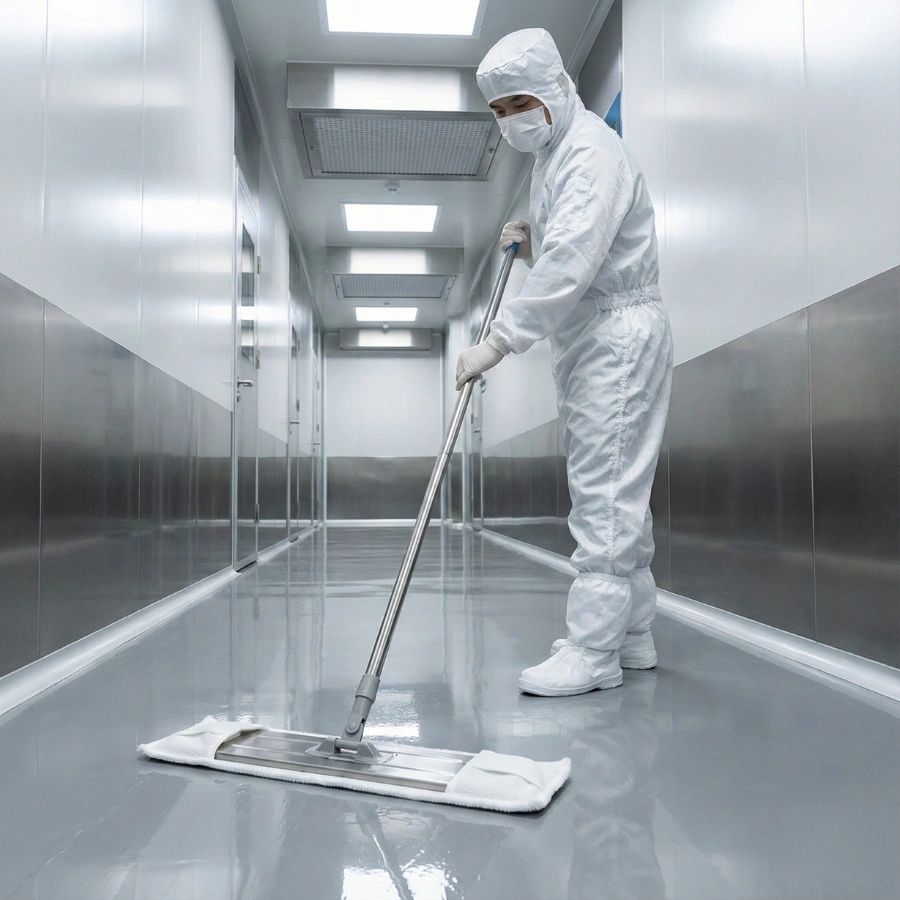
مڈپوسی کلین روم موپ ہیڈ آپشنز (جی ایم پی کے لئے تیار)
مڈپوسی نے آئی ایس او کلاس 5-8 فارماسیوٹیکل اور میڈیکل ڈیوائس ایپلی کیشنز کے لئے انجنیئر پالئیےسٹر سیلڈ ایج اور مائکرو فائبر کلین روم موپ ہیڈ فراہم کیا۔ پالئیےسٹر لائن الٹراسونک سیل والے کناروں کے ساتھ مسلسل فلیمینٹ سوت کا استعمال کرتی ہے ، جس میں ذرہ نسل کی کارکردگی کو گریڈ سی/ڈی فارماسیوٹیکل مینوفیکچرنگ اور میڈیکل ڈیوائس اسمبلی کلین رومز کے لئے موزوں فراہم کیا جاتا ہے۔ کوالیفائیڈ آٹوکلیو سائیکل لائف 121 ° C پر 150-200 رنز بناتی ہے ، جو اعلی حجم کی سہولیات کے لئے مضبوط TCO فراہم کرتی ہے۔ کیمیائی مطابقت کی جانچ IPA ، ہائیڈروجن پیرو آکسائیڈ (6 ٪ تک) ، اور اعتدال پسند بلیچ حراستی (500-1000 پی پی ایم) میں استحکام کی تصدیق کرتی ہے۔
مائکرو فائبر آپشن لیزر کٹ کناروں کے ساتھ اسپلٹ فائبر پالئیےسٹر/پولیمائڈ مرکب کا استعمال کرتا ہے ، جس میں ایپلی کیشنز کو نشانہ بنایا جاتا ہے جہاں ذرہ گرفت کی کارکردگی مختصر سائیکل زندگی (50–100 آٹوکلیو رنز) کا جواز پیش کرتی ہے۔ جاذبیت 6–8 × خشک وزن تک پہنچ جاتی ہے ، جس سے ڈپنگ فریکوینسی کو کم کیا جاتا ہے اور بڑے علاقے کے کلین رومز میں کوریج کو بہتر بنایا جاتا ہے۔ مڈپوسی مطابقت ، مادی حفاظت کے ڈیٹا شیٹس ، اور ذرہ جنریشن ٹیسٹ کے خلاصے کے سرٹیفکیٹ فراہم کرتا ہے جس کی درخواست پر - دستاویزات جو سازوسامان کی قابلیت کے پروٹوکول کی حمایت کرتی ہے اور آڈٹ کے مشاہدات کو بند کرتی ہے۔
دونوں پروڈکٹ لائنیں ایک سے زیادہ سائز (چھوٹے/درمیانے/بڑے پیڈ ، نلی نما ایم او پی کنفیگریشنز) میں دستیاب ہیں اور آنے والے ذرہ بوجھ کو کم کرنے کے لئے لانڈرڈ اور کنٹرول ماحول میں پیک کیا جاسکتا ہے۔ پہلے سے مستحکم استعمال شدہ سامان کی ضرورت والی سہولیات کے لئے ، گاما سٹرلائزڈ مختلف حالتیں (SAL 10⁻⁶) خوراک آڈٹ دستاویزات کے ساتھ دستیاب ہیں۔ مڈپوسی کی مینوفیکچرنگ اینڈ سپلائی چین شمالی امریکہ ، یورپ اور ایشیاء میں دواسازی ، طبی آلہ ، اور الیکٹرانکس کلین روم مارکیٹس کی خدمت کرتی ہے۔
جب دوسرے دکانداروں کے خلاف مڈپوسی کا جائزہ لیتے ہو تو ، اسی مقصد کے معیار پر عمل کریں: آئی ایس او 14644-14 ذرہ جنریشن ٹیسٹ رپورٹس ، آپ کے مخصوص ڈس انفیکٹینٹ حراستی کے لئے ASTM D543 کیمیائی مطابقت کے اعداد و شمار ، آٹوکلیو کی توثیق سائیکل زندگی کے مطالعے ، اور بانجھ پن کی یقین دہانی کی دستاویزات (اگر قابل اطلاق ہیں)۔ اپنی سہولت کے اصل کھپت کے اعداد و شمار کا استعمال کرتے ہوئے فی استعمال ٹی سی او کے حساب کتاب کا موازنہ کریں ، نہ کہ وینڈر فراہم کردہ "عام استعمال" مفروضوں کا۔ مڈپوسی کی پوزیشنیں ایک درمیانی منڈی کے آپشن کے طور پر لاگت کی کارکردگی کے ساتھ تکنیکی کارکردگی کو متوازن کرتی ہیں۔