What Is GMP Cleaning?
GMP cleaning is a controlled cleaning process used in pharmaceutical, biotechnology, medical device, laboratory, and other regulated environments to help reduce contamination risks. It usually involves written SOPs, trained operators, approved cleaning agents, cleanroom-compatible tools, defined cleaning frequency, documentation, and QA review.
GMP cleaning means cleaning according to Good Manufacturing Practice expectations. In cleanrooms, it focuses on controlling particles, residues, microorganisms, cleaning-agent use, cross-contamination, operator technique, and documentation so the facility can support product quality and audit readiness.
What Does GMP Cleaning Mean?
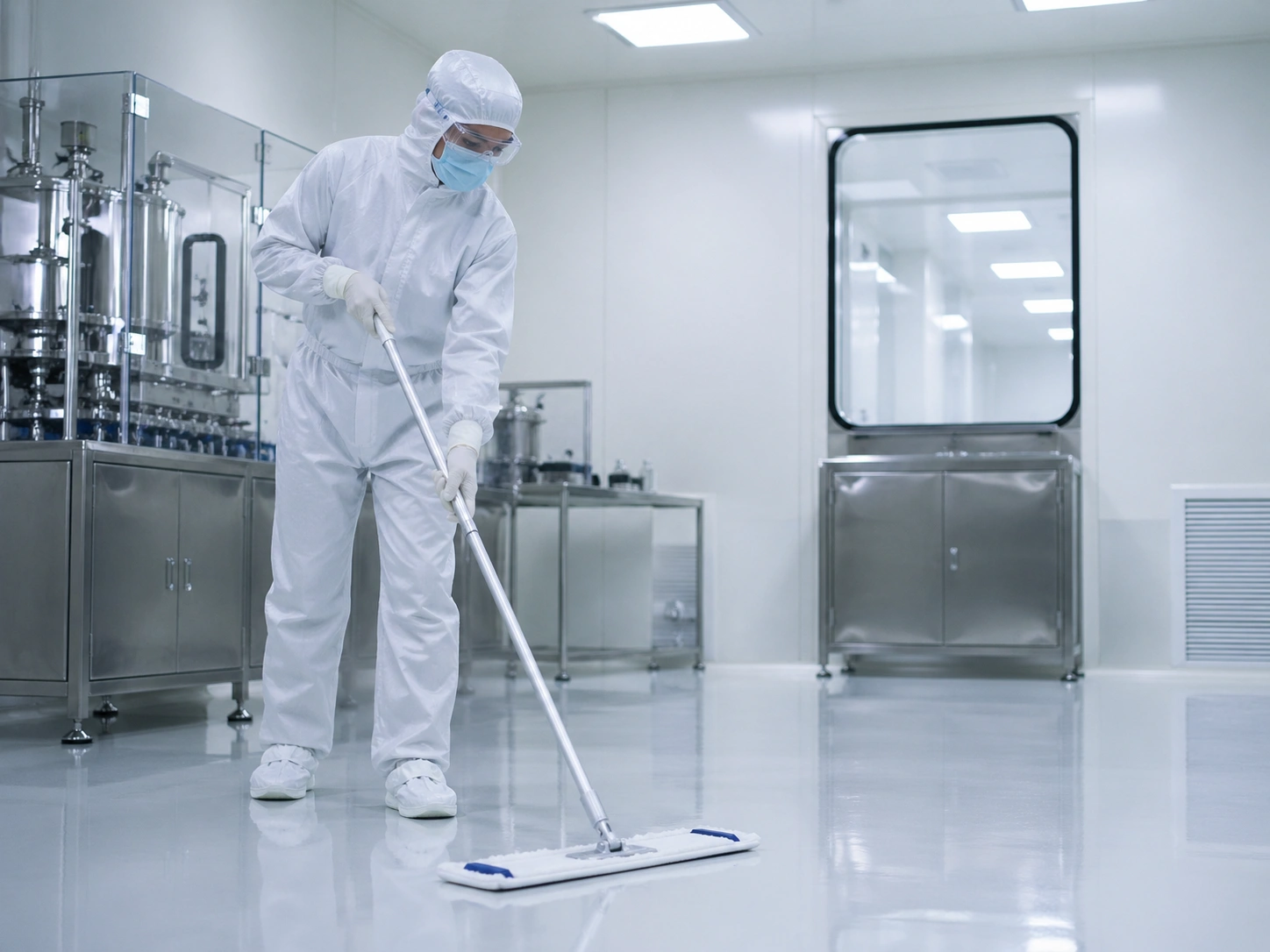
GMP cleaning means cleaning under a controlled quality system rather than performing ordinary housekeeping. The goal is to reduce contamination risks that may affect product quality, patient safety, process reliability, or cleanroom control.
In regulated cleanrooms, cleaning is normally connected to SOPs, contamination control strategy, environmental monitoring, disinfectant use, personnel training, cleaning records, and QA oversight. EU GMP Annex 1 emphasizes contamination control strategy, cleanroom classification, qualification, monitoring, and personnel gowning as important principles for sterile manufacturing and other products where contamination control is important. :contentReference[oaicite:0]{index=0}
GMP Cleaning vs Regular Cleaning
Regular cleaning focuses mainly on visible dirt and general hygiene. GMP cleaning focuses on contamination control, repeatability, qualification, documentation, and suitability for regulated environments.
| Comparison Point | GMP Cleaning | Regular Cleaning |
|---|---|---|
| Main Purpose | Reduce contamination risks and support product quality | Remove visible dirt and maintain general cleanliness |
| Procedure | Written SOP with defined tools, agents, sequence, and records | General cleaning routine or janitorial practice |
| Tools | Cleanroom-compatible mops, wipes, buckets, garments, and PPE | Standard commercial cleaning tools |
| Documentation | Cleaning logs, batch-related records, training records, and QA review where required | Often limited or informal |
| Environment | Pharma, biotech, medical device, ISO cleanrooms, controlled manufacturing | Offices, public areas, warehouses, or general facilities |
Why GMP Cleaning Matters in Cleanrooms
Cleanrooms are controlled environments where airborne particles, microorganisms, fibers, residues, and process-related contamination must be managed. ISO 14644-1 classifies cleanrooms based on airborne particle concentration, making particle control a core part of cleanroom operation. :contentReference[oaicite:1]{index=1}
Particle Control
GMP cleaning helps reduce particles, fibers, and residues that may affect controlled environments.
Microbial Control
Cleaning and disinfection workflows help manage microbial contamination risks in GMP areas.
Audit Readiness
Records, SOPs, training, and supplier documents help support QA review and customer audits.
Core Elements of a GMP Cleaning Program
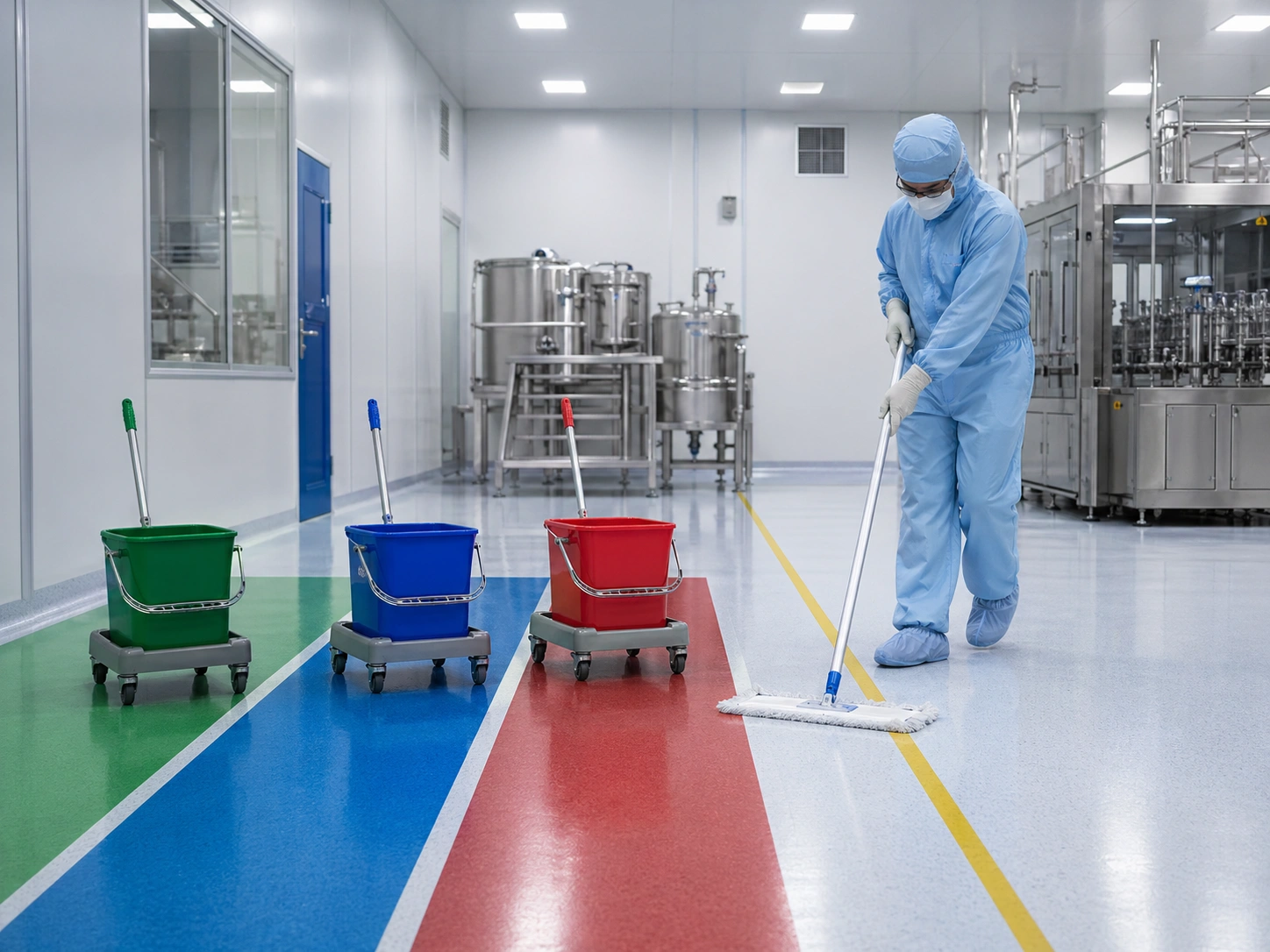
A GMP cleaning program should be systematic, repeatable, and reviewable. The exact design depends on the product, facility type, room grade, cleaning agent, process risk, and internal SOP.
Typical GMP cleaning elements include:
- Approved cleaning and disinfection SOPs
- Defined cleaning frequency and cleaning sequence
- Cleanroom-compatible mops, wipes, buckets, and garments
- Disinfectant preparation, contact time, and rotation where required
- Operator training and gowning discipline
- Cleaning records, batch records, or logbooks where applicable
- QA review and deviation handling
Where GMP Cleaning Is Used
GMP cleaning is used in regulated or controlled production environments where contamination could affect product quality, patient safety, device performance, or process control.
Pharmaceutical Manufacturing
Used in production areas, sterile support spaces, compounding rooms, filling support areas, and cleanroom corridors.
Biotechnology Facilities
Supports controlled cleaning in research, pilot production, cell culture, and bioprocessing environments.
Medical Device Manufacturing
Supports controlled surface cleaning in assembly, packaging, inspection, and clean production areas.
Laboratories
Used where controlled cleaning, residue control, and documented procedures are required.
Aseptic Processing Support
FDA aseptic processing guidance connects cleanroom control, pressure differentials, and procedures with CGMP expectations. :contentReference[oaicite:2]{index=2}
Controlled Warehousing
May support raw material, packaging, sampling, and controlled storage areas when SOPs require it.
How GMP Cleaning Works Step by Step
GMP cleaning should follow the facility’s approved SOP. A typical workflow may include preparation, cleaning, disinfection, tool replacement, inspection, and documentation.
| Step | What Happens | GMP Control Purpose |
|---|---|---|
| 1. Preparation | Confirm room status, PPE, cleaning tools, disinfectants, and required records | Prevents uncontrolled cleaning activity |
| 2. Tool Selection | Select cleanroom mop, wipe, bucket, frame, handle, or sterile tool as required | Ensures tools match SOP and room risk level |
| 3. Cleaning Sequence | Clean from cleaner to less-clean areas or according to the validated facility SOP | Reduces cross-contamination risk |
| 4. Disinfection | Apply approved disinfectant with defined contact time and concentration | Supports microbial control |
| 5. Inspection | Check surfaces, residues, tools, and cleaning completeness | Supports operator verification and QA review |
| 6. Documentation | Record cleaning activity, room, date, operator, product, and deviations where required | Supports traceability and audit readiness |
Why Cleanroom Mop Systems Matter in GMP Cleaning
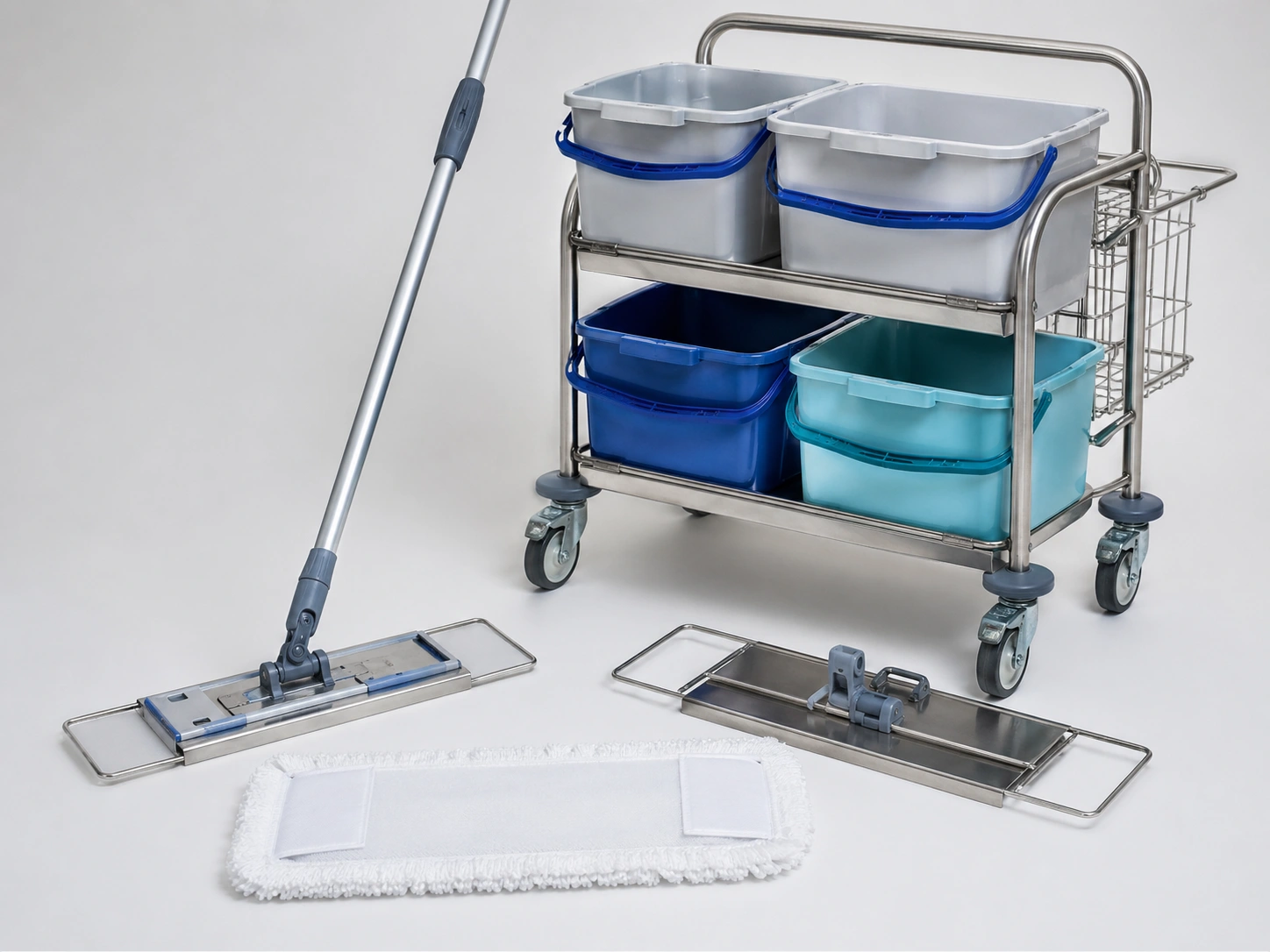
In GMP cleanrooms, the mop is not just a cleaning accessory. It is part of a controlled cleaning system. The mop cover, frame, handle, bucket, wringer, material, packaging, and replacement workflow can all affect cleaning consistency.
GMP Cleaning Tools Buyers Should Review
Buyers should review cleaning tools based on material, cleanroom suitability, packaging, sterility requirement, chemical compatibility, documentation, and supplier consistency.
| Tool | Role in GMP Cleaning | Buyer Review Point |
|---|---|---|
| Cleanroom Mop | Floor, wall, ceiling, and controlled-surface cleaning | Low-lint material, sterile option, size, packaging, and frame compatibility |
| Cleanroom Wipe | Small surfaces, equipment, benches, and controlled wiping | Material, particle control, absorbency, chemical compatibility |
| Mop Bucket and Wringer | Fluid control, disinfectant application, and waste separation | Single, dual, or triple-bucket workflow and material suitability |
| Cleanroom Garments | Personnel contamination control | Reusable, autoclavable, sterile, or controlled-area garment requirements |
| PPE and Accessories | Operator protection and contamination control support | Gloves, goggles, masks, boots, and gowning compatibility |
Common GMP Cleaning Mistakes
GMP cleaning problems often come from uncontrolled tools, unclear SOPs, poor documentation, improper disinfectant use, or weak operator training.
Common risks
- Using regular mops in controlled cleanroom areas
- Reusing mop heads without a defined replacement workflow
- Mixing tools between different cleanroom zones
- Using disinfectants without clear contact time or concentration control
- Missing cleaning records or operator signatures
- Weak supplier documentation for cleaning consumables
Better practice
- Use cleanroom-compatible low-lint cleaning tools
- Define cleaning direction, frequency, and tool replacement
- Separate tools by area, zone, or risk level
- Train operators and document cleaning activities
- Review product specifications before bulk purchasing
- Keep sample approval and supplier qualification records
What Documents Support GMP Cleaning Tool Review?
Documentation helps buyers and QA teams review whether a cleaning tool is suitable for internal procedures. For cleanroom mops and related consumables, the document package may vary by supplier and product type.
How MIDPOSI Supports GMP Cleaning Workflows
MIDPOSI supports B2B buyers with cleanroom mop systems, sterile and non-sterile mop options, microfiber and polyester mop materials, cleanroom frames, handles, buckets, and documentation support for controlled cleaning programs.
Low-Lint Mop Options
Cleanroom mop materials selected for controlled cleaning and reduced fiber-shedding concerns.
Sterile & Non-Sterile Choices
Options for GMP areas requiring sterile presentation or routine controlled-area cleaning.
B2B Documentation Support
Product specifications, packaging details, sample support, and supplier communication for procurement review.
FAQ About GMP Cleaning
What is GMP cleaning?
GMP cleaning is a controlled cleaning process used in regulated manufacturing environments to help reduce contamination risks. It usually involves SOPs, trained operators, approved cleaning agents, suitable tools, records, and QA review.
What is the purpose of GMP cleaning?
The purpose of GMP cleaning is to help control particles, residues, microorganisms, and cross-contamination risks that may affect product quality, process control, or patient safety.
Is GMP cleaning the same as cleanroom cleaning?
Not always. Cleanroom cleaning focuses on cleaning controlled environments, while GMP cleaning adds quality-system expectations such as SOPs, documentation, training, QA review, and contamination-control requirements.
What tools are used in GMP cleanroom cleaning?
Common tools include low-lint cleanroom mops, cleanroom wipes, mop frames, handles, buckets, wringers, cleanroom garments, gloves, goggles, and other controlled-area PPE or accessories.
Why are low-lint mops used in GMP cleaning?
Low-lint mops are used because ordinary mops may release fibers or particles. Low-lint mop materials help reduce fiber-shedding concerns during controlled cleaning workflows.
Does a cleanroom mop guarantee GMP compliance?
No. A cleanroom mop does not guarantee GMP compliance. It supports GMP cleaning only when selected, qualified, documented, and used according to the facility’s approved SOP and quality system.
Need Cleanroom Tools for GMP Cleaning Workflows?
Contact MIDPOSI to discuss low-lint cleanroom mops, sterile and non-sterile options, bucket systems, documentation support, and sample availability for GMP cleanroom cleaning.