مماسح غرف الأبحاث المعقمة للمعالجة المعقمة هي ممسحات تستخدم مرة واحدة أو يتم التحقق من صحتها بشكل صارم وقابلة لإعادة الاستخدام وتحقق مستوى ضمان العقم SAL 10⁻⁶ (مستوى ضمان العقم) من خلال طرق التعقيم المعتمدة مع تأكيد المؤشر البيولوجي.
تعد مماسح غرف الأبحاث المعقمة للمعالجة المعقمة جزءًا مهمًا من عمليات غرف الأبحاث المتوافقة مع GMP وISO. وهي تدعم التحكم في التلوث، وإجراءات التنظيف المعتمدة، وضمان العقم في بيئات التصنيع المعقمة.
تعد مماسح غرف الأبحاث المعقمة جزءًا أساسيًا من برامج مكافحة التلوث المتوافقة مع GMP.
تتطلب توقعات الملحق 1 من إدارة الغذاء والدواء الأمريكية (FDA) ووكالة الأدوية الأوروبية (EMA) والاتحاد الأوروبي لممارسات التصنيع الجيدة (GMP) التحقق من صحة العقم وإمكانية التتبع والتوثيق.
تعد المراقبة المنتظمة والتحقق من العقم أمرًا ضروريًا للحفاظ على الامتثال ومراقبة العملية.
يعد تدريب الموظفين والانضباط الإجرائي ضروريين لضمان التعامل مع الممسحة المعقمة واستخدامها بشكل صحيح.
تساعد معالجة الانحراف وأنظمة CAPA والسجلات الجاهزة للتدقيق على دفع التحسين المستمر.

مماسح غرف الأبحاث المعقمة للمعالجة المعقمة هي مماسح تستخدم مرة واحدة أو يتم التحقق من صحتها بشكل صارم وقابلة لإعادة الاستخدام وتحقق مستوى ضمان العقم SAL 10⁻⁶ (مستوى ضمان العقم) من خلال طرق التعقيم المعتمدة مع تأكيد المؤشر البيولوجي. وفقًا للملحق 1 لممارسات التصنيع الجيدة للاتحاد الأوروبي وتوجيهات إدارة الأغذية والعقاقير (FDA)، تتطلب المماسح المعقمة المستخدمة في المناطق الحرجة من الدرجة A (ISO 5) تشعيع جاما أو تعقيم الأوتوكلاف المعتمد، وتغليف حاجز معقم، وإمكانية التتبع على أساس الدفعة، والتحقق من العقم الموثق من خلال المؤشرات البيولوجية. تعمل المماسح المعقمة على تقليل مخاطر التلوث عند إعادة الاستخدام وتوفر عقمًا مضمونًا للتصنيع المعقم حيث يكون تعقيم المنتج غير قابل للتفاوض.
في المعالجة الصيدلانية المعقمة، يمكن أن تؤدي ممسحة واحدة ملوثة أو إجراء تنظيف غير معتمد إلى فقدان الدفعة، ومخاطر سلامة المرضى، والنتائج التنظيمية. تفهم معظم المرافق هذا المفهوم، ولكن القليل منها لديه إطار كامل لضمان العقم يدمج علوم المواد، والتحقق من صحة التعقيم، وسلامة التعبئة والتغليف، وتتبع الاستخدام.
توفر هذه المقالة إطارًا كاملاً وجاهزًا للتنفيذ لضمان العقم لمماسح المعالجة المعقمة - وهو موضوع بالغ الأهمية يتناوله العديد من المنافسين فقط على مستوى وصف المنتج الأساسي وليس من منظور التميز التشغيلي والتحكم في التلوث.
كما نوقش في موقعنا دليل ممسحة غرف الأبحاث القابل للتصرف مقابل القابل لإعادة الاستخدام، يتطلب ضمان العقم فهم دورة الحياة الكاملة بدءًا من اختيار المواد وحتى التعقيم المعتمد وحتى الاستخدام المعقم وإمكانية التتبع.
| معيار | متطلبات الدرجة أ (ISO 5). | الأدلة المطلوبة | تكرار |
|---|---|---|---|
| الاتحاد الأوروبي GMP الملحق 1.5 | العقم يمكن إثباته | تأكيد BI | لكل استخدام |
| دليل المعالجة المعقمة من إدارة الغذاء والدواء | طريقة التعقيم المعتمدة | تقرير التحقق من الصحة | لكل دفعة / ممسحة |
| جامعة جنوب المحيط الهادئ <797> | ضمان العقم | شهادة التحليل | لكل الكثير |
| المساعد الشخصي الرقمي TR13 | برنامج صيانة العقم | بيانات الرصد | مستمر |
┌─────────────────────────────────────────────────────────────────────┐
│              STERILITY ASSURANCE LEVEL (SAL) EXPLAINED             │
├─────────────────────────────────────────────────────────────────────┤
│  WHAT IS SAL 10⁻⁶?                                                 │
│  • Probability of finding viable microorganism: 1 in 1,000,000    │
│  • Mathematical notation: 10⁻⁶                                    │
│  • Required for aseptic processing and terminally sterilized       │
│    products                                                        │
│                                                                     │
│  HOW IS IT ACHIEVED?                                               │
│  • Method: Gamma irradiation (25-50 kGy) OR ETO (37-63°C)         │
│  • Validation: Biological indicator (BI) showing no growth        │
│  • Material compatibility: Must withstand sterilization without    │
│    degradation                                                     │
│  • Packaging: Maintains sterility until use                        │
│                                                                     │
│  DOCUMENTATION REQUIRED                                            │
│  • Sterilization certificate from supplier                         │
│  • Lot number traceability                                         │
│  • BI confirmation records                                         │
│  • Validation data for facility method                             │
│                                                                     │
│  STERILITY ASSURANCE LEVELS                                        │
│  • SAL 10⁻⁶: Terminal sterilization (Grade A critical zone)       │
│  • SAL 10⁻³: High-level disinfection (Grade B)                    │
│  • SAL 10⁻⁴: Sanitization (Grade C)                               │
└─────────────────────────────────────────────────────────────────────┘
| طريقة | درجة حرارة | الجرعة / الوقت | فعالية | توافق المواد | تَحَقّق |
|---|---|---|---|---|---|
| تشعيع جاما | لا يوجد | 25-50 كغ | ≥6 سجل، SAL 10⁻⁶ | جميع المواد | شهادة بي |
| الأوتوكلاف (البخار) | 121-134 درجة مئوية | 15-30 دقيقة عند 15 رطل لكل بوصة مربعة | ≥6 سجل، SAL 10⁻⁶ | متوافق مع البوليستر | BI لكل دورة |
| إيتو (أكسيد الإيثيلين) | 37-63 درجة مئوية | 3-12 ساعة + 48 ساعة تهوية | ≥6 سجل، SAL 10⁻⁶ | جميع المواد | شهادة بي |
| الحرارة الجافة | 160-180 درجة مئوية | 2-4 ساعات | ≥4 سجل، SAL 10⁻⁶ | مواد محدودة | شهادة بي |
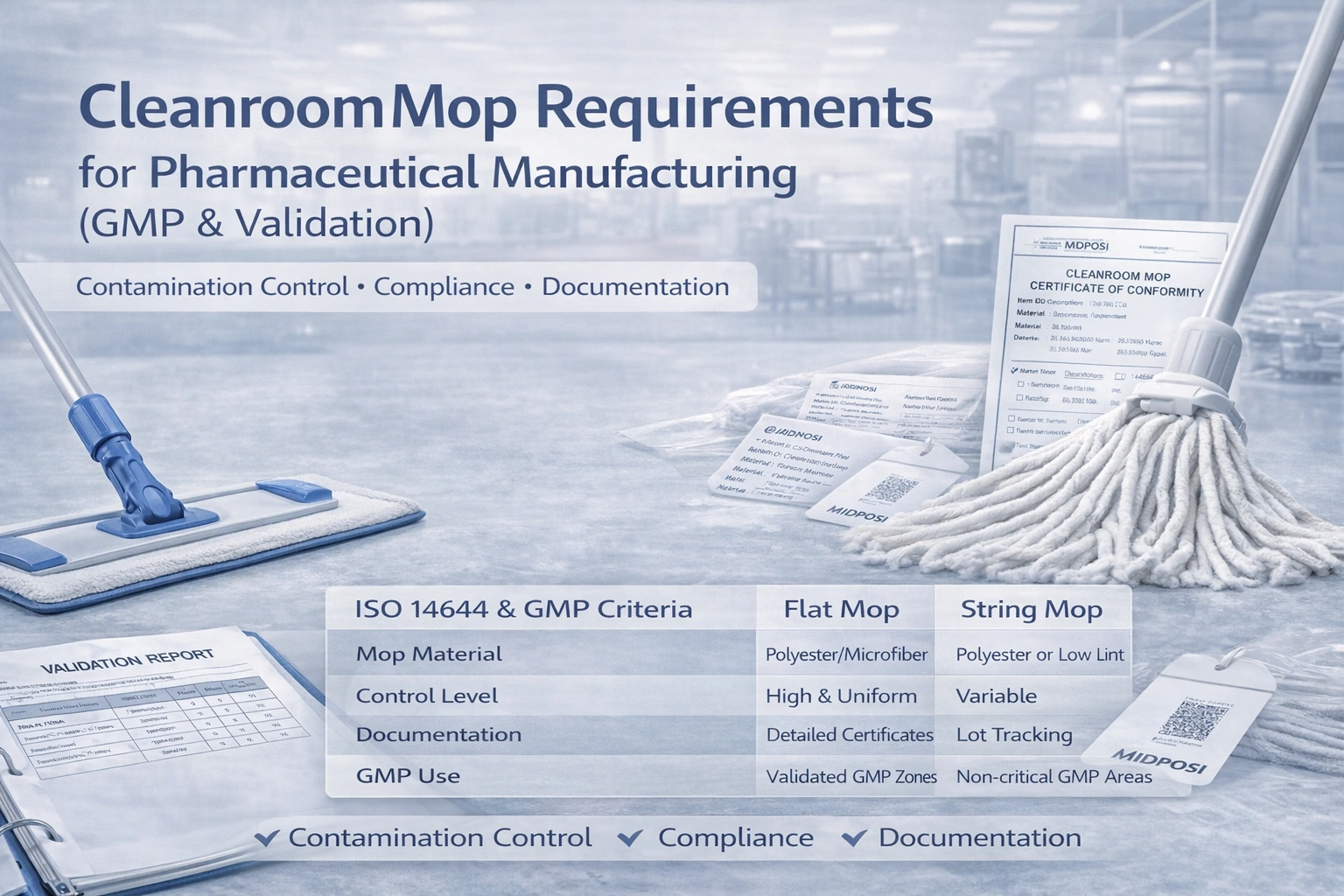
الموصى بها للصف أ:
┌─────────────────────────────────────────────────────────────────────┐
│            GAMMA IRRADIATION FOR ASEPTIC MOPS FRAMEWORK            │
├─────────────────────────────────────────────────────────────────────┤
│  IRRADIATION PARAMETERS                                            │
│  • Dose range: 25-50 kGy                                           │
│  • Source: Cobalt-60 or Cesium-137                                 │
│  • Effect: SAL 10⁻⁶ sterility achieved                            │
│  • Penetration: Through entire mop assembly                        │
│  • Temperature rise: Minimal during irradiation                    │
│                                                                     │
│  MATERIAL CONSIDERATIONS                                           │
│  • Polyester: Excellent (maintains integrity)                      │
│  • Microfiber: Good (minor degradation at high dose)               │
│  • Blends: Variable (validate per material)                        │
│  • Handles: Must be irradiation-compatible                         │
│                                                                     │
│  VALIDATION PROTOCOL                                               │
│  ☐ Supplier BI certificate attached to each package batch          │
│  ☐ BI type specified                                               │
│  ☐ BI population: ≥10⁶ spores                                      │
│  ☐ D-Value: ≥10⁶ (10⁻⁶)                                           │
│  ☐ Incubation: 30 days at 55-60°C                                  │
│  ☐ Result: No growth required for acceptance                       │
│                                                                     │
│  PACKAGING INTEGRITY                                               │
│  ☐ Sterile barrier packaging                                       │
│  ☐ Sealed outer packaging                                          │
│  ☐ Maintain sterility indicator visibility                         │
│  ☐ No damage or breach detected                                    │
│                                                                     │
│  CERTIFICATE VERIFICATION                                          │
│  ☐ Certificate reviewed against irradiation parameters             │
│  ☐ Lot number cross-referenced                                     │
│  ☐ Valid through date confirmed                                    │
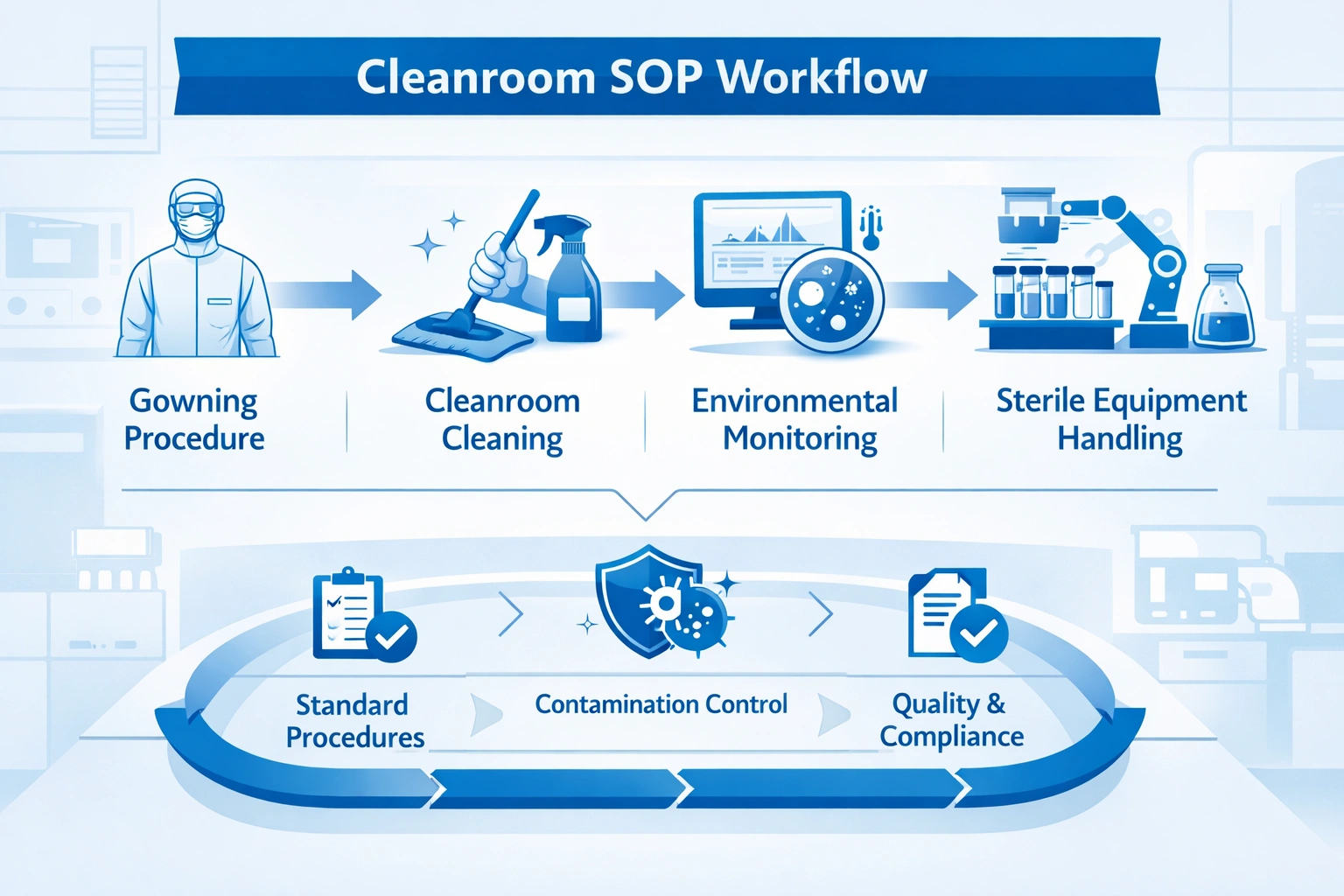
└─────────────────────────────────────────────────────────────────────┘
| عنصر التغليف | متطلبات | التحكم النقدي | تَحَقّق |
|---|---|---|---|
| الحاجز الأساسي | كيس مزدوج معقم أو حاوية مغلقة | لا كشف الانتهاك | التفتيش البصري |
| التغليف الخارجي | طبقة واقية مقاومة للتمزق | السلامة الجسدية | اختبار سلامة الختم |
| مؤشر العقم | مرئية ويمكن الوصول إليها | تأكيد سلامتها | التحقق من تغيير اللون |
| إمكانية تتبع الكثير | رقم القطعة فريد على جميع الوحدات | إمكانية التتبع | المسح / التحقق |
| تنسيق جاهز للاستخدام | الوصول السريع دون التلوث | خطر الاحتواء | بروتوكول نقل العقيم |
| انتهاء | صالحة حتى التاريخ المعروض | العقم لفترة زمنية محدودة | مراقبة التاريخ |
الإجراء الحاسم لمناطق الدرجة الأولى:
┌─────────────────────────────────────────────────────────────────────┐
│           ASEPTIC MOP TRANSFER PROTOCOL (GRADE A)                  │
├─────────────────────────────────────────────────────────────────────┤
│  PRE-TRANSFER PREPARATION                                          │
│  ☐ Personnel in Grade A gowning complete                           │
│  ☐ Gloves sanitized and donned                                     │
│  ☐ Transfer area validated as clean                                │
│  ☐ Mop staging area prepared                                       │
│  ☐ Tools and materials ready                                       │
│                                                                     │
│  PHASE 1: PACKAGING OPENING                                        │
│  ☐ Outer packaging inspected for integrity                         │
│  ☐ No damage, tears, or breaches detected                          │
│  ☐ Sterility indicator verified                                    │
│  ☐ Opened with sterile scissors or tool                            │
│                                                                     │
│  PHASE 2: PRIMARY BARRIER REMOVAL                                  │
│  ☐ Inner sterile bag exposed within clean air                      │
│  ☐ Mop immediately removed with sterile forceps                    │
│  ☐ Transferred to sterile holding container                        │
│  ☐ Container sealed immediately                                    │
│                                                                     │
│  PHASE 3: ASEPTIC TRANSFER                                         │
│  ☐ Mop transported via pass-through or direct transfer             │
│  ☐ No exposure to non-aseptic environment                          │
│  ☐ Received by Grade A operator                                    │
│  ☐ Transfer documented: Time, Mop ID, Lot #, Operators             │
│                                                                     │
│  PHASE 4: DOCUMENTATION                                            │
│  ☐ Transfer log updated                                            │
│  ☐ Sterility indicator recorded                                    │
│  ☐ Any discrepancies documented and investigated                   │
└─────────────────────────────────────────────────────────────────────┘
┌─────────────────────────────────────────────────────────────────────┐
│           STERILE MOP LOT TRACEABILITY FRAMEWORK                   │
├─────────────────────────────────────────────────────────────────────┤
│  SUPPLIER LOT INFORMATION                                          │
│  ☐ Supplier name                                                   │
│  ☐ Supplier lot #                                                  │
│  ☐ Manufacturing date                                              │
│  ☐ Sterilization date                                              │
│  ☐ Irradiation dose and method                                     │
│  ☐ Sterility certificate #                                         │
│  ☐ Valid through                                                   │
│                                                                     │
│  RECEIVING VERIFICATION                                            │
│  ☐ Certificate matches shipment                                    │
│  ☐ Lot number matches certificate                                  │
│  ☐ Dose within specified range                                     │
│  ☐ Sterility indicator verified                                    │
│  ☐ Packaging integrity confirmed                                   │
│                                                                     │
│  USAGE TRACKING SYSTEM                                             │
│  ☐ Unique mop ID per unit                                          │
│  ☐ Use date / operator / zone / purpose                            │
│  ☐ Disposal method documented                                      │
│                                                                     │
│  DISPOSAL / REPLACEMENT TRACKING                                   │
│  ☐ Disposal date                                                   │
│  ☐ Replacement mop ID                                              │
│  ☐ Disposal reason documented                                      │
│                                                                     │
│  AUDIT TRAIL                                                       │
│  ☐ Complete record from receipt to disposal                        │
│  ☐ Audit-ready for inspection                                      │
│  ☐ Retention period: 5 years minimum                               │
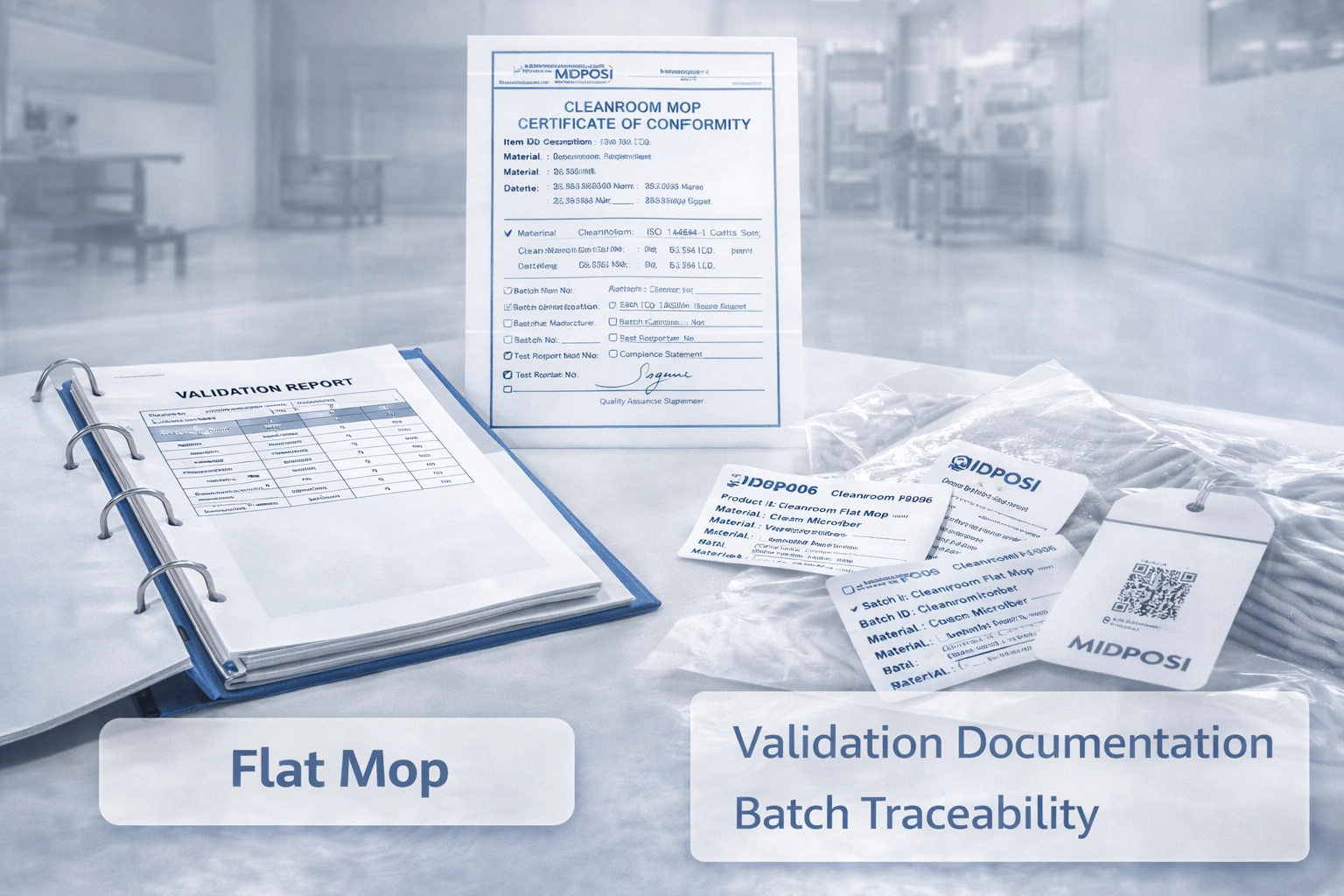
└─────────────────────────────────────────────────────────────────────┘
| مؤشر مراقبة الجودة | معايير القبول | تكرار | عتبة العمل |
|---|---|---|---|
| قبول ذكاء الأعمال | لا النمو المطلوب | لكل الكثير | أي نمو = رفض الكثير |
| دقة رقم القطعة | تطابق 100% بين التغليف والشهادة | لكل إيصال | عدم التطابق = التحقيق |
| نطاق الجرعة | 25-50 كغ | لكل الكثير | النطاق الخارجي = إعادة التعقيم |
| سلامة التغليف | سليمة 100% | لكل استخدام | الخرق = التخلص |
| الامتثال لانتهاء الصلاحية | لا يتم استخدام المماسح منتهية الصلاحية | لكل استخدام | منتهية الصلاحية = الرفض |
| إمكانية التتبع | 100% من الاستلام حتى التخلص منها | ربع سنوية | الثغرات = التحقيق |
برنامج اختبار ذكاء الأعمال الكامل:
┌─────────────────────────────────────────────────────────────────────┐
│         BIOLOGICAL INDICATOR (BI) VERIFICATION FRAMEWORK           │
├─────────────────────────────────────────────────────────────────────┤
│  BI SELECTION CRITERIA                                             │
│  ☐ Organism: Geobacillus stearothermophilus spores                 │
│  ☐ Population: ≥10⁶ spores                                         │
│  ☐ D-Value: ≥10⁶ (10⁻⁶)                                           │
│  ☐ Resistant to irradiation                                        │
│                                                                     │
│  SUPPLIER VERIFICATION                                             │
│  ☐ Supplier BI validation data reviewed                            │
│  ☐ Certificate authenticity verified                               │
│  ☐ BI placement confirmed                                          │
│                                                                     │
│  INCUBATION PROCEDURE                                              │
│  ☐ Temperature: 55-60°C                                            │
│  ☐ Duration: 30 days minimum                                       │
│  ☐ Positive control included                                       │
│  ☐ Negative control included                                       │
│                                                                     │
│  RESULT INTERPRETATION                                             │
│  ☐ No growth = Acceptable                                          │
│  ☐ Growth = Reject lot                                             │
│  ☐ Inconclusive = Re-test                                          │
│                                                                     │
│  LOT ACCEPTANCE DECISION                                           │
│  ☐ ACCEPT / REJECT / RE-STERILIZE / INVESTIGATE                    │
└─────────────────────────────────────────────────────────────────────┘| متري | هدف | مصدر البيانات | تكرار | مستوى التنبيه |
|---|---|---|---|---|
| معدل نجاح BI | 100% (0 حالات فشل) | اختبار ذكاء الأعمال | لكل الكثير | <95% |
| معدل رفض الكمية | <1% | سجل الرفض | ربع سنوية | >2% |
| سلامة مؤشر العقم | سليمة 100% | تقتيش | لكل استخدام | <95% |
| اكتمال التتبع | 100% | مراجعة | شهريا | <90% |
| الامتثال لانتهاء الصلاحية | 100% | سجل الاستخدام | شهريا | <95% |
| صالح من خلال المعدل | 0٪ منتهي الصلاحية | نظام مراقبة الجودة | مستمر | أي |
| معدل إعادة التعقيم | <0.5% | سجل إعادة التعقيم | ربع سنوية | >1% |

عواقب
أفضل الممارسات
عواقب
أفضل الممارسات
عواقب
أفضل الممارسات

ج: تتطلب المعالجة المعقمة SAL 10⁻⁶، مما يعني أن هناك احتمالًا واحدًا في المليون للعثور على كائن حي دقيق قابل للحياة. يتم تحقيق ذلك من خلال طرق التعقيم المعتمدة مثل تشعيع جاما، أو التعقيم بالأوتوكلاف، أو تعقيم ETO مع التهوية المناسبة. يعتمد اختيار الطريقة على توافق المواد والبنية التحتية المتاحة للتعقيم.
ج: يتطلب التحقق من العقم برنامج تأكيد المؤشر البيولوجي. يتضمن ذلك مراجعة شهادة المورد، وفحص الاستلام، والتحقق من سلامة التغليف، ومطابقة الدفعة الصحيحة، وتأكيد شهادة BI، والوثائق الكاملة من الاستلام وحتى التخلص. تتطلب المماسح القابلة لإعادة الاستخدام اختبار BI لكل دورة تعقيم أو على فترات زمنية محددة.
ج: تتطلب مماسح غرف الأبحاث المعقمة عبوة تحافظ على العقم حتى الاستخدام. يتضمن هذا عادةً حاجزًا أوليًا معقمًا، وطبقة واقية خارجية، ومؤشرات عقم مرئية، وإمكانية تتبع الدفعة، وتنسيق نقل معقم جاهز للاستخدام، وتاريخ صلاحية محدد بشكل واضح.
ج: يعتمد تكرار الاختبار على طريقة التعقيم. قد لا تتطلب المنتجات المعقمة من قبل المورد اختبار BI روتينيًا إذا كانت الشهادات صالحة، بينما تتطلب المماسح القابلة لإعادة الاستخدام المعقمة في المنشأة بشكل عام اختبار BI لكل دورة أو على فترات زمنية تم التحقق من صحتها. يلزم التحقق الأولي وإعادة التحقق من الصحة عند تغيير معلمات التعقيم.
ج: يتم تنفيذ أشعة جاما في درجة حرارة الغرفة، وتخترق التجميع الكامل، وتقدم شهادة SAL 10⁻⁶ المعتمدة مسبقًا. يستخدم التعقيم بالأوتوكلاف درجة حرارة وضغط عاليين، وقد يؤثر على بعض المواد، ويتطلب التحقق من صحة كل دورة وتأكيد المؤشر البيولوجي. غالبًا ما يُفضل تشعيع جاما للتعقيم النهائي للمماسح المعقمة.
ج: يجب أن يتضمن نظام التتبع الكامل تحديدًا فريدًا، وتتبعًا قائمًا على الكمية، وتواريخ التصنيع والتعقيم، وسجلات الاستخدام، وسجلات المشغلين، وسجلات التخلص، ومسار تدقيق كامل من الاستلام وحتى التخلص. يمكن للأدوات الرقمية مثل أنظمة الباركود أو RFID تحسين إمكانية التتبع في العمليات الأكبر حجمًا.
إذا كنت تقارن مواد الممسحة المعقمة، أو طرق التعقيم، أو تنسيقات التغليف، أو متطلبات التتبع للبيئات المعقمة، فيمكن لفريقنا مساعدتك في تقييم حل غرف الأبحاث المناسب لعمليتك.