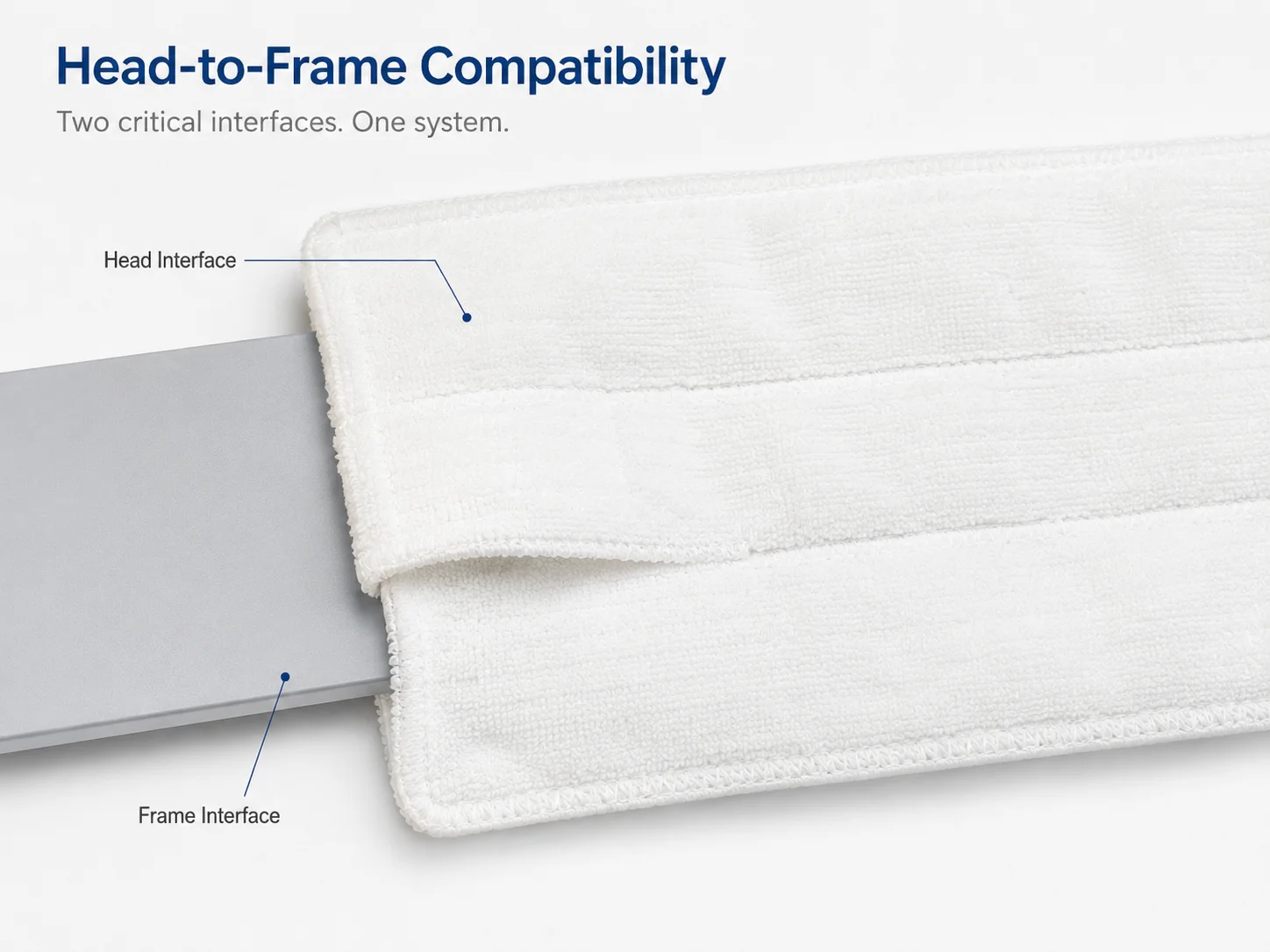
ممسحة غرف الأبحاث ليست منتجًا مستقلاً. إنه عبارة عن تجميع لثلاثة مكونات مترابطة - الرأس والإطار والمقبض - حيث يجب تصميم تفاوتات الأبعاد وتوافق المواد وآليات التثبيت كمجموعة متطابقة. عندما يتم الحصول على أي مكون بشكل مستقل دون التحقق، فإن العواقب لا تقتصر على الإزعاج: بل هي أحداث تلوث، وانحرافات إجراءات التشغيل القياسية، ونتائج التدقيق التي يمكن منعها تمامًا من خلال المشتريات على مستوى النظام.
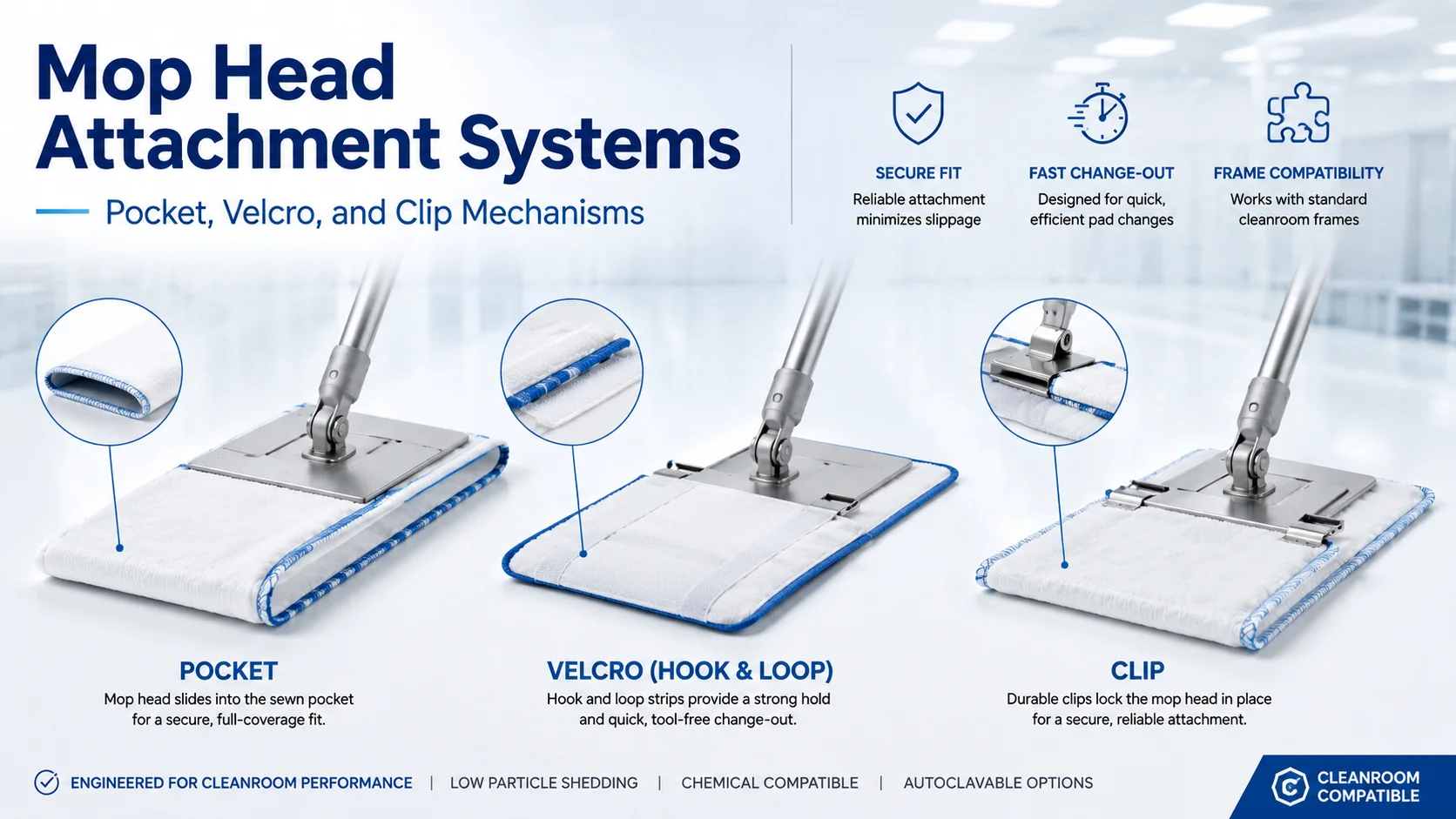
نظام ممسحة غرف الأبحاث مهم لأنه المكونات الثلاثة - الرأس والإطار والمقبض - مترابطة من الناحية الهيكلية. رأس الممسحة متصل بالإطار. يتصل الإطار بالمقبض. يقوم المشغل بدفع المقبض، الذي ينقل القوة عبر الإطار إلى رأس الممسحة على الأرض. يؤدي عدم تطابق الأبعاد أو المواد في أي من نقطتي الواجهة هاتين إلى تغيير نتيجة التنظيف: ضغط الأرضية غير المتساوي، أو التغطية غير الكاملة، أو انفصال المكونات، أو توليد الجسيمات من ملامسة المواد غير المتوافقة. ويضمن نهج النظام أن تعمل المكونات الثلاثة معًا كما هو مصمم. ينقل النهج المستقل عبء التحقق إلى المشتري - وإلى المشغل الذي يكتشف عدم التطابق أثناء الاستخدام.
| زوج مكون | ماذا يحدث إذا كان غير متطابق | التأثير التشغيلي |
|---|---|---|
| رأس → إطار | الجيب ضحل للغاية ← ينزلق الرأس أثناء المسح. الإطار ضيق جدًا ← اتصال غير كامل بالأرضية، ضغط غير متساوٍ. الإطار عريض للغاية ← يمتد الجيب ويتمزق عند الدرزات. | حدث التلوث (ينفصل الرأس في منتصف عملية التنظيف). عدم تناسق التنظيف (المناطق المفقودة). استبدال الرأس المبكر (الجيوب الممزقة). |
| إطار → مقبض | عدم تطابق الخيط → لن يتم إرفاق المقبض. توصيل سريع بجهاز استقبال خاطئ ← قفل غير مكتمل، ينفصل المقبض تحت قوة السحب. عدم توافق المواد (مقبض SS + إطار من الألومنيوم) ← التآكل الجلفاني مع بعض المطهرات. | مخاطر سلامة المشغل (انفصال المقبض). الأداة غير قابلة للاستخدام حتى يتم الحصول على الموصل الصحيح. توليد الجسيمات من الأسطح الملامسة المتآكلة. |
| مقبض → المشغل → إطار → رأس | المقبض قصير جدًا ← ينحني المشغل، مما يقلل من اتساق الضربة. زاوية المقبض غير متوافقة مع مفصل الإطار ← ضغط التطهير غير متساوٍ. التأثير المشترك: إجهاد المشغل ← انخفاض جودة التنظيف مع نوبة العمل. | عدم تناسق التحقق من صحة التنظيف (ينتج المشغلون المختلفون نتائج مختلفة باستخدام نفس الأداة). نتائج التدقيق: "لم يتم إثبات فعالية إجراءات التنظيف في ظل ظروف المشغل الفعلية." |
الوجبات الجاهزة: إن توافق المكونات ليس أمرًا مريحًا، بل هو متغير للتحكم في التلوث. للحصول على مقارنة أوسع بين أساليب الشراء على مستوى النظام مقابل مناهج الشراء على مستوى المكونات، راجع مقارنة نظام ممسحة غرف الأبحاث بالممسحة المسطحة. للحصول على نظرة عامة أساسية حول ما يشكل نظام الممسحة، راجع نظرة عامة على نظام ممسحة غرف الأبحاث.
إن فهم سبب أهمية النظام بأكمله يتطلب فهم ما يحدث عند كل نقطة واجهة - الحدود المادية حيث يلتقي مكونان ويجب أن يعملا كواحد. يوضح التفصيل التالي المكونات الثلاثة والواجهتين المهمتين فيما بينها.
سطح تنظيف النسيج. تحدد أبعاد الجيب (العرض والعمق)، وقوة مادة الجيب، ووزن القماش، عرض الإطار الذي يمكن أن يقبله، ومقدار القوة التي يمكن أن يتحملها الجيب أثناء حركة الدفع والسحب، وكيف يتفاعل وزن الرأس مع صلابة الإطار لإنتاج ضغط ملامس ثابت للأرضية.
الواجهة الرئيسية: فتحة الجيب ↔ عرض الإطار. يجب أن يكون الجيب عريضًا بما يكفي لقبول الإطار دون إجبار، وعميقًا بما يكفي لتثبيت الإطار بشكل آمن أثناء تغييرات الاتجاه، وقويًا بما يكفي عند خط التماس لمقاومة التمزق عند الاستخدام المتكرر.
للاطلاع على خيارات مادة الرأس والوزن والتعقيم، راجع أنواع رأس ممسحة غرف الأبحاث واختيارها صفحة. لاختيار الوزن المحدد، راجع دليل وزن رأس ممسحة غرف الأبحاث.
الهيكل الصلب الذي يحمل رأس الممسحة بشكل مسطح على الأرض. يحدد عرض الإطار والمواد (الفولاذ المقاوم للصدأ والألمنيوم والمركب) والوزن ونوع موصل المقبض الرؤوس والمقابض المتوافقة - وكيفية توزيع قوة التنظيف عبر سطح رأس الممسحة.
واجهات رئيسية: عرض الإطار ↔ جيب الرأس (الواجهة أ). مقبض المستقبل ↔ موصل المقبض (الواجهة ب). الإطار هو المكون المركزي - يجب أن يتطابق مع الرأس من جانب والمقبض من الجانب الآخر. يحتوي الإطار من المورد أ برأس من المورد ب ومقبض من المورد ج على نقطتين محتملتين لعدم التطابق.
للحصول على خيارات مادة الإطار والعرض ونوع المرفق، راجع أنواع إطارات ممسحة غرف الأبحاث صفحة.
واجهة المشغل. يحدد طول المقبض والمادة والوزن وتصميم المقبض ونوع الموصل راحة المشغل واتساق ضغط المسح وسرعة التغيير. المقبض ليس عصا عامة - فمواصفاته تتفاعل مع موصل الإطار والميكانيكا الحيوية للمشغل.
الواجهة الرئيسية: موصل المقبض ↔ مستقبل الإطار (الواجهة ب). يجب أن تتطابق الموصلات الملولبة مع درجة الخيط وقطره. يجب أن تشترك أنظمة الاتصال السريع في نفس تصميم آلية القفل. المقبض الذي يتم توصيله بشكل آمن على طاولة العمل ولكن يتم فصله تحت قوة سحب المسح يعد بمثابة فشل في التوافق - وليس عيبًا في المنتج.
للحصول على خيارات مادة المقبض والطول والموصل، راجع اختيار مقبض ممسحة غرف الأبحاث صفحة.

من بين نقطتي الواجهة في نظام الممسحة، يكون الرأس إلى الإطار هو المكان الذي تحدث فيه معظم حالات فشل عدم تطابق المكونات. السبب هيكلي: الرأس عبارة عن منتج نسيجي بنطاقات تسامح تحددها بنية القماش وخياطته، في حين أن الإطار عبارة عن منتج صلب ذو تفاوتات أبعاد ضيقة. عندما لا تتم محاذاة نطاقي التسامح هذين، تكون النتيجة إما رأس ينزلق أثناء الاستخدام أو إطار لا يشرك الرأس بالكامل.
جيب رأس الممسحة هو غلاف القماش الذي يتم إدخال الإطار فيه. أبعاد الجيب تحدد توافق الإطار:
| البعد | ما يتحكم فيه | نتيجة عدم التطابق |
|---|---|---|
| عرض الجيب (فتح من جانب إلى آخر) | ما إذا كان يمكن إدخال الإطار على الإطلاق، وما مقدار الحركة الجانبية التي قام بها الرأس مرة واحدة | ضيق جدًا: لا يمكن إدخال الإطار. عريض جدًا: يتحرك الرأس بشكل جانبي أثناء تغيير الاتجاه، مما يؤدي إلى تلامس غير متساوٍ مع الأرض وتآكل سريع لدرز الجيب. |
| عمق الجيب (إلى أي مدى يخترق الإطار الرأس) | مدى أمان إمساك الرأس بالإطار أثناء ضربات الدفع والسحب | سطحي جدًا: ينزلق الرأس عن الإطار أثناء شوط السحب — وهو فشل المكونات الأكثر شيوعًا الذي تم الإبلاغ عنه في مرافق GMP. عميق جدًا: يتجمع القماش الزائد عند حواف الإطار، مما يقلل من مساحة سطح التنظيف الفعالة. |
يجب أن يتوافق عرض الإطار مع عرض رأس الممسحة. إطار مقاس 40 سم مقترنًا برأس ممسحة مصمم لإطار مقاس 45 سم يترك 5 سم من القماش غير المدعم عند كل طرف - وهو قماش لا يتلقى ضغط تنظيف ثابتًا، ويسبب سحبًا، وقد يطوى أسفل الإطار أثناء الاستخدام. وعلى العكس من ذلك، لا يمكن إدخال الإطار الأعرض من الرأس بالكامل، مما يترك حواف الإطار مكشوفة ومن المحتمل أن يلامس الأرض مباشرة.
يؤثر الاقتران المادي بين الإطار والرأس على الاحتكاك والتآكل وتوليد الجسيمات:
سيناريو العالم الحقيقي: طلبت إحدى المنشآت رؤوس ممسحة بوزن 65 جرامًا واستمرت في استخدام الإطارات الموجودة مقاس 40 سم. تم تصميم الرؤوس التي يبلغ وزنها 65 جرامًا لإطارات مقاس 45 سم. لم يقم الإطار الصغير الحجم بإشراك جيب الرأس بالكامل - فقط الجزء الأوسط من الرأس تلقى ضغطًا ثابتًا. وفي غضون أسبوعين، أبلغ المشغلون عن انزلاق الرؤوس أثناء ضربات السحب. وأرجعت المنشأة الفشل إلى "ضعف جودة الرأس". كان السبب الفعلي هو عدم تطابق الأبعاد الذي كان من الممكن اكتشافه لو تم تحديد الرأس والإطار كنظام متطابق.
في حين أن التوافق من الرأس إلى الإطار هو نقطة الفشل الأكثر وضوحًا، إلا أن التوافق من المقبض إلى الإطار هو الأكثر إغفالًا. يكون موصل المقبض صغيرًا، وغالبًا ما يكون موحدًا ضمن مجموعة منتجات، ويكون مخفيًا عن الأنظار بمجرد توصيله - ولكن الفشل في هذه الواجهة يعني أن المشغل يفقد السيطرة على الأداة بالكامل.
| نوع الموصل | كيف يعمل | ميزة | وضع الفشل |
|---|---|---|---|
| مترابطة (نوع المسمار) | التعامل مع المواضيع في استقبال الإطار. يجب أن تتطابق خطوة الخيط والقطر. | الاتصال الأكثر أمانا. مقاومة لفصل قوة السحب. | الترابط المتقاطع إذا لم يتم محاذاة المقبض قبل الشد. تآكل الخيط بسبب التجميع/التفكيك المتكرر. معايير الخيط غير متوافقة بين الموردين. |
| الاتصال السريع (قفل الربيع) | يدفع المقبض إلى جهاز الاستقبال؛ دبوس أو طوق محمل بنابض يثبته في مكانه. يتطلب الإصدار الضغط على زر أو سحب الياقة. | أسرع تغيير. لا خيوط المطلوبة. | قفل غير مكتمل إذا لم يتم تعشيق الدبوس بشكل كامل — يبدو المقبض متصلاً ولكن يتم تحريره تحت قوة السحب. تعب الربيع مع مرور الوقت. خاصة بالآلية - العلامة التجارية "أ" سريعة الاتصال لا تعمل مع العلامة التجارية "ب". |
| كليب / هوك | يتم ربط المقبض عبر آلية المشبك أو الخطاف الموجودة على الإطار. | أبسط آلية. أقل الأجزاء المتحركة. | أدنى مقاومة لقوة السحب. تشوه المقطع بسبب الاستخدام المتكرر. إطلاق عرضي إذا اصطدمت الممسحة بعائق. |
عندما يكون المقبض والإطار مصنوعين من معادن مختلفة - على سبيل المثال، مقبض من الفولاذ المقاوم للصدأ متصل بإطار من الألومنيوم - فإن نقطة الاتصال تخلق زوجًا كلفانيًا. في وجود المنحل بالكهرباء (معظم مطهرات غرف الأبحاث مؤهلة)، يمكن أن يحدث التآكل الجلفاني في الواجهة. والنتيجة المرئية هي تغير اللون أو الحفر عند نقطة الاتصال. والنتيجة الوظيفية هي الضعف التدريجي لآلية الموصل. هذه مشكلة تتعلق بعلم المواد، وليست عيبًا في المنتج - ولكن لا يمكن منعها إلا إذا تم تحديد المقبض والإطار كمجموعة متطابقة مع توافق المواد الذي تم التحقق منه.
يتفاعل طول المقبض مع تصميم الإطار لتحديد موضع جسم المشغل أثناء عملية التطهير. المقبض القصير جدًا يجبر المشغل على الانحناء للأمام، مما يقلل من اتساق الضربة. المقبض الطويل جدًا يغير ناقل القوة - دفع أفقي أكبر، وضغط أقل للأسفل. يعتمد طول المقبض المثالي على ارتفاع المشغل ومساحة الأرضية وزاوية مفصل الإطار. يتم تحديد المقبض المحدد من قبل النظام للإطار الذي يقترن به ومهمة التنظيف التي يقوم بها. يتم اختيار المقبض المستقل حسب التوفر والسعر - ويتم اكتشاف النتائج المريحة أثناء الاستخدام.
إن العواقب التشغيلية لعدم تطابق المكونات مرئية: انزلاق الرؤوس، والمقابض المنفصلة، والتنظيف غير المتسق. تكون عواقب التوثيق أقل وضوحًا ولكنها على نفس القدر من الأهمية - خاصة أثناء تدقيق ممارسات التصنيع الجيدة.
عندما يقوم المدقق بمراجعة وثائق أدوات التنظيف، فإنه يسأل: "هل هناك دليل موثق على أن أدوات التنظيف المستخدمة في هذه المنشأة مناسبة للغرض وتستخدم كما تم التحقق من صحتها؟" تختلف الإجابة بشكل أساسي اعتمادًا على ما إذا كانت المنشأة تستخدم نظامًا متكاملًا أو مكونات من مصادر مستقلة.
الفرق في وقت إعداد التدقيق بين هذين السيناريوهين قابل للقياس - ويتضاعف عندما يطرح المدقق أسئلة متابعة حول منهجية التحقق من التوافق، ومعايير قبول تحمل الأبعاد، واختبار التفاعل المادي. للحصول على إرشادات منظمة حول الوثائق التي يجب على المشترين طلبها من موردي الممسحات، راجع قائمة التحقق من صحة وثائق ممسحة غرف الأبحاث. للحصول على إطار التدقيق على مستوى الموردين، راجع قائمة المراجعة لمراجعة موردي ممسحة غرف الأبحاث.
المكونات الأكثر شيوعًا التي يتم تجاهلها في مواصفات نظام ممسحة غرف الأبحاث هي الدلو والعصارة. بينما تقوم فرق المشتريات بتحديد رؤوس الممسحة والإطارات والمقابض بعناية، يتم التعامل مع الدلو والعصارة في كثير من الأحيان على أنهما ملحقات عامة للحراسة - يتم شراؤها من كتالوج منفصل، دون مواصفات، ودون التحقق من التوافق، ودون وثائق.
وهذا خطأ في المواصفات له عواقب تشغيلية. يحتوي الدلو على محلول التنظيف الذي يلامس كل سطح تم تنظيفه. تحدد العصارة مستوى الرطوبة في رأس الممسحة - ويؤثر مستوى الرطوبة بشكل مباشر على فعالية التنظيف، وإزالة البقايا، ووقت التجفيف. يقدم الدلو والعصارة غير المحددين لمعايير غرف الأبحاث ثلاثة نواقل تلوث في بروتوكول التنظيف الذي تم التحقق من صحته.
إن الجرافة المستخدمة في غرف الأبحاث ليست حاوية، بل هي عبارة عن نظام لإدارة الحلول. ثلاثة عناصر تصميم تميزه عن دلو النظافة:
يجب أن تكون فتحة العصارة مطابقة لأبعادها مع عرض إطار الممسحة. تطبق عصارة لا مثيل لها ضغطًا غير متساوٍ - حيث يتم ضغط مركز رأس الممسحة أكثر من الحواف - مما ينتج عنه مستويات رطوبة غير متناسقة عبر سطح التنظيف. لا يكون هذا التناقض مرئيًا أثناء عملية التطهير ولكنه يؤدي إلى فعالية تنظيف متغيرة وإزالة البقايا. بالنسبة لبيئات GMP حيث يجب إثبات اتساق التنظيف، يعد متغير الرطوبة غير المعتمد الذي تم تقديمه بواسطة عصارة عامة بمثابة ثغرة أمنية في التدقيق.
توفر العصارة المخصصة للغرف النظيفة ضغطًا مُعايرًا يتوافق مع أبعاد إطار الممسحة، مما يؤدي إلى إزالة الرطوبة بشكل متسق عبر عرض رأس الممسحة بالكامل. يدعم هذا الاتساق حجة التحقق من صحة التنظيف القائلة بأن حالة رأس الممسحة قابلة للتكرار من ضربة إلى ضربة ومن عامل إلى مشغل.
يقدم دلو الحراسة القياسي المستخدم في غرفة الأبحاث أربعة أوضاع للفشل:
يتكون نظام ممسحة غرف الأبحاث الكامل من خمسة مكونات - رأس الممسحة، والإطار، والمقبض، والدلو، والعصارة - تعمل كسير عمل واحد تم التحقق منه. رأس الممسحة متصل بالإطار. يتصل الإطار بالمقبض. تقوم العصارة بإزالة المحلول من الرأس عند ضغط معاير يتوافق مع عرض الإطار. يحمل الدلو المحلول في حاوية متوافقة مع غرف الأبحاث تحتوي على مواد موثقة وقابلية للتنظيف. عندما يتم تحديد جميع المكونات الخمسة كنظام متكامل، يتم ضمان التوافق من خلال التصميم. عندما يتم الحصول على أي مكون بشكل مستقل، يقدم هذا المكون متغيرًا غير معتمد - وفي بيئة GMP، تكون المتغيرات غير المعتمدة هي نتائج التدقيق.
للحصول على دليل تفصيلي لاختيار الجرافة والعصارة يغطي درجات المواد، وأنواع العصارات، ومنطق الجرافة الفردية/الثنائية/الثلاثية، وتخطيط السعة، راجع دلو ممسحة غرف الأبحاث ودليل اختيار العصارة.
إذا كانت منشأتك تحصل على رؤوس الممسحات والإطارات والمقابض من نفس المورد كنظام مطابق، فإن قائمة المراجعة التالية هي مسؤولية المورد، وليست مسؤوليتك. إذا كنت مصدر المكونات بشكل مستقل - أو كنت تقوم بتقييم ما إذا كان الأمر كذلك - فإن قائمة المراجعة هذه هي ما يجب عليك التحقق منه قبل أن يدخل أي مكون في مرحلة التنظيف الإنتاجي.
طلب مواصفات المورد لعرض الجيب وعمقه. قياس عرض الإطار. تأكد من إدخال الإطار بالكامل دون الضغط عليه وأن الرأس لا ينزلق عند سحبه في الاتجاه المعاكس للإدخال. توثيق نتيجة التحقق.
حدد معيار الموصل: ملولب (سجل درجة الخيط وقطره)، أو توصيل سريع (سجل العلامة التجارية والطراز)، أو مقطع (أبعاد السجل). تأكد من الملاءمة الميكانيكية تحت كل من الحمل الثابت والديناميكي — قم بالتوصيل، ثم قم بتطبيق قوة سحب مكافئة لمقاومة المسح. توثيق النتيجة.
إذا كان الإطار والمقبض من معادن مختلفة، فقم بتقييم خطر التآكل الجلفاني باستخدام المطهرات المستخدمة في منشأتك. إذا كان أحد المكونات مركبًا أو بلاستيكيًا، فتحقق من المقاومة الكيميائية لعوامل التنظيف. توثيق تقييم التوافق.
تأكد من أن الرأس والإطار والمقبض يمكنهم جميعًا تحمل طريقة التعقيم المستخدمة في منشأتك (الأوتوكلاف عند درجة حرارة ودورة محددتين، أو تشعيع جاما بجرعة محددة، أو EtO). الرأس الذي يتحمل الأوتوكلاف المقترن بإطار مركب يلتوي عند درجة حرارة الأوتوكلاف يعد بمثابة فشل في النظام.
يجب على كل مورد للمكونات تقديم: شهادة التحليل أو شهادة المطابقة، وبيان تكوين المواد، ووثائق توافق التعقيم. إذا قام ثلاثة موردين بتقديم الوثائق بثلاثة تنسيقات مختلفة، فقم بدمجها في ملف واحد جاهز للتدقيق قبل دخول أدوات التنظيف إلى الخدمة.
تحقق من النظام المُجمَّع بموجب بروتوكول التنظيف الفعلي الخاص بك: عامل التنظيف الخاص بك، وتقنية المشغل الخاص بك، وسطح الأرضية. قد تظل مجموعة المكونات التي تجتاز التحقق من المنصة تفشل في ظل ظروف الإنتاج - وأرضية الإنتاج ليست المكان المناسب لاكتشاف ذلك.
قم بتوثيق أرقام أجزاء المكونات المحددة وأسماء الموردين وتاريخ التحقق في إجراء التشغيل المعياري للتنظيف. إذا تغير أي مكون، فيجب مراجعة إجراء التشغيل المعياري (SOP) وإعادة التحقق من المجموعة الجديدة. هذا هو رابط التوثيق الذي سيقوم المدققون بفحصه.
جدول بسيط يسرد كل مجموعة رأس + إطار + مقبض معتمدة مع تاريخ التحقق وطريقة التحقق والمراجع. هذا السجل هو المستند الأول الذي سيطلبه المدقق إذا حدد أن أدوات التنظيف مصدرها موردون متعددون. انظر دليل اختيار درجة ممسحة غرف الأبحاث GMP لمعرفة كيفية تناسب هذا السجل مع إطار مواصفات الأداة الأوسع على أساس الدرجة.
إذا كنت تقوم بتنفيذ قائمة التحقق هذه لثلاثة مكونات من ثلاثة موردين، فأنت تقوم بعمل تكامل النظام بنفسك - مما يعني أنك تتحمل مخاطر التوافق. يلغي نهج النظام قائمة المراجعة هذه حسب التصميم: يضمن المورد التوافق، ويتحقق المشتري من وثائق المورد على مستوى النظام بدلاً من إجراء اختبار التوافق على مستوى المكونات.
تمثل الأخطاء الخمسة التالية الأنماط التي تمت ملاحظتها عندما تقوم المنشآت بإدارة مكونات الممسحة بشكل مستقل وليس كنظام متكامل. ويمكن منع كل منها من خلال الشراء على مستوى النظام - وقد تم توثيق كل منها في عمليات المنشأة الحقيقية.
"كلاهما من رؤوس الممسحة المسطحة القياسية - يجب أن يكونا مناسبين." تختلف أبعاد الجيب وتكوينات الحزام وسمك المواد عبر الشركات المصنعة. قد ينزلق رأس الممسحة الذي يبدو ملائمًا للمقعد أثناء عملية السحب الأولى على أرضية الإنتاج. في غرفة الأبحاث، يعتبر هذا حدث تلوث، وليس مشكلة راحة.
تصحيح: تحقق من أبعاد الجيب مقابل أبعاد الإطار قبل الشراء. إذا كان الرأس والإطار من موردين مختلفين، فقم بإجراء اختبار الملاءمة المادية في ظل ظروف الإنتاج قبل النشر إلى جميع المشغلين.
تتحول المنشأة من رؤوس ممسحة 55 جم إلى 65 جم. الرأس أكثر سمكًا، والجيب مختلف قليلاً، والإطار - المختار للرؤوس التي يبلغ وزنها 55 جرامًا - لا يتفاعل بشكل كامل. يلاحظ المشغل أن الرأس يشعر بالارتخاء ولكنه يستمر في استخدامه. هذه هي الطريقة التي يصبح بها قرار الشراء (دعونا نجرب رؤوسًا أثقل) مشكلة تشغيلية (رأس مفكك في الإطار).
تصحيح: عند تغيير أي مواصفات مكون (وزن الرأس أو المادة أو المورد)، أعد التحقق من التوافق مع جميع المكونات الأخرى في التجميع قبل نشر الإنتاج.
"المقبض هو المقبض." تقوم المنشآت بشكل روتيني باستبدال المقابض المكسورة بكل ما هو متوفر في المخزون - أطوال مختلفة، ونوع موصل مختلف، ومواد مختلفة. النتيجة: مشغل يستخدم مقبضًا لا يتطابق مع موصل الإطار، إما عن طريق فرض اتصال يؤدي إلى إتلاف جهاز الاستقبال أو باستخدام مرفق مرتجل يفشل تحت الحمل.
تصحيح: حدد نوع المقبض والطول والموصل كجزء من مواصفات نظام الممسحة - وليس كمواد استهلاكية تتم إدارتها بشكل منفصل. عند ضرورة استبدال المقبض، تأكد من أن البديل يطابق المواصفات الأصلية تمامًا.
يسرد إجراء التشغيل المعياري للتنظيف ما يلي: "رأس الممسحة: المورد أ، الجزء #X. الإطار: المورد ب، الجزء #ص. المقبض: المورد ج، الجزء #ز." لم يتم ذكر ما إذا كان قد تم التحقق من عمل هذه المكونات الثلاثة معًا. يسأل أحد المدققين: "كيف تعرف أن الجزء #X يناسب الجزء #Y؟" يجب أن تكون الإجابة موثقة، وليست لفظية.
تصحيح: في حالة استخدام مكونات متعددة الموردين، قم بتضمين سجل التحقق من التوافق في ملحق SOP. قم بالإشارة إلى سجل توافق المكونات (عنصر قائمة التحقق 08) وتاريخ التحقق. إذا كنت تستخدم نظامًا متكاملاً، فارجع إلى مستند مواصفات النظام ولاحظ أن التوافق مضمون من قبل المورد.
مقبض من الفولاذ المقاوم للصدأ متصل بإطار من الألومنيوم، يستخدم مع مطهر مؤكسد. على مدار ستة أشهر، يتطور التآكل الجلفاني عند نقطة الاتصال. يصبح المقبض فضفاضًا. تعزو المنشأة الفشل إلى "جودة التعامل" وتستبدل المقبض - بمقبض آخر من الفولاذ المقاوم للصدأ - وتكرر الدورة دون معالجة السبب الجذري.
تصحيح: تقييم توافق المواد في كلا نقطتي الواجهة أثناء مواصفات النظام. في حالة استخدام معادن مختلطة، تحقق من خطر التآكل الجلفاني باستخدام المطهرات المحددة المستخدمة في المنشأة. حيثما أمكن، حدد الإطار والمقبض من نفس المادة للتخلص من المتغير الجلفاني تمامًا.
يعد تكامل المكونات أحد أبعاد تقييم نظام ممسحة غرف الأبحاث. يتناول المحتوى التالي ذو الصلة الموجود على موقع MIDPOSI الأبعاد الأخرى لقرار اختيار النظام الذي يتفاعل مع الاختيارات على مستوى المكونات التي تمت مناقشتها في هذا الدليل.
الفشل الأكثر شيوعًا هو انزلاق الرأس أثناء شوط السحب - ينفصل الرأس عن الإطار في منتصف التنظيف. في غرفة الأبحاث، يعد هذا حدث تلوث. أقل دراماتيكية ولكن بنفس القدر من الإشكالية: الإطار الصغير الذي لا يشرك الجيب بالكامل يخلق ضغطًا غير متساوٍ على الأرض، مما يؤدي إلى تغطية تنظيف غير متناسقة. يفترض إجراء التشغيل المعياري (SOP) الخاص بالتنظيف اتصالاً موحدًا؛ تقدم الأداة غير المتطابقة نتائج غير مكتملة قد لا يتم اكتشافها حتى تحدد المراقبة البيئية رحلة.
نعم من الناحية الفنية — إذا قمت بالتحقق من توافق الأبعاد، وتوافق المواد، وتوافق التعقيم قبل النشر. هذا التحقق هو مسؤوليتك، وليس المورد. يجب عليك قياس أبعاد جيب الرأس مقابل عرض الإطار، واختبار المرفق في ظل ظروف الإنتاج، وتقييم تفاعل المواد (التآكل الجلفاني، وتآكل القماش)، وتوثيق نتائج التحقق. إذا قمت بإجراء هذا التحقق لكل مجموعة مكونات في برنامج التنظيف الخاص بك، فسيكون نهج الموردين المتعددين صالحًا من الناحية التشغيلية. إذا لم تقم بإجراء هذا التحقق، فإنك تقبل مخاطر التوافق التي لم يتم حلها.
يؤثر نوع موصل المقبض على ثلاثة متغيرات تشغيلية: (1) سرعة التغيير - الاتصال السريع هو الأسرع، والترابط هو الأبطأ؛ (2) أمان الاتصال - الخيوط هي الأكثر أمانًا تحت قوة السحب، والمشبك هو الأقل أمانًا؛ (3) التوافق بين الموردين - قد يكون للموصلات المترابطة من موردين مختلفين معايير مختلفة للخيوط، وتكون آليات الاتصال السريع عادةً خاصة بالعلامة التجارية. قد تفضل المنشآت التي تقدر التغيير السريع للرأس الاتصال السريع. قد تفضل المنشآت التي قد يؤدي فيها فصل المقبض إلى حدوث تلوث في منطقة حرجة إلى استخدام الخيوط. يجب أن يتطابق الاختيار مع ملف تعريف المخاطر التشغيلية لمنطقة التنظيف.
على الأقل: عرض جيب الرأس وعمقه (من مورد الرأس)، وعرض الإطار ونوع الموصل (من مورد الإطار)، ونوع موصل المقبض ومواصفات الخيط (من مورد المقبض)، وطول المقبض. تحدد هذه القياسات الأربعة التوافق الجسدي. بالإضافة إلى ذلك، تحقق من: مادة الإطار ومادة المقبض (لتقييم التآكل الجلفاني)، وتوافق التعقيم عبر جميع المكونات، ومعدل الحمل الأقصى لآلية الموصل إذا حدده المورد.
يفترض التحقق من صحة التنظيف أن الأداة المستخدمة أثناء التحقق من الصحة هي نفس الأداة المستخدمة أثناء تنظيف الإنتاج. إذا تغير أحد المكونات - وزن رأس مختلف، وعرض إطار مختلف، وطول مقبض مختلف - فقد لا يتم تطبيق شروط التنظيف المعتمدة. يمكن أن يتغير ضغط التنظيف ونمط التغطية وتقنية المشغل مع تغييرات المكونات. إن المنشأة التي تتحقق من صحتها باستخدام System X ثم تستبدل الرأس بنموذج مختلف دون إعادة التحقق من الصحة قد أدخلت متغيرًا غير معتمد في عملية التحقق من الصحة. هذه هي مخاطر التوثيق التي يزيلها نهج النظام: مواصفات النظام هي التكوين الذي تم التحقق من صحته، وأي تغيير في المكونات يؤدي إلى تقييم إعادة التحقق من الصحة.
يجب على المورد الذي يقدم نظام ممسحة متكامل توفير ما يلي: (1) وثيقة مواصفات النظام التي تدرج جميع المكونات وتؤكد تصميمها واختبارها كمجموعة متطابقة؛ (2) مواصفات الأبعاد لكل مكون كافية للتحقق من ملاءمتها؛ (3) مواصفات المواد لكل مكون كافية لتقييم التوافق الكيميائي مع المطهرات الشائعة في غرف الأبحاث؛ (4) بيانات توافق التعقيم لكل مكون؛ و(5) شهادة تحليل أو شهادة مطابقة للمكونات المستهلكة (رؤوس الممسحة). المورد الذي لا يستطيع توفير هذه المستندات للنظام ككل - فقط للمكونات الفردية - يتعامل مع المكونات كمنتجات مستقلة، وليس كنظام متكامل.
يكون خلط المكونات من موردين مختلفين مقبولاً عندما: (1) يتم إجراء التحقق من التوافق الموثق وتمريره للمجموعة المحددة؛ (2) يغطي التحقق ملاءمة الأبعاد، والتفاعل المادي، والتوافق مع التعقيم؛ (3) تم توثيق التحقق في إجراء التشغيل المعياري للتنظيف أو في سجل التوافق المصاحب؛ و(4) توجد عملية للتحكم في التغيير لبدء إعادة التحقق في حالة تغيير أي مكون في المجموعة. بدون هذه الشروط الأربعة، يؤدي خلط المكونات متعددة الموردين إلى إدخال متغيرات غير موثقة في عملية تتطلب تحكمًا موثقًا. بالنسبة للمناطق من الدرجة A/B، غالبًا ما يفوق عبء التوثيق للتحقق من الموردين المتعددين فائدة مرونة الشراء.
يعني نهج النظام أنك مقيد بالتوافق على مستوى النظام - وليس بالضرورة مع مورد واحد. إذا قمت بالتبديل إلى نظام مورد مختلف، فإن المجموعة بأكملها (الرأس والإطار والمقبض) تنتقل معًا، مع الحفاظ على التوافق. القيد هو أنه لا يمكنك تبديل المكونات الفردية بشكل مستقل دون إعادة التحقق. وهذا ليس تقييدًا للموردين، بل هو النتيجة المنطقية للاعتماد المتبادل بين المكونات. لن يؤدي الرأس المصمم للإطار A إلا بشكل متوقع مع الإطار A ما لم يتم التحقق من خلاف ذلك. ويعترف نهج النظام بهذا الواقع ويبني عمليات الشراء حوله. ويتجاهل النهج المستقل هذه المشكلة، ويستوعب العواقب أثناء العمليات.
حدد درجات غرف الأبحاث وأسطح التنظيف ومتطلبات سير العمل. يوفر MIDPOSI توصيات متطابقة لنظام الرأس والإطار والمقبض مع وثائق توافق الأبعاد من أجل الاستعداد لمراجعة GMP.
قد يختلف توفر الوثائق حسب تكوين المنتج. الوثائق الفنية القياسية المقدمة مع كل استفسار.