

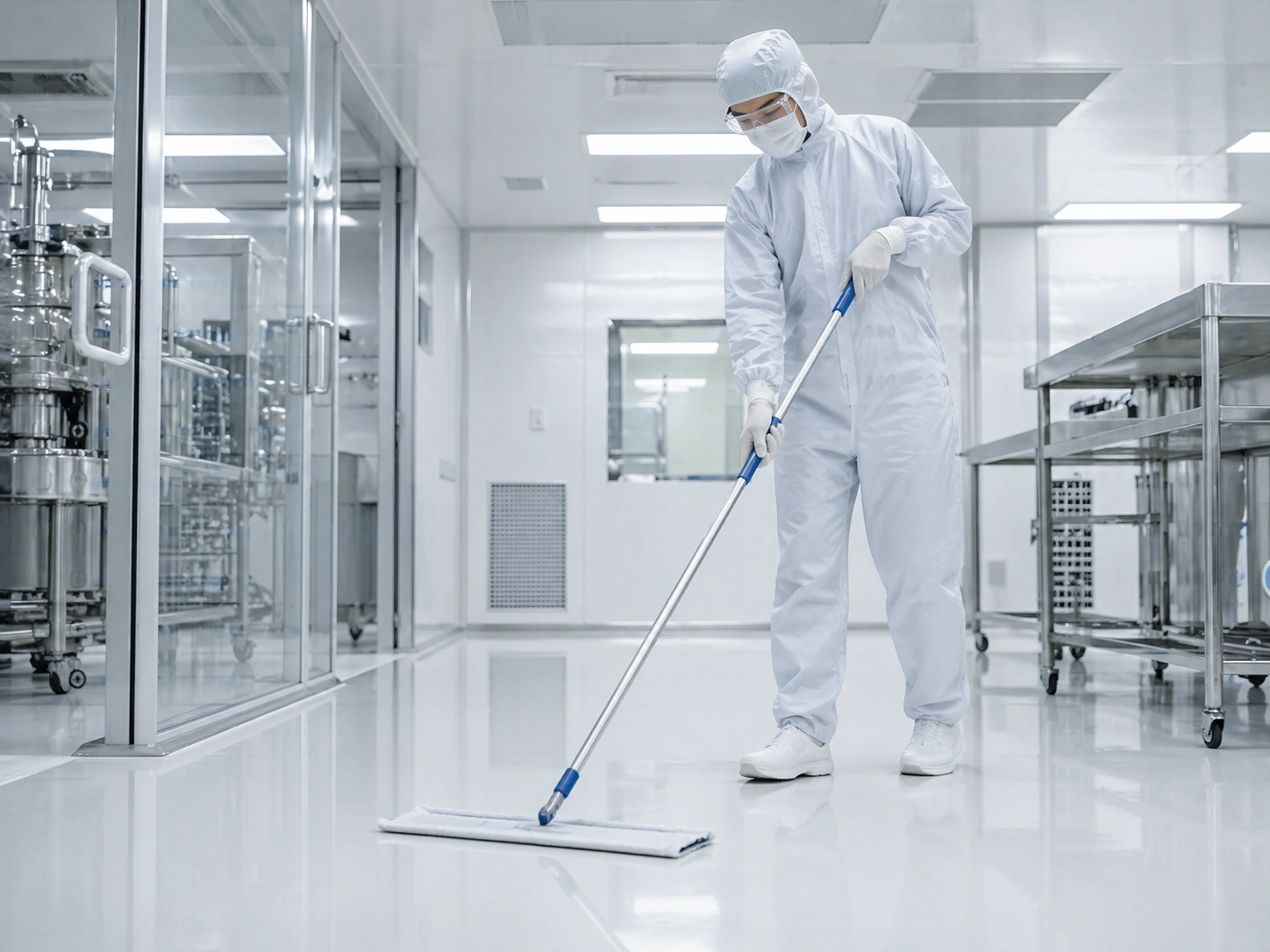
In pharmaceutical cleanroom operations, a cleanroom mop system should be evaluated as a complete contamination-control tool, not as isolated components purchased separately.
Pharmaceutical QA teams often investigate environmental monitoring deviations by reviewing cleaning tools, operator workflow, disinfectant contact time, and whether the mop head, frame, handle, and bucket system are compatible with the facility’s cleaning SOP.A cleanroom mop head may be qualified individually, but contamination risk can still occur when the mop head, frame, handle, bucket, and operator workflow are not evaluated together.
Environmental monitoring failures can have many causes. A properly selected mop system helps support routine contamination control by improving surface contact, disinfectant delivery, and workflow consistency.
| Renrumsrisiko | Mulig årsag | Kontrol på systemniveau |
|---|---|---|
| Partikeludflugter | Fiberafskalning, håndtagsslid, rammefriktion | Fnugfattig moppebetræk, glat ramme, kompatibelt håndtag |
| Øget biobelastning | Utilstrækkelig våd kontakt, fortyndet desinfektionsmiddel | Korrekt mætning, spandadskillelse, verificeret desinfektionsmiddelkompatibilitet |
| Rum-til-rum forurening | Genbrug af brugt væske eller snavset moppeoverflade | Kontrolleret rengøringssekvens og dual/triple-bucket workflow |
| Revisionsfund | Uklar værktøjskvalifikation eller rengørings-SOP | Dokumenteret systemvalg og rengøringsprocedure |
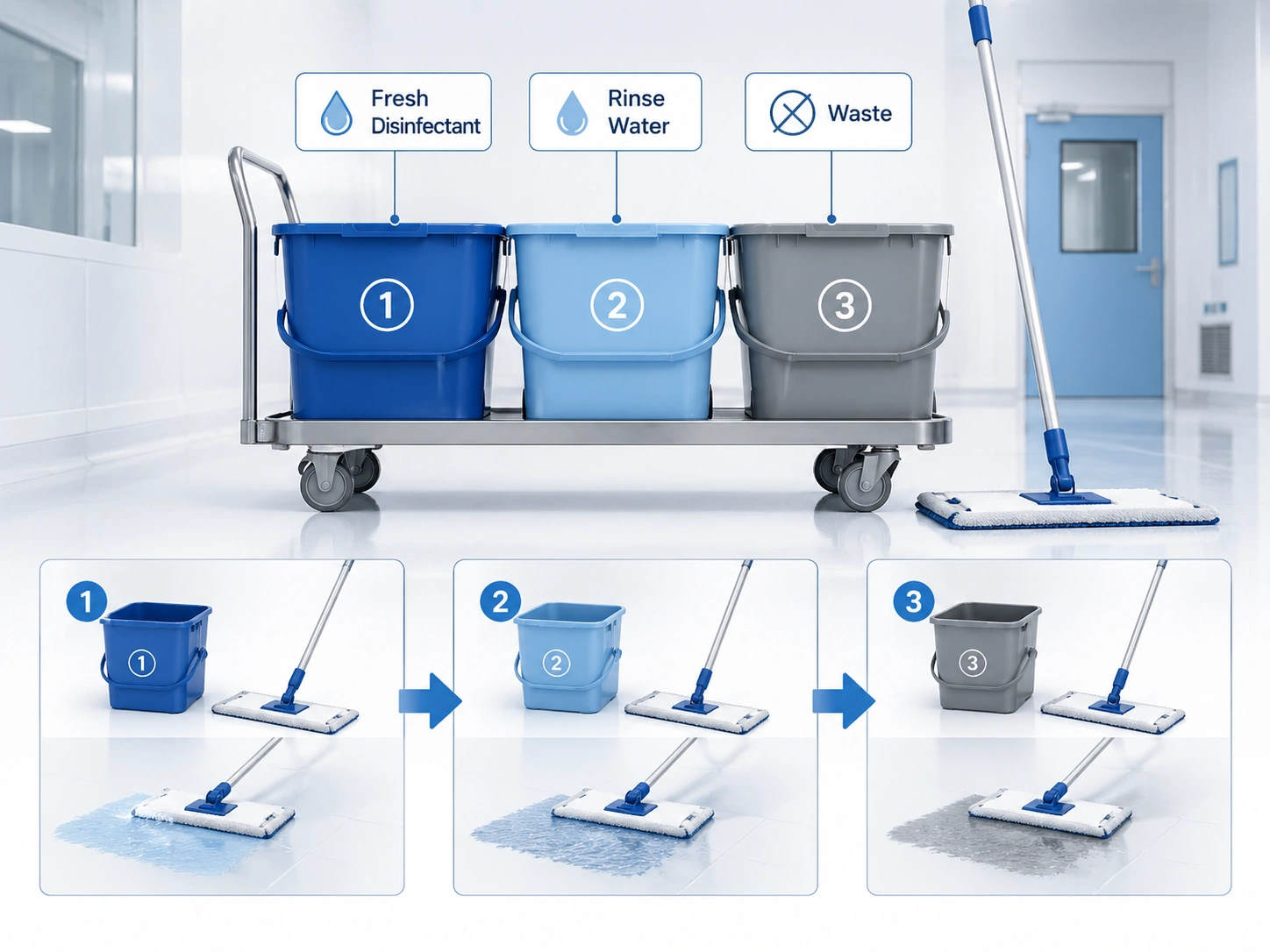
Bucket configuration affects how disinfectant is prepared, applied, rinsed, and separated from waste fluid. For higher-risk cleanroom areas, facilities often prefer more controlled separation of fresh solution and used fluid.
| Feature | Enkelt spand | Dobbelt spand | Triple Bucket |
|---|---|---|---|
| Frisk og brugt væskeseparation | Begrænset | Moderat | Stærk |
| Kontrol med desinfektionsmiddelfortynding | Sænke | Bedre | Bedst |
| Krydskontamineringsrisikokontrol | Grundlæggende | Forbedret | Højest |
| Almindelig brug | Støtteområder med lavere risiko | Rutinemæssig ISO renrum rengøring | Pharma-, GMP- og arbejdsgange med høj kontrol |
A reliable system should be selected by material, surface contact, sterilization compatibility, disinfectant compatibility, and cleaning area.
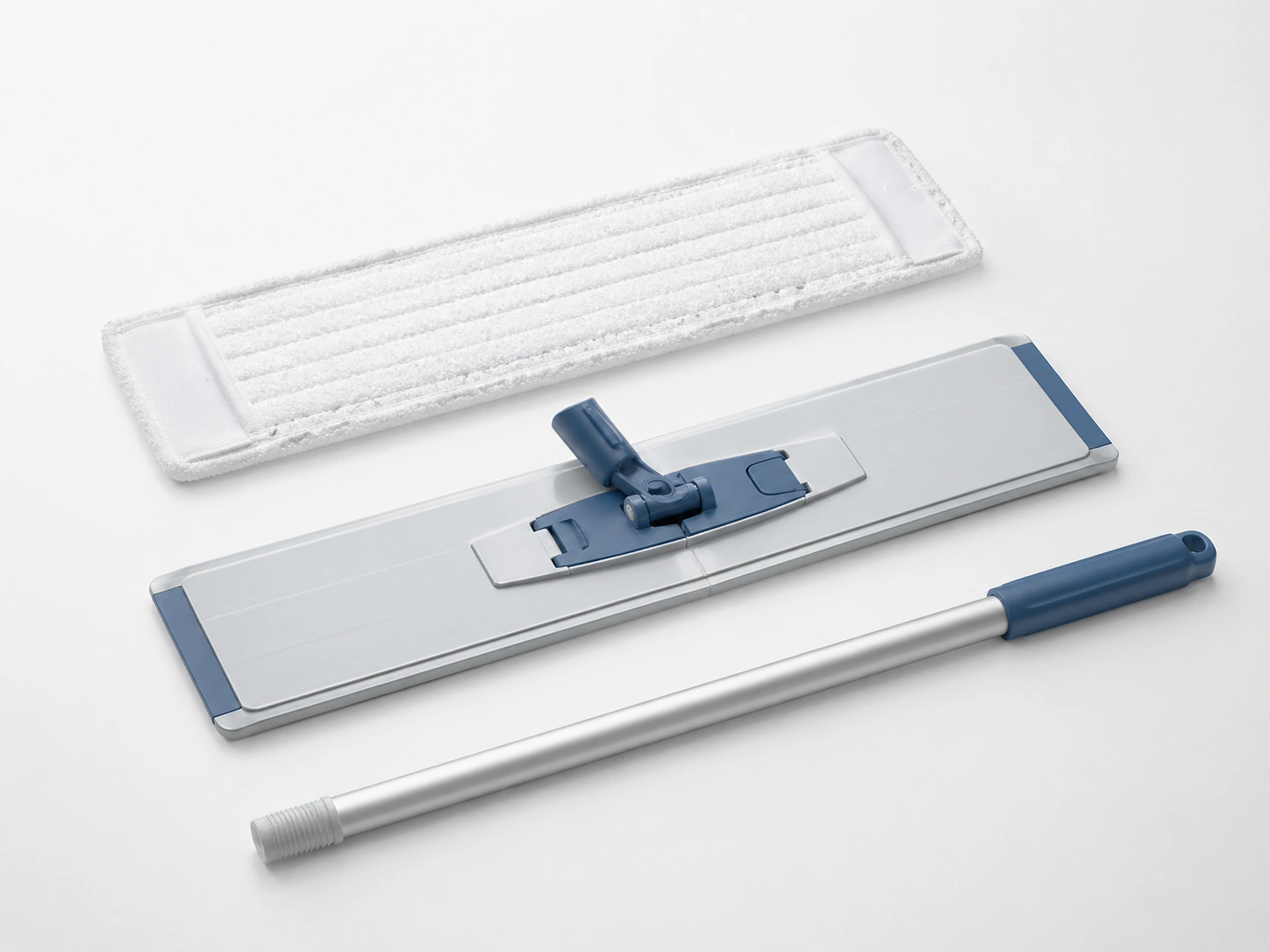
| Attribut | Polyester med forseglet kant | Mikrofiber |
|---|---|---|
| Typisk fordel | Fnugløs ydeevne og kemisk modstandsdygtighed | Høj overfladekontakt og restopsamling |
| Almindelig brug | Farmaceutiske og kontrollerede miljøer | Rutinemæssig rengøring af renrum og støtteområder |
| Steriliseringsmulighed | Kan understøtte sterile eller autoklaverbare konfigurationer afhængigt af produktdesign | Afhænger af konstruktion og leverandørspecifikation |
| Bedst til | Fnugløs mopping og desinfektionsmiddelkompatibilitet | Fjernelse af partikler og rester på større overflader |
MIDPOSI offers cleanroom mop options in different weight levels and sterile or non-sterile configurations to support GMP, ISO, pharmaceutical, laboratory, and controlled-environment cleaning programs.
| Product Type | Model / Page | Konfiguration | Recommended Use |
|---|---|---|---|
| Heavy Duty White Cleanroom Mop | 65g Sterile Mop | Steril | Higher-control GMP and pharmaceutical cleaning workflows |
| Heavy Duty White Cleanroom Mop | 65g Non-Sterile Mop | Ikke-steril | Controlled areas where sterile supply is not required |
| Medium White Cleanroom Mop | 55g Sterile Mop | Steril | Routine GMP cleanroom cleaning with balanced absorption and handling |
| Medium White Cleanroom Mop | 55g Non-Sterile Mop | Ikke-steril | ISO cleanroom and controlled production cleaning |
| Light White Cleanroom Mop | 40g Sterile Mop | Steril | Lower-weight sterile cleaning tasks and controlled-area wiping support |
| Light White Cleanroom Mop | 40g Non-Sterile Mop | Ikke-steril | Cost-sensitive routine cleanroom cleaning |
| Microfiber Stripe Cleanroom Mop Pad | ISO 5 Blue Microfiber Mop Pad | Mikrofiber | Residue pickup and routine ISO cleanroom surface cleaning |
| Microfiber Stripe Cleanroom Mop Pad | ISO 5 Green Microfiber Mop Pad | Mikrofiber | Color-coded cleanroom cleaning workflows |
Pharmaceutical and controlled-environment buyers should confirm sterilization method, chemical compatibility, reusable lifecycle, and available documentation before approving a cleanroom mop system.
| Rengøringsmiddel | Hvorfor det betyder noget | Hvad skal bekræftes |
|---|---|---|
| 70% IPA | Bruges almindeligvis til renrumsaftørring og desinfektionsstøtte | Ingen materialenedbrydning eller unormal afgivelse |
| Kvaternære ammoniumforbindelser | Anvendes i rutinemæssige desinfektionsprogrammer | Kompatibilitet med moppebetræk og rammemateriale |
| Hydrogenperoxid | Anvendes i mange desinfektionsprogrammer med kontrolleret miljø | Materialebestandighed og ydeevne efter eksponering |
| Blegemiddel / natriumhypochlorit | Kan bruges til rotationsdesinfektion | Modstandsdygtighed over for misfarvning, skørhed eller fiberskade |
For GMP and ISO cleanroom purchasing, buyers often need more than product photos and price. MIDPOSI can support technical review with product and material information for internal qualification.
The supplier does not replace the facility’s validation team, but a professional mop system supplier should support QA review with clear product documentation and material information.
Use the table below as a practical starting point when selecting a mop system for pharmaceutical, medical device, laboratory, electronics, or ISO cleanroom applications.
| Krav | Anbefalet mulighed | Hvorfor det betyder noget |
|---|---|---|
| GMP farmaceutisk facilitet | Renrumsmoppesystem med lavt fnug og dokumenteret materialekompatibilitet | Understøtter rengørings-SOP, QA-gennemgang og forventninger til kontamineringskontrol |
| Sterilt eller aseptisk støtteområde | Sterilt engangsmoppebetræk eller valideret genanvendeligt system | Reducerer genbrugsrelaterede forureningsproblemer |
| Rutinemæssig ISO renrum rengøring | Renrumsmoppesystem i mikrofiber eller polyester | Understøtter fjernelse af rester og partikler fra store overflader |
| Rengøring af væg og loft | Flad moppestel med passende håndtagslængde | Forbedrer rækkevidde og overfladekontakt |
| Krydskontaminering kontrol | Disposable mop cover or dual/triple-bucket workflow | Hjælper med at adskille frisk opløsning, skyllevæske og spildvæske |
| Omkostningskontrol | Genanvendelig ramme og håndtag med udskiftelige moppebetræk | Afbalancerer driftsomkostninger med krav til forureningskontrol |
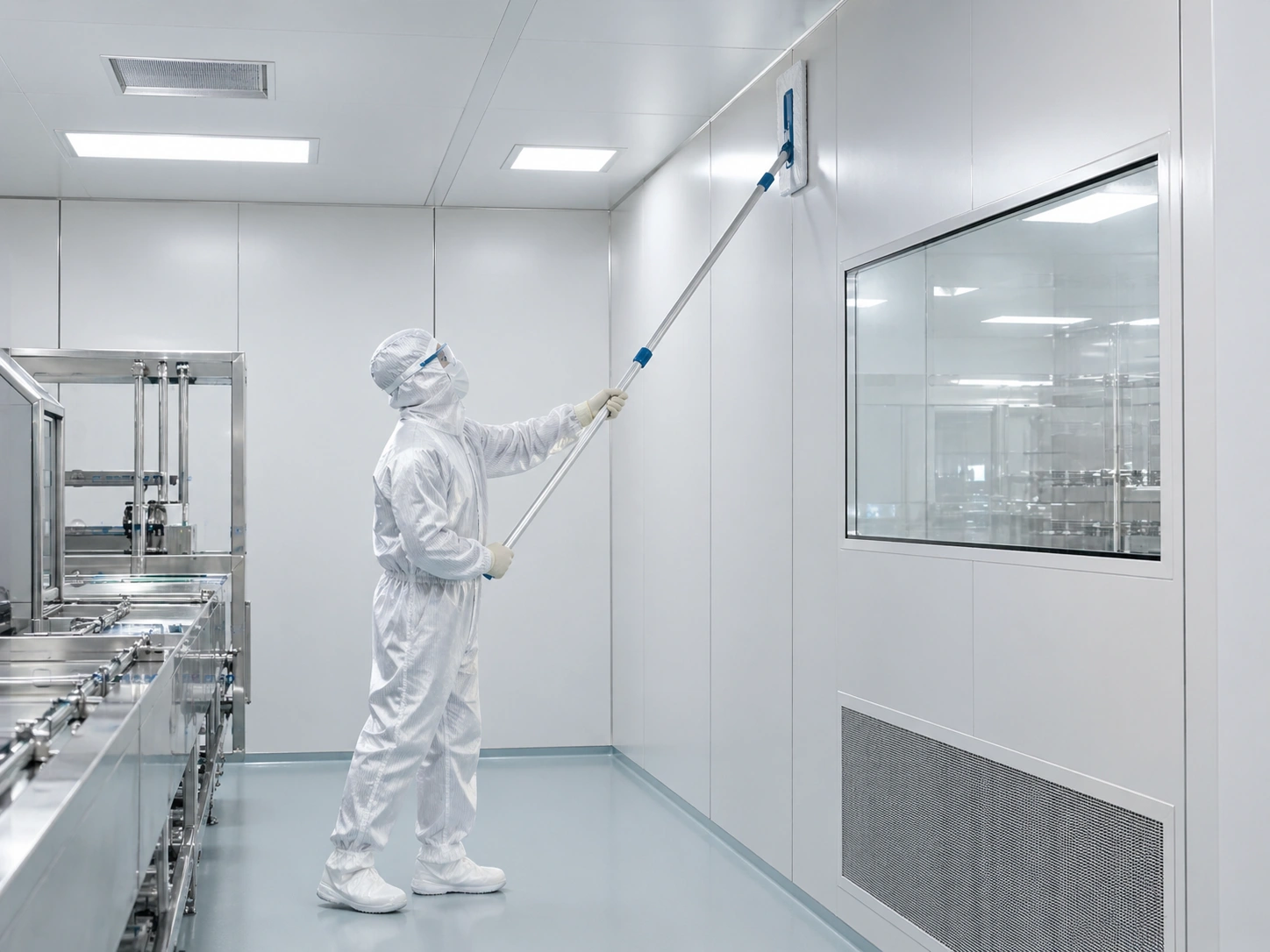
Different controlled environments have different expectations for lint control, microbial control, chemical compatibility, workflow separation, and documentation.
Common questions from pharmaceutical, laboratory, medical device, and controlled-environment buyers.


 Optimized by Seraphinite Accelerator