A guide to evaluating cleanroom mop systems for food processing and cosmetics manufacturing facilities. Covers how requirements differ from pharmaceutical cleanrooms, material selection considerations, allergen cross-contamination prevention, color coding, and program design for non-pharma controlled environments. For an introduction to cleanroom mop components, see the renrumsmoppesystem oversigt.
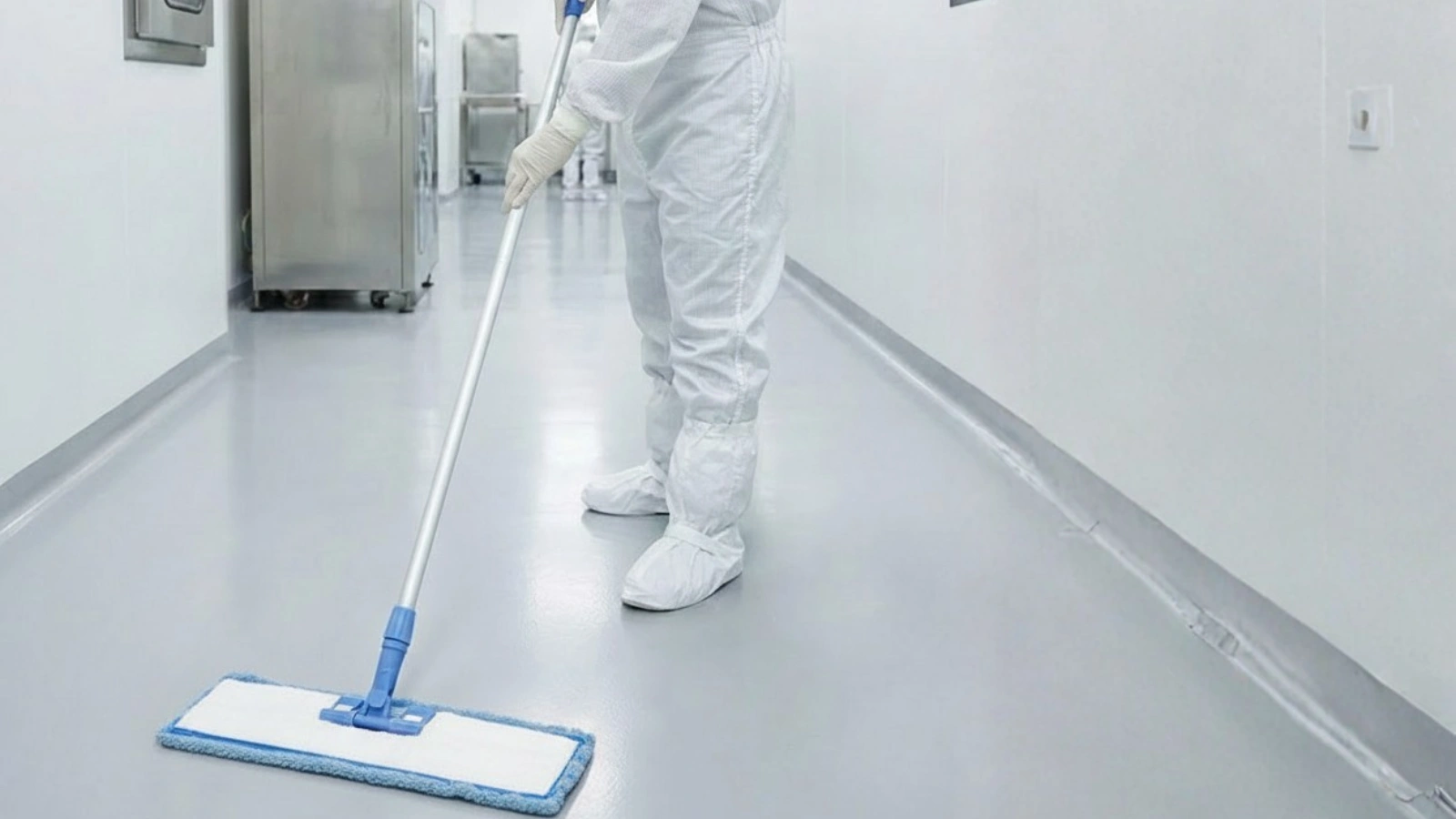
Food and cosmetics manufacturing cleanrooms differ from pharmaceutical cleanrooms in three ways that affect mop selection: (1) sterility is generally not required — the focus shifts to hygienic design, cleanability, and chemical compatibility with food-safe disinfectants, (2) allergen cross-contamination control is a unique operational requirement with no direct pharmaceutical equivalent, and (3) applicable standards include ISO 14644 (cleanroom classification), ISO 22716 (cosmetics GMP), and food safety standards such as BRC, SQF, or FSSC 22000 — each with cleaning tool expectations that differ from pharmaceutical GMP. The following sections provide a detailed framework for evaluating cleaning tools in these environments.
Many food processing and cosmetics manufacturing operations take place in controlled environments — ISO Class 7 or 8 cleanrooms, or cleanroom-like production areas with HEPA filtration, positive pressure, and gowning protocols. The cleaning tools used in these spaces directly contact production surfaces and should support the facility’s contamination control objectives.
Three industry developments are increasing the focus on cleaning tool quality:
Food safety auditors under BRC, SQF, and FSSC 22000 schemes increasingly review cleaning tool specifications, material composition, and condition as part of facility inspections. Tools that shed fibers, retain moisture, or cannot be adequately cleaned between uses are cited as potential contamination sources.
Food and cosmetics manufacturers are increasingly building and certifying production areas to ISO 14644 cleanroom classifications. An ISO-classified room cleaned with non-cleanroom tools creates a disconnect between the facility standard and the cleaning program.
Facilities processing multiple allergen-containing products need cleaning tools that support validated allergen removal and prevent cross-contact between production campaigns. The cleaning tool itself should not be a vector for allergen transfer.
Professionals coming from a pharmaceutical background — or reading pharmaceutical-focused content — may find the following differences helpful when translating cleanroom mop knowledge to food and cosmetics contexts. For the pharma reference point, see the GMP cleanroom mop grade selection guide, and for the fundamental differences between cleanroom and conventional tools, see cleanroom mop vs regular mop.
| Faktor | Pharmaceutical Cleanroom | Food / Cosmetics Cleanroom |
|---|---|---|
| Sterilitet | Required for Grade A/B aseptic areas | Generally not required; hygienic cleanliness is the standard |
| Primary concern | Particulate and microbial contamination | Microbial, allergen, and physical contamination |
| Disinfectants | Sporicidal agents, quaternary ammonium, hydrogen peroxide | Food-safe sanitizers, quaternary ammonium, peracetic acid (food); alcohol-based, quaternary ammonium (cosmetics) |
| Applicable standards | EU GMP Annex 1, FDA 21 CFR 211, PIC/S | ISO 14644, ISO 22716 (cosmetics), BRC / SQF / FSSC 22000 (food) |
| Documentation depth | COA, CoI, particle data, batch traceability, change control | COA, material composition, chemical compatibility; generally more proportional |
| Particle spec | Stringent — continuous filament polyester typical for higher grades | Moderate — microfiber often acceptable; particle control balanced with durability |
| Unique requirement | Sterility assurance, endotoxin control | Allergen segregation, food-contact material compatibility |
The choice of mop cover material in food and cosmetics facilities should be driven by the specific cleaning chemistry and contamination control priorities of the application — not by defaulting to the lowest-cost option. For a deeper material comparison, see the microfiber cleanroom mop guide.
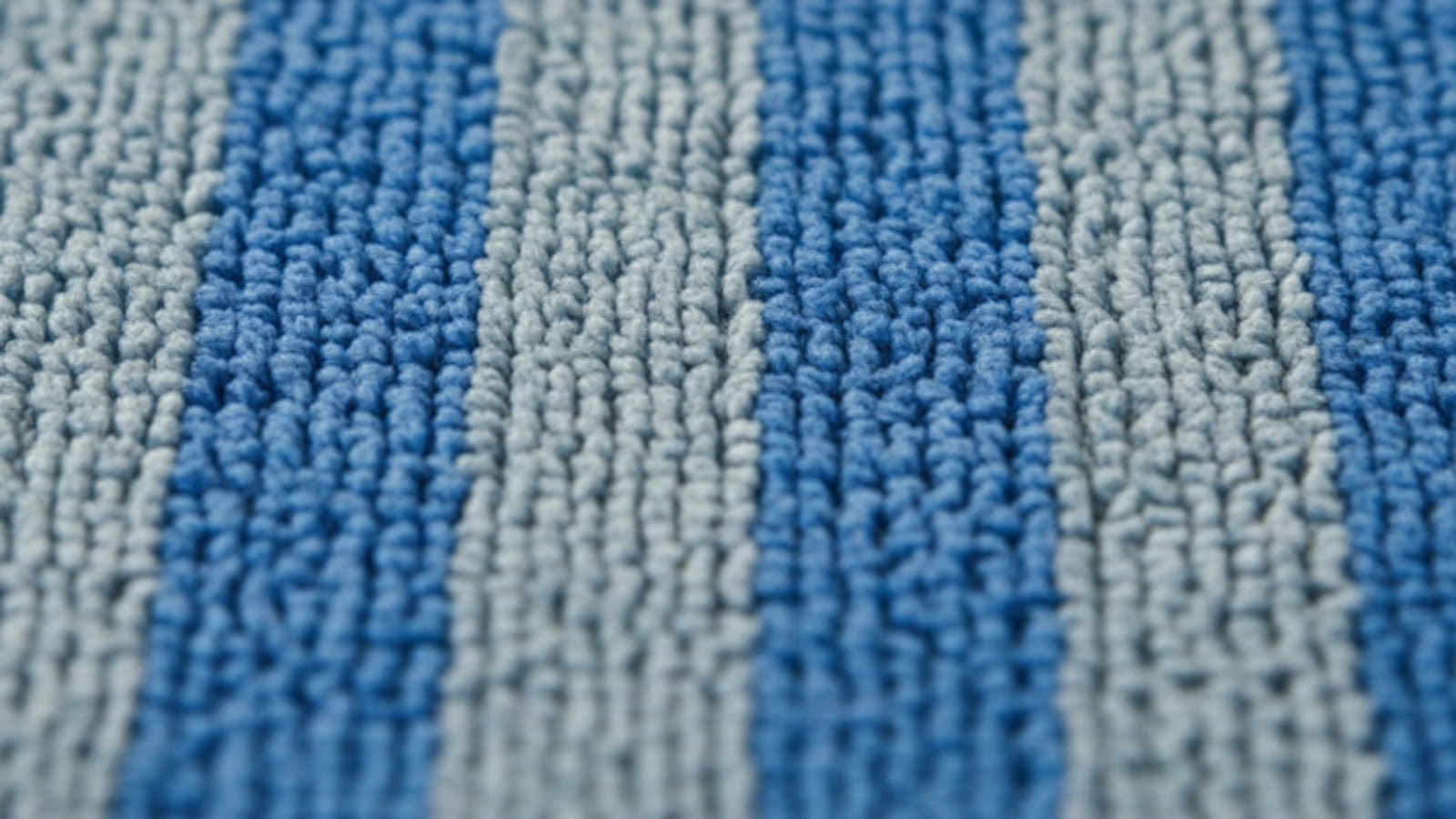
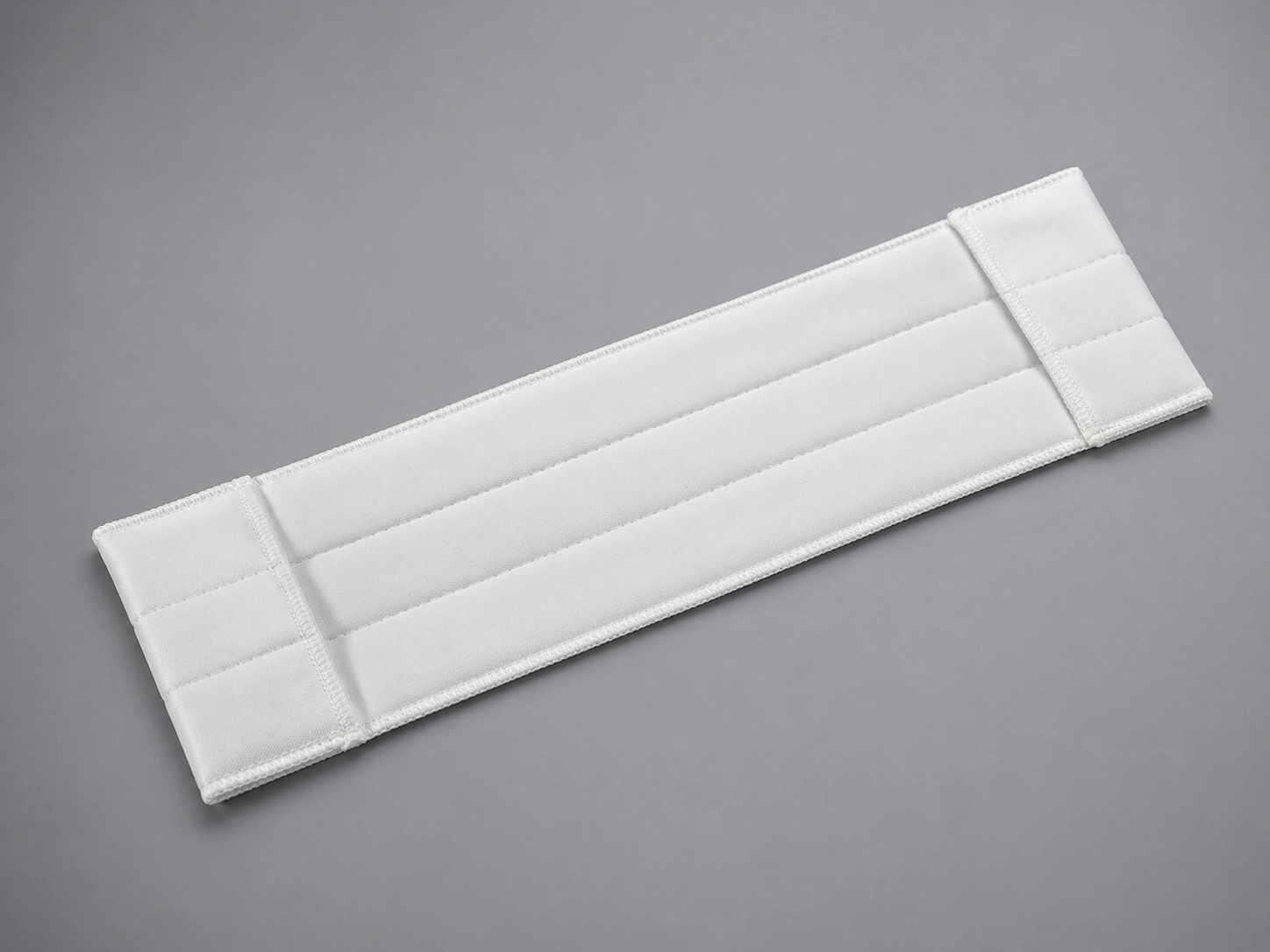
Polyester-polyamide blend with high surface area. Effective at capturing fine particles and applying sanitizers evenly across large floor areas — useful in food processing where broad disinfectant coverage is an operational requirement. Edges should be ultrasonically or laser sealed to reduce fiber release into production environments.
Typically evaluated for: general cleanroom zones, food processing floors, cosmetics filling areas.
100% continuous filament construction minimizes fiber shedding. Highly resistant to aggressive cleaning agents including quaternary ammonium and peracetic acid sanitizers used in food facilities. Lower absorbency than microfiber, which may require more frequent re-saturation in large areas.
Typically evaluated for: higher-grade cleanrooms, areas using aggressive sanitizers, cosmetics aseptic filling zones.
Hardware consideration: Stainless steel mop frames and handles (material grade subject to product specification) offer corrosion resistance when exposed to the sanitizing chemicals commonly used in food and cosmetics facilities. Smooth, crevice-free designs support cleanability between uses.
Food and cosmetics facilities that process multiple product types — or multiple allergen-containing formulations — face a cross-contamination challenge that has no direct equivalent in single-product pharmaceutical manufacturing. Color-coded cleaning tools provide a practical, visible, and auditable control measure.
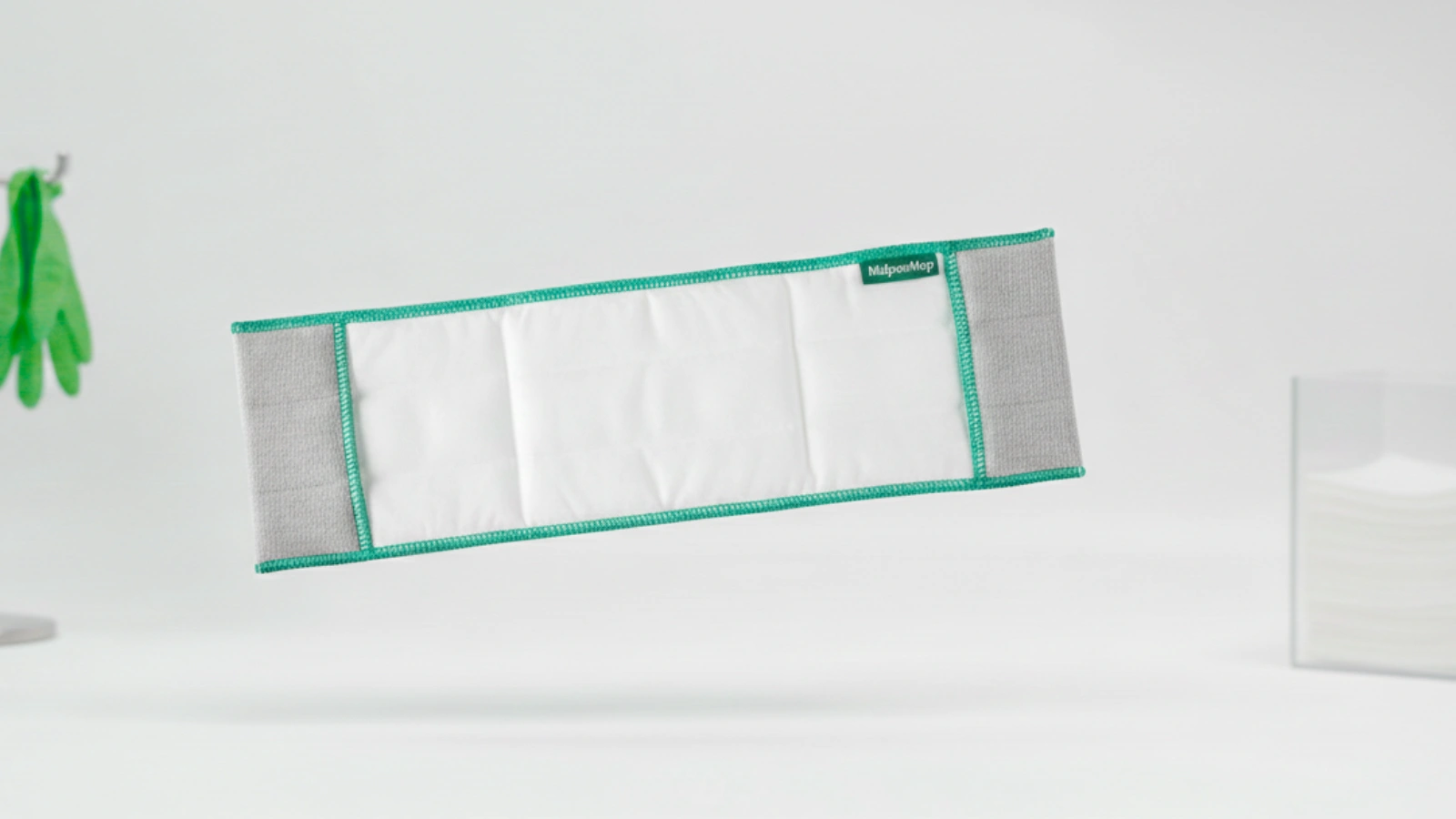
The specific color assignments should be defined by each facility based on its product mix, allergen profile, and cleaning zone map. The principle is that an operator — and an auditor — should be able to confirm that the correct tool is in the correct zone at a glance, without reference to documentation.
A cleaning program in a food or cosmetics facility does not need the sterility or full pharmaceutical documentation framework — but it should be designed, not improvised. The following considerations can help structure a program that is practical, auditable, and effective. For the reusable-vs-disposable economics dimension, see the disposable vs reusable decision guide.
Map the facility into cleaning zones based on contamination risk: high-risk (allergen production, aseptic filling), medium-risk (general production, packaging), and low-risk (corridors, warehouses). Each zone should have a defined cleaning frequency, tool assignment, and disinfectant specification.
Confirm that the selected mop cover material is compatible with the facility’s sanitizers and cleaning agents. Request compatibility data from the mop supplier. If the supplier cannot provide compatibility data with the specific chemicals used, perform in-house testing before committing to a volume purchase.
Define cleaning frequency per zone and mop cover change triggers. Per-room or per-defined-area policies are preferred over visual soiling as the sole change criterion. Between production campaigns involving allergen changes, a full cleaning tool change may be specified.
Include post-cleaning verification — visual inspection as a minimum, with ATP swabbing or surface protein testing as an option for higher-risk zones. Verification results should be documented and trended. A negative verification trend should trigger a review of cleaning tools, techniques, or frequency.
Review the cleaning program at least annually, or when: a new product or allergen is introduced, a new sanitizer is adopted, facility layout changes, or a cleaning-related audit observation or customer complaint occurs. The review should include tool condition assessment and supplier performance evaluation.
Written cleaning SOPs with defined tools, frequencies, and methods. Training sign-off records for all cleaning operators. Cleaning logs showing date, zone, operator, and disinfectant used. The documentation standard does not need to match pharmaceutical depth, but it should demonstrate that a defined program exists and is being followed consistently.
Generally, no. Sterility is a pharmaceutical cleanroom requirement, not a standard food processing requirement. Food facilities should focus on hygienic design, cleanability, chemical compatibility with food-safe sanitizers, and allergen segregation. If a specific food process requires sterility (e.g., aseptic packaging), that requirement should be defined by the facility’s HACCP plan or risk assessment — not assumed from pharmaceutical practice.
ISO 22716 (Cosmetics GMP) provides guidelines for manufacturing hygiene, including cleaning and sanitation. It does not specify cleaning tool standards but does require that cleaning programs are documented, tools are appropriate for their intended use, and cleaning effectiveness is verified. ISO 14644 applies if the facility is cleanroom-classified. Facilities exporting to the EU must also comply with EC 1223/2009. Cleaning tool suppliers should be able to provide material composition and chemical compatibility documentation to support the facility’s compliance demonstration.
Three controls: (1) dedicate color-coded mop sets to specific allergen zones and never rotate tools between zones, (2) implement a full mop cover change between production campaigns involving different allergen profiles, and (3) validate that the cleaning procedure — including the mop and disinfectant combination — achieves acceptable allergen removal through surface protein testing or allergen-specific swabbing. The cleaning tool is one element of the allergen control program; it should be assessed alongside cleaning technique, disinfectant selection, and verification methods.
If the facility produces both food and cosmetics in separate areas, dedicated mop sets per production category are recommended. Cross-category tool sharing introduces contamination risk and complicates audit documentation. Color-coded sets with clear zone assignments provide the simplest and most auditable segregation.
Request: material composition documentation (fiber type, blend ratio, any treatments or coatings), chemical compatibility data with your specific sanitizers, particle generation data (where available), and dimensional specifications. Confirm edge sealing method (ultrasonic or laser). If the supplier claims any food-contact or cosmetics-GMP certifications, request current certificates. For products not specifically certified to food/cosmetics standards, the documentation should still support the facility’s own material evaluation and qualification process.
Under BRC, SQF, and FSSC 22000, auditors typically review: whether cleaning tools are fit for purpose and in good condition, whether they are stored hygienically between uses, whether a color-coding or segregation system is in place and being followed, and whether cleaning procedures are documented and verified. Auditors may ask to see material composition documentation and cleaning records. Tools showing visible wear, fiber shedding, or inadequate cleaning between uses are commonly cited observations.
It depends on the application. Microfiber offers higher absorbency and effective particle capture — useful for large-area food processing floors where disinfectant coverage and throughput are priorities. Polyester offers lower particle shedding and better chemical resistance — useful in areas using aggressive sanitizers or where fiber contamination risk must be minimized. Facilities should test both materials with their actual sanitizers and under actual operating conditions before deciding. The correct answer is the material that performs under your specific conditions, not a universal recommendation.
Request product samples and technical documentation to evaluate MIDPOSI cleanroom mop products under your facility’s specific operating conditions, sanitizers, and regulatory requirements. Product suitability must be confirmed by the user before final specification.
Material composition, chemical compatibility data, and product samples available for evaluation. MIDPOSI products are designed for controlled-environment cleaning. Food-contact or cosmetics GMP certifications should be confirmed with supplier documentation before specification.
Disclaimer: This guide provides a general framework for evaluating cleanroom mop products in food and cosmetics manufacturing environments and does not constitute regulatory or legal advice. MIDPOSI products are not certified to food-contact material standards (e.g., FDA 21 CFR, EU 1935/2004), food safety scheme standards (BRC, SQF, FSSC 22000), or cosmetics GMP standards (ISO 22716). Product suitability for any specific food, cosmetics, or other regulated application must be determined by the user based on their specific operating conditions, applicable regulations, and qualification processes. References to industry standards are informational and do not imply product compliance with those standards.