

Sterile renrumsmopper til aseptisk behandling er engangsmopper eller strengt validerede genanvendelige mopper, der opnår sterilitetsgarantiniveau SAL 10⁻⁶ (Sterility Assurance Level) gennem validerede steriliseringsmetoder med biologisk indikatorbekræftelse.
Sterile renrumsmopper til aseptisk behandling er en kritisk del af GMP- og ISO-kompatible renrumsdrift. De understøtter kontamineringskontrol, validerede rengøringsprocedurer og sterilitetssikring i aseptiske produktionsmiljøer.
Sterile renrumsmopper er en kernedel af GMP-kompatible forureningskontrolprogrammer.
FDA, EMA og EU GMP Annex 1 forventninger kræver valideret sterilitet, sporbarhed og dokumentation.
Regelmæssig overvågning og sterilitetsverifikation er afgørende for at opretholde overholdelse og proceskontrol.
Personaletræning og proceduremæssig disciplin er nødvendig for at sikre korrekt aseptisk moppehåndtering og brug.
Afvigelseshåndtering, CAPA-systemer og revisionsklare registreringer hjælper med at drive løbende forbedringer.

Sterile renrumsmopper til aseptisk behandling er engangsmopper eller strengt validerede genanvendelige mopper, der opnår sterilitetsgarantiniveau SAL 10⁻⁶ (Sterility Assurance Level) gennem validerede steriliseringsmetoder med biologisk indikatorbekræftelse. I henhold til EU GMP Annex 1 og FDA-vejledning kræver sterile mopper, der bruges i Grad A (ISO 5) kritiske zoner, gammabestråling eller valideret autoklavesterilisering, steril barriereemballage, lot-baseret sporbarhed og dokumenteret sterilitetsverifikation gennem biologiske indikatorer. Sterile mopper reducerer risikoen for genbrugskontaminering og giver sikker sterilitet til aseptisk fremstilling, hvor produktsterilitet ikke er til forhandling.
Ved aseptisk farmaceutisk behandling kan én kompromitteret moppe eller én uvalideret rengøringsprocedure resultere i batchtab, patientsikkerhedsrisiko og lovmæssige fund. De fleste faciliteter forstår konceptet, men få har en komplet sterilitetsgarantiramme, der integrerer materialevidenskab, steriliseringsvalidering, emballageintegritet og brugssporing.
Denne artikel giver en komplet, implementeringsklar sterilitetsgarantiramme for aseptiske behandlingsmopper - et kritisk emne, som mange konkurrenter kun behandler på et grundlæggende produktbeskrivelsesniveau snarere end ud fra et driftsmæssigt ekspertise og kontamineringskontrolperspektiv.
Som diskuteret i vores engangs- vs genanvendelig renrumsmoppeguide, kræver sterilitetssikring forståelse af hele livscyklussen fra materialevalg over valideret sterilisering til aseptisk brug og sporbarhed.
| Standard | Karakter A (ISO 5) Krav | Bevis påkrævet | Frekvens |
|---|---|---|---|
| EU GMP bilag 1.5 | Sterilitet påviselig | BI bekræftelse | Per brug |
| FDA aseptisk behandlingsvejledning | Valideret steriliseringsmetode | Valideringsrapport | Pr. batch/moppe |
| USP <797> | Sterilitetssikring | Analysecertifikat | Pr. parti |
| PDA TR13 | Program for vedligeholdelse af sterilitet | Overvågning af data | Løbende |
┌─────────────────────────────────────────────────────────────────────┐
│              STERILITY ASSURANCE LEVEL (SAL) EXPLAINED             │
├─────────────────────────────────────────────────────────────────────┤
│  WHAT IS SAL 10⁻⁶?                                                 │
│  • Probability of finding viable microorganism: 1 in 1,000,000    │
│  • Mathematical notation: 10⁻⁶                                    │
│  • Required for aseptic processing and terminally sterilized       │
│    products                                                        │
│                                                                     │
│  HOW IS IT ACHIEVED?                                               │
│  • Method: Gamma irradiation (25-50 kGy) OR ETO (37-63°C)         │
│  • Validation: Biological indicator (BI) showing no growth        │
│  • Material compatibility: Must withstand sterilization without    │
│    degradation                                                     │
│  • Packaging: Maintains sterility until use                        │
│                                                                     │
│  DOCUMENTATION REQUIRED                                            │
│  • Sterilization certificate from supplier                         │
│  • Lot number traceability                                         │
│  • BI confirmation records                                         │
│  • Validation data for facility method                             │
│                                                                     │
│  STERILITY ASSURANCE LEVELS                                        │
│  • SAL 10⁻⁶: Terminal sterilization (Grade A critical zone)       │
│  • SAL 10⁻³: High-level disinfection (Grade B)                    │
│  • SAL 10⁻⁴: Sanitization (Grade C)                               │
└─────────────────────────────────────────────────────────────────────┘
| Metode | Temperature | Dose / Time | Effektivitet | Materialekompatibilitet | Verifikation |
|---|---|---|---|---|---|
| Gamma bestråling | N/A | 25-50 kGy | ≥6 log, SAL 10⁻⁶ | All materials | BI certificate |
| Autoclave (Steam) | 121-134°C | 15-30 min @ 15 psi | ≥6 log, SAL 10⁻⁶ | Polyester compatible | BI per cycle |
| ETO (Ethylene Oxide) | 37-63°C | 3-12 hrs + 48h aeration | ≥6 log, SAL 10⁻⁶ | All materials | BI certificate |
| Dry Heat | 160-180°C | 2-4 hrs | ≥4 log, SAL 10⁻⁶ | Limited materials | BI certificate |
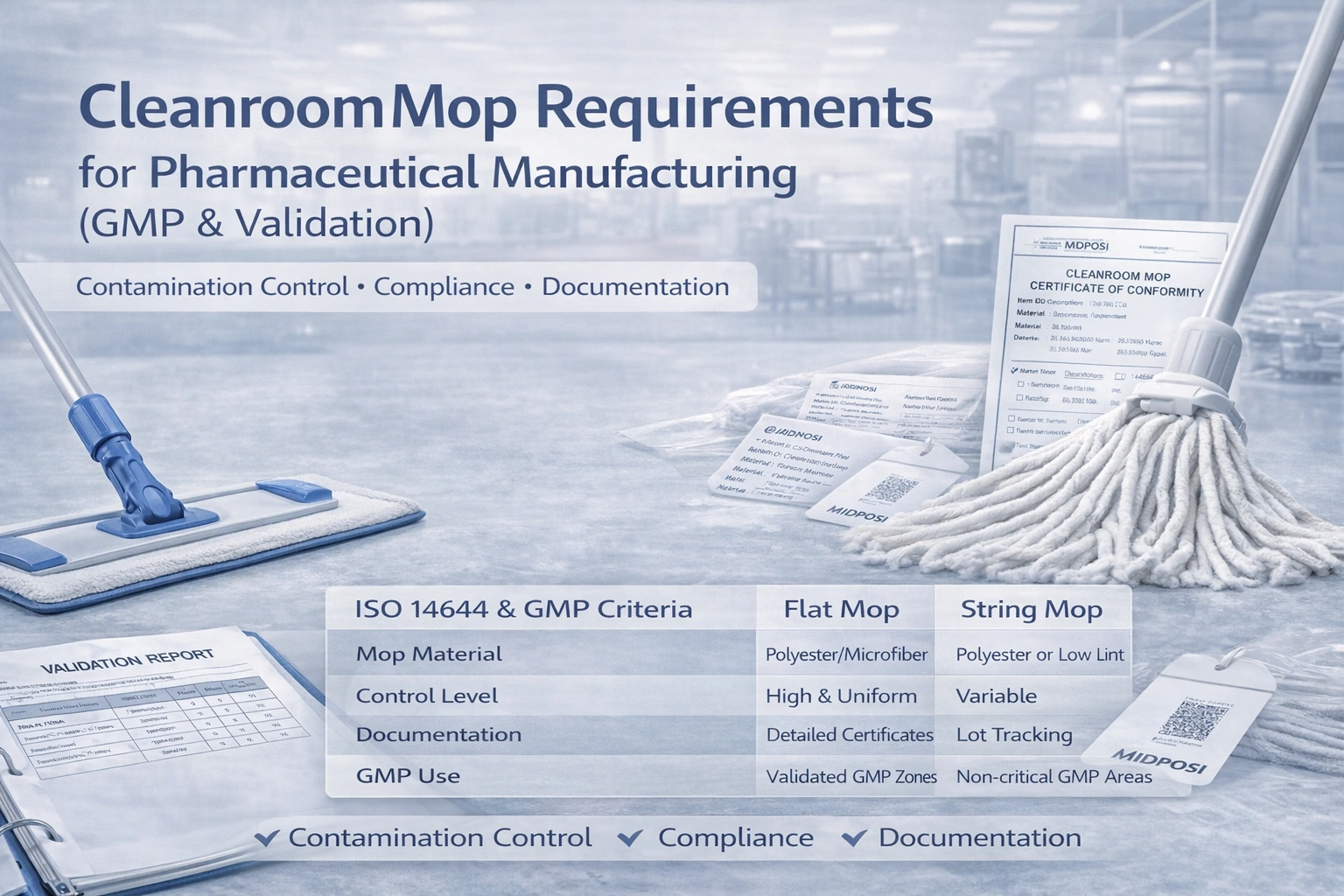
Recommended for Grade A:
┌─────────────────────────────────────────────────────────────────────┐
│            GAMMA IRRADIATION FOR ASEPTIC MOPS FRAMEWORK            │
├─────────────────────────────────────────────────────────────────────┤
│  IRRADIATION PARAMETERS                                            │
│  • Dose range: 25-50 kGy                                           │
│  • Source: Cobalt-60 or Cesium-137                                 │
│  • Effect: SAL 10⁻⁶ sterility achieved                            │
│  • Penetration: Through entire mop assembly                        │
│  • Temperature rise: Minimal during irradiation                    │
│                                                                     │
│  MATERIAL CONSIDERATIONS                                           │
│  • Polyester: Excellent (maintains integrity)                      │
│  • Microfiber: Good (minor degradation at high dose)               │
│  • Blends: Variable (validate per material)                        │
│  • Handles: Must be irradiation-compatible                         │
│                                                                     │
│  VALIDATION PROTOCOL                                               │
│  ☐ Supplier BI certificate attached to each package batch          │
│  ☐ BI type specified                                               │
│  ☐ BI population: ≥10⁶ spores                                      │
│  ☐ D-Value: ≥10⁶ (10⁻⁶)                                           │
│  ☐ Incubation: 30 days at 55-60°C                                  │
│  ☐ Result: No growth required for acceptance                       │
│                                                                     │
│  PACKAGING INTEGRITY                                               │
│  ☐ Sterile barrier packaging                                       │
│  ☐ Sealed outer packaging                                          │
│  ☐ Maintain sterility indicator visibility                         │
│  ☐ No damage or breach detected                                    │
│                                                                     │
│  CERTIFICATE VERIFICATION                                          │
│  ☐ Certificate reviewed against irradiation parameters             │
│  ☐ Lot number cross-referenced                                     │
│  ☐ Valid through date confirmed                                    │
└─────────────────────────────────────────────────────────────────────┘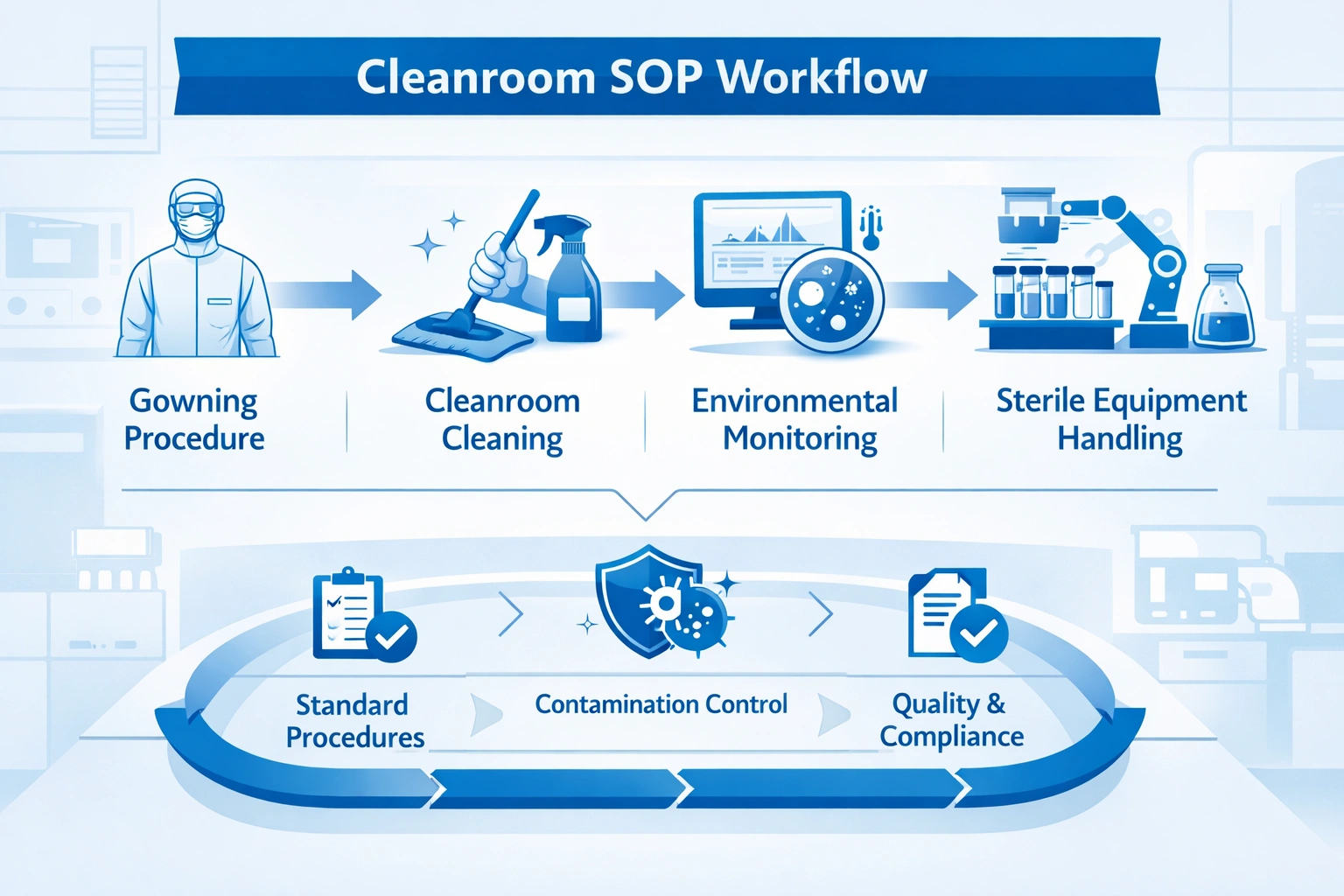
| Packaging Element | Krav | Critical Control | Verifikation |
|---|---|---|---|
| Primary Barrier | Double sterile bag or sealed container | No breach detection | Visual inspection |
| Outer Packaging | Protective tear-proof layer | Physical integrity | Seal integrity test |
| Sterility Indicator | Visible and accessible | Confirm intactness | Color change verification |
| Parti sporbarhed | Unique lot number on all units | Sporbarhed | Scanning / verification |
| Use-Ready Format | Quick access without contamination | Containment risk | Aseptic transfer protocol |
| Udløb | Valid through date displayed | Time-limited sterility | Date monitoring |
Critical procedure for Grade A zones:
┌─────────────────────────────────────────────────────────────────────┐
│           ASEPTIC MOP TRANSFER PROTOCOL (GRADE A)                  │
├─────────────────────────────────────────────────────────────────────┤
│  PRE-TRANSFER PREPARATION                                          │
│  ☐ Personnel in Grade A gowning complete                           │
│  ☐ Gloves sanitized and donned                                     │
│  ☐ Transfer area validated as clean                                │
│  ☐ Mop staging area prepared                                       │
│  ☐ Tools and materials ready                                       │
│                                                                     │
│  PHASE 1: PACKAGING OPENING                                        │
│  ☐ Outer packaging inspected for integrity                         │
│  ☐ No damage, tears, or breaches detected                          │
│  ☐ Sterility indicator verified                                    │
│  ☐ Opened with sterile scissors or tool                            │
│                                                                     │
│  PHASE 2: PRIMARY BARRIER REMOVAL                                  │
│  ☐ Inner sterile bag exposed within clean air                      │
│  ☐ Mop immediately removed with sterile forceps                    │
│  ☐ Transferred to sterile holding container                        │
│  ☐ Container sealed immediately                                    │
│                                                                     │
│  PHASE 3: ASEPTIC TRANSFER                                         │
│  ☐ Mop transported via pass-through or direct transfer             │
│  ☐ No exposure to non-aseptic environment                          │
│  ☐ Received by Grade A operator                                    │
│  ☐ Transfer documented: Time, Mop ID, Lot #, Operators             │
│                                                                     │
│  PHASE 4: DOCUMENTATION                                            │
│  ☐ Transfer log updated                                            │
│  ☐ Sterility indicator recorded                                    │
│  ☐ Any discrepancies documented and investigated                   │
└─────────────────────────────────────────────────────────────────────┘ ┌─────────────────────────────────────────────────────────────────────┐
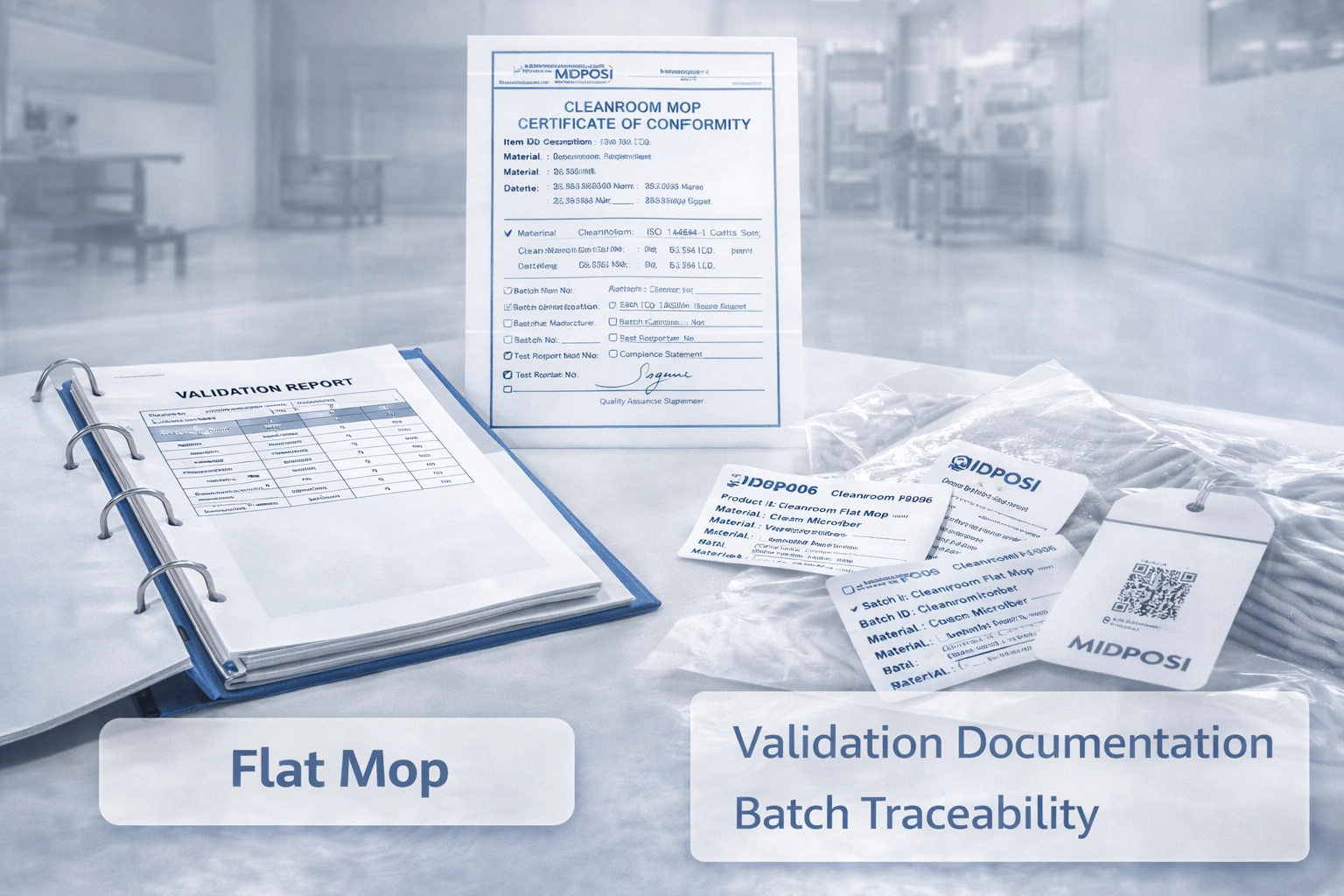
│ STERILE MOP LOT TRACEABILITY FRAMEWORK │
├─────────────────────────────────────────────────────────────────────┤
│ SUPPLIER LOT INFORMATION │
│ ☐ Supplier name │
│ ☐ Supplier lot # │
│ ☐ Manufacturing date │
│ ☐ Sterilization date │
│ ☐ Irradiation dose and method │
│ ☐ Sterility certificate # │
│ ☐ Valid through │
│ │
│ RECEIVING VERIFICATION │
│ ☐ Certificate matches shipment │
│ ☐ Lot number matches certificate │
│ ☐ Dose within specified range │
│ ☐ Sterility indicator verified │
│ ☐ Packaging integrity confirmed │
│ │
│ USAGE TRACKING SYSTEM │
│ ☐ Unique mop ID per unit │
│ ☐ Use date / operator / zone / purpose │
│ ☐ Disposal method documented │
│ │
│ DISPOSAL / REPLACEMENT TRACKING │
│ ☐ Disposal date │
│ ☐ Replacement mop ID │
│ ☐ Disposal reason documented │
│ │
│ AUDIT TRAIL │
│ ☐ Complete record from receipt to disposal │
│ ☐ Audit-ready for inspection │
│ ☐ Retention period: 5 years minimum │
└─────────────────────────────────────────────────────────────────────┘
| QC Indicator | Acceptkriterier | Frekvens | Action Threshold |
|---|---|---|---|
| BI Acceptance | No growth required | Pr. parti | Any growth = lot rejection |
| Lot Number Accuracy | 100% match between packaging and certificate | Per receipt | Mismatch = investigation |
| Dose Range | 25-50 kGy | Pr. parti | Outside range = re-sterilization |
| Packaging Integrity | 100% intact | Per brug | Breach = disposal |
| Expiry Compliance | No expired mops used | Per brug | Expired = rejection |
| Sporbarhed | 100% from receipt to disposal | Quarterly | Gaps = investigation |
Complete BI testing program:
┌─────────────────────────────────────────────────────────────────────┐
│         BIOLOGICAL INDICATOR (BI) VERIFICATION FRAMEWORK           │
├─────────────────────────────────────────────────────────────────────┤
│  BI SELECTION CRITERIA                                             │
│  ☐ Organism: Geobacillus stearothermophilus spores                 │
│  ☐ Population: ≥10⁶ spores                                         │
│  ☐ D-Value: ≥10⁶ (10⁻⁶)                                           │
│  ☐ Resistant to irradiation                                        │
│                                                                     │
│  SUPPLIER VERIFICATION                                             │
│  ☐ Supplier BI validation data reviewed                            │
│  ☐ Certificate authenticity verified                               │
│  ☐ BI placement confirmed                                          │
│                                                                     │
│  INCUBATION PROCEDURE                                              │
│  ☐ Temperature: 55-60°C                                            │
│  ☐ Duration: 30 days minimum                                       │
│  ☐ Positive control included                                       │
│  ☐ Negative control included                                       │
│                                                                     │
│  RESULT INTERPRETATION                                             │
│  ☐ No growth = Acceptable                                          │
│  ☐ Growth = Reject lot                                             │
│  ☐ Inconclusive = Re-test                                          │
│                                                                     │
│  LOT ACCEPTANCE DECISION                                           │
│  ☐ ACCEPT / REJECT / RE-STERILIZE / INVESTIGATE                    │
└─────────────────────────────────────────────────────────────────────┘| Metrisk | Mål | Data Source | Frekvens | Alert Level |
|---|---|---|---|---|
| BI Pass Rate | 100% (0 failures) | BI testing | Pr. parti | <95 % |
| Lot Rejection Rate | <1% | Rejection log | Quarterly | >2% |
| Sterility Indicator Integrity | 100% intact | Inspection | Per brug | <95 % |
| Traceability Completeness | 100% | Revidere | Månedlig | <90% |
| Expiry Compliance | 100% | Usage log | Månedlig | <95 % |
| Valid Through Rate | 0% expired | QC system | Sammenhængende | Any |
| Re-sterilization Rate | <0.5% | Re-sterilization log | Quarterly | >1% |

Consequences
Bedste praksis
Consequences
Bedste praksis
Consequences
Bedste praksis

EN: Aseptic processing requires SAL 10⁻⁶, meaning there is a one-in-one-million probability of finding a viable microorganism. This is achieved through validated sterilization methods such as gamma irradiation, validated autoclave sterilization, or ETO sterilization with proper aeration. Method selection depends on material compatibility and available sterilization infrastructure.
EN: Sterility verification requires a biological indicator confirmation program. This includes supplier certificate review, receiving inspection, packaging integrity verification, correct lot matching, BI certificate confirmation, and complete documentation from receiving through disposal. Reusable mops require BI testing per sterilization cycle or at validated intervals.
EN: Sterile cleanroom mops require packaging that maintains sterility until use. This usually includes a primary sterile barrier, an outer protective layer, visible sterility indicators, lot traceability, a use-ready aseptic transfer format, and a clearly marked valid-through date.
EN: Testhyppigheden afhænger af steriliseringsmetoden. Leverandørsteriliserede produkter kræver muligvis ikke rutinemæssig BI-test, hvis certifikater er gyldige, mens facilitetssteriliserede genanvendelige mopper generelt kræver BI-test pr. cyklus eller med validerede intervaller. Indledende validering og genvalidering er påkrævet, når steriliseringsparametrene ændres.
EN: Gamma irradiation is performed at room temperature, penetrates the full assembly, and offers a pre-validated SAL 10⁻⁶ certificate. Autoclave sterilization uses high temperature and pressure, may affect some materials, and requires per-cycle validation and biological indicator confirmation. Gamma irradiation is often preferred for terminal sterilization of aseptic mops.
EN: A full traceability system should include unique identification, lot-based tracking, manufacturing and sterilization dates, use logs, operator records, disposal records, and a complete audit trail from receipt through disposal. Digital tools such as barcode or RFID systems can improve traceability in larger operations.
If you are comparing sterile mop materials, sterilization methods, packaging formats, or traceability requirements for aseptic environments, our team can help you evaluate the right cleanroom solution for your process.



 Optimized by Seraphinite Accelerator