Zusammenfassung
In regulierten Reinräumen ist „Mopp vs. Wischen“ nur die halbe Entscheidung. Die andere Hälfte ist, ob das Werkzeug ist am Einsatzort steril– und falls steril, ob diese Sterilität durch eine validierte Bestätigung bestätigt wird Dampfautoklavverfahren oder vom Lieferanten ausgestellt Gammabestrahlungszertifikat.
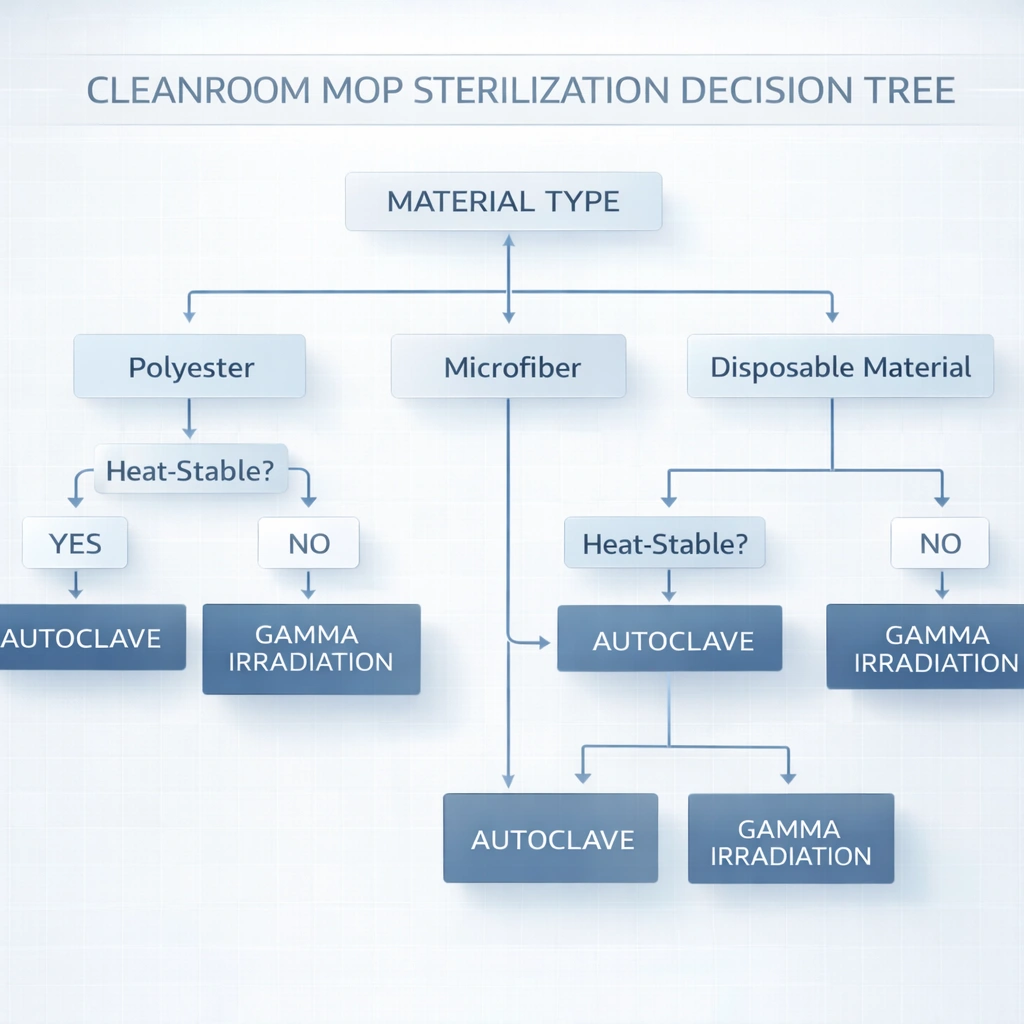
Primäre Entscheidungsregel: Verwenden Gammabestrahlte sterile Werkzeuge when you need a supplier-certified sterile claim at point of use (e.g., SAL 10⁻⁶ documentation), when materials are heat-sensitive, or when on-site autoclave capacity is limited. Use autoklavierbare Mopps when materials are heat-stable (often polyester systems) and you can validate and routinely control the steam process (cycle records + monitoring + BI program where applicable).
Reinigungsausführungsregel: Verwenden Mopps für große Flächen (Böden/Wände) und Tücher für kleine oder unregelmäßige Geräteflächen; Die meisten GMP-Programme nutzen beides.
Empfohlene Snippet-Antwort
Autoklavierbare vs. gammabestrahlte Reinraummopps selection depends on (1) material compatibility, (2) sterility assurance documentation requirements (e.g., SAL-based sterile claim), (3) whether you can validate and routinely control an on-site steam process, and (4) total cost of ownership. In routine cleaning, use wipes for small critical equipment surfaces and mops for large floors and walls, often as a combined strategy.
Wichtige Erkenntnisse
- Die Werkzeugauswahl ist zweidimensional: Oberflächengeometrie (Mopp vs. Wischen) und Sterilitätsmethode (Autoklav vs. Gamma).
- Die Dampfsterilisation muss validiert und routinemäßig kontrolliert werden; Die Zykluszeit hängt von der Beladung und dem Sterilisatortyp ab.
- Gammabestrahlte Werkzeuge sind auf die Zertifizierung des Lieferanten, die Kontrolle des Dosisbereichs und die Rückverfolgbarkeit der Chargen angewiesen.
- Hybridprogramme sind üblich: sterile Tücher für kritische Zonen und validierte Wischsysteme für große Flächen.
Einführung
The choice between cleanroom mops and cleanroom wipes is a common decision point for pharmaceutical and medical device manufacturers. Both support contamination control, but their Anwendungsgebiete, Abdeckungseffizienz, and Wege zur Sterilitätssicherung abweichen.
Most GMP facilities use both, but suboptimal selection increases cost (using wipes for large areas) or reduces effectiveness (using mops on irregular equipment surfaces). When sterile claims are required, the decision expands to Autoklav-validierte Sterilisation mit feuchter Hitze gegen Gammabestrahlung mit Lieferantenzertifizierung und Dosisaudits.
Grundlegende Unterschiede
Autoklav vs. Gamma-Sterilitätspfade
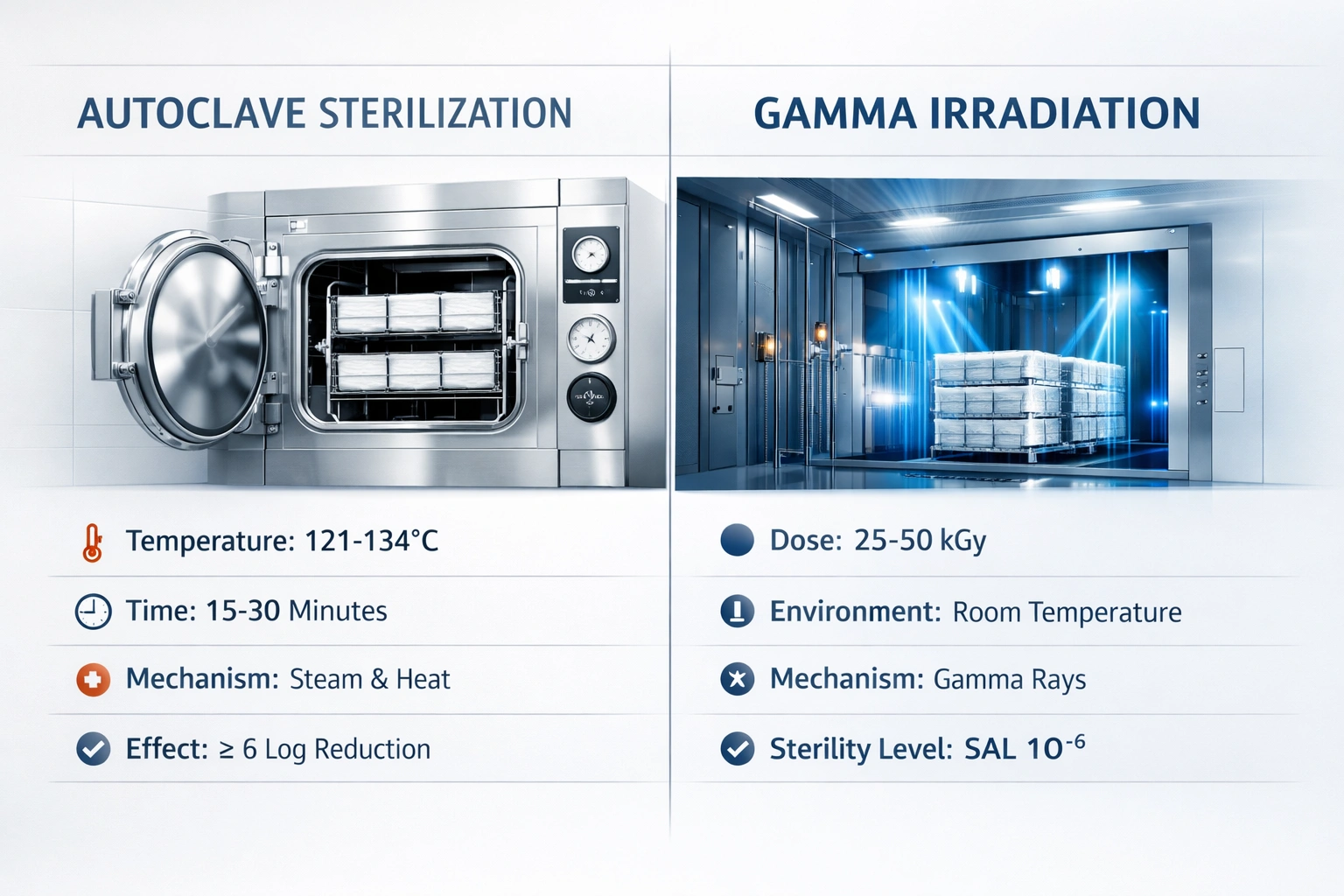
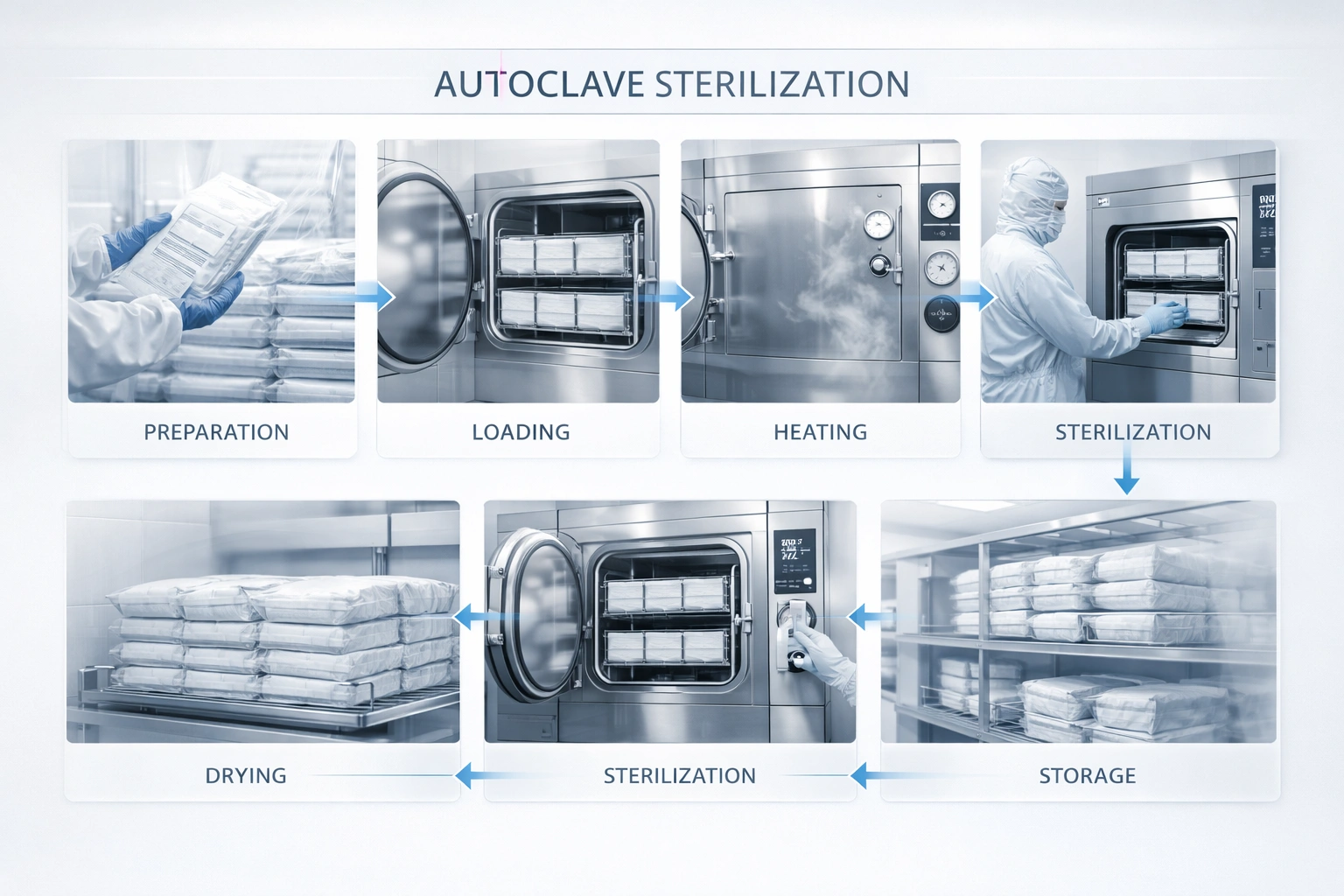
Autoclave sterilization achieves sterility through saturated steam under pressure and requires validated cycle development and routine control. Gamma sterilization uses ionizing radiation; sterile claims are supported through dose establishment/verification, dosimetry control, and routine dose audits aligned with ISO 11137 programs.
STERILIZATION METHOD CHARACTERISTICS (SUMMARY)

AUTOCLAVE (STEAM)
• Temperature: commonly 121°C or 132°C setpoints (cycle depends on sterilizer type and load)
• Exposure time: varies; minimum times depend on load/sterilizer type and must be validated
• Environment: saturated steam under pressure
• Control: mechanical + chemical indicators; biological indicators used for effectiveness monitoring as applicable
• Operational limit: chamber capacity; drying time; load configuration sensitivity

GAMMA IRRADIATION
• Sterilant: ionizing radiation (e.g., Cobalt-60 systems used industrially)
• Dose: often specified as a range; 25 kGy is a widely referenced sterilization dose, with product-specific ranges validated
• Control: dosimetry + certificate/lot traceability; ongoing dose audit expectations under ISO 11137 dose establishment programs
• Operational advantage: terminal sterilization of packaged tools at room temperature (no thermal stress)
Mopp- und Wischeigenschaften
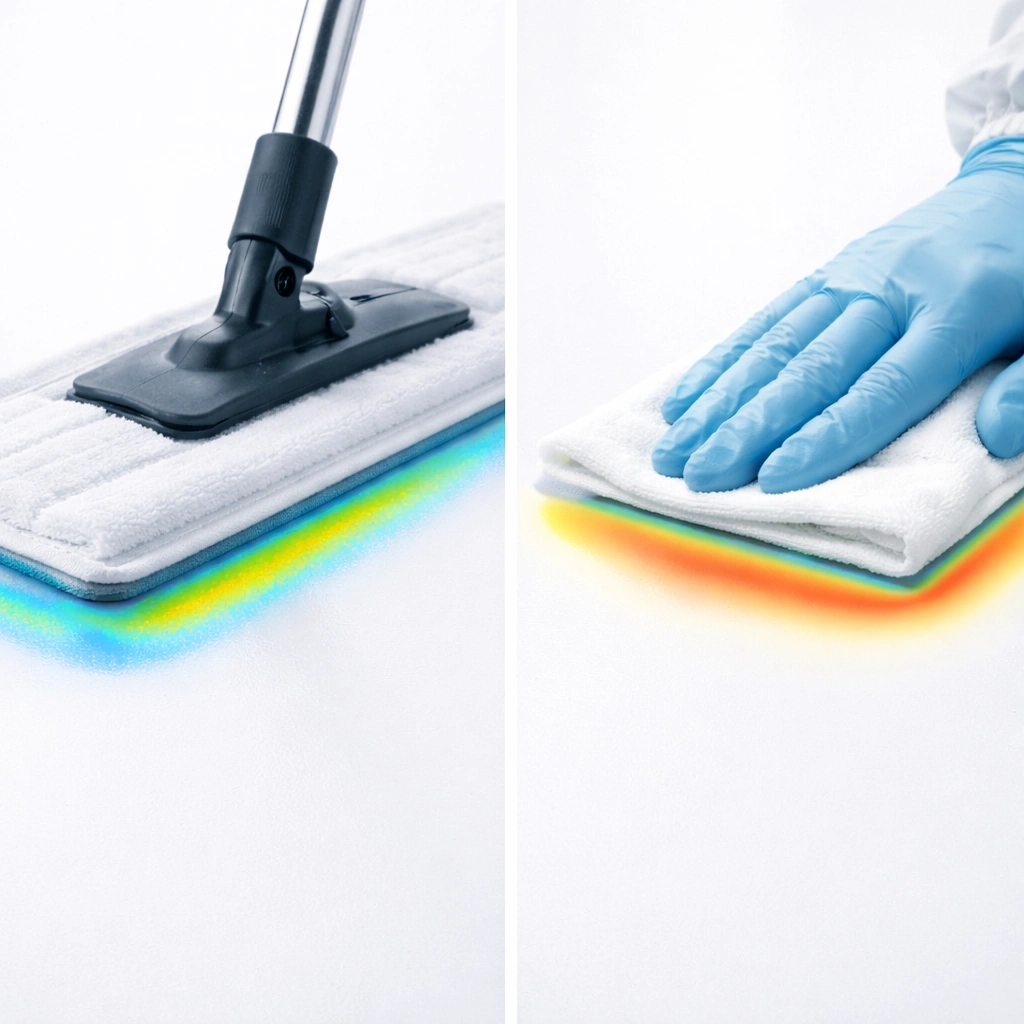
The core cleaning-function difference is geometry and controlled contact: wipes provide direct hand pressure for full surface contact on small areas; mops provide rapid coverage for large surfaces, but contact percentage depends on mop design and technique.
MOP VS WIPE CHARACTERISTICS COMPARISON

MOPS
• Best for: floors, walls, large surfaces (≥ 1 m²)
• Contact: typically 60–95% depending on mop type and technique
• Strength: fast coverage + lower cost per square meter

WIPES
• Best for: equipment, workstations, spot cleaning (< 1 m²)
• Contact: 100% with correct pressure application
• Strength: precision + reduced cross-contamination when single-use/sterile
Tabelle der Hauptunterschiede
| Merkmal | Mopps | Tücher |
|---|---|---|
| Hauptanwendung | Böden, Wände, große Flächen (≥ 1 m²) | Ausstattung, Arbeitsplätze, Kleinflächen (< 1 m²) |
| Oberflächenkontakt | 60–95 % (je nach Mopptyp) | 100 % (bei Druckanwendung) |
| Sterilitätsoptionen | Autoklav validiert (wiederverwendbar) oder steril geliefert (Gamma) | Vorsterilisiert (häufig Gamma) oder desinfiziert |
| Abfall pro m² | Untere | Höher (Einmalgebrauch) |
Leistungsvergleich
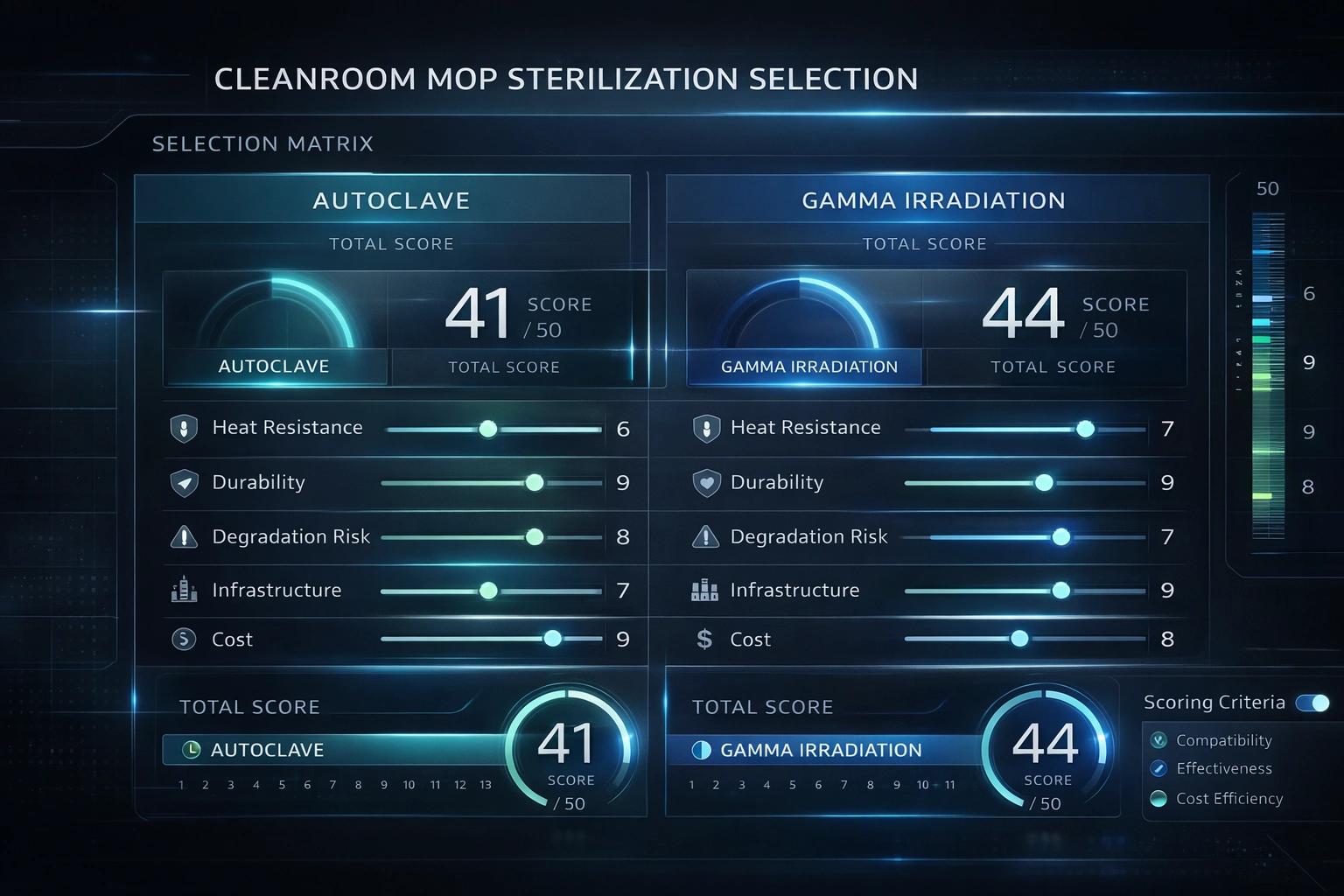
MIDPOSI Mop-Wipe-Auswahlmatrix
This scoring model supports consistent tool selection across surfaces and ISO grades. It can be used as part of a contamination control strategy where tool choice is justified via documented decision criteria.
MIDPOSI MOP-WIPE SELECTION MATRIX (0–100)

SCORE THRESHOLDS:
• 70–100: Highly Recommended
• 50–69:  Recommended
• 30–49:  Acceptable with limitations
• 0–29:   Not Recommended

DECISION RULE:
Select the tool with the higher suitability score for the specific application.
Kriterien für die Faktorbewertung
| Faktor | Mop-Score (0–20) | Wipe-Score (0–20) | Bewertungskriterien |
|---|---|---|---|
| Flächendeckung | 0–1 m² (0) … >20 m² (20) | >10 m² (0) … <0,1 m² (20) | Werkzeug an Flächenmaßstab anpassen |
| Oberflächentyp | Ausrüstung (0), Wände (10), Böden (20) | Böden (0), Wände (5), Ausstattung (20) | Geometrie und Kontakt steigern die Wirksamkeit |
| ISO-Klasse | Risikogewichtung steigt in Richtung ISO 5; Am Einsatzort können sterile Werkzeuge erforderlich sein. | ||
Anwendungsszenarien
| Anwendung | Bereich | Oberfläche | Mop-Score | Partitur löschen | Empfohlen |
|---|---|---|---|---|---|
| Arbeitsstation mit aseptischer Zone ISO 5 | 0,5 m² | Ausrüstung | 6.5 | 78,5 | Wischen |
| Flurboden ISO 7 (täglich) | 50 m² | Boden | 87,5 | 22.5 | Mop |
Anwendungsspezifische Empfehlungen
Kritische aseptische Zone ISO 5
ISO 5 workflows emphasize precision cleaning and sterility assurance. Wipes are typically primary for critical equipment surfaces, while sterile mops may be used for defined floor/perimeter tasks as dictated by the site’s contamination control strategy.
Saubere Bereiche nach ISO 7
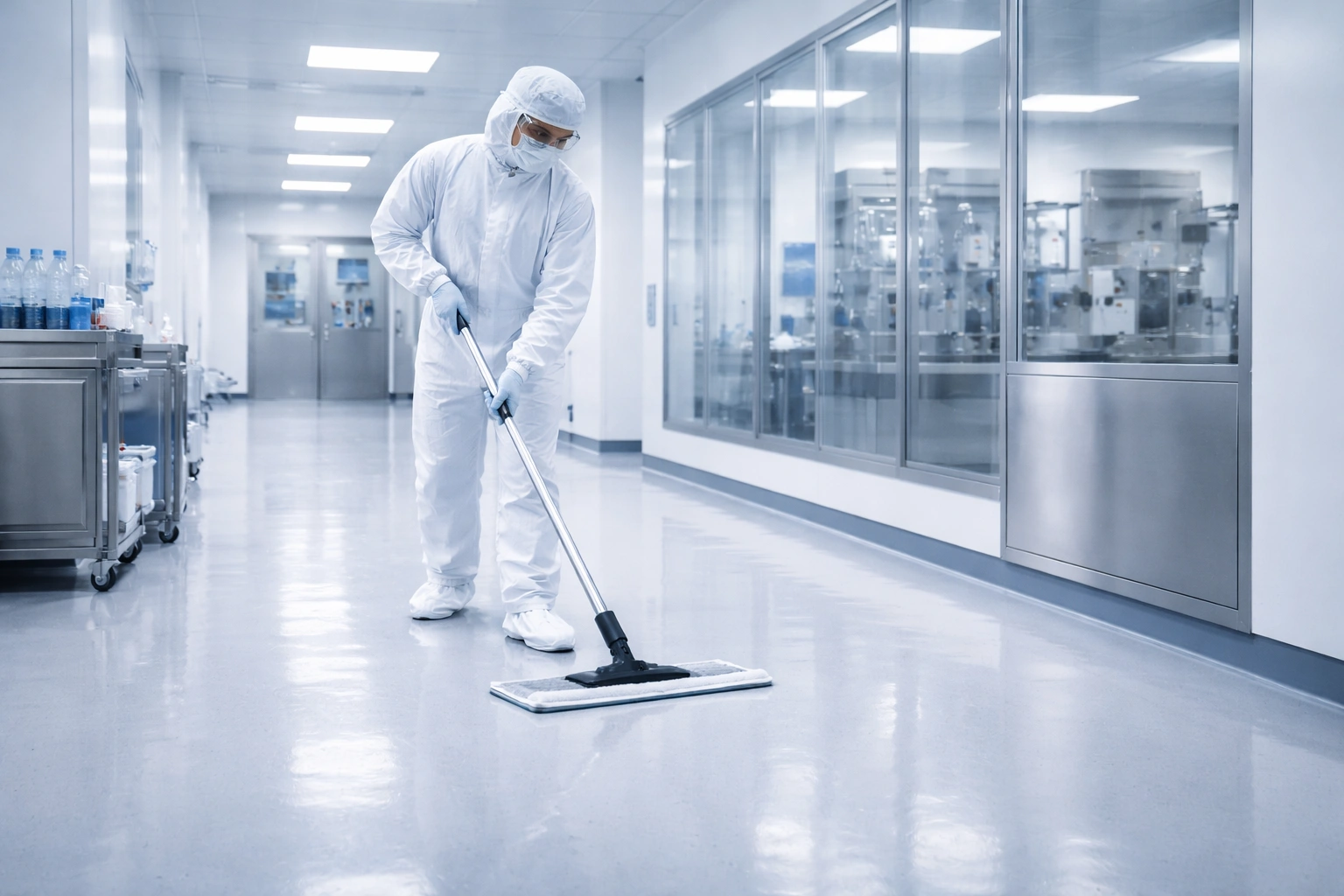
ISO 7 often supports validated reusable mop systems coupled with disinfected or sterile wipes for equipment surfaces, pass-throughs, and frequent-touch points.
Materialauswahl
Tabelle der Sterilisationsstandards
For regulated decision-making, cite and align to the standards that match the sterilization method: radiation programs to ISO 11137, moist heat programs to ISO 17665, and EU sterile manufacturing expectations to Annex 1 and compendial chapters such as Ph. Eur. 5.1.1/5.1.2.
| Referenz | Methodenumfang | Was es regelt | Typische Nachweise bei Audits |
|---|---|---|---|
| ISO 11137-2 | Strahlung | Dosisfestlegung/-begründung für Sterilitätsaussagen und laufende Dosisprüfungen | Bestrahlungszertifikat, Dosisbereichskontrollen, Chargenrückverfolgbarkeit, Auditnachweise |
| ISO 17665 | Feuchte Hitze (Dampf) | Prozessentwicklung, Validierung und Routinekontrolle für die Dampfsterilisation | Zyklusparameter, Lastkonfiguration, Überwachungsaufzeichnungen, ggf. BI-Programmnachweise |
| Ph. Eur. 5.1.1 / 5.1.2 | Kompendiale Erwartungen an die sterile Herstellung | Validierte Prozesse und Eignung/Genauigkeit biologischer Indikatoren (BI). | Auf den Prozess abgestimmte Validierungsstrategie und BI-Eignungsdokumentation |
| Ich GMP Anhang 1 | Sterile Herstellung | Strategie zur Kontaminationskontrolle und Philosophie zur Sterilitätssicherung | CCS, validierte Verfahren, Überwachung/Trending, Abweichung/CAPA-Integration |
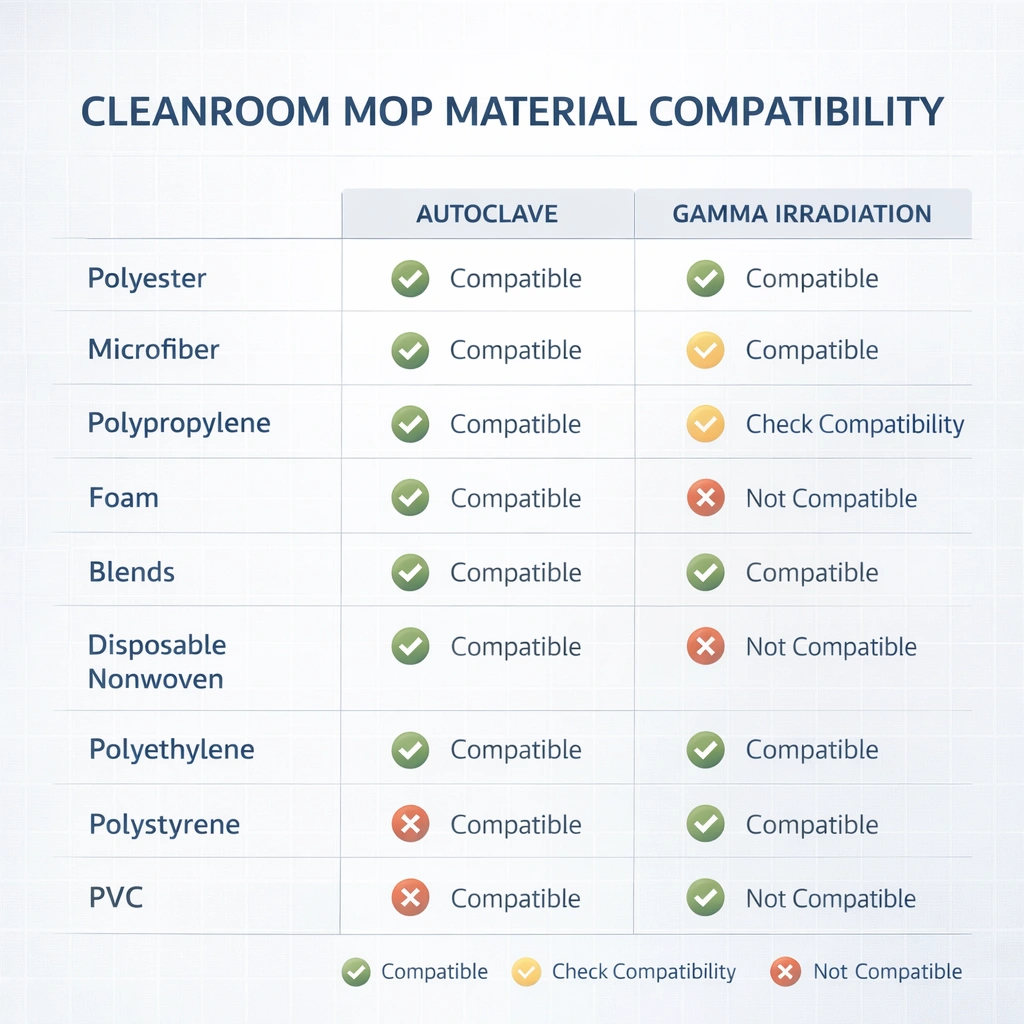
Wischen Sie Materialtypen ab

Validation note: radiation dose is typically specified as a range (not a single point), and maximum dose must be justified against material performance. For any “25–50 kGy” specification, validate that your tool materials and packaging tolerate the maximum dose without unacceptable degradation.
Kostenanalyse
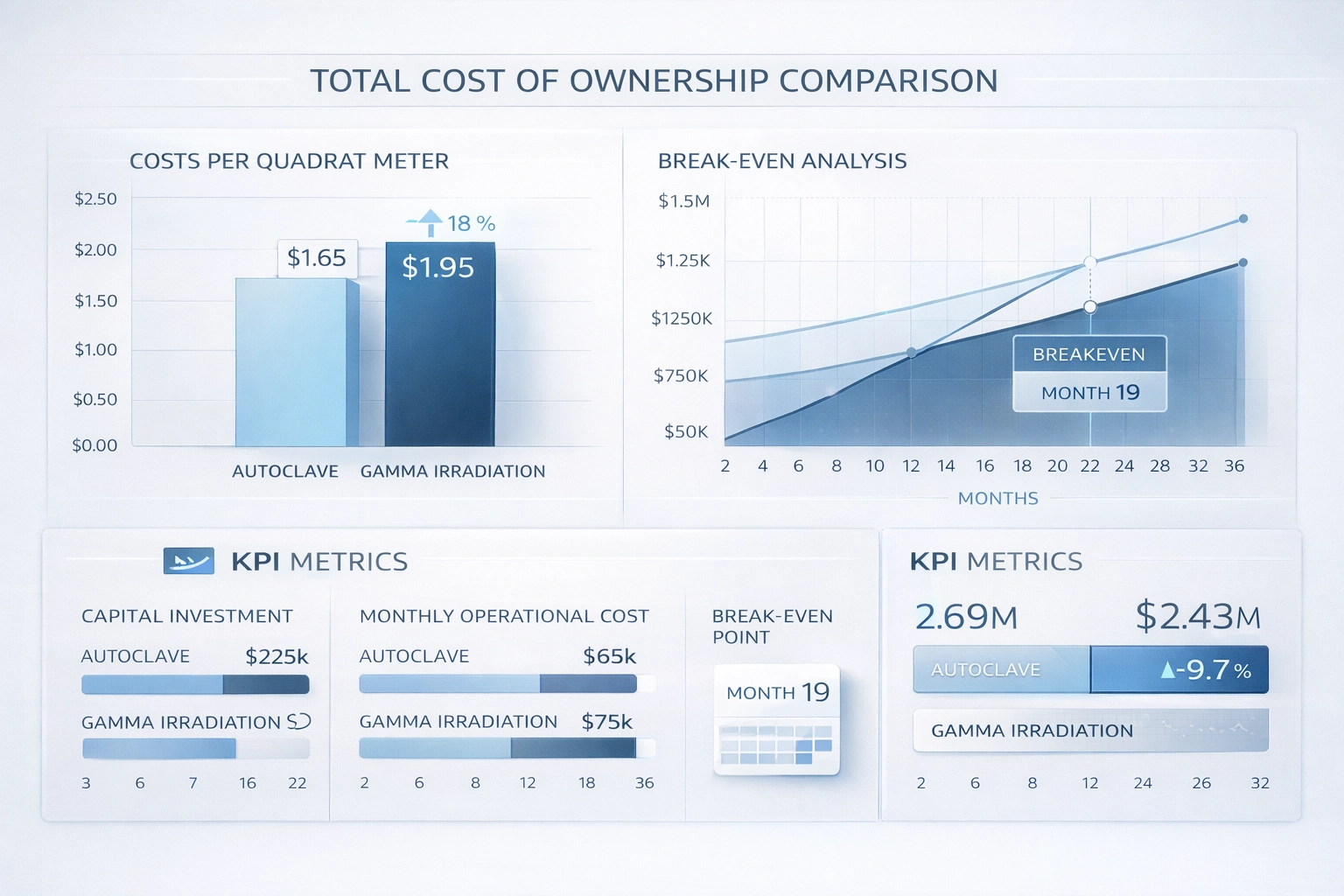
Kosten pro m² Vergleich
COST PER m² COMPARISON (EXAMPLE MODEL)

ASSUMPTIONS
• Labor cost: $25/hour
• Mop head cost: $5 (reusable 10 times) = $0.50/use
• Wipe cost: $0.30/wipe (single-use)
• Mop covers 10 m²/use, wipe covers 0.5 m²/use
• Labor: mop 0.5 min/m², wipe 0.25 min/m²

CONCLUSION (MODEL OUTPUT)
Mop is ~4–5× more cost-effective than wipes for large surfaces.
Tabelle „Sterilisationskostenrahmen“.
Kostenentscheidungsregel (sterile Werkzeuge): If the fully loaded gamma program cost (including supplier qualification, incoming verification, and waste) is >Da die Gesamtkosten eines validierten Autoklaven dreimal so hoch sind, ist der Autoklav in der Regel die wirtschaftliche Wahl – vorausgesetzt, das Material ist hitzestabil und die Zykluskapazität ist verfügbar.
| Kostenkategorie | Autoklavenprogramm | Gamma-Programm | Notizen |
|---|---|---|---|
| Kosten pro Werkzeugeinheit | $_____ (wiederverwendbar) | $_____ (oft einmalig) | Berücksichtigen Sie die Lebensdauer von wiederverwendbaren Materialien |
| Sterilisationskosten | $_____ pro Zyklus | $_____ pro Los | Gamma wird in der Regel über ein Lieferantenzertifikat + Eingangsverifizierung verwaltet |
| Arbeit & Handhabung | $_____ | $_____ | Beinhaltet Bereitstellung, Kennzeichnung, Quarantäne und Freigabe |
| Dokumentationsaufwand | Zyklusaufzeichnung + BI/Überwachungsprogramm | Bestrahlungszertifikat + Rückverfolgbarkeit der Charge | Beide erfordern eine QS-Überprüfung und Änderungskontrolle |
Best Practices
Wischtechnik

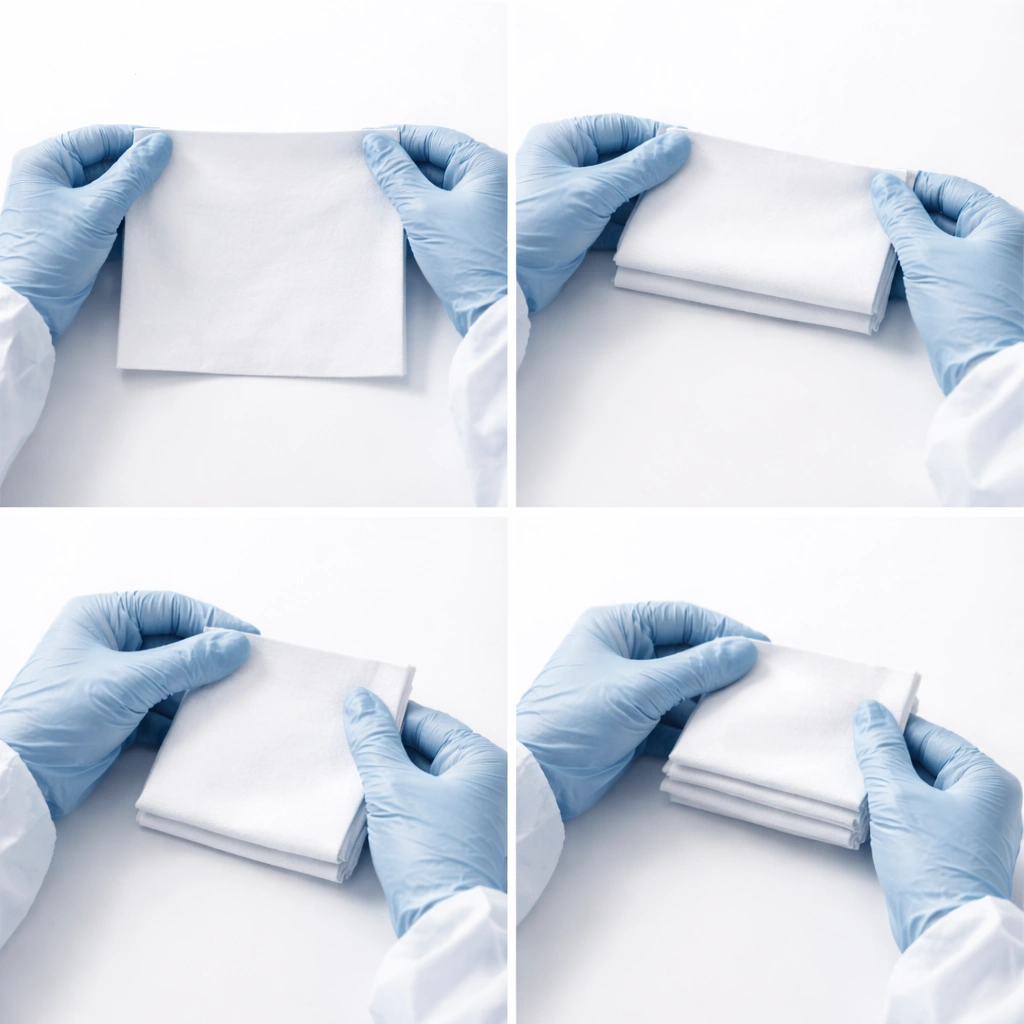
Wischfalttechnik
Häufige Fehler, die es zu vermeiden gilt
Fehler: Die Sterilitätszertifikate der Lieferanten werden als „ausreichend“ behandelt, ohne eingehende Überprüfung und Kontrollen der Chargenrückverfolgbarkeit.
Fehler: Überladen von Autoklaven oder Ändern der Beladungskonfiguration, ohne die Wirksamkeit des Zyklus neu zu bewerten.
Fehler: Verwenden Sie ein Werkzeugmaterial, das nachweislich nicht mit Ihrer maximalen Gammadosis oder wiederholten Dampfzyklen kompatibel ist.
Praktische Werkzeuge
Tool: Entscheidungsmatrix für die Mop-Wipe-Auswahl
MOP-WIPE SELECTION DECISION MATRIX (TEMPLATE)

Application: ______________________  ISO Grade: ________  Area: __________ m²

Score each factor (0–20)
• Area Coverage: Mop ___ / Wipe ___
• Labor Efficiency: Mop ___ / Wipe ___
• Surface Type: Mop ___ / Wipe ___
• ISO Grade: Mop ___ / Wipe ___
• Cost Efficiency: Mop ___ / Wipe ___

Decision: Select the higher total score tool.
Assessors: _______________________  Date: _________________
Approver: ________________________  Date: _________________
Werkzeug: Autoklav-Sterilisationsprotokoll
AUTOCLAVE STERILIZATION PROTOCOL (CHECKLIST)

PRE-CYCLE
☐ Mop inspected for integrity
☐ Cleaned per SOP
☐ Packaging verified (no damage)
☐ Sterilization label attached (tool ID, cycle ID)
☐ Load configuration documented
☐ Monitoring / BI plan per site validation strategy

CYCLE
☐ Temperature setpoint: ________
☐ Exposure time: ________
☐ Drying time: ________
☐ Cycle record saved (time/temperature/pressure)
☐ Any alarms investigated and resolved

POST-CYCLE
☐ Quarantine / release process followed (QA as applicable)
☐ Storage conditions maintained
☐ FIFO rotation implemented
☐ Traceability log updated
Tool: Gammabestrahlungs-Verifizierungsprotokoll
GAMMA IRRADIATION VERIFICATION (RECEIVING CHECKLIST)

RECEIVING
☐ Supplier certificate verified
☐ Dose stated: _______ kGy (within validated range)
☐ SAL 10⁻6 sterility claim verified if required for use
☐ Lot number recorded
☐ Packaging integrity confirmed (no breach)
☐ Receipt and release logged (QA controls)

USAGE
☐ FIFO rotation maintained
☐ Expired tools not used
☐ Zone segregation (color-code / controls)
☐ Disposal documented and traceable

FAQ
Wann sollte ich einen Mopp oder ein Wischtuch verwenden?
Verwenden Sie einen Wischmopp, wenn die Fläche ≥ 1 m² (Böden/Wände) beträgt und die Geometrie regelmäßig ist. Verwenden Sie Tücher, wenn der Bereich trocken ist < 1 m², surfaces are irregular (equipment/workstations), or when single-use sterility at point of use is required.
Kann ich Tücher zum Reinigen von Böden verwenden?
Generally not for routine large-area floor cleaning due to cost and efficiency; use wipes for spot cleaning, corners, edges, or critical zones where the workflow requires sterile precision use.
Was ist der kostengünstigste Ansatz für gemischte Anwendungen?
Ein hybrider Ansatz: Mopps für Böden und große Flächen, Tücher für Geräte und kleine Flächen; sterile Werkzeuge, die den Zonen mit dem höchsten Risiko vorbehalten sind.
Wie wähle ich das Moppmaterial aus?
Match material to ISO grade, disinfectant chemistry, and sterilization method. Verify compatibility with repeated steam cycles or validated gamma dose ranges, and require documentation that supports low-lint and intended use.
Wie oft sollten Mopps ausgetauscht werden?
Replace reusable mops after their validated cycle life (or sooner if damage, increased lint, or reduced absorbency appears). Disposable/sterile tools are typically single-use unless a validated reprocessing program exists.
Sind vorgetränkte Tücher den Aufpreis wert?
In kritischen Bereichen oft ja, weil sie die Anwendung standardisieren, die Vorbereitungsvariabilität verringern und bei steriler Lieferung die Sterilitätssicherung unterstützen.
Kann ich Tücher wiederverwenden?
Einwegtücher sollten nicht wiederverwendet werden. Programme für wiederverwendbare Wischtücher erfordern eine validierte Reinigung/Sterilisation und klare Rückverfolgbarkeitskontrollen.
Wie überprüfe ich die Low-Lint-Leistung?
Require supplier evidence and verify via your facility’s monitoring strategy. For critical grades, ensure the evidence aligns with your room classification and operational state. Document acceptance criteria in your SOP.
Was ist SAL 10⁻⁶ und warum ist es für gammabestrahlte Werkzeuge wichtig?
SAL (sterility assurance level) is the statistical level used for sterile claims; gamma programs commonly support SAL-based claims via validated dose establishment and ongoing dose audits, with certificates tied to lot traceability.
Welche Dokumentation sollte ich für Audits aufbewahren?
For autoclave: cycle records, monitoring results, load configuration controls, and release documentation. For gamma: certificate of irradiation per lot, defined dose range, incoming verification, storage/expiry controls, and usage/disposal traceability.
Interne Links
Für entsprechende Anleitungen und Implementierungsressourcen:
Bevorzugte Standards und Referenzen
Verwenden Sie offizielle Kopien von Standards/Kompendien als Hauptquellen für die Validierung und Prüfungsabwehr. Öffentliche Referenzlinks:
- ISO 11137-2: Festlegung der Strahlensterilisationsdosis
- ISO 17665-1: Anforderungen an den Sterilisationsprozess mit feuchter Hitze (zurückgezogen; verweist auf ISO 17665:2024)
- EDQM-Übersicht über Ph. Eur. 5.1.1 & 5.1.2
- CDC: Übersicht und Überwachung der Dampfsterilisation
- CDC: Tabelle der Mindestzykluszeiten (Dampf)
- EU GMP Annex 1 (2022): Herstellung steriler Arzneimittel