Reinraummopp vs. normaler Mopp: Was ist der Unterschied?
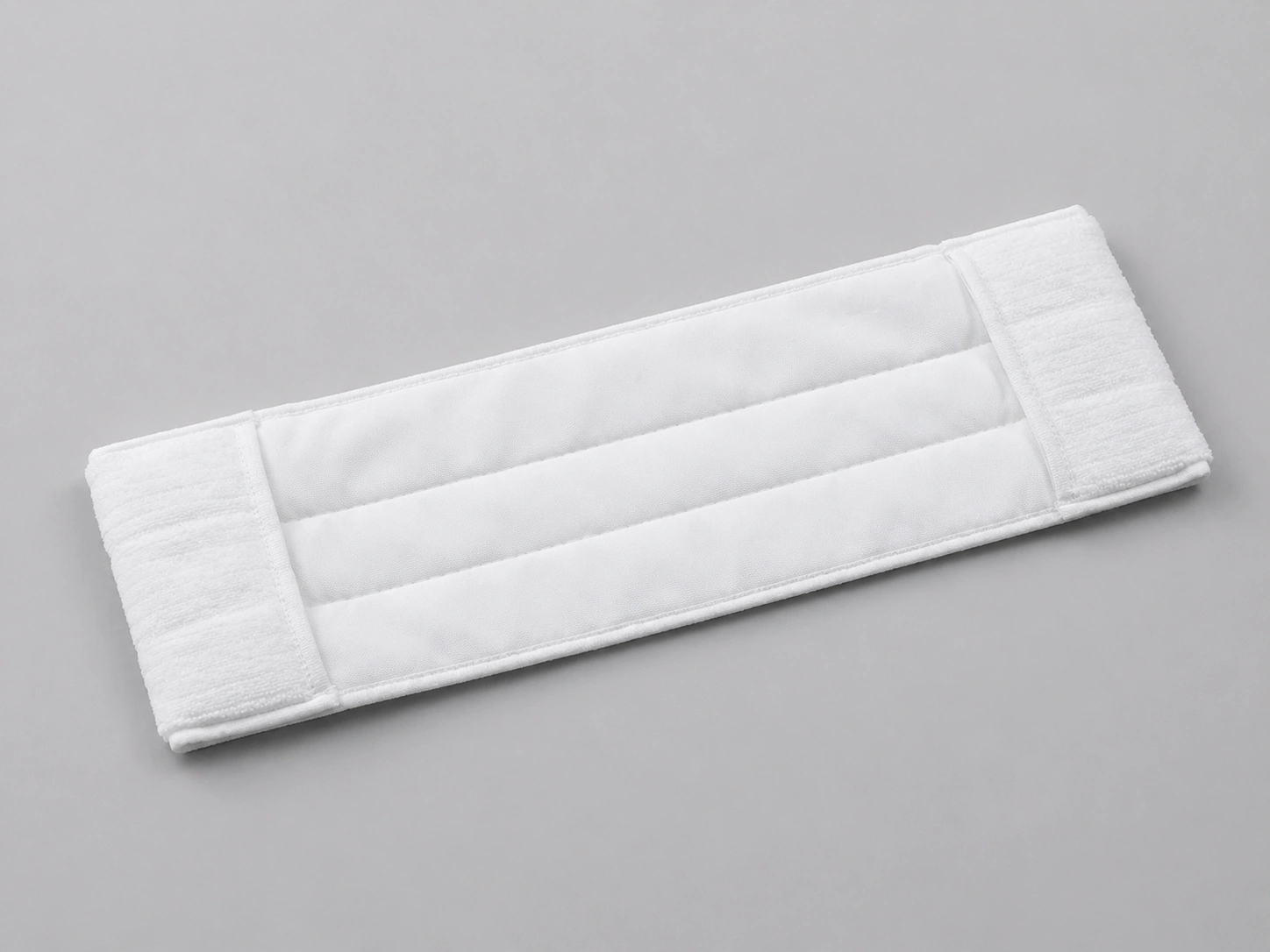
A Reinraummopp is a low-lint cleaning tool selected for controlled environments, while a regular mop is made for general cleaning and may release fibers, lint, or residues. The main difference is not only appearance; it is material construction, contamination control, packaging, cleanroom suitability, and how the mop fits into SOP-based cleaning workflows.
Regular mops are suitable for offices, warehouses, kitchens, and general floors. Clean room mops are selected for ISO-classified cleanrooms, GMP cleanroom workflows, pharmaceutical production, biotech facilities, semiconductor fabs, medical device manufacturing, and laboratories where particle and fiber control are important.
Schneller Vergleich: Reinraummopp vs. normaler Mopp
Der schnellste Weg, den Unterschied zu verstehen, besteht darin, zu vergleichen, wo jeder Mopp verwendet wird, welche Materialien verwendet werden und welche Risiken Käufer kontrollieren müssen.
| Vergleichspunkt | Reinraummopp | Normaler Mopp |
|---|---|---|
| Primäre Verwendung | Kontrollierte Umgebungen wie ISO- und GMP-Reinräume | Allgemeine gewerbliche, industrielle oder Haushaltsreinigung |
| Material | Fusselarme Polyester-, Mikrofaser-, Schaumstoff- oder Vliesmaterialien | Baumwolle, Viskose oder allgemeine synthetische Mischungen |
| Partikel- und Faserkontrolle | Ausgewählt, um die Freisetzung von Flusen, Fasern und Partikeln zu reduzieren | Kann Flusen, Fasern oder Rückstände freisetzen während des Gebrauchs |
| Sterile Optionen | Kann in steriler oder unsteriler Ausführung erhältlich sein | Normalerweise nicht in steriler Reinraumverpackung geliefert |
| Typische Anwendungen | Reinräume für Pharmazeutika, Biotechnologie, Halbleiter, medizinische Geräte und Labore | Büros, Lagerhallen, Küchen, öffentliche Bereiche und allgemeine Etagen |
| Bedenken des Käufers | Material, Flusengrad, Sterilität, SOP-Passform, Dokumentation und Probenprüfung | Preis, Haltbarkeit, Saugfähigkeit und Benutzerfreundlichkeit |
Was ist ein Reinraummopp?
A clean room mop is a mop designed or selected for controlled environments where particle, fiber, lint, and residue control matter. It is usually made from low-lint materials and used with defined cleaning procedures.
Clean room mops may be used in ISO-classified cleanrooms, GMP cleanroom cleaning workflows, pharmaceutical production areas, biotechnology facilities, semiconductor fabs, medical device manufacturing environments, laboratories, and cleanroom service operations.
Fusselarmes Material
Reinraummopps werden ausgewählt, um die Flusen- und Faserfreisetzung während der kontrollierten Reinigung zu reduzieren.
Kontrollierte Verpackung
Einige Optionen sind je nach den Anforderungen der Einrichtung in steriler oder reinraumtauglicher Verpackung erhältlich.
SOP-basierte Verwendung
Reinraummopps werden in der Regel gemäß den internen Reinigungs-SOPs und Qualitätsanforderungen verwendet.
Was ist ein normaler Mopp?
A regular mop is designed for general cleaning in offices, homes, warehouses, kitchens, public spaces, and industrial floors. It is usually selected for absorbency, price, durability, and ease of use rather than cleanroom contamination control.
Regular mops often use cotton, rayon, sponge, or general synthetic materials. These materials may work well for ordinary floor cleaning, but they may not be appropriate for cleanrooms where lint, fibers, residues, and uncontrolled moisture can create quality concerns.
Warum normale Wischmopps in Reinräumen nicht verwendet werden sollten
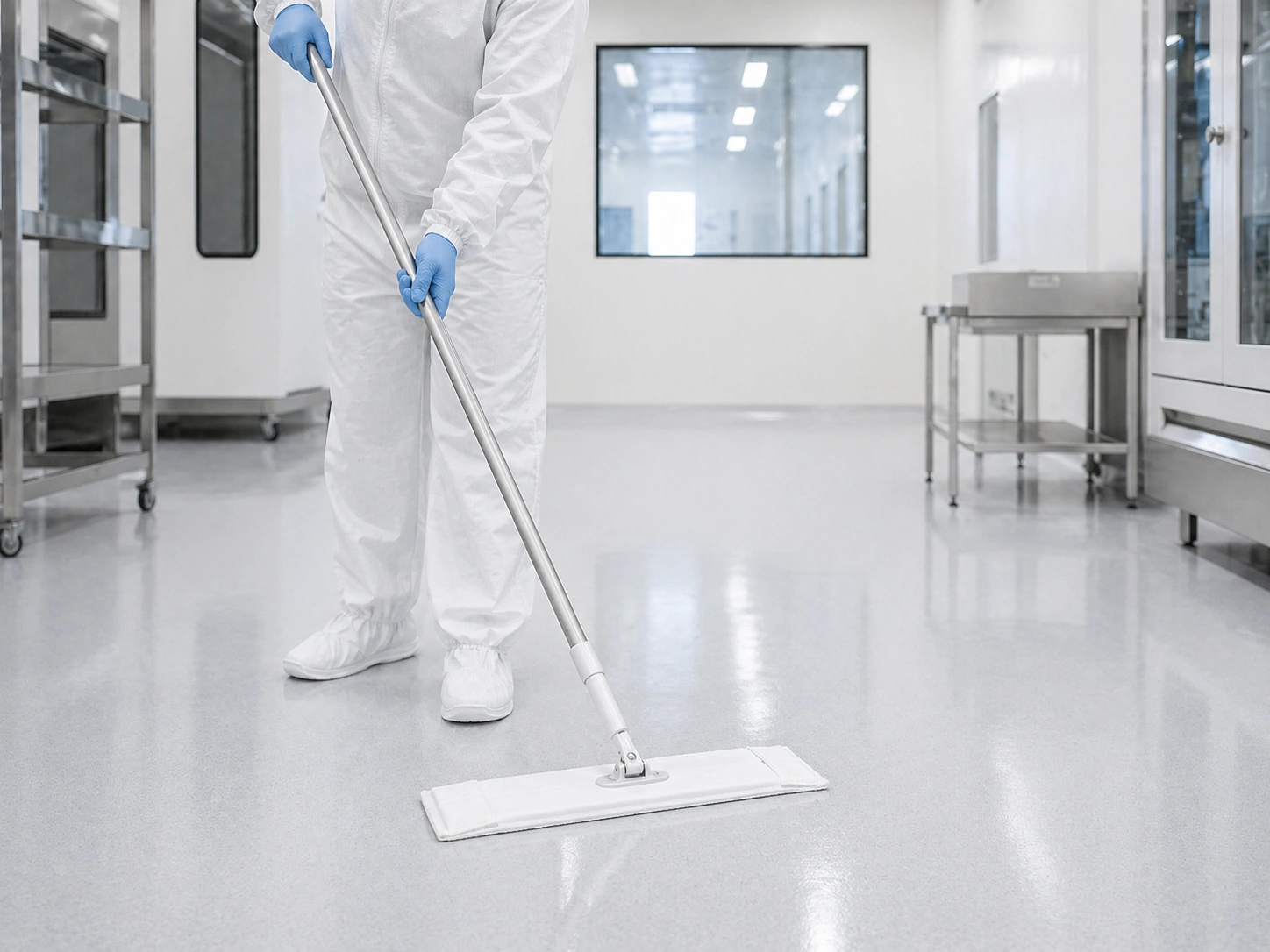
Regular mops may not be suitable for cleanrooms because they can introduce fibers, lint, residues, and inconsistent liquid control into sensitive environments.
In cleanrooms, the cleaning tool itself becomes part of the contamination control strategy. A mop that is acceptable for general cleaning may create unnecessary risk in pharmaceutical, biotech, semiconductor, or medical device environments.
- Normale Moppfasern können sich während des Gebrauchs lösen.
- Bei herkömmlichen Moppmaterialien können Fusseln oder Rückstände zurückbleiben.
- Standardverpackungen erfüllen möglicherweise nicht die Anforderungen an die Lagerung im Reinraum.
- Normale Mopps werden in der Regel nicht in einer sterilen Reinraumverpackung geliefert.
- Sie entsprechen möglicherweise nicht den SOP-basierten Reinigungs- und Dokumentationserwartungen.
Hauptunterschiede zwischen Reinraum-Mopps und normalen Mopps
The difference between a clean room mop and a regular mop is mainly about risk control. Buyers should compare material, lint release, absorbency, packaging, sterility, cleaning surface, and compatibility with facility procedures.
Reinraummopp
- Ausgewählt für eine fusselarme Reinigungsleistung.
- Kann in steriler oder unsteriler Ausführung erhältlich sein.
- Wird in ISO-, GMP-, Pharma-, Biotech- und Halbleiterumgebungen verwendet.
- Kann SOP-basierte Boden-, Wand- und Deckenreinigung unterstützen.
- In der Regel anhand von Produktspezifikationen und Mustertests bewertet.
Normaler Mopp
- Konzipiert für die allgemeine Reinigung und nicht für die Reinraumkontrolle.
- Während des Gebrauchs können Flusen, Fasern oder Rückstände freigesetzt werden.
- Normalerweise nicht in steriler Reinraumverpackung geliefert.
- Geeignet für Büros, Lagerhallen, Küchen und die allgemeine Bodenreinigung.
- Wird normalerweise nach Preis, Saugfähigkeit und Haltbarkeit ausgewählt.
Reinraum-Moppmaterialien im Vergleich zu normalen Moppmaterialien
Clean room mop materials are usually selected to support low-lint controlled cleaning, while regular mop materials are selected for general absorbency and durability.
Common clean room mop materials include polyester, microfiber, foam, and nonwoven structures. Polyester is commonly selected for stable low-lint wiping. Microfiber may be selected for surface contact and particle pickup. Nonwoven options may support disposable cleaning workflows.
Regular mops often use cotton, sponge, rayon, or general synthetic yarns. These may be suitable for general cleaning, but they are not always appropriate for particle-sensitive cleanroom environments.
Müssen Reinraummopps steril sein?
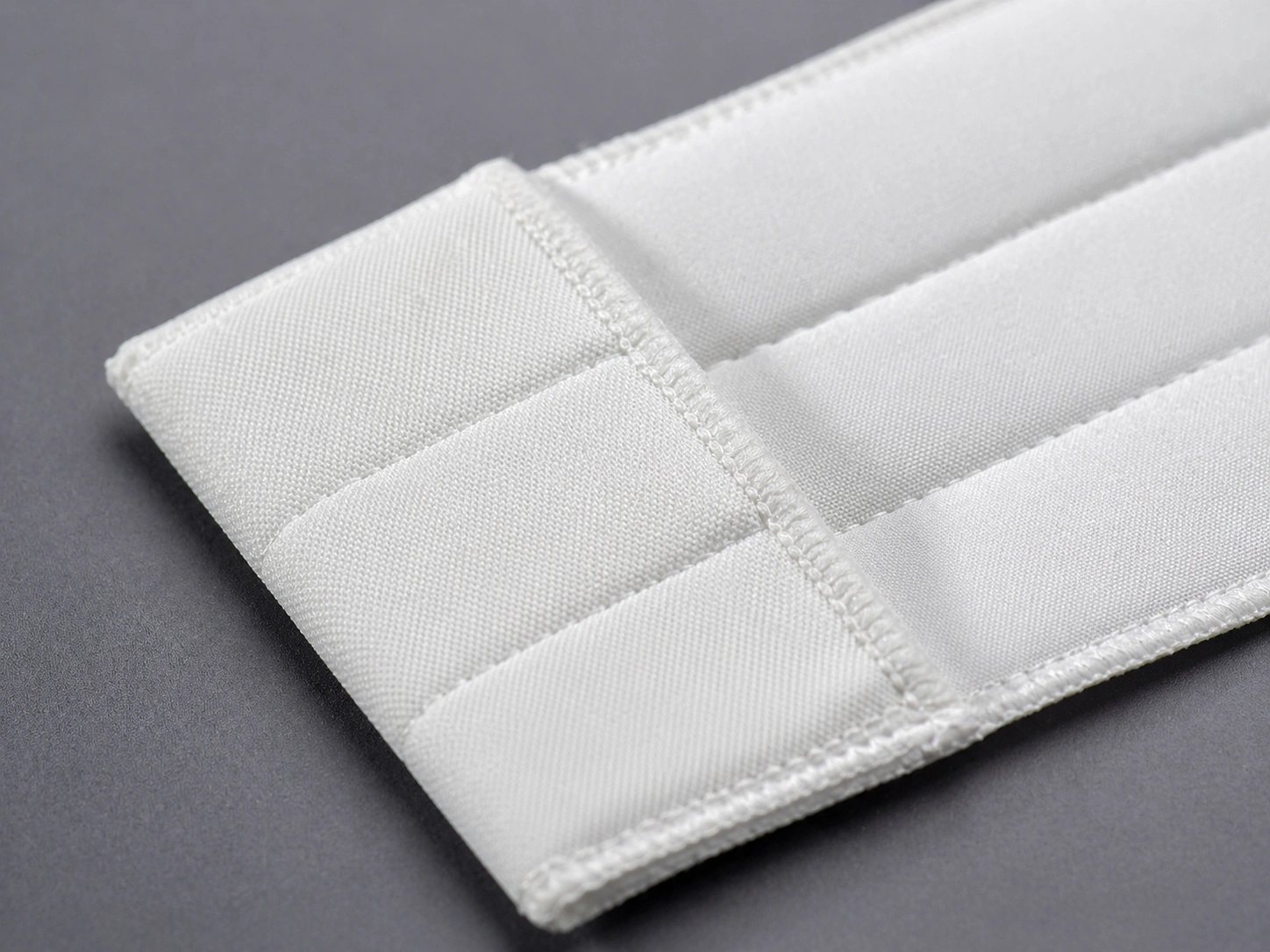
Clean room mops do not always need to be sterile. Sterility depends on the cleanroom zone, facility SOP, contamination control strategy, and quality requirements.
Verwenden Sie sterile Optionen, wenn
- Die SOP der Einrichtung erfordert eine sterile Präsentation.
- Der Mopp wird in strengeren Arbeitsabläufen zur Kontaminationskontrolle eingesetzt.
- Qualitätssicherungs- oder Validierungsteams benötigen Informationen zur Sterilität.
- Der Bereich erfordert gammabestrahlte Wischtücher oder sterile Verpackungen.
Verwenden Sie nicht sterile Optionen, wenn
- Die SOP erlaubt unsterile Wischpads.
- Bei der Anwendung handelt es sich um die routinemäßige Reinigung kontrollierter Bereiche.
- Der Bereich erfordert keine sterile Präsentation.
- Der Käufer benötigt kostengünstigen Ersatz für die routinemäßige Reinigung.
Wann sollten Käufer Reinraummopps statt normaler Mopps verwenden?
Buyers should use clean room mops when the cleaning area requires particle control, low-lint materials, controlled packaging, sterile or non-sterile selection, and SOP-based cleaning.
Pharmazeutische Reinräume
Verwenden Sie Reinraummopps dort, wo GMP-Reinigungsabläufe, die Unterstützung steriler Bereiche oder kontrollierte Reinigungsverfahren erforderlich sind.
Halbleiterfabriken
Verwenden Sie fusselarme Reinraum-Moppmaterialien in partikelempfindlichen Umgebungen und kontrollierten Auflagebereichen.
Herstellung medizinischer Geräte
Verwenden Sie Reinraummopps, wenn die Faser- und Partikelkontrolle während der Produktion, Montage oder Verpackung wichtig ist.
Anwendungsspezifische Seiten finden Sie unter Pharmazeutischer Reinraummopp, Biotech-Reinraummopp, Und Halbleiter-Reinraummopp.
Wie sollten B2B-Käufer einen Reinraummopp auswählen?
B2B buyers should choose a clean room mop by matching the mop material, sterility level, cleaning surface, and packaging format to the facility’s SOP and cleanroom environment.
| Käuferfrage | Warum es wichtig ist | Empfohlene Aktion |
|---|---|---|
| Ist der Mopp fusselarm? | Reduziert die Übertragung von Fasern oder Flusen während der Reinigung | Überprüfen Sie das Material und fordern Sie Muster an |
| Ist eine sterile Verpackung erforderlich? | In bestimmten Reinraumzonen kann eine sterile Präsentation erforderlich sein | Bestätigen Sie dies mit dem SOP- und QA-Team |
| Welche Oberfläche wird gereinigt? | Für Böden, Wände, Decken und Geräte sind möglicherweise unterschiedliche Moppformate erforderlich | Überprüfen Sie die Kompatibilität von Moppkopf und Rahmen |
| Welche Desinfektionsmittel werden verwendet? | Die Materialverträglichkeit beeinflusst die Haltbarkeit und Reinigungsleistung | Fordern Sie Produktinformationen oder Testmuster an |
| Einweg oder wiederverwendbar? | Wirkt sich auf den Austausch-Workflow, die Wäsche, die Validierung und die Kosten aus | Vergleichen Sie die Gesamtkosten des Arbeitsablaufs, nicht nur den Stückpreis |
MIDPOSI Reinraum-Mopp-Optionen
MIDPOSI provides cleanroom mop pads and related cleanroom mop system options for controlled environments, including pharmaceutical, biotech, semiconductor, medical device, laboratory, and cleanroom service applications.
Der MIDPOSI weiße Reinraum-Mopp-Serie includes 40g, 55g, and 65g disposable mop pad options in sterile and non-sterile versions. These options help B2B buyers select mop pads according to cleaning workload, sterility requirement, packaging needs, and sample evaluation.
| Option | Am besten für | Überlegung des Käufers |
|---|---|---|
| 40g leichter Mopp | Leichte Routinereinigung | Einfachere Handhabung und kosteneffizienter Einweggebrauch |
| 55 g mittlerer Mopp | Ausgewogene Reinigungsleistung im Reinraum | Mittlere Option zwischen leichter und schwerer Beanspruchung |
| 65 g Hochleistungsmopp | Höhere Saugfähigkeit und stärkere Wischabdeckung | Anspruchsvollere kontrollierte Reinigungsaufgaben |
| Sterile Version | Arbeitsabläufe, die eine sterile Präsentation erfordern | Bestätigen Sie SOP-, Verpackungs- und Sterilitätsanforderungen |
| Unsterile Version | Regelmäßige Reinigung des kontrollierten Bereichs | Nützlich, wenn SOP unsterile Mopppads zulässt |
FAQ: Reinraummopp vs. normaler Mopp
Was ist der Hauptunterschied zwischen einem Reinraummopp und einem normalen Mopp?
A clean room mop is selected for low-lint controlled cleaning in ISO, GMP, pharmaceutical, biotech, semiconductor, or laboratory environments. A regular mop is designed for general cleaning and may release lint, fibers, or residues.
Können in Reinräumen normale Wischmopps verwendet werden?
Regular mops are generally not recommended for cleanrooms because they may introduce fibers, lint, residues, or uncontrolled moisture. Cleanroom mop selection should follow the facility’s SOP and quality requirements.
Warum bergen normale Mopps ein Kontaminationsrisiko?
Regular mops may use materials that shed fibers or leave residues. Their packaging and construction are usually designed for general cleaning, not controlled cleanroom environments.
Welche Materialien werden in Reinraummopps verwendet?
Common clean room mop materials include polyester, microfiber, foam, and nonwoven materials. Buyers should compare lint level, absorbency, chemical compatibility, sterile availability, and disposable or reusable format.
Müssen Reinraummopps steril sein?
Not always. Sterile mop pads may be required in specific cleanroom zones or workflows, while non-sterile cleanroom mops may be suitable for routine controlled-area cleaning where the SOP allows.
Wie sollten B2B-Käufer Reinraummopps auswählen?
Buyers should compare mop material, lint level, sterility requirement, cleaning surface, disinfectant compatibility, packaging, sample availability, MOQ, and lead time.
Benötigen Sie Reinraummopps für Ihre Einrichtung oder Ihr Vertriebsunternehmen?
Contact MIDPOSI to discuss cleanroom mop pads, sterile or non-sterile options, mop bucket and wringer systems, and sample availability for your market.