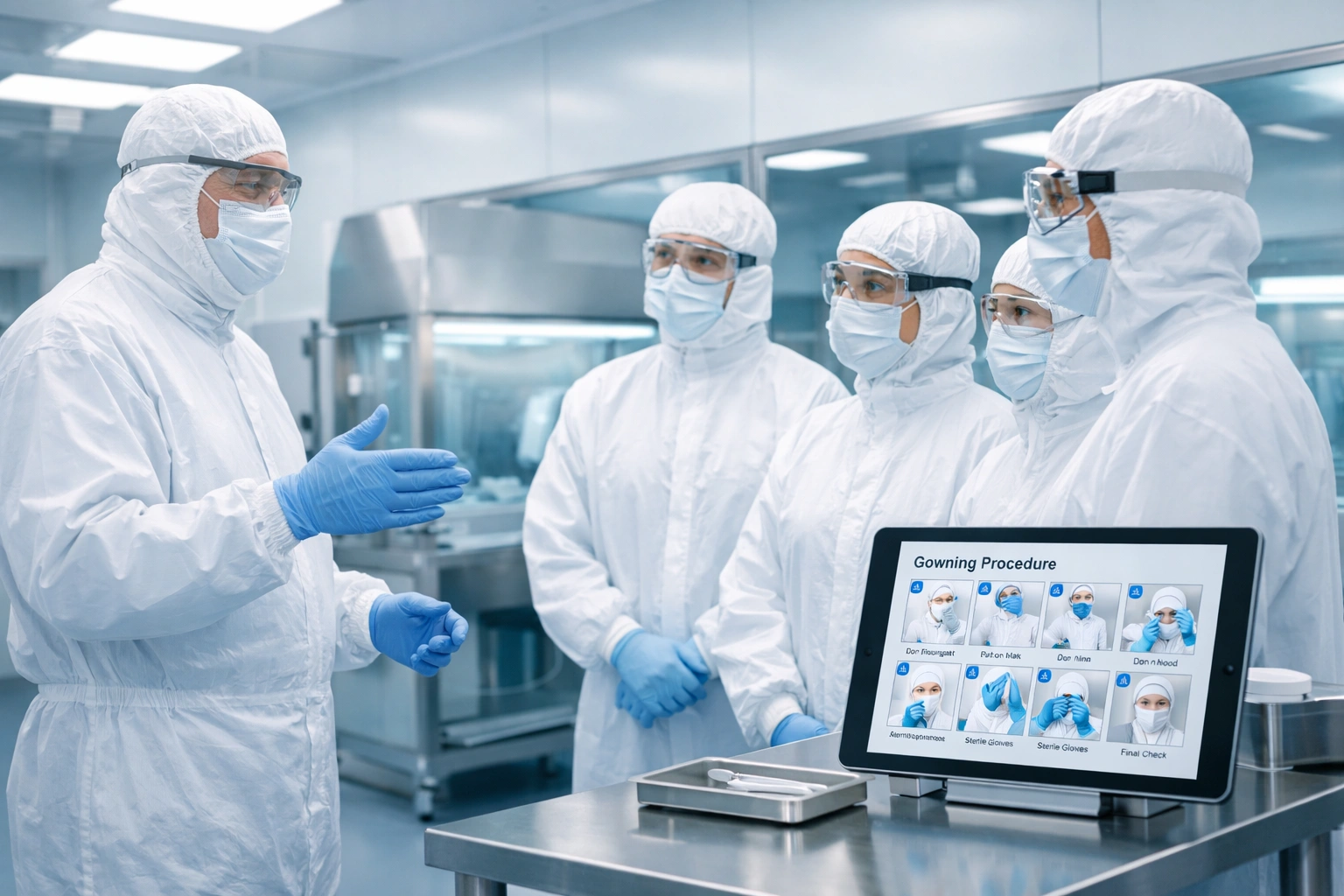
Warum Personalschulung ein zentrales Kontrollsystem für Reinräume ist
Menschen sind in pharmazeutischen, biotechnologischen und hochspezialisierten Reinraumbetrieben von entscheidender Bedeutung, bringen aber auch Partikel, Mikroben, Fasern und Verhaltensschwankungen mit sich. Selbst wenn eine Einrichtung über eine starke HVAC-Kontrolle, validierte Reinigung und konforme Umkleidesysteme verfügt, kann es dennoch zu Leistungseinbußen kommen, wenn das Personal nicht ordnungsgemäß geschult ist.
Deshalb muss eine moderne Reinraumschulung über die Orientierung hinausgehen. Es sollte festlegen, wer geschult werden muss, welche Kompetenzen erforderlich sind, wie die Qualifikation nachgewiesen wird und wann eine Umschulung stattfinden muss.
Die Personalschulung steht auch in direktem Zusammenhang mit umfassenderen Elementen der Kontaminationskontrolle, wie z Reinraumkleidung, Visualisierung des Luftstrommusters, Umweltüberwachung, Validierungslebenszyklus, Reinigungs-SOPs, Und Prüfungsbereitschaft.
| Trainingsbereich | Warum es wichtig ist | Risiko, wenn schwach |
|---|---|---|
| Kleidung | Verhindert, dass Hautschuppen, Fasern und mikrobielle Ausscheidungen in den kontrollierten Raum gelangen | Häufige Kontaminationsereignisse in der Eingangsphase |
| Aseptisches Verhalten | Reduziert unnötige Bewegungen, Eingriffe und Oberflächenkontakte | Höheres betreiberbedingtes Kontaminationsrisiko |
| Materialhandhabung | Schützt den Rein-zu-Schmutz-Durchfluss und die Übertragungsdisziplin | Kreuzkontamination und Prozessstörung |
| Abweichungsbewusstsein | Verbessert die Früherkennung und Reaktion auf ungewöhnliche Ereignisse | Verzögerte Eskalation und schwache Ermittlungen |
| Umqualifizierung | Bestätigt, dass Fertigkeiten im Laufe der Zeit aktuell und wiederholbar bleiben | Kompetenzdrift und Prüfungsergebnisse |
Welche GMP-Erwartungen an die Personalschulung gestellt werden
Ein starkes Reinraumschulungssystem sollte das Risikoniveau, die Raumklassifizierung, die Rolle des Bedieners und die Prozesskritikalität widerspiegeln. Die Schulungsinhalte sollten nicht für alle Mitarbeiter identisch sein. Für einen sterilen Abfüller und einen Wartungsbesucher besteht nicht das gleiche Kontaminationsrisiko und sollte daher nicht das gleiche Qualifikationspaket erhalten.
Zu den Kernerwartungen gehören typischerweise:
- Erste Einweisung vor Zugang zum Reinraum
- Rollenbasiertes Training nach Prozess und Zone
- Praktische Beurteilung der Kleidung
- Aseptisches Verhalten und Interventionsdisziplin
- Verständnis der Kontaminationspfade
- Regelmäßige Umschulung und Neuqualifizierung
- Dokumentierte Freigabe und nachvollziehbarer Schulungsstatus
Benötigen Sie GMP-gerechte Reinraumunterstützung?
Entdecken Sie Midposi-Lösungen für pharmazeutische und kontrollierte Umgebungen, einschließlich Reinraumbekleidung und Produktunterstützung zur Kontaminationskontrolle.
Was eine SOP für die Schulung von Reinraumpersonal beinhalten sollte
Eine auditfähige SOP sollte Verantwortlichkeiten, Schulungsinhalte, Qualifikationskriterien, Aufzeichnungen und Umschulungsauslöser definieren. Dabei sollte auch klar zwischen theoretischer Ausbildung und praktischer Qualifikation unterschieden werden.
| SOP-Abschnitt | Was einzuschließen ist |
|---|---|
| Zweck | Erklären Sie, wie Schulungen die Kontaminationskontrolle, GMP-Konformität und Personalqualifizierung unterstützen |
| Umfang | Definieren Sie, welches Personal abgedeckt ist: Bediener, Qualitätssicherung, Technik, Wartung, Auftragnehmer, Besucher |
| Verantwortlichkeiten | Weisen Sie die Verantwortung den Qualitätssicherungs-, Produktions-, Schulungskoordinatoren und Abteilungsleitern zu |
| Trainingsmatrix | Geben Sie die erforderlichen Module nach Rolle, Raumklasse und Zugriffsebene an |
| Qualifizierungsmethode | Beschreiben Sie die schriftliche Bewertung, die Beobachtung der Kleidung, die Verhaltensbeurteilung und den Genehmigungsprozess |
| Häufigkeit der Neuqualifizierung | Definieren Sie Intervalle und ereignisbasierte Auslöser für das Neutraining |
| Aufzeichnungen | Geben Sie an, wie Fertigstellung, Genehmigung, Revisionskontrolle und Rückverfolgbarkeit aufrechterhalten werden |
| Abweichungsreaktion | Definieren Sie Nachschulungsmaßnahmen nach Verstößen, Ausfällen oder kontaminationsbedingten Ereignissen |
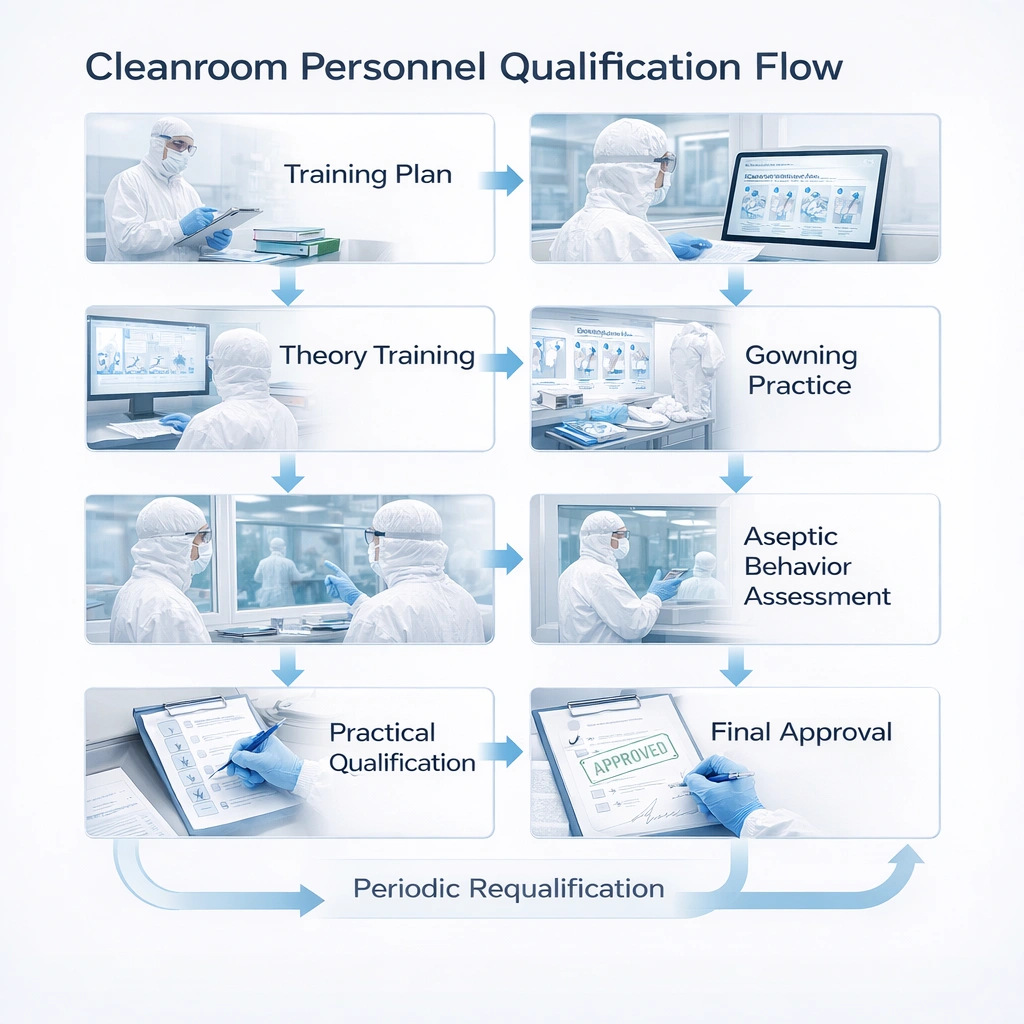
Typischer Personalqualifizierungsablauf
Die Qualifizierung sollte einem einheitlichen Ablauf und nicht einer einmaligen Präsentation folgen. Die stärksten Programme bewegen sich vom Wissen über die Demonstration bis hin zur kontrollierten Genehmigung.
Visuelle Erklärung: Qualifizierungsfluss
Empfohlener Trainingsablauf:
- Zuweisung des Trainingsplans
- Theorieschulung zur Kontaminationskontrolle
- Anziehanleitung und beaufsichtigtes Üben
- Beobachtung des aseptischen Verhaltens
- Praktische Qualifikation in simulierter oder kontrollierter Umgebung
- Endgültige Genehmigung für den Raumzugang oder die Prozessteilnahme
- Regelmäßige Requalifizierung und abweichungsbedingte Umschulung
- Genehmigen Sie Personal nicht nur aufgrund der Anwesenheit im Klassenzimmer
- Verwenden Sie eine beobachtungsbasierte Freigabe für Kleidung und Bewegungsdisziplin
- Trennen Sie die temporäre Zugangsschulung von der vollständigen Bedienerqualifikation
- Neubewertung nach größeren SOP-Änderungen, Raumänderungen oder Untersuchungsergebnissen
Worüber das Personal geschult werden sollte
1. Grundlagen der Kontamination
Das Personal sollte verstehen, woher die Kontamination kommt, wie Menschen dazu beitragen und wie sich Verhalten auf die Raumkontrolle auswirkt. Dies verleiht den Regeln einen Kontext und verbessert die Compliance-Qualität.
2. Anziehen und Eintrittsverhalten
Die Schulung sollte Reihenfolge, Umgang mit Kleidungsstücken, Handschuhwechsel, Einlassablauf und berührungslose Disziplin umfassen. Dies sollte eng mit Ihrem übereinstimmen Umkleideprogramm und Bekleidungsmanagementprozess.
3. Aseptische Technik und Reinraumverhalten
Bediener müssen wissen, wie sie sich bewegen, erreichen, wenden, kommunizieren und eingreifen können, ohne den kontrollierten Luftstrom zu stören oder kritische Oberflächen zu berühren.
4. Raumspezifische Regeln
Für verschiedene Bereiche können unterschiedliche Einschränkungen, Übertragungsprotokolle und Zugangsbedingungen gelten. Das Personal sollte für die Zonen, die es tatsächlich betritt, qualifiziert sein.
5. Abweichungs- und Vorfallbewusstsein
In der Schulung muss erklärt werden, was nach einem Bruch des Kittels, einer Berührung mit einem Handschuh, einem fallengelassenen Gegenstand, einer unerwarteten Bewegung oder einem Umgebungsalarm zu tun ist.
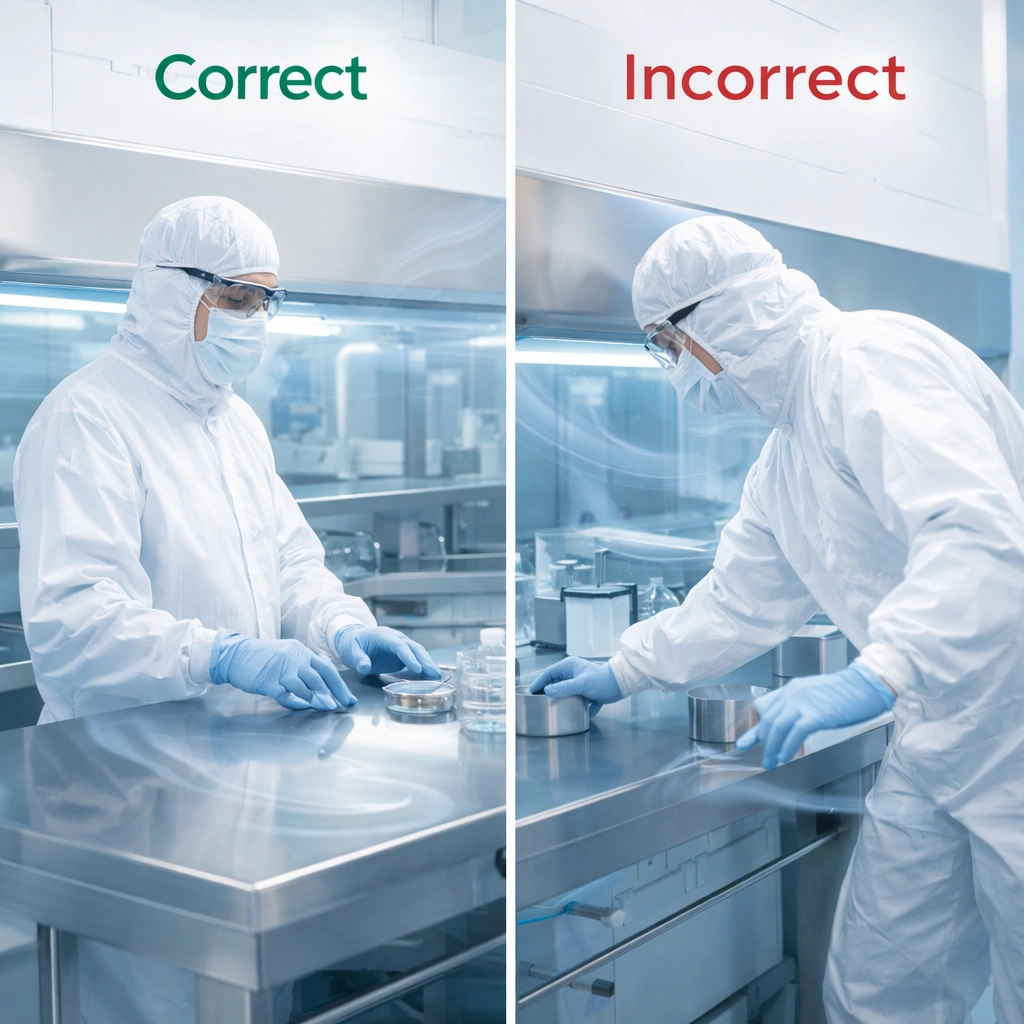
Richtiges vs. falsches Personalverhalten
Eines der effektivsten Trainingsinstrumente ist der visuelle Kontrast. Mitarbeiter verstehen Erwartungen schneller, wenn sie akzeptables Verhalten mit häufigen Fehlern vergleichen können.
Visuelle Erklärung: Richtiges vs. falsches Verhalten
In den Trainingsvisualisierungen sollten langsame kontrollierte Bewegungen, korrekte Handpositionierung und saubere Transfertechnik mit Hektik, unnötigem Drehen, Berühren nicht steriler Oberflächen oder dem Blockieren kritischer Luftströme verglichen werden.
| Richtige Praxis | Falsche Praxis | Warum es wichtig ist |
|---|---|---|
| Bewegen Sie sich langsam und bewusst | Bewegen Sie sich schnell oder abrupt | Schnelle Bewegung erhöht die Partikelbildung und die Störung des Luftstroms |
| Halten Sie Ihre Hände im geschulten Arbeitsbereich | Greifen Sie unnötigerweise über kritische Bereiche hinweg | Reduziert das Kontakt- und Kontaminationsrisiko |
| Folgen Sie definierten Übertragungswegen | Verknüpfung von Material- oder Personalfluss | Schützt die Trennung von sauber nach schmutzig |
| Eskalieren Sie mögliche Verstöße sofort | Ignorieren Sie kleinere Fehler oder korrigieren Sie sie stillschweigend | Verbessert die Untersuchungsqualität und Risikokontrolle |
Wann Umschulung und Neuqualifizierung ausgelöst werden sollten
Eine Umschulung sollte niemals auf ein jährliches Kalenderereignis beschränkt sein. Es sollte auch durch operationelle Risikosignale und Qualitätsereignisse ausgelöst werden.
- Regelmäßige geplante Requalifizierung
- Große SOP-Überarbeitung
- Raumklassifizierung oder Prozessänderung
- Fehler beim Anziehen oder bei der Beurteilung des Verhaltens
- Mit dem Menschen verbundene EM-Exkursion oder Untersuchungsbefund
- Lange Abwesenheit von Reinraumarbeiten
- Wiederholte geringfügige Abweichungen deuten auf eine Kompetenzdrift hin
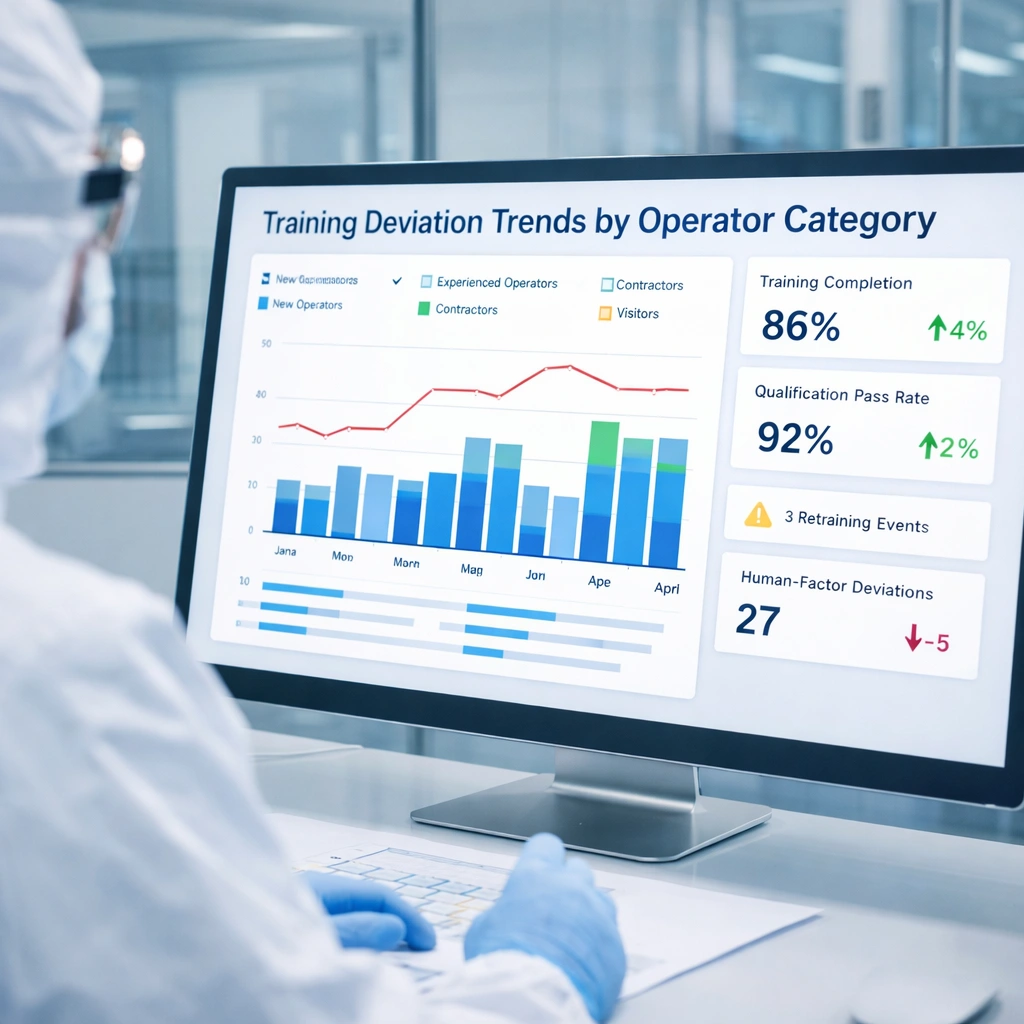
Visuelle Erklärung: Trainingsabweichungstrend
Ein Dashboard kann der Qualitätssicherung dabei helfen, schulungsbezogene Abweichungen nach Abteilung, Dienstalter des Bedieners, Zimmerkategorie oder Art des Vorfalls zu überprüfen. Dadurch wird die Umschulung zielgerichteter und datenbasierter.
Worauf Prüfer üblicherweise achten
Bei Inspektionen werden Schulungssysteme häufig nicht nur als Dokumente, sondern auch als Nachweis der Kontrolle überprüft. Schwache Rückverfolgbarkeit, generische Inhalte oder mangelnde praktische Qualifikation können das Vertrauen in die umfassendere Kontaminationskontrollstrategie schnell untergraben.
Prüfer fragen oft nach:
- Rollenbasierte Trainingsmatrix
- Neueste genehmigte Schulungs-SOPs
- Datensätze für bestimmte benannte Operatoren
- Nachweis der praktischen Qualifikation
- Umschulungsaufzeichnungen nach Abweichungen
- Nachweis, dass die Schulungsinhalte den aktuellen Verfahren entsprechen
Best-Practice-Modell für ein Hochleistungstrainingsprogramm
Die effektivsten Reinraum-Trainingssysteme haben mehrere Merkmale gemeinsam:
- Risikobasierte Inhalte nach Rolle und Reinraumklasse
- Starke Integration mit kleiden, Reinigung, Umweltüberwachungund Abweichungssysteme
- Praktische Qualifikation, nicht nur Anwesenheitsnachweise
- Routinemäßige Auffrischungen und ereignisbasierte Umschulungen
- Visuelle Lehrmittel, die richtiges und falsches Verhalten zeigen
- Klare Dokumentation und schnelle Rückverfolgbarkeit bei Audits
Die Ausbildung sollte nicht vom Betrieb isoliert werden. Es sollte Teil des lebenden Kontaminationskontrollsystems sein.
Bauen Sie eine prüfungssicherere Reinraumumgebung auf
Rüsten Sie Ihr Kontaminationskontrollsystem mit GMP-gerechten Reinraumlösungen für pharmazeutische und kontrollierte Umgebungen auf.
Häufig gestellte Fragen
Was ist eine Reinraumpersonalschulung?
Die Schulung des Reinraumpersonals ist ein dokumentiertes Programm, das den Mitarbeitern beibringt, wie sie sich in kontrollierten Umgebungen verhalten, kleiden, bewegen und arbeiten, ohne die Kontaminationskontrolle zu beeinträchtigen.
Warum ist Personalschulung in GMP-Reinräumen wichtig?
Denn der Mensch ist eine Hauptkontaminationsquelle. Richtiges Training reduziert Partikelabwurf, schlechte aseptische Technik, falsche Bewegungen und das Risiko von Abweichungen.
Braucht die Reinraumausbildung eine praktische Qualifikation?
Ja. Präsenzschulungen allein reichen nicht aus. Kleidungs-, Verhaltens- und prozessspezifische Handlungen sollten in der Praxis beachtet und genehmigt werden.
Wie oft sollte das Personal umgeschult werden?
Eine Neuschulung findet in der Regel regelmäßig statt, sollte aber auch bei Abweichungen, SOP-Änderungen, längerer Abwesenheit, nicht bestandener Qualifizierung oder Kontaminationsuntersuchungen ausgelöst werden.
Wer sollte in die Reinraumschulung einbezogen werden?
Bediener, QA-Personal, Vorgesetzte, Wartungspersonal, Auftragnehmer und alle Besucher, die kontrollierte Bereiche betreten, sollten entsprechend ihrer Zugangsebene und ihrem Risiko eine angemessene Schulung erhalten.
Welche Dokumente unterstützen ein auditfähiges Schulungssystem?
Zu den wichtigsten Aufzeichnungen gehören Schulungs-SOPs, Schulungsmatrix, Anwesenheits- und Qualifikationsaufzeichnungen, Requalifizierungshistorie und abweichungsbezogene Umschulungsdokumentation.
Welchen Zusammenhang gibt es zwischen Personalschulung und Umweltüberwachung?
Bei Exkursionen zur Umweltüberwachung kommt es oft auf den Faktor Mensch an. Schulungen tragen dazu bei, vermeidbare Kontaminationsereignisse zu reduzieren und unterstützen eine bessere Reaktion, wenn ungewöhnliche Ergebnisse auftreten.
Geht es bei der Reinraumschulung nur um das Ankleiden?
Nein. Der Kittel ist nur ein Teil. Eine wirksame Schulung umfasst auch Kontaminationsbewusstsein, aseptisches Verhalten, Bewegungskontrolle, Transferpraktiken und Reaktion auf Abweichungen.