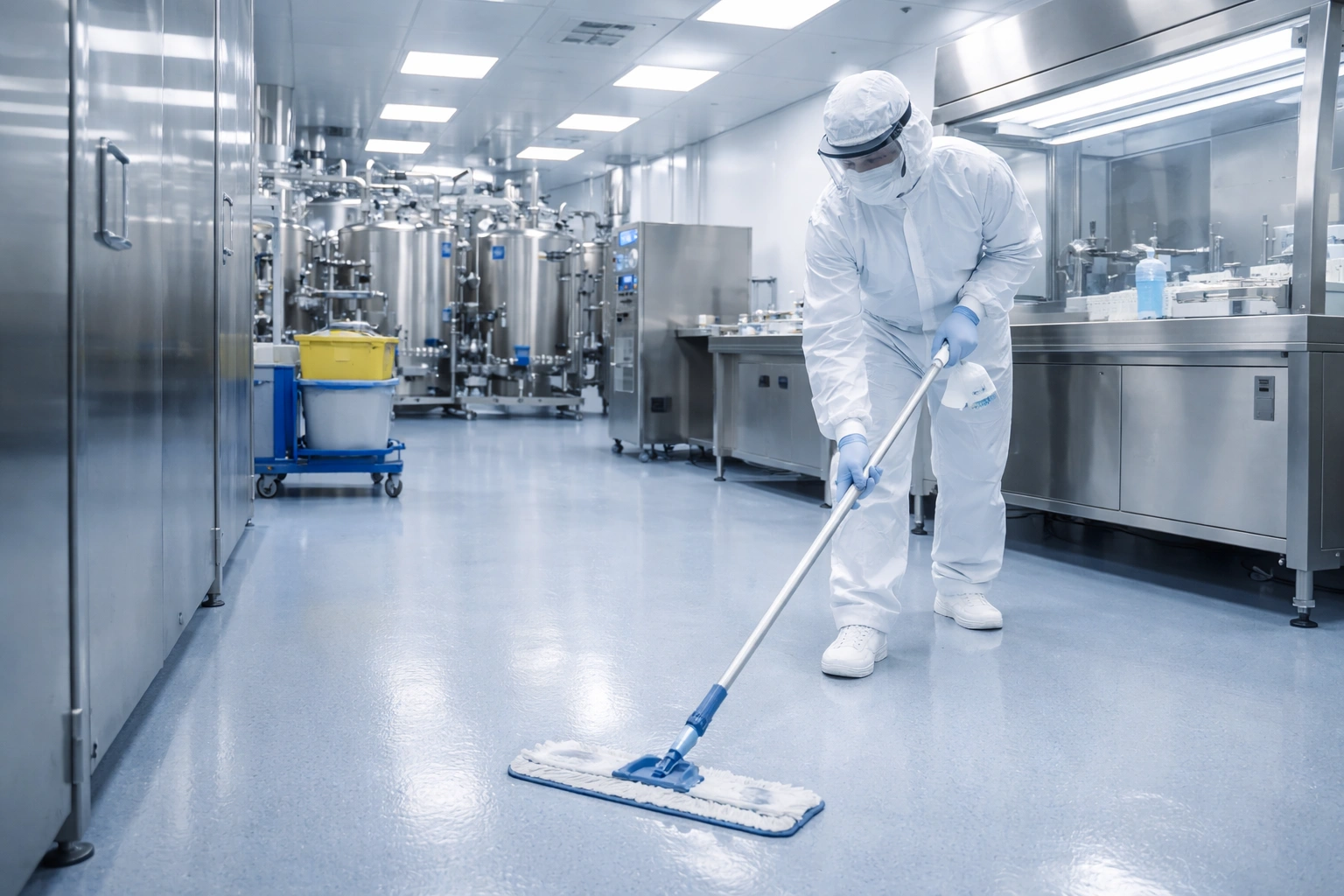
Ein strukturierter Rahmen für die Anpassung der Reinraum-Moppspezifikationen an die EU-GMP-Zonen A, B, C und D. Behandelt Sterilitätsanforderungen, Materialauswahl, Verpackung, Dokumentationserwartungen und zonenspezifische betriebliche Überlegungen für pharmazeutische und biotechnologische Einrichtungen.
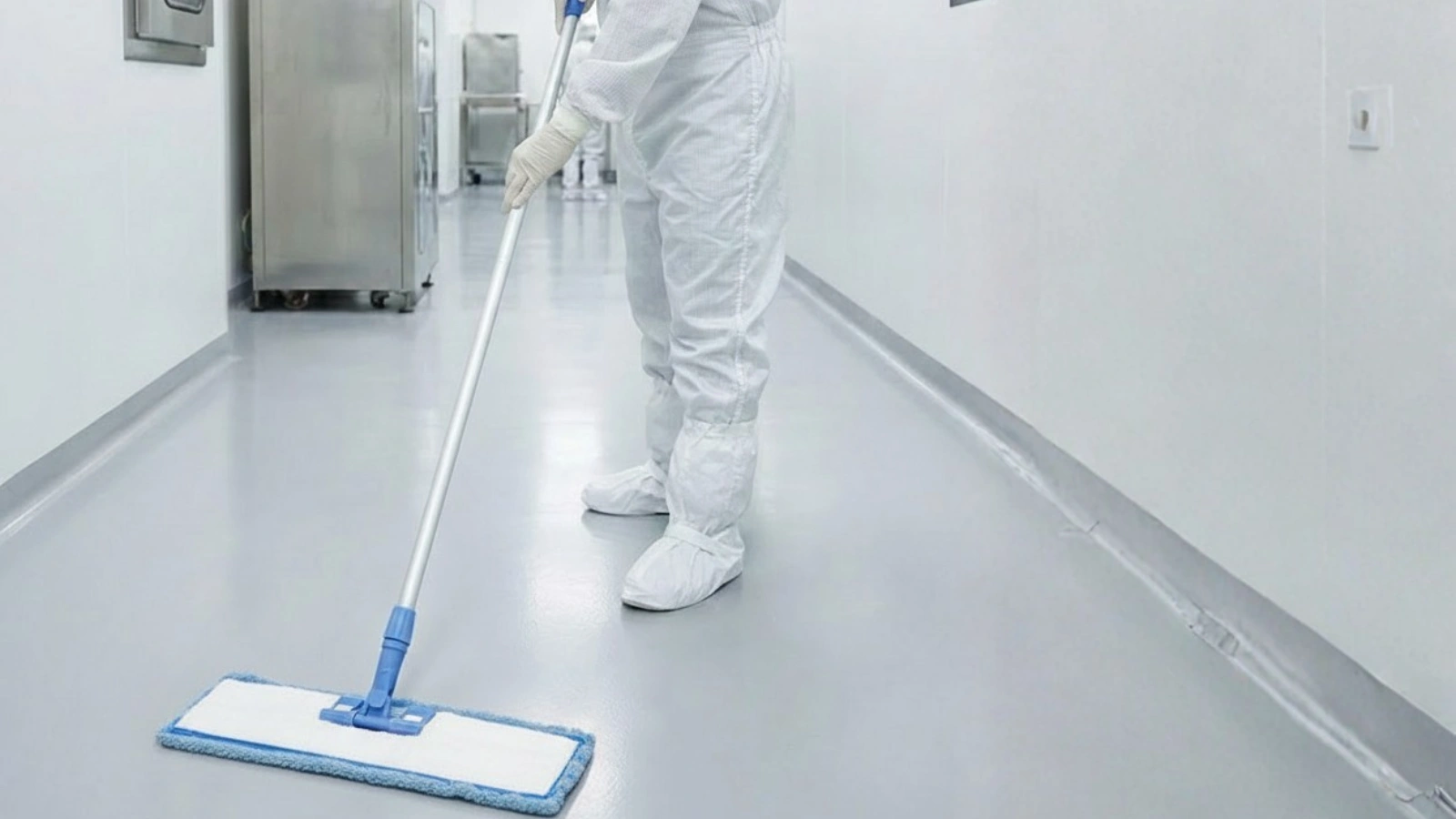
Die folgende Matrix bietet einen schnellen Überblick darüber, wie sich die Moppspezifikationen in den GMP-Zonen A, B, C und D ändern. Jede Zeile stellt einen allgemeinen Bewertungsausgangspunkt dar – keinen universellen Regulierungsauftrag. Einrichtungsspezifische Risikobewertungen, Reinigungsvalidierungsprotokolle und die Nähe zum Produktkontakt sollten in die endgültigen Spezifikationen einfließen.
| GMP-Qualität | Typische Sterilitätsanforderung | Materialpräferenz | Verpackung | Dokumentationserwartung |
|---|---|---|---|---|
| Klasse A | Endsterilisiert (Gamma- oder validierte Methode); doppelt verpackt | Endlosfilament-Polyesterstrick mit versiegelten Kanten | Stufenweiser aseptischer Transfer; Entfernung des mehrschichtigen Außenbeutels | Sterilitätszertifikat (pro Charge), COA, Partikeltestdaten, Chargenrückverfolgbarkeit |
| Note B | Normalerweise steril bei Anschluss an Klasse A; „Unsteril“ kann für eigenständige Zonen bewertet werden | Endlosfilament-Polyestergestrick (in den meisten Fällen derselbe Materialstandard wie Klasse A) | Im sterilen Zustand doppelt verpackt; Einzelbeutel können als nicht steril bewertet werden | COA, Partikeltestdaten; Sterilitätszertifikat, falls steril; Aufzeichnungen zur Rückverfolgbarkeit |
| Klasse C | Unsteril ist typisch; Steril kann verwendet werden, wenn die Einrichtung ein einheitliches Sterilprogramm anwendet | Polyester oder Mikrofaser (risikobasiert); Mikrofasern können auf ihre Reinigungswirkung hin untersucht werden | Groß- oder Einzelbeutel; Verpackungssauberkeit statt Sterilitätssicherung | COA, Materialzertifizierung; Sterilität ist normalerweise nicht erforderlich |
| Klasse D | Unsteril; Eine übermäßige Angabe von Sterilität für Klasse D ist eine gängige, kostenineffiziente Praxis | Polyester oder Mikrofaser; Kosteneffizienz, Reinigungsleistung und Zonentrennung sind die Haupttreiber | Großverpackungen sind normalerweise akzeptabel | Echtheitszertifikat, Materialzertifizierung, Farbcodierungsüberprüfung |
Haftungsausschluss: Hierbei handelt es sich um allgemeine Bewertungsrichtlinien, die auf der gängigen Branchenpraxis basieren, nicht auf behördlichen Vorgaben. Spezifische Risikobewertungen der Einrichtung, Reinigungsvalidierungsprotokolle und die Nähe zum Produktkontakt sollten die endgültigen Moppspezifikationen bestimmen. Überprüfen Sie immer anhand des aktuellen EU-GMP-Anhangs 1 und der geltenden regionalen behördlichen Anforderungen.
Der Begriff „GMP-Reinraummopp“ wird oft verwendet, als ob alle GMP-Zonen dieselben Anforderungen an Reinigungswerkzeuge hätten. In der Praxis a
Reinraummopp für die GMP-Anlagenreinigungmuss unterschiedlich angegeben werden, je nachdem, in welche Sortenzone es eintritt. Der Mopp, der für einen Materialbereitstellungsbereich der Klasse D geeignet ist, ist nicht derselbe Mopp, der in eine aseptische Abfülllinie der Klasse A gelangen sollte. Das EU-GMP-Anhang-1-Rahmenwerk definiert vier Reinraumklassen für die Herstellung steriler Arzneimittel mit jeweils unterschiedlichen Grenzwerten für luftgetragene Partikel, mikrobiellen Grenzwerten und betrieblichen Erwartungen.
Was ist GMP-Reinigung?In diesem Zusammenhang handelt es sich nicht um ein einzelnes Protokoll, sondern um ein zonengeschichtetes System, bei dem Reinigungswerkzeuge Teil der Kontaminationskontrollstrategie sind.
Der örtliche Bereich für Vorgänge mit hohem Risiko, einschließlich aseptischer Abfüllung, Stopfenschalen, offener Ampullen und Fläschchen sowie aseptischer Verbindungen. Die Grenzwerte für luftgetragene Partikel sind am strengsten: ≤3.520 Partikel/m³ (≥0,5 µm) im Ruhezustand und im Betrieb. Reinigungswerkzeuge der Klasse A dürfen keine Partikel, Mikroorganismen oder chemischen Rückstände enthalten, die die Sterilität des Produkts beeinträchtigen könnten.
Hintergrundumgebung für Zonen der Klasse A während der aseptischen Vorbereitung und Abfüllung. Die Partikelgrenzwerte im Ruhezustand entsprechen der Klasse A (≤3.520 Partikel/m³ bei ≥0,5 µm); Die Betriebsgrenzwerte sind höher, werden aber immer noch streng kontrolliert. Reinigungswerkzeuge müssen mit der Aufrechterhaltung der Hintergrundumgebung kompatibel sein, die aseptische Abläufe unterstützt.
Saubere Bereiche für weniger kritische Phasen der Herstellung steriler Produkte. Klasse C: Lösungsvorbereitung, Waschen der Komponenten. Klasse D: Materialhandhabung, Gerätereinigung, Verpackung. Die Partikelgrenzwerte werden immer weniger streng und die Spezifikationen für Reinigungsgeräte können sich in Richtung betrieblicher Effizienz und Kosteneffizienz verschieben, während gleichzeitig die Umweltkontrolle gewährleistet bleibt.
A
Übersicht über Reinraum-Moppsystemeist als Ausgangspunkt hilfreich, aber dieser nach Qualitäten geschichtete Leitfaden konzentriert sich darauf, wie sich die Spezifikation ändert, wenn sich die Einrichtung vom aseptischen Kern nach außen bewegt. Der zentrale Grundsatz lautet:
Je näher ein Mopp dem Produkt kommt, desto wichtiger sind Material, Sterilität, Verpackung und Dokumentation.Zonen der Güteklasse A und B stellen den aseptischen Kern einer GMP-Anlage dar. Für die in diesen Bereichen eingesetzten Mopps gelten höchste Material-, Sterilitäts- und Dokumentationsanforderungen. Die hier getroffenen Auswahlentscheidungen haben direkte Auswirkungen auf die Produktsterilitätssicherung und die Ergebnisse behördlicher Prüfungen.
Für alle Mopps der Klasse A – und typischerweise für Mopps der Klasse B, die als Hintergrund für Operationen der Klasse A dienen –
Die Endsterilisation ist der erwartete Standard. Gammabestrahlung ist eine gängige Sterilisationsmethode für Reinraum-Mopps, gefolgt von einer validierten Sterilitätssicherung. Jeder Produktionscharge sollte ein Sterilitätszertifikat beigefügt sein, das den Sterilisationsprozess, die Chargenidentifizierung und den Sterilitätssicherungsgrad (SAL) dokumentiert. Sterile Mopps müssen sein
doppelt verpacktum einen stufenweisen aseptischen Transfer zu ermöglichen. Der äußere Beutel wird im Übergangsbereich der Klasse C oder B entfernt; Der Innenbeutel wird innerhalb der Zone der Klasse B oder A entfernt. Dieses schrittweise Transferprotokoll ist ein wichtiger Bestandteil der aseptischen Technik. Eine detaillierte Untersuchung der aseptischen Transferprotokolle und Verpackungsanforderungen finden Sie im
Steriler Reinraum-Mopp-Leitfaden für den aseptischen Transfer und die Verpackung.

Für Zonen der Klassen A und B gilt:
Endlosfilament-Polyestergestrick mit versiegelten Kantenist die am häufigsten empfohlene Materialkonfiguration. Die strukturelle Begründung lautet wie folgt:
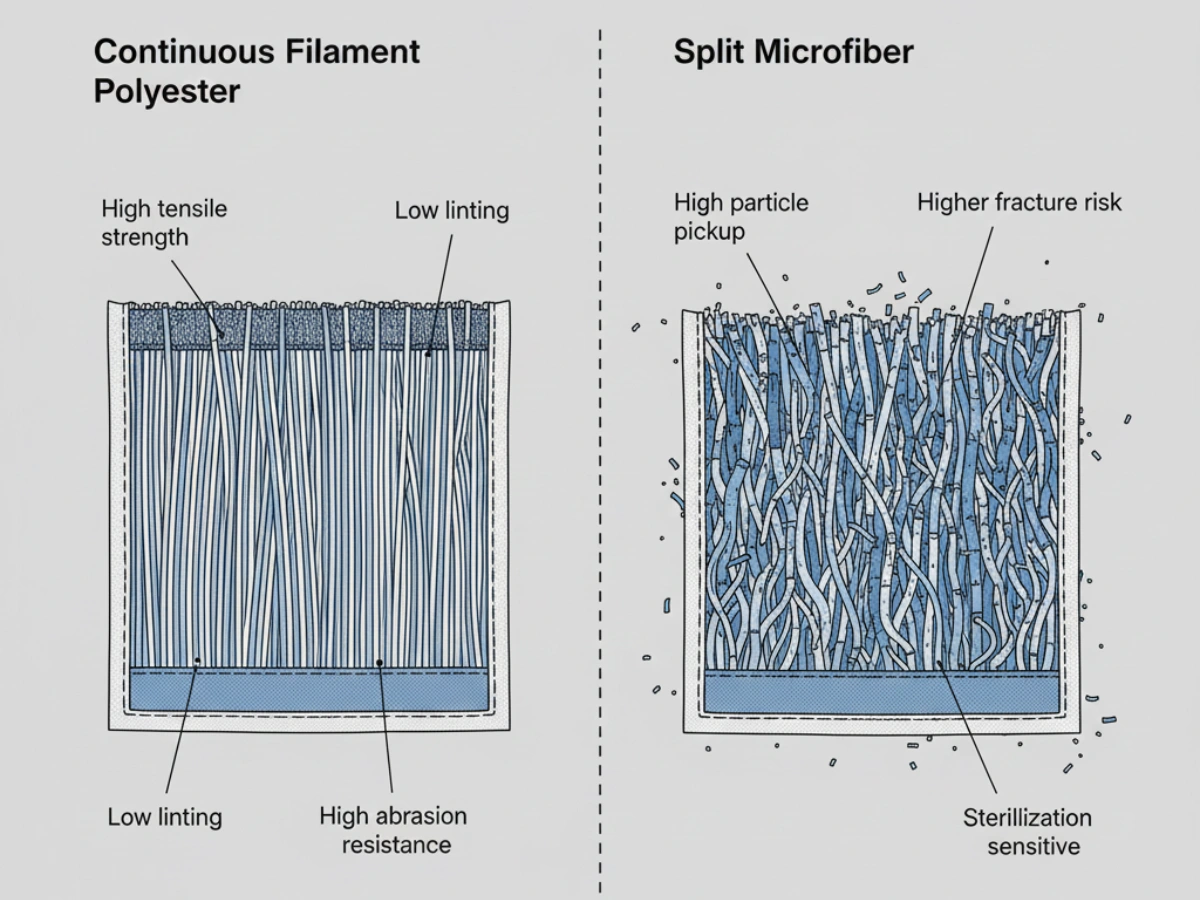
In Zonen der Güteklasse A und B werden häufig leichtere Moppkopfgewichte (40–55 g) bevorzugt. Diese bieten eine ausreichende Saugfähigkeit für die typischerweise kleineren Oberflächenbereiche in aseptischen Abfüllanlagen und bieten dem Bediener gleichzeitig eine bessere Kontrolle in eng konfigurierten kritischen Zonen. Schwerere Köpfe (65 g) transportieren mehr Flüssigkeit und decken pro Hub eine größere Oberfläche ab – ein Vorteil in größeren offenen Bereichen wie Korridoren und Vorräumen der Klasse B – können jedoch in engen Räumen der Klasse A zu Herausforderungen bei der Handhabung führen.
Für Zonen der Klassen A und B sollte das Dokumentationspaket mindestens Folgendes umfassen:
Für eine tiefergehende Diskussion der Dokumentation aller Reinraumklassifizierungen siehe
Pharmazeutischer Reinraummopp GMP Annex 1-KonformitätDer Leitfaden deckt die Dokumentationserwartungen ab, die mit der aktuellen Überarbeitung von Anhang 1 übereinstimmen. Der breitere Kontext von
Anforderungen an pharmazeutische Reinraummoppsbefasst sich auch mit Überlegungen auf Einrichtungsebene, die über den stufenspezifischen Rahmen hinausgehen.
Klasse B stellt einen differenzierten Entscheidungspunkt dar, der nicht für Klasse A gilt. Da Klasse B als Hintergrundumgebung für aseptische Vorgänge dient, hängt die Sterilitätsanforderung für in Klasse B verwendete Mopps davon ab, ob die Zone mit einem aktiven Betrieb der Klasse A verbunden ist.
Die Entscheidung, ob Mopps der Güteklasse B steril sein müssen, sollte durch eine risikobasierte Bewertung erfolgen. Die folgenden drei Bedingungen beschreiben, wann nicht sterile Mopps für die alleinige Verwendung der Klasse B bewertet werden können:
Die Zone der Klasse B ist physisch von den Betrieben der Klasse A getrennt und wird während der aseptischen Verarbeitung nicht aktiv als Hintergrundumgebung genutzt. Wenn sich der Raum der Klasse B in einem „Ruhezustand“ befindet oder Funktionen erfüllt, die den aktiven Betrieb der Klasse A nicht direkt unterstützen, kann die Sterilitätsanforderung neu bewertet werden.
Die Einrichtung verfügt über ein validiertes Reinigungsprotokoll, aus dem hervorgeht, dass die Verwendung nicht steriler Wischmopps in der spezifischen Zone der Klasse B nicht zu mikrobiellen oder Partikelausbrüchen führt, die über die definierten Grenzen der Zone hinausgehen. Diese Validierung sollte Umweltüberwachungsdaten umfassen, die sowohl im Ruhezustand als auch im Betrieb erfasst wurden.
Es wurde eine formelle, dokumentierte Risikobewertung durchgeführt und von der Qualitätssicherung genehmigt, die sich mit Folgendem befasst: der Nähe der Zone der Klasse B zur Zone der Klasse A, der Art der Vorgänge in der Zone der Klasse B, der Reinigungshäufigkeit und den möglichen Auswirkungen eines nicht sterilen Mopps auf die Ergebnisse der Umweltüberwachung und die Produktqualität.
Wenn alle drei Bedingungen erfüllt sind, Nicht sterile Mopps können für die spezifische Zone der Klasse B bewertet werden. Wenn eine Bedingung nicht vollständig erfüllt ist, Sterile Mopps sollten die Standardspezifikation für Klasse B sein, wenn sie als Hintergrund für Operationen der Klasse A dienen. Im Zweifelsfall – und insbesondere bei behördlichen Inspektionen – ist der konservative Ansatz, sterile Mopps für Klasse B zu spezifizieren, im Allgemeinen der Weg mit dem geringsten Auditrisiko.
Unabhängig von der Sterilitätsentscheidung ist die
Der Materialstandard für Mopps der Klasse B sollte normalerweise mit der Klasse A übereinstimmen: Endlosfilament-Polyestergestrick mit versiegelten Kanten. Der Grundgedanke ist, dass die Partikelanzahl in der Umgebung der Klasse B niedrig genug gehalten werden muss, um die Zone der Klasse A, die sie versorgt, zu schützen. Die Einführung eines minderwertigeren Materials in Klasse B – zum Beispiel Mikrofasern mit höherem Partikelabwurfpotenzial – führt zu einem Materialqualitätsgradienten, der die Kontaminationskontrollstrategie untergraben kann.
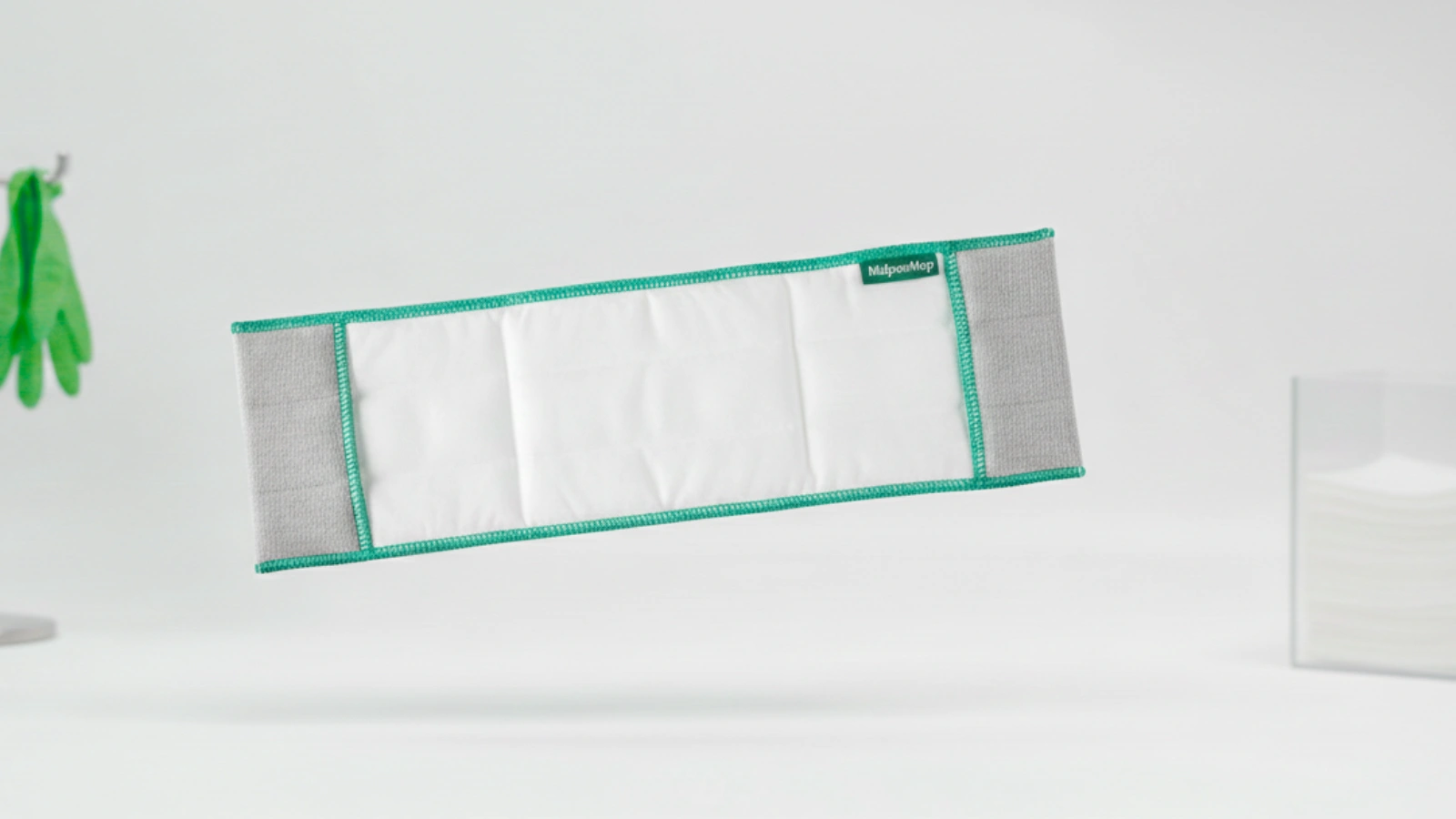
Sobald die Moppspezifikation über den aseptischen Kern hinaus in die Zonen der Klassen C und D übergeht, ändern sich die Bewertungskriterien. Die zentrale Frage lautet nicht mehr „wie kann die Sterilitätssicherheit aufrechterhalten werden“, sondern „wie kann eine wirksame Kontaminationskontrolle zu angemessenen Kosten innerhalb einer weniger strengen Umweltklassifizierung erreicht werden.“
Für die überwiegende Mehrheit der Anwendungen der Klassen C und D gilt:
Unsterile Mopps sind sinnvoll und kosteneffizient. Die Partikelgrenzwerte der Güteklasse C (≤352.000 Partikel/m³ bei ≥0,5 µm im Ruhezustand; ≤3.520.000 im Betrieb) und die Grenzwerte der Güteklasse D (≤3.520.000 im Ruhezustand; im Betrieb nicht definiert) ermöglichen eine breitere Palette von Reinigungswerkzeugmaterialien. Die übermäßige Spezifizierung steriler Mopps für Klasse C/D ist eine der häufigsten kostenineffizienten Praktiken, die in Einrichtungen mit mehreren Klassen beobachtet werden. Es gibt begrenzte Szenarien, in denen sich eine Einrichtung für die Verwendung steriler Mopps der Klasse C entscheiden kann – zum Beispiel, wenn die Einrichtung ein einheitliches Programm für sterile Mopps in allen Klassen einführt, um das Lieferkettenmanagement zu vereinfachen und das Risiko zu verringern, dass der falsche Mopp in die falsche Zone gelangt. Hierbei handelt es sich um eine betriebliche Entscheidung, nicht um eine regulatorische Anforderung, und sie sollte anhand der Kostenprämie bewertet werden.
In der Klasse C und D steht die materielle Entscheidung offen. Sowohl Polyester als auch Mikrofaser können praktikable Optionen sein, und die Wahl sollte sich an den Prioritäten der Einrichtung orientieren:
Der
Vergleich zwischen Mikrofaser- und Polyester-ReinraummoppsBietet eine detaillierte, evidenzbasierte Analyse der Materialkompromisse in Bezug auf Partikelerzeugung, Absorptionsfähigkeit, chemische Kompatibilität, Haltbarkeit und Lebenszykluskosten – direkt relevant für die Materialentscheidung der Güteklasse C/D.
Die Entscheidung zwischen Einweg- und Mehrwegprodukten der Klasse C/D ist in erster Linie wirtschaftlicher und nicht sterilitätsorientierter Natur. In den unteren Klassenstufen konzentriert sich die Analyse auf:
Einen strukturierten Rahmen zum Vergleich dieser Dimensionen finden Sie im
Entscheidungshilfe für Einweg- oder wiederverwendbare Reinraummopps.
Einer der praktischsten Mechanismen, um zu verhindern, dass Mopps der Klassen A/B fälschlicherweise in Mopps der Klassen C/D (und umgekehrt) verwendet werden, ist ein Farbcodierungssystem. Durch die Zuweisung unterschiedlicher Mopp- oder Besatzfarben zu jeder Sortierzone können Bediener auf einen Blick visuell bestätigen, dass der richtige Mopp verwendet wird. Dies ist eine einfache, aber wirksame Verteidigungsebene:
Farbcodierungszuweisungen sollten in der Reinigungs-SOP der Einrichtung dokumentiert, an den Reinigungsstationen sichtbar ausgehängt und in die Bedienerschulung einbezogen werden. Das Farbschema sollte so einfach sein, dass man es sich merken und einheitlich anwenden kann.
Die folgende Tabelle ist die Hauptreferenz für dieses Handbuch. Es konsolidiert die wichtigsten Spezifikationsdimensionen aller vier GMP-Qualitäten in einer einzigen Vergleichsansicht. Nutzen Sie dies als Ausgangspunkt für die Ausarbeitung einrichtungsspezifischer Moppspezifikationen – und nicht als Checkliste zur Einhaltung gesetzlicher Vorschriften.
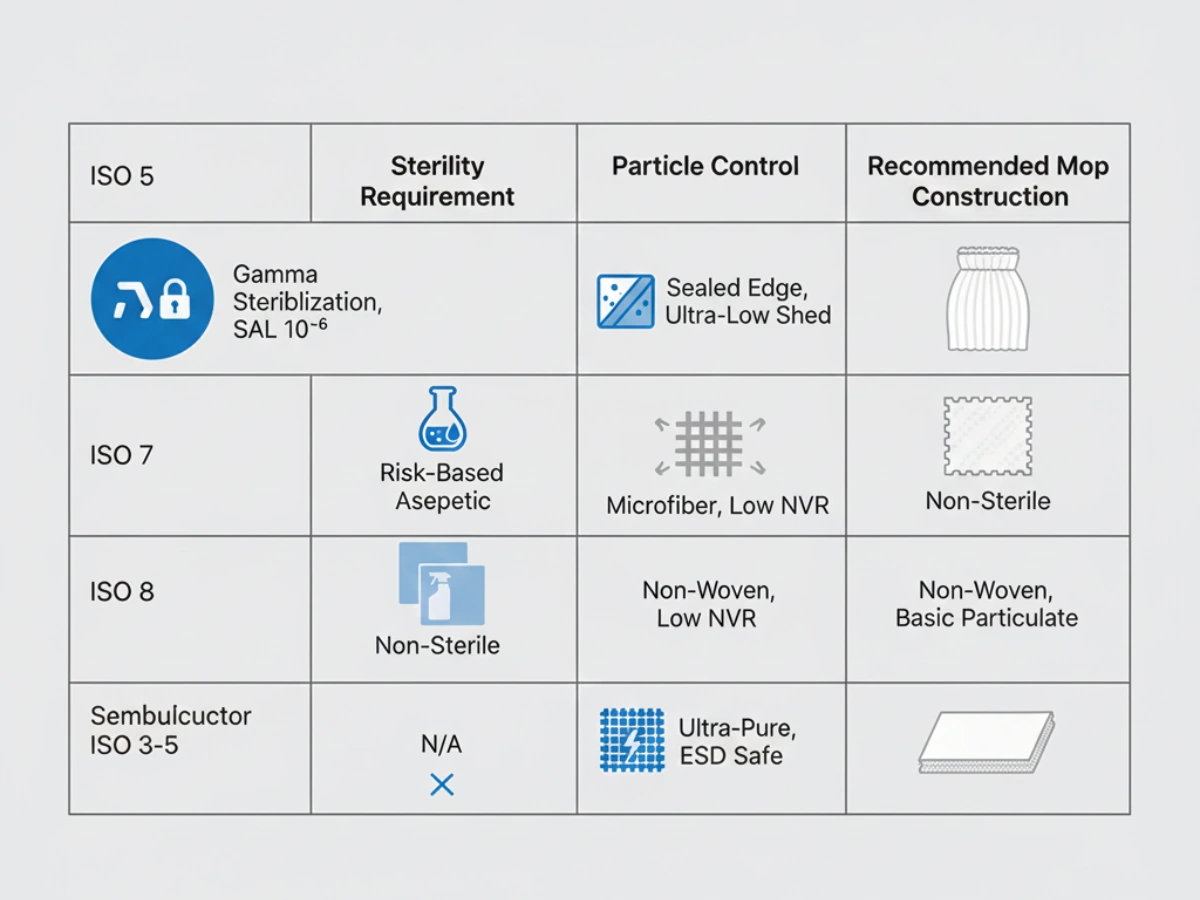
| Grad | Sterilität | Material | Gewichtsbereich | Verpackung | Dokumentation | Häufigkeit ändern | Empfohlene MIDPOSI-Option |
|---|---|---|---|---|---|---|---|
| A | Endgültig sterilisiert (Gamma); SAL-validiert | Endlosfilament-Polyestergewirke; Laser-/ultraschallversiegelte Kanten | 40–55 g (leichtere Köpfe zur Bedienerkontrolle in engen aseptischen Räumen) | Doppelt verpackt; abgestuftes aseptisches Transferprotokoll | COA + Sterilitätszertifikat (pro Charge) + Partikeltestdaten + CoC + Chargenrückverfolgbarkeit | Pro Reinigungsereignis oder pro Bereich; validiert in der Reinigungs-SOP | Weißer Mopp, 40 g/55 g, steril |
| B | Steril bei Anschluss an Klasse A; unsteril, kann für eigenständige Zonen bewertet werden (risikobasiert) | Endlosfilament-Polyestergewirke; versiegelte Kanten; In den meisten Fällen derselbe Materialstandard wie Klasse A | 55 g (üblich); Für größere Flächen können 65g veranschlagt werden | Im sterilen Zustand doppelt verpackt; Einzelbeutel können akzeptabel sein, wenn sie unsteril sind | COA + Sterilitätszertifikat (falls steril) + Partikeltestdaten + Rückverfolgbarkeit | Im Einklang mit dem Zeitplan der Klasse A, wenn verbundene Klasse A bedient wird; Andernfalls kann der B-spezifische Zeitplan eingehalten werden | Weißer Mopp 55 g/65 g steril (an A angeschlossen); 55 g/65 g unsteril (eigenständig, risikobewertet) |
| C | Unsteril (typisch); steril optional für einheitliches Programm | Polyester oder Mikrofaser (risikobasiert); Polyester wird bevorzugt, wenn es auf chemische Kompatibilität ankommt; Mikrofaser, bei der die Reinigungswirkung im Vordergrund steht | 55 g–65 g (Abdeckungseffizienz für größere Stützbereiche) | Groß- oder Einzelbeutel; Verpackungssauberkeitsstandard | COA + Materialzertifizierung | Definiert durch das Reinigungsprotokoll der Einrichtung; typischerweise pro Bereich oder pro Schicht | Weißer Mopp 55 g/65 g, unsteril; Mikrofaser-Streifen-Mopp-Pads |
| D | Unsteril; Steril ist für Anwendungen der Klasse D in der Regel kostenineffizient | Polyester oder Mikrofaser; Kosteneffizienz, Reinigungsleistung und Auswahl des Zonentrennungsantriebs | 55g–65g | Großverpackungen sind normalerweise akzeptabel | COA + Materialzertifizierung | Definiert durch das Reinigungsprotokoll der Einrichtung; typischerweise höchste Wechselhäufigkeit aufgrund der Schmutzbelastung | Weißer Mopp 55 g/65 g, unsteril; Mikrofaser-Streifen-Mopp-Pads; farbcodierte Optionen |
WICHTIGER HAFTUNGSAUSSCHLUSS: Hierbei handelt es sich um allgemeine Bewertungsrichtlinien, die auf allgemeiner Branchenpraxis und materialwissenschaftlichen Grundsätzen basieren, nicht auf behördlichen Vorgaben. Spezifische Anlagenrisikobewertungen, Reinigungsvalidierungsprotokolle, Nähe zum Produktkontakt und aktuell geltende behördliche Anforderungen (EU-GMP-Anhang 1, PIC/S, WHO, örtlich zuständige Behörde) sollten die endgültigen Moppspezifikationen bestimmen. Die Spalte „Vorgeschlagene MIDPOSI-Option“ spiegelt die Übereinstimmung des Produktportfolios von MIDPOSI mit den allgemeinen Qualitätserwartungen wider; es handelt sich nicht um eine regulatorische Empfehlung. Jede Einrichtung sollte ihre eigene Qualifizierung jedes Moppprodukts für seine spezifischen Einsatzbedingungen durchführen.
Hinweise dazu, wie sich das Gewicht des Moppkopfes auf die Reinigungsleistung, die Saugfähigkeit und die Ermüdung des Bedieners auswirkt – was sich direkt auf die Gewichtsspalte oben auswirkt – finden Sie im
Leitfaden zur Auswahl des Wischkopfgewichts für Reinräume. Für die in der Matrix aufgeführten Dokumentationspositionen gilt:
Reinraum-Mopp-Validierungsdokumente und COADer Leitfaden enthält eine ausführliche Erläuterung der einzelnen Dokumenttypen und erläutert, worauf Käufer bei der Prüfung von Lieferanteneinreichungen achten sollten.
Die folgenden fünf Szenarien stellen häufig beobachtete Probleme in Einrichtungen dar, in denen ein sortenstratifizierter Ansatz für die Auswahl von Reinraummopps nicht vollständig implementiert ist. Jedes enthält praktische Korrekturanleitungen.
Das Problem: Eine Einrichtung kauft eine Wischmoppspezifikation – normalerweise die sterile, doppelt verpackte Konfiguration aus Polyester, die für Klasse A geeignet ist – und setzt sie in allen Qualitäten ein, vom aseptischen Kern bis zur Materialbereitstellung der Klasse D. Dies stellt eine einheitliche Qualität sicher, verursacht jedoch erhebliche unnötige Kosten in den Klassen C und D, wo unsterile, Einzelbeutel- oder Großpackungsoptionen funktionell ausreichend wären.
So korrigieren Sie: Ordnen Sie jede Zone ihren tatsächlichen regulatorischen und betrieblichen Anforderungen zu. Reservieren Sie die Grade-A-Spezifikation für Grade-A-Zonen (und damit verbundene Grade-B-Zonen). Führen Sie unsterile, entsprechend verpackte Mopps für die Klassen C und D ein. Die Kosteneinsparungen durch diese Klassenstratifizierung übersteigen in der Regel den zusätzlichen Verwaltungsaufwand für die Verwaltung mehrerer Mop-SKUs.
Das Problem: Eine Einrichtung verwendet in Zonen der Klasse D endsterilisierte, doppelt verpackte Mopps, weil „wir überall sterile Mopps verwenden“ als sicherer angesehen wird. In Klasse D, wo die Grenzwerte für luftgetragene Partikel 1.000-mal höher sind als in Klasse A, bietet der sterile Mopp Premium im Verhältnis zu seinen Kosten nur minimale Vorteile bei der Kontaminationskontrolle.
So korrigieren Sie: Informieren Sie sich über die spezifischen behördlichen Anforderungen für Klasse D im Zuständigkeitsbereich der Einrichtung. In fast allen Fällen sind für Klasse D keine sterilen Reinigungswerkzeuge erforderlich. Wenn es sich um einen Bedienerfehler handelt (ein steriler Wischmopp wird mit einem nicht sterilen verwechselt), beheben Sie dies durch Farbcodierung, Etikettierung und Schulung, anstatt den gesamten Bestand zu spezifizieren.
Das Problem: Klasse B wird manchmal fälschlicherweise als „nur ein Reiniger der Klasse C“ bezeichnet, was zur Spezifikation nicht steriler, nicht validierter Mopps für Bereiche der Klasse B führt, die als Hintergrund für Operationen der Klasse A dienen. Dadurch entsteht eine Kontaminationskontrolllücke an der Grenze zwischen dem aseptischen Kern und der unterstützenden Umgebung.
So korrigieren Sie: Wenn Klasse B als Hintergrund für Klasse A dient, behandeln Sie die Standards für Wischmoppmaterial und Sterilität im Einklang mit Klasse A. Die Spezifikation wird nur dann auf „nicht steril“ herabgestuft, wenn eine formelle, dokumentierte Risikobewertung dies unterstützt und die drei Bedingungen aus dem Entscheidungsrahmen für Klasse B (Abschnitt 4) erfüllt sind.
Das Problem: Die Spezifikation des Moppkopfes ist nach Güteklassen geschichtet, der Mopprahmen und der Stiel jedoch nicht. Bediener verwenden den gleichen wiederverwendbaren Edelstahlrahmen und -griff in den Klassen A, B, C und D, wobei nur der Moppkopf zwischen den Zonen wechselt. Dies entspricht funktionell der Verwendung desselben Mopps für alle Qualitäten – der Rahmen selbst kann Partikel, Rückstände und Mikroorganismen zwischen Zonen unterschiedlicher Klassifizierung transportieren.
So korrigieren Sie: Ordnen Sie Mopphalter (und Griffe, sofern möglich) bestimmten Zonen zu. Trennen Sie mindestens die Rahmen für den aseptischen Kern (A/B) von den Rahmen für die Stützzone (C/D). Markieren oder beschriften Sie die Rahmen farblich, um Fehlzuordnungen optisch deutlich zu machen. Beziehen Sie die Rahmen- und Griffzuordnung in die Reinigungs-SOP ein.
Das Problem: Das QA-Team der Einrichtung fordert vom Lieferanten unabhängig von der Qualität das gleiche Dokumentationspaket – Sterilitätszertifikat für Mopps der Klasse D – oder lässt Partikeltestdaten für Mopps der Klasse A weg, weil „das Echtheitszertifikat ausreichend war“. Dadurch entstehen zwei Risiken: eine Überdokumentation, die die Lieferantenkosten ohne regulatorische Vorteile erhöht, und eine Unterdokumentation, die kritische Lücken in der Moppqualifikationsaufzeichnung hinterlässt.
So korrigieren Sie: Definieren Sie in der Qualitätsvereinbarung für den Mopplieferanten eine sortenspezifische Dokumentationsanforderungsmatrix. Klasse A/B: vollständiges Dokumentationspaket (Sterilitätszertifikat, Echtheitszertifikat, Partikeldaten, CoC, Rückverfolgbarkeit). Klasse C/D: Echtheitszertifikat und Materialzertifizierung als Basis, mit zusätzlicher Dokumentation nur, wenn dies durch eine spezifische Risikobewertung gerechtfertigt ist. Beziehen Sie die Dokumentationsmatrix als überprüftes Element in interne Audits und Lieferantenqualitätsprüfungen ein.
Für sterile Produktionsbereiche der Klasse A ist ein endsterilisierter (normalerweise gammabestrahlter) Polyester-Strickmopp mit Endlosfilamenten und laserversiegelten oder ultraschallversiegelten Kanten, doppelt verpackt für den stufenweisen aseptischen Transfer, die am häufigsten empfohlene Konfiguration. Leichtere Moppkopfgewichte (40–55 g) werden typischerweise für die Bedienung durch den Bediener in engen aseptischen Abfüllräumen bevorzugt. Die Dokumentation sollte ein Sterilitätszertifikat pro Charge, ein Analysezertifikat, Partikeltestdaten mit angegebener Methodik, ein Konformitätszertifikat und Aufzeichnungen zur Chargenrückverfolgbarkeit umfassen. Jede Einrichtung sollte überprüfen, ob ihre spezifische Produktkontaktnähe, Reinigungsvalidierungsdaten und regionalen gesetzlichen Anforderungen durch die gewählte Moppspezifikation erfüllt werden.
Nicht immer, aber die Standardempfehlung für Zonen der Klasse B, die als Hintergrund für Operationen der Klasse A dienen, ist steril. Nicht sterile Mopps können für eigenständige Zonen der Klasse B nur dann bewertet werden, wenn drei Bedingungen erfüllt sind: (1) die Zone der Klasse B ist physisch unabhängig und wird nicht aktiv als Hintergrund für aseptische Operationen der Klasse A verwendet, (2) die Einrichtung verfügt über ein validiertes Reinigungsprotokoll, das nachweist, dass keine Umgebungsüberwachungsausflüge mit nicht sterilen Mopps durchgeführt werden, und (3) eine formelle, dokumentierte Risikobewertung wurde durchgeführt und von der Qualitätssicherung genehmigt. Wenn eine Bedingung nicht vollständig erfüllt ist, sollten sterile Mopps die Spezifikation bleiben. In der Praxis verwenden viele Einrichtungen standardmäßig sterile Wischmopps für alle Produkte der Klasse B, um behördliche Prüfungsfragen zu vermeiden.
Ja, in den meisten Fällen kann die gleiche Moppspezifikation für die Klassen C und D verwendet werden, da es sich bei beiden um nicht-aseptische Stützzonen mit grundsätzlich ähnlichen Anforderungen an Reinigungswerkzeuge handelt (nicht steril, partikelkontrolliert, chemisch kompatibel). Allerdings sollte die Einrichtung einen Mechanismus implementieren, um zu verhindern, dass in einer Zone verwendete Mopps ohne entsprechende Reinigung oder Austausch in die andere gelangen – typischerweise durch Farbcodierung, zonenspezifische Mop-Inventare und SOP-definierte Nutzungsprotokolle. Ein Mopp, der in der Klasse D verwendet wird, wo die Schmutzbelastung höher sein kann, sollte dann nicht in die Klasse C gebracht werden, ohne den validierten Reinigungsprozess zu durchlaufen. Der Moppkopf selbst kann vom gleichen Produkt sein; Das Nutzungsprotokoll unterscheidet die Zonen.
Für die Validierung eines Mopps der Güteklasse A erwartet ein Prüfer normalerweise Folgendes: (1) Sterilitätszertifikat pro Produktionscharge mit Chargenkennung, Sterilisationsmethode (z. B. Gammabestrahlung), Sterilisationsdatum und Sterilitätssicherungsstufe (SAL, normalerweise 10).
-6); (2) Analysezertifikat (COA) pro Charge, das Gewicht, Abmessungen und Materialzusammensetzung bestätigt; (3) Testdaten zur Partikelerzeugung mit der angegebenen Testmethodik (z. B. Helmke-Trommeltest gemäß IEST-RP-CC003 oder Gelbo-Flex-Test); (4) Konformitätszertifikat, das bestätigt, dass das Produkt den angegebenen Spezifikationen entspricht; (5) Chargenrückverfolgbarkeitsaufzeichnungen, die die Moppcharge mit Rohstoffchargen, Produktionsdaten und Sterilisationszyklusaufzeichnungen verknüpfen; und (6) gegebenenfalls Endotoxin-Testdaten für Produkte, die bei der aseptischen Verarbeitung parenteraler Produkte verwendet werden. Der Prüfer erwartet von der Einrichtung außerdem, dass sie durch interne Bewertung und nicht nur durch vom Lieferanten bereitgestellte Dokumentation nachweist, dass der Mopp für seine spezifischen Verwendungsbedingungen qualifiziert wurde.
Der Hauptunterschied besteht darin, dass Klasse A Endlosfilament-Polyesterstrick mit versiegelten Kanten erfordert – eine Materialkonfiguration, die für minimale Partikelabgabe und maximale chemische Kompatibilität mit oxidierenden Desinfektionsmitteln optimiert ist. Klasse C eröffnet die Materialentscheidung, sowohl Polyester als auch Mikrofaser einzubeziehen. Polyester bleibt die Standardwahl, wenn Partikelkontrolle und chemische Verträglichkeit im Vordergrund stehen. Mikrofasern können in Klasse C bewertet werden, wenn die Reinigungswirksamkeit (Saugfähigkeit, mechanische Partikelerfassung, Rückstandsentfernung) Priorität hat und die Desinfektionsmittelformel der Einrichtung mit der in den meisten Mikrofasermischungen enthaltenen Polyamidkomponente (Nylon) kompatibel ist. Die Materialspezifikation der Klasse A ist strenger, da das Kontaminationsrisiko bereits bei kleinen Unterschieden in der Partikelfreisetzungsrate im aseptischen Kern deutlich höher ist.
Sowohl Einweg- als auch wiederverwendbare Konfigurationen kommen für Klasse B in Frage, und die Wahl sollte sich an den spezifischen Betriebsprioritäten der Einrichtung orientieren und nicht an einer klassenbasierten Regel. Sterile Einwegmopps eliminieren den Validierungsaufwand bei der Wiederverwendung (Wasch-, Trocknungs-, Resterilisationsprotokolle) und beseitigen das Risiko unsachgemäß gereinigter wiederverwendbarer Wischtücher. Sie sind im Betrieb einfacher, verursachen jedoch höhere Materialkosten pro Verwendung. Wiederverwendbare sterile Mopps (normalerweise autoklavierbar) haben über den gesamten Lebenszyklus hinweg geringere Kosten pro Verwendung, erfordern jedoch eine validierte Wasch- und Resterilisierungsinfrastruktur. In der Praxis hängt die Entscheidung oft davon ab: (1) ob die Einrichtung bereits eine Reinraumwäscherei betreibt, (2) die Häufigkeit des Wischmoppwechsels in Klasse B und (3) die Risikotoleranz für potenzielle Kontaminationen im Zusammenhang mit der Wiederverwendung. Viele Einrichtungen verwenden Einwegartikel im aseptischen Kern (Klasse A) und bewerten wiederverwendbare Einwegartikel für Klasse B basierend auf Volumen und Kosten.
Es gibt kein einheitliches „bestes“ Gewicht pro Klasse, aber allgemeine Empfehlungen lauten:
Note A:40–55 g, da leichtere Köpfe dem Bediener eine bessere Kontrolle in den engen Räumen bieten, die für aseptische Abfüllanlagen typisch sind, und die Oberflächen pro Reinigungsvorgang normalerweise kleiner sind.
Note B:55 g sind eine gängige Mittelklasse-Wahl für Flure und Vorräume; 65 g können für größere Räume der Klasse B bewertet werden, bei denen die Abdeckungseffizienz im Vordergrund steht.
Note C/D:55–65 g, da größere Auflageflächen von der höheren Saugfähigkeit und größeren Abdeckung pro Hub eines schwereren Moppkopfes profitieren. Die Gewichtsentscheidung wird auch durch das Reinigungslösungsvolumen der Einrichtung (schwerere Köpfe tragen mehr Flüssigkeit), die Ergonomie des Bedieners (leichtere Köpfe verringern die Ermüdung bei langen Reinigungsschichten) und die Kompatibilität des Mopprahmens mit unterschiedlichen Kopfgewichten beeinflusst. Der vollständige Auswahlrahmen wird im Gewichtsleitfaden für Reinraum-Moppköpfe behandelt.
Um zonenübergreifende Wischfehler zu verhindern, ist eine Kombination aus physischen, verfahrenstechnischen und Schulungskontrollen erforderlich: (1)
Farbcodierung:Weisen Sie jeder Sortierzone unterschiedliche Mopp- oder Besatzfarben zu und stellen Sie sicher, dass das Schema an den Reinigungsstationen ausgehängt wird. Zum Beispiel weiße Mopps für Klasse A/B, blaue für Klasse C, grüne für Klasse D. (2)
Physische Trennung:Bewahren Sie Mopps für jede Klassenzone an physisch getrennten Orten auf. Bewahren Sie Mopps der Klassen A/B und C/D niemals ohne klare visuelle Abgrenzung im selben Schrank oder Wagen auf. (3)
SOP-Dokumentation:Fügen Sie der Reinigungs-SOP eine zonenspezifische Moppidentifikation mit Fotos jedes Mopptyps und der ihm zugewiesenen Zone hinzu. (4)
Bedienerschulung:Integrieren Sie in die GMP-Reinigungsschulung ein spezielles „Moppzonen-Matching“-Modul mit regelmäßiger Kompetenzbewertung. (5)
Leitungsfreigabe und Umstellungsüberprüfung:Überprüfen Sie vor Beginn einer Reinigungsschicht, ob die in den einzelnen Zonen bereitgestellten Wischtücher mit der Zonenzuweisung übereinstimmen. (6)
Vorfallmeldung:Definieren Sie einen CAPA-auslösenden Schwellenwert für zonenübergreifende Wischfehler, damit systemische Probleme untersucht und nicht als isolierte Bedienerfehler behandelt werden.
Besprechen Sie die Qualitätsanforderungen Ihrer Einrichtung mit unserem technischen Team – vom sterilen Kern der Klasse A bis zu den Unterstützungsbereichen der Klasse D. Die MIDPOSI White Cleanroom Mop-Serie bietet eine Strickkonstruktion aus 100 % Endlosfilament-Polyester mit versiegelten Kanten und ist in sterilen (gammabestrahlt, doppelt verpackt) und nicht sterilen Konfigurationen mit Gewichten von 40 g, 55 g und 65 g erhältlich. Dokumentationspakete einschließlich Analysezertifikat und, für sterile Konfigurationen, Sterilitätszertifikat sind auf Anfrage erhältlich, um Ihren Lieferantenqualifizierungsprozess zu unterstützen.
MIDPOSI liefert Reinraummopps an Pharma-, Biotech- und Medizingerätehersteller. Eine Dokumentation auf Chargenebene, einschließlich Analysezertifikat (COA) und, für sterile Produkte, Sterilitätszertifikat, ist auf Anfrage erhältlich. Kontaktieren Sie unser Team, um die sortenspezifischen Moppanforderungen Ihrer Einrichtung zu besprechen – vom aseptischen Kern der Klasse A bis zu den Stützzonen der Klasse D – und Produktproben zur internen Bewertung anzufordern.