

Cleanroom mop inventory planning is the structured process of calculating consumption rates, setting reorder points, and maintaining adequate safety stock for cleanroom mop heads across all facility zones. It moves facility procurement from reactive (ordering when shelves are empty) to predictive (ordering based on measured consumption data). The core formula is: Daily Consumption = Number of Cleanroom Zones times Mop Head Changes per Shift per Zone times Number of Shifts per Day. From this base, monthly consumption, safety stock at 15-25%, and reorder trigger points are derived. The planning framework differs materially between disposable (linear consumption) and reusable (circular turnaround pipeline) mop head models — each requires its own inventory logic.
Most GMP facilities approach cleanroom mop head inventory in one of two ways — and both are expensive. The first is overstocking: procurement orders in bulk to avoid running out, tying up working capital in shelf-stored consumables that may degrade before use. The second is understocking: inventory is managed reactively, orders are placed when the shelf is visibly low, and the facility operates one delayed shipment away from a cleaning tool shortage.
Neither approach is acceptable in a GMP environment. Overstocking wastes budget that could be allocated to other contamination control consumables. Understocking is worse: when a cleanroom runs out of the correct mop head for a Grade B zone on a Friday afternoon, the facility faces a choice between using a non-conforming substitute tool (and creating a deviation record) or suspending cleaning until the next delivery arrives. Both outcomes create audit exposure.
Mop head inventory is not a warehouse management detail — it is a GMP compliance dependency. When the correct Tipos de cabezales de fregona para salas blancas for each grade are unavailable at the point of use, cleaning SOP compliance is compromised. A structured inventory plan is the procurement equivalent of a validated cleaning process: it makes compliance repeatable and auditable.
Facilities that order mop heads when someone notices the shelf is low are making decisions on visual cues, not data. The hidden cost is not just the occasional stockout — it is the cumulative effect of:
A structured inventory planning approach — one that calculates consumption from operational variables rather than historical guesswork — eliminates these costs. It also supports the broader sistema de trapeador para sala limpia procurement strategy by ensuring that all system components (heads, frames, handles) are stocked proportionally.
For QA and audit readiness, inventory planning records serve a second purpose: they demonstrate that the facility maintains adequate cleaning tool supply as part of its contamination control program. An auditor reviewing cleaning logs may ask: “How do you ensure the correct mop head is always available?” A documented inventory plan with consumption calculations, reorder triggers, and purchase order history provides a defensible answer.
Cleanroom mop head consumption is driven by four operational variables. None requires estimation — each is a known value from the facility’s cleaning SOP, shift roster, and floor plan:
| Variable | Symbol | Definición | Fuente de datos |
|---|---|---|---|
| Cleanroom Zones | Z | Number of physically or operationally separated cleanroom areas, each requiring independent mop head changes to prevent cross-contamination | Facility floor plan and cleaning zone map |
| Mop Head Changes per Shift per Zone | do | How many times the mop head is changed within a single zone during one shift. Typically 1 for a single cleaning event; can be 2-3 for large zones requiring mid-cleaning head replacement | Cleaning SOP and validated cleaning protocol |
| Shifts per Day | S | Number of operational shifts during which cleaning occurs. Note: some facilities clean only during the day shift even when production runs 24/7. Others clean every shift. | Production schedule and shift roster |
| Operating Days per Week | D | Number of days per week the facility operates and requires cleaning. Typically 5, 6, or 7. | Production calendar |
The base formula for daily cleanroom mop head consumption across the entire facility is:
Daily Consumption Formula
Daily Consumption = Z × do × S
Z = Number of zones | C = Mop head changes per shift per zone | S = Shifts per day with cleaning activity
Worked Example A — Single-Shift Pharmaceutical Facility: A facility with 8 cleanroom zones (1 Grade A, 2 Grade B, 3 Grade C, 2 Grade D), one mop head change per shift per zone, and one cleaning shift per day:
Example A: Single-Shift, 8 Zones
Daily = 8 × 1 × 1 = 8 mop heads per day
From the daily rate, weekly and monthly consumption are straightforward:
Weekly and Monthly Formulas
Weekly = Daily × D | Monthly = Daily × 30 | Annual = Daily × 365
Continuing Example A with 5 operating days per week:
Example A: Extended
Weekly = 8 × 5 = 40 mop heads per week
Monthly = 8 × 30 = 240 mop heads per month
For reusable mop heads, the inventory calculation must account for the pipeline between use and availability. A mop head that is used, then sent for laundering, then returned to stock occupies pipeline capacity — it is not available for use during the turnaround period. The formula adds a pipeline multiplier:
Reusable Mop Head Total Stock Requirement
Total Stock = (Daily Consumption × Turnaround Days) + Safety Stock
Turnaround Days = days from use to laundered return-to-stock (typical: 2-5 days for on-site laundry; 5-14 days for third-party processing)
Worked Example B — Reusable Mop Head Pipeline: Same 8-zone facility using reusable mop heads with a 4-day on-site laundry turnaround:
Example B: Reusable Pipeline
Pipeline Stock = 8 × 4 = 32 mop heads in circulation
Total Stock = 32 + (8 × 3) = 56 mop heads (3-day safety buffer)
Safety stock is additional inventory held to absorb variability: unexpected demand spikes, delayed deliveries, higher-than-planned consumption during campaign cleaning, or scheduled retirement of worn mop heads. A 15-25% safety stock buffer is the industry-practice baseline for cleanroom cleaning consumables.
Safety Stock Formula
Safety Stock = Monthly Consumption × Buffer Percentage
Buffer: 15% for stable, predictable operations with reliable supply | 20% for multi-grade facilities with variable production schedules | 25% for sterile/disposable models where stockout consequences are highest
For Example A (240 mop heads/month) with a 20% buffer for a multi-grade facility:
Example A: Safety Stock (20%)
Safety Stock = 240 × 0.20 = 48 additional mop heads
Total Monthly Requirement = 240 + 48 = 288 mop heads/month
Mop head consumption is not uniform across all cleanroom grades. Higher-grade zones (Grade A/B) consume more mop heads per zone per shift because cleaning protocols require more frequent change-outs, single-use sterile heads are standard, and zone segregation demands dedicated heads per area. Lower-grade zones (Grade C/D) often permit reusable heads and longer change intervals.
The following table provides industry-practice consumption baselines for planning purposes. Actual consumption should be validated against facility-specific cleaning SOPs and historical usage data. For a detailed breakdown of mop selection criteria across grades, see the GMP mop selection by grade guide.
| Grado GMP | Equivalente ISO | Typical Mop Head Type | Changes / Shift / Zone | Est. Heads / Month / Zone (Single Shift, 30 Days) | Key Consumption Drivers |
|---|---|---|---|---|---|
| Grado A | ISO 5 | Sterile single-use polyester knit (typically 40g) | 1-2 (each cleaning event uses a new sterile head; large zones may require mid-cleaning replacement) | 30-60 |
|
| Grado B | ISO 7 | Sterile single-use polyester knit (40g-55g) | 1 | 30 |
|
| Grado C | ISO 8 | Non-sterile reusable or disposable (55g typical) | 1 | 20-30 (reusable with laundering cycle); 30 (disposable) |
|
| Grado D | ISO 8 | Non-sterile reusable (55g-65g) or disposable | 1 | 15-25 (reusable); 20-30 (disposable) |
|
The values above are planning baselines derived from typical industry practice. For your facility, substitute your actual zone count, cleaning SOP-defined change frequencies, and validated cleaning schedule. The formula logic (zones x changes x shifts) remains the same; only the input values change. If your facility uses two mop head changes per shift in Grade C (e.g., one for floor, one dedicated for walls), adjust the Changes/Shift/Zoom value accordingly.
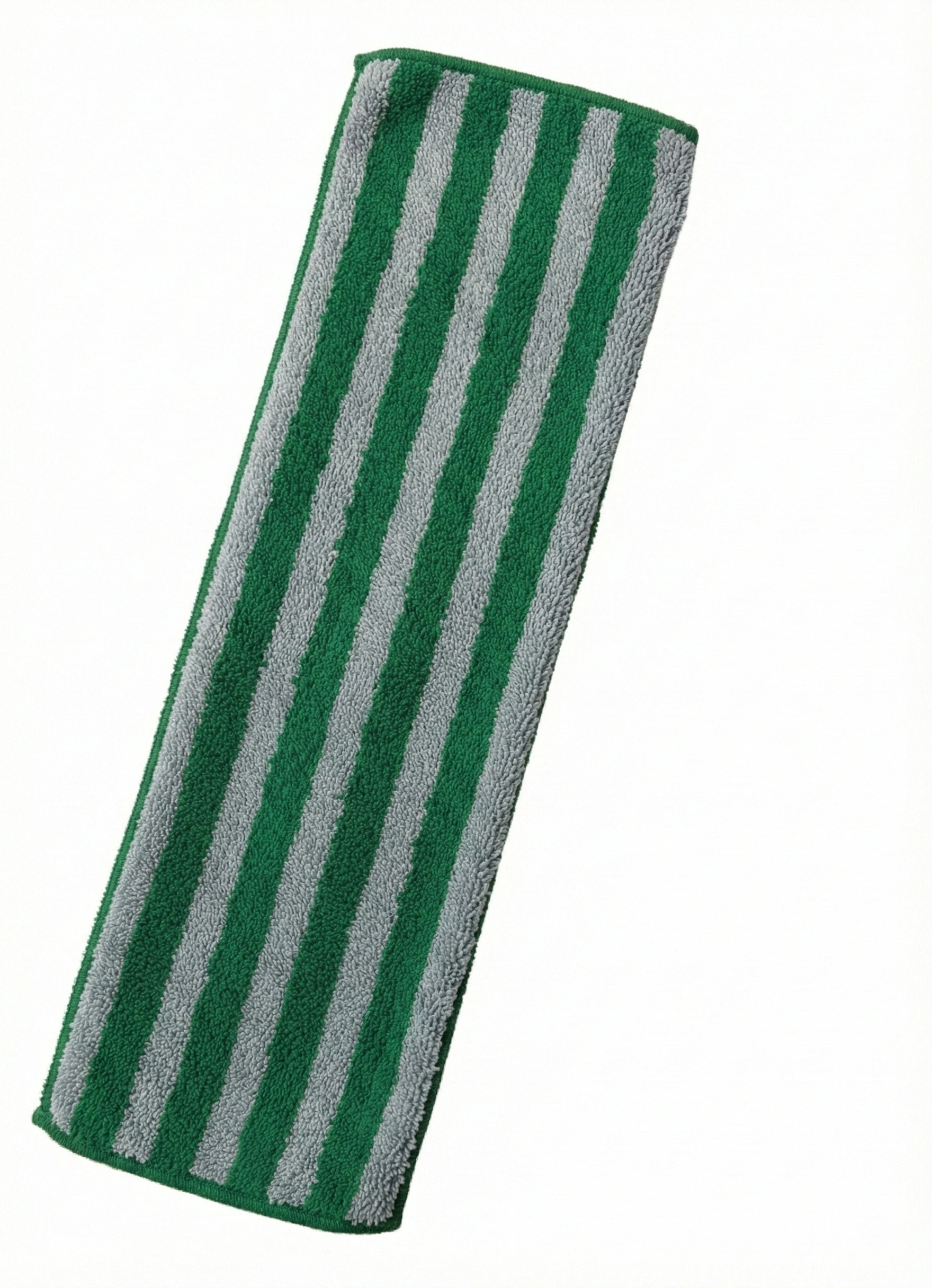
A facility manager might assume that adding a second cleaning shift simply doubles mop head consumption: 8 heads per day becomes 16. In practice, multi-shift operations typically consume more than the linear multiple because of three compounding factors:
Many facilities require a cleaning event at shift changeover, even if routine cleaning is scheduled once per shift. A two-shift operation with shift-change cleaning may require three mop head sets per day, not two.
In GMP environments, mop heads are typically not reused across shifts. The night shift uses fresh heads. Any reusable model must account for heads tied up across all shifts simultaneously.
Reusable mop heads in multi-shift facilities cycle through laundry more frequently. This accelerates wear, shortens the useful life per head, and increases the replacement rate — a factor that single-shift inventory models do not need to account for.
| Scenario | Zones | Shifts / Day | Changes / Shift / Zone | Daily Consumption | Monthly (30 Days) | Monthly + 20% Safety |
|---|---|---|---|---|---|---|
| Single-Shift | 8 | 1 | 1 | 8 | 240 | 288 |
| Two-Shift | 8 | 2 | 1 | 16 | 480 | 576 |
| Two-Shift + Changeover Cleaning | 8 | 2 | 1 (+ 1 changeover event) | 24 | 720 | 864 |
| Three-Shift (24/7) | 8 | 3 | 1 | 24 | 720 | 864 |
The planning implication is clear: a facility that transitions from single-shift to two-shift operation should not simply double the standing purchase order. It should recalculate from the base formula with the new shift count and confirm whether shift-change cleaning adds a consumption layer. A 200% increase in shifts can produce a 300% increase in consumption when changeover cleaning is factored in. For a deeper discussion of how mop weight selection interacts with multi-shift cleaning demands, see the mop weights for multi-shift operations guía.
Disposable and reusable mop heads operate on fundamentally different inventory logic. Treating them as the same commodity with different unit counts leads to stockout failures in reusable models and expiry waste in disposable models. Each model has its own planning framework. For a full comparison of when to use each type, see the disposable vs reusable cleanroom mops decision guide.
In the disposable model, each mop head is used once and discarded. Consumption is linear: if the facility uses 8 heads per day, it consumes exactly that many units. The inventory planning task is to ensure that the pipeline of incoming orders matches the consumption rate, with adequate safety stock to cover supplier variability.
| Planning Factor | Disposable Model Behavior | Planning Implication |
|---|---|---|
| Consumption Pattern | One-time use; head is discarded after a single cleaning event | Reorder quantity must match consumption exactly — no return to stock |
| Shelf Life | Sterile disposables have a defined shelf life (typically 12-24 months from sterilization date, dependent on packaging integrity and sterilization validation) | Order quantities must not exceed the quantity consumable within the shelf-life window; large bulk orders risk expiry waste |
| Safety Stock Logic | 25% buffer recommended for sterile disposables — stockout consequences are highest because there is no fallback reusable option | Higher buffer level increases working capital but prevents cleaning program interruption |
| Reorder Trigger | Based on consumption rate and supplier lead time: Reorder Point = (Daily Consumption x Lead Time Days) + Safety Stock | Requires consumption tracking; visual inspection of shelf levels is unreliable for sterile packaged goods |
| Trazabilidad de lotes | Each order should be received as a single or minimal number of production lots for QA traceability | Bulk ordering in fewer, larger shipments improves lot consistency but increases expiry risk |
In the reusable model, mop heads cycle through a pipeline: in-use, in-laundry, and available-to-use. The total stock must cover all three states simultaneously. The laundry turnaround time — whether on-site or outsourced — is the critical planning variable. If on-site laundry takes 4 days, the facility needs enough heads to cover 4 days of consumption in the pipeline plus heads physically available for the current shift plus safety stock.
Reusable Total Stock Formula (Complete)
Total Reusable Stock = (Daily × Laundry Turnaround Days) + (Daily × On-Deck Days) + (Daily × Safety Days)
Laundry Turnaround Days: 2-5 for on-site; 5-14 for third-party | On-Deck Days: heads immediately available for the next shift (typically 1-2) | Safety Days: 3-5 days of buffer consumption
For reusable mop heads, the maintenance and longevity of each head directly affects inventory economics. A head that withstands 50 laundry cycles requires fewer replacement purchases than one that degrades after 30 cycles. For guidance on extending reusable mop head lifespan, see the mop maintenance and longevity tips guía.
The most common reusable model failure is underestimating laundry turnaround variability. On-site laundry equipment breakdown, third-party processor delays, or holiday shutdowns at the laundry facility can extend turnaround from 4 days to 7-10 days. A reusable inventory plan should stress-test the pipeline: “If laundry turnaround doubles, do we still have enough heads to clean for one full week?” If the answer is no, increase either pipeline stock or safety buffer.
The consumption formula produces a number. Turning that number into a functioning inventory system requires three practical mechanisms: tracking current stock, calculating the reorder point, and executing the order at the right time.
The reorder point is the inventory level at which a new purchase order should be initiated. It must be high enough that the new order arrives before existing stock is exhausted — accounting for supplier lead time and consumption during that lead time.
Reorder Point Formula
Reorder Point = (Daily Consumption × Supplier Lead Time in Days) + Safety Stock
Worked Example: Facility consuming 8 heads/day, supplier lead time of 14 days, safety stock of 48 heads (20% of monthly):
Example: Reorder Point Calculation
Reorder Point = (8 × 14) + 48 = 160 mop heads
When inventory drops to 160 heads, place the next order. The new shipment should arrive before the remaining 160 heads are consumed.
The method chosen for tracking inventory should match the facility’s scale and procurement maturity:
| Tracking Method | Mejor para | Cómo funciona | Limitación |
|---|---|---|---|
| Visual Kanban / Two-Bin System | Small facilities, single location, low SKU count | Two physical bins per mop type. When Bin 1 empties, the cleaning team uses Bin 2 and procurement places a new order to refill Bin 1. Simple, visual, no software required. | Requires disciplined adherence by cleaning staff. Does not automatically adjust for consumption rate changes. |
| Consumption Log + Periodic Review | Mid-size facilities, moderate SKU count, QA-driven | Cleaning supervisor logs daily mop head usage by zone and type. Procurement reviews the log weekly or bi-weekly, compares against reorder point, and places orders accordingly. | Manual — relies on consistent log completion. Review lag means stockouts can occur between review cycles if consumption unexpectedly spikes. |
| ERP / Inventory Management Software | Large facilities, multi-site, high SKU count, integrated procurement | Consumption data entered into ERP system (or auto-captured via barcode scanning at point of use). System automatically generates purchase requisitions when reorder point is reached. | Requires ERP infrastructure and setup. Over-automation of a low-cost consumable may not justify the implementation effort for smaller operations. |
| Vendor-Managed Inventory (VMI) | Facilities with a single or primary mop head supplier and stable consumption patterns | Supplier monitors agreed-upon stock levels (on-site or via shared consumption data) and triggers replenishment shipments automatically. | Requires supplier relationship maturity and trust. Not suitable for facilities with multiple competing suppliers or highly variable consumption. |
Inventory plans are not set-and-forget. At minimum, a quarterly review should compare planned consumption against actual consumption, with particular attention to:
The quarterly review output is simple: update the daily consumption figure, adjust the reorder point, and confirm or modify the safety stock percentage. If actual consumption is trending higher than planned, increase the reorder point rather than depleting safety stock.
The fields below form a printable inventory planning worksheet. Copy and complete it for your facility. The calculated fields follow the formulas described in this article. Use one template per mop head type if your facility stocks multiple types (e.g., sterile 40g for Grade A/B and non-sterile 55g for Grade C/D).
Document ID: ________ | Revision Date: ________ | Prepared By: ________
Calculate each grade separately, then sum. A Grade A zone using sterile 40g single-use mop heads has different consumption logic than a Grade D zone using reusable 65g heads. Run the formula (zones x changes x shifts) for each grade group independently, producing separate monthly totals for each mop head specification. This also produces grade-specific reorder points — you should not combine a Grade A sterile SKU and a Grade D reusable SKU into a single reorder calculation, because the consumption rates, supplier lead times, and stockout consequences differ materially between them.
Use 15% if your operation has stable, predictable consumption, a reliable supplier with consistent lead times, and uses reusable mop heads (where a stockout can be partially absorbed through emergency laundering). Use 20% for multi-grade facilities with variable production-driven cleaning demand — this is the most common starting point for GMP pharmaceutical facilities. Use 25% for sterile single-use mop heads where stockout consequences are highest (no laundering fallback), or when the supplier is overseas with variable shipping lead times. The percentage should be reviewed quarterly against actual consumption variability.
Sterile mop heads carry a defined shelf life from the date of sterilization, typically stated on the Certificate of Sterility and product labeling. Your maximum order quantity should not exceed the number of heads your facility will consume within that shelf-life window. For example, if shelf life is 18 months and monthly consumption is 240 heads, the maximum single-order quantity should not exceed 4,320 heads (18 x 240). In practice, ordering in smaller, more frequent batches provides better lot traceability and reduces the risk of shelf-life expiry on slow-moving stock. Implement a first-expiry-first-out (FEFO) stock rotation in the warehouse.
Yes. Campaign-based production creates consumption peaks and troughs. During a campaign, cleaning frequency in Grade A/B zones may increase to between-batch or daily cleaning, driving higher mop head consumption. Between campaigns, consumption drops but does not stop entirely — Grade C/D corridors and support areas still require scheduled cleaning. Plan for the peak campaign consumption rate when setting safety stock levels, but use the annualized average consumption for purchase order sizing. The inventory plan should identify the maximum monthly consumption month (typically the heaviest campaign month) and ensure stock levels can absorb that peak without triggering an emergency order.
Start with the formula using known variables: zone count from the floor plan, mop head changes per zone from the draft cleaning SOP, and shift count from the planned operating schedule. This produces a theoretical consumption baseline. For the first three months of operation, track actual consumption against the theoretical baseline. If actual consumption exceeds the theoretical value by more than 20%, recalculate the formula inputs — the cleaning SOP may specify more head changes than estimated, or zones may require more cleaning events than planned. After six months of stable operation, use actual consumption data as the primary planning input, retaining the formula as a cross-check and for what-if scenario planning.
Monthly ordering is the most common cadence for facilities with moderate consumption (100-500 heads/month). For high-consumption facilities (500+ heads/month), bi-weekly ordering can reduce on-hand inventory and associated carrying costs while maintaining supply continuity. Quarterly ordering is only advisable for very low-consumption facilities (under 50 heads/month) where monthly orders would be too small to meet supplier minimum order quantities. The key constraint is supplier lead time: if lead time is 4 weeks, monthly ordering creates zero margin for error — any consumption spike or shipping delay produces a stockout. In that scenario, consider bi-weekly ordering with a standing purchase order that can be adjusted up or down per delivery.
Mop head weight does not directly change the consumption formula — the number of heads consumed depends on zones, changes, and shifts, not on head weight. However, weight affects inventory indirectly through storage volume, packaging unit count, and procurement SKU management. A facility that stocks 40g, 55g, and 65g mop heads must run three separate inventory plans, increasing planning complexity. Weight also drives consumption patterns: 40g heads are used in Grade A/B zones with higher change frequency (more consumption per zone), while 65g heads are used in Grade D zones with lower change frequency (less consumption per zone). Consolidating to fewer weight variants where operationally feasible simplifies procurement.
Not directly. Cleanroom wipes are typically consumed at much higher unit volumes (hundreds per day across all zones) and are often ordered in cases rather than individual units. Mop head consumption is lower in unit count but higher in unit value per piece. The planning framework — consumption tracking, reorder point calculation, and safety stock logic — is structurally the same, but the variables differ: wipe consumption is driven by surface area per zone and wipe-per-square-meter rates, while mop head consumption is driven by zones, shifts, and change frequency. The two should be planned separately but reviewed together as part of a consolidated cleanroom consumable procurement program.
MIDPOSI’s white cleanroom mop series supports structured procurement with consistent specifications, lot traceability documentation, and flexible order quantities. Whether your facility runs a disposable sterile model for Grade A/B zones or a reusable model for Grade C/D — having a supplier that understands your inventory pipeline makes reorder planning predictable, not reactive.
Designed for structured procurement programs in pharmaceutical, biotech, and medical device cleanroom facilities.
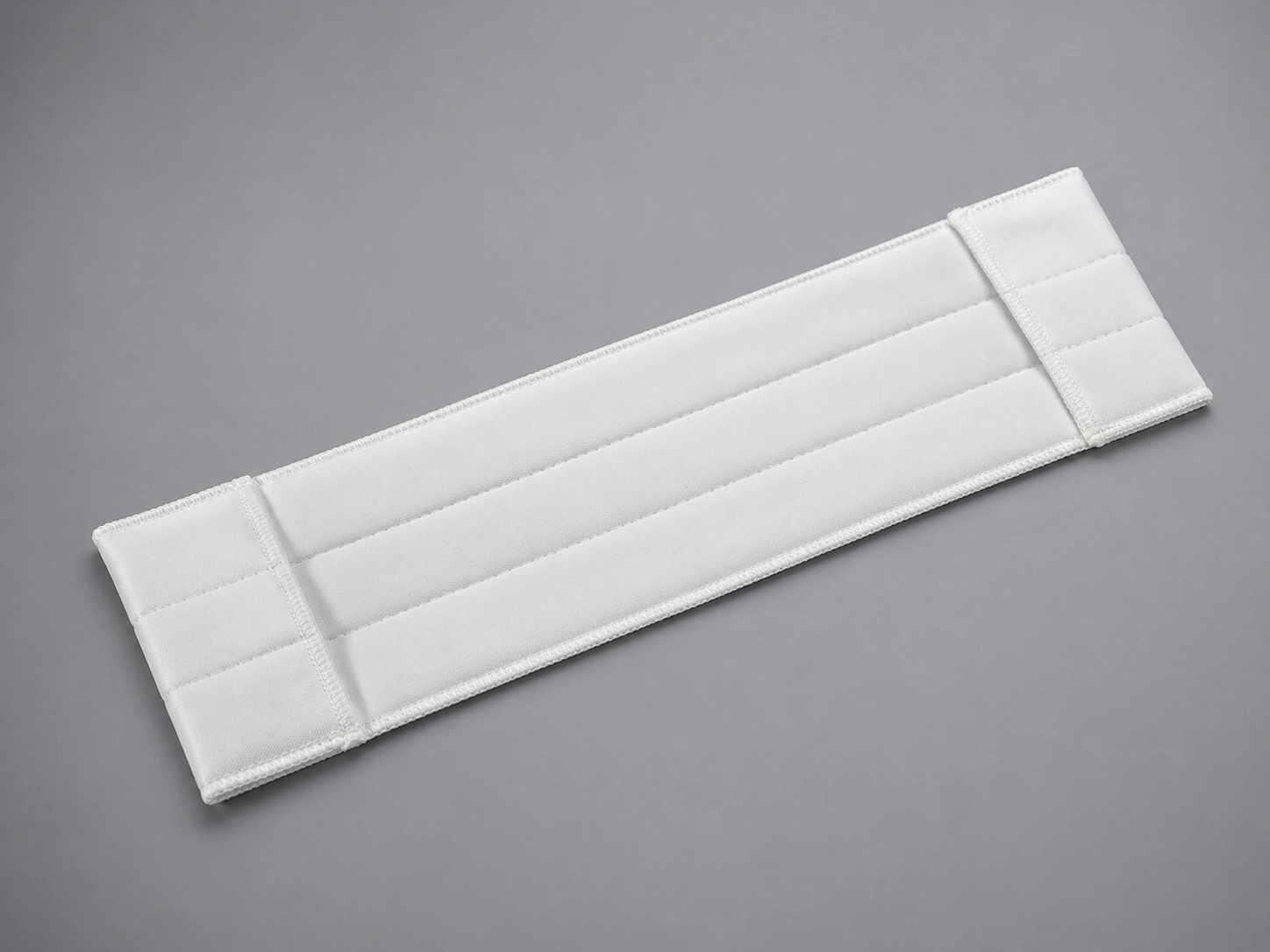
Inventory levels should be calculated based on cleaning frequency, area size, number of cleanroom zones, mop change frequency per cleaning session, and supplier lead time. Facilities should build a consumption model based on actual usage data rather than relying on a fixed number. A buffer stock for supply chain variability is a common procurement practice.
Lead times vary by supplier, product type (sterile vs non-sterile), order volume, and shipping destination. Buyers should confirm lead times with the supplier during the evaluation phase and include lead time in their inventory planning model. For sterile products, additional processing time may apply.
This depends on the facility’s cleanroom grades and SOP requirements. Facilities with both aseptic and support areas may stock both types. Facilities operating only in Grade C/D or ISO 7-8 environments may only need non-sterile options. The decision should be based on documented cleaning procedures and risk assessment.
Distributors should segment customers by cleanroom grade, mop material preference, size, and consumption volume. A tiered inventory model — core stock for high-volume items, buffer stock for mid-volume, and make-to-order for low-volume specialty items — can help balance availability with carrying cost.
MIDPOSI can work with B2B buyers and distributors to plan regular supply based on estimated consumption. Providing your facility’s cleanroom grade, mop size, material preference, and estimated monthly volume helps MIDPOSI recommend a suitable supply arrangement for evaluation.