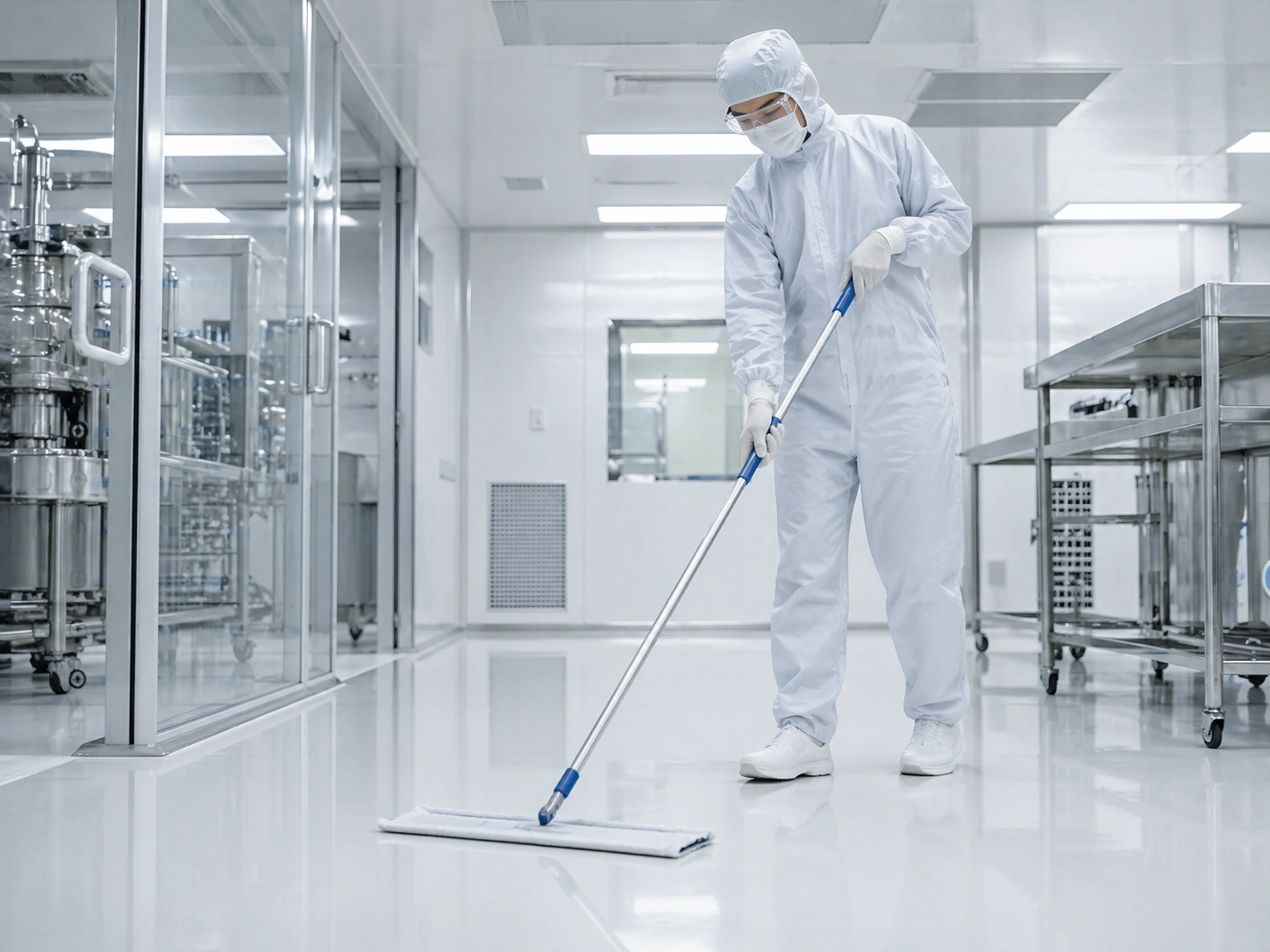
En las operaciones de salas blancas farmacéuticas, un sistema de trapeador para salas blancas debe evaluarse como una herramienta completa de control de la contaminación, no como componentes aislados comprados por separado.
Los equipos de control de calidad farmacéuticos a menudo investigan las desviaciones del monitoreo ambiental revisando las herramientas de limpieza, el flujo de trabajo del operador, el tiempo de contacto con el desinfectante y si el cabezal del trapeador, el marco, el mango y el sistema de cubeta son compatibles con los SOP de limpieza de la instalación.Un cabezal de trapeador para sala limpia puede calificarse individualmente, pero el riesgo de contaminación aún puede ocurrir cuando el cabezal del trapeador, el marco, el mango, el balde y el flujo de trabajo del operador no se evalúan juntos.
Las fallas en el monitoreo ambiental pueden tener muchas causas. Un sistema de trapeador seleccionado adecuadamente ayuda a respaldar el control rutinario de la contaminación al mejorar el contacto con la superficie, la entrega de desinfectante y la consistencia del flujo de trabajo.
| Riesgo de sala limpia | Posible causa | Control a nivel del sistema |
|---|---|---|
| excursiones de partículas | Desprendimiento de fibras, abrasión del mango, fricción del marco. | Funda para fregona con poca pelusa, estructura lisa y mango compatible |
| Aumento de la carga biológica | Contacto húmedo insuficiente, desinfectante diluido | Saturación adecuada, separación del cubo, compatibilidad desinfectante verificada |
| Contaminación de habitación a habitación | Reutilización del líquido gastado o de la superficie sucia del trapeador | Secuencia de limpieza controlada y flujo de trabajo de dos o tres cubos |
| Hallazgo de auditoría | Calificación de la herramienta o SOP de limpieza poco claros | Procedimiento documentado de selección y limpieza del sistema. |
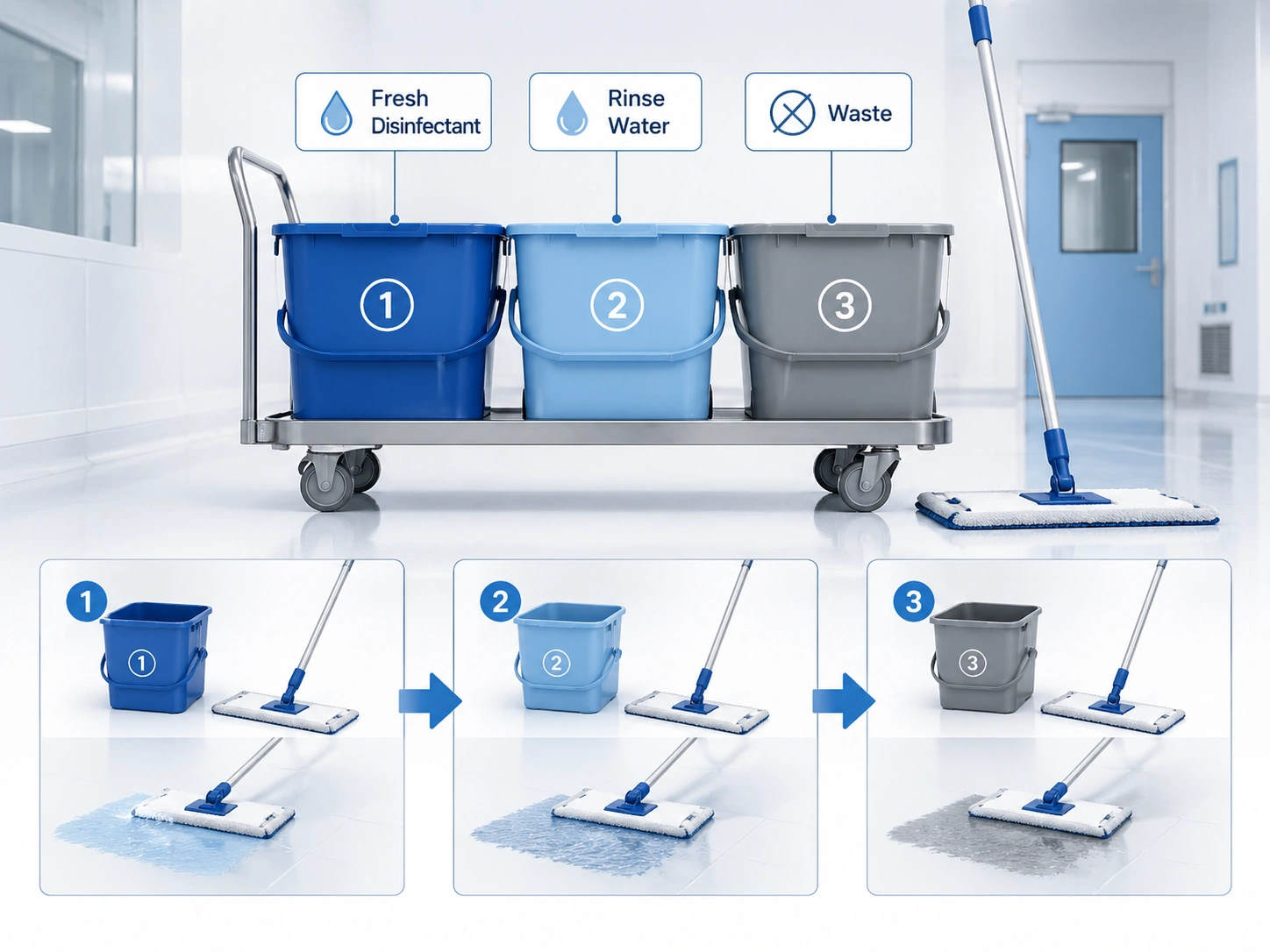
La configuración del cubo afecta la forma en que se prepara, aplica, enjuaga y separa el desinfectante del líquido residual. Para las áreas de salas blancas de mayor riesgo, las instalaciones suelen preferir una separación más controlada de la solución nueva y el fluido usado.
| Característica | Cubo individual | Cubo doble | Cubo triple |
|---|---|---|---|
| Separación de fluidos frescos y usados. | Limitado | Moderado | Fuerte |
| Control de dilución del desinfectante | Más bajo | Mejor | Mejor |
| Control del riesgo de contaminación cruzada | Básico | Mejorado | más alto |
| uso común | Áreas de soporte de menor riesgo | Limpieza rutinaria de salas blancas ISO | Flujos de trabajo farmacéuticos, GMP y de alto control |
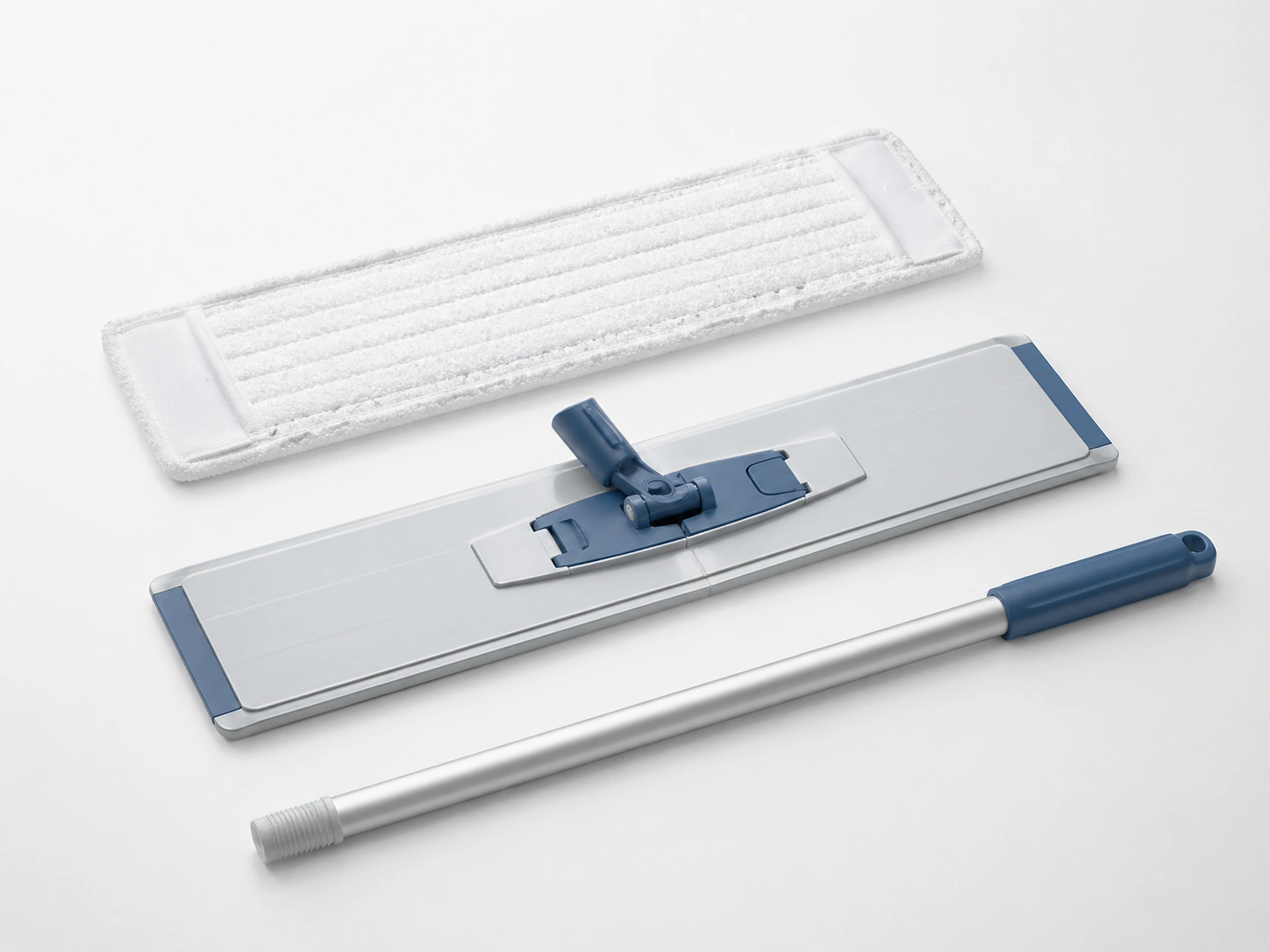
Se debe seleccionar un sistema confiable según el material, la superficie de contacto, la compatibilidad con la esterilización, la compatibilidad con los desinfectantes y el área de limpieza.
| Atributo | Poliéster con borde sellado | Microfibra |
|---|---|---|
| Ventaja típica | Rendimiento con poca pelusa y resistencia química | Alta superficie de contacto y recogida de residuos. |
| uso común | Entornos farmacéuticos y controlados. | Limpieza rutinaria de salas blancas y áreas de apoyo. |
| Opción de esterilización | Puede admitir configuraciones estériles o esterilizables en autoclave según el diseño del producto. | Depende de la construcción y las especificaciones del proveedor. |
| Lo mejor para | Compatibilidad con trapeadores y desinfectantes con poca pelusa | Eliminación de partículas y residuos en superficies más grandes. |
MIDPOSI ofrece opciones de trapeadores para salas blancas en diferentes niveles de peso y configuraciones estériles o no estériles para admitir programas de limpieza GMP, ISO, farmacéuticos, de laboratorio y de ambientes controlados.
| Tipo de producto | Modelo / Página | Configuración | Uso recomendado |
|---|---|---|---|
| Trapeador blanco resistente para salas limpias | Fregona estéril de 65 g. | Estéril | Flujos de trabajo de limpieza farmacéutica y GMP de mayor control |
| Trapeador blanco resistente para salas limpias | Fregona No Estéril 65g | No estéril | Áreas controladas donde no se requiere suministro estéril |
| Trapeador blanco mediano para sala limpia | Fregona estéril de 55 g. | Estéril | Limpieza rutinaria de salas blancas GMP con absorción y manipulación equilibradas |
| Trapeador blanco mediano para sala limpia | Fregona No Estéril 55g | No estéril | Sala limpia ISO y limpieza de producción controlada |
| Fregona blanca clara para sala limpia | Fregona Estéril 40g | Estéril | Tareas de limpieza estériles de menor peso y soporte de limpieza en áreas controladas |
| Fregona blanca clara para sala limpia | Fregona No Estéril 40g | No estéril | Limpieza rutinaria de salas blancas económica |
| Almohadilla de trapeador para sala limpia a rayas de microfibra | Almohadilla de trapeador de microfibra azul ISO 5 | Microfibra | Recogida de residuos y limpieza rutinaria de superficies de salas blancas ISO |
| Almohadilla de trapeador para sala limpia a rayas de microfibra | Almohadilla de trapeador de microfibra verde ISO 5 | Microfibra | Flujos de trabajo de limpieza de salas blancas codificados por colores |
Los compradores de productos farmacéuticos y de ambientes controlados deben confirmar el método de esterilización, la compatibilidad química, el ciclo de vida reutilizable y la documentación disponible antes de aprobar un sistema de trapeador para sala limpia.
| Agente de limpieza | Por qué es importante | Qué confirmar |
|---|---|---|
| 70% API | Comúnmente utilizado como soporte de limpieza y desinfección de salas blancas. | Sin degradación del material ni desprendimiento anormal |
| Compuestos de amonio cuaternario | Utilizado en programas de desinfección de rutina. | Compatibilidad con la funda del trapeador y el material del marco. |
| Peróxido de hidrógeno | Se utiliza en muchos programas de desinfección de ambientes controlados. | Resistencia y rendimiento del material tras la exposición. |
| Lejía/hipoclorito de sodio | Puede usarse en desinfección rotacional. | Resistencia a la decoloración, fragilidad o daño de la fibra. |
Para la compra de salas blancas GMP e ISO, los compradores a menudo necesitan más que fotos y precios del producto. MIDPOSI puede respaldar la revisión técnica con información de productos y materiales para la calificación interna.
El proveedor no reemplaza al equipo de validación de la instalación, pero un proveedor profesional de sistemas de trapeador debe respaldar la revisión de control de calidad con documentación clara del producto e información sobre los materiales.
Utilice la siguiente tabla como punto de partida práctico al seleccionar un sistema de trapeador para aplicaciones farmacéuticas, de dispositivos médicos, de laboratorio, electrónica o de salas blancas ISO.
| Requisito | Opción recomendada | Por qué es importante |
|---|---|---|
| Instalación farmacéutica GMP | Sistema de trapeador para sala limpia con poca pelusa y compatibilidad de materiales documentada | Respalda los SOP de limpieza, la revisión de control de calidad y las expectativas de control de la contaminación. |
| Área de soporte estéril o aséptica | Funda de trapeador estéril de un solo uso o sistema reutilizable validado | Reduce los problemas de contaminación relacionados con la reutilización |
| Limpieza rutinaria de salas blancas ISO | Sistema de trapeador para sala limpia de microfibra o poliéster. | Apoya la eliminación de residuos y partículas de grandes superficies. |
| Limpieza de paredes y techos | Bastidor de fregona plano con mango de longitud adecuada | Mejora el alcance y el contacto con la superficie. |
| Control de contaminación cruzada | Funda de trapeador desechable o flujo de trabajo con dos o tres cubos | Ayuda a separar la solución nueva, el líquido de enjuague y el líquido residual. |
| control de costos | Marco y mango reutilizables con fundas de trapeador reemplazables | Equilibra los costos operativos con los requisitos de control de la contaminación |
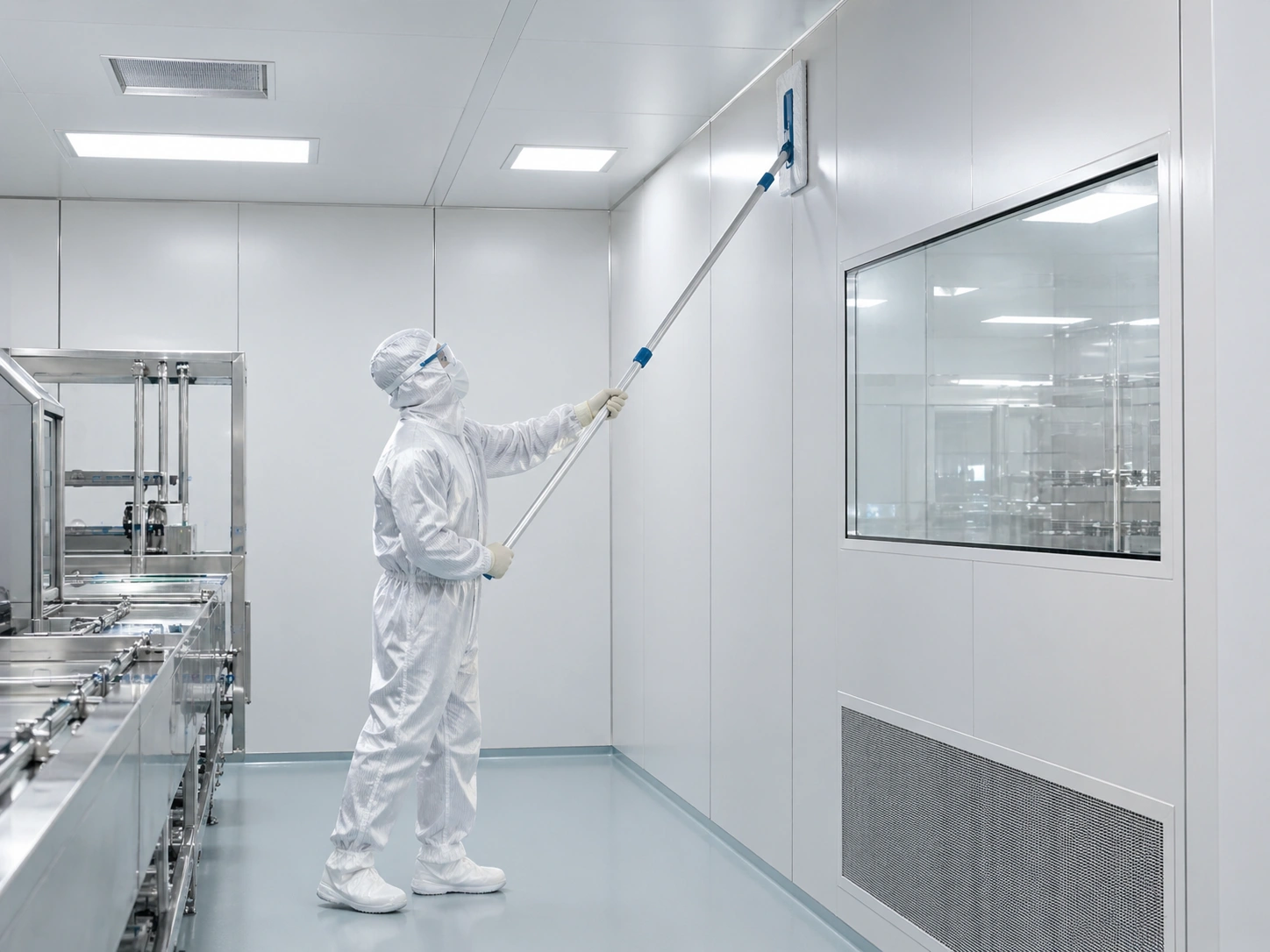
Los diferentes entornos controlados tienen diferentes expectativas en cuanto al control de pelusas, control microbiano, compatibilidad química, separación del flujo de trabajo y documentación.
Preguntas comunes de compradores de productos farmacéuticos, laboratorios, dispositivos médicos y ambientes controlados.