
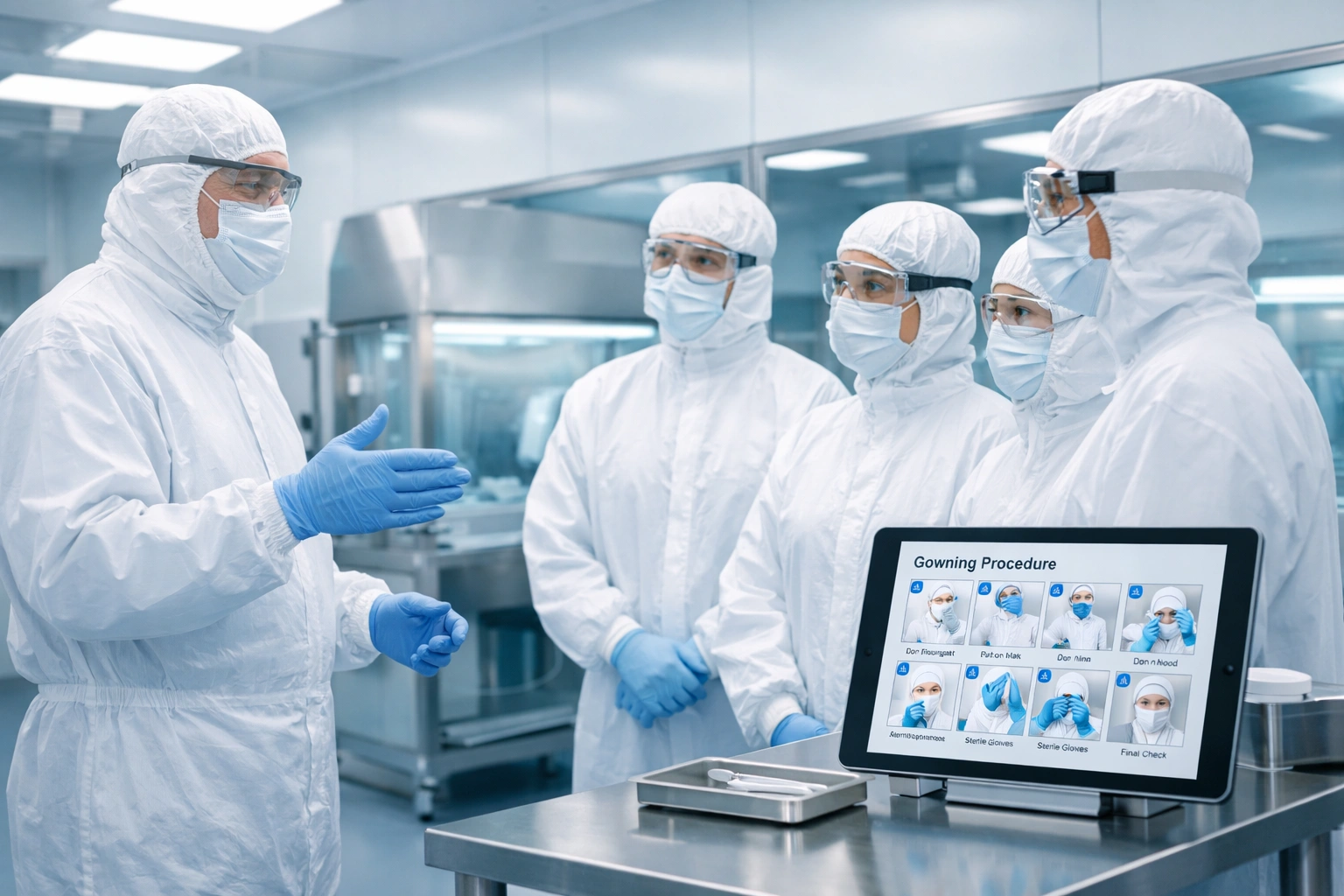
Por qué la formación del personal es un sistema central de control de salas limpias
Las personas son esenciales en las operaciones farmacéuticas, biotecnológicas y de salas blancas de alta especificación, pero también introducen partículas, microbios, fibras y variabilidad de comportamiento. Incluso cuando una instalación tiene un fuerte control de HVAC, limpieza validada y sistemas de batas que cumplen con las normas, el desempeño aún puede fallar si el personal no está capacitado adecuadamente.
Por este motivo, la formación moderna en salas blancas debe ir más allá de la orientación. Debería definir quién necesita capacitación, qué competencias se requieren, cómo se demuestra la calificación y cuándo debe realizarse la recapacitación.
La capacitación del personal también se conecta directamente con elementos más amplios de control de la contaminación, como vestidor para sala limpia, visualización del patrón de flujo de aire, monitoreo ambiental, ciclo de vida de validación, POE de limpieza, y preparación para la auditoría.
| Área de Entrenamiento | Por qué es importante | Riesgo si es débil |
|---|---|---|
| vestirse | Evita que las escamas de la piel, las fibras y la eliminación de microbios entren en un espacio controlado | Eventos frecuentes de contaminación en la etapa de entrada |
| Comportamiento aséptico | Reduce movimientos innecesarios, intervenciones y contacto con superficies. | Mayor riesgo de contaminación relacionado con el operador |
| Manipulación de materiales | Protege el flujo de limpio a sucio y la disciplina de transferencia. | Contaminación cruzada e interrupción del proceso |
| Conciencia de desviación | Mejora el reconocimiento temprano y la respuesta a eventos anormales. | Escalada retrasada e investigaciones débiles |
| Recalificación | Confirma que las habilidades permanecen actualizadas y repetibles con el tiempo. | Desviación de competencias y hallazgos de auditoría |
Lo que las expectativas GMP requieren de la capacitación del personal
Un sistema sólido de capacitación en salas blancas debe reflejar el nivel de riesgo, la clasificación de la sala, el rol del operador y la criticidad del proceso. El contenido de la formación no debe ser idéntico para todo el personal. Un operador de llenado estéril y un visitante de mantenimiento no presentan el mismo riesgo de contaminación y, por lo tanto, no deberían recibir el mismo paquete de calificación.
Las expectativas básicas suelen incluir:
- Inducción inicial antes del acceso a la sala limpia
- Formación basada en roles por proceso y zona
- Evaluación práctica de batas.
- Comportamiento aséptico y disciplina de intervención.
- Comprensión de las vías de contaminación.
- Reciclaje y recalificación periódica
- Aprobación documentada y estado de formación rastreable
¿Necesita soporte para salas blancas preparadas para GMP?
Explore las soluciones Midposi diseñadas para entornos farmacéuticos y controlados, incluidas prendas para salas blancas y soporte para productos de control de contaminación.
Qué debe incluir un POE de capacitación del personal de salas blancas
Un SOP listo para la auditoría debe definir responsabilidades, contenido de la capacitación, criterios de calificación, registros y desencadenantes de recapacitación. También debería distinguirse claramente entre formación teórica y cualificación práctica.
| Sección de POE | Qué incluir |
|---|---|
| Objetivo | Explicar cómo la capacitación respalda el control de la contaminación, el cumplimiento de las GMP y la calificación del personal. |
| Alcance | Defina qué personal está cubierto: operadores, control de calidad, ingeniería, mantenimiento, contratistas, visitantes. |
| Responsabilidades | Asignar propiedad a los coordinadores de calidad, producción, capacitación y supervisores de departamento. |
| Matriz de formación | Especifique los módulos requeridos por función, categoría de sala y nivel de acceso |
| Método de calificación | Describir la evaluación escrita, la observación de la vestimenta, la evaluación del comportamiento y el proceso de aprobación. |
| Frecuencia de recalificación | Definir intervalos y desencadenantes de reentrenamiento basados en eventos |
| Archivos | Indique cómo se mantienen la finalización, aprobación, control de revisión y trazabilidad. |
| Respuesta de desviación | Definir acciones de reentrenamiento después de infracciones, fallas o eventos relacionados con la contaminación. |
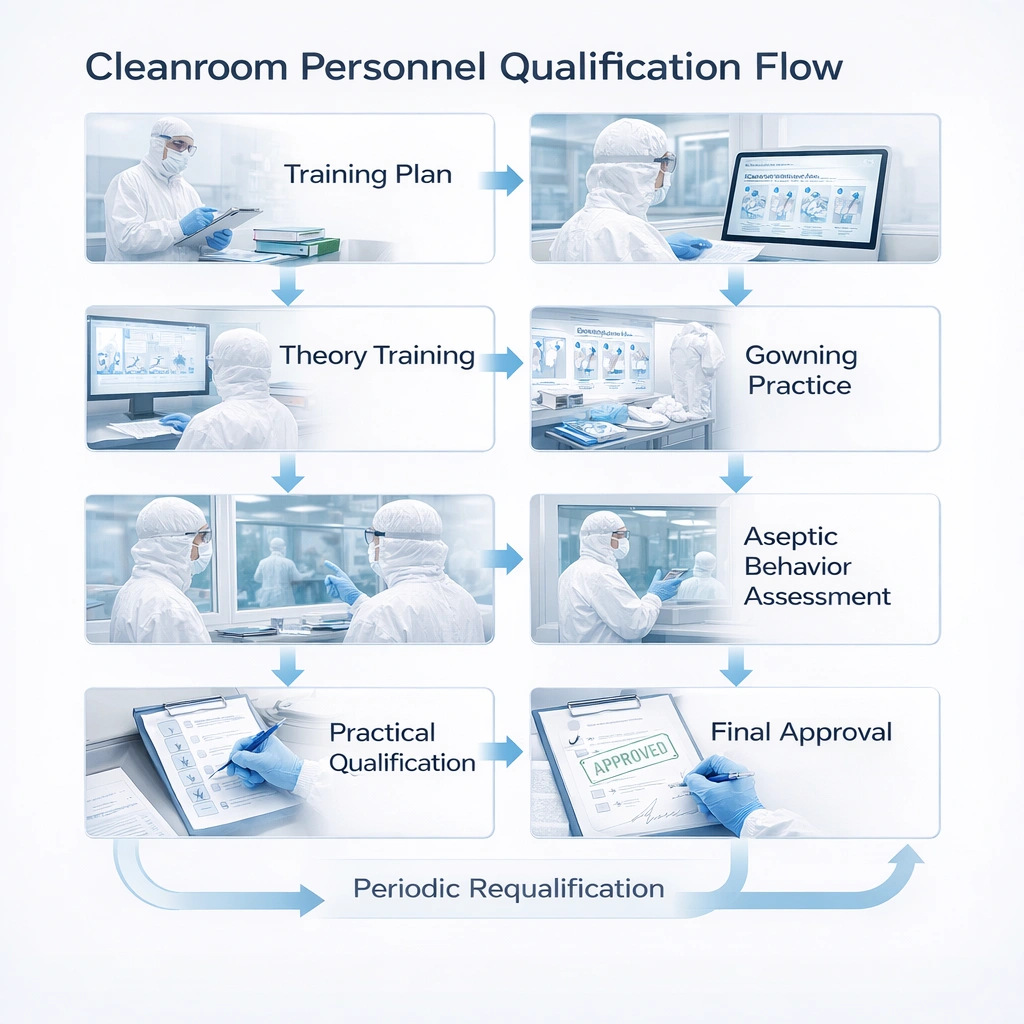
Flujo típico de calificación del personal
La calificación debe seguir una secuencia consistente en lugar de una presentación única. Los programas más sólidos pasan del conocimiento a la demostración y a la aprobación controlada.
Explicación visual: flujo de calificación
Secuencia de entrenamiento recomendada:
- Asignación del plan de entrenamiento
- Formación teórica sobre control de la contaminación.
- Instrucción de vestimenta y práctica supervisada.
- Observación de comportamiento aséptico.
- Calificación práctica en ambiente simulado o controlado.
- Aprobación final para el acceso a la sala o la participación en el proceso
- Recalificación periódica y reentrenamiento provocado por desviaciones
- No aprobar personal basándose únicamente en la asistencia a clase.
- Utilice la aprobación basada en la observación para la disciplina de vestimenta y movimiento.
- Separar la formación de acceso temporal de la cualificación completa del operador
- Reevaluar después de cambios importantes en los SOP, cambios de sala o resultados de la investigación.
¿En qué se debe capacitar al personal?
1. Fundamentos de la contaminación
El personal debe comprender de dónde proviene la contaminación, cómo contribuyen los humanos a ella y cómo el comportamiento afecta el control de la sala. Esto da contexto a las reglas y mejora la calidad del cumplimiento.
2. Comportamiento de vestimenta y entrada
La capacitación debe incluir secuenciación, manejo de prendas, cambios de guantes, flujo de entrada y disciplina sin contacto. Esto debería alinearse estrechamente con su programa de vestimenta y proceso de gestión de prendas.
3. Técnica aséptica y conducta en sala limpia
Los operadores deben saber cómo moverse, alcanzar, girar, comunicarse e intervenir sin interrumpir el flujo de aire controlado ni entrar en contacto con superficies críticas.
4. Reglas específicas de la habitación
Diferentes áreas pueden tener diferentes restricciones, protocolos de transferencia y condiciones de acceso. El personal debe estar calificado para las zonas a las que realmente ingresa.
5. Desviación y conciencia de incidentes
La capacitación debe explicar qué hacer después de una ruptura de la bata, un contacto con un guante, una caída de un artículo, un movimiento inesperado o una alerta ambiental.
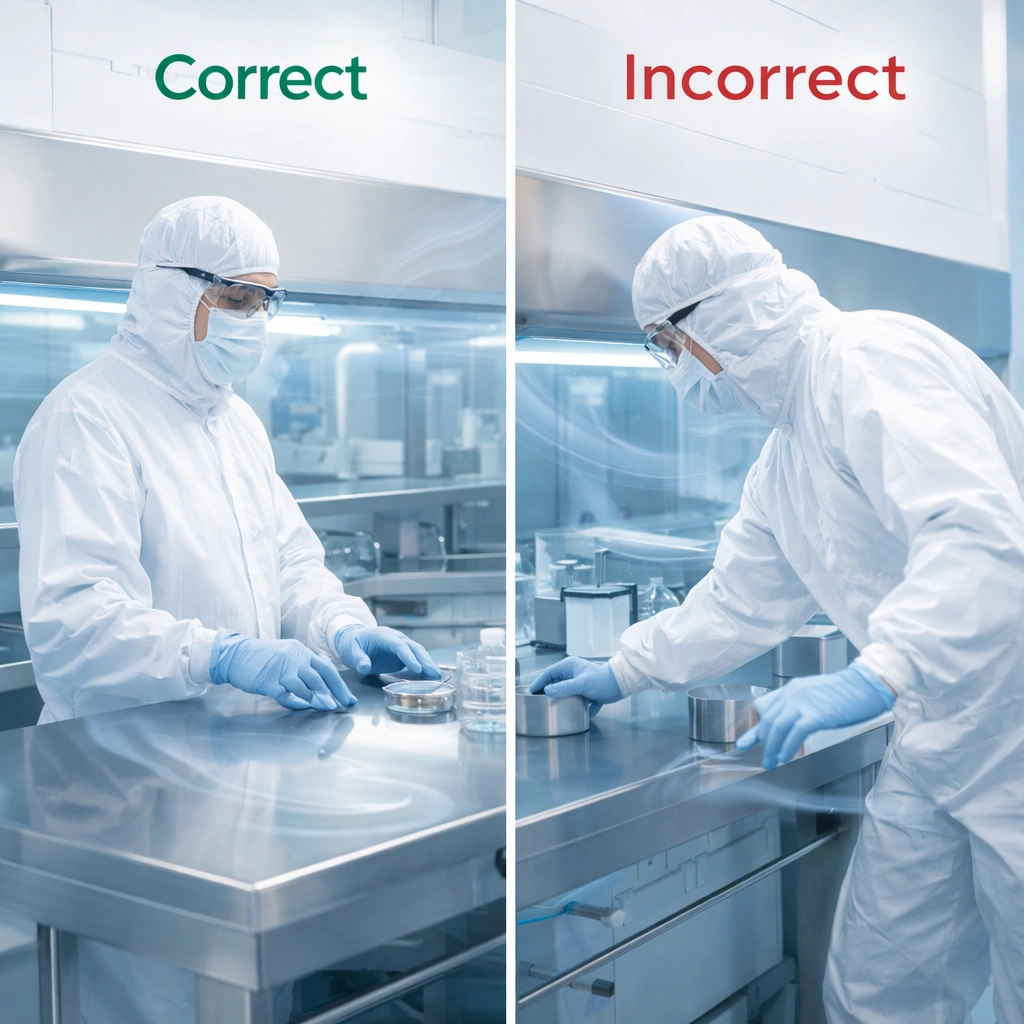
Comportamiento correcto versus incorrecto del personal
Una de las herramientas de entrenamiento más efectivas es el contraste visual. El personal comprende las expectativas más rápido cuando puede comparar el comportamiento aceptable con errores comunes.
Explicación visual: comportamiento correcto versus incorrecto
Las imágenes de entrenamiento deben comparar el movimiento lento y controlado, la posición correcta de las manos y la técnica de transferencia limpia con las prisas, los giros innecesarios, el contacto con superficies no esterilizadas o el bloqueo del flujo de aire crítico.
| Práctica correcta | Práctica incorrecta | Por qué es importante |
|---|---|---|
| Muévete lenta y deliberadamente | Muévete rápida o abruptamente | El movimiento rápido aumenta la generación de partículas y la alteración del flujo de aire. |
| Mantenga las manos dentro de la zona de trabajo capacitada | Llegar a áreas críticas innecesariamente | Reduce el riesgo de contacto y contaminación. |
| Siga rutas de transferencia definidas | Atajo del flujo de material o personal | Protege la segregación de limpio a sucio |
| Escalar posibles infracciones inmediatamente | Ignore errores menores o autocorrija en silencio | Mejora la calidad de la investigación y el control de riesgos. |
Cuándo se debe activar el reciclaje y la recalificación
El reciclaje nunca debe limitarse a un evento del calendario anual. También debería desencadenarse por señales de riesgo operativo y eventos de calidad.
- Recalificación periódica programada
- Revisión importante de SOP
- Clasificación de habitaciones o cambio de proceso.
- Evaluación fallida del comportamiento o de la bata
- Excursión EM vinculada a humanos o hallazgo de investigación
- Larga ausencia del trabajo en salas blancas
- Desviaciones menores repetidas que indican una desviación de competencias
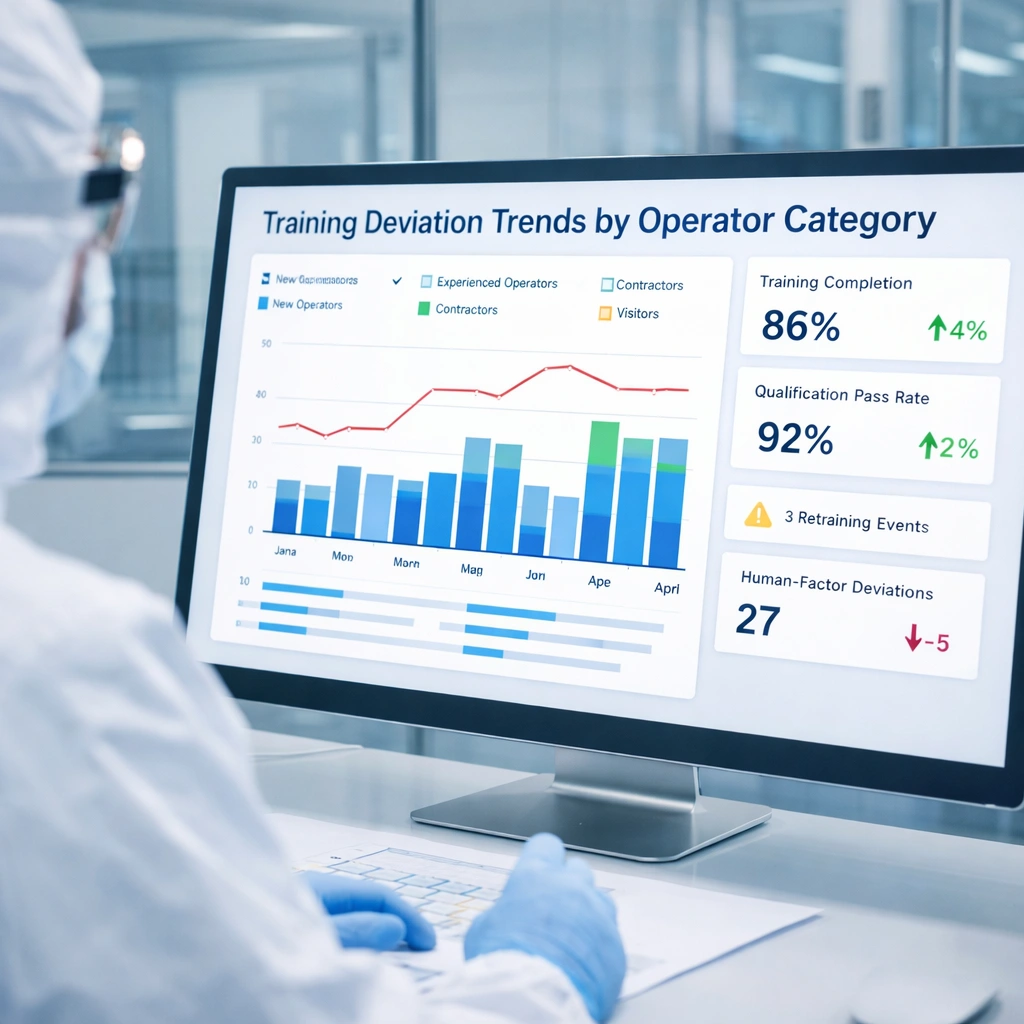
Explicación visual: tendencia de desviación del entrenamiento
Un panel puede ayudar al control de calidad a revisar las desviaciones relacionadas con la capacitación por departamento, antigüedad del operador, grado de la sala o tipo de incidente. Esto hace que el reciclaje sea más específico y basado en datos.
Lo que los auditores suelen buscar
Durante las inspecciones, los sistemas de capacitación a menudo se revisan no sólo como documentos sino también como evidencia de control. Una trazabilidad débil, un contenido genérico o una calificación práctica deficiente pueden socavar rápidamente la confianza en la estrategia más amplia de control de la contaminación.
Los auditores suelen pedir:
- Matriz de formación basada en roles
- Últimos POE de capacitación aprobados
- Registros para operadores nombrados específicos
- Evidencia de cualificación práctica.
- Registros de reentrenamiento después de desviaciones.
- Prueba de que el contenido de la formación coincide con los procedimientos actuales
Modelo de mejores prácticas para un programa de formación de alto rendimiento
Los sistemas de formación en salas blancas más eficaces comparten varias características:
- Contenido basado en riesgos por función y grado de sala limpia
- Fuerte integración con vestirse, limpieza, monitoreo ambientaly sistemas de desviación
- Cualificación práctica, no sólo registros de asistencia
- Actualizaciones de rutina y reentrenamiento basado en eventos
- Herramientas de enseñanza visuales que muestran el comportamiento correcto e incorrecto
- Documentación clara y trazabilidad rápida durante las auditorías
La formación no debe aislarse de las operaciones. Debería ser parte del sistema de control de la contaminación viva.
Cree un entorno de sala limpia más preparado para las auditorías
Actualice su sistema de control de contaminación con soluciones para salas blancas listas para GMP diseñadas para entornos farmacéuticos y controlados.
Preguntas frecuentes
¿Qué es la formación del personal de salas blancas?
La capacitación del personal de salas blancas es un programa documentado que enseña al personal cómo comportarse, vestirse, moverse y trabajar en ambientes controlados sin comprometer el control de la contaminación.
¿Por qué es importante la formación del personal en las salas blancas GMP?
Porque las personas son una fuente importante de contaminación. Una formación adecuada reduce el desprendimiento de partículas, la técnica aséptica deficiente, los movimientos incorrectos y el riesgo de desviación.
¿La formación en salas blancas necesita cualificación práctica?
Sí. La formación en el aula por sí sola no es suficiente. La vestimenta, el comportamiento y las acciones específicas del proceso deben observarse y aprobarse en la práctica.
¿Con qué frecuencia se debe volver a capacitar al personal?
La recapacitación suele ser periódica, pero también debe desencadenarse en caso de desviaciones, cambios en los SOP, ausencias prolongadas, calificaciones fallidas o investigaciones de contaminación.
¿Quién debería incluirse en la formación sobre salas blancas?
Los operadores, el personal de control de calidad, los supervisores, el personal de mantenimiento, los contratistas y cualquier visitante que ingrese a áreas controladas deben recibir capacitación adecuada según su nivel de acceso y riesgo.
¿Qué documentos respaldan un sistema de capacitación listo para auditorías?
Los registros clave incluyen SOP de capacitación, matriz de capacitación, registros de asistencia y calificación, historial de recalificación y documentación de reentrenamiento vinculada a desviaciones.
¿Cómo se relaciona la capacitación del personal con el monitoreo ambiental?
Las excursiones de vigilancia ambiental suelen tener un componente de factor humano. La capacitación ayuda a reducir los eventos de contaminación evitables y respalda una mejor respuesta cuando se producen resultados anormales.
¿La capacitación en salas blancas se trata solo de usar batas?
No. La bata es sólo una parte. La capacitación eficaz también cubre la concienciación sobre la contaminación, el comportamiento aséptico, el control de movimientos, las prácticas de transferencia y la respuesta a las desviaciones.