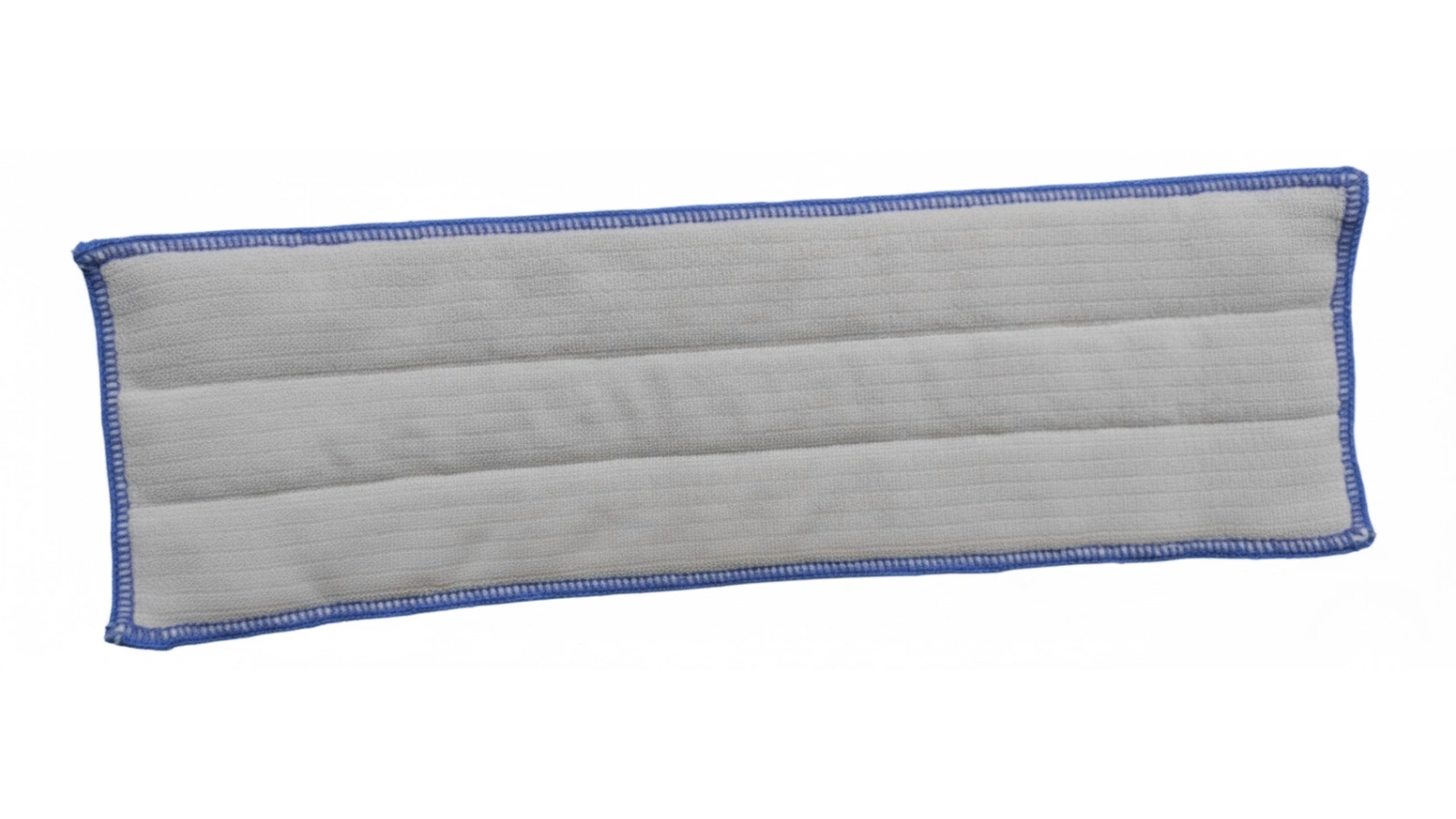
Una comparación técnica basada en evidencia de las dos tecnologías principales de telas para trapeadores para salas blancas. Cubre los mecanismos de generación de partículas, la absorbencia, la compatibilidad química, la durabilidad, el costo del ciclo de vida y un marco de decisión basado en el grado de la instalación para líderes de control de calidad, equipos de adquisiciones y gerentes de instalaciones de salas blancas.
La elección entre fregonas de microfibra y poliéster para salas blancas es no es una simple decisión de “uno es mejor”. Depende de la clasificación ISO/GMP de la sala limpia, los productos químicos de limpieza utilizados, el umbral aceptable de generación de partículas y si la instalación prioriza la absorbencia y la eficiencia de la limpieza o el control de partículas y la resistencia química.
A material sintético monocomponente hecho de filamentos continuos de poliéster tejidos en una estructura de tejido multicapa. Borde sellado mediante métodos de corte láser, ultrasonidos o termosellado para evitar la liberación de fibra en el perímetro.
Normalmente es la opción más adecuada cuando: La instalación opera en ISO 5–6 / GMP Grado A–B, utiliza desinfectantes oxidantes agresivos, requiere esterilización repetida en autoclave en un programa reutilizable o el control de partículas es la preocupación de contaminación dominante.
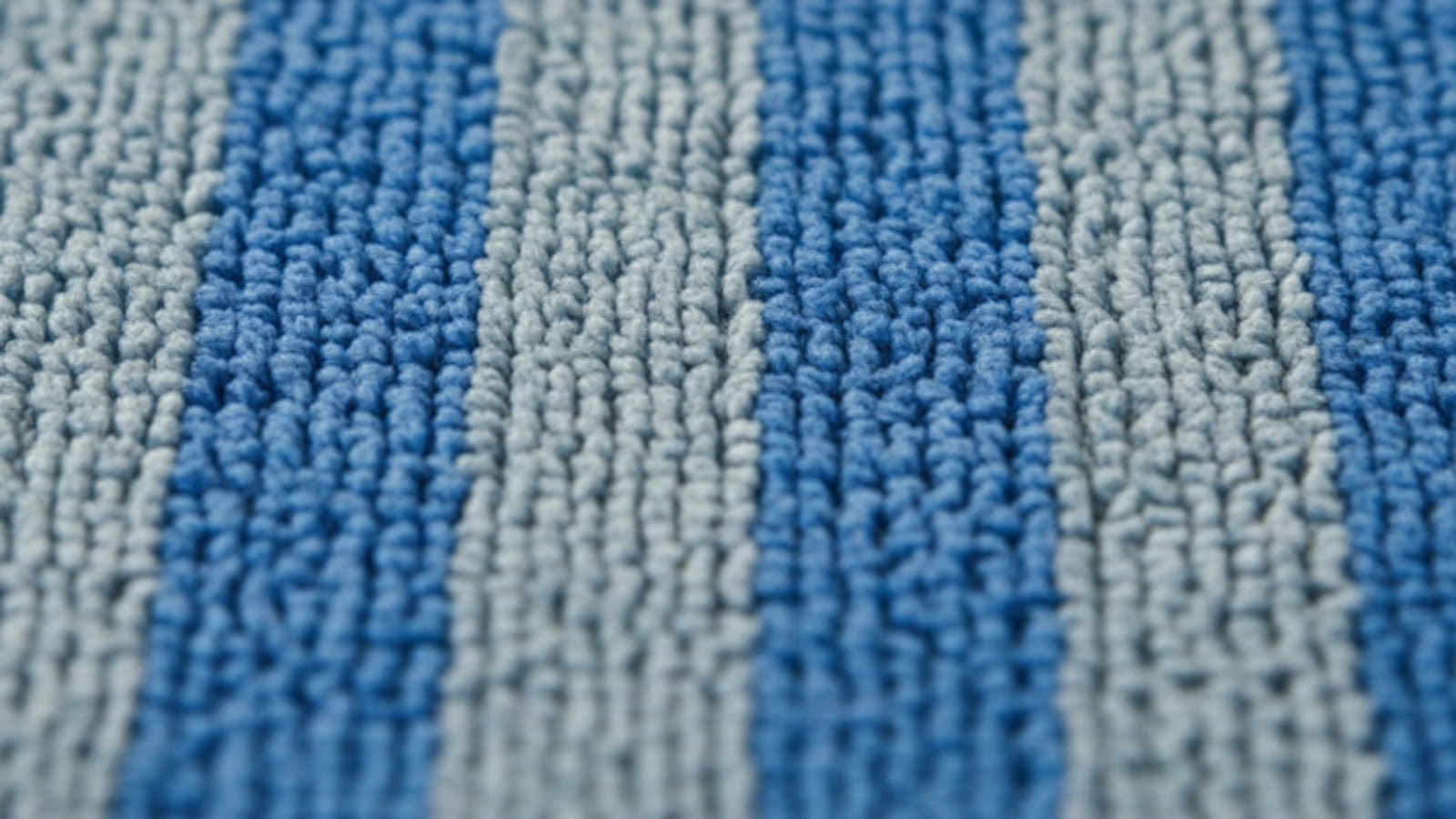
Un mezcla de fibras sintéticas ultrafinas (típicamente poliéster/poliamida), fabricado dividiendo filamentos individuales en múltiples microfilamentos en forma de cuña. Esto crea una gran superficie y acción capilar para la captura de líquidos y partículas.
Normalmente es la opción más adecuada cuando: La instalación opera en ISO 7–8/GMP Grado C–D, la eficacia de la limpieza y la eliminación de residuos son las prioridades, la química de limpieza es suave o se prefieren aplicaciones desechables de un solo uso donde se desea el máximo poder de limpieza por uso.
La respuesta corta: El poliéster (especialmente el tejido de filamento continuo con bordes sellados) generalmente genera menos partículas y ofrece una mayor compatibilidad química.—lo que la convierte en la recomendación más común para ISO 5–6 / GMP Grado A–Ambientes B. La microfibra (construcción de filamentos divididos) generalmente proporciona una mayor absorbencia y una captura mecánica superior de partículas.—lo que lo convierte en un actor sólido en ISO 7–8/GMP Grado C–D entornos donde la eficacia de la limpieza puede tener prioridad sobre los requisitos de partículas ultrabajas. Ambos materiales siguen siendo relevantes en las operaciones modernas de salas blancas; la elección correcta depende de cada instalación.
Las diferencias de rendimiento entre los trapeadores para salas blancas de microfibra y poliéster se originan en el nivel de la fibra. Comprender cómo se construye cada material proporciona la base para evaluar la generación de partículas, la absorbencia, la compatibilidad química y la durabilidad.—en lugar de confiar en las afirmaciones de marketing de los proveedores.
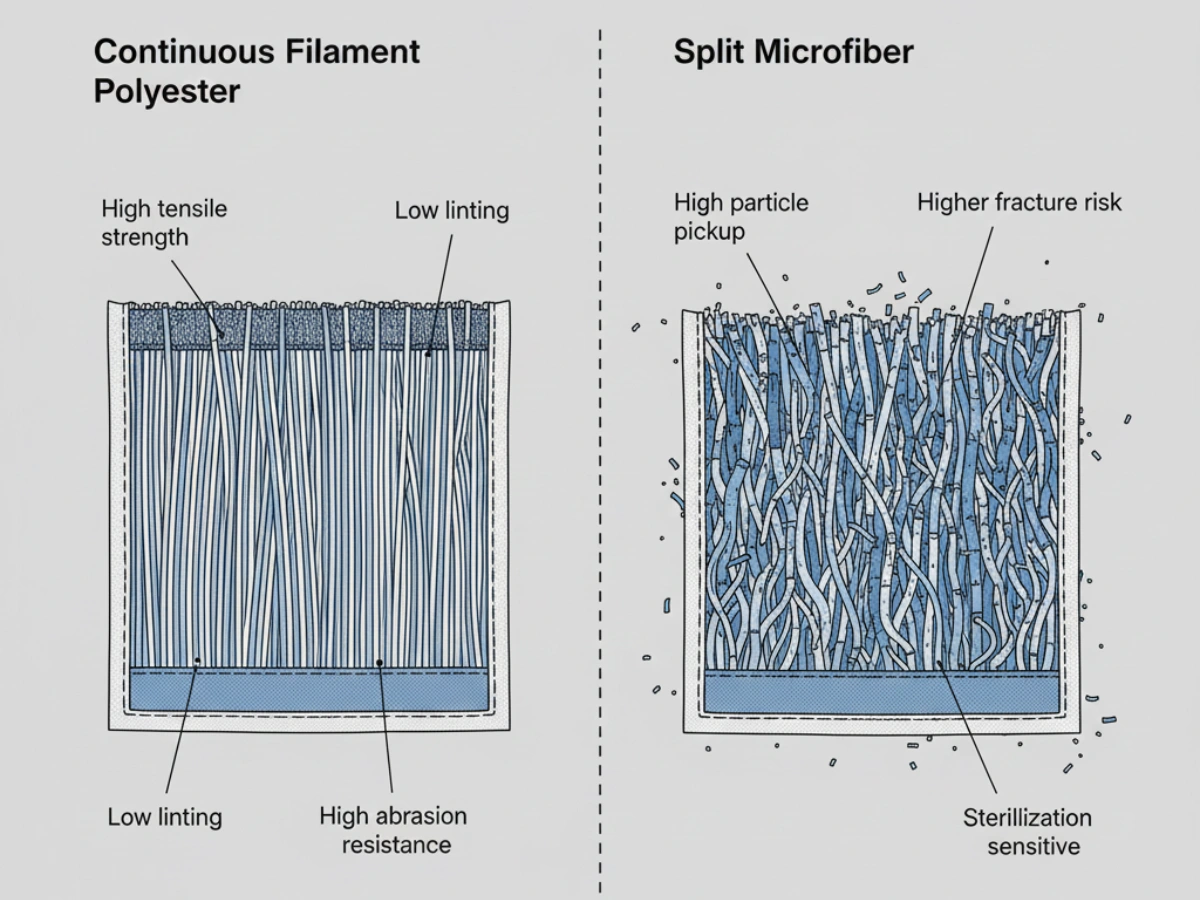
Los trapeadores de poliéster aptos para salas blancas están fabricados con poliéster de filamento continuo (PET)—Fibras sintéticas largas e ininterrumpidas extruidas y tejidas para formar un tejido. A diferencia de los textiles de fibras cortadas, donde se hilan fibras cortas, la construcción de filamentos continuos minimiza deliberadamente la cantidad de extremos de fibras sueltas en el cuerpo de la tela, que es el principal contribuyente estructural a la baja liberación de partículas.
Fibras largas y únicas recorren ininterrumpidamente el tejido. Menos extremos de filamento = menos puntos de rotura = teóricamente menor liberación de partículas. Esta es la ventaja estructural fundamental para aplicaciones de salas blancas sensibles a partículas.
Trapeadores de poliéster fabricados para uso en salas blancas.—como la serie White Mop de MIDPOSI—Normalmente se utiliza una estructura de tejido de varias capas. El patrón de tejido y el número de capas influyen en la distribución del líquido, la absorbencia y la estabilidad mecánica del cabezal del trapeador durante el uso.
Debido a que el perímetro del trapeador representa una zona concentrada de extremos de fibras cortadas, el acabado de los bordes es un indicador crítico de la calidad de fabricación. Los trapeadores de poliéster para salas blancas utilizan bordes cortados con láser, ultrasónicos o termosellados para sellar el perímetro y evitar que los bordes se deshilachen. La calidad del sellado de los bordes puede tener tanto impacto en el rendimiento de las partículas como el propio tipo de filamento.
El grosor de la fibra (denier) afecta la sensación de la mano del trapeador, la eficiencia del contacto con el líquido y la durabilidad. Las fibras de poliéster de denier más fino producen un tejido más suave con un contacto superficial potencialmente mejor para la aplicación de líquidos; Las fibras de denier más gruesas pueden ofrecer una mayor resistencia a la abrasión. Esta es una variable específica del fabricante, no una constante del material.
Uso de trapeadores de microfibra aptos para salas blancas tecnología de filamento dividido. Durante la fabricación, un único filamento bicomponente (normalmente núcleo de poliéster + funda de poliamida/nylon, o una configuración de poliéster/poliamida lado a lado) se divide mecánica o químicamente en múltiples microfilamentos en forma de cuña. Cada filamento original puede producir 8–16 microfilamentos individuales, lo que aumenta drásticamente el número de fibras y la superficie total dentro del mismo peso de tela.
La sección transversal en forma de cuña de cada microfilamento es la fuente de la ventaja de limpieza de la microfibra. Los bordes afilados de la cuña raspan y atrapan mecánicamente partículas finas, mientras que los espacios entre los filamentos crean canales capilares que aspiran líquidos. Este es un mecanismo de captura físico, no químico.
La mayoría de las microfibras aptas para salas blancas utilizan una mezcla de poliéster/poliamida (nylon).—comúnmente 70–80% poliéster y 20–30% poliamida. El poliéster proporciona integridad estructural; la poliamida contribuye a la absorbencia y al propio comportamiento de división. Esta proporción de mezcla es la fuente tanto de las ventajas de rendimiento como de los problemas de sensibilidad química que se analizan más adelante en este artículo.
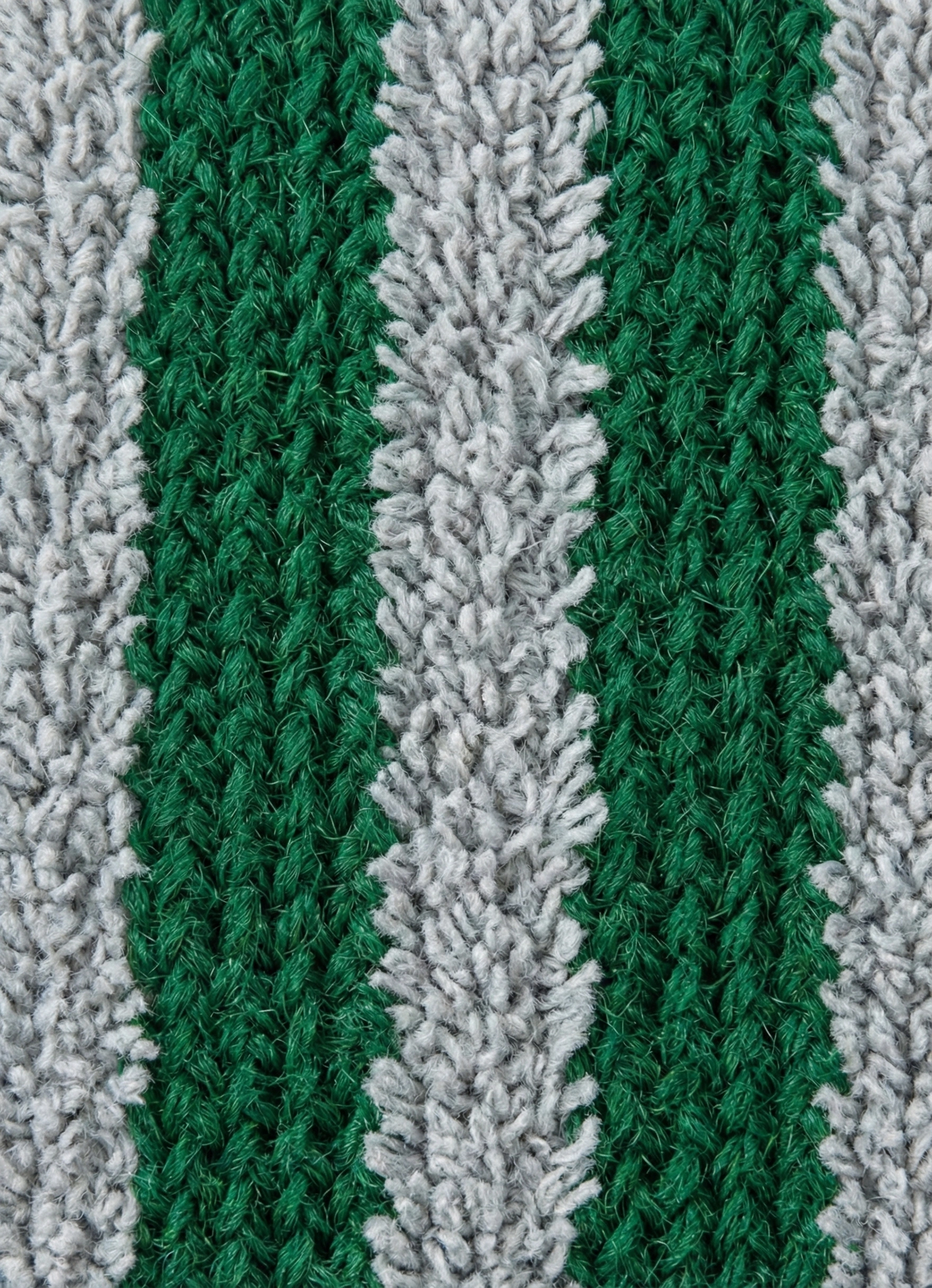
Los trapeadores de microfibra para salas blancas pueden utilizar construcciones de superficie en bucle o de pelo cortado. Las construcciones en bucle generalmente liberan menos fibras sueltas durante el uso porque cada filamento está anclado en ambos extremos; Las construcciones de pelo cortado exponen más extremos de filamentos, lo que potencialmente aumenta la liberación de partículas. Esta es una variable de calidad crítica para aplicaciones de salas blancas. Productos como el almohadilla de trapeador para sala blanca con rayas de microfibra utilice una construcción en bucle con bordes sellados para compatibilidad con salas blancas.
Debido a que cada filamento original se divide en múltiples microfilamentos, el área superficial total de la fibra por gramo de material es sustancialmente mayor que la del poliéster hilado convencionalmente. Esta es la base estructural de la mayor absorbencia y capacidad de captura de partículas de la microfibra.—pero la misma superficie también significa más sitios potenciales para la degradación de la fibra y la liberación de partículas a medida que el material envejece.
La distinción estructural entre poliéster de filamento continuo y microfibra de filamento dividido no es meramente académica. Explica directamente las compensaciones de rendimiento observables:
| Dimensión | Poliéster (tejido de filamento continuo) | Microfibra (filamento dividido) |
|---|---|---|
| Tipo de fibra | Filamento único continuo | Cuña multifilamento dividida |
| Composición | 100% poliéster (PET) | Mezcla de poliéster/poliamida (típica: 70–80/20–30) |
| Área de superficie por gramo | Relativamente más bajo | Relativamente más alto (geometría dividida) |
| Mecanismo de liberación de partículas primarias | Principalmente relacionado con los bordes; bajo del cuerpo de filamento continuo | Rotura de fibras por filamentos partidos; también relacionado con los bordes |
| Acabado de bordes | Cortadas con láser, ultrasónicas o termoselladas | Varía según el fabricante; Se requieren bordes sellados para uso en salas blancas. |
| Idoneidad típica para salas limpias | ISO 5–8 / BPF A–D (dependiendo de la calidad de la construcción) | ISO 7–8/BPF C–D más comúnmente; ISO 5–6 con calificación |
| Interacción con el agua | Inherentemente hidrofóbico; absorbencia de la estructura tejida | Acción capilar por la geometría de la cuña; naturalmente hidrófilo en el componente de poliamida |
Nota: Esta tabla compara las características estructurales a nivel de material. El rendimiento real del producto depende de variables específicas del fabricante, incluida la calidad del anclaje del filamento, la densidad del tejido, la consistencia del método de sellado de bordes y el control de calidad general de fabricación. Estas características deben verificarse con el producto y proveedor específicos, no asumirse únicamente a partir del tipo de material.
Esta es la dimensión que determina más directamente si el material de un trapeador es adecuado para una clasificación de sala blanca determinada. La pregunta no es simplemente “¿qué material es más limpio?” pero “¿qué material genera partículas mediante qué mecanismo y bajo qué condiciones?”
Los trapeadores para salas blancas generan partículas a través de tres mecanismos principales:
El tipo de filamento—continuo o dividido—Afecta directamente cuál de estos mecanismos domina y en qué magnitud. La presencia de fluidos y la acción mecánica aceleran los tres mecanismos, razón por la cual los datos de partículas del trapeador húmedo pueden diferir de las mediciones en estado seco.
La ventaja estructural del poliéster de filamento continuo para el control de partículas es sencilla: menos extremos de filamento = menos fuentes potenciales de partículas. Debido a que cada filamento corre ininterrumpidamente a través de la tela, hay menos puntos de inicio de rotura en comparación con una tela compuesta de fibras cortadas individuales más cortas o microfilamentos divididos.
Factores adicionales que contribuyen al perfil de partículas típicamente más bajo del poliéster:
Advertencia importante: Este perfil supone un producto bien fabricado. El rendimiento de las partículas depende del proceso de fabricación. Un trapeador de poliéster con bordes sellados mal y fibras superficiales sueltas generará más partículas que un trapeador de microfibra bien hecho con bordes sellados y filamentos anclados. El tipo de material establece una tendencia estructural; La calidad de fabricación determina si esa tendencia se realiza.
La construcción de filamentos divididos de la microfibra crea una compensación inherente al riesgo de partículas: La misma característica estructural que proporciona una captura superior de partículas también crea más puntos potenciales de liberación de partículas.. Cada microfilamento partido es más fino y frágil que un filamento continuo de poliéster, y hay muchos más por unidad de superficie.
Variables clave que afectan la generación de partículas de microfibra:
Advertencia importante: La microfibra de calidad de un fabricante acreditado, con bordes sellados y construcción de bucle anclado, puede funcionar bien dentro de los requisitos de partículas de ISO 7.–8 entornos y puede, con pruebas de calificación, ser adecuado para ISO 5–6 zonas. El tipo de material por sí solo no descalifica a la microfibra para su uso en salas blancas; indica que el rendimiento de las partículas debe verificarse en lugar de asumirse.
Los datos de generación de partículas de diferentes proveedores de trapeadores pueden ser difíciles de comparar directamente porque las metodologías de prueba difieren. Al evaluar los datos de partículas del proveedor, considere:
Descargo de responsabilidad crítico: Esta comparación describe tendencias estructurales a nivel material. El rendimiento de las partículas debe verificarse en el producto específico bajo consideración, utilizando condiciones de prueba relevantes para la aplicación de sala limpia prevista. Ninguna afirmación a nivel de material contenida en este artículo constituye una garantía de rendimiento para ningún producto específico.
Si la generación de partículas es la dimensión en la que el poliéster tiende a tener una ventaja, la eficacia de limpieza es la dimensión en la que la microfibra gana su lugar en las operaciones de salas blancas. La diferencia de rendimiento observable en absorbencia y eliminación mecánica de partículas es real.—pero debe sopesarse frente a la compensación de generación de partículas y los requisitos específicos de cada zona de sala limpia.
La ventaja de limpieza de la microfibra se basa en su estructura física, no en un agente de limpieza químico:
El poliéster de filamento continuo es inherentemente hidrófobo—el polímero base no absorbe agua. Sin embargo, esto no significa que las fregonas de poliéster para salas blancas no puedan absorber líquidos. La absorbencia de los trapeadores de poliéster es función de la construcción del tejido:
La paradoja de la eficacia de la limpieza: El poder de limpieza superior de la microfibra es real y demostrable en pruebas estandarizadas de eficacia de limpieza. Sin embargo, en una sala limpia, una “mejor limpieza” sólo es beneficiosa si no crea un riesgo de contaminación.—específicamente a través de la generación de partículas—que excede el beneficio de limpieza. Para entornos ISO 5/GMP Grado A, el control de partículas puede ser la preocupación dominante, y la absorbencia adecuada (en lugar de la máxima) del poliéster puede ser la opción más apropiada. Para ISO 7–8/GMP Grado C–En entornos D, donde los umbrales de partículas son menos estrictos, la ventaja de la eficacia de limpieza de la microfibra puede impulsar mejoras operativas significativas.
Esta es una dimensión que muchas evaluaciones de adquisición de trapeadores para salas blancas pasan por alto.—y uno que puede hacer que la elección de un material técnicamente correcto sea operativamente problemática si se combina el material de trapeador incorrecto con el formulario de desinfectantes de la instalación.
El poliéster (PET) como clase de polímero se exhibe amplia resistencia a una amplia gama de agentes químicos comúnmente utilizados en la desinfección de salas blancas:
El perfil de compatibilidad química de la microfibra para salas blancas tiene más matices porque la mayoría de las microfibras para salas blancas son mezcla de poliéster/poliamida (nylon). El componente de poliamida introduce una sensibilidad química que el poliéster puro no tiene:
La degradación del componente de poliamida se manifiesta como: fragilidad de la fibra, mayor desprendimiento de partículas, absorbencia reducida (a medida que se degrada la estructura capilar) y una vida útil general más corta en aplicaciones reutilizables.
Importante: La compatibilidad química es específica del producto, no sólo del material. Las variaciones en la construcción de la tela, la química de unión de los bordes, el material del hilo de coser y cualquier tratamiento de la tela pueden afectar la resistencia química general. Solicite siempre datos de compatibilidad química del fabricante del trapeador específicos para su el formulario de desinfectantes de la instalación y verificar mediante pruebas de compatibilidad en la instalación bajo sus condiciones de uso reales.
La siguiente tabla consolida la comparación a nivel de material en las seis dimensiones de desempeño analizadas anteriormente y en las secciones siguientes. Utilice esto como referencia de alto nivel, no como sustituto de una evaluación específica del producto.
| Dimensión de rendimiento | Poliéster (tejido de filamento continuo) | Microfibra (filamento dividido) | Cuando esta dimensión es decisiva |
|---|---|---|---|
| 1. Generación de partículas | Generalmente más bajo (ventaja del filamento continuo; menos puntos de rotura) | Generalmente más alto (estructura de filamento dividido; más puntos de liberación potenciales) | ISO 5–6 / GMP Grado A–B: normalmente se prefiere el poliéster |
| 2. Absorbencia / Eficacia de limpieza | Moderado; liberación controlada de líquido; adecuado para la limpieza de rutina | Más alto; acción capilar + atrapamiento mecánico de partículas | ISO 7–8/BPF C–D con protocolos con muchos residuos: ventaja de la microfibra |
| 3. Resistencia química | Amplia compatibilidad; resistente a la oxidación (100% PET) | Sensibilidad de la poliamida a oxidantes y ácidos. | Instalaciones que utilizan desinfectantes agresivos: normalmente se prefiere el poliéster |
| 4. Durabilidad (reutilizable) | Mayor recuento de ciclos; degradación más lenta | Recuento de ciclos más bajo; rotura progresiva del filamento con el lavado | Programas reutilizables de alta frecuencia: normalmente se prefiere el poliéster |
| 5. Desechable (de un solo uso) | Disponible; enfocado en el control de la esterilidad y la contaminación | Disponible; centrado en el máximo poder de limpieza por uso | La elección depende de la prioridad: control de partículas versus poder de limpieza por uso |
| 6. Costo (direccional) | Bajar por adelantado; vida útil reutilizable más larga | Más alto por adelantado; vida útil reutilizable más corta | Programas reutilizables con alto volumen de uso: ventaja de coste del poliéster |
Divulgación: Esta tabla presenta comparaciones direccionales a nivel de material. El rendimiento real del producto depende de variables específicas del fabricante, incluida la calidad del filamento, la densidad del tejido, el método de sellado de bordes, la construcción de las capas y el control de calidad general de fabricación. No se hacen afirmaciones de rendimiento absoluto para ningún producto o tipo de material. Todas las comparaciones deben verificarse mediante evaluaciones específicas del producto y, cuando sea posible, pruebas en las instalaciones.
La durabilidad afecta directamente el costo total de propiedad y la frecuencia de reemplazo. Los dos materiales se degradan a través de diferentes mecanismos y a diferentes velocidades, y estas diferencias se amplifican en aplicaciones reutilizables (lavadas/esterilizadas).
Nota: Los datos reales del ciclo de reemplazo deben obtenerse de los proveedores y—para programas reutilizables—verificado en pruebas de lavado específicas de la instalación que replican los parámetros reales de limpieza, lavado y esterilización de la instalación. Los datos del ciclo de vida publicados por el proveedor son direccionales, no una garantía.
Las decisiones de adquisición basadas únicamente en el precio unitario del cabezal de fregona son engañosas. El siguiente marco identifica los componentes de costos que difieren según el tipo de material, lo que permite una comparación del costo total de propiedad (TCO) específico de la instalación.
Sin embargo, el costo inicial del material es sólo un componente del panorama del costo total y, a menudo, no es el más grande.
Una comparación completa de costos debe basarse en costo por evento de limpieza, sin costo por cabezal de trapeador:
(Costo del cabezal de trapeador / Ciclos utilizables por cabezal de trapeador) + (Costo de lavado/esterilización por ciclo) + (Costo de mano de obra por evento de limpieza) = Costo por evento de limpieza
Este marco revela varias dinámicas importantes:
Evitar: Este marco no incluye cifras de costos absolutos, afirmaciones de “X$ por cabezal de trapeador” ni porcentajes de ahorro de TCO específicos. Cada instalación debe crear su propio modelo de costos utilizando sus precios de adquisición reales, tarifas de mano de obra, costos de servicios públicos y costos operativos de lavandería/esterilización.
Esta sección consolida el análisis técnico anterior en un marco de selección viable. Utilice las condiciones y escenarios siguientes para autodiagnosticar qué material se alinea con el perfil de su instalación.
En la práctica, varios escenarios reducen la sensibilidad a la elección del material:
Advertencia clave: El material es un factor entre muchos en la evaluación de un trapeador para sala blanca. La compatibilidad del armazón, el tipo de mango, la configuración de esterilidad, el peso del cabezal del trapeador y el acabado de los bordes son criterios de selección igualmente importantes. Esta comparación debería informar una evaluación más amplia del sistema de trapeador.—no debería reemplazar a uno. Para obtener un enfoque estructurado para evaluar el sistema completo de trapeador, consulte nuestra Marco de evaluación del comprador del sistema de trapeador para sala limpia.
| Escenario de instalación | Grado de sala limpia | Recomendación de material típico | Justificación clave |
|---|---|---|---|
| Llenado farmacéutico aséptico | ISO 5 / GMP A | Poliéster | El control de partículas es primordial en las zonas de llenado aséptico. El poliéster de filamento continuo con bordes sellados proporciona el perfil bajo en partículas más predecible para esta aplicación. |
| Zona de fondo farmacéutico | ISO 7 / GMP B–do | Poliéster o microfibra de calidad. | La decisión depende de la química del desinfectante y la frecuencia de limpieza. Si se utilizan desinfectantes oxidantes de forma rutinaria, el poliéster puede ser la opción más segura. Si la química es neutra con una limpieza con muchos residuos, la microfibra de calidad puede ofrecer ventajas de eficacia. |
| Montaje de dispositivos médicos | ISO 7–8/BPF C–D | Microfibra | Es beneficiosa una mayor eficacia de limpieza para la eliminación de partículas de las superficies de contacto del dispositivo. Los umbrales de partículas son menos estrictos, lo que permite aprovechar plenamente la ventaja de limpieza de la microfibra. |
| Biotecnología R&D / laboratorios generales | ISO 7–8 | Cualquiera de los materiales | Los requisitos para las partículas son menos estrictos. El costo, la conveniencia del suministro y la compatibilidad con los productos químicos de limpieza existentes pueden ser los factores decisivos en lugar de las distinciones de desempeño específicas del material. |
| Semiconductores / electrónica | ISO 5–7 | Poliéster | Control de partículas combinado con agentes de limpieza agresivos típicos de las salas blancas de semiconductores. Las consideraciones ESD (descarga electrostática) pueden favorecer configuraciones de materiales específicas. |
| Capitalización hospitalaria (USP <797>/<800>) | ISO 5–7 | Poliéster | La baja generación de partículas en las áreas de control de ingeniería primaria es un requisito clave. El tejido de filamento continuo de poliéster con bordes sellados respalda las expectativas de control de partículas de los entornos de compuestos USP. |
Nota sobre recomendaciones: Estas son sugerencias direccionales a nivel de material, no certificaciones específicas de productos. Evaluación específica de la instalación—incluyendo pruebas de partículas, verificación de compatibilidad química y validación de protocolos de limpieza.—siempre es necesario. El material recomendado debe verificarse con respecto a los parámetros de limpieza específicos del producto, del proveedor y de las instalaciones.
Los siguientes seis conceptos erróneos se encuentran con frecuencia en las discusiones sobre la adquisición de trapeadores para salas blancas. Cada corrección está respaldada por el análisis técnico presentado en las secciones anteriores.
Realidad: La generación de pelusa depende del tipo de fibra (continua o dividida), la calidad del acabado de los bordes y el control del proceso de fabricación.—no en una etiqueta de “microfibra”. Una fregona tejida de poliéster bien hecha con bordes sellados cortados con láser y filamentos continuos anclados puede generar menos partículas que una fregona de microfibra de baja calidad con filamentos partidos mal anclados y bordes sin sellar. La categoría del material no garantiza el rendimiento de las partículas; La calidad de fabricación específica del producto sí lo hace.
Realidad: La menor absorbencia del poliéster en comparación con la microfibra es una compensación de diseño, no un defecto. En aplicaciones donde la aplicación controlada de desinfectante es importante—lograr un tiempo de contacto específico sin humedecer demasiado, gestionar el tiempo de secado para minimizar la interrupción operativa y garantizar un volumen constante de desinfectante por superficie—La liberación controlada de líquido del poliéster puede ser una ventaja. "Absorbe más" no siempre significa "funciona mejor" en todos los contextos de salas blancas.
Realidad: La microfibra se utiliza ampliamente y con éxito en ISO 7–8/GMP Grado C–D entornos de sala limpia cuando provienen de fabricantes de calidad con bordes sellados, construcción de bucle anclado y datos de pruebas de partículas documentados. La preocupación es la evaluación de idoneidad para el propósito, no la exclusión absoluta. Muchas instalaciones utilizan fregonas de microfibra en las zonas de apoyo con buenos resultados. Excluir categóricamente la microfibra de todo uso en salas blancas es una simplificación excesiva que ignora la diversidad de requisitos de las salas blancas.
Realidad: La calidad del trapeador de poliéster varía significativamente según el fabricante. Los factores diferenciadores clave incluyen: filamento continuo versus filamento discontinuo, densidad y patrón de tejido, número de capas de tela y su método de unión, tecnología de sellado de bordes (corte por láser versus ultrasonido versus termosellado), compatibilidad química del hilo y control de calidad general de fabricación. Dos “trapeadores de poliéster para salas blancas” de diferentes fabricantes pueden funcionar de manera muy diferente en las pruebas de partículas. El nombre del material es un punto de partida para la evaluación, no una garantía de equivalencia.
Realidad: La esterilización (irradiación gamma, EtO o autoclave) aborda la carga biológica—la contaminación microbiana en el trapeador en el punto de uso. No aborda la contaminación por partículas no viables. Un trapeador estéril hecho de un material que desprende partículas aún puede introducir partículas no viables en el ambiente de la sala limpia, lo cual es una preocupación en zonas de clasificación ISO 5 y superiores donde el recuento total de partículas—no sólo recuentos viables—son monitoreados y controlados. El material y la esterilidad son criterios de selección independientes que deben evaluarse ambos.
Realidad: Un enfoque híbrido basado en zonas es común y, a menudo, óptimo. Muchas instalaciones utilizan trapeadores de poliéster en áreas críticas/Grado A.–Zonas B (donde el control de partículas es primordial) y fregonas de microfibra en soporte/Grado C–Zonas D (donde la eficacia de la limpieza impulsa la elección). La clave para un enfoque híbrido exitoso es la gestión de protocolos: segregación de zonas clara, asignación de trapeador a zonas específicas con identificación visual (código de colores) y capacitación del personal para evitar el uso cruzado. Los materiales son complementarios, no mutuamente excluyentes.
El análisis técnico de este artículo le permitirá evaluar los materiales de los trapeadores para salas blancas. Las siguientes preguntas traducen ese análisis en un marco práctico de evaluación de proveedores. Hacer estas preguntas al contratar a cualquier proveedor de trapeadores para salas blancas ayuda a diferenciar entre las afirmaciones de marketing y las características verificables del producto.
Esta pregunta establece la identidad material de referencia. La respuesta debe ser específica: “100% poliéster de filamento continuo, X denier por filamento” o “X% poliéster / Y% microfibra de filamento dividido de poliamida, Z denier por filamento antes de dividir”. Las respuestas vagas (“es poliéster” o “es microfibra”) deben aclararse antes de continuar.
El borde es una zona concentrada de posible liberación de partículas. Los bordes cortados con láser, ultrasónicos y termosellados producen perfiles de borde diferentes. Un proveedor que puede proporcionar una imagen microscópica de su borde sellado demuestra capacidad y transparencia. Si la calidad del sellado de los bordes no se puede confirmar visualmente, el rendimiento de las partículas en el perímetro no está verificado.
Solicite datos de partículas con el método de prueba claramente identificado (por ejemplo, tambor Helmke, agitación biaxial, recuento de partículas líquidas). Sin la metodología, los números de partículas no son interpretables ni comparables. Si el proveedor no puede proporcionar datos de pruebas de partículas de una metodología reconocida, no se puede confirmar la idoneidad del material para una zona sensible a partículas.
Proporcione al proveedor la lista completa de desinfectantes utilizados en sus instalaciones, incluidas las concentraciones y los tiempos de contacto. Solicite datos de compatibilidad documentados. Si el proveedor no puede proporcionar información sobre la compatibilidad química de un desinfectante específico, solicite que le proporcionen muestras de materiales para sus propias pruebas de compatibilidad.
Esta pregunta aborda directamente la cuestión del ciclo de vida reutilizable. El proveedor debe poder describir no sólo el recuento de ciclos nominal, sino también la curva de degradación del rendimiento esperada.—aumento del desprendimiento de partículas, disminución de la absorbencia e indicadores de desgaste visibles—durante toda la vida útil indicada. Un proveedor que no puede discutir los cambios en el rendimiento del ciclo de vida no lo ha probado o no está dispuesto a revelarlo.
Esta pregunta es fundamental para la evaluación de la compatibilidad química. Si el material es una mezcla de poliéster/poliamida, el porcentaje de poliamida determina el grado de sensibilidad potencial a los desinfectantes oxidantes. Un proveedor debería poder indicar la composición exacta, no sólo "microfibra" o "mezcla de poliéster".
Un COA debe confirmar la composición del material, las propiedades físicas y cualquier dato de prueba relevante para el lote de producción específico. Esto respalda los requisitos de seguimiento de auditoría y permite verificar que el producto recibido coincide con la especificación evaluada. Vea nuestra guía sobre Documentos de validación de fregona para sala limpia y COA. para más detalles.
La consistencia del material entre lotes es un atributo de calidad crítico. Comprenda qué pruebas realiza el fabricante en cada lote—peso por unidad de área, verificación de la composición de la fibra, integridad del sellado de los bordes, criterios de inspección visual y cualquier prueba de partículas—y con qué frecuencia de muestreo. La variación de la calidad del material entre lotes puede crear inconsistencia en el rendimiento de la limpieza y el control de la contaminación.
Un proveedor que ofrece ambos materiales y puede brindar recomendaciones específicas para zonas basadas en los parámetros de sus instalaciones está demostrando amplitud de productos y capacidad de consulta. Un proveedor que solo ofrece un material puede recomendarlo independientemente de su idoneidad, ya que no tiene otra alternativa que ofrecer.
La evaluación en las instalaciones bajo condiciones de uso reales es la forma más confiable de confirmar que un material cumple con los requisitos de las instalaciones. Solicite muestras de un lote de producción actual (no muestras de demostración especialmente preparadas) para sus propias pruebas de partículas, verificación de compatibilidad química y recopilación de comentarios del operador.
Esta comparación cubre la distinción a nivel de material entre los trapeadores para salas blancas de microfibra y poliéster. Los siguientes recursos abordan aspectos complementarios de la evaluación y selección de trapeadores para salas blancas:
La distinción central está en el nivel de fibra. Fregonas de poliéster para salas blancas Generalmente están hechos de poliéster de filamento continuo (PET).—Fibras sintéticas largas e ininterrumpidas de un solo componente tejidas en una estructura de tela. Trapeadores de microfibra para salas blancas están hechos de tecnología de filamento dividido—Filamentos de dos componentes (normalmente una mezcla de poliéster y poliamida) que se dividen durante la fabricación en múltiples microfilamentos en forma de cuña. Esta diferencia estructural produce diferentes perfiles para la generación de partículas, absorbencia, compatibilidad química y durabilidad en el uso en salas blancas.
El poliéster de filamento continuo normalmente genera menos partículas que la microfibra de filamento dividido, debido a la ventaja estructural de tener menos puntos de rotura de filamentos en un tejido de filamento continuo. Sin embargo, la calidad de fabricación es una variable crítica: un trapeador de microfibra bien hecho con bordes sellados y filamentos anclados puede superar a un trapeador de poliéster mal hecho con fibras sueltas y bordes sin sellar. El tipo de material establece una tendencia estructural; el producto específico y el fabricante determinan si esa tendencia se realiza. Solicite siempre datos de pruebas de partículas con la metodología de prueba especificada.
Generalmente no se recomienda a menos que el producto de microfibra específico haya sido calificado mediante pruebas de partículas y validado para la clasificación ISO 5/Grado A de la instalación con datos que respalden su idoneidad. Las propiedades estructurales de la microfibra de filamento dividido crean un mayor riesgo de liberación de partículas en comparación con el poliéster de filamento continuo. Para entornos ISO 5/Grado A y B, la recomendación más común es el tejido de poliéster de filamento continuo con bordes sellados. Si una instalación está evaluando microfibra para uso de Grado A/B, debe realizar sus propias pruebas de partículas en condiciones de uso reales y estar preparada para documentar los fundamentos de la calificación para fines de auditoría.
En las pruebas estandarizadas de eficacia de limpieza, la microfibra generalmente demuestra una mayor absorbencia y una captura mecánica de partículas superior en comparación con el poliéster del mismo peso. Esto se debe a la estructura de filamentos divididos en forma de cuña, que proporciona acción capilar para la absorción de líquidos y el atrapamiento mecánico de partículas finas. Sin embargo, en aplicaciones de salas blancas, “limpiar mejor” solo es beneficioso si no introduce un riesgo de generación de partículas que exceda el beneficio de la limpieza. Para ISO 7–8/GMP Grado C–En entornos D, la ventaja de eficacia de limpieza de la microfibra se puede aprovechar plenamente. Para ISO 5–6 / Grado A–B, donde el control de partículas es la preocupación primordial, la compensación debe evaluarse cuidadosamente.
El poliéster (100% PET) tiene una compatibilidad química más amplia con la gama de desinfectantes comúnmente utilizados en entornos de salas blancas. En particular, el poliéster resiste la degradación oxidativa de agentes como el peróxido de hidrógeno y el ácido peracético. Microfibra—que contiene poliamida (nylon)—es más susceptible a la degradación por desinfectantes oxidantes y agentes a base de cloro. El componente de poliamida puede degradarse con la exposición repetida, lo que provoca que la fibra se vuelva quebradiza, aumente el desprendimiento de partículas y reduzca la absorbencia. Siempre verifique la compatibilidad con su formulario de desinfectante específico y el producto de trapeador específico, ya que la resistencia química puede variar según la construcción de la tela y la química del hilo.
El poliéster normalmente tiene un costo inicial de material más bajo y una vida útil más larga en aplicaciones reutilizables, lo que lo hace potencialmente más rentable en programas reutilizables de alta frecuencia. La microfibra puede ser más rentable en configuraciones desechables/de un solo uso donde su rendimiento superior de limpieza por uso reduce el tiempo de limpieza o el retrabajo. La comparación debe basarse en el costo del ciclo de vida (costo por evento de limpieza), no en el precio unitario. Un modelo de costo por evento debe tener en cuenta: el costo del cabezal del trapeador amortizado en ciclos utilizables, los costos de lavandería y esterilización, y el costo de mano de obra por evento de limpieza. El coste del material por sí solo suele ser el componente más pequeño del coste total de limpieza.
Sí. Un enfoque híbrido basado en zonas es común y, a menudo, óptimo para instalaciones multizona. Por ejemplo: implementar trapeadores de punto de filamento continuo de poliéster en condiciones críticas ISO 5–6 / Grado A–Zonas centrales B donde el control de partículas es la prioridad, y mopas de microfibra en ISO 7–8 / Grado C–D zonas de soporte donde la eficacia de limpieza y la eliminación de residuos impulsan la elección. El enfoque híbrido requiere procedimientos operativos estándar claros, asignación de trapeadores específicos de cada zona con identificación visual (código de colores) y capacitación del personal para evitar el uso cruzado entre zonas. Los dos materiales son complementarios, no mutuamente excluyentes.
Las preguntas clave incluyen: (1) ¿Cuál es el tipo de filamento y la especificación de denier? (2) ¿Qué método de sellado de bordes se utiliza? ¿Puede proporcionar una imagen de microscopía? (3) ¿Puede proporcionar datos de pruebas de generación de partículas con la metodología especificada? (4) ¿Es el material compatible con el formulario de desinfectante específico de nuestras instalaciones? (5) Para los trapeadores reutilizables, ¿cuántos ciclos se validan y qué cambios de rendimiento ocurren durante la vida útil? (6) ¿Cuál es la composición exacta de la tela y la proporción de mezcla? (7) ¿Puede proporcionar un certificado de análisis por lotes? (8) ¿Qué pruebas de control de calidad se realizan por lote de producción? (9) ¿Ofrecen opciones de poliéster y microfibra? (10) ¿Puede proporcionarnos muestras de un lote de producción actual para nuestra evaluación interna? El marco de evaluación completo se trata en la sección Preguntas de evaluación de proveedores.
La serie de fregonas blancas para salas limpias MIDPOSI utiliza una construcción de punto de poliéster de filamento continuo 100 % multicapa.—diseñado para una baja generación de partículas, amplia compatibilidad química y uso repetido de autoclave en entornos controlados por GMP e ISO. También disponible en configuraciones estériles y no estériles en pesos de 40 g, 55 gy 65 g. Para las instalaciones que evalúan opciones de microfibra, MIDPOSI también ofrece almohadillas para trapeador de microfibra para salas blancas de calidad con bordes sellados y construcción de bucle anclado.
MIDPOSI proporciona documentación a nivel de lote, incluido el Certificado de análisis (COA), previa solicitud, y puede respaldar la evaluación de materiales específicos y el suministro de muestras para compradores calificados. Tanto las opciones de productos de poliéster como las de microfibra están disponibles con paquetes de documentación completos.