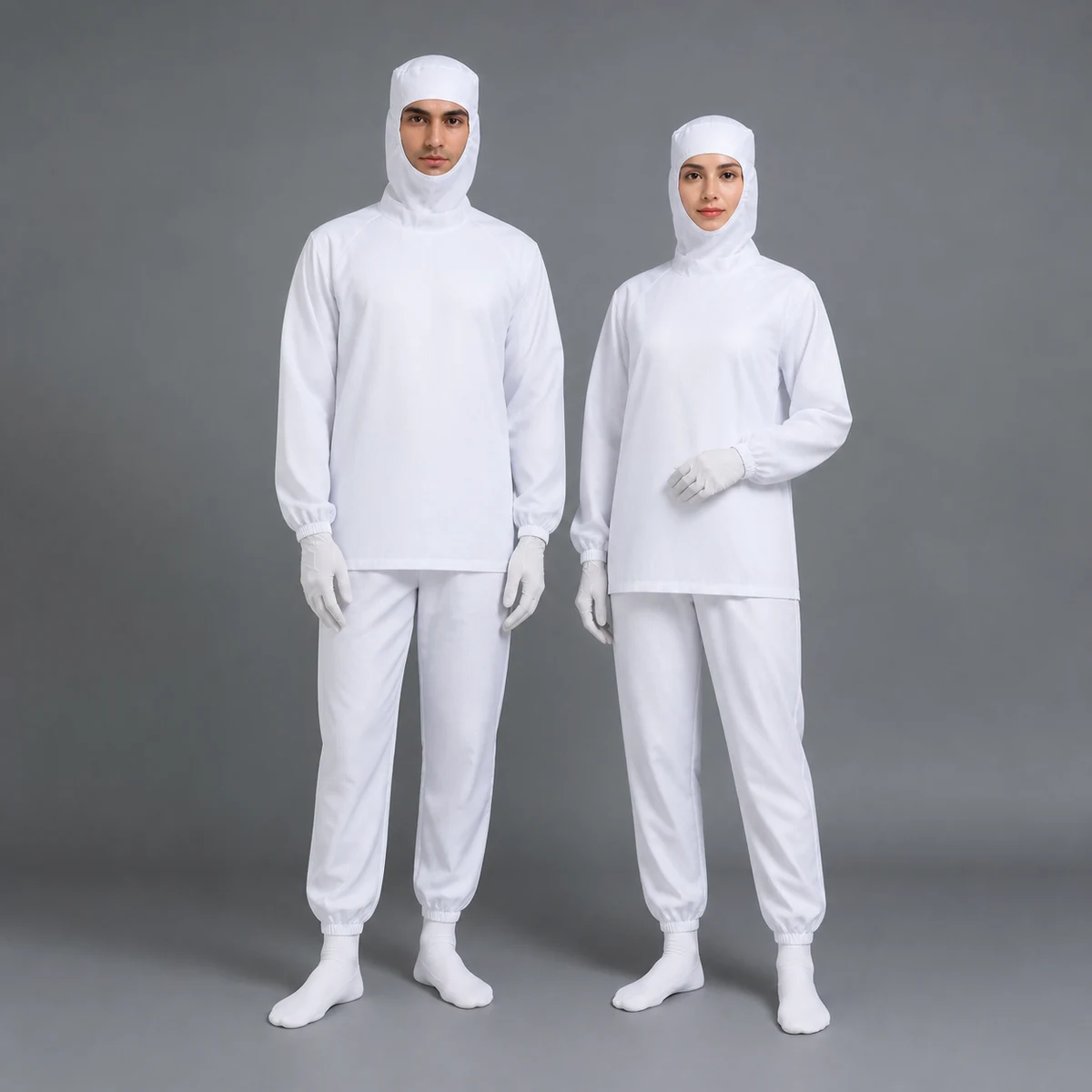
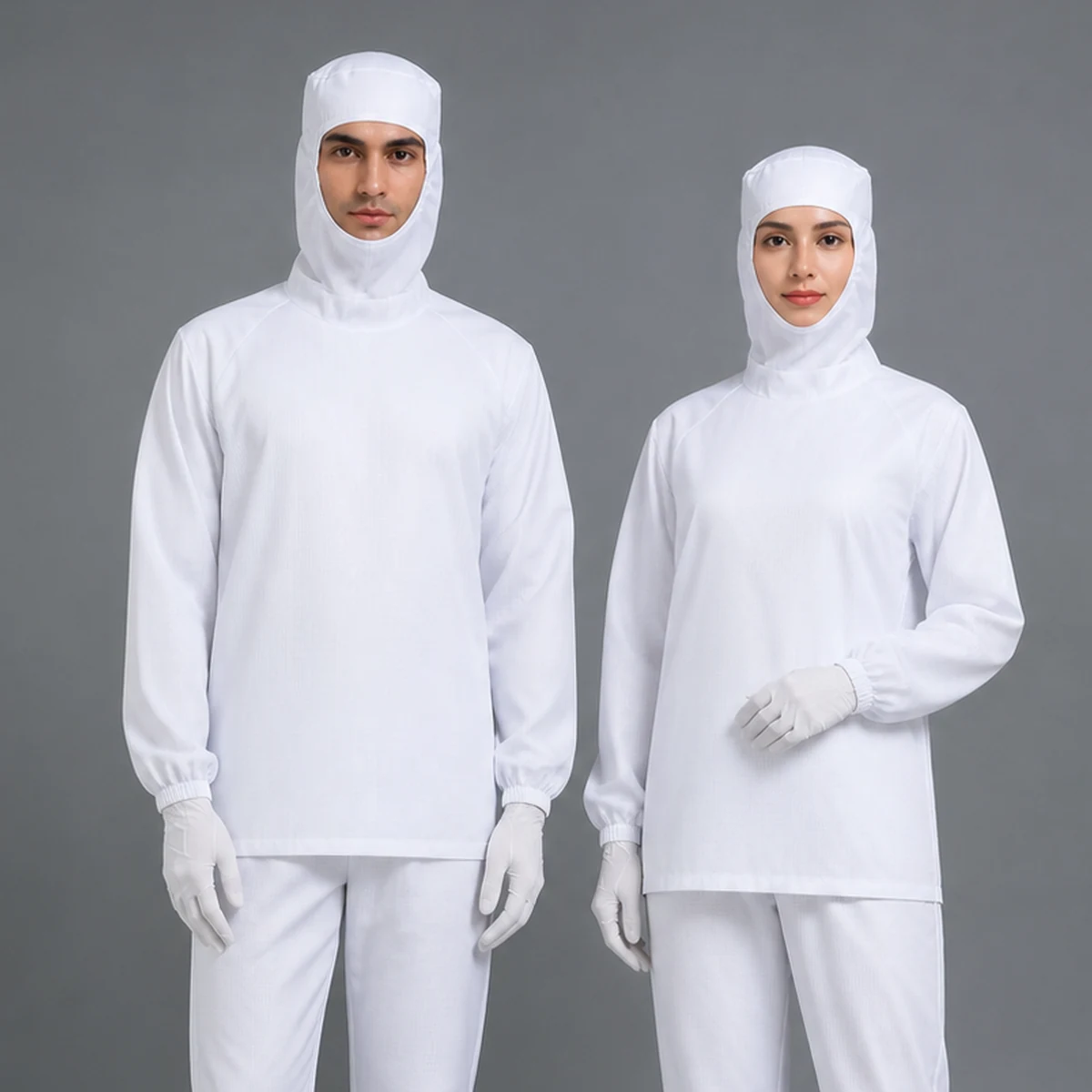
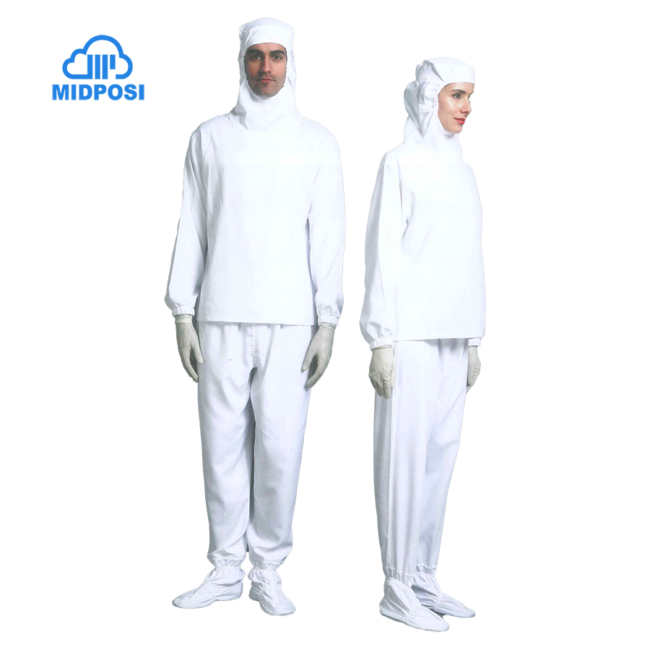
Les vêtements de travail à capuche pour salle blanche MIDPOSI MD-1A01 sont conçus pour les salles blanches de grade C et D où les opérateurs ont besoin de vêtements de travail confortables, peu pelucheux, antistatiques et résistants à la poussière. Ce modèle comprend un pull à capuche avec un pantalon séparé, et le pantalon est relié à des chaussettes pour améliorer la couverture du bas du corps et réduire les ouvertures exposées lors des mouvements en salle blanche.
Numéro de pièce : MD-1A01
Catégorie : Combinaisons autoclavables pour salle blanche & Ensembles
Étiquettes : Grade C, Grade D, Avec capuche
Structure : haut pull à capuche + pantalon séparé avec chaussettes connectées
Caractéristiques : surface lisse, antistatique, peu pelucheuse, résistante à la poussière, confortable et facile à changer.
Utilisé avec : Sac à vêtements propre, housse propre, chaussures entièrement collées, chaussures de sécurité et gants antistatiques
Informations Complémentaires
Écrit par l'équipe technique MIDPOSI
Révisé pour les applications de contrôle de la contamination en salle blanche.
Vêtements de travail à capuche pour salle blanche MIDPOSI Grade C/D
Pull à capuche pour salle blanche avec chaussettes connectées – MD-1A01
Les vêtements de travail pour salle blanche MIDPOSI MD-1A01 sont conçus pour les salles blanches de grade C et D où les opérateurs ont besoin de vêtements de travail peu pelucheux, antistatiques, résistants à la poussière et confortables pour les opérations de routine dans un environnement contrôlé. Ce modèle utilise un pull à capuche avec un pantalon séparé, et le pantalon est relié à des chaussettes pour améliorer la couverture du bas du corps et réduire les ouvertures exposées autour de la cheville.
Comparé aux vêtements de travail pour salle blanche fendus avec fermeture éclair sur le devant, le MD-1A01 convient mieux aux utilisateurs qui préfèrent un vêtement supérieur pull-over et une structure pantalon-chaussettes intégrée. Il est pratique pour les ateliers propres, les zones de support des salles blanches et les zones de production contrôlées où le confort, la couverture des vêtements et la gestion quotidienne des vêtements de travail doivent être équilibrés.
Numéro de pièceMD-1A01
CatégorieCombinaisons de salle blanche autoclavables & Ensembles
Mots clésCatégorie C, Catégorie D, avec capuche
StructureTop pull à capuche + pantalon avec chaussettes connectées
Conception de pullHaut à capuche pour les utilisateurs de salles blanches qui ont besoin d'une simple couverture du haut du corps.
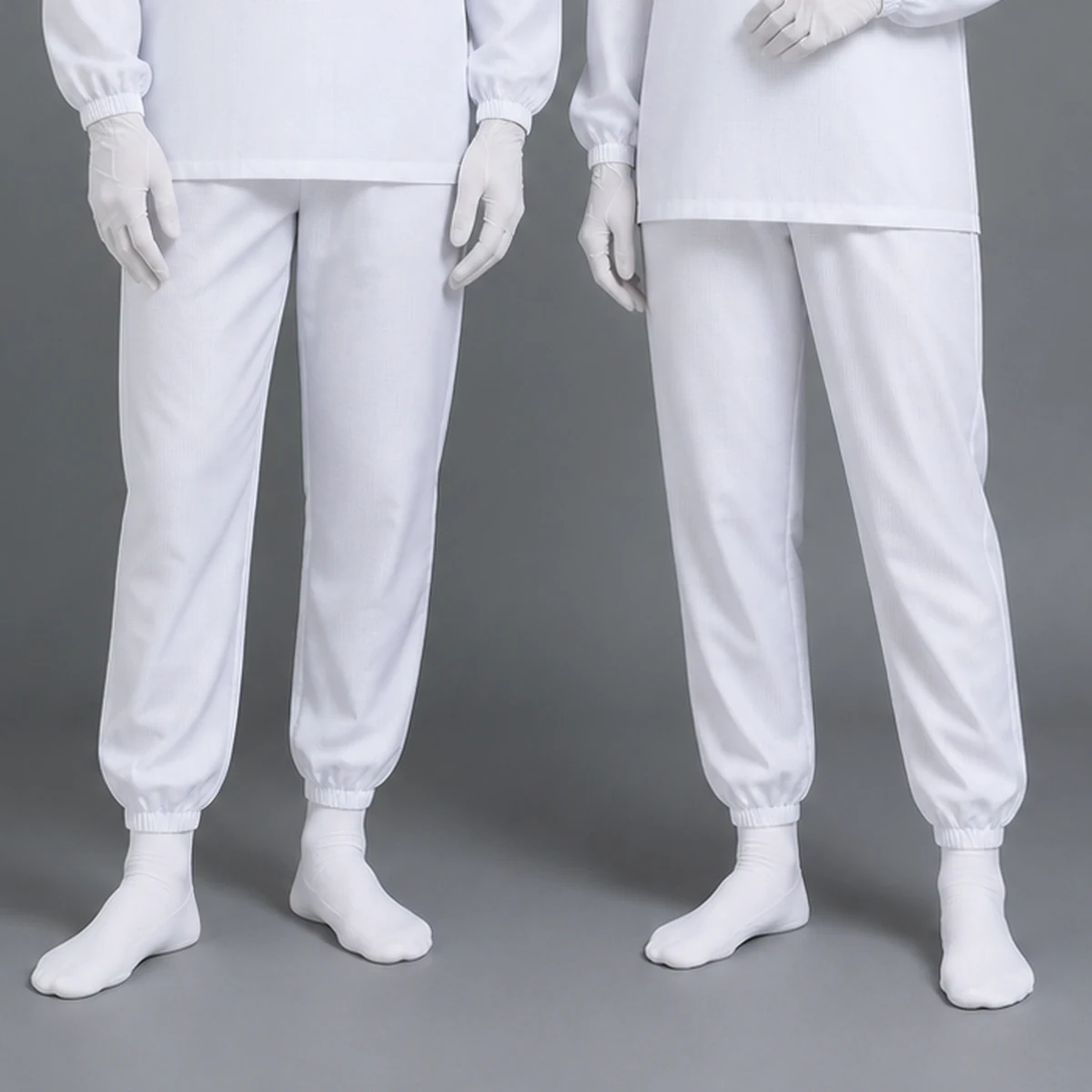
Chaussettes ConnectéesLes pantalons avec chaussettes connectées aident à réduire l'exposition de la zone de la cheville pendant le mouvement.
Utilisation de qualité C/DConçu pour les ateliers propres, les zones de support et les zones de production contrôlées.
Changement confortableConçu pour un changement facile et confortable dans les programmes de routine de vêtements de travail en salle blanche.
Pourquoi choisir le MD-1A01 ?
MD-1A01 n'est pas un ensemble veste et pantalon à fermeture éclair sur le devant. Sa principale valeur est la combinaison d'un pull à capuche et d'un pantalon relié à des chaussettes. This structure helps improve lower-body coverage and makes the garment suitable for Grade C and Grade D cleanroom users who want a practical workwear system with fewer loose openings around the feet.
This model is especially suitable for clean workshop workwear programs where the garment must not become a source of dust, while also helping reduce dust emission from the human body.
Positionnement principal
Pull à capuche de qualité C/D, vêtements de travail pour salle blanche avec pantalon et chaussettes connectées
Différence principale
Haut pull et pantalon à chaussettes connectées, pas une combinaison fendue standard à fermeture éclair sur le devant.
Valeur acheteur
Meilleure couverture de la zone des chevilles, changement confortable et utilisation quotidienne des vêtements de travail en salle blanche
Structure du produit et description du style
MD-1A01 est un style de vêtement de travail d'atelier épuré avec un vêtement et un pantalon séparés. Le vêtement supérieur est de type capuche et pull, tandis que le pantalon est relié à des chaussettes.
Article de conception
Description
Avantage salle blanche
Type de vêtement
Vêtement et pantalon séparés.
Permet une gestion des tailles plus flexible que les combinaisons une pièce.
Structure supérieure
Type de pull à capuche.
Fournit une couverture de tête tout en évitant l'exposition de la fermeture éclair avant sur le vêtement supérieur.
Structure du pantalon
Pantalon séparé avec chaussettes connectées.
Améliore la couverture du bas du corps et aide à réduire les ouvertures exposées aux chevilles.
Capuchon arrière
Conception élastique croisée derrière la casquette.
Améliore la stabilité de la capuche et aide à maintenir l'ajustement pendant le mouvement.
Ouverture du visage
Conception élastique subtile autour de la zone du visage.
Améliore l'ajustement du visage tout en maintenant le confort de l'opérateur.
Objectif matériel et conception
Conçu dans un souci de protection de la sécurité, de confort, de facilité d’utilisation et d’esthétique.
Prend en charge à la fois les exigences de contrôle des salles blanches et l’acceptation quotidienne des opérateurs.
Exigences de performance en matière de vêtements de travail pour salles blanches
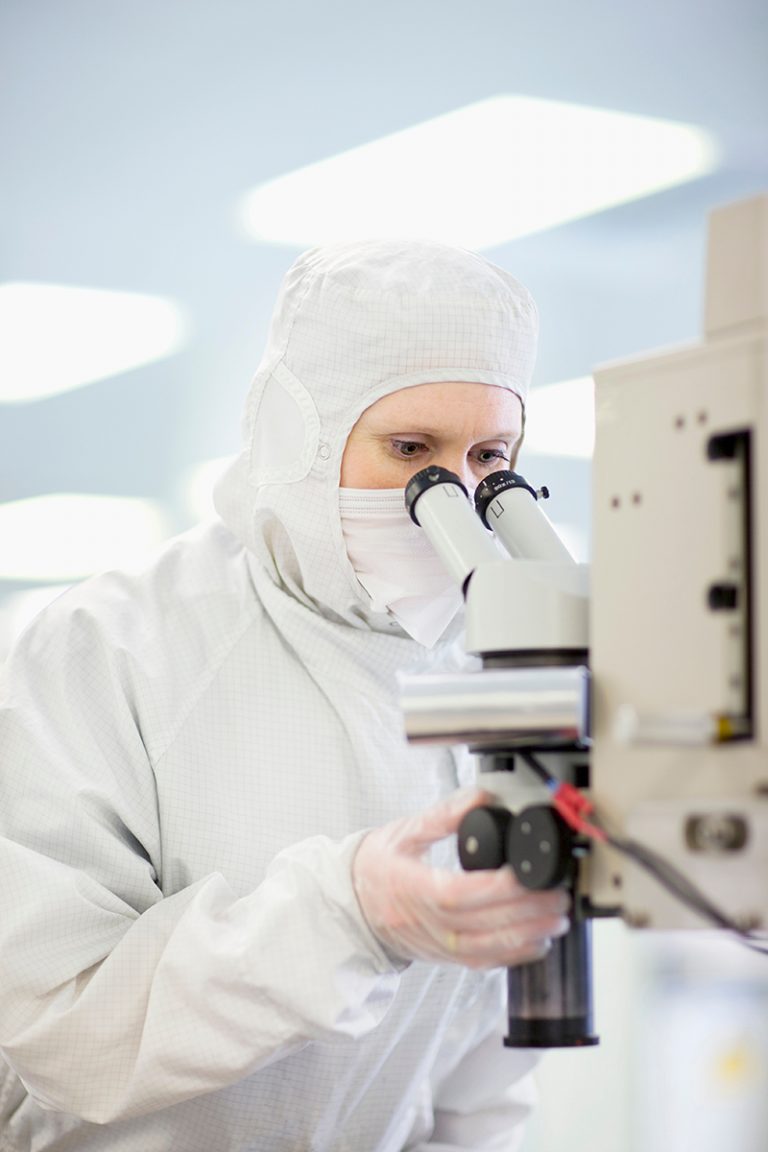
Les vêtements de travail en salle blanche ne doivent pas devenir eux-mêmes une source de poussière. Dans le même temps, cela devrait contribuer à empêcher le corps humain d’émettre de la poussière dans l’environnement contrôlé. La sélection des matériaux et la conception des vêtements affectent directement la libération de poussière, le contrôle des particules et les niveaux de colonies microbiennes dans la salle blanche.
01
Surface lisse
La texture du tissu est conçue pour être lisse, aidant à réduire la fixation des particules et l'absorption de la poussière.
02
Fonction antistatique
Le vêtement ne doit pas générer d’électricité statique qui attire la poussière et les particules.
03
Faible perte de fibres
Les vêtements de travail propres ne doivent pas perdre de fibres ou de particules lors des mouvements normaux en salle blanche.
04
Résistant à la poussière
Le vêtement ne doit pas facilement absorber ou retenir la poussière après utilisation ou pendant le transfert.
05
Changement confortable
Les vêtements de salle blanche doivent être faciles et confortables à changer pour favoriser un comportement vestimentaire correct.
06
Conception équilibrée
Les matériaux et la conception doivent favoriser la sécurité, la protection, la facilité d’utilisation et l’esthétique de la salle blanche.
Why Ultra-Clean Synthetic Long Fibers Matter
Ce vêtement étant porté en salle blanche, le tissu ne doit pas devenir une source de poussière. Les tissus ultra-propres doivent être produits à partir de fibres longues synthétisées chimiquement. Natural short fibers such as cotton, hemp and silk are not suitable for ultra-clean fabric because they are more likely to release fibers and particles.
Point de sélection du tissu
Raison
Impact sur les salles blanches
Fibres longues synthétisées chimiquement
Les fibres longues aident à réduire la perte de fibres et la génération de poussière.
Convient aux vêtements de travail en salle blanche nécessitant une faible libération de particules.
Évitez les fibres courtes naturelles
Le coton, le chanvre et la soie peuvent être confortables mais peuvent libérer plus de fibres.
Non recommandé pour les tissus ultra-propres utilisés en salle blanche.
Contrôle strict des émissions de poussière
Les filaments chimiques sélectionnés doivent être contrôlés pour les émissions de poussière.
Aide à réduire la charge de particules dans les zones de catégorie C/D.
Filament de polyester entièrement mat
Ne convient généralement pas au tissage de tissus antistatiques ultra-propres.
La sélection des tissus doit être alignée sur les besoins en matière de performances antistatiques et de salle blanche.
Lors de la sélection de vêtements pour salles blanches, le confort seul ne suffit pas. Le tissu doit également supporter une faible génération de poussière, une faible libération de particules et des performances antistatiques.
Domaines d'application recommandés
MD-1A01 convient aux programmes de vêtements de travail en salle blanche de grade C et D où les opérateurs ont besoin d'une couverture pratique, d'un changement confortable et d'une performance de tissu contrôlée.
Catégories de salles blanches applicables
Classe CClasse DAtelier propreZone d'assistance
Scénarios d'utilisation typiques
Programmes de vêtements de travail pour salles blanches de catégorie C
Zones d'atelier propres de niveau D
Zones de production contrôlées
Salles d’emballage et d’inspection
Zones de fabrication d’électronique et de précision
Vêtements quotidiens pour opérateurs de salle blanche
Produits correspondants
Le MD-1A01 peut être utilisé avec les accessoires de salle blanche correspondants pour créer un système complet de vêtements pour salle blanche pour les zones de classe C et D.
Produits utilisés ensemble
Sac à vêtements propre
Nettoyer la couverture
Chaussures pour salle blanche à liaison totale
Chaussures de sécurité
Gants antistatiques
Rappel de sélection
Le vêtement lui-même ne doit pas être une source de poussière. Les accessoires assortis doivent également suivre la même logique de salle blanche : peu pelucheux, antistatiques, faciles à nettoyer et adaptés au niveau de salle blanche cible.
MD-1A01 vs vêtements de travail pour salle blanche fendus avec fermeture éclair sur le devant
MD-1A01 doit être sélectionné lorsque les utilisateurs préfèrent un vêtement supérieur pull-over et un pantalon à chaussettes connectées au lieu d'un ensemble veste et pantalon standard à fermeture éclair sur le devant.
Point de sélection
MD-1A01 Pull à capuche Vêtements de travail
Vêtements de travail fendus à fermeture éclair sur le devant
Style haut
Type de pull à capuche.
Veste à capuche avec fermeture éclair sur le devant.
Conception de pantalons
Pantalon séparé avec chaussettes connectées.
Pantalon séparé, généralement sans chaussettes connectées.
Couverture du bas du corps
Meilleure couverture de la zone des chevilles grâce aux chaussettes connectées.
Cela dépend de l'interface de la chaussure et du brassard.
Meilleur cas d'utilisation
Utilisateurs de grade C/D ayant besoin d'un design de pull et d'une meilleure intégration au niveau des pieds.
Utilisateurs de grade C/D ayant besoin d’un pansement rapide par entrée frontale.
Raison de l'acheteur
À sélectionner lorsque les chaussettes connectées et les ouvertures inférieures réduites sont préférées.
À sélectionner lorsque la commodité de la fermeture éclair sur le devant est la priorité.
Demander des vêtements de travail à capuche pour salle blanche MD-1A01
Partagez votre qualité de salle blanche, votre domaine d’application, votre gamme de tailles préférées, vos exigences de couleur et la quantité commandée. MIDPOSI peut recommander une configuration de vêtements de travail pour salle blanche à pull à capuche MD-1A01 adaptée à votre atelier propre de grade C/D.
FAQ : Vêtements de travail à capuche pour salle blanche MD-1A01
Quelle est la structure principale du MD-1A01 ?
MD-1A01 comprend un haut pull à capuche et un pantalon séparé avec chaussettes connectées. Il est conçu pour les programmes de vêtements de travail en salle blanche de grade C et D.
En quoi le MD-1A01 est-il différent des vêtements de travail fendus à fermeture éclair sur le devant ?
Le MD-1A01 utilise un vêtement supérieur de type pull et un pantalon reliés à des chaussettes, tandis que les vêtements de travail fendus à fermeture éclair sur le devant utilisent généralement un haut de style veste et un pantalon séparé sans chaussettes reliées.
Pour quelles qualités de salle blanche ce produit est-il adapté ?
Il convient aux environnements de salles blanches de grade C et D, aux ateliers propres, aux zones de support et aux zones de production contrôlées.
Pourquoi les chaussettes connectées sont-elles utiles ?
Les chaussettes connectées aident à réduire les ouvertures exposées autour de la zone de la cheville et à améliorer la couverture du bas du corps lors des mouvements en salle blanche.
Quels produits sont utilisés avec le MD-1A01 ?
Il peut être utilisé avec des housses à vêtements propres, des housses propres, des chaussures de salle blanche à liaison totale, des chaussures de sécurité et des gants antistatiques.
Détails visibles du pull et des chaussettes connectées
Vues du produit montrant le haut à capuche et le pantalon avec des chaussettes en tissu connectées. Confirmez la taille et la configuration requises lorsque vous demandez des échantillons ou un devis.
Haut pull à capuche sans fermeture éclair sur le devantPantalon avec chaussettes en tissu doux connecté