Scegliere i panni per camere bianche per ambienti ISO 5–8 non significa trovare il prodotto “migliore” isolatamente. La scelta giusta dipende dai requisiti di controllo della contaminazione, dalla classificazione della stanza, dal protocollo disinfettante, dal metodo di sterilizzazione, dal flusso di lavoro dell'operatore e dal costo totale di proprietà.
Lo spazzolone sbagliato può contribuire a escursioni di monitoraggio ambientale, incoerenze di pulizia e problemi di audit. Specificare eccessivamente può anche far sprecare il budget per funzionalità che non sono necessarie per le aree a basso rischio. Questa guida mette a confronto le principali opzioni di pulizia per camere bianche e spiega come gli acquirenti possono creare un elenco difendibile per camere bianche farmaceutiche, biotecnologiche, per dispositivi medici e semiconduttori.
Inizia con la classe di stanza più rigorosa della tua struttura, quindi conferma se il panno deve essere sterile, autoclavabile, riutilizzabile, monouso, pre-saturato o compatibile con disinfettanti aggressivi. Il flusso di lavoro della testa dello spazzolone, del manico, del telaio e del secchio deve essere esaminato insieme come un sistema di pulizia completo.
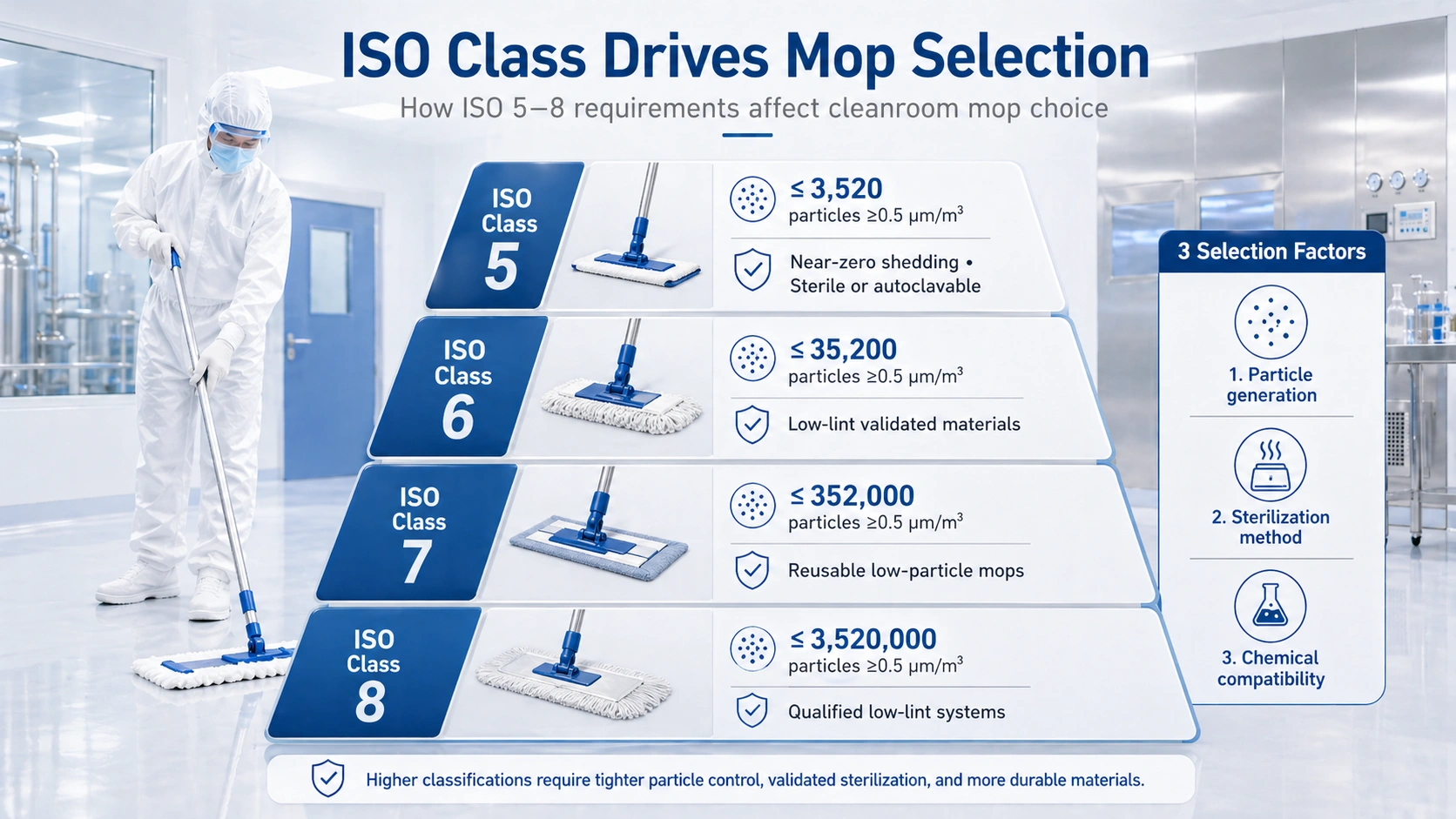
La classificazione ISO definisce le aspettative di controllo delle particelle di una camera bianca. Più rigorosa è la classe della camera bianca, minore è la tolleranza per la generazione di particelle durante la pulizia di routine. Uno spazzolone convenzionale può essere accettabile in un ufficio, ma non è adatto per ambienti classificati in cui particelle, fibre e residui possono influenzare la qualità del prodotto o i risultati del monitoraggio ambientale.
Nella scelta del panno per camera bianca, la classe ISO guida tre decisioni pratiche: quanto basso deve essere il materiale del panno, se il panno deve essere sterile o autoclavabile e quanta resistenza chimica è necessaria per il programma di disinfezione della struttura.
Uno spazzolone per camera bianca non deve diventare una fonte di particelle durante l'uso. Gli acquirenti dovrebbero verificare se la testa del mocio utilizza tessuto a basso rilascio di fibre, bordi controllati, struttura del filato durevole e imballaggio compatibile con le camere bianche. Per le aree ad alto controllo, la documentazione sulla generazione delle particelle e i registri sulla qualità dei fornitori diventano parti importanti della valutazione del fornitore.
Le aree farmaceutiche e biotecnologiche ad alto rischio possono richiedere strumenti di pulizia sterili o sterilizzabili. Ciò può significare testine per spazzoloni monouso sterilizzate a raggi gamma, testine per spazzoloni riutilizzabili autoclavabili o sistemi completi che includono spazzole compatibili manici per mop per camere bianche E telai per mop per camere bianche.
I materiali per lo spazzolone per camere bianche devono tollerare i disinfettanti utilizzati nella struttura. La microfibra, la maglia di poliestere, il nucleo in schiuma e il poliestere tipo corda si comportano tutti in modo diverso in caso di esposizione ripetuta a IPA, perossido di idrogeno, ipoclorito di sodio e altri detergenti.
Per un confronto a livello di componente, esamina MIDPOSI mocio in microfibra per camere bianche, sistema di pulizia piana per camere bianche, telai per mop E manici per scopa come gruppo di pulizia completo.
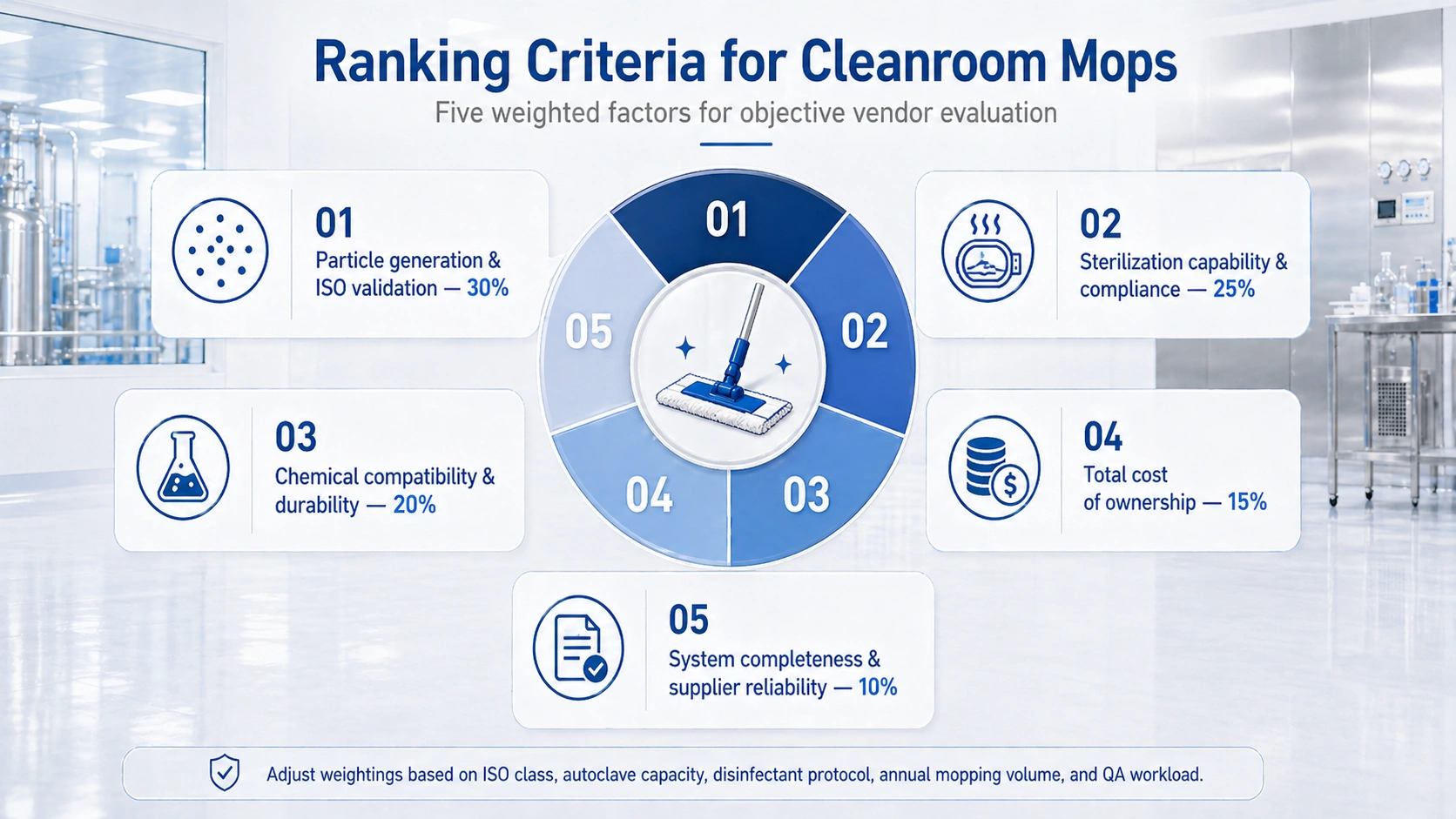
Questa guida valuta i sistemi di pulizia per camere bianche in base a cinque criteri ponderati. Questi criteri sono pensati per i team di approvvigionamento, QA, strutture e controllo della contaminazione che devono confrontare i prodotti in modo strutturato.
Consiglio per l'acquisto: non confrontare solo le teste dei lavapavimenti. Un programma qualificato di pulizia per camere bianche dovrebbe includere testine, maniglie, telai, flusso di lavoro del secchio, compatibilità dei disinfettanti e documentazione.
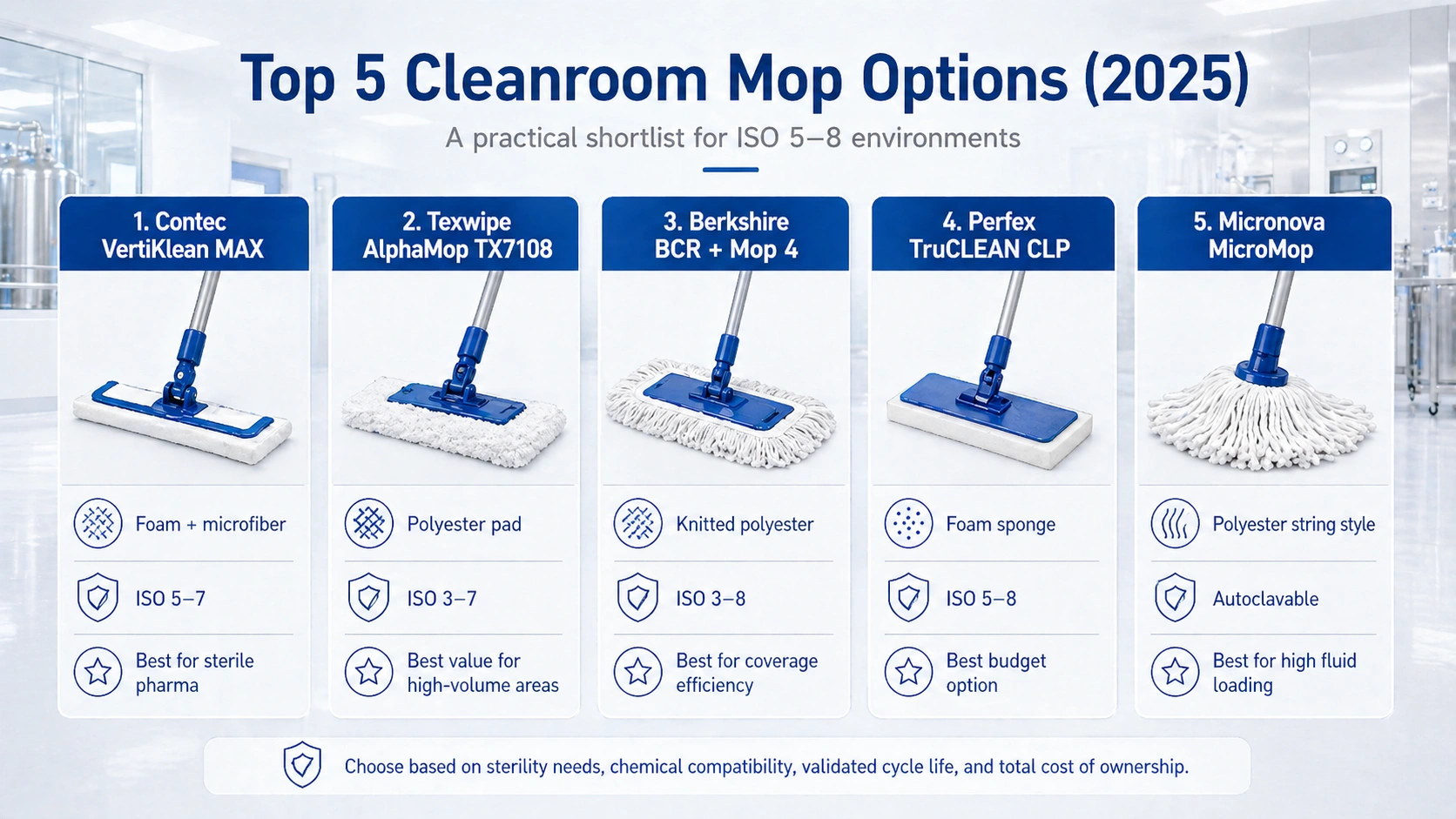
I sistemi in schiuma e microfibra di tipo Contec vengono spesso selezionati quando la documentazione, la garanzia di sterilità e la disponibilità alle verifiche contano più del costo più basso per utilizzo. Per le suite asettiche farmaceutiche, le strutture biologiche e la produzione di sperimentazioni cliniche, un sistema di consumo sterile chiavi in mano può ridurre l'onere della convalida del ritrattamento interno.
Il limite principale è il costo. Le testine per mocio presterilizzate o ad alta documentazione possono essere più costose rispetto alle alternative riutilizzabili in poliestere. Sono meglio giustificate laddove la separazione dei lotti, la tracciabilità dei lotti e la documentazione sulla sterilità hanno un valore di conformità diretto.
I sistemi di pulizia con tampone in poliestere di grande formato sono pratici per le camere bianche con volumi elevati in cui l'efficienza della copertura è importante. Sono particolarmente utili per camere di vestizione, camere di equilibrio, aree di stoccaggio dei materiali e zone di produzione controllata dove le strutture hanno già un flusso di lavoro di pulizia e ricondizionamento definito.
I sistemi di pulizia a doppia faccia sono attraenti perché aumentano la superficie di pulizia utilizzabile. Quando un lato si sporca, l'operatore può utilizzare l'altro lato prima di cambiare la testa. Ciò può ridurre i tempi di inattività e migliorare l’efficienza della copertura nelle camere bianche di grandi dimensioni.
I sistemi di pulizia con spugna in schiuma possono essere utili quando il cambio frequente fa parte della SOP. La loro capacità di assorbimento e i costi di ingresso inferiori li rendono attraenti per strutture di avvio, studi di convalida, sale di supporto o operazioni in cui si preferiscono un inventario semplice e una sostituzione frequente.
I sistemi di spazzolone in poliestere a corde possono gestire elevati volumi di liquidi e superfici irregolari. Sono spesso considerati negli ambienti controllati dell'elettronica, dei semiconduttori e di grandi aree in cui l'assorbenza e il comportamento di asciugatura sono importanti. Per le strutture che preferiscono una standardizzazione più semplice, a sistema di pulizia piana per camere bianche può fornire un flusso di lavoro più controllato.
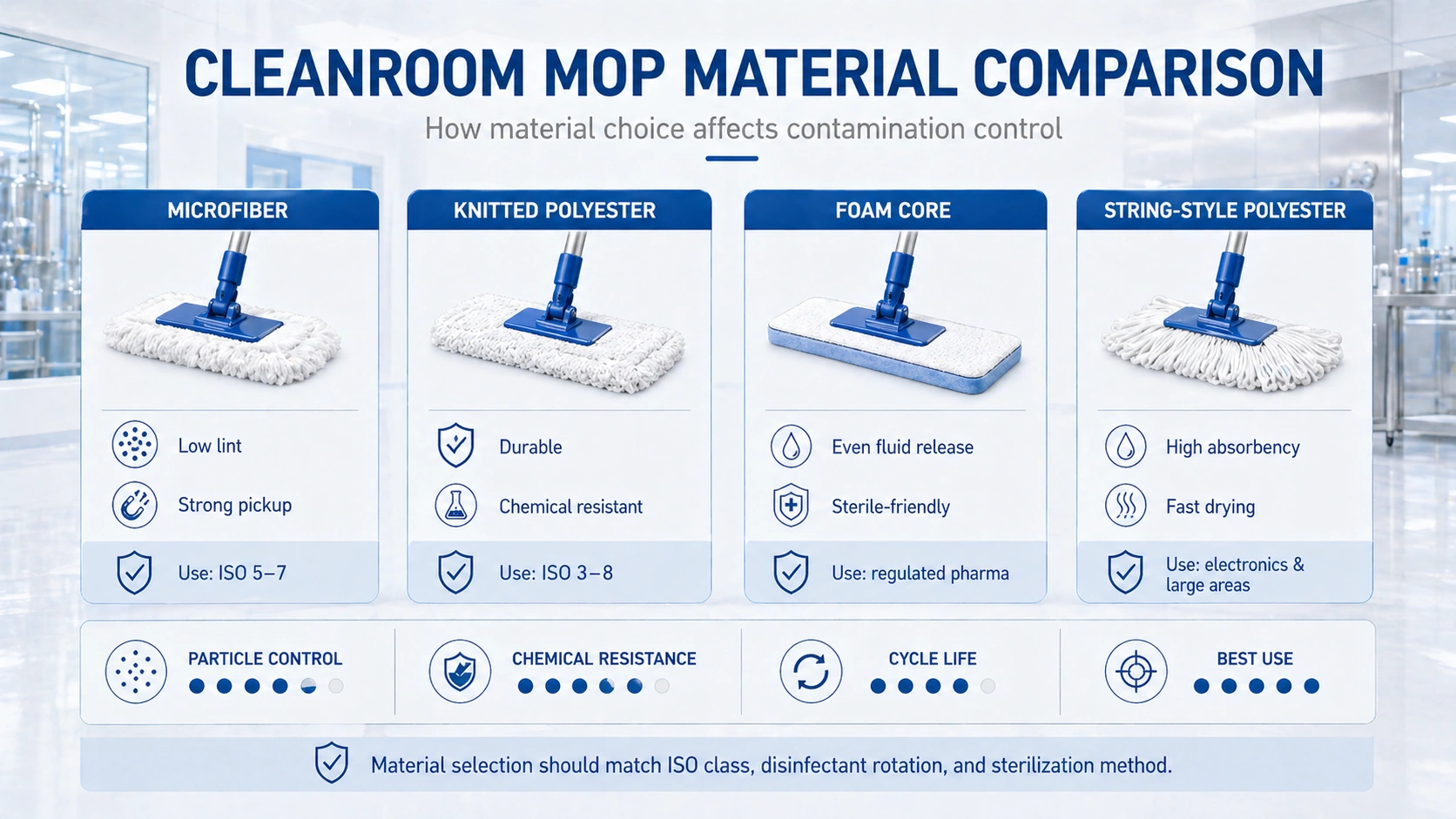
La selezione del materiale è una delle decisioni più importanti in un programma di pulizia per camere bianche. La microfibra può fornire una forte presa e un buon contatto superficiale. Il poliestere lavorato a maglia può offrire durata e resistenza chimica. Le testine per spazzoloni con nucleo in schiuma possono aiutare a garantire un rilascio uniforme dei liquidi. Il poliestere stile corda può supportare un'elevata assorbenza e un'asciugatura rapida.
| Materiale del mocio | Punti di forza | Uso comune | Attenzione dell'acquirente |
|---|---|---|---|
| Microfibra | Pochi pelucchi, presa forte, buon contatto superficiale | Pulizia ISO 5–7, pulizia di precisione e pulizia controllata dei pavimenti | Controllare la compatibilità chimica e il comportamento al lavaggio. |
| Poliestere lavorato a maglia | Durevole, resistente agli agenti chimici, adatto per programmi di pulizia ripetibili | Aree di supporto e produzione ISO 3–8 | Confermare la costruzione del bordo e la durata del ciclo. |
| Nucleo in schiuma | Rilascio uniforme del fluido e buon contatto con il bagnato | Settore farmaceutico regolamentato, applicazione di disinfettanti e flussi di lavoro sterili | Rivedere la compatibilità con gli ossidanti e la sterilizzazione ripetuta. |
| Poliestere stile corda | Elevato potere assorbente e rapida asciugatura | Elettronica, semiconduttori e pulizia di grandi superfici | Richiede un buon controllo del lavaggio e dell'asciugatura. |
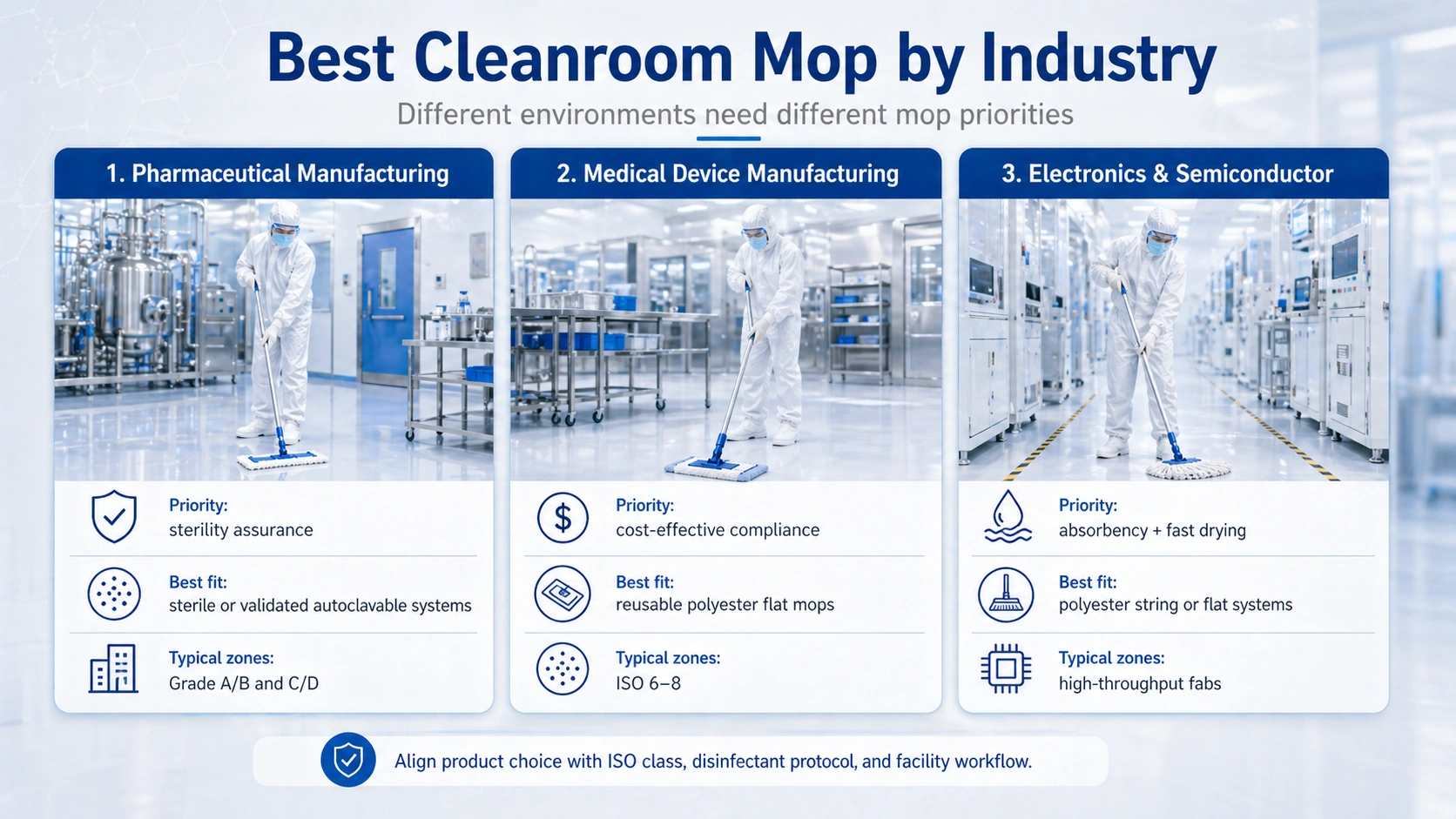
Le camere bianche farmaceutiche spesso necessitano del pacchetto di documentazione più completo. La garanzia di sterilità, la tracciabilità dei lotti, il certificato di autenticità, il controllo delle modifiche e la compatibilità dei panni con le SOP di pulizia possono essere più importanti del prezzo unitario principale. Per applicazioni farmaceutiche dettagliate, vedere soluzioni di pulizia per camere bianche farmaceutiche, Guida alla pulizia delle camere bianche GMP Allegato 1 E Guida SOP per la pulizia dei panni per camere bianche farmaceutiche.
Le strutture che producono dispositivi medici spesso necessitano di un equilibrio tra conformità, pulizia ripetibile e controllo dei costi. I sistemi di pulizia riutilizzabili possono funzionare bene quando la struttura ha definito procedure di ricondizionamento, stoccaggio e sostituzione. La compatibilità dei componenti è importante, soprattutto per telai per mop per camere bianche E manici per mop per camere bianche.
Le camere bianche per semiconduttori ed elettronica spesso danno priorità al controllo delle particelle, all'asciugatura rapida e alla copertura efficiente. Nelle fabbriche ad alta produttività, l'assorbenza del panno e la velocità dell'operatore possono influire sui tempi di fermo tra un turno e l'altro. Per questa applicazione, cfr soluzioni di pulizia per camere bianche a semiconduttori.
Le strutture biotecnologiche spesso operano in più gradi di camera bianca e tipi di processo. Sono comuni i programmi di mop ibridi: mop sterili o ad alta documentazione per aree critiche e sistemi riutilizzabili per le zone di supporto. Scopri di più da MIDPOSI Guida allo straccio per camere bianche biotecnologiche.
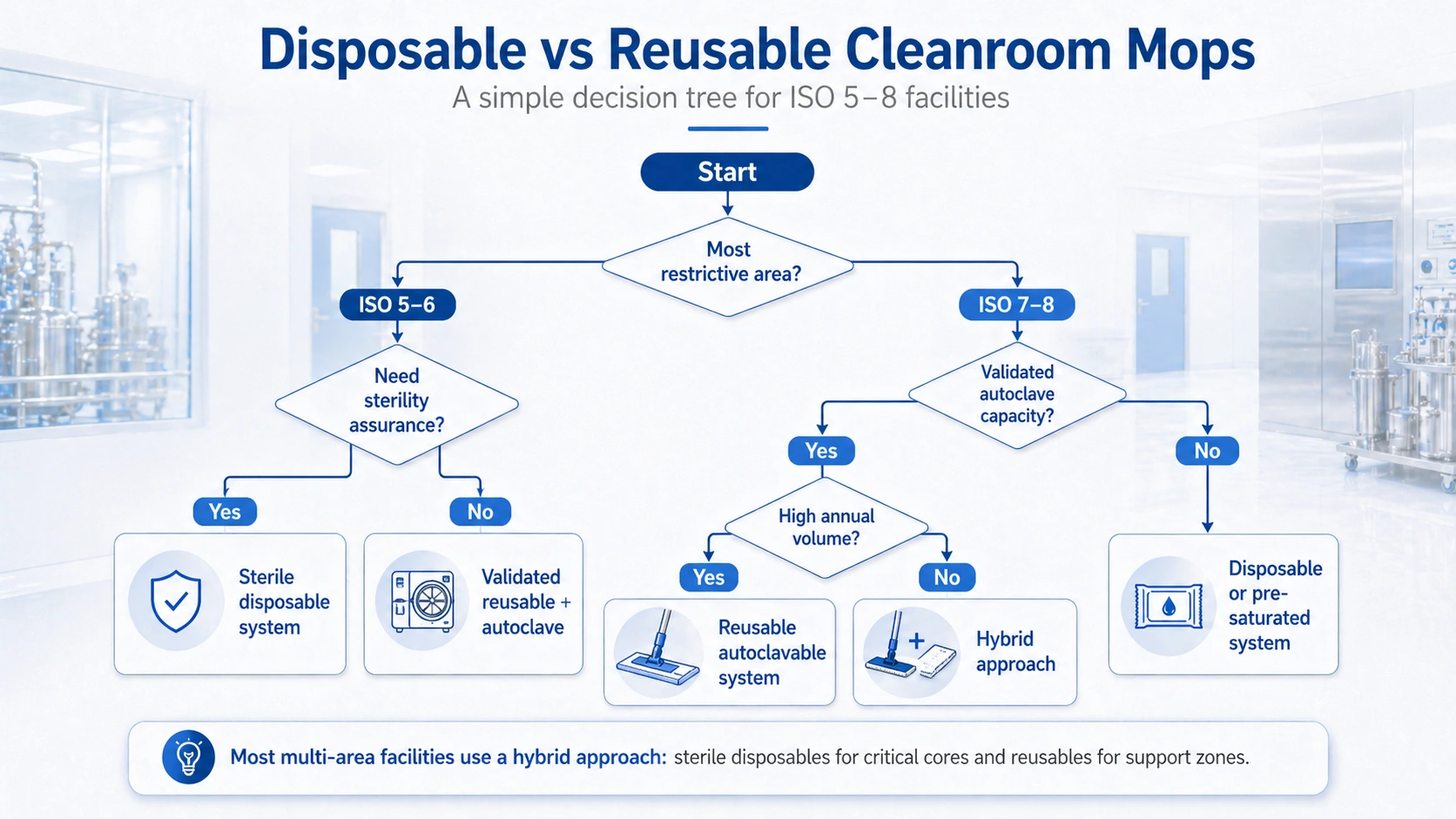
I panni monouso monouso o sterili vengono spesso selezionati quando la struttura desidera ridurre la complessità del ritrattamento, prevenire il rischio di usi incrociati o semplificare la separazione dei lotti. Sono particolarmente rilevanti per le aree farmaceutiche o biotecnologiche ad alto rischio in cui la garanzia della sterilità e la documentazione dei lotti sono importanti.
I sistemi di scopa riutilizzabili hanno senso quando la struttura dispone già di lavanderia convalidata, autoclave o capacità di ritrattamento controllato. Possono ridurre i costi a lungo termine in aree ad alto volume, soprattutto quando le testine riutilizzabili hanno un ciclo di vita documentato e sono abbinate a telai e maniglie compatibili.
La maggior parte delle strutture multiarea non necessita di una strategia di pulizia per ogni zona. Un approccio pratico consiste nell’utilizzare mop sterili o monouso nelle aree critiche e sistemi di mop riutilizzabili nelle aree di supporto. Per maggiori dettagli sulle scelte di sterilizzazione, rivedere Mop per camere bianche irradiati con raggi gamma e autoclavabili E mop sterili per camere bianche in doppio sacchetto.
I mop non funzionano in modo isolato. Il sistema completo di pulizia per camere bianche comprende la testa, il telaio, il manico, il secchio, lo strizzatoio, il codice colore e il processo di stoccaggio. Se questi componenti non sono compatibili, gli operatori potrebbero avere difficoltà a seguire la SOP in modo coerente.
I manici fissi o sigillati possono ridurre le fessure rispetto ai manici telescopici mal progettati. I telai devono corrispondere al metodo di fissaggio della testa dello spazzolone ed essere compatibili con i requisiti di pulizia, disinfezione o sterilizzazione. Per la pianificazione del sistema, cfr sistemi di pulizia piana per camere bianche, telai per mop per camere bianche E manici per mop per camere bianche.
Per i team di approvvigionamento farmaceutico, MIDPOSI fornisce anche indicazioni dedicate su come qualificare un fornitore di mop per camere bianche farmaceutiche, Documenti di convalida del mocio per camera bianca e certificato di autenticità E tracciabilità dei lotti per i panni per camere bianche farmaceutiche.
MIDPOSI fornisce sistemi di pulizia per camere bianche per ambienti farmaceutici, biotecnologici, dispositivi medici, elettronici e di produzione controllata. La nostra gamma di prodotti comprende teste per mop in microfibra, sistemi per mop piatti, telai per mop, manici per mop e componenti compatibili con le camere bianche progettati per flussi di lavoro di pulizia controllati.
Per le operazioni regolamentate, MIDPOSI può supportare i team di approvvigionamento con raccomandazioni sui prodotti, confronto dei materiali, configurazione del sistema di pulizia e documentazione per la revisione dei fornitori. Se la tua struttura necessita di un set di prodotti completo, esamina il Catalogo MIDPOSI indumenti e panni per camere bianche oppure visitare il pagina delle soluzioni di prodotto.
ISO 5 areas usually require a mop system with very low particle generation, strong documentation and either sterile supply or validated sterilization. The best choice depends on whether the facility prefers disposable sterile mops or autoclavable reusable systems.
Reusable mops can offer lower long-term cost when the facility has validated reprocessing capacity. Disposable or sterile mops can reduce reprocessing complexity and may be preferred for high-risk or batch-segregated areas.
Microfiber, knitted polyester, foam-core and string-style polyester each have different strengths. The right material depends on particle-control requirements, disinfectant compatibility, absorbency, sterilization method and cleaning surface.
No. Mop handles and frames should be selected as part of the complete mop system. Mop heads, frames, handles and bucket workflow must be compatible with the cleaning method, disinfectants, sterilization process and operator SOP.
Depending on the application, buyers may request CoA, material information, lot traceability, particle-control documentation, sterilization records, chemical compatibility information and supplier qualification documents.
Send MIDPOSI your cleanroom class, industry, disinfectant protocol, sterilization method and expected cleaning frequency. Our team can help you compare mop heads, frames, handles and complete cleaning system options for your facility.