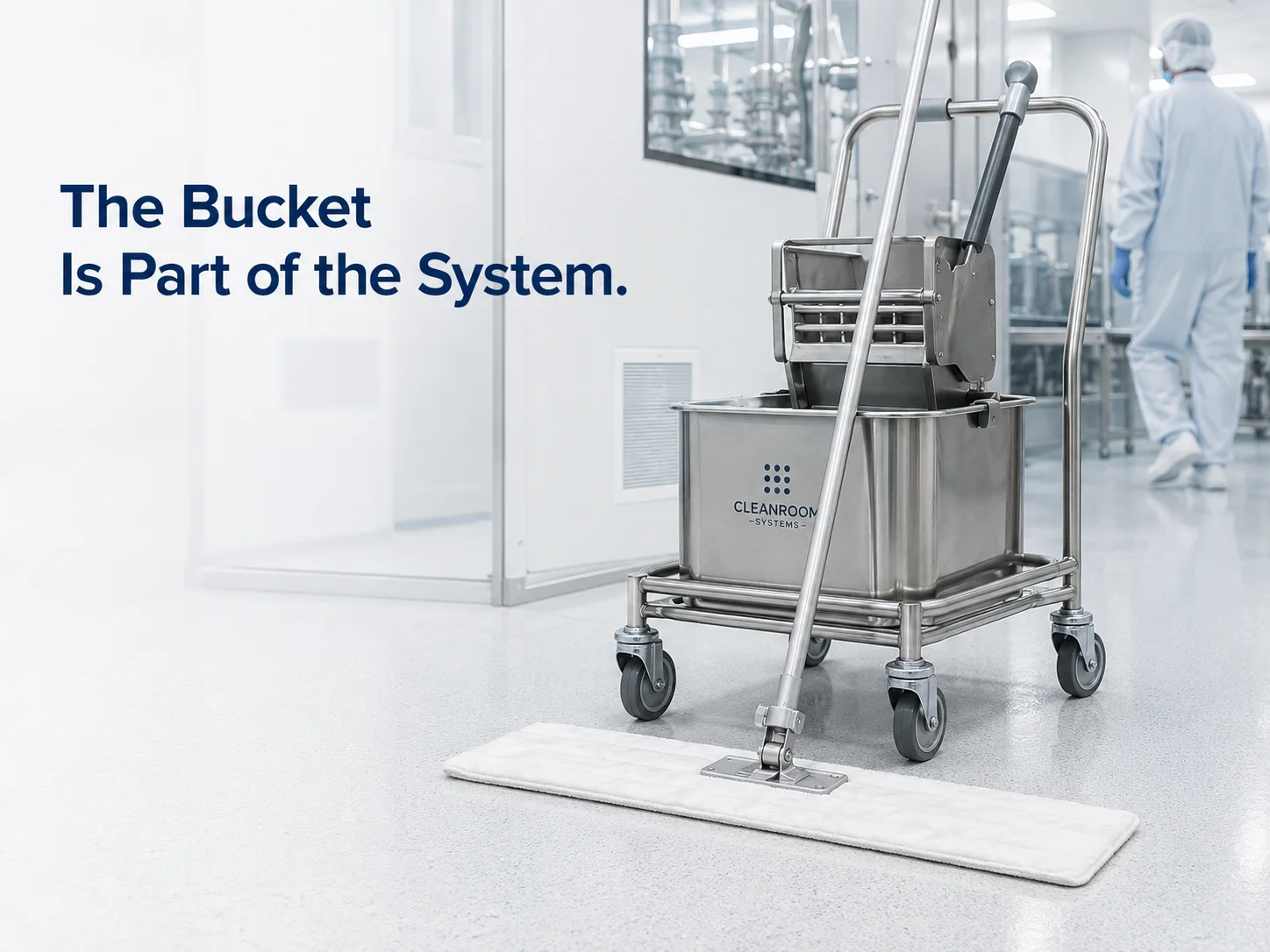
クリーンルーム モップ バケットと絞り器は、完全なモップ システムの 4 番目のコンポーネントであり、調達仕様で最も見落とされがちなコンポーネントです。モップヘッド、フレーム、ハンドルは構造化された評価を受けますが、バケツと絞り器は一般的な清掃用付属品として扱われることがよくあります。これは、モップフレームとの寸法の不一致、互換性のないバケット材料からの粒子の排出、洗浄の一貫性を損なう未検証の溶液管理システムなど、運用上の影響を伴う仕様エラーです。このガイドでは、他の 3 つのコンポーネントに適用されるのと同じ厳密さでバケットと絞りシステムを評価するための選択基準を提供します。
クリーンルームグレードのバケットおよび絞り器と、汎用の清掃用バケットとを区別する 3 つの基準があります。 材料 (ステンレス鋼または検証済みのクリーンルーム対応ポリマー - 粒子を放出する未処理のプラスチックではない)、 寸法互換性 (絞り器の開口部はモップのフレーム幅と一致する必要があり、バケットの深さはフレームの形状に対応する必要があります)、および ソリューション管理能力 (システムは、検証されたソリューションの準備、変更頻度、および廃棄をサポートする必要があります。オペレーターの裁量に任されてはなりません)。これら 3 つの基準のいずれかを満たさないバケットは、文書化および管理されるクリーニング プロトコルに未検証の変数を導入します。
| 特徴 | 管理用バケツ | クリーンルームグレードのバケット |
|---|---|---|
| 材料 | 未処理のプラスチック (PE、PP) – 粒子が落ちたり、化学薬品を吸収したり、表面の細孔に汚染が残ったりする可能性があります | 304/316 ステンレス鋼または検証済みのクリーンルーム用ポリマー - 滑らかで脱落がなく、耐薬品性のある表面 |
| 絞り器の互換性 | 一般的な開口部 - クリーンルームモップのフレーム幅と一致しない場合があります。絞る際の圧力が均一ではありません。 | 特定のフレーム幅に合わせた絞り開口部。溶液除去中にモップヘッド全体に圧力が均等に分散されます。 |
| ソリューション管理 | ボリュームマークはありません。ソリューションの変更はオペレーターの裁量に任されています。 | 段階的なボリュームのマーキング。清掃エリアの範囲に合わせて容量を定義。クリーン/ダーティ分離のためのデュアルバケットオプション。 |
| 表面仕上げ | 粗いまたはざらざらした – 残留物があり、きれいであることを確認するのが困難 | 滑らかで隙間がありません。表面粗さ(Ra値)を規定。洗浄可能で目視検査可能。 |
| ドキュメンテーション | なし | 材料証明書、寸法仕様、表面仕上げに関する文書、化学的適合性に関する声明 |
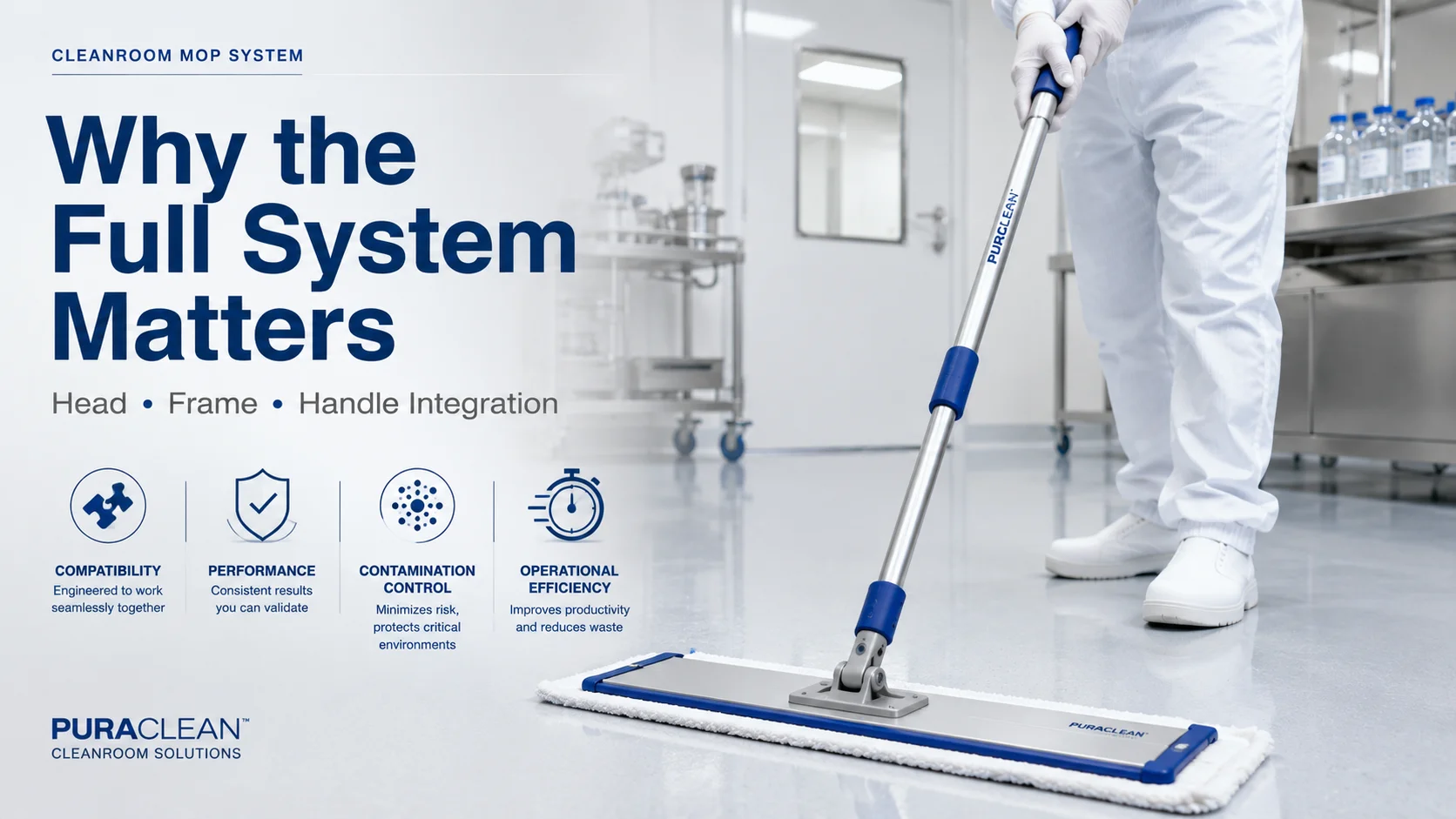
コンポーネントの互換性が重要である理由に関する、より広範なシステムレベルの議論 (ヘッドからフレームへのインターフェイスやハンドルからフレームへのインターフェイスなど) については、 フルクリーンルームモップシステムが重要な理由 ガイド。基本的な概要については、を参照してください。 クリーンルームモップシステムの概要.
クリーンルームで使用される汎用の清掃用バケツは、最適ではないだけでなく、残りの洗浄プロトコルが制御するように設計されている汚染ベクトルを積極的に導入します。次の 4 つの障害モードは、バケットの仕様が重要である理由を説明しています。
未処理のプラスチック製バケツの表面には、撹拌すると粒子が放出される微細な凹凸があり、洗浄液を入れたバケツは使用中常に撹拌されます。プラスチックの表面も時間の経過とともに摩耗し、さらなる粒子が発生します。粒子数が監視されるグレード B のクリーンルームでは、粒子を排出するバケットが調査のきっかけとなる環境監視のエクスカーションの発生源となる可能性があります。また、バケットが最初に検査される変数であることはほとんどありません。
一部のプラスチックは、酸化性消毒剤 (過酸化水素、過酢酸) に長時間接触すると劣化します。殺胞子溶液を8時間保管したバケツでは、目に見えない表面劣化が起こる可能性がありますが、化学副生成物が洗浄溶液に放出され、有効な消毒剤の濃度が変化し、洗浄された表面に残留物が残る可能性があります。
多孔質またはテクスチャーのあるプラスチック表面には、微細な隙間に残留物が残ります。使用の合間にバケツを「洗浄」すると、目視検査では表面がきれいであることがわかりますが、綿棒検査では、残留消毒剤、洗浄剤、または表面の細孔内の微生物汚染が明らかになる可能性があります。次の使用までにクリーンであることを検証できないバケットは、クリーンルーム対応ツールではありません。
洗浄プロトコルをレビューする監査人は、「洗浄液コンテナの仕様は何ですか?」と尋ねます。答えが「標準的な管理用バケツ」、材料仕様書、寸法文書、洗浄性検証がない場合、監査人は汚染管理プログラムのギャップを特定したことになります。この 1 つの質問が、すべての未検証のクリーニング消耗品の広範なレビューに発展する可能性があります。 GMP グレード固有のツール要件については、 GMPクリーンルームモップグレード選択ガイド.
| 材料 | 学年 | クリーンルーム適合性 | 主な考慮事項 |
|---|---|---|---|
| ステンレス鋼316 | プレミアム | グレードA/B/C/D | 最高の耐薬品性 (モリブデン含有により塩化物の孔食に耐性があります)。オートクレーブ可能。滑らかで抜け落ちない表面。最高コスト。化学物質への曝露が最も激しいグレード A/B の無菌環境に適しています。 |
| ステンレス304 | 標準 | グレードC/D;グレード A/B をケースバイケースで評価 | ほとんどのクリーンルーム消毒剤に対して優れた耐薬品性。オートクレーブ可能。 316 よりもコスト効率が高くなります。塩素ベースの消毒剤に長時間さらされると、塩化物による孔食が発生しやすくなる可能性があります (いずれにしても、クリーンルームの清掃では通常は避けるべきです)。 |
| ポリプロピレン/HDPE | 許容可能 (検証された場合) | グレード C/D (サプライヤー検証あり) | ステンレス製に比べて軽量です。低コスト。特定のグレードについては粒子の脱落がないことを検証する必要があります。化学的適合性は、施設の特定の消毒剤と検証する必要があります。オートクレーブ不可 - 滅菌オプションが制限されます。表面の状態は時間の経過とともに劣化します。ステンレスに比べて寿命が短い。 |
| 亜鉛メッキ/塗装スチール | 受け入れられない | クリーンルーム内では使用しないでください | 亜鉛コーティング(亜鉛メッキ)は一般的な消毒剤によって腐食します。ペイントチップは粒子状の汚染物になります。表面はクリーンルーム対応であることを検証できません。 |
ステンレス鋼は、GMP 環境におけるクリーンルームのバケットおよび絞りシステムに推奨される材料です。プラスチックよりも優れた材料であることは、より長い耐用年数 (ステンレス鋼は化学物質に繰り返しさらされても劣化しません)、オートクレーブ滅菌可能 (必要に応じて社内滅菌に対応)、および文書化可能な表面仕上げ (Ra 値を指定および確認できる) によって正当化されます。コストが主な制約で化学物質への曝露がそれほど激しくないグレード C/D サポート ゾーンの場合、サプライヤーが粒子排出性能と化学的適合性を文書化できる場合、検証済みのクリーンルーム グレードのポリマーが代替品として評価される場合があります。
絞り器は、各パスの前にモップヘッドから除去される溶液の量、つまり床に適用される溶液の量を制御します。これは、消毒剤の接触時間、床の乾燥時間、および洗浄の一貫性に直接影響します。絞り器のタイプは、入手可能かどうかではなく、洗浄プロトコルの要件に基づいて選択する必要があります。
| タイプ | 仕組み | 最適な用途 | 制限事項 |
|---|---|---|---|
| プレス式 | オペレーターはモップヘッド (フレーム上にあるまま) を平らなプレートまたは湾曲したプレートに押し付けます。機械的な圧力によって溶液が絞り出されます。 | 軽度から中程度の使用。シンプルなソリューション管理要件を持つ施設。メンテナンスの軽減 – 可動部品が少ない。 | 溶液除去の一貫性はオペレーターの技術に依存します。適用される圧力はオペレーターごとに、またシフトによって異なります。ローラータイプに比べて安定性が劣ります。 |
| ローラー式 | モップヘッドは 2 つのローラーの間を通過し、オペレーターがモップを引き抜くと溶液が絞り出されます。 | オペレーターやシフト全体で一貫した溶液の除去が必要な施設。より大容量のクリーニング プログラム。 | 可動部品が増える - ローラーとベアリングにはメンテナンスが必要です。ローラー圧力は定期的に校正および検証する必要があります。プレス式に比べイニシャルコストが高い。 |
| ハンズフリー/足踏み式 | オペレーターはフットペダルで絞り器を作動させ、溶液に手を近づけないようにしてください。モップヘッドは機械的にプレスまたは転がされます。 | オペレーターが洗浄液に触れるグレード A/B の無菌環境は最小限に抑える必要があります。厳格な従業員の衛生プロトコルを備えた施設。 | 最高の複雑さ。ペダルと絞り器の間の機械的な連動にはメンテナンスが必要です。コストが高くなります。グレード C/D 環境では必要ない場合があります。 |
絞り器の開口部の幅はモップのフレーム幅と一致する必要があります。絞りの開口部が狭すぎるとフレームが受け入れられず、オペレーターはモップヘッドをまったく絞ることができません。絞り器の開口部が広すぎると、不均一な圧力がかかります。モップヘッドの中央が端よりも強く絞られ、フレームの端に過剰な溶液が残り、床の濡れが不安定になり、消毒剤の接触時間が変動します。絞り器を指定する前に、フレーム幅を確認してください。 クリーンルームモップのフレームタイプ 仕様を確認し、モップヘッドを取り付けた状態で絞りの開口部がその幅に対応していることを確認してください。
シングルバケットシステムには、洗浄液のリザーバーが 1 つあります。オペレーターがモップをかけていると、溶液は床からの残留物で徐々に汚染されていきます。洗浄セッションの終わりに近づくにつれて、オペレーターはますます汚染された溶液を表面に適用します。これにより残留物が残り、洗浄効果が低下する可能性があります。デュアルバケットシステムは、きれいな溶液 (1 つのバケット) と汚れた溶液 (絞り器が排出するもう 1 つのバケット) を分離します。モップヘッドは汚れた溶液のバケツですすぎ、絞られ、次に 2 番目のバケツからきれいな溶液が再びロードされます。デュアルバケットシステムは、洗浄セッション全体を通じて溶液の品質を維持するため、GMP 洗浄に推奨されます。
バケットの容量は、おおよそのサイズで選択するのではなく、洗浄エリアの範囲と溶液の塗布量に基づいて計算する必要があります。一般的な式:
1回の交換に必要な液量=洗浄面積(㎡)×塗布量(L/㎡)
溶液の適用速度は、モップヘッドの材質、消毒剤の種類、必要な接触時間によって異なり、洗浄の検証中に確立する必要があります。バケットの容量は、指定された洗浄領域を完了する前にオペレーターが溶液を使い果たさないように、この容量に作業マージン (通常は +20%) を加えたものを収容する必要があります。バケットが小さすぎる場合、オペレーターは洗浄を中断して補充する必要があり、これによりプロセスの逸脱が生じます。バケットが大きすぎる場合、ソリューションは検証された耐用年数を超えて未使用のままになる可能性があります。
洗浄 SOP では、溶液をいつ変更するかを定義する必要があり、オペレーターの裁量に任せることはできません。検証されたトリガーには、定義された面積 (m²) の後、定義された部屋数の後、目に見える汚れが観察されたとき、または定義された時間間隔 (ソリューションが検証された耐用年数がある場合) が含まれます。溶液の準備の検証をサポートするために、バケットには段階的な容量のマークが付いている必要があります。オペレーターは「約これくらい」ではなく、定義されたマークまで充填します。
バケツ、絞り器、モップハンドルの収納部をステンレス製カートに一体化。オペレーターは 1 台のユニットを洗浄エリア内で押します。固定バケットに戻ることはありません。モップヘッドは交換用の台車に乗せて運ばれます。
バケットと絞り器を固定ユニットとして使用します。オペレーターはバケットの位置に戻り、モップヘッドを絞って再装填します。
台車搭載型かスタンドアロン型かの決定は、清掃ゾーンごとの床面積、シフトごとのゾーン数、オペレーター数、廊下のアクセスのしやすさによって決まります。オープンな生産スイートを備えた大規模施設では、トロリー システムのメリットが得られます。廊下が狭い複数の部屋の施設では、部屋ごとに独立したバケットの方が実用的である可能性があります。
バケットと絞り器は、他のクリーンルーム用ツールと同様に、GMP 環境での目的への適合性を示す文書によってサポートされる必要があります。以下の文書をサプライヤーに要求する必要があります。
For the complete supplier documentation framework covering all mop system components, see the クリーンルームモップの検証書類 ガイド。
施設は、認定サプライヤーからクリーンルーム モップのヘッドとフレームを指定し、清掃用品カタログからバケットを購入します。バケツは粒子を落とし、プラスチックは殺胞子性消毒剤と適合せず、絞り器の開口部はフレームの幅と一致しません。最も厳密に検証された洗浄プロトコルで最も慎重に指定されたモップヘッドは、検証されていないバケットによって損なわれます。
修正: バケットと絞り器は、清掃員が個別に購入するのではなく、モップ システムの調達の一部として指定します。モップのサプライヤーがバケット/絞りシステムを提供していない場合は、文書化された材料仕様と寸法互換性を備えたクリーンルームグレードの代替品を評価してください。
The bucket is ordered. The frame is ordered. No one verified that the frame fits through the wringer opening. The operator discovers this on the first day of use — and either forces the frame through (damaging the mop head or wringer) or skips the wringing step (applying excess solution to the floor). Both outcomes are protocol deviations.
修正: Before procurement, verify the wringer opening width against the frame width with the mop head mounted. Document this verification. If the mop system supplier offers a matched bucket/wringer, this verification is the supplier’s responsibility — confirm it is included in the system specification.
The procurement specification says “bucket and wringer” with no mention of wringer type. The supplier provides the least expensive option — a basic press-type wringer. The facility’s cleaning protocol requires consistent solution removal for validated disinfectant contact time. The press-type wringer produces variable results depending on operator technique — some operators press harder than others, and the same operator presses differently at the beginning and end of a shift. The validated contact time assumes consistent solution application, which the specified wringer does not deliver.
修正: Specify the wringer type (press, roller, or hands-free) in the procurement document. If the cleaning protocol requires validated solution removal consistency, a roller-type wringer provides more reproducible results than press-type. Match the wringer type to the protocol’s requirements, not to the lowest-cost option.
The mop heads arrive with COA, material certificates, and sterility documentation. The bucket arrives with a packing slip. During an audit, the cleaning tool documentation package is complete for heads, frames, and handles — and empty for the bucket and wringer. The auditor asks: “What is this bucket made of? Is it compatible with your disinfectants? Has its cleanability been validated?” The answers are not documented.
修正: Request material certification, dimensional specifications, and chemical compatibility documentation for the bucket and wringer — the same documentation standard applied to the other mop system components. Include these documents in the cleaning tool documentation binder.
General-purpose janitorial buckets are typically made from untreated plastics that shed particles when agitated, may be chemically incompatible with cleanroom disinfectants, have porous surfaces that harbor contamination, and lack the dimensional specifications needed to verify compatibility with the mop frame. In a GMP environment, every tool that contacts the cleaning solution or the cleaned surface is part of the validated cleaning protocol — an unvalidated bucket introduces an uncontrolled variable.
Stainless steel — 316 for Grade A/B environments with the most aggressive chemical exposure, 304 for Grade C/D environments. Stainless steel provides a smooth, non-particle-shedding surface, chemical resistance to common cleanroom disinfectants, autoclavability, and documentable surface finish (Ra values). Validated cleanroom-grade polymers (polypropylene, HDPE) may be evaluated for Grade C/D zones where cost is a primary constraint, provided the supplier can document particle shedding performance and chemical compatibility.
If the wringer opening is too narrow, the frame cannot be inserted — the mop head cannot be wrung. If the wringer opening is too wide, pressure is uneven — the center of the mop head is wrung more than the edges, creating inconsistent solution application and variable disinfectant contact time across the floor surface. The wringer opening width must be verified against the frame width before procurement. The specification should come from the mop system supplier as a matched set, not from independent measurement.
Dual-bucket systems are preferred for GMP cleaning. They separate clean solution from dirty solution — the mop head is rinsed in the dirty-solution bucket, wrung, and re-loaded with clean solution from the second bucket. This maintains solution quality throughout the cleaning session and prevents the progressive application of increasingly contaminated solution to cleaned surfaces. Single-bucket systems may be acceptable for small-area cleaning with frequent solution changes, but the solution change frequency must be defined and validated — not left to operator discretion.
Bucket capacity should be calculated as: cleaning area (m²) × solution application rate (L/m²) + 20% working margin. The solution application rate depends on the mop head material, disinfectant type, and required contact time — and should be established during cleaning validation. The bucket must hold enough solution to complete the designated cleaning area without refilling. Undersized buckets force mid-cleaning refills (process deviation). Oversized buckets may result in solution sitting unused beyond its validated use-life.
Trolley-mounted systems are best for large-area cleaning (corridors, production suites) where reducing operator trips improves productivity. Standalone buckets are best for small-area or zone-specific cleaning (individual rooms) where a trolley would be impractical or where dedicated buckets per zone reduce cross-contamination risk. The decision depends on floor area per zone, operator count, and corridor accessibility.
Stainless steel buckets and wringers can be autoclaved — this is one of the advantages of stainless steel over polymer alternatives. The autoclave compatibility should be confirmed by the supplier, including maximum temperature and cycle type. Polymer buckets are generally not autoclavable — they may warp or degrade at autoclave temperatures. If in-house sterilization of cleaning equipment is required, stainless steel is the appropriate material choice.
At minimum: material certification (mill test report or composition statement for stainless steel), dimensional specifications (capacity, wringer opening width, overall dimensions), surface finish documentation (Ra value for stainless steel), chemical compatibility statement with common cleanroom disinfectants, and autoclave compatibility confirmation if sterilization is required. This documentation should be included in the cleaning tool documentation binder alongside the documentation for mop heads, frames, and handles.
Specify your mop frame dimensions, cleanroom grades, and cleaning solution management requirements. MIDPOSI provides cleanroom-grade stainless steel bucket and wringer recommendations with material certifications for audit documentation.
入手可能なドキュメントは製品構成によって異なる場合があります。すべての問い合わせに標準の技術文書が提供されます。
{
「@context」: 「https://schema.org」、
「@グラフ」: [
{
“@type”: “記事”,
“headline”: “Cleanroom Mop Bucket and Wringer Systems — A Selection Guide for GMP Facilities”,
“description”: “How to select cleanroom mop bucket and wringer systems. Covers stainless steel materials, wringer types, frame compatibility, capacity planning, and validation documentation for GMP facilities.”,
"著者": { "@type": "組織", "名前": "MIDPOSI" },
"発行者": { "@type": "組織", "名前": "MIDPOSI", "url": "https://midposi.com/" },
“datePublished”: “{{DATE_PUBLISHED_PENDING}}”,
“dateModified”: “{{DATE_MODIFIED_PENDING}}”,
“mainEntityOfPage”: { “@type”: “WebPage”, “@id”: “https://midposi.com/cleanroom-mop-bucket-wringer-selection-guide/” },
“image”: “https://midposi.com/wp-content/uploads/2026/02/cleanroom-mop-system-stainless-steel-trolley.webp”,
“articleSection”: “Cleanroom Mop System Components”,
“keywords”: “cleanroom mop bucket wringer, stainless steel cleanroom bucket, GMP cleaning bucket, cleanroom wringer system”
}、
{
“@type”: “FAQページ”,
“メインエンティティ”: [
{ “@type”: “Question”, “name”: “Why can’t a general-purpose janitorial bucket be used in a GMP cleanroom?”, “acceptedAnswer”: { “@type”: “Answer”, “text”: “General-purpose janitorial buckets are typically made from untreated plastics that shed particles, may be chemically incompatible with cleanroom disinfectants, have porous surfaces, and lack dimensional specifications. An unvalidated bucket introduces an uncontrolled variable into the validated cleaning protocol.” } },
{ “@type”: “Question”, “name”: “What is the preferred material for cleanroom bucket and wringer systems?”, “acceptedAnswer”: { “@type”: “Answer”, “text”: “Stainless steel — 316 for Grade A/B, 304 for Grade C/D. Provides smooth, non-shedding surface, chemical resistance, autoclavability, and documentable surface finish. Validated cleanroom-grade polymers may be evaluated for Grade C/D where cost is a primary constraint.” } },
{ “@type”: “Question”, “name”: “How does wringer-to-frame compatibility affect cleaning workflow?”, “acceptedAnswer”: { “@type”: “Answer”, “text”: “A wringer opening too narrow prevents frame insertion. Too wide creates uneven pressure and inconsistent solution application. The wringer opening width must be verified against frame width before procurement — ideally as a matched set from the mop system supplier.” } },
{ “@type”: “Question”, “name”: “Single-bucket or dual-bucket — which is appropriate for GMP cleaning?”, “acceptedAnswer”: { “@type”: “Answer”, “text”: “Dual-bucket systems are preferred for GMP cleaning. They separate clean and dirty solution, maintaining solution quality throughout the session. Single-bucket may be acceptable for small-area cleaning with frequent, validated solution changes.” } },
{ “@type”: “Question”, “name”: “How is bucket capacity determined for a specific cleaning area?”, “acceptedAnswer”: { “@type”: “Answer”, “text”: “Capacity = cleaning area (m²) × solution application rate (L/m²) + 20% margin. The application rate depends on mop material, disinfectant type, and contact time — established during cleaning validation. The bucket must hold enough solution to complete the designated area without refilling.” } },
{ “@type”: “Question”, “name”: “Trolley-mounted or standalone bucket — when does each make sense?”, “acceptedAnswer”: { “@type”: “Answer”, “text”: “Trolley-mounted: large-area cleaning where reducing operator trips improves productivity. Standalone: small-area or zone-specific cleaning where trolleys are impractical or dedicated buckets per zone reduce cross-contamination risk.” } },
{ “@type”: “Question”, “name”: “Can bucket and wringer systems be autoclaved?”, “acceptedAnswer”: { “@type”: “Answer”, “text”: “Stainless steel buckets and wringers can be autoclaved — confirmed by supplier for specific temperature and cycle type. Polymer buckets are generally not autoclavable and may warp or degrade at autoclave temperatures.” } },
{ “@type”: “Question”, “name”: “What documentation should a bucket/wringer supplier provide?”, “acceptedAnswer”: { “@type”: “Answer”, “text”: “Material certification, dimensional specifications (capacity, wringer width, overall dimensions), surface finish documentation (Ra value for stainless steel), chemical compatibility statement, and autoclave compatibility confirmation if required.” } }
】
}、
{
“@type”: “パンくずリスト”,
「アイテムリスト要素」: [
{ “@type”: “ListItem”, “position”: 1, “name”: “Home”, “item”: “https://midposi.com/” },
{ “@type”: “ListItem”, “position”: 2, “name”: “Blog”, “item”: “https://midposi.com/blog/” },
{ “@type”: “ListItem”, “position”: 3, “name”: “Cleanroom Mop Bucket and Wringer Guide”, “item”: “https://midposi.com/cleanroom-mop-bucket-wringer-selection-guide/” }
】
}
】
}