クリーンルーム モップ フレームの材質と関節 — 詳細な選択ガイド
フレームの材質グレードと関節タイプは、洗浄圧力分布、消毒時の化学的適合性、オートクレーブの耐久性、壁から隅までの到達範囲を直接決定します。このガイドでは、クリーンルーム モップ システムのコンポーネントを評価する施設エンジニア、調達マネージャー、QA レビュー担当者向けに設計された選択マトリックスを使用して、SS 304、SS 316、アルミニウム、および複合フレームのオプションを固定、スイベル、ヒンジ付き関節機構と併せて詳細に説明します。
簡単な回答
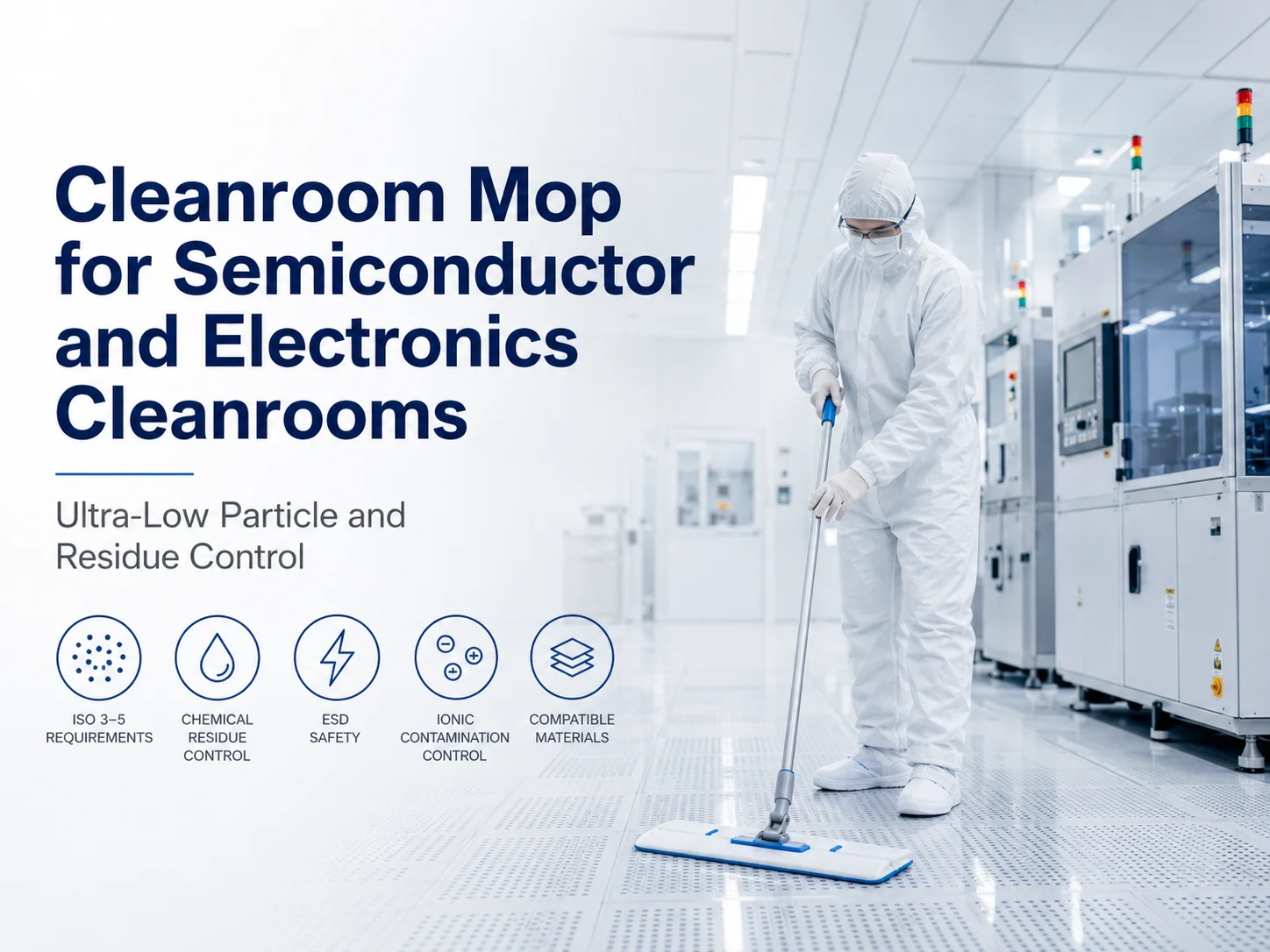
クリーンルーム モップ フレームは、オペレータが加えた力をハンドルからモップ ヘッドに伝達し、清掃面に対してモップ パッドを所定の位置に保持し、ヘッドが旋回して角、壁、凹凸のある表面に到達できるかどうかを決定する剛性の構造コンポーネントです。フレームの材質 (通常は SS 304、SS 316、アルミニウム、または複合材/ポリマー) は、耐薬品性、オートクレーブ耐性、腐食リスク、およびシステム全体の重量に直接影響します。フレームの関節動作 (固定、回転、またはヒンジ付き) によって、ハンドルと清掃面の間の可動範囲が決まります。これは、塗装範囲の均一性、隅へのアクセス、オペレーターの疲労、床のみの清掃ワークフローと壁と天井の清掃ワークフローの適合性に影響します。
選択の決定は表面的なものではありません。繰り返し VHP にさらされると腐食するフレーム素材、または壁と床の接合部に到達できない関節タイプは、GMP 洗浄プログラム全体を損なう可能性があります。設備エンジニアによる評価 クリーンルームモップシステムの概要 コンポーネント、材料グレードのコストのトレードオフを比較する調達チーム、および洗浄ツールの互換性を監査する QA 関係者は、フレームの選択を、定義された選択基準を備えた構造化されたエンジニアリング上の決定として扱う必要があります。
フレームの選択がアクセサリの選択ではなく、エンジニアリング上の決定である理由
多くの調達会話では、モップのフレームは最も戦略的ではないコンポーネント、つまり「パッドを保持しているだけ」の部品として扱われます。これは高くつく誤解です。フレームは、洗浄システムにおける力伝達リンクです。オペレーターが加えたあらゆるニュートンの圧力は、清掃面に到達する前にフレームを通過します。フレーム素材が過度に曲がったり、消毒剤にさらされて腐食したり、施設が選択した滅菌サイクルに耐えられない場合は、フレーム全体が クリーンルームモップのフレームタイプ 投資が危うくなる。
フレームの選択を重要な決定にする 4 つの具体的な技術的側面を考慮してください。
1. 圧力分布の均一性。 荷重がかかるとフレームが曲がったり歪んだりすると、パッドと表面の接触が不均一になります。これにより、洗浄圧力が不均一になり、完全な機械的作用を受ける領域もあれば、洗浄が不十分な領域もあります。粒子除去の一貫性が監査される ISO 5 / GMP グレード A ゾーンでは、フレームの剛性が汚染制御の変数となります。
2. 消毒時の化学的適合性。 クリーンルーム用モップのフレームは、床や表面に使用されるのと同じ消毒剤、つまり過酸化水素 (VHP)、第四級アンモニウム化合物、次亜塩素酸ナトリウム、過酢酸、イソプロピル アルコールにさらされます。各材料グレードの反応は異なります。 SS 304 フレームは、ほとんどの一般的なクリーンルーム消毒剤に耐えます。アルミニウムフレームは、塩素系薬剤の下では穴が開いたり、腐食したりする可能性があります。複合フレームは溶剤に長時間さらされると吸収または劣化する可能性があります。フレームは、洗浄作業だけでなく、施設の化学薬品による消毒プログラムにも耐える必要があります。
3. 滅菌サイクルの生存性。 施設の SOP が、フレームを含むモップ システム全体をオートクレーブ サイクル (通常は 121 ℃ または 134 ℃ の飽和蒸気) にかける必要がある場合、フレームの材質の選択は二者択一となり、ステンレス鋼グレードのみがオートクレーブに繰り返し曝されても劣化せずに残ります。アルミは柔らかくなります。複合材料は歪んだり、構造的な完全性を失ったりします。この 1 つの要件により、他の基準が評価される前にフレーム素材のオプションが除外されることがよくあります。
4. 重量とオペレーターの人間工学。 フレームの重量は、オペレータがシフト全体で押したり引いたりする必要があるシステムの総重量に直接加わります。クリーンルームのモップ掛けが連続的に実行される複数シフトの製薬業務では、フレームごとの 200 g の重量差にシフトごとの数千ストロークを掛け合わせると、測定可能な人間工学的変数と生産性変数になります。材料が軽いと疲労が軽減されますが、剛性が犠牲になる可能性があります。材料が重いと接地圧は向上しますが、オペレーターの負担は増大します。
エンジニアリングのポイント: Frame selection is not about choosing “the best material” — it is about matching material properties (corrosion resistance, thermal tolerance, weight, rigidity) to the specific chemical, thermal, mechanical, and workflow demands of the facility in which the frame will operate.
Frame Materials — SS 304 vs 316 vs Aluminum vs Composite
Four material categories dominate cleanroom mop frame manufacturing. Each offers a distinct trade-off profile across corrosion resistance, weight, sterilization tolerance, cost, and chemical compatibility. The following breakdown is designed to support specification-level comparison.
SS 304 — Cost-Effective Workhorse
SS 304 (UNS S30400) は、クリーンルーム モップ フレームに最も広く指定されているステンレス鋼グレードです。約 18% のクロムと 8% のニッケルが含まれており、妥当な材料コストで優れた一般的な耐食性を提供します。
- 耐食性: ほとんどのクリーンルーム環境に適しています。標準濃度の酸化、有機酸、および最も一般的なクリーンルーム用消毒剤に耐性があります。
- オートクレーブ耐性: 素晴らしい。 121 ~ 134 ℃のオートクレーブサイクルを繰り返しても、構造の完全性は低下しません。
- 重さ: 適度。一般的なフレーム重量は、寸法に応じて約 400 g ~ 700 g の範囲です。
- コストポジション: ステンレス鋼のオプションの中で最も安価です。広く入手可能。サプライチェーンのリスクを最小限に抑えます。
- 制限事項: 長期にわたる高濃度の塩化物にさらされる環境 (例: 高温での希釈されていない次亜塩素酸ナトリウム) では、塩化物による孔食や応力腐食割れが発生しやすくなります。
- 以下に最適: グレード C/D の製薬施設、医療機器のクリーンルーム、ISO 7/ISO 8 ゾーン、定期的な消毒剤ローテーションを使用した標準 GMP 洗浄プログラム。
SS 316 — 強化された耐食性
SS 316 (UNS S31600) は、SS 304 配合物に約 2 ~ 3% のモリブデンを添加します。このモリブデンの添加により、塩化物孔食や隙間腐食に対する耐性が大幅に向上し、より攻撃的な化学環境に適した選択肢となります。
- 耐食性: Superior to SS 304, especially against chlorides, halogens, and acidic disinfectants. Better pitting resistance in environments with frequent VHP or peracetic acid exposure.
- オートクレーブ耐性: Excellent. Equivalent to SS 304 in thermal cycling performance.
- 重さ: Moderate to slightly heavier than SS 304. Density difference is negligible in practical terms.
- コストポジション: Higher than SS 304. Material premium is typically justified when the chemical exposure profile exceeds SS 304 tolerance.
- 制限事項: Higher cost. May be over-specified for facilities using only routine quaternary ammonium or alcohol-based disinfectants where SS 304 is sufficient.
- 以下に最適: 殺胞子剤を積極的にローテーションするグレードA/Bの無菌製造エリア、フレームが露出しているVHPバイオ除染を使用する施設、強酸/塩基洗浄化学薬品を使用する半導体クリーンルーム、過酢酸消毒サイクルを使用するバイオテクノロジー施設。
アルミニウム — 化学的配慮を考慮した軽量化
アルミニウム フレームは、クリーンルーム モップのフレーム素材の中で最高の強度対重量比を実現します。同等のステンレス鋼よりも大幅に軽量であるため、長時間の清掃作業におけるオペレータの疲労が軽減されます。ただし、アルミニウムには化学的適合性の制限があるため、多くのクリーンルーム消毒プログラムには適していません。
- 耐食性: 乾燥した環境または中性 pH 環境に適しています。アルミニウムは、大気腐食に耐える保護酸化層を形成します。
- 化学的脆弱性: 重大な制限。 アルミニウムは、塩素系消毒剤(次亜塩素酸ナトリウム/漂白剤)、強酸、強アルカリの存在下で急速に腐食します。過酸化水素 (VHP) も、暴露サイクルを繰り返すとアルミニウム表面を攻撃する可能性があります。
- オートクレーブ耐性: 貧しい。アルミニウムはオートクレーブサイクルを繰り返すと軟化して構造特性を失います。蒸気滅菌洗浄システムには適していません。
- 重さ: ステンレスに比べて大幅に軽い。同等の SS フレームと比較して、通常 30 ~ 50% の重量削減。
- コストポジション: ステンレスに比べて原料コストが安い。コスト上の利点は、化学的に攻撃的な環境での耐用年数の短縮によって部分的に相殺される可能性があります。
- 以下に最適: ISO 8 / controlled-but-not-classified areas with alcohol-only or neutral-pH cleaning agents, electronics assembly areas with IPA-only disinfection, dry cleaning applications where chemical exposure is minimal.
Composite / Polymer — Niche Applications
Composite and engineered polymer frames (e.g., glass-filled nylon, polypropylene, PPS) represent the smallest category in cleanroom mop applications. They are typically found in single-use or limited-reuse scenarios where metal frames introduce unacceptable contamination risk from particle shedding or metal ion leachables.
- 耐食性: Excellent chemical inertness for most polymer formulations. No metal ion leachables. No galvanic corrosion risk.
- オートクレーブ耐性: 材質に依存します。標準的なポリプロピレンはオートクレーブ温度で反ります。高性能熱可塑性プラスチック (PPS、PEEK) は、限られたオートクレーブサイクルにも耐えられますが、材料コストが大幅に高くなります。
- 重さ: 最軽量の部類。 SS フレーム重量の 50% 未満にすることもできます。
- コストポジション: 変動性が高い。基本的なポリプロピレンフレームは低コストです。高性能人工ポリマー (PPS、ガラス繊維入りナイロン) は、SS 304 のコストに匹敵するか、それを超えています。
- 制限事項: 金属フレームに比べて機械的剛性が低い。高い接触圧力下で曲がる可能性があり、洗浄の均一性が低下します。熱安定性が限られている。標準製剤の蒸気滅菌には適していません。粒子発生特性は材料グレードごとに検証する必要があります。
- 以下に最適: Single-use/disposable cleaning workflows, semiconductor fabs with metal-ion sensitivity, applications requiring complete metal elimination from the cleaning tool set, R&D and pilot-scale cleanrooms with low-volume cleaning programs.
Material decision shortcut: If the frame must survive autoclave cycles, go directly to SS 304 or SS 316 and bypass aluminum and composite entirely. If the frame is used in a VHP or chlorine-heavy disinfection program, consider SS 316 over SS 304 for long-term corrosion margin. If autoclave is not a requirement, the decision opens up to weight and cost trade-offs.
Frame Articulation — Fixed, Swivel, and Hinged
素材以外にも、モップ フレームに組み込まれた関節機構によって、モップ ヘッドがハンドルに対してどのように動くかが決まります。固定式、回転式、ヒンジ式の 3 つの主要なタイプは、それぞれ異なる洗浄用途に役立ちます。間違った関節タイプを選択すると、隅のカバー範囲が不十分になったり、機械的に不必要に複雑になったりします。
固定フレーム
モップヘッドはハンドルに対して固定された非旋回位置に留まります。洗浄角度は完全にオペレーターの手の位置によって決まります。固定フレームは機械的に最も単純で、故障箇所が最も少なく、広くて平らな床面積に最も安定した圧力伝達を提供します。
以下に最適: オープンフロアの廊下の清掃、大面積の生産スイート、壁や隅へのアクセスが優先されない標準的な床のモップ掛けワークフロー。
スイベルフレーム
360 度回転ジョイントがフレームをハンドルに接続し、モップヘッドが水平面内で自由に旋回できるようにします。これにより、オペレータはスタンスを変更することなく、機器の脚の周り、ベンチの端の下、不規則な床の形状にモップを操縦することができます。スイベル関節は、汎用クリーンルームの床モップ掛けに最も一般的な選択肢です。
以下に最適: 機器が密集したクリーンルーム、タンクファームやバイオリアクタースキッドのある生産エリア、固定障害物を回避する必要があるあらゆるフロア。
ヒンジ付きフレーム
A hinge joint allows the mop head to pivot in the vertical plane — essential for transitioning from floor to wall surfaces, reaching ceiling panels, and cleaning the wall-floor junction where most contamination accumulates. Hinged frames are the defining feature of cleanroom wall-and-ceiling mop systems and are not typically found in floor-only flat mops.
以下に最適: Wall and ceiling cleaning, wall-floor junction decontamination, complete-room cleaning programs that require a single frame to reach all six surfaces.
Selection error to avoid: Specifying a fixed frame for a facility that requires wall and ceiling cleaning. A fixed frame simply cannot reach vertical surfaces. This forces operators to either use the wrong tool or skip wall cleaning entirely — both of which create audit findings in GMP environments where complete-room cleaning is documented in the facility SOP.
Articulation type selection logic:
- Floor-only cleaning, large open areas: Fixed frame (simpler, fewer mechanical failure points, lower cost).
- Floor-only cleaning, equipment-dense areas: Swivel frame (navigability around obstacles).
- Floor + wall cleaning: Hinged frame (vertical plane articulation required).
- Complete-room (floor + wall + ceiling): Hinged frame, often combined with an extension handle for ceiling reach.
Note that many facilities maintain multiple frame types in their cleaning inventory — fixed frames for corridor and open-area floor mopping, swivel frames for equipment-dense production suites, and hinged frames for wall and ceiling cleaning rotations. There is no single “best” articulation type; the decision is driven by the set of surfaces the frame must clean in a given cleaning task.
Frame Dimensions — Width, Weight, and Mop Head Compatibility
フレームの寸法は任意ではありません。フレームの幅はモップのヘッドポケットまたはアタッチメントの幅と正確に一致する必要があります。ヘッドポケットに対してフレームが狭すぎると、パッドの端がサポートされなくなり、不均一な洗浄圧力が発生します。幅が広すぎるフレームはヘッドポケットに挿入できず、システム全体が使用できなくなります。
一般的なクリーンルーム モップ フレームの寸法は次の範囲に当てはまります。
| フレームタイプ | 一般的な幅 | 標準重量 (SS 304) | 適合ヘッド幅 | 代表的な用途 |
|---|---|---|---|---|
| 標準フラットフレーム | 40~45cm(約16~18インチ) | 400~550g | 40~45cmのポケットモップヘッド | クリーンルームの廊下や生産エリアでの一般的な床のモップ掛け |
| 広域フレーム | 60cm (約24インチ) | 600~750g | 60cmポケットモップヘッド | 大規模なオープン生産スイート、高スループットの GMP 施設廊下 |
| コンパクト・狭額縁 | 30~35cm(約12~14インチ) | 300-400 g | 30-35 cm pocket mop heads | Tight spaces, around bioreactors, under low-clearance equipment |
| Wall/Ceiling Hinged Frame | 40-45 cm | 500-650 g | 40-45 cm wall mop heads | Wall and ceiling cleaning, wall-floor junction decontamination |
Compatibility rule. A mop frame and クリーンルームモップヘッドの種類と選択 must be matched by width. The frame’s outer dimensions should sit fully inside the head’s pocket or attachment channel without excess play or compression. A common procurement mistake is ordering frames and heads from different suppliers without verifying dimensional compatibility. This is one of the simplest failure modes to prevent during specification.
調達メモ: When evaluating a クリーンルームモップのフレームタイプ supplier, request the frame’s exact outer dimensions (width, length, thickness) in millimeters and compare them against the head’s internal pocket dimensions before finalizing the purchase order. Dimensional mismatch discovered after delivery results in unusable inventory.
Weight trade-offs. A heavier SS frame provides better ground-contact pressure with less operator effort — the frame’s own mass contributes to downward force. However, in wall and ceiling cleaning where operators work above shoulder height, every gram of frame weight multiplies fatigue. Facility managers planning wall-and-ceiling cleaning programs should prioritize frame weight in their specification alongside material and articulation type.
Chemical Compatibility by Frame Material
The single most common cause of premature mop frame failure in GMP environments is chemical incompatibility — the frame material degrading under repeated exposure to a disinfectant it was never rated to withstand. The following reference table summarizes compatibility across the four frame material categories against the disinfectants most commonly used in GMP施設清掃用クリーンルームモップ programs.
| Disinfectant / Chemical Agent | SS304 | SS316 | Aluminum | Composite / Polymer |
|---|---|---|---|---|
| Isopropyl Alcohol (70% IPA) | Compatible | Compatible | Compatible | Compatible* |
| 第四級アンモニウム化合物 (Quats) | Compatible | Compatible | 注意 | Compatible |
| Sodium Hypochlorite (Bleach, dilute) | Caution (limit exposure time) | Compatible | Not Compatible | Compatible* |
| Hydrogen Peroxide (VHP / liquid H₂O₂) | Compatible | Compatible | Not Compatible | Material-dependent |
| Peracetic Acid (PAA) | Caution (concentration-dependent) | Compatible | Not Compatible | Material-dependent |
| Phenol-Based Disinfectants | Compatible | Compatible | 注意 | Not Compatible* |
| Glutaraldehyde | Compatible | Compatible | 注意 | Compatible* |
* Composite/polymer compatibility is highly material-specific. The markings above assume standard polypropylene or glass-filled nylon formulations. High-performance thermoplastics (PPS, PEEK) may have broader compatibility. Always verify against the specific polymer grade datasheet. The information in this table represents general engineering guidance; facility-specific chemical concentration, temperature, and contact-time conditions should be validated. This table does not replace formal material compatibility testing.
Practical guidance: 覚えておくべき重要な非互換性は、アルミニウム + 塩素系消毒剤とアルミニウム + 過酸化水素 (VHP) です。施設の消毒プログラムにこれらの薬剤が含まれる場合、アルミニウムフレームは考慮から除外する必要があります。この 1 つのルールにより、GMP 調達で見られる最も一般的なフレーム材料選択エラーが排除されます。
過酢酸、過酸化水素蒸気、高濃度の塩素系薬剤を含む強力な殺胞子循環を使用する施設では、SS 316 が最も広い安全マージンを提供します。 SS 304 に比べて SS 316 の追加コストは、偏差レポートが生成されたり、フレーム在庫全体の交換が必要になったりするフレーム腐食故障のコストと比較すると、通常は小さいです。参照 cleanroom mop sterilization methods for a parallel discussion on how sterilization cycle selection interacts with frame material choice.
Frame Selection by Application
The following matrix maps cleanroom grade and area type to recommended frame material and articulation type. Use this as a starting point for specification, adjusting for facility-specific chemical and sterilization requirements.
| Application / Area Type | クリーンルームグレード | Recommended Frame Material | Recommended Articulation | 理論的根拠 |
|---|---|---|---|---|
| Aseptic filling suite — floor | グレード A/B (ISO 5) | SS316 | Fixed or Swivel | SS 316 for maximum sporicidal agent compatibility. Fixed for open areas; swivel around filling lines. |
| Aseptic filling suite — walls & ceiling | グレード A/B (ISO 5) | SS316 | Hinged | Hinged required for vertical surface reach. SS 316 for chemical margin in aseptic core. |
| Grade C production — floor | グレード C (ISO 7) | SS304 | Swivel | SS 304 sufficient for standard disinfectant rotation. Swivel for equipment-dense production layouts. |
| Grade C production — walls | グレード C (ISO 7) | SS304 | Hinged | SS 304 adequate. Hinged for wall-floor junction coverage. |
| Grade D support areas — floor | グレード D (ISO 8) | SS304 | Swivel or Fixed | Cost-effective SS 304. Swivel preferred for corridors and material airlocks. |
| Grade D — walls | グレード D (ISO 8) | SS304 | Hinged | Standard SS 304 frame. Reduce cleaning frequency may reduce corrosion risk. |
| Corridor / transition zones | Grade C/D / ISO 7-8 | SS304 | 修理済み | Large open area — fixed frame simplest, lowest cost, most consistent pressure. |
| Semiconductor fab — floor (IPA only) | ISO5-7 | Aluminum or SS 304 | Swivel | If IPA is the only cleaning agent and no autoclave required, aluminum is viable. If any acid/base chemistry is used, switch to SS. |
| Biotech — bioreactor floor area | グレード C (ISO 7) | SS316 | Swivel | Biotech facilities often use PAA for sporicidal efficacy. SS 316 provides corrosion margin. Swivel for navigating around skids. |
| Single-use / disposable workflow | Various | Composite / Polymer | 修理済み | Metal elimination requirement. Composite frame typically paired with disposable head for complete single-use system. |
How to use this table: Identify your cleanroom grade and area type. Confirm the recommended material against your facility’s specific disinfection chemistry list and sterilization requirements. If your disinfection program contains an agent that is incompatible with the recommended material, upgrade to a compatible grade. Then verify articulation type against the surfaces you need to clean. For more detailed grade-specific selection logic, see the GMPクリーンルームモップグレード選択ガイド.
System Integration — Frame + Handle + Head Compatibility
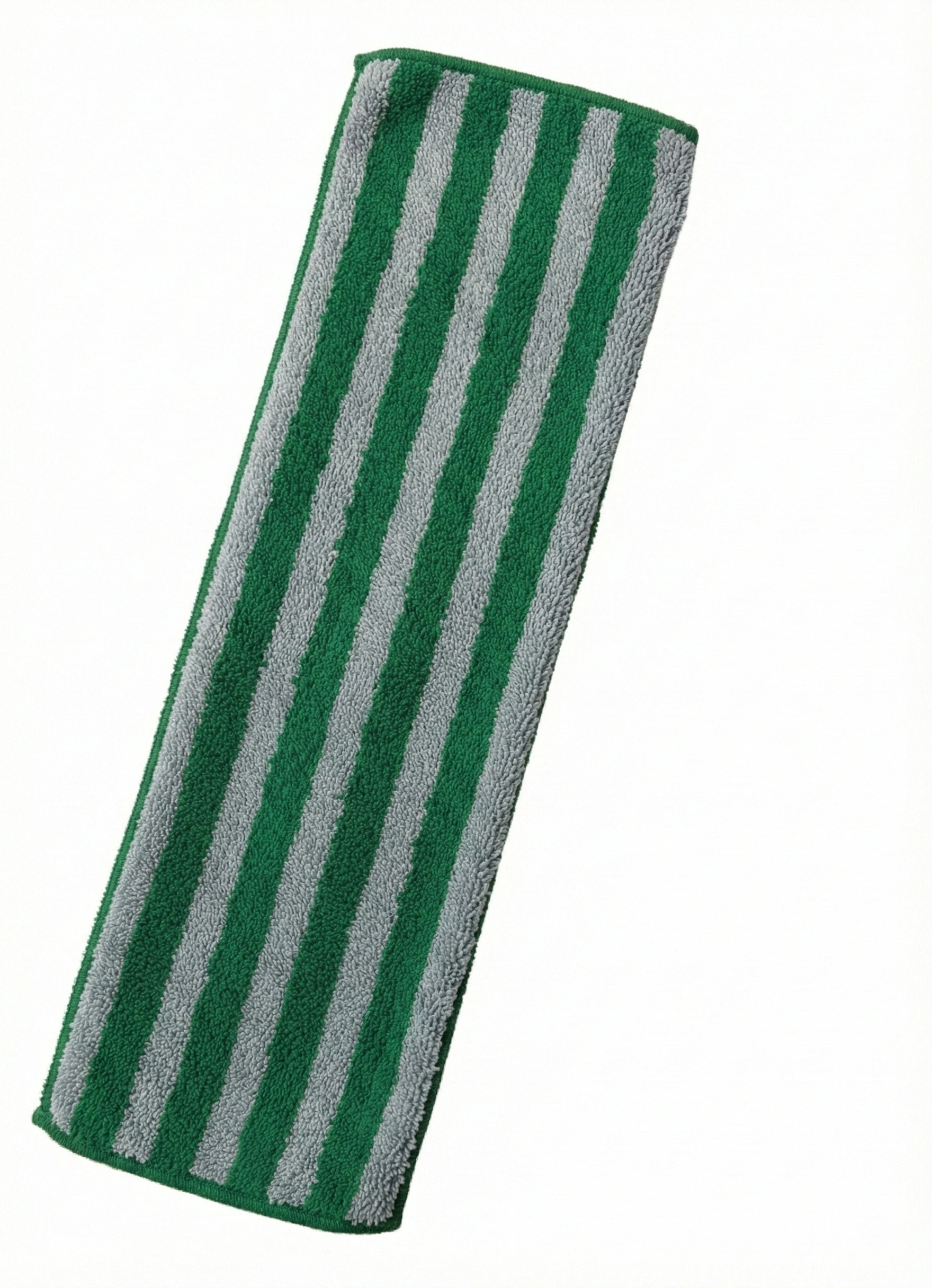
A frame never operates in isolation. It must physically connect to the handle on one side and hold the mop head on the other. The three components — frame, handle, and head — form a single integrated cleaning tool. If any interface fails, the entire tool fails. This is why クリーンルームモップヘッドフレームハンドル統合 should be evaluated as a system, not as three separate purchasing decisions.
Frame-to-Handle Connection
The frame connects to the handle via a mechanical joint — typically a threaded screw fitting, a quick-release clip, or a bayonet-style connector. The connector type must be consistent between the frame and the クリーンルームモップハンドルの選択. Key considerations:
- Thread type compatibility: Some frames use ACME threads, others use standard metric or imperial threads. A handle with the wrong thread type simply will not connect.
- Quick-release reliability: Quick-release connectors reduce setup and changeover time but introduce a mechanical wear point. Verify the connector’s cycle-life rating against expected daily use frequency.
- Autoclave effect on connectors: 熱サイクルを繰り返すと、ねじ接続が緩み、プラスチックのクイックリリースコンポーネントが劣化する可能性があります。定期的な清掃ツールのメンテナンスの一環として、フレームとハンドルの接合部を検査してください。
フレームとヘッドの取り付け
フレームはしっかりと固定する必要があります クリーンルームモップヘッドの種類と選択 全ストロークサイクル中、押し、引き、持ち上げ、回転します。最も一般的な接続メカニズムは次の 3 つです。
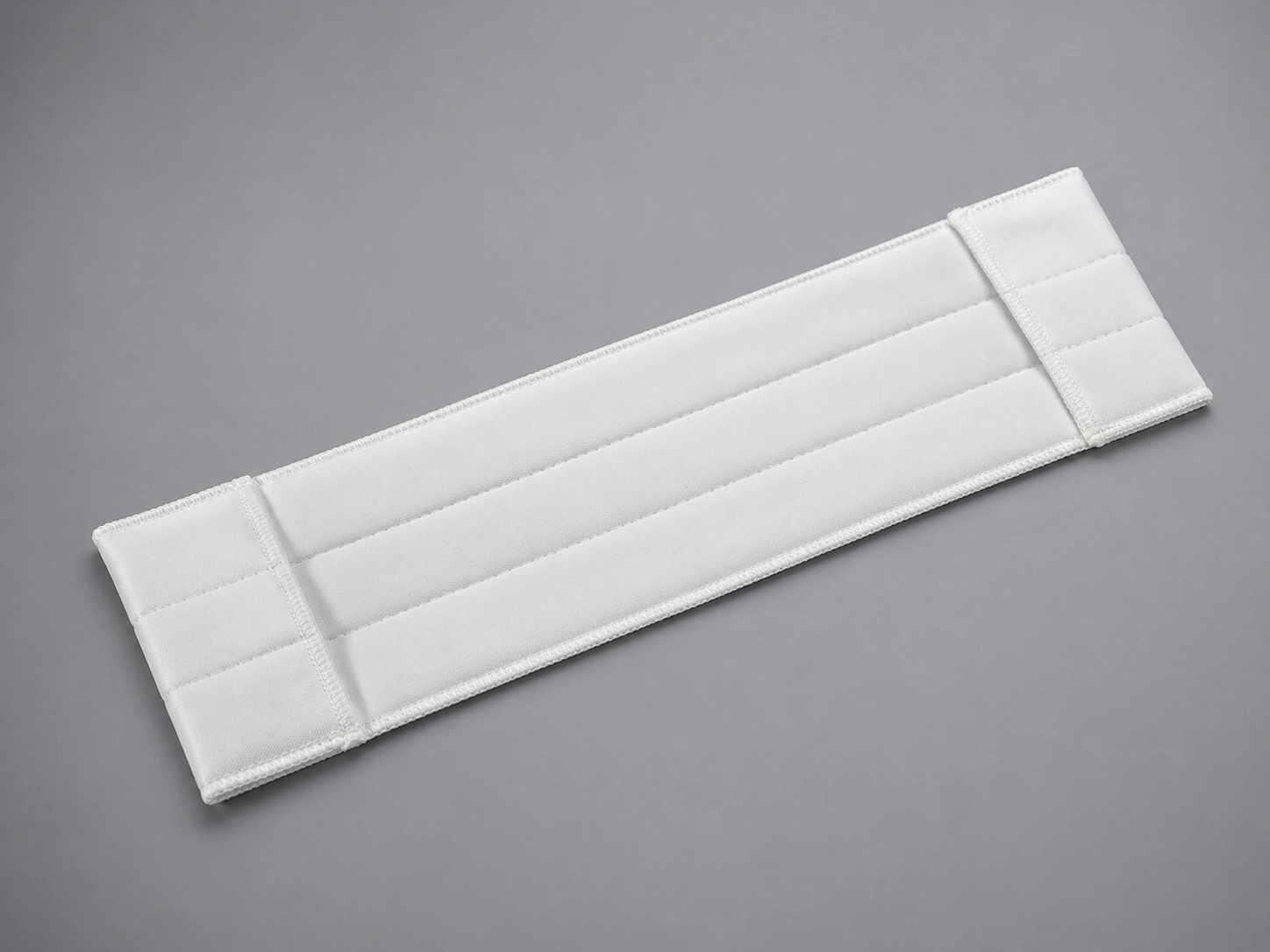
- ポケットスタイル: フレームはモップヘッドの後ろに縫い付けられた布地のポケットに滑り込みます。クリーンルーム用途で最も一般的です。フレームとポケットの幅を正確に一致させる必要があります。
- ベルクロ/面ファスナー: ヘッドは面ファスナーストリップを介してフレームに取り付けられます。ポケットスタイルよりも切り替えが早いですが、繰り返し使用するとベルクロ自体が劣化して粒子の発生源になる可能性があります。
- クリップ/メカニカルファスナー: The head clips onto the frame via plastic or metal fasteners. Fastest changeover but introduces additional mechanical components that can fail or generate particles.
Common failure mode: A pocket-style head that is slightly too wide for the frame will bunch and slip during the push stroke, creating uneven cleaning pressure and exposing the frame edge directly to the cleaning surface — a contamination risk if the frame edge is not smooth or if it scratches the floor.
System Integration Checklist
Frame-to-System Compatibility Verification (8 Points)
Summary: Frame Material and Articulation Decision Framework
Sequential Frame Selection Logic
- Does the frame require autoclave sterilization? If yes, eliminate aluminum and composite. Choose SS 304 or SS 316.
- Review the disinfection chemical list. If it includes chlorine-based agents, VHP, or peracetic acid, select SS 316 for maximum corrosion margin. If it is quats and IPA only, SS 304 is sufficient.
- Identify all surfaces to be cleaned. If walls and ceilings are included, a hinged frame is required. If floor only, choose fixed (open areas) or swivel (equipment-dense areas).
- Verify head compatibility. Ensure frame width matches head pocket width. Confirm attachment mechanism (pocket, Velcro, clip) is consistent with operational preference.
- Verify handle compatibility. Ensure frame connector type matches handle connector type.
- Consider total system weight. For wall/ceiling applications, prioritize lower frame weight within the required material grade.
- Request material certification. Obtain mill test report or material certificate from the frame supplier. File with cleaning tool qualification documentation.
Frame selection ultimately reduces to three questions: What chemicals will it touch? Will it go through an autoclave? What surfaces does it need to reach? Answer these, and the material + articulation decision follows logically from the answers. Everything else — cost negotiation, supplier comparison, inventory planning — becomes an operational discussion rather than an unresolved technical specification.
よくある質問
Can an SS 304 frame be used in a Grade A cleanroom?
It depends on the disinfection chemistry and sterilization requirements. SS 304 is structurally acceptable for Grade A environments, but if the facility’s sporicidal program includes peracetic acid or concentrated chlorine-based agents, SS 316 is preferred for its superior pitting and crevice corrosion resistance. Additionally, if the frame will undergo frequent autoclave sterilization at 134 degrees C, SS 304 is capable but SS 316 provides additional margin against chloride stress-corrosion cracking if any chloride residues remain on the frame surface. A facility risk assessment should drive the material grade decision, not a blanket grade-to-material mapping.
What is the most common mistake in cleanroom mop frame procurement?
Ordering frames and heads from different suppliers without verifying dimensional compatibility. A frame that is 42 cm wide does not automatically fit a head pocket marked “40-45 cm” — the pocket’s actual internal dimension in millimeters must match the frame’s external dimension. The second most common mistake is specifying aluminum frames for facilities that use chlorine-based disinfectants, which leads to rapid frame corrosion and particle generation.
How often should cleanroom mop frames be replaced?
決まった交換時期はありません。 SS フレームは、目視検査で次のいずれかが判明した場合に交換する必要があります: (a) 洗浄できない表面の孔食または隙間腐食、(b) パッド接触の均一性に影響を与える曲がったまたは歪んだフレーム形状、(c) 仕様通りに締めることができないコネクタ接続部の緩みまたは遊び、または (d) フレーム接続部の溶接不良。実際の検査プロトコルは、毎月のクリーニング ツールの在庫確認中にすべてのフレームをチェックし、目に見える劣化が見られるフレームに交換のフラグを立てることです。アルミニウムおよび複合フレームは機械的耐久性が低いため耐用年数が短く、より頻繁に検査する必要があります。
床掃除用と壁掃除用に別のフレームが必要ですか?
Typically yes. Floor-only frames are usually fixed or swivel articulation and optimized for horizontal pressure transfer. Wall and ceiling cleaning requires a hinged frame that can pivot in the vertical plane to maintain pad contact against vertical surfaces. Using a fixed floor frame for wall cleaning is ineffective because the frame cannot angle itself to the wall surface. Most GMP facilities maintain separate frame inventories for floor and wall/ceiling cleaning rotations.
What frame surface finish is recommended for ISO 5 / Grade A areas?
Electropolished stainless steel provides the smoothest surface finish, minimizing particle adhesion and making the frame easier to wipe down during cleaning tool disinfection. A surface roughness of Ra less than or equal to 0.8 micrometers (32 micro-inches) is a commonly referenced target for Grade A/ISO 5 applications. Brushed or mill finishes are acceptable for Grade C/D areas where surface finish requirements are less stringent.
Can I use the same frame with different mop head weights (40g, 55g, 65g)?
Yes, provided the frame width matches the head pocket width. Mop head weight (40g, 55g, 65g) affects the pad’s absorbency and thickness but does not typically change the pocket dimensions for a given width. The same frame can be used with different-weight heads of the same width. However, verify that a thicker 65g head does not create excessive friction or bunching inside the frame, which can occur if the pocket tolerance was designed for a thinner pad.
What documentation should I request from a frame supplier?
At minimum, request: (a) material grade certificate (mill test report or equivalent confirming the alloy grade, e.g., SS 304 or SS 316), (b) frame dimension drawing with tolerances (width, length, thickness in mm), (c) surface finish specification (Ra value), (d) connector type specification, and (e) weight specification. For facilities with autoclave requirements, additionally request confirmation that the frame material and connector assembly are rated for the specified autoclave temperature and cycle count. This documentation supports cleaning tool qualification in GMP environments.
Are swivel frames more prone to mechanical failure than fixed frames?
Yes, by design. A swivel frame introduces a rotating joint — a mechanical component that fixed frames do not have. This joint is a wear point. Over time, the swivel mechanism can develop play (looseness), produce metallic particles from friction, or seize if not maintained. The trade-off is that swivel frames provide navigability around equipment that fixed frames cannot match. The risk is managed through (a) selecting frames with sealed or low-particle-generation swivel bearing designs, (b) including swivel joint inspection in routine cleaning tool maintenance, and (c) replacing frames whose swivel joints show measurable wear rather than waiting for failure.
Need a Cleanroom Mop System with the Right Frame Configuration?
フレームの材質と関節のタイプは、洗浄プログラムの有効性、化学的適合性、滅菌スループットに直接影響します。グレード A の無菌充填スイートに SS 316 フレームを指定している場合でも、グレード D のサポート領域で SS 304 とアルミニウムを比較している場合でも、MIDPOSI は、フレーム、ヘッド、ハンドルのコンポーネントを検証済みの互換性のあるシステムに適合させるのに役立ちます。
ご要望に応じて、フレーム材質の認証と寸法仕様をご提供いたします。 GMP、ISO、および汚染に敏感な施設における管理された洗浄プログラム向けに構築されています。
Disclaimer: The chemical compatibility information in this article is provided as general engineering guidance. Material compatibility depends on chemical concentration, temperature, contact duration, and the specific alloy or polymer grade. Always verify frame material compatibility against the manufacturer’s chemical resistance data sheet and your facility’s specific disinfection SOP before procurement. This article does not constitute formal material qualification or validation advice.