
環境モニタリング場所の選択が実際に意味するもの
In GMP cleanrooms, environmental monitoring is not just about placing settle plates or active air samplers at equal distances across a room. The real objective is to identify the locations where contamination is most likely to appear first, spread fastest, or create the highest product risk.
That means monitoring location design must consider process exposure, human intervention, transfer events, equipment surfaces, airflow disruption, room classification, and historical deviations. A room may be visually clean and still contain hidden risk zones if operators repeatedly reach into the same location, if carts disturb unidirectional airflow, or if material transfer steps create momentary contamination spikes.
EM の場所の選択では、次の答えが得られます。
- 汚染が最も侵入しやすい場所はどこですか?
- 粒子や微生物はどこに蓄積するのでしょうか?
- 露出した製品または重要な表面に最も近い点はどれですか?
- GMP の観点から見て、エクスカーションが最も重要になるのはどこですか?
典型的な入力データ:
- 気流の可視化 / 煙の研究
- 介入マッピング
- 部屋の分類とゾーニング
- 過去のEMトレンドデータ
- 洗浄と消毒のワークフローのレビュー

GMP クリーンルームでリスクベースの配置が重要な理由
A GMP cleanroom is a controlled system, but not a static one. Operators move, materials transfer, equipment heats up, doors open, and surfaces are repeatedly touched. The highest-risk zones are often created by workflow rather than architecture.
A risk-based EM strategy improves deviation detection, strengthens trend analysis, and makes your monitoring program easier to defend during audits. It also prevents the common failure of over-monitoring low-value points while under-monitoring locations near real process exposure.
リスクベースの配置は、次の場合に特に重要になります。
- 露出した製品の近くではオペレーターの介入が頻繁に発生します。
- 乗り換えポイントは、異なる清潔度条件を持つ部屋を接続します。
- 機器により局所的な乱気流や影のゾーンが発生します。
- 歴史的な EM エクスカーションは、特定のワークフローに集中しています。
- コーナー、ホイール、またはサポートの近くでは、クリーニング範囲が一貫していません。
完全な資格戦略を洗練するチームの場合、このトピックは次のことに関連する必要があります。 IQ/OQ/PQ 資格計画, because monitoring location selection becomes more defensible when it is tied to documented airflow verification, intervention studies, and operational qualification logic.
最初に評価すべき高リスク環境モニタリング場所
正確なモニタリング マップはプロセスやクリーンルームのグレードによって異なりますが、通常は次の領域が初回評価に値します。
| 場所の種類 | なぜそれが重要なのか | 一般的なリスクシグナル | モニタリングの関連性 |
|---|---|---|---|
| 露出に近い製品パス | 製品または重要な表面への直接的な汚染の影響 | 介入、開放的な取り扱い、無菌暴露 | 最高の優先度 |
| オペレーター介入ポイント | 手、袖、体の動きにより空気の流れが妨げられ、汚染が除去されます。 | 繰り返しのリーチインアクションまたは手動調整 | 非常に高い優先度 |
| 材料移送/通過ゾーン | 清浄度状態間の移行により、粒子や微生物が侵入する可能性があります | ドア開口部、カート通過、梱包材取り出し | 高優先度 |
| 機器インターフェースゾーン | 熱、振動、または形状により、エアフローのデッドスポットが発生する可能性があります | 影の領域、アクセスできない表面、繰り返しの接触 | 高優先度 |
| 交通路下の床面積 | 粒子の輸送、ホイールの汚れ、濡れ範囲の不良 | 定期的な定盤エクスカーション | 中から高の優先度 |
| 部屋の隅/掃除しにくい端 | 死角を掃除すると残留物や微生物が閉じ込められる可能性がある | クリーニングまたはシャットダウン後のトレンドの急増 | 中優先度 |
| 戻り気流影響ゾーン | 移行または収集の動作を示すことができます | 予期せぬ方向性の汚染パターン | 場合に応じて |
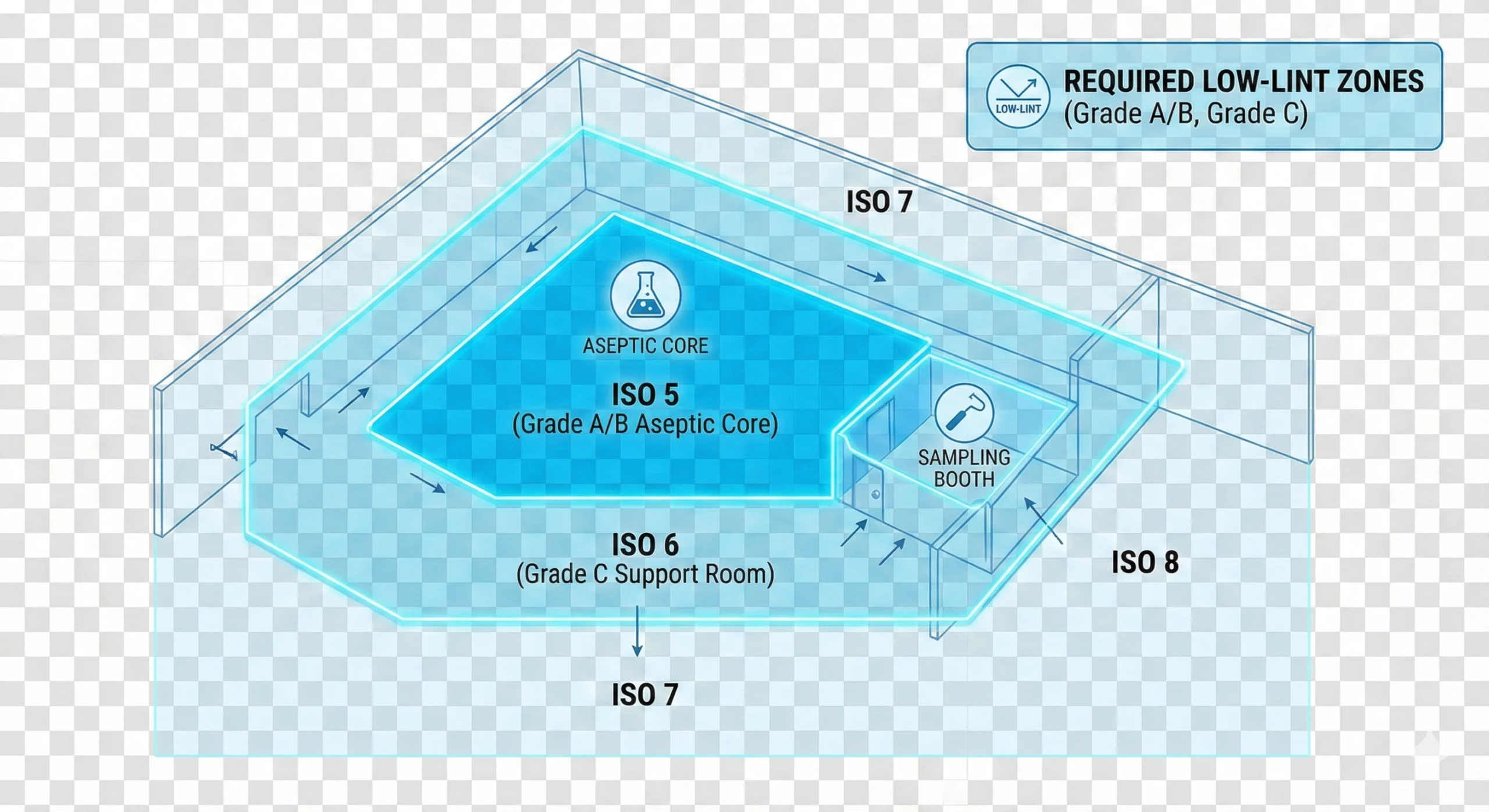
環境モニタリング位置マップの作成方法
A robust EM map is usually built in layers rather than in one step. Start with process understanding, then overlay airflow, interventions, transfer routes, and cleaning boundaries. The best teams treat EM location planning as a cross-functional exercise involving QA, microbiology, operations, engineering, and contamination control.
推奨される段階的なアプローチ
1. クリティカルプロセスとリスクにさらされるゾーンを定義する
Mark where product, components, tools, or critical surfaces are exposed. This establishes the locations where contamination would have the greatest GMP consequence.
2. 気流の挙動と煙の研究結果を確認する
Identify airflow paths, turbulence areas, recirculation zones, and shadow points. Monitoring should reflect real air behavior, not just equipment footprint.
3. オペレーターの介入と移動動作をマッピングする
手作業による作業を繰り返すと、部屋のレイアウトだけよりも、移動パターンがよりよく説明されることがよくあります。
4. 清掃と消毒の境界線を調整する
Confirm that locations with elevated contamination risk are also visible in the cleaning program and SOP structure. This should tie back to your クリーンルームの清掃と消毒SOP.
5. 過去の傾向データを使用してマップを改良する
既存の逸脱、行動レベルのイベント、または繰り返し発生する「ニアミス」によって、よりインテリジェントに監視すべき場所が示されることがよくあります。
環境モニタリング場所の決定マトリックス
A simple scoring model helps teams prioritize where to place active air sampling, settle plates, contact plates, or surface swabs. You can adapt the matrix below to your site protocol.
| 得点係数 | 説明 | 低いスコア | ハイスコア |
|---|---|---|---|
| 製品の近接性 | ポイントが露出した製品または重要な表面にどれだけ近いか | プロセスからリモート | 直接隣接 |
| 介入頻度 | 担当者がポイント付近でやり取りする頻度 | レア | 頻繁/繰り返し |
| 気流の乱れ | 乱気流、影、または汚染物質の移動の可能性 | 安定した風量 | 既知の妨害ゾーン |
| 転写露光 | 材料やツールが汚染の境界を越えるかどうか | 移転関連性なし | 高い転移活性 |
| 過去の傾向リスク | 以前のアラート、逸脱、または疑わしいパターン | クリーンな履歴 | 繰り返される信号 |
| 掃除の難しさ | 残留物、死角、または一貫性のないモップの塗布の可能性 | アクセスしやすい | 掃除しにくい形状 |
このマトリックスは、次のことにも自然につながります。 監査の準備状況, because a documented rationale for monitoring point selection is easier to defend than a map based only on legacy habit.
EM の場所を選択する際のよくある間違い
1. 汚染リスクの代わりに部屋の対称性を使用する
等間隔にするときれいに見えるかもしれませんが、GMP モニタリングはインテリア デザインの練習ではありません。危険検知システムです。
2. フロアと移動経路の無視
Floor-associated contamination can be highly relevant, especially where wheels, bins, buckets, or material movement repeatedly intersect with controlled pathways. This is one reason cleaning tool selection and traceability matter.
3. EM を洗浄検証から分離する
If contamination is repeatedly detected near the same zone, the investigation should not stop at sampling frequency. It should also question mop design, saturation control, operator technique, and SOP execution.
4. EM の調査結果をバッチおよび文書管理に結び付けることができない
有意義なエクスカーション調査には多くの場合、強力な情報が必要です。 クリーンルーム消耗品のバッチトレーサビリティ, especially when surface cleaning tools or sterile consumables may contribute to variation.
How Cleaning Tools Influence Environmental Monitoring Outcomes
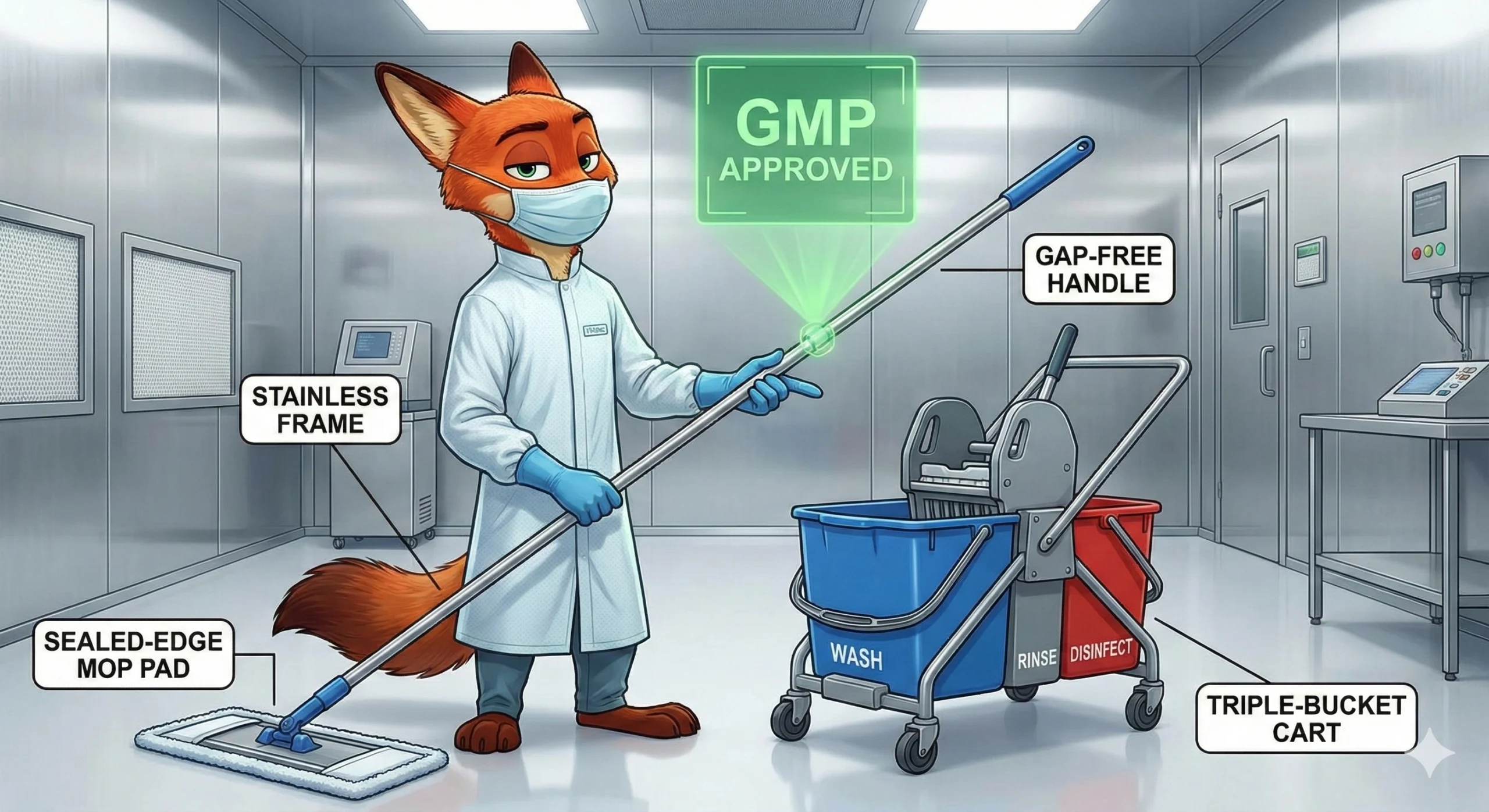
Environmental monitoring data does not exist in isolation. A location may trend poorly because the contamination source is real, but it may also trend poorly because cleaning coverage is inconsistent, the wrong mop material is used for the zone, or the tool itself sheds particles or fails to retain contamination effectively.
That is why environmental monitoring strategy should be reviewed together with mop head construction, edge sealing, saturation control, bucket method, sterilization route, and consumable traceability. For facilities with repeated excursions near floors, transfer edges, or difficult geometries, cleaning system optimization can be as important as monitoring intensity.
次の場合にはモップ システムを見直してください。
- 同じ清掃エリア内で表面数が増加傾向にある
- コーナー付近や機器の下でカバレッジが不安定になる
- 人間工学が不十分なため、オペレーターが即興で清掃動作を行う
- 調査中に消耗品の文書が不完全である
次の場合に EM マップを確認してください。
- エクスカーションが現在のサンプル ポイントから切り離されて表示される
- 介入は変更されましたが、モニタリングマップは変更されませんでした
- 新しい機器によりエアフローパターンが変化
- Room classification stayed the same but process risk increased
Need Help Matching Monitoring Risk to Cleaning System Design?
Midposi supports buyers and technical teams that need cleanroom mops aligned with contamination control strategy, documentation expectations, and controlled-environment cleaning workflows.
- さまざまなリスクゾーンに対応したクリーンルームモップオプション
- Support for ISO / GMP-oriented cleaning workflows
- Documentation-oriented approach for QA and procurement review
この記事の推奨内部リンク
Based on your uploaded content map, this article should sit inside the Environmental Monitoring cluster and connect naturally to qualification, audit, traceability, SOP, standards, and gowning topics.:contentReference[oaicite:4]{index=4} :contentReference[oaicite:5]{index=5}
- クリーンルーム IQ OQ PQ 資格の説明 — 検証ロジックと文書化された理論的根拠について議論する場合にリンクします。
- GMP クリーンルーム監査の準備方法 — 防御可能な監視マップや監査の質問について議論するときにリンクします。
- クリーンルーム消耗品のバッチトレーサビリティ — 調査や遠征のレビューについて話し合うときのリンク。
- クリーンルームの清掃と消毒 SOP: 完全ガイド — 床および表面の清掃制御について議論する際のリンク。
- クリーンルームガウン手順: 付属書 1 コンプライアンスガイド — 人員汚染ベクトルについて議論する場合はリンクしてください。
- ISO 14644 分類の説明 — 部屋の分類とゾーンのロジックについて議論する場合のリンク。
Suggested anchor text mix: “environmental monitoring map”, “GMP cleanroom audit readiness”, “cleanroom batch traceability”, “cleanroom cleaning SOP”, “ISO 14644 classification”, “Annex 1 gowning procedures”.
よくある質問
GMP クリーンルーム内の環境モニタリング場所はどのように選択しますか?
Start with risk. Prioritize locations near exposed product, operator interventions, transfer points, and airflow disruption zones. Then validate the map against workflow, historical trend data, and cleaning boundaries.
EM の場所は部屋全体に均等に分散する必要がありますか?
Not necessarily. Even spacing may miss the highest-risk points. Risk-based placement is usually more meaningful and more defensible during GMP review.
EM ポイントを正当化するにはどのようなデータを使用する必要がありますか?
Use airflow studies, intervention mapping, process exposure analysis, historical EM results, equipment layout, room zoning, and cleaning workflow review.
床掃除用具は環境モニタリングの結果に影響しますか?
Yes. Poor cleaning coverage, inconsistent saturation, unsuitable mop materials, or incomplete consumable control can all influence recurring surface contamination trends.