
This standard operating procedure establishes a risk-based approach for environmental monitoring in GMP cleanrooms, covering EM location selection, sampling procedures, monitoring frequency, alert and action limits, trending, CAPA, change control, and training.
It is designed for pharmaceutical, biotech, medical device, and controlled manufacturing facilities that need a documented and defendable environmental monitoring program aligned with cleanroom risk, process criticality, and contamination control expectations.

A risk-based environmental monitoring SOP helps GMP cleanrooms maintain microbiological control by defining monitoring locations, sampling methods, frequencies, alert limits, action levels, trending rules, and CAPA workflows based on contamination risk.
Use a structured risk model to prioritize monitoring points by personnel activity, airflow disturbance, proximity to Grade A, material transfer, and historical alert rate.
Align monitoring methods and frequencies with cleanroom grade, risk score, and process criticality.
Trend monitoring data continuously and define alert and action responses before excursions occur.
Link alerts to documented investigation, root cause analysis, corrective action, and effectiveness verification.
Control all EM program changes through QA-approved change control and periodic training.
| Version | Date | Description | Prepared By | Approved By |
|---|---|---|---|---|
| 1.0 | 2026-03-23 | Initial issue | Quality Assurance | Quality Manager |
This SOP establishes a risk-based approach for Environmental Monitoring (EM) in GMP cleanrooms. The purpose is to ensure cleanroom environments remain within specified microbiological limits, provide a systematic framework for EM location selection, establish monitoring frequencies appropriate to risk levels, define procedures for sampling, analysis, and data management, and support compliance with EU GMP Annex 1, FDA cGMP, and ISO-based cleanroom operating expectations.
MIDPOSI note: Environmental monitoring results are closely connected with cleaning execution, gowning discipline, cleanroom tools, and contamination-control consumables. For related cleaning controls, see MIDPOSI’s guide to pharmaceutical cleanroom mop cleaning SOP.
| ਮਿਆਦ | ਪਰਿਭਾਸ਼ਾ |
|---|---|
| Active Air Sampling | Volumetric air sampling using impactors, slit samplers, or other qualified devices to capture airborne microorganisms. |
| Alert Level | A specified level of microbial contamination indicating a potential drift from normal operating conditions. |
| Action Level | A specified level of microbial contamination requiring investigation, documented response, and corrective action. |
| Critical Zone | A Grade A or highest-risk area where aseptic operations or direct product exposure may occur. |
| Risk-Based EM Location Matrix | A structured risk assessment tool for scoring EM locations based on activity, airflow, material movement, proximity to critical operations, and historical data. |
| Settle Plate | A nutrient agar plate exposed to the environment for passive air monitoring over a defined exposure period. |
| CAPA | Corrective and Preventive Action used to address confirmed or potential quality system failures. |
| ਭੂਮਿਕਾ | ਜ਼ਿੰਮੇਵਾਰੀਆਂ |
|---|---|
| Quality Assurance Manager | Overall EM program approval, change control, regulatory compliance, deviation review, and CAPA approval. |
| Microbiology Manager | EM program execution, method qualification, sample review, investigation support, and training oversight. |
| Microbiology Technician | Sample collection, incubation, colony reading, data entry, and immediate notification of alert or action results. |
| Production Manager | Cleanroom operation maintenance, personnel behavior control, gowning compliance, and production support during investigations. |
| Engineering Manager | HVAC maintenance, airflow pattern verification, pressure cascade support, and engineering-related CAPA actions. |
| Quality Control Manager | Data review, trend analysis, recurring alert evaluation, and technical support for root cause analysis. |
All environmental monitoring locations shall be selected using a risk-based assessment framework. The goal is to focus sampling intensity on areas with higher contamination risk, higher product exposure, more personnel activity, stronger airflow disturbance, and recurring alert history.
RISK SCORE = (Personnel Activity × 0.30) + (Airflow Disturbance × 0.25)
           + (Proximity to Critical Zone × 0.20) + (Material Transfer × 0.15)
           + (Historical Alert Rate × 0.10)
Score Range: 0–100. The score should be reviewed during initial cleanroom qualification, after layout changes, after significant process changes, and during periodic EM program review.
| Risk Score | Classification | Monitoring Required |
|---|---|---|
| 80–100 | Critical | Continuous or very high-frequency monitoring required. |
| 60–79 | ਉੱਚ | Fixed location monitoring at least once per shift or per defined production period. |
| 40–59 | ਦਰਮਿਆਨੀ | Rotating monitoring, typically weekly or based on process frequency. |
| 20–39 | ਘੱਟ | Periodic monitoring, typically monthly or during routine verification. |
| 0–19 | ਨਿਊਨਤਮ | Monitoring may not be required unless risk changes or trend data indicates concern. |
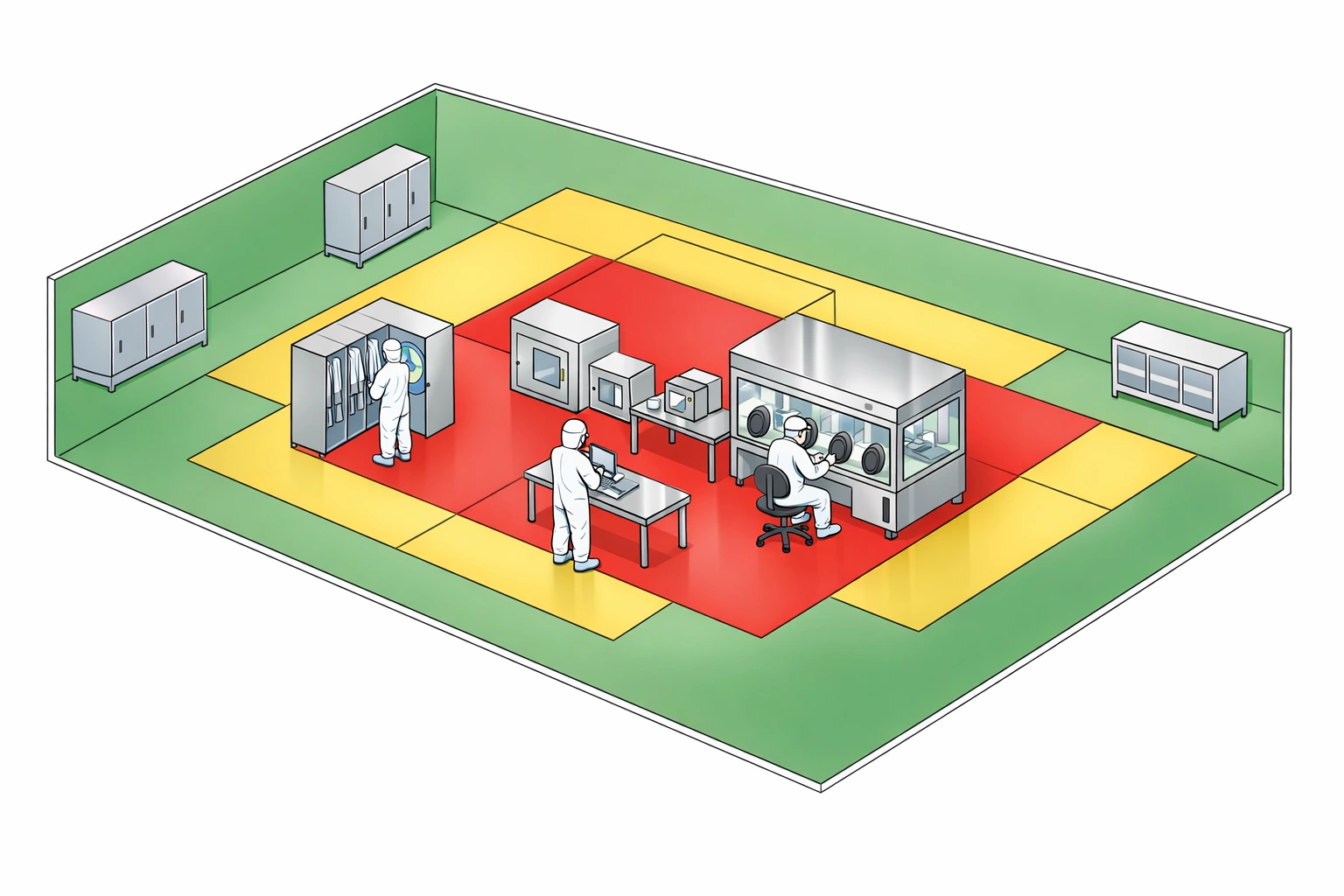
Sampling locations and frequencies should be assigned according to cleanroom grade, risk score, product exposure risk, historical alert rate, and operational traffic. Higher-grade areas require tighter frequency, stronger justification, and lower excursion tolerance.
| ਕਲੀਨਰੂਮ ਗ੍ਰੇਡ | Typical EM Priority | Sampling Logic |
|---|---|---|
| ਗ੍ਰੇਡ ਏ | Critical | Monitor critical zones, aseptic interventions, filling points, exposed product areas, and locations directly affected by first air. |
| ਗ੍ਰੇਡ ਬੀ | ਉੱਚ | Monitor background environment around Grade A, personnel movement routes, transfer points, and intervention zones. |
| ਗ੍ਰੇਡ ਸੀ | ਦਰਮਿਆਨੀ | Monitor support areas, preparation rooms, equipment staging areas, and zones with material movement. |
| ਗ੍ਰੇਡ ਡੀ | Low to Moderate | Monitor lower-risk support areas, entry corridors, staging areas, and locations with recurring alert history. |
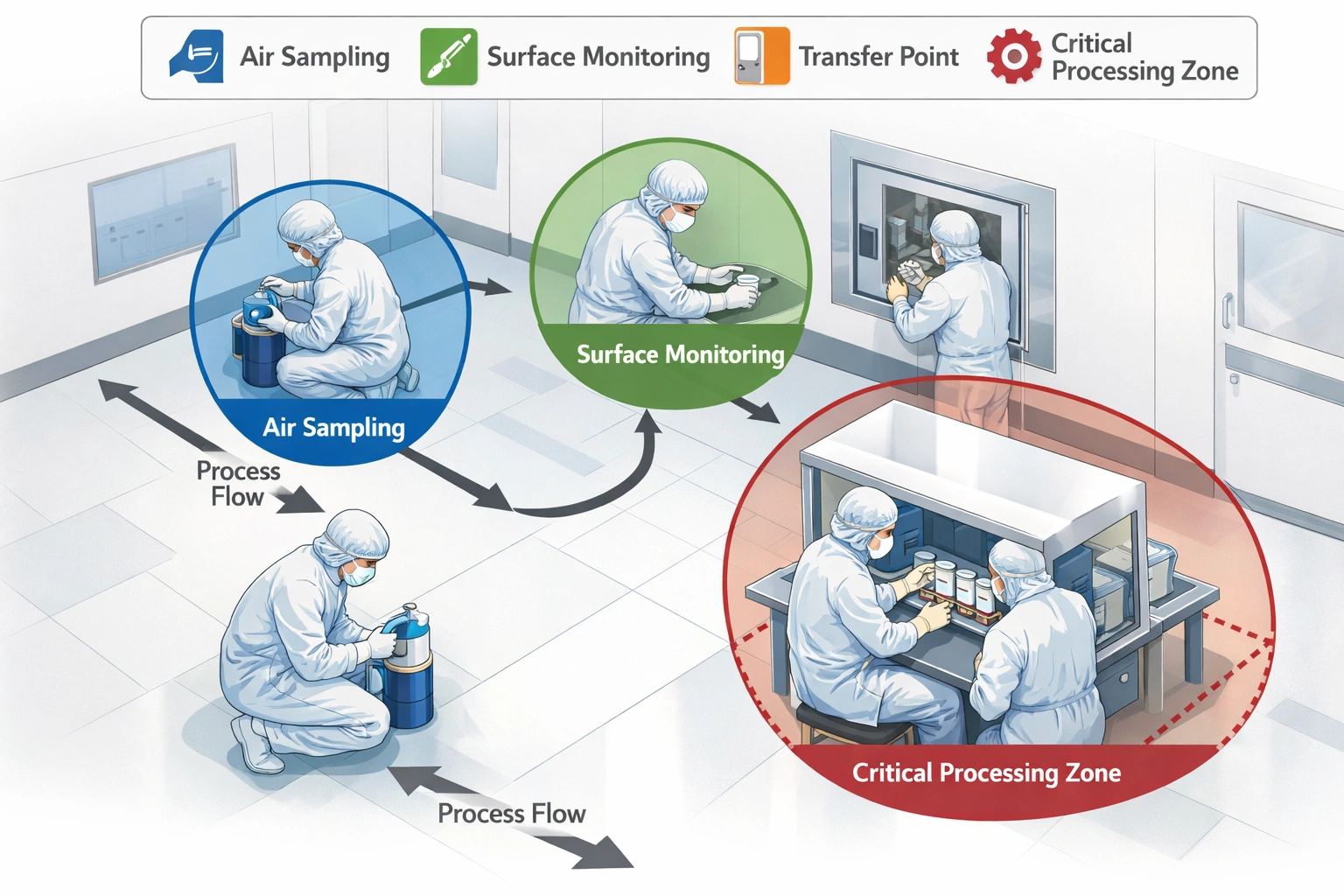
| ਉਪਕਰਨ | Specification | Placement | Flow Rate | Duration |
|---|---|---|---|---|
| SAS Sampler or Qualified Air Sampler | Single-stage or facility-approved device | Near critical surface without disrupting process airflow | Per equipment qualification | Per sampling plan and area grade |
| ਪਲੇਟ ਦੀ ਕਿਸਮ | ਆਕਾਰ | Placement | ਸੰਪਰਕ ਦਾ ਸਮਾਂ | ਉਚਾਈ |
|---|---|---|---|---|
| ਟੀ.ਐੱਸ.ਏ | 90mm | Under or near defined monitoring point | Per SOP or process duration | Representative of work height |
| ਐਸ.ਡੀ.ਏ | 90mm | Adjacent to defined monitoring point | Per SOP or process duration | Representative of work height |
Surface monitoring should focus on product-contact-adjacent areas, transfer points, frequently touched surfaces, equipment interfaces, floors near high-traffic zones, and locations with historical alert trends. Personnel monitoring should include gloves, gown sleeves, chest, forearms, or other site-defined locations based on gowning risk and aseptic activity.
Surface monitoring results can be affected by floor cleaning tools and operator technique. Facilities reviewing repeated floor-related excursions may also evaluate ਕਲੀਨਰੂਮ ਫਲੈਟ ਮੋਪ ਸਿਸਟਮ, ਮਾਈਕ੍ਰੋਫਾਈਬਰ ਕਲੀਨਰੂਮ ਮੋਪਸ, ਅਤੇ cleanroom mop validation documents.
ਨਿਗਰਾਨੀ ਦੀ ਬਾਰੰਬਾਰਤਾ ਕਲੀਨਰੂਮ ਗ੍ਰੇਡ, ਜੋਖਮ ਸਕੋਰ, ਪ੍ਰਕਿਰਿਆ ਦੀ ਗੰਭੀਰਤਾ, ਅਤੇ ਇਤਿਹਾਸਕ ਰੁਝਾਨ ਪ੍ਰਦਰਸ਼ਨ ਦੇ ਅਨੁਸਾਰ ਨਿਰਧਾਰਤ ਕੀਤੀ ਜਾਣੀ ਚਾਹੀਦੀ ਹੈ। ਨਾਜ਼ੁਕ ਅਤੇ ਉੱਚ-ਜੋਖਮ ਵਾਲੇ ਸਥਾਨਾਂ ਲਈ ਲਗਾਤਾਰ ਜਾਂ ਇੱਕ ਵਾਰ-ਪ੍ਰਤੀ-ਸ਼ਿਫਟ ਸਮੀਖਿਆ ਦੀ ਲੋੜ ਹੁੰਦੀ ਹੈ, ਜਦੋਂ ਕਿ ਮੱਧਮ ਅਤੇ ਘੱਟ-ਜੋਖਮ ਵਾਲੇ ਸਥਾਨ ਰੋਟੇਟਿੰਗ ਹਫਤਾਵਾਰੀ ਜਾਂ ਮਾਸਿਕ ਸਮਾਂ-ਸਾਰਣੀਆਂ ਦੀ ਵਰਤੋਂ ਕਰ ਸਕਦੇ ਹਨ।
| Risk Category | Typical Frequency | Example Locations |
|---|---|---|
| Critical | Continuous, per batch, or per operation | Grade A critical zones, aseptic interventions, exposed sterile product areas |
| ਉੱਚ | Each shift or each production day | Grade B background, transfer points, high-touch surfaces |
| ਦਰਮਿਆਨੀ | Weekly or rotating schedule | Grade C support rooms, preparation zones, equipment staging areas |
| ਘੱਟ | Monthly or periodic verification | Grade D corridors, storage support zones, low-traffic areas |

Alert limits indicate potential drift from normal operating conditions and trigger review. Action levels require immediate investigation, assessment of product impact where relevant, corrective action, and effectiveness review. Limits should be aligned with cleanroom grade, sample type, process criticality, historical capability, and regulatory expectations.
| Level | ਭਾਵ | ਆਮ ਜਵਾਬ |
|---|---|---|
| Alert Level | Early warning of potential drift from normal conditions. | Document, review trend, notify responsible function, and consider enhanced monitoring. |
| Action Level | Confirmed unacceptable condition or significant excursion. | Open deviation, perform investigation, assess product impact, define CAPA, and verify effectiveness. |
| Recurring Alert | Repeated alert in same location, method, organism type, or time period. | Perform trend investigation and review cleaning, personnel, HVAC, material flow, and tool performance. |
Data should be reviewed in real time where possible and trended by location, grade, method, organism, shift, campaign, and excursion history. Monthly KPI dashboards should support QA review, management review, contamination control decisions, and CAPA prioritization.
When an alert or action level is exceeded, the investigation should evaluate sampling error, personnel behavior, cleaning execution, cleanroom tool performance, HVAC condition, material transfer, equipment status, and process activity at the time of sampling.
[ALERT OR ACTION TRIGGERED]
       │
       ▼
Immediate Notification and Documentation
       │
       ▼
Initial Assessment
       │
   ┌───┼───┐
   │   │   │
Sampling  Personnel  Environment/
Method    Behavior    Equipment
   │   │   │
   └───┼───┘
       ▼
Root Cause Analysis
       │
       ▼
Corrective and Preventive Action
       │
       ▼
Effectiveness Verification and Trend Review
If CAPA points to cleaning tool performance, supplier documentation, or mop-related contamination risk, review MIDPOSI’s guidance on ਫਾਰਮਾਸਿਊਟੀਕਲ ਕਲੀਨਰੂਮ ਮੋਪ ਸਪਲਾਇਰ ਨੂੰ ਕਿਵੇਂ ਯੋਗ ਬਣਾਇਆ ਜਾਵੇ ਅਤੇ ਫਾਰਮਾਸਿਊਟੀਕਲ ਕਲੀਨਰੂਮ ਮੋਪਸ ਲਈ ਬੈਚ ਟਰੇਸੇਬਿਲਟੀ.
Any change affecting facility layout, equipment, personnel flow, monitoring location, risk score, sampling method, cleanroom cleaning process, gowning process, or consumable selection must be reviewed under change control before implementation or before production resumes where applicable.
All relevant personnel must be trained before performing EM activities. Training should cover aseptic behavior, sampling execution, data entry, alert response, CAPA workflow, change control requirements, and data integrity expectations.
| ਸਿਖਲਾਈ ਖੇਤਰ | Required For | ਬਾਰੰਬਾਰਤਾ |
|---|---|---|
| EM SOP and Sampling Technique | Microbiology and sampling personnel | Initial and annual refresher |
| Aseptic Behavior and Gowning | Cleanroom personnel | Initial, annual, and deviation-triggered |
| Alert/Action Response | QA, QC, Production, Engineering | Initial and after SOP change |
| Data Integrity | All personnel handling EM records | Initial and periodic refresher |
Environmental monitoring is closely linked with cleaning tools, cleanroom garments, contamination-control consumables, and supplier documentation. These related MIDPOSI resources can help connect EM findings with practical cleanroom controls.
MIDPOSI supplies cleanroom garments, mop systems, and contamination-control consumables for pharmaceutical, biotech, medical device, and controlled manufacturing environments. If your EM trends point to cleaning execution, gowning, or consumable-related risks, our team can help review suitable product options.