ਕਲੀਨਰੂਮ ਕਲੀਨਿੰਗ ਮੋਪ • ਮੋਪ ਸਟ੍ਰਕਚਰ ਦੀ ਚੋਣ • GMP-ਓਰੀਐਂਟਡ
ਕਲੀਨਰੂਮ ਕਲੀਨਿੰਗ ਵਿੱਚ ਫਲੈਟ ਮੋਪ ਬਨਾਮ ਸਟ੍ਰਿੰਗ ਮੋਪ: ਐਪਲੀਕੇਸ਼ਨ ਦ੍ਰਿਸ਼ਾਂ ਦੀ ਤੁਲਨਾ
ਖਰੀਦ, QA/ਪ੍ਰਮਾਣਿਕਤਾ, ਅਤੇ ਸਹੀ ਚੋਣ ਕਰਨ ਵਾਲੀਆਂ ਉਤਪਾਦਨ ਟੀਮਾਂ ਲਈ ਇੱਕ ਤਕਨੀਕੀ ਤੁਲਨਾ ਕਲੀਨਰੂਮ ਸਫਾਈ ਕਰਨ ਵਾਲਾ ਮੋਪ ਗੰਦਗੀ ਦੇ ਜੋਖਮ, SOP ਦੁਹਰਾਉਣਯੋਗਤਾ, ਅਤੇ ਸਪਲਾਈ ਸਕੇਲੇਬਿਲਟੀ 'ਤੇ ਅਧਾਰਤ।
ਇੱਕ ਪੂਰੀ ਕਲੀਨਰੂਮ ਮੋਪ ਸੋਰਸਿੰਗ ਸੰਖੇਪ ਜਾਣਕਾਰੀ ਨੂੰ ਤਰਜੀਹ ਦਿੰਦੇ ਹੋ? ਇੱਥੇ ਸ਼ੁਰੂ ਕਰੋ: ਥੋਕ ਕਲੀਨਰੂਮ ਮੋਪ - ਸੰਪੂਰਨ ਗਾਈਡ.
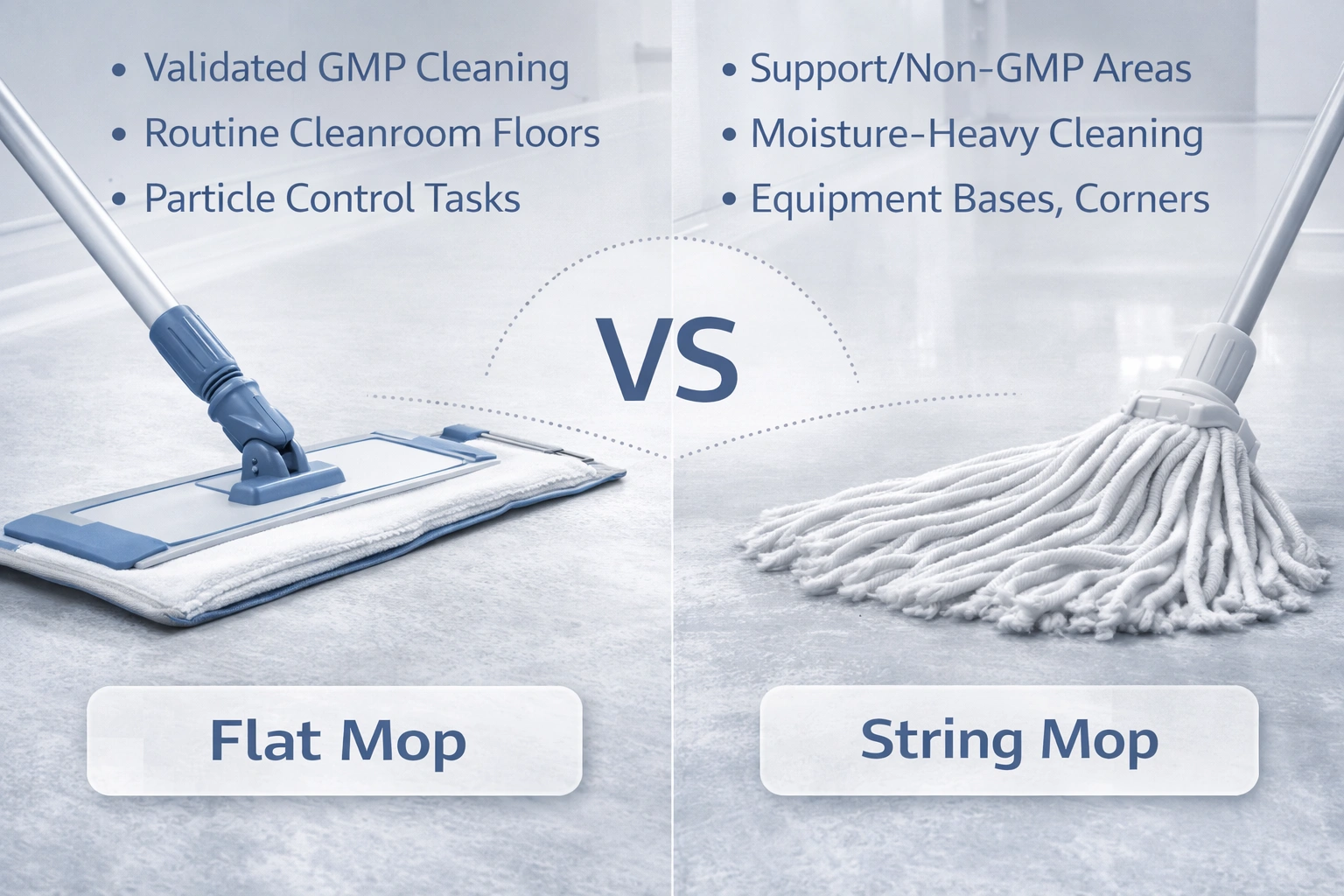
ਨਿਯੰਤਰਿਤ ਵਾਤਾਵਰਣ ਵਿੱਚ, ਕਲੀਨਰੂਮ ਸਫਾਈ ਕਰਨ ਵਾਲਾ ਮੋਪ ਇੱਕ ਹਾਊਸਕੀਪਿੰਗ ਟੂਲ ਤੋਂ ਵੱਧ ਹੈ। ਇਸਦਾ ਢਾਂਚਾਗਤ ਡਿਜ਼ਾਈਨ ਗੰਦਗੀ ਨਿਯੰਤਰਣ, ਸਫਾਈ ਦੁਹਰਾਉਣਯੋਗਤਾ, ਅਤੇ GMP ਅਤੇ ISO 14644 ਲੋੜਾਂ ਦੀ ਪਾਲਣਾ ਨੂੰ ਸਿੱਧਾ ਪ੍ਰਭਾਵਿਤ ਕਰਦਾ ਹੈ। ਖਰੀਦ ਪ੍ਰਬੰਧਕਾਂ ਅਤੇ QA ਟੀਮਾਂ ਦੁਆਰਾ ਦਰਪੇਸ਼ ਸਭ ਤੋਂ ਆਮ ਸੋਰਸਿੰਗ ਸਵਾਲਾਂ ਵਿੱਚੋਂ ਇੱਕ ਇਹ ਹੈ ਕਿ ਕੀ ਏ flat mop or a string mop is more appropriate for their cleanroom operations.
This article provides a supplier-side, application-focused comparison of flat mops and string mops used in cleanroom cleaning. The analysis is intended for pharmaceutical manufacturers, hospitals, medical device facilities, and electronics cleanrooms where mop selection must align with SOPs, validation protocols, and audit expectations.
For a clean definition and classification of cleanroom mops, see: ਇੱਕ ਕਲੀਨਰੂਮ ਮੋਪ ਕੀ ਹੈ.
1. Why Mop Structure Matters in Cleanroom Cleaning
In GMP environments, cleaning processes must be repeatable, documented, and validated. Mop structure determines how evenly cleaning solutions are applied, how contaminants are removed, and how much variability is introduced during routine cleaning.
From a risk-management perspective, mop design affects:
- Surface contact consistency
- Liquid retention and release control
- Particle and fiber shedding risk
- Operator-dependent variability
These factors explain why flat mops and string mops are often assigned to different cleanroom zones rather than used interchangeably.
If your SOPs are built around single-use control, compare system approaches here: ਡਿਸਪੋਸੇਬਲ ਬਨਾਮ ਮੁੜ ਵਰਤੋਂ ਯੋਗ ਕਲੀਨਰੂਮ ਮੋਪਸ.
2. What Is a Cleanroom Cleaning Mop?
A cleanroom cleaning mop is a controlled cleaning implement designed for use in classified environments. Unlike conventional mops, cleanroom mops are manufactured using low-lint materials, processed under controlled conditions, and supplied with documentation to support GMP and ISO 14644 compliance.
Common characteristics include:
- Engineered fabrics (polyester or microfiber)
- Controlled particle and fiber release
- Compatibility with cleanroom disinfectants
- Traceability and batch consistency
Material choice also matters. Related technical comparison: ਪੋਲੀਸਟਰ ਬਨਾਮ ਮਾਈਕ੍ਰੋਫਾਈਬਰ ਕਲੀਨਰੂਮ ਮੋਪਸ.
3. Flat Mops: Design, Strengths, and Limitations
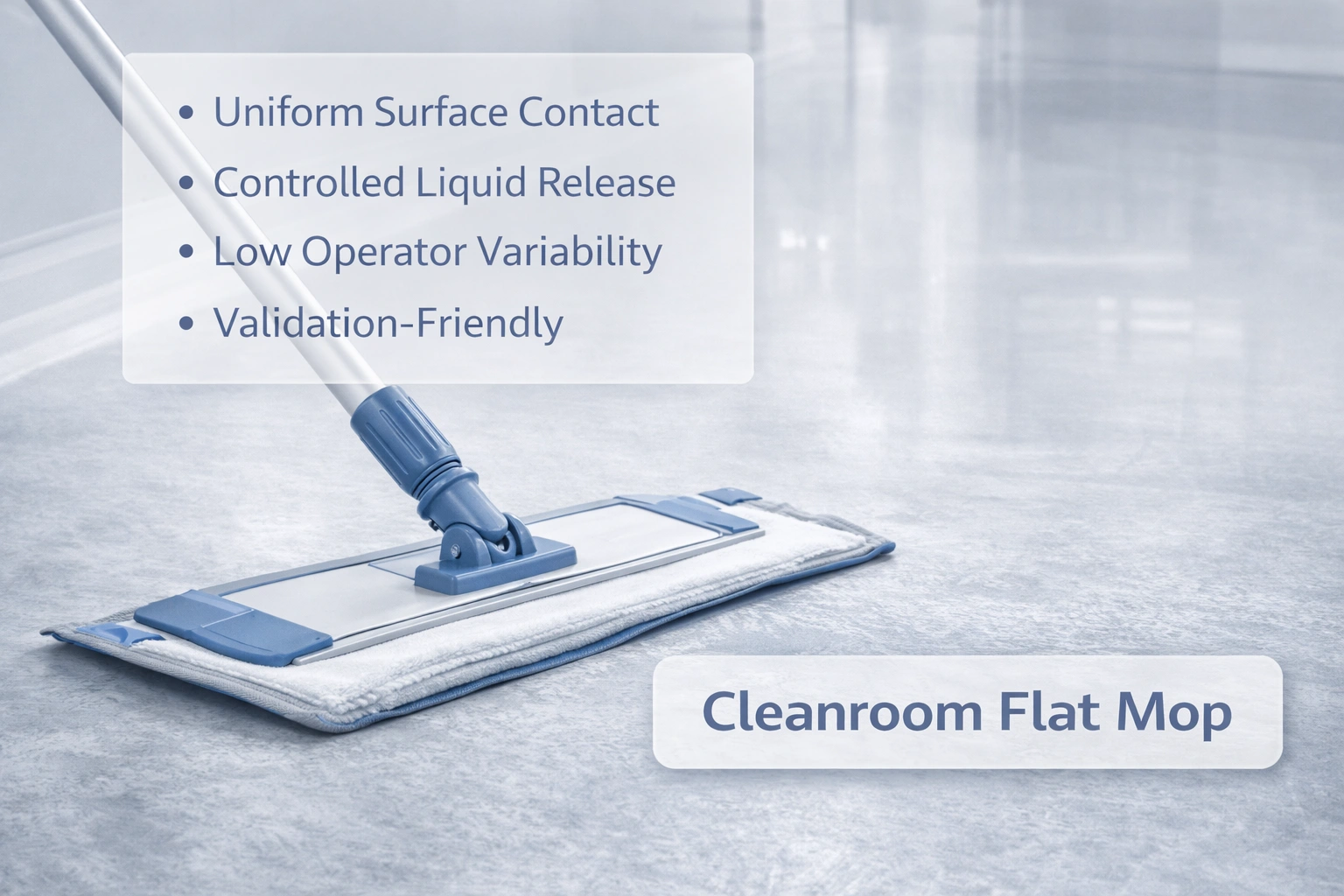
Flat mops are characterized by a rectangular, flat cleaning surface attached to a rigid or semi-rigid frame. The mop pad maintains uniform contact with the floor or surface, making it a preferred option in many GMP-regulated environments.
Key strengths of flat cleanroom mops
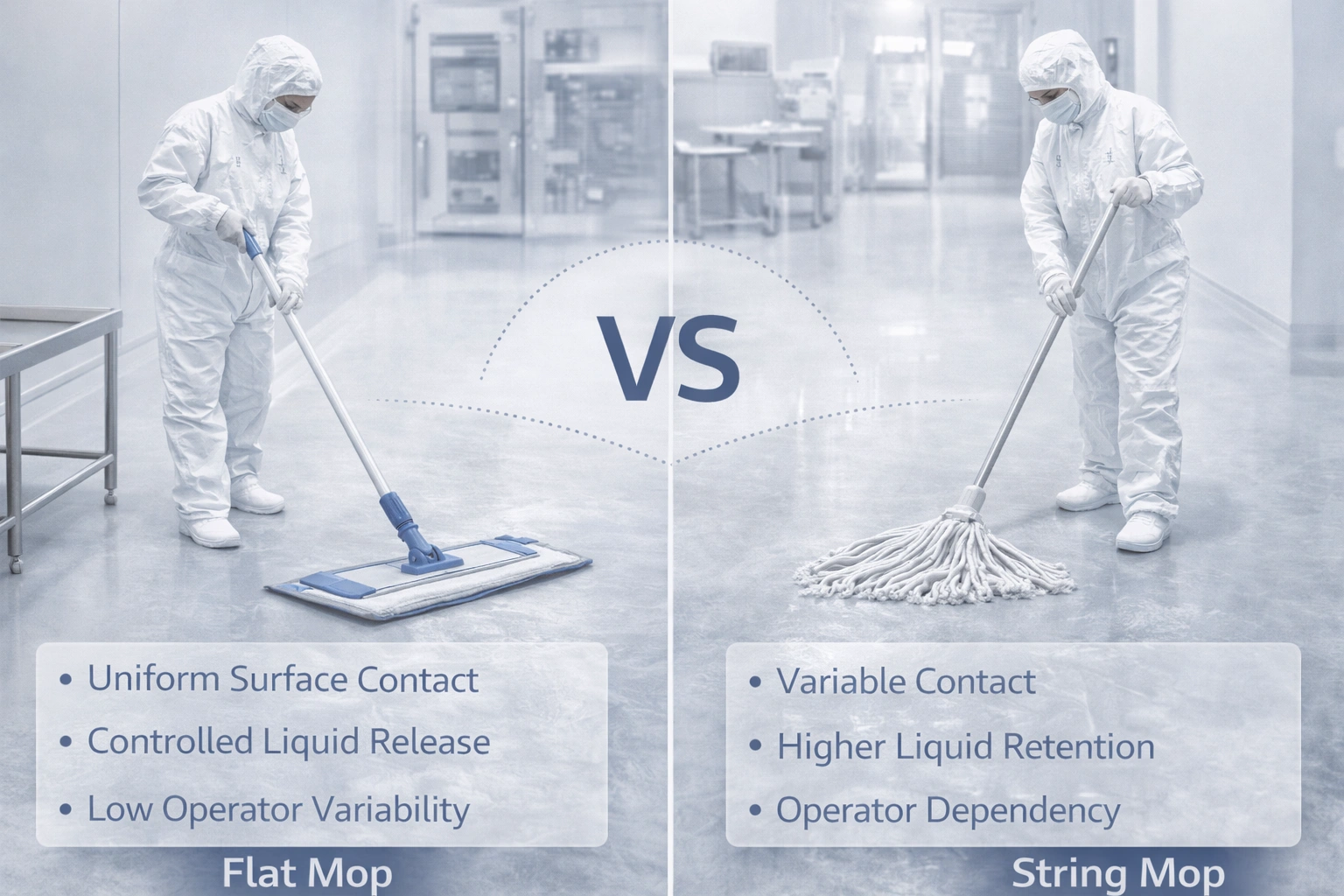
- Uniform surface contact: consistent pressure distribution supports repeatable cleaning results
- Controlled liquid release: easier to standardize wetting levels in SOPs
- Lower operator variability: reduced dependence on individual technique
- Validation-friendly: predictable behavior across cleaning cycles
Typical limitations
- Less effective on uneven surfaces or corners
- Requires proper frame and pad compatibility
Flat mops are commonly used in pharmaceutical cleanrooms, aseptic corridors, and controlled manufacturing zones where cleaning consistency is critical.
GMP application expectations and buyer criteria: ਫਾਰਮਾਸਿਊਟੀਕਲ ਕਲੀਨਰੂਮ ਮੋਪ ਦੀਆਂ ਲੋੜਾਂ.

4. String Mops: Design, Strengths, and Limitations
String mops consist of multiple strands attached to a central head. The flexible structure allows the mop to adapt to irregular surfaces, edges, and equipment bases.
Key strengths of string cleanroom mops
- High liquid retention: suitable for wet cleaning and rinsing steps
- Surface adaptability: effective around equipment legs and corners
- Mechanical agitation: helpful for removing heavier residues
Typical limitations
- Higher operator-dependent variability
- More difficult to standardize contact pressure
- Potentially higher fiber control requirements
In cleanroom settings, string mops are often restricted to lower-grade areas or specific cleaning steps rather than critical GMP zones.
5. Flat Mop vs String Mop: Cleanroom Comparison Table
| ਮਾਪਦੰਡ | Flat Mop | ਸਟ੍ਰਿੰਗ ਮੋਪ |
|---|---|---|
| Surface contact consistency | High and uniform | ਵੇਰੀਏਬਲ |
| Liquid control | Controlled and repeatable | High retention, less controlled |
| Operator variability | ਘੱਟ | ਉੱਚਾ |
| Validation suitability | ਉੱਚ | ਦਰਮਿਆਨੀ |
| Typical GMP use | Routine validated cleaning | Non-critical or support areas |
Compliance mapping and ISO/GMP references: ISO 14644 & GMP ਕਲੀਨਰੂਮ ਮੋਪਸ.
6. Application Scenarios by Industry
ਔਸ਼ਧੀ ਨਿਰਮਾਣ ਸੰਬੰਧੀ & GMP ਕਲੀਨਰੂਮ
Flat mops are generally preferred due to predictable performance and easier validation. String mops are more commonly used in non-critical zones or where SOPs allow higher variability.
ਹਸਪਤਾਲ & Healthcare Clean Areas
Both mop types may be used depending on area risk. Flat mops are common in controlled zones; string mops may be used in utility or transition areas.
ਮੈਡੀਕਲ ਡਿਵਾਈਸ ਮੈਨੂਫੈਕਚਰਿੰਗ
Flat mops are often selected to reduce fiber risk and support consistent cleaning outcomes, especially where residues can impact product performance.
ਇਲੈਕਟ੍ਰਾਨਿਕਸ & ਸੈਮੀਕੰਡਕਟਰ
Flat mops support particle control for manufacturing yield; string mops are generally used outside critical production zones for heavier wet cleaning tasks.
7. Compliance and Validation Considerations
Regardless of mop type, GMP buyers should evaluate:
- Material composition and fiber control
- Documentation and batch traceability
- Supplier change management
For supplier selection methodology: ਥੋਕ ਕਲੀਨਰੂਮ ਮੋਪ ਸਪਲਾਇਰ ਦੀ ਚੋਣ ਕਿਵੇਂ ਕਰੀਏ.
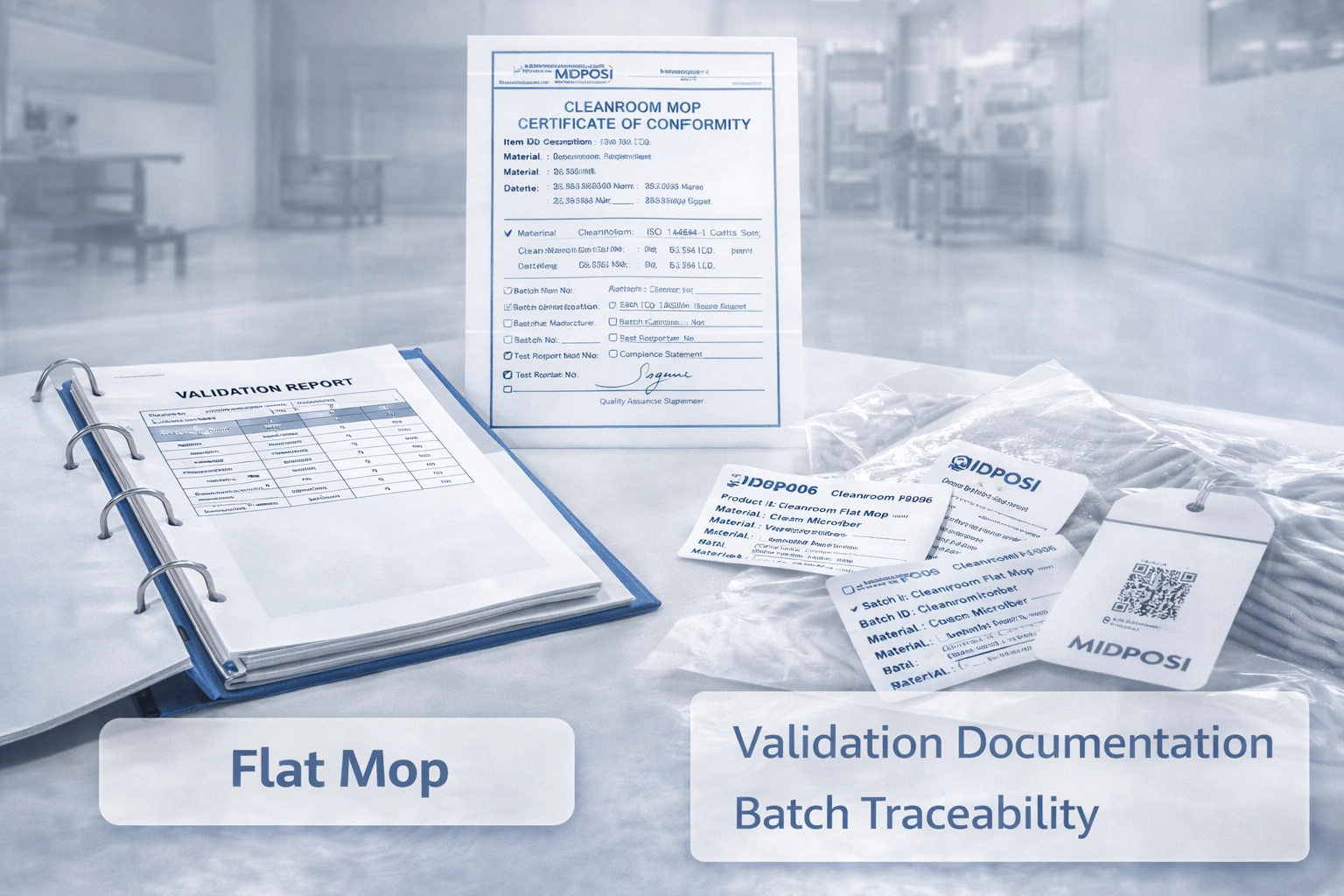
Procurement Checklist (Cleanroom Cleaning Mop)
- ਜ਼ੋਨ ਜੋਖਮ ਨੂੰ ਪਰਿਭਾਸ਼ਿਤ ਕਰੋ: match mop type to cleanroom classification and contamination risk.
- SOP ਫਿੱਟ ਦੀ ਪੁਸ਼ਟੀ ਕਰੋ: wetting method, disinfectant, contact time, and acceptance criteria.
- ਕੰਟਰੋਲ ਪਰਿਵਰਤਨਸ਼ੀਲਤਾ: prioritize repeatability for GMP-critical zones.
- ਦਸਤਾਵੇਜ਼ਾਂ ਦੀ ਪੁਸ਼ਟੀ ਕਰੋ: traceability and quality controls for audit readiness.
- ਯੋਜਨਾ ਮਾਪਣਯੋਗਤਾ: stable supply, lead time, and batch-to-batch consistency.
Back to the sourcing hub: ਥੋਕ ਕਲੀਨਰੂਮ ਮੋਪ - ਸੰਪੂਰਨ ਗਾਈਡ.