Autoclavable cleanroom goggles are the reusable eye coverings that complete a sterile gowning set in EU GMP Grade B and Grade A access. Search interest in autoclavable cleanroom goggles, cleanroom goggles and sterile goggles shows that buyers want more than a product photo: they need to know when Annex 1 requires sterile eye coverings, how goggles fit with hoods and masks, and what to check before a laundry and sterilization program. This guide covers those points with confirmed standards language and a practical buyer checklist.
Resposta rápida: for Grade B (including interventions into Grade A), EU GMP Annex 1 requires a sterile face mask and sterile eye coverings (for example goggles) so that facial skin is covered and droplet and particle shedding is limited. Reusable eye coverings must be sterilized, kept within their hold time, inspected in intact packaging before use, and replaced if damaged or at the frequency set during qualification. Autoclavable cleanroom goggles are built for that reusable, steam-sterilized path.
Why cleanroom goggles are not the same as lab safety glasses
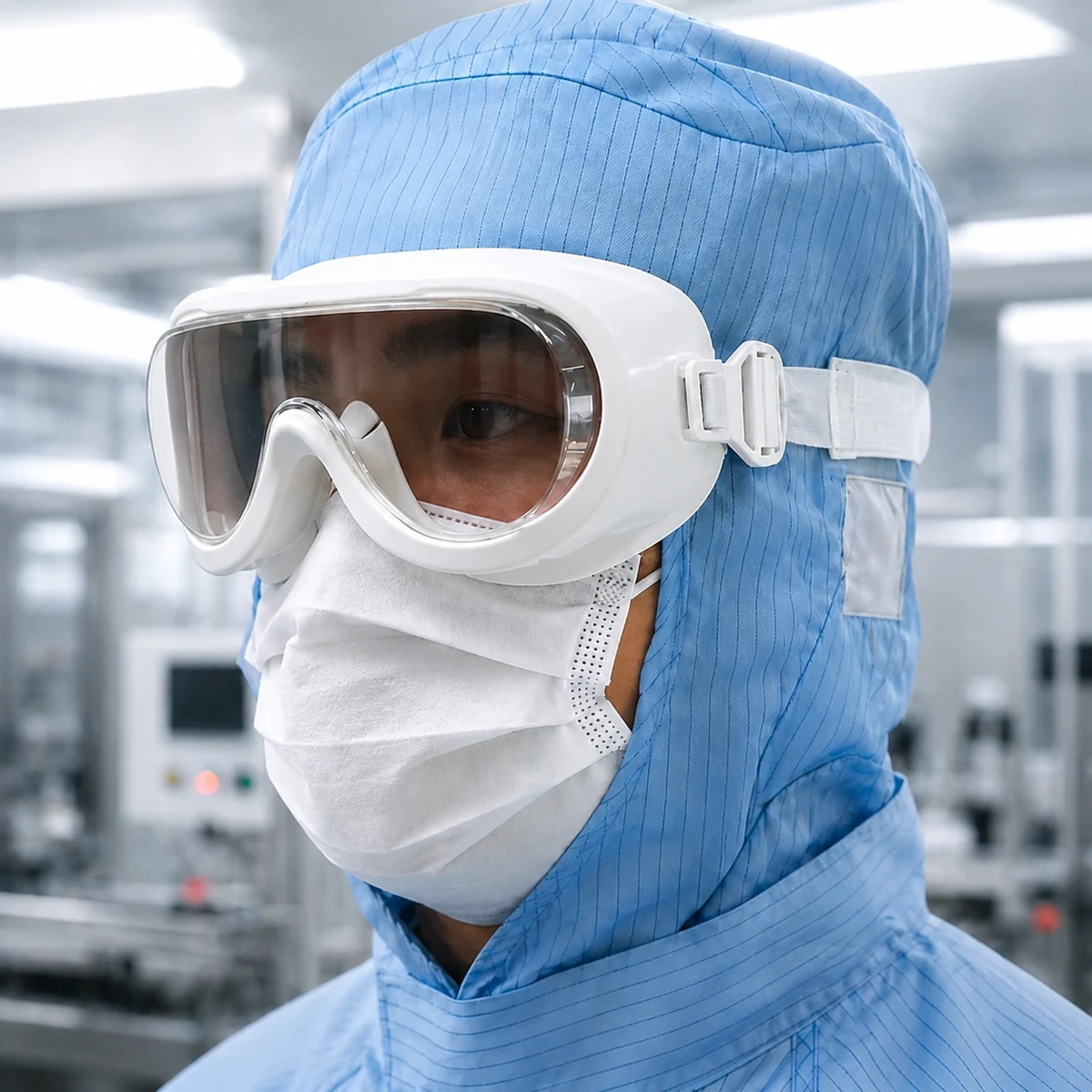
Ordinary safety glasses protect the wearer from impact or splash. Cleanroom goggles in an aseptic program also protect the product and the cleanroom from the operator. They:
- Form a seal around the eyes so skin and lashes are enclosed.
- Mate with the sterile face mask and hood so that no strip of facial skin is left open.
- Are made from materials that can be cleaned and, when required, steam sterilized without warping or heavy fogging.
- Are handled as controlled cleanroom items: bagged, sterilized, held and issued under procedure.
Impact ratings such as ANSI Z87.1 may still matter for occupational safety, but they do not replace cleanroom and sterility requirements. For fogging control tips, see how to solve goggle fogging e how to choose sterile goggles.
What Annex 1 says about sterile eye coverings
EU GMP Annex 1 (2022) is explicit for Grade B clothing, which also covers access and interventions into Grade A:
A sterile facemask and sterile eye coverings (e.g. goggles) should be worn to cover and enclose all facial skin and prevent the shedding of droplets and particles.
Related clauses that buyers and QA teams should build into SOPs:
- Sterilized garments and eye coverings must have completed sterilization, be within their specified hold time, and have packaging that is visually intact before use.
- Reusable garments, including eye coverings, must be replaced if damage is found, or at a set frequency determined during qualification studies.
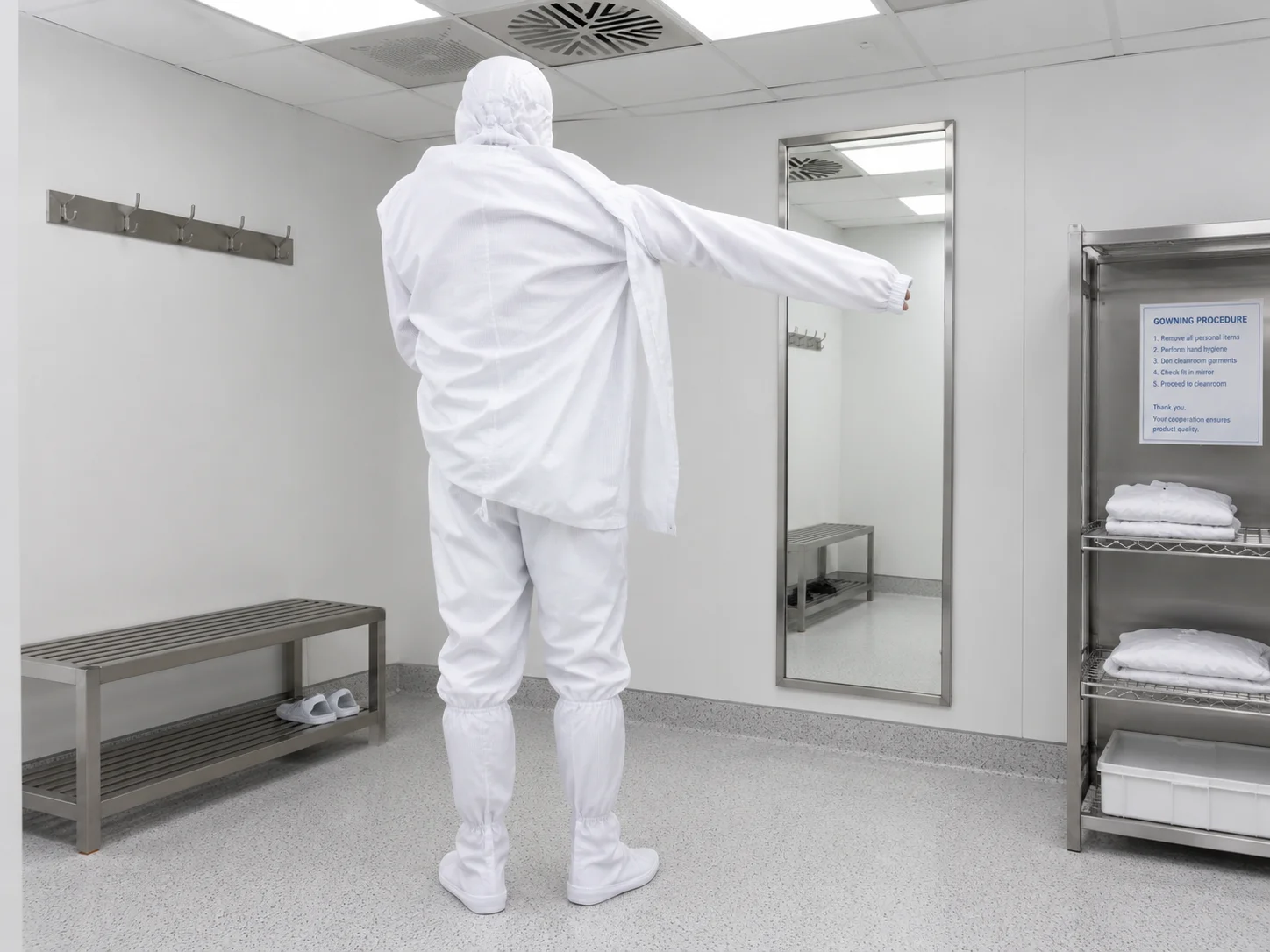
- Operators entering Grade B or A areas gown into sterilized protective garments, including eye coverings of an appropriate size, at each entry.
Grade C clothing in Annex 1 does not list sterile goggles as standard. Gloves and a face mask may still be required in Grade C or D when the Contamination Control Strategy (CCS) identifies a contamination risk. Many sites nevertheless issue the same sterilized goggle style across Grade B and higher-risk Grade C tasks to keep the kit simple.
Autoclavable vs disposable cleanroom goggles
| Opção | Best when | Watch-outs |
|---|---|---|
| Autoclavable (reusable) goggles | Daily aseptic operations with a qualified laundry and autoclave | Need cycle limits, inspection, anti-fog performance after many cycles |
| Disposable sterile goggles | Sites without laundry capacity, short campaigns, visitors | Higher unit cost, more packaging waste, size range may be limited |
Reusable autoclavable goggles usually win on cost per wear and fit consistency once the reprocessing path is qualified. Disposable sterile goggles remove laundry complexity. Some facilities keep both: reusable for operators, disposable for infrequent entries.
How autoclavable goggles fit the gowning sequence
Goggles are put on after the sterile hood and mask, or in the order your SOP defines, so that:
- Hair is already enclosed.
- The mask covers the mouth and nose.
- The goggle seal sits on skin or on the mask edge without gaps at the temples or nose bridge.
- The hood cape remains tucked into the coverall collar.
A hood that is too large or a mask that sits high will break the seal. Size the goggles with the same hood and mask models you issue in production. Our guides to cleanroom hats, caps and hoods, hood and face mask selection e o gowning procedure SOP by GMP grade show how the full set works together. For Grade B steps, see GMP Grade B gowning.
Specification points for autoclavable cleanroom goggles
Optical and seal design
- Full enclosure around the eyes, not open-sided glasses.
- Soft gasket or flange that seals without painful pressure on long shifts.
- Compatibility with the face mask bridge and hood opening used on site.
- Optical clarity that remains acceptable after repeated autoclave cycles.
Materials and autoclave compatibility
- Frames and lenses rated for the steam sterilization cycle your laundry uses.
- Resistance to warping, crazing and permanent fogging after the planned cycle count.
- Surfaces that can be cleaned before sterilization without trapping residue.
Anti-fog performance
Fogging is one of the main reasons operators break aseptic technique by adjusting goggles. Prefer designs with proven anti-fog coatings or ventilation that does not compromise the cleanroom seal, and re-check performance after laundry qualification, not only on new samples.
Packaging and hold time
Sterile goggles should arrive in packaging that supports aseptic presentation, with a defined hold time after sterilization. Operators must be trained to reject packs that are wet, torn or past hold time.
Reprocessing, qualification and retirement
Treat goggles like other reusable cleanroom garments:
- Clean and inspect before packing.
- Sterilize with a validated steam cycle when sterile use is required.
- Store under controlled conditions for the approved hold time.
- Inspect packaging at issue and the goggles after doffing.
- Retire units that are scratched, cracked, permanently fogged or past the qualified cycle count.
Annex 1 expects the replacement frequency for reusable eye coverings to come from qualification studies, not from informal habit. Keep lot and cycle records so that each pair’s history is traceable.

Common audit findings with cleanroom goggles
- Operators enter Grade B without sterile eye coverings because the kit was incomplete at the change room.
- Goggles are sterilized but past hold time, or packaging is wet or torn and still issued.
- One universal size is stocked, so seals fail on some operators and they adjust goggles inside the aseptic area.
- Reusable goggles are used until they show clear damage, with no qualified retirement frequency.
- Anti-fog performance was checked only on new samples, not after the laundry and autoclave cycle used on site.
- Goggles, hoods and masks come from different suppliers and never leave a continuous seal line at the temples.
Fixing these gaps is usually a documentation and inventory problem as much as a product problem: write the eye-covering steps into the gowning SOP, stock sized pairs within hold time, and retire pairs on the qualified schedule.
Buyer checklist
- Confirm whether Grade B / Grade A access requires sterile eye coverings under your CCS (Annex 1 expects them for Grade B).
- Match goggle size and seal to your hood and mask models.
- Ask for autoclave cycle guidance, anti-fog behavior after cycling, and packaging format.
- Define inspection criteria and a maximum cycle or service life.
- Plan inventory so that every entry has a sterilized pair within hold time.
- Include goggles in OEM/private-label gowning kits if distributors need branded sets — see OEM & Private Label.
- Request quality certificates and any available test documentation; MIDPOSI’s garment system certificates are summarized on Qualidade & Certificações.
Autoclavable goggles from MIDPOSI
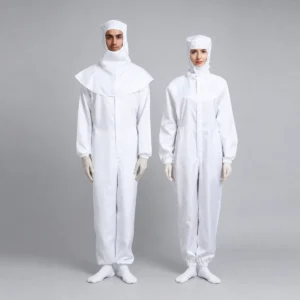
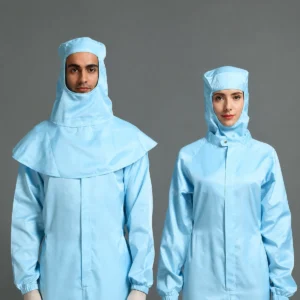
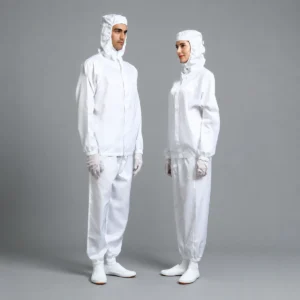
MIDPOSI has made cleanroom products since 2004 and is ISO 13485 certified, with a CE certificate. Our óculos de proteção para salas limpas autoclaváveis are intended to be ordered with hoods, masks and coveralls as a gowning set for EU GMP Grade A/B, C and D programs. Related reusable garments are rated for up to 100 autoclave cycles; particle, filtration and ESD test reports for garments are available on request. Production orders start at 50 pieces per style, samples and trial orders start at 10 pieces, and the lead time is about 25 days.
Use o cleanroom garment selector to build a full set, or the cleanroom quote estimator to plan quantities before you ask for a quote.
Perguntas frequentes
Does Annex 1 require sterile goggles in Grade B?
Yes. Annex 1 states that a sterile face mask and sterile eye coverings (for example goggles) should be worn in Grade B, including access to Grade A, to cover facial skin and limit droplet and particle shedding.
Are autoclavable goggles required in Grade C?
Not by the default Grade C clothing description in Annex 1. Gloves and a face mask may be required when the CCS identifies a risk. Some sites still use sterilized goggles in Grade C for consistency with Grade B kits.
How often should reusable goggles be replaced?
Annex 1 says reusable eye coverings should be replaced if damaged, or at a frequency set during qualification. Scratching, seal failure and permanent fogging are common retirement triggers.
Can cleanroom goggles be autoclaved with garments?
Only if the goggle materials are rated for the same steam cycle and your qualification covers co-processing or separate processing. Many sites sterilize goggles on their own validated load pattern.
What should I order with the goggles?
Order the matching hood, face mask and coverall sizes so that the seal line is continuous. MIDPOSI can supply goggles with autoclavable hoods e coveralls as one program.
Get samples or a quote
Share your room grades, current hood and mask models and the quantities you need. We can recommend matching autoclavable goggles and send samples from 10 pieces. Send an inquiry through our contact form ou message us on WhatsApp.