
A rastreabilidade de lotes de consumíveis para salas limpas não é apenas um exercício de documentação. É a espinha dorsal operacional que permite aos fabricantes, às equipes de processamento estéril e às instalações regulamentadas vincular matérias-primas, produção, esterilização, distribuição e uso final em uma cadeia verificável de evidências.
Em ambientes farmacêuticos, de biotecnologia, de semicondutores e de dispositivos médicos, a rastreabilidade incompleta cria riscos muito além das lacunas na documentação. Atrasa as investigações, enfraquece a resposta ao recall, complica as auditorias e mina a confiança nos programas de controlo de contaminação. Um sistema robusto deve ajudar as equipes de qualidade a passar da coleta reativa de registros para o controle proativo.

A rastreabilidade de lotes para consumíveis para salas limpas significa manter um registro completo e recuperável de cada lote, desde o material recebido até a fabricação, esterilização, distribuição e uso final. Na prática, um sistema eficaz deve identificar o que foi feito, a partir de que materiais de origem, sob que condições de processo, para onde foi enviado e quais clientes ou utilizadores internos foram afetados caso ocorresse um desvio ou recolha.
Para instalações regulamentadas, os melhores sistemas não estão apenas em conformidade no papel. Eles são rápidos de pesquisar, fáceis de verificar, prontos para auditoria e capazes de suportar um recall direcionado em horas, em vez de dias.
A forte rastreabilidade de lotes vincula lotes de matérias-primas, lotes de produção, registros de esterilização, dados de remessa e consumo do usuário final em uma única cadeia de evidências.
Os sistemas preparados para auditoria devem apoiar a investigação rápida e a recolha direcionada, e não apenas o armazenamento passivo de registos desconectados.
Uma lógica clara de numeração de lote reduz a confusão do operador e melhora a geração de relatórios, rotulagem, liberação e tratamento de reclamações posteriores.
A rastreabilidade direta, a rastreabilidade retroativa e a simulação de recall devem ser testadas periodicamente para provar que o sistema realmente funciona sob pressão.
Muitas instalações já registram números de lote em caixas, rótulos ou documentos de esterilização. O problema é que estes registos são frequentemente fragmentados em registos de compras, armazenamento, produção, esterilização, logística e utilizadores finais. Quando ocorre uma reclamação, evento de contaminação ou solicitação de auditoria, a equipe precisa reconstruir o histórico manualmente.
Essa abordagem é lenta, propensa a erros e cara. Um programa de rastreabilidade maduro reduz o tempo de investigação, melhora a confiança na liberação e limita o escopo das ações de recall. Ele também oferece suporte à análise de tendências, gerenciamento de fornecedores, CAPA e comunicação com o cliente.

Um sistema de rastreabilidade de consumíveis para salas limpas deve ser projetado em torno de como as organizações regulamentadas investigam desvios e comprovam o controle. Para muitos usuários, as referências mais relevantes incluem o Anexo 1 das BPF da UE, as expectativas de manutenção de registros cGMP da FDA e os requisitos de rastreabilidade ISO 13485 para sistemas de qualidade relacionados a dispositivos médicos.
| Regulamento/Norma | Área de foco | Significado Operacional |
|---|---|---|
| EU GMP Annex 1 | Rastreabilidade, registros de lote, capacidade de recall | As instalações devem ser capazes de identificar rapidamente os materiais e produtos acabados afetados durante investigações ou ações de mercado. |
| FDA 21 CFR 211.180/211.198 | Registros de distribuição, arquivos de reclamações, retenção | Os registros devem apoiar a avaliação de reclamações, a revisão do impacto do lote e a execução controlada de recall. |
| ISO 13485 Seção 7.5.8 | Identificação e recuperação exclusivas | A organização deve manter procedimentos de rastreabilidade documentados e ser capaz de recuperar registros vinculados quando necessário. |
Para compradores e equipes de controle de qualidade, isso significa que a rastreabilidade não deve ser tratada como uma função exclusiva do armazém. É um requisito de qualidade multifuncional que abrange controle de fornecedores, documentação de produção, liberação de esterilização, histórico de remessas e responsabilidade do usuário final.
Uma maneira útil de estruturar a rastreabilidade de lotes é dividir o sistema em cinco camadas conectadas: matérias-primas, fabricação, esterilização, distribuição e consumo. Essa estrutura ajuda as equipes a definir propriedade, campos de dados e pontos de verificação sem perder visibilidade de ponta a ponta.
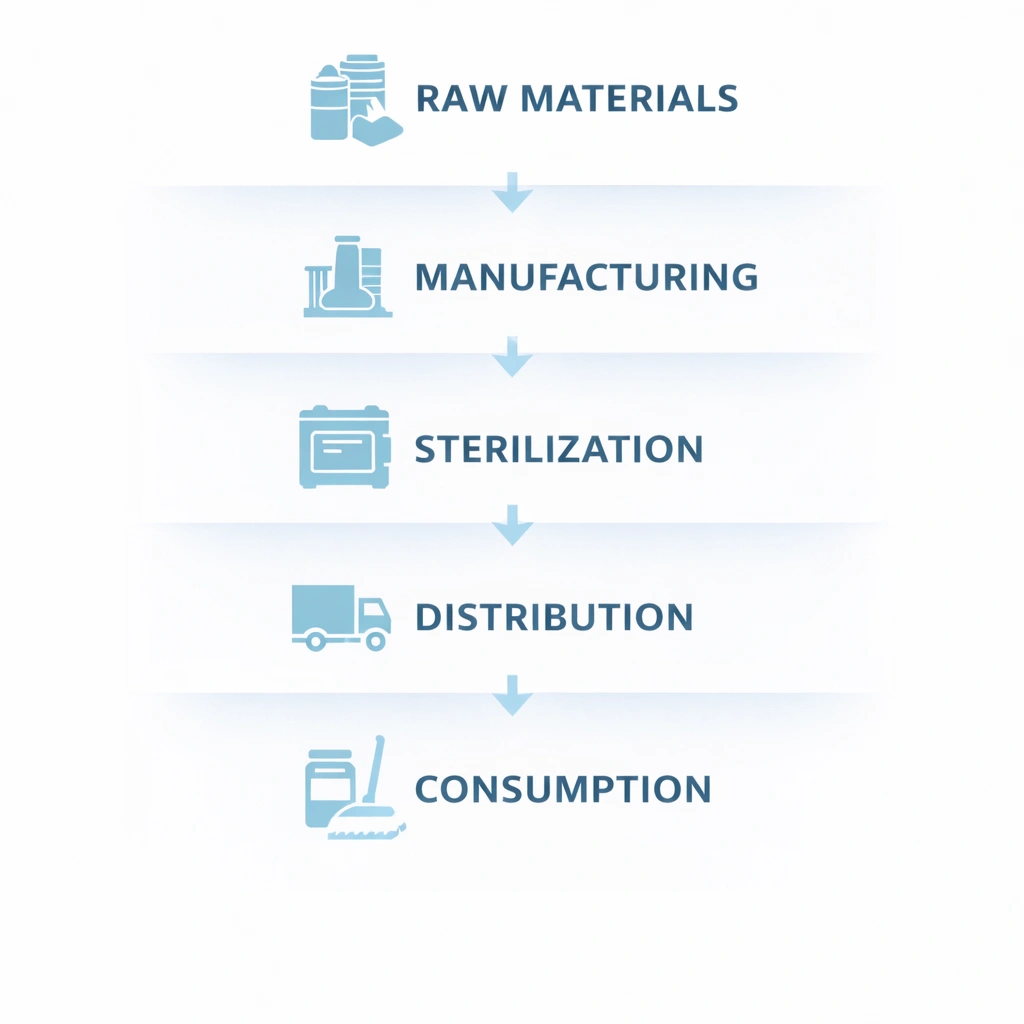
Capture a identidade do fornecedor, o número de lote do fornecedor, a data de recebimento, o status da inspeção recebida e certificados relevantes, como COA ou CoC. Este é o ponto de partida para o controle upstream.
Registre quais materiais foram usados, qual linha produziu o lote, quem operou ou liberou o processo e quais verificações de CQ finais ou em processo foram realizadas.
Para consumíveis estéreis, vincule o lote de produção ao lote de esterilização, aos parâmetros do ciclo, ao método de esterilização, ao status de liberação e a qualquer evidência de validação.
Vincule números de lote a clientes, quantidades de remessa, datas de remessa, informações da transportadora e detalhes de destino. Isto é essencial para a triagem de reclamações e contenção de recalls.
Onde o modelo de uso exigir, mantenha registros do lado do usuário do número do lote, data de uso, localização e rota de descarte. Isto é particularmente valioso em ambientes GMP de alto risco.
O número do lote deve ser maior que um carimbo de série. Deve suportar interpretação rápida, armazenamento preciso, apresentação de rótulo limpo e manuseio manual com baixo erro. Um formato estruturado também torna a pesquisa e os relatórios digitais mais confiáveis.
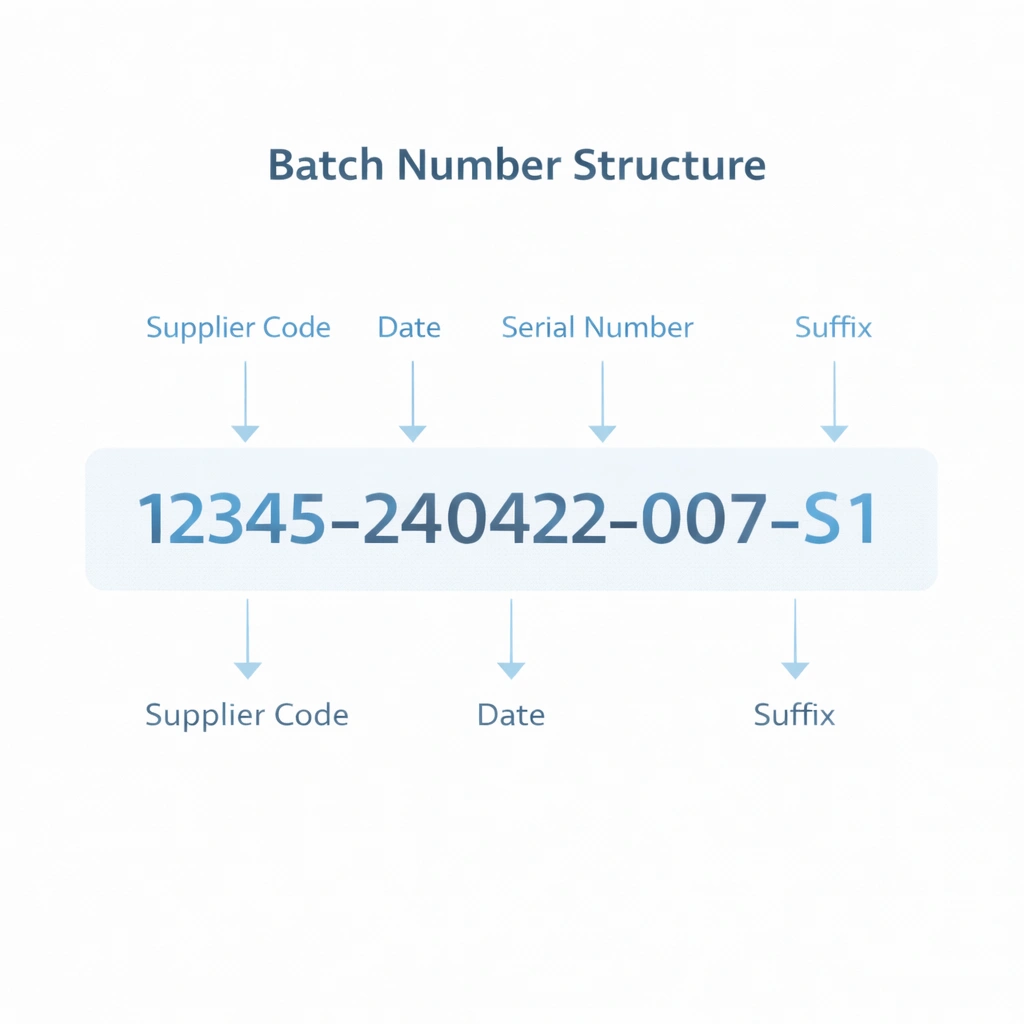
| Elemento de lote | Exemplo | Por que é importante |
|---|---|---|
| Código do fornecedor/fabricante | POSIÇÃO MÉDIA | Identifica a origem da fabricação e separa marcas, locais ou fluxos de fornecimento. |
| Segmento de data | 06/04/2026 | Ajuda os operadores a identificar rapidamente a cronologia da produção e a lógica de retenção. |
| Número de série | 001 | Diferencia vários lotes produzidos no mesmo dia ou janela de ciclo. |
| Sufixo/Marcador de Processo | A/B/C | Útil para distinções de fluxo de trabalho de produção, esterilização, reesterilização ou controle de qualidade. |
Mesmo uma forte rotulagem física não é suficiente se os registos de apoio estiverem incompletos. Um arquivo de rastreabilidade defensável deve permitir que um revisor passe de um lote acabado de volta para os materiais de origem, e de um material de origem para cada lote acabado afetado e remessa do cliente.
Lote do fornecedor, quantidade recebida, resultado da inspeção, verificação de documentos, status de liberação.
Número do lote, operador, linha, data do processo, uso de material, pontos de verificação de CQ, desvios.
Lote de esterilização, dados do ciclo, decisão de liberação, quantidade enviada pelo cliente, destino, vinculação de reclamação.
O conjunto de documentação também deve ser fácil de recuperar durante auditorias de fornecedores, qualificação de clientes, tratamento de reclamações e revisões de CAPA. Se a localização do arquivo correto demorar muito, o sistema será funcionalmente mais fraco do que parece no papel.
Um sistema de rastreabilidade deve ser testado e não presumido. A abordagem mais prática é executar três tipos de exercícios: rastreabilidade direta, rastreabilidade retroativa e simulação de recall. Esses testes revelam se os campos de dados estão realmente vinculados, se as equipes sabem onde procurar e se o tempo de resposta atende às expectativas internas.
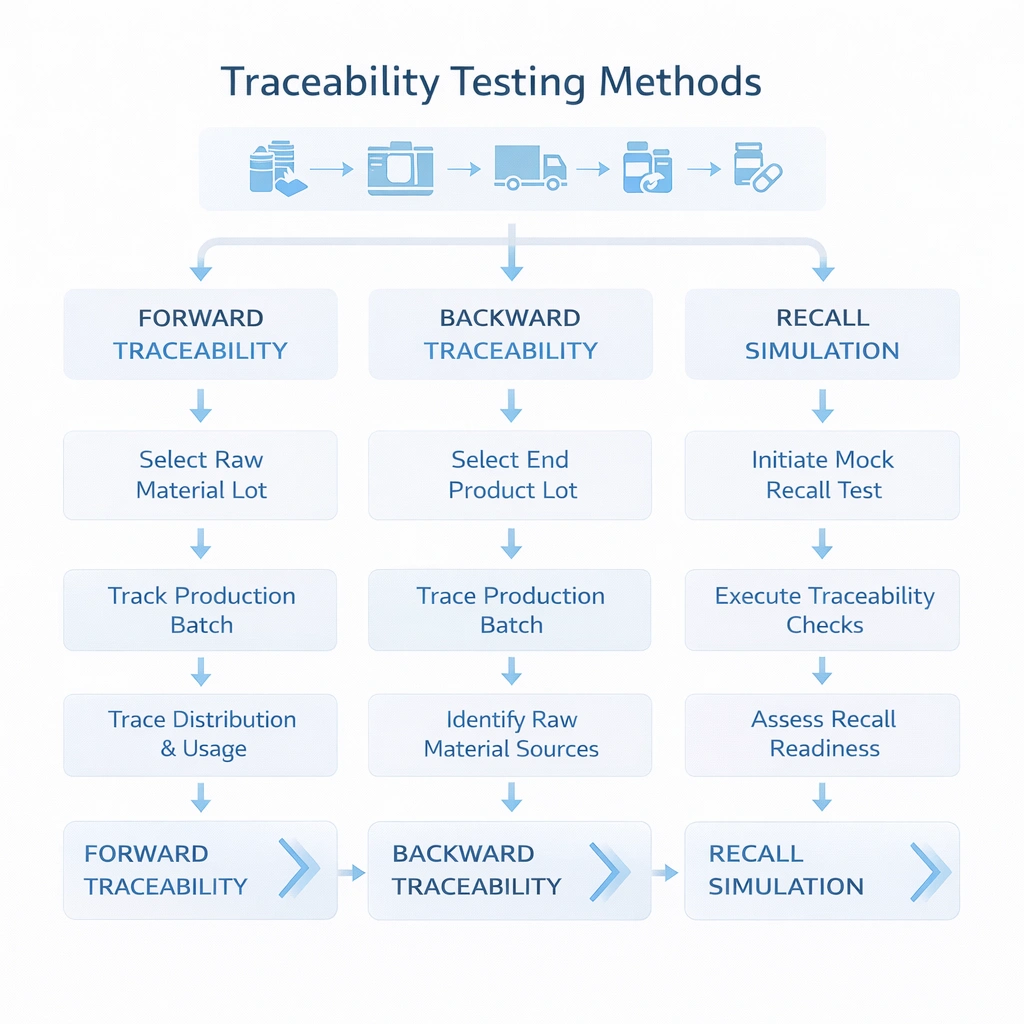
Comece com um lote de material recebido e determine quais lotes de produção, ciclos de esterilização e remessas de clientes foram afetados.
Comece com uma reclamação ou lote usado pelo cliente e rastreie os materiais de origem, os registros do processo e o status de liberação.
Selecione um lote e simule um recall direcionado: identifique cada cliente afetado, quantidade, rota de remessa e entre em contato com o proprietário. Registre o tempo total necessário e as lacunas de dados encontradas. Em ambientes de alto controle, este exercício é uma das maneiras mais rápidas de avaliar se o sistema está genuinamente pronto para recall.
| Tipo de teste | Pergunta principal | Resultado Esperado |
|---|---|---|
| Rastreabilidade direta | Para onde foi essa entrada? | Registros de produção, esterilização e remessa afetados |
| Rastreabilidade retroativa | O que criou esse resultado? | Material de origem, histórico do processo, evidências de liberação |
| Simulação de recall | Podemos agir com rapidez e precisão? | Lista de clientes, mapa de quantidade, tempo de resposta, registro de lacunas de dados |
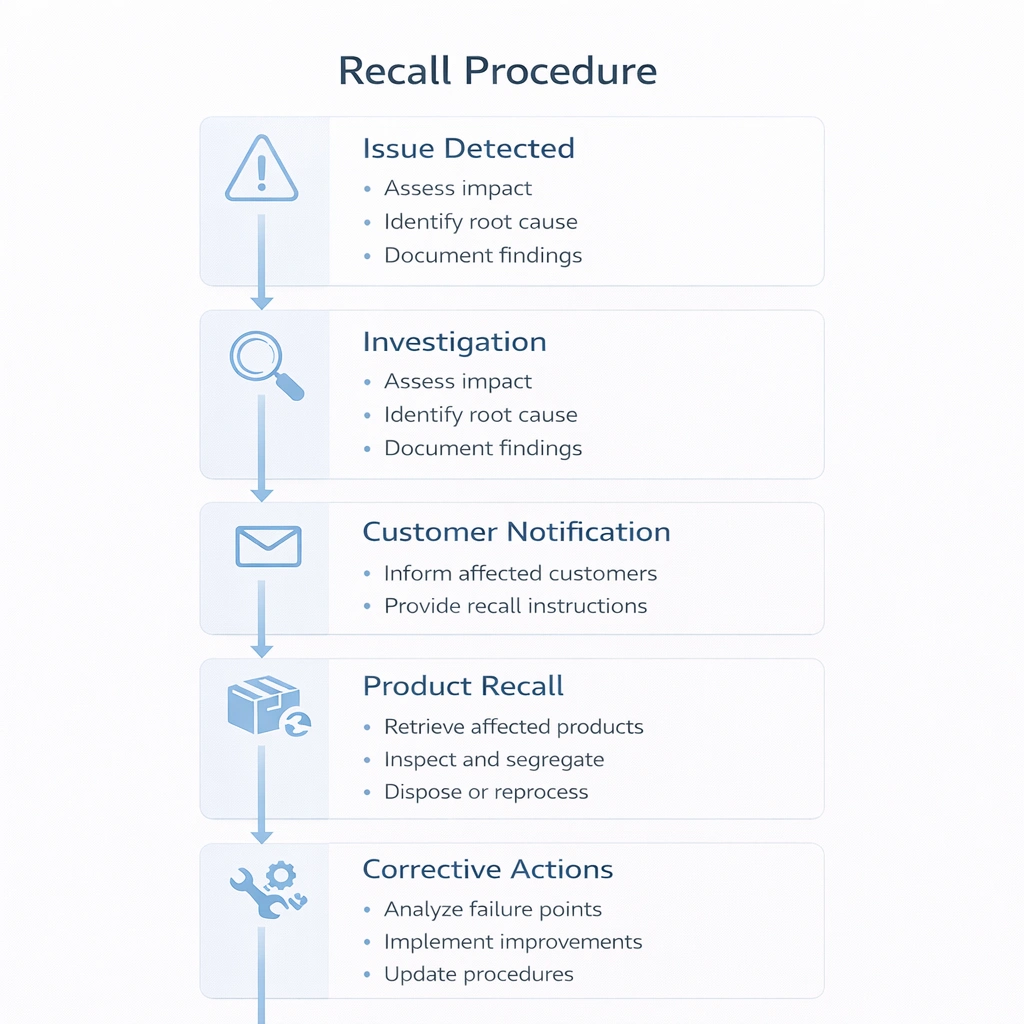
Um fluxo de trabalho de recall deve ser predeterminado e não improvisado. Quando surge um problema de qualidade, as equipes já devem saber como classificar o problema, identificar os lotes afetados, notificar as partes interessadas, interromper a distribuição adicional e documentar a causa raiz e as ações corretivas.
Os sistemas baseados em planilhas podem funcionar com baixa complexidade, mas à medida que a gama de produtos, o volume de clientes e os fluxos de trabalho de esterilidade se expandem, a rastreabilidade eletrônica geralmente se torna mais prática. Os sistemas com suporte de código de barras ou RFID reduzem o risco de entrada manual e tornam a simulação de recall mais rápida e repetível.

Defina campos de dados, propriedade, lógica de código de lote, regras de retenção e escopo de rastreabilidade para linhas estéreis e não estéreis.
Padronize formulários, captura de lotes de fornecedores, registros de produção, vínculo de esterilização e registros de remessa.
Execute testes de rastreabilidade direta, rastreabilidade retroativa e simulação de recall e documente as lacunas encontradas.
No mínimo, o sistema deve conectar lotes de materiais recebidos, lotes de produção, registros de liberação ou esterilização, quando aplicável, histórico de remessas e a capacidade de identificar clientes ou usuários afetados durante uma investigação.
A rotulagem do lote identifica um grupo de produtos. Links de rastreabilidade completos que rotulam materiais upstream, registros de processos, decisões de liberação e distribuição downstream ou registros de uso.
Muitas equipes de qualidade realizam isso pelo menos uma vez por ano, enquanto operações de maior risco ou mais complexas podem testar com mais frequência, especialmente após mudanças no sistema, mudanças de fornecedores ou ações importantes de CAPA.
Sim, para operações de baixo volume. Mas quando a variação do produto, o controle de esterilidade ou a complexidade do cliente aumentam, os sistemas digitais geralmente proporcionam melhor velocidade de recuperação, redução de erros e controle de auditoria.
Porque os produtos estéreis exigem um controle mais rígido do histórico do lote, da ligação da esterilização, das evidências de liberação e da visibilidade posterior caso surja uma reclamação, preocupação de esterilidade ou decisão de recall.
A Midposi oferece suporte a compradores regulamentados com consumíveis para salas limpas projetados para ambientes controlados, incluindo comunicação orientada a documentação para qualificação, revisão do status de esterilidade e discussões sobre rastreabilidade de lotes.