
Este procedimento operacional padrão estabelece uma abordagem baseada em risco para monitoramento ambiental em salas limpas GMP, abrangendo seleção de locais EM, procedimentos de amostragem, frequência de monitoramento, limites de alerta e ação, tendências, CAPA, controle de mudanças e treinamento.
Ele foi projetado para instalações farmacêuticas, de biotecnologia, de dispositivos médicos e de fabricação controlada que precisam de um programa de monitoramento ambiental documentado e defensável, alinhado com o risco de salas limpas, a criticidade do processo e as expectativas de controle de contaminação.

Um SOP de monitoramento ambiental baseado em risco ajuda as salas limpas GMP a manter o controle microbiológico, definindo locais de monitoramento, métodos de amostragem, frequências, limites de alerta, níveis de ação, regras de tendências e fluxos de trabalho CAPA com base no risco de contaminação.
Use um modelo de risco estruturado para priorizar pontos de monitoramento por atividade de pessoal, perturbação do fluxo de ar, proximidade do Grau A, transferência de material e taxa histórica de alerta.
Alinhe os métodos e frequências de monitoramento com a classificação da sala limpa, a pontuação de risco e a criticidade do processo.
Dados de monitoramento de tendências continuamente e definição de alertas e respostas de ação antes que ocorram excursões.
Vincule alertas a investigação documentada, análise de causa raiz, ação corretiva e verificação de eficácia.
Controle todas as alterações do programa EM por meio de controle de alterações aprovado pelo controle de qualidade e treinamento periódico.
| Versão | Data | Descrição | Preparado pela | Aprovado por |
|---|---|---|---|---|
| 1,0 | 23/03/2026 | Edição inicial | Garantia de Qualidade | Gerente de Qualidade |
Este POP estabelece uma abordagem baseada em riscos para Monitoramento Ambiental (EM) em salas limpas de BPF. O objetivo é garantir que os ambientes de salas limpas permaneçam dentro dos limites microbiológicos especificados, fornecer uma estrutura sistemática para a seleção de locais EM, estabelecer frequências de monitoramento apropriadas aos níveis de risco, definir procedimentos para amostragem, análise e gerenciamento de dados e apoiar a conformidade com o Anexo 1 das BPF da UE, cGMP da FDA e expectativas operacionais de salas limpas baseadas na ISO.
Nota MIDPOSI: Os resultados do monitoramento ambiental estão intimamente ligados à execução da limpeza, disciplina de vestimenta, ferramentas para salas limpas e consumíveis para controle de contaminação. Para controles de limpeza relacionados, consulte o guia da MIDPOSI para esfregona farmacêutica para limpeza de salas limpas SOP.
| Prazo | Definição |
|---|---|
| Amostragem de ar ativa | Amostragem volumétrica de ar usando impactadores, amostradores de fenda ou outros dispositivos qualificados para capturar microorganismos transportados pelo ar. |
| Nível de alerta | Um nível especificado de contaminação microbiana que indica um possível desvio das condições normais de operação. |
| Nível de ação | Um nível específico de contaminação microbiana que requer investigação, resposta documentada e ação corretiva. |
| Zona Crítica | Uma área de Grau A ou de maior risco onde podem ocorrer operações assépticas ou exposição direta ao produto. |
| Matriz de localização EM baseada em risco | Uma ferramenta estruturada de avaliação de risco para pontuar locais EM com base em atividade, fluxo de ar, movimentação de materiais, proximidade de operações críticas e dados históricos. |
| Placa de assentamento | Uma placa de ágar nutriente exposta ao ambiente para monitoramento passivo do ar durante um período de exposição definido. |
| CAPA | Ação Corretiva e Preventiva usada para tratar falhas confirmadas ou potenciais do sistema de qualidade. |
| Papel | Responsabilidades |
|---|---|
| Gerente de Garantia de Qualidade | Aprovação geral do programa EM, controle de mudanças, conformidade regulatória, revisão de desvios e aprovação CAPA. |
| Gerente de Microbiologia | Execução de programas EM, qualificação de métodos, revisão de amostras, apoio à investigação e supervisão de treinamento. |
| Técnico em Microbiologia | Coleta de amostras, incubação, leitura de colônias, entrada de dados e notificação imediata de alertas ou resultados de ações. |
| Gerente de Produção | Manutenção da operação de salas limpas, controle do comportamento do pessoal, conformidade com vestimentas e suporte à produção durante as investigações. |
| Gerente de Engenharia | Manutenção de HVAC, verificação de padrão de fluxo de ar, suporte de cascata de pressão e ações de CAPA relacionadas à engenharia. |
| Gerente de Controle de Qualidade | Revisão de dados, análise de tendências, avaliação de alertas recorrentes e suporte técnico para análise de causa raiz. |
Todos os locais de monitorização ambiental serão seleccionados utilizando um quadro de avaliação baseado no risco. O objetivo é concentrar a intensidade da amostragem em áreas com maior risco de contaminação, maior exposição ao produto, maior atividade do pessoal, maior perturbação do fluxo de ar e histórico de alertas recorrentes.
RISK SCORE = (Personnel Activity × 0.30) + (Airflow Disturbance × 0.25)
           + (Proximity to Critical Zone × 0.20) + (Material Transfer × 0.15)
           + (Historical Alert Rate × 0.10)
Faixa de pontuação: 0–100. A pontuação deve ser revisada durante a qualificação inicial da sala limpa, após alterações de layout, após alterações significativas no processo e durante a revisão periódica do programa EM.
| Pontuação de risco | Classificação | Monitoramento necessário |
|---|---|---|
| 80–100 | Crítico | É necessário monitoramento contínuo ou de frequência muito alta. |
| 60–79 | Alto | Monitoramento de local fixo pelo menos uma vez por turno ou por período de produção definido. |
| 40–59 | Moderado | Monitoramento rotativo, normalmente semanal ou baseado na frequência do processo. |
| 20–39 | Baixo | Monitoramento periódico, normalmente mensal ou durante verificação de rotina. |
| 0–19 | Mínimo | O monitoramento pode não ser necessário, a menos que alterações de risco ou dados de tendências indiquem preocupação. |
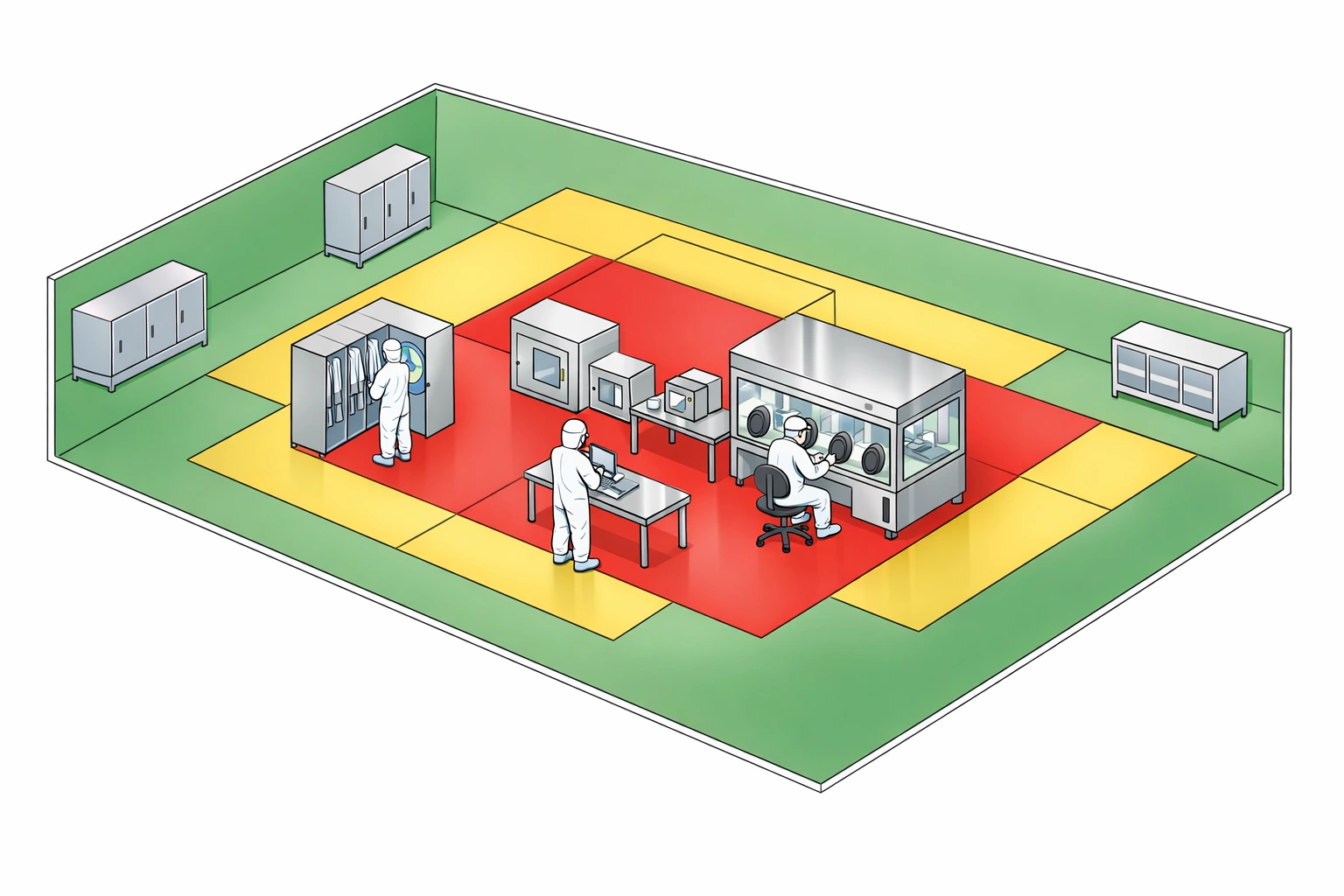
Os locais e frequências de amostragem devem ser atribuídos de acordo com o grau da sala limpa, a pontuação de risco, o risco de exposição do produto, a taxa histórica de alerta e o tráfego operacional. Áreas de maior grau exigem frequência mais restrita, justificativa mais forte e menor tolerância a excursões.
| Classe de sala limpa | Prioridade EM típica | Lógica de Amostragem |
|---|---|---|
| Nota A | Crítico | Monitore zonas críticas, intervenções assépticas, pontos de enchimento, áreas expostas de produtos e locais diretamente afetados pela primeira ventilação. |
| Série b | Alto | Monitore o ambiente de fundo em torno do Grau A, rotas de movimentação de pessoal, pontos de transferência e zonas de intervenção. |
| Grau C | Moderado | Monitore áreas de apoio, salas de preparação, áreas de preparação de equipamentos e zonas com movimentação de materiais. |
| Grau D | Baixo a moderado | Monitore áreas de suporte de baixo risco, corredores de entrada, áreas de preparação e locais com histórico de alertas recorrentes. |
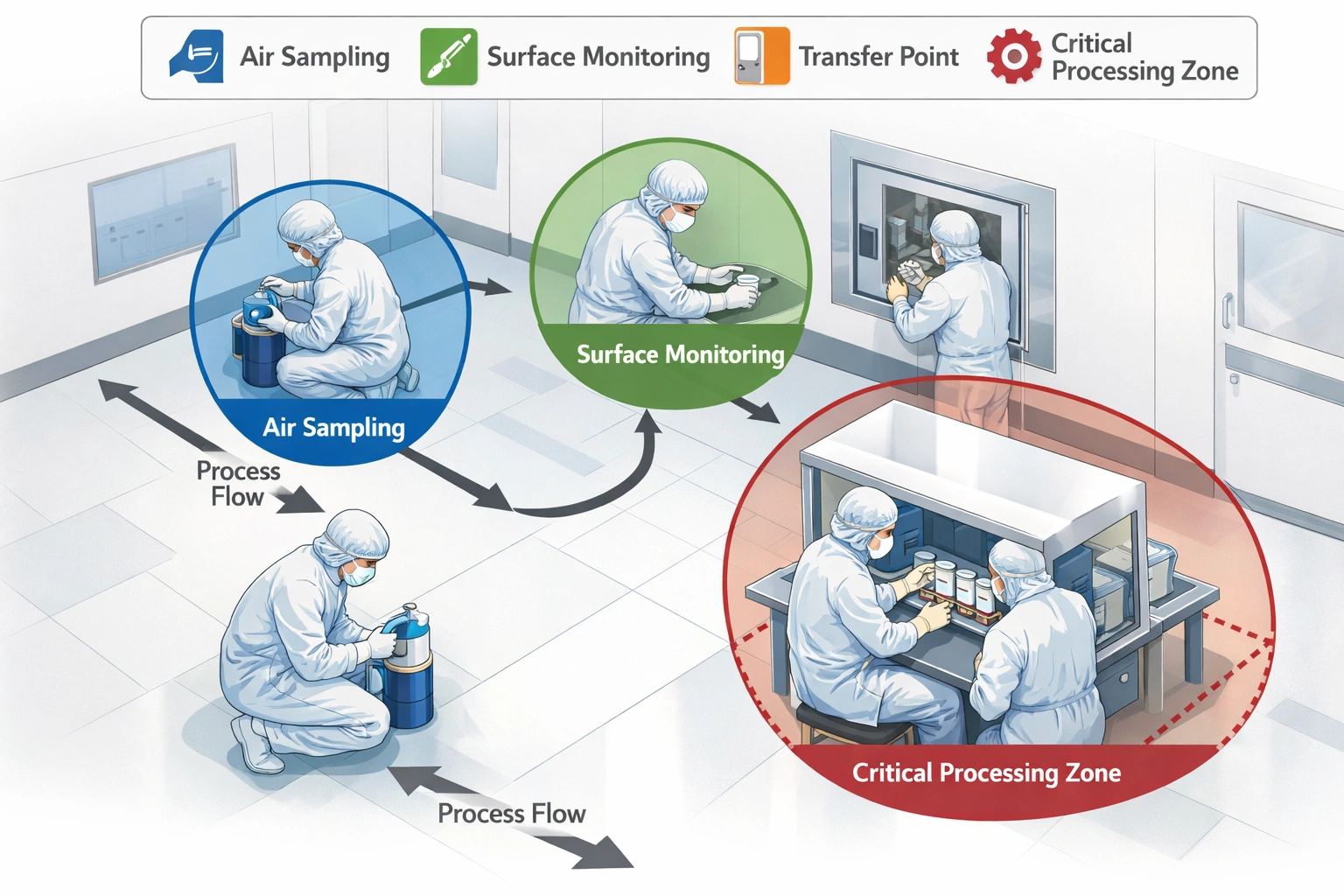
| Equipamento | Especificação | Colocação | Taxa de fluxo | Duração |
|---|---|---|---|---|
| Amostrador SAS ou Amostrador de Ar Qualificado | Dispositivo de estágio único ou aprovado pela instalação | Perto da superfície crítica sem interromper o fluxo de ar do processo | Qualificação por equipamento | Por plano de amostragem e classificação da área |
| Tipo de placa | Tamanho | Colocação | Período de exposição | Altura |
|---|---|---|---|---|
| TSA | 90mm | Ponto de monitoramento abaixo ou próximo do definido | Por SOP ou duração do processo | Representante da altura de trabalho |
| IASD | 90mm | Adjacente ao ponto de monitoramento definido | Por SOP ou duração do processo | Representante da altura de trabalho |
O monitoramento de superfície deve se concentrar em áreas adjacentes de contato com o produto, pontos de transferência, superfícies frequentemente tocadas, interfaces de equipamentos, pisos próximos a zonas de tráfego intenso e locais com tendências históricas de alerta. O monitoramento do pessoal deve incluir luvas, mangas de avental, tórax, antebraços ou outros locais definidos no local com base no risco do uso de avental e na atividade asséptica.
Os resultados do monitoramento de superfície podem ser afetados pelas ferramentas de limpeza do piso e pela técnica do operador. As instalações que analisam repetidas excursões relacionadas ao piso também podem avaliar sistemas de esfregões planos para salas limpas, esfregões de microfibra para salas limpas, e documentos de validação de esfregões para salas limpas.
A frequência de monitoramento deve ser atribuída de acordo com o grau da sala limpa, pontuação de risco, criticidade do processo e tendência histórica de desempenho. Locais críticos e de alto risco exigem revisão contínua ou uma vez por turno, enquanto locais de risco moderado e baixo podem usar programações rotativas semanais ou mensais.
| Categoria de risco | Frequência Típica | Locais de exemplo |
|---|---|---|
| Crítico | Contínuo, por lote ou por operação | Zonas críticas de grau A, intervenções assépticas, áreas expostas a produtos estéreis |
| Alto | Cada turno ou cada dia de produção | Fundo de grau B, pontos de transferência, superfícies de alto toque |
| Moderado | Programação semanal ou rotativa | Salas de apoio de grau C, zonas de preparação, áreas de preparação de equipamentos |
| Baixo | Verificação mensal ou periódica | Corredores de grau D, zonas de apoio ao armazenamento, áreas de baixo tráfego |

Os limites de alerta indicam desvio potencial das condições normais de operação e acionam a revisão. Os níveis de ação exigem investigação imediata, avaliação do impacto do produto quando relevante, ação corretiva e revisão da eficácia. Os limites devem estar alinhados com o grau da sala limpa, o tipo de amostra, a criticidade do processo, a capacidade histórica e as expectativas regulatórias.
| Nível | Significado | Resposta Típica |
|---|---|---|
| Nível de alerta | Aviso antecipado de possível desvio das condições normais. | Documente, analise tendências, notifique a função responsável e considere um monitoramento aprimorado. |
| Nível de ação | Condição inaceitável confirmada ou excursão significativa. | Abra desvios, realize investigações, avalie o impacto do produto, defina CAPA e verifique a eficácia. |
| Alerta recorrente | Alerta repetido no mesmo local, método, tipo de organismo ou período de tempo. | Realize investigação de tendências e analise limpeza, pessoal, HVAC, fluxo de materiais e desempenho de ferramentas. |
Os dados devem ser revisados em tempo real sempre que possível e classificados por localização, grau, método, organismo, turno, campanha e histórico de excursões. Os painéis mensais de KPI devem apoiar a revisão do controle de qualidade, a revisão da gestão, as decisões de controle de contaminação e a priorização da CAPA.
Quando um alerta ou nível de ação é excedido, a investigação deve avaliar o erro de amostragem, o comportamento do pessoal, a execução da limpeza, o desempenho da ferramenta da sala limpa, a condição do HVAC, a transferência de material, o status do equipamento e a atividade do processo no momento da amostragem.
[ALERT OR ACTION TRIGGERED]
       │
       ▼
Immediate Notification and Documentation
       │
       ▼
Initial Assessment
       │
   ┌───┼───┐
   │   │   │
Sampling  Personnel  Environment/
Method    Behavior    Equipment
   │   │   │
   └───┼───┘
       ▼
Root Cause Analysis
       │
       ▼
Corrective and Preventive Action
       │
       ▼
Effectiveness Verification and Trend Review
Se a CAPA apontar para o desempenho da ferramenta de limpeza, documentação do fornecedor ou risco de contaminação relacionado ao esfregão, revise as orientações da MIDPOSI sobre como qualificar um fornecedor farmacêutico de esfregões para salas limpas e rastreabilidade de lote para esfregonas farmacêuticas para salas limpas.
Qualquer alteração que afete o layout das instalações, equipamentos, fluxo de pessoal, local de monitoramento, pontuação de risco, método de amostragem, processo de limpeza de sala limpa, processo de vestimenta ou seleção de consumíveis deve ser revisada sob controle de alterações antes da implementação ou antes da produção ser retomada, quando aplicável.
Todo o pessoal relevante deve ser treinado antes de realizar atividades EM. O treinamento deve abranger comportamento asséptico, execução de amostragem, entrada de dados, resposta a alertas, fluxo de trabalho CAPA, requisitos de controle de alterações e expectativas de integridade de dados.
| Área de Treinamento | Obrigatório para | Freqüência |
|---|---|---|
| EM SOP e técnica de amostragem | Microbiologia e pessoal de amostragem | Atualização inicial e anual |
| Comportamento Asséptico e Vestimenta | Pessoal de sala limpa | Inicial, anual e acionado por desvio |
| Alerta/Resposta à ação | Controle de qualidade, controle de qualidade, produção, engenharia | Inicial e após alteração do SOP |
| Integridade de dados | Todo o pessoal que lida com registros EM | Atualização inicial e periódica |
O monitoramento ambiental está intimamente ligado às ferramentas de limpeza, vestimentas para salas limpas, consumíveis para controle de contaminação e documentação do fornecedor. Esses recursos MIDPOSI relacionados podem ajudar a conectar as descobertas EM com controles práticos de salas limpas.
A MIDPOSI fornece roupas para salas limpas, sistemas de esfregões e consumíveis para controle de contaminação para ambientes farmacêuticos, de biotecnologia, de dispositivos médicos e de fabricação controlada. Se suas tendências EM apontarem para riscos relacionados à execução de limpeza, vestimentas ou consumíveis, nossa equipe poderá ajudar a analisar opções de produtos adequados.