
A cleanroom flat mop system supports controlled cleaning of floors, walls, ceilings, and large surfaces in pharmaceutical, laboratory, electronics, and contamination-sensitive environments. Compared with traditional mops, flat mop systems provide broader surface contact, cleaner workflow control, and better suitability for cleanroom SOPs.
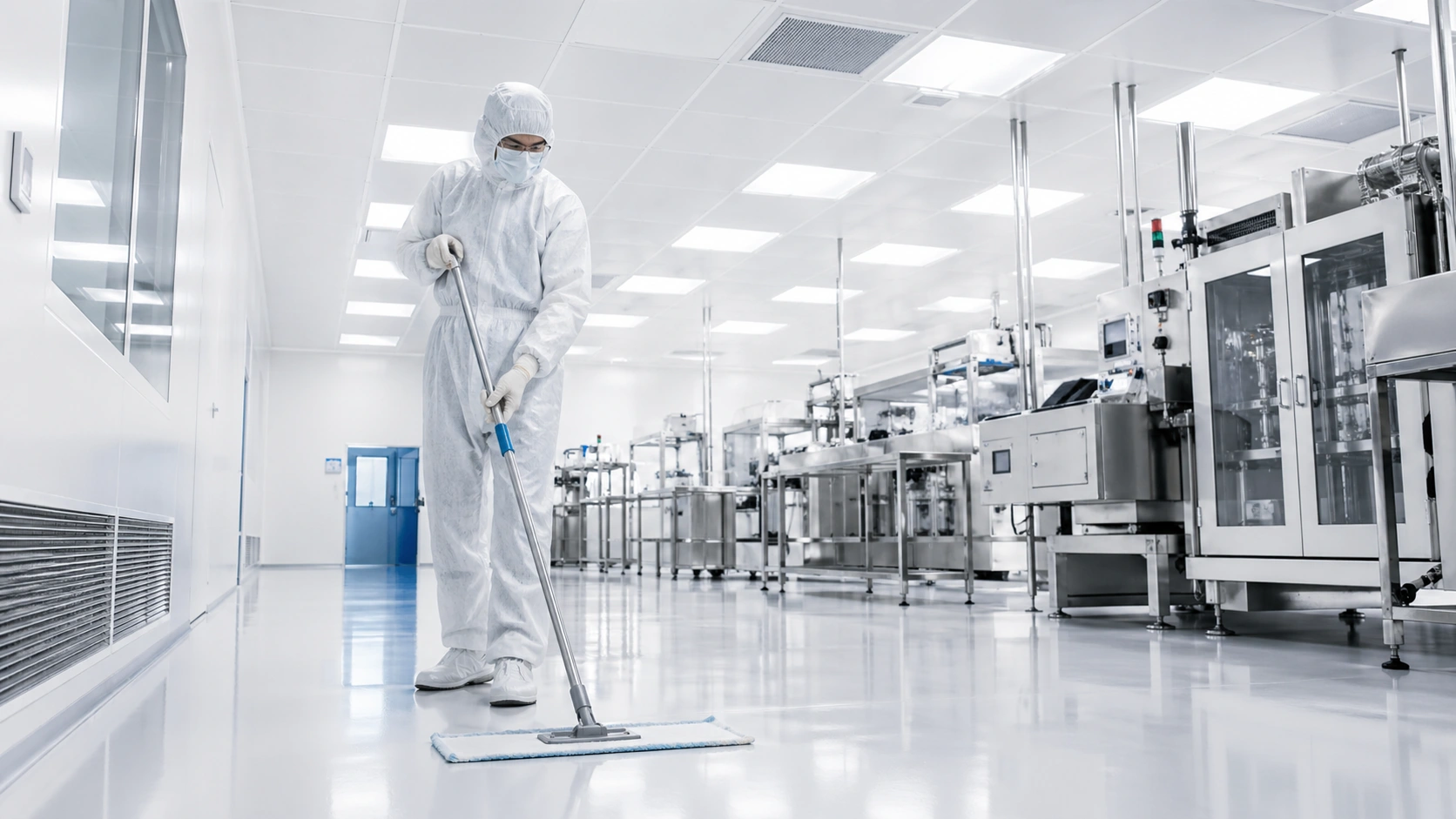
A cleanroom flat mop system is a coordinated cleaning solution that uses a flat mop pad attached to a compatible frame and handle for controlled surface cleaning in cleanrooms and other critical environments.
Unlike traditional mop styles, a flat mop system creates broad and relatively even contact across the target surface. This makes it suitable for cleanroom cleaning where buyers need better reach, controlled liquid application, and improved consistency during floor, wall, and ceiling cleaning.
In controlled environments, the system should be considered as a whole. The mop pad, frame, handle, and bucket or wringer method all influence cleaning performance, operator workflow, residue control, and contamination risk.
Flat mop systems are widely preferred in controlled environments because they support consistent movement, stable surface coverage, and cleaner workflow control compared with traditional mopping methods.
A flat mop pad can maintain broad contact across smooth floors, walls, and ceilings. This supports more even cleaning and more predictable wetting of the target surface.
Flat mop systems are easier to integrate into structured cleanroom cleaning SOPs, including one-direction mopping, area zoning, and fresh-to-dirty cleaning logic.
With the right frame and handle length, flat mop systems can be used on floors, walls, ceilings, and hard-to-reach large surfaces in controlled spaces.
A reliable cleanroom flat mop system should be selected based on how well the components work together in real cleaning conditions.
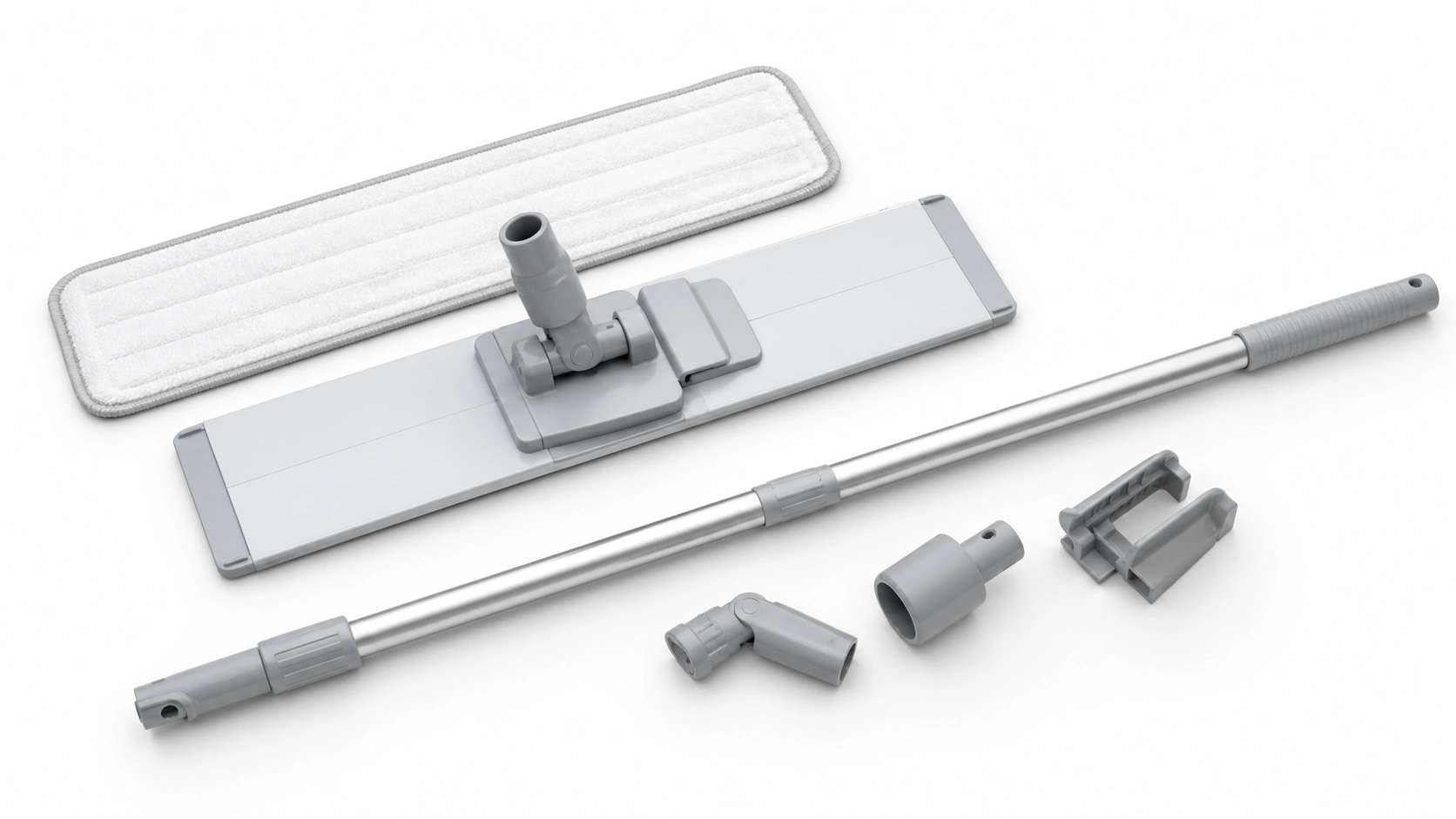
Плоская насадка для швабры из микрофибры или полиэстера для контролируемой уборки.
Стабильная плоская рама швабры для широкого и равномерного контакта с поверхностью.
Ручка, совместимая с чистыми помещениями, обеспечивает досягаемость, контроль и безопасную работу.
Система ведер или отжимных устройств для насыщения швабры и управления жидкостью.
For cleanroom and GMP buyers, flat mop systems are often easier to standardize than traditional string or sponge mop designs.
| Атрибут | Система плоской швабры | Струнная швабра | Губка Швабра |
|---|---|---|---|
| Поверхностный контакт | Широкий и стабильный | Менее однородный | Более узкая область контакта |
| Пригодность для чистых помещений | Лучше подходит для контролируемых рабочих процессов | Обычно менее подходит | Зависит от дизайна |
| Использование стены/потолка | Хорошо, если есть правильная ручка. | Ограничен | Ограничен |
| Стандартизация СОП | Легче стандартизировать | Менее последовательный | Умеренный |
| Типичное использование | GMP, ISO, лаборатория, контролируемые зоны | Генеральная коммерческая уборка | Уборка небольших площадей |
A cleanroom flat mop system can be used across multiple controlled cleaning tasks, depending on pad material, frame design, handle length, and workflow requirements.
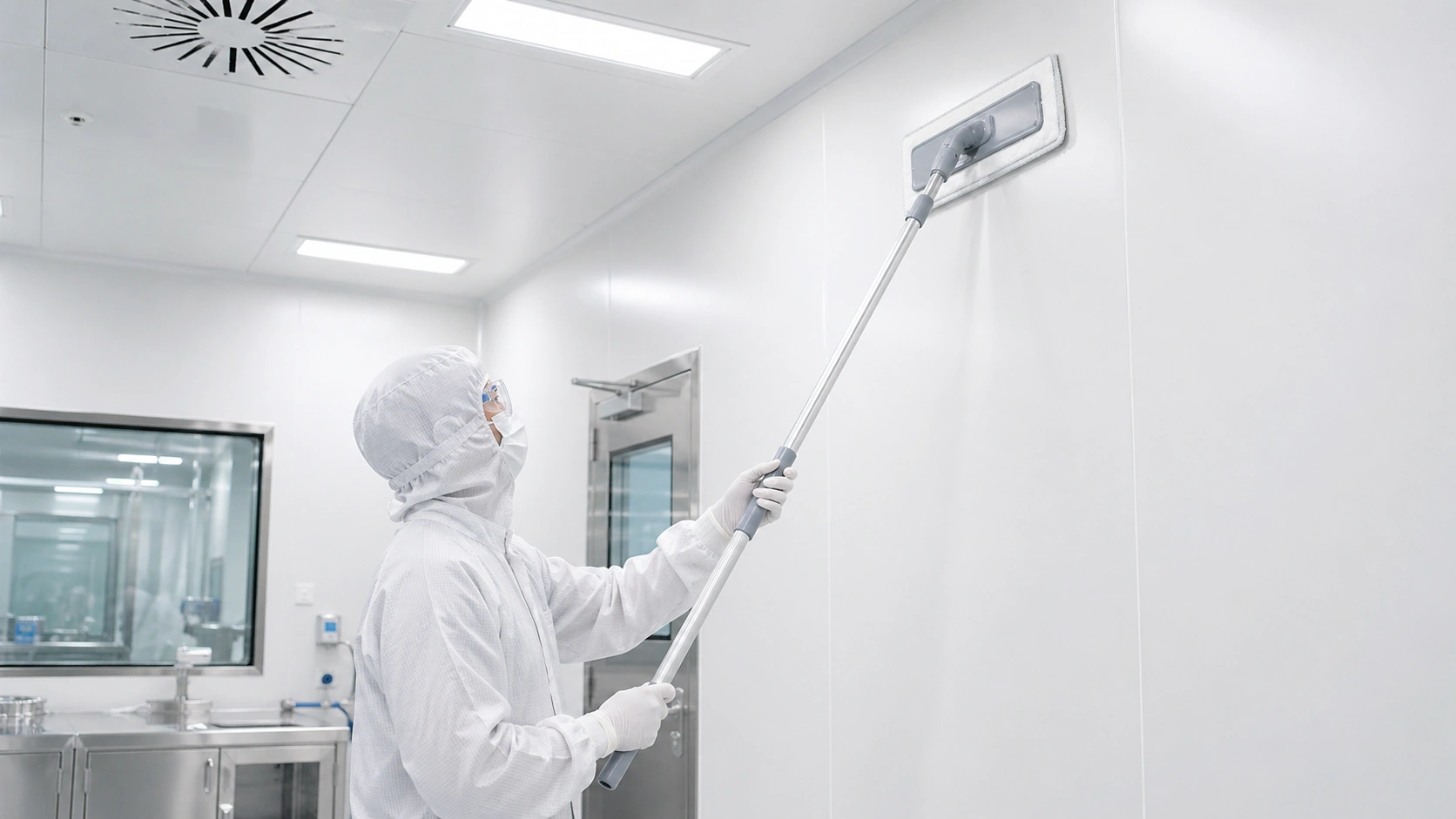
Системы плоских швабр эффективно покрывают большие площади, обеспечивая при этом структурированное движение и контролируемое внесение жидкости.
Благодаря правильной раме и ручке системы плоских швабр помогают операторам более равномерно очищать поверхности стен.
Системы плоских швабр могут помочь в уборке потолков там, где большие гладкие поверхности требуют контролируемого контакта и снижения нагрузки на оператора.
В условиях GMP системы плоских швабр могут быть интегрированы в документированные процедуры уборки и рабочие процессы зонирования.
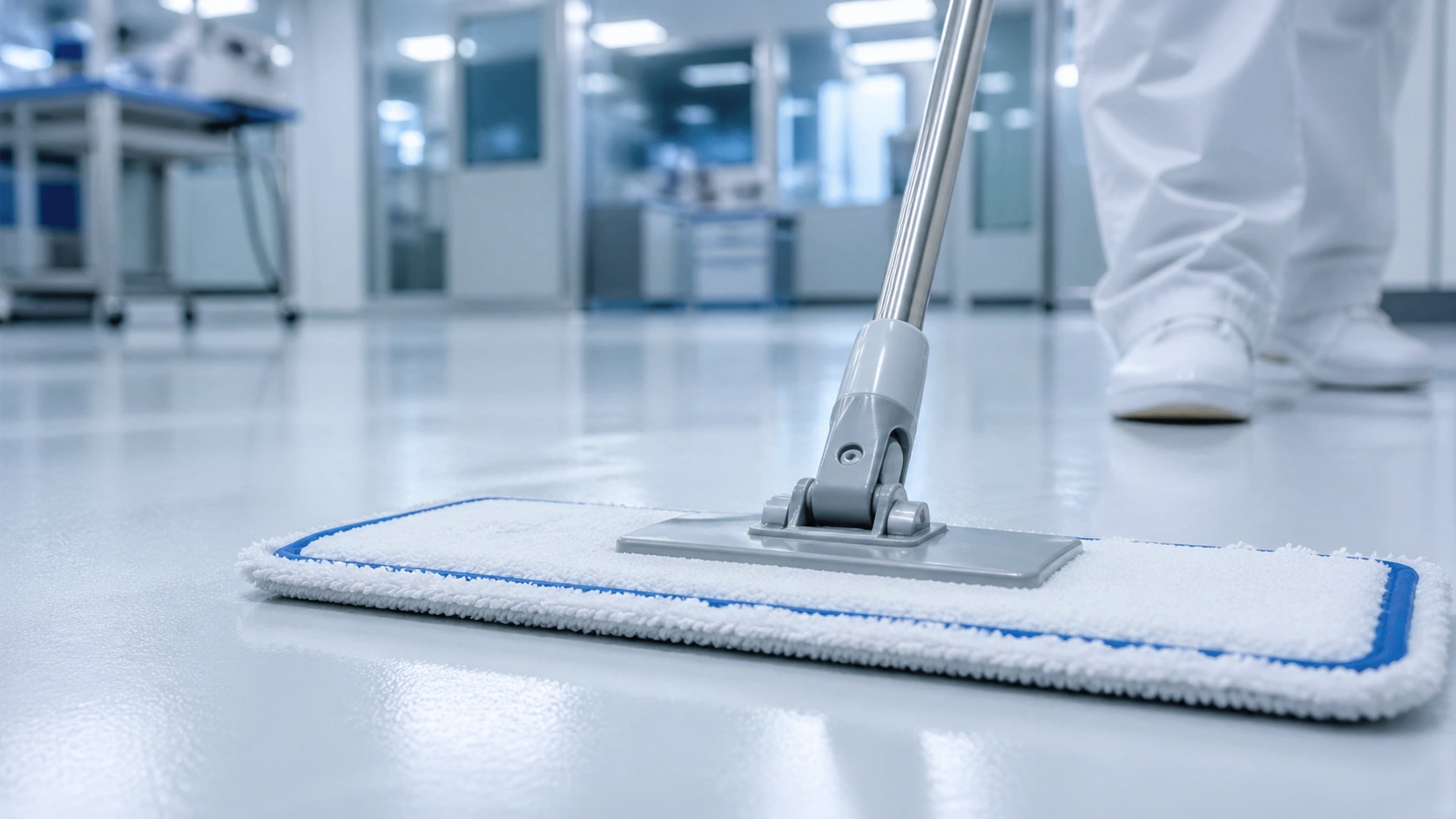
The choice between microfiber and polyester flat mop pads depends on the balance a facility needs between surface pickup, lint control, chemical compatibility, and cleaning workflow.
| Атрибут | Плоская накладка для швабры из микрофибры | Плоская накладка для швабры из полиэстера |
|---|---|---|
| Типичная сила | Высокий контакт с поверхностью и сбор остатков | Маловорсовая производительность и химическая стойкость |
| Общее использование | Регулярная уборка чистых помещений | Фармацевтические и контролируемые применения |
| Покрытие поверхности | Прочный контакт с гладкими поверхностями. | Подходит для контролируемой влажной уборки. |
| Возможность стерилизации | Зависит от конструкции изделия | Зависит от дизайна продукта |
| Внимание покупателя | Производительность пикапа | Контроль ворса и совместимость |
Professional buyers should choose a cleanroom flat mop system by comparing the cleaning area, material preference, bucket workflow, and contamination-control expectations of the facility.
| Требование | Рекомендуемое направление | Почему это важно |
|---|---|---|
| GMP или фармацевтическое предприятие | Маловорсовая плоская швабра с документированной информацией о материале. | Поддерживает контролируемую очистку и проверку качества. |
| Регулярная уборка чистых помещений ISO | Плоская швабра из микрофибры или полиэстера | Поддерживает очистку больших поверхностей |
| Очистка стен и потолка | Плоская рама швабры с ручкой подходящей длины. | Улучшает охват и охват |
| Улучшенный контроль жидкости | Система плоской швабры с ведром или отжимным устройством | Помогает контролировать насыщенность швабры |
| Уменьшение проблем с повторным использованием | Вариант одноразовой плоской подушечки для швабры. | Может упростить рабочий процесс контроля загрязнения |
| Баланс затрат | Многоразовая рама и ручка со сменными насадками для швабры. | Поддерживает долгосрочную эффективность работы |
A cleanroom flat mop should be selected together with its frame, handle, and workflow method. This helps buyers build a more consistent and auditable cleaning process.
MIDPOSI can help recommend flat mop system configurations based on cleaning area, material preference, and controlled-environment requirements.
Tell us your cleanroom class, application area, material preference, mop pad size, workflow needs, and whether you are evaluating disposable or reusable options. MIDPOSI can help recommend a suitable flat mop system for your controlled environment.
Explore related MIDPOSI resources for cleanroom mop systems, flat mop pads, mop heads, mop frames, mop handles, bucket workflows, sterile mop options, disposable mop covers, microfiber materials, GMP cleaning applications, and buyer guidance.
Эти ответы предназначены для покупателей чистых помещений, групп контроля качества, специалистов по контролю загрязнения и руководителей предприятий.
A cleanroom flat mop system is a cleaning solution that includes a flat mop pad, frame, handle, and sometimes a bucket or wringer workflow, designed for controlled cleaning in cleanrooms and other sensitive environments.
Flat mops are commonly used in cleanrooms because they provide broad surface contact, support structured cleaning movement, and work well on floors, walls, and ceilings.
Yes. With the correct frame and handle length, a cleanroom flat mop system can be used for wall and ceiling cleaning as well as routine floor cleaning.
Microfiber flat mops are often selected for strong surface contact and residue pickup, while polyester flat mops are often selected for low-lint performance and compatibility with controlled cleaning environments.
Some cleanroom flat mop systems are paired with bucket or wringer workflows to help control mop saturation, liquid separation, and process consistency.
Buyers should evaluate the cleaning area, cleanroom class, mop pad material, reusable or disposable preference, liquid-control workflow, and whether documentation is needed for internal review.
If you are sourcing cleanroom flat mop systems for pharmaceutical manufacturing, laboratories, medical device production, electronics facilities, or ISO cleanrooms, MIDPOSI can help you compare flat mop pad materials, frame and handle options, and bucket-based workflow configurations.