
Введение
ISO 14644 is the international standard most widely used to classify cleanrooms according to airborne particle concentration. It gives teams a common language for describing how clean an environment is and how that cleanliness should be measured.
But classification alone is not enough. A room can meet an ISO class on a test day and still perform poorly in operation if airflow, maintenance, gowning, or cleaning control is weak. That is why ISO classification should always be viewed as one part of a broader contamination-control system.

What ISO 14644 Classification Means
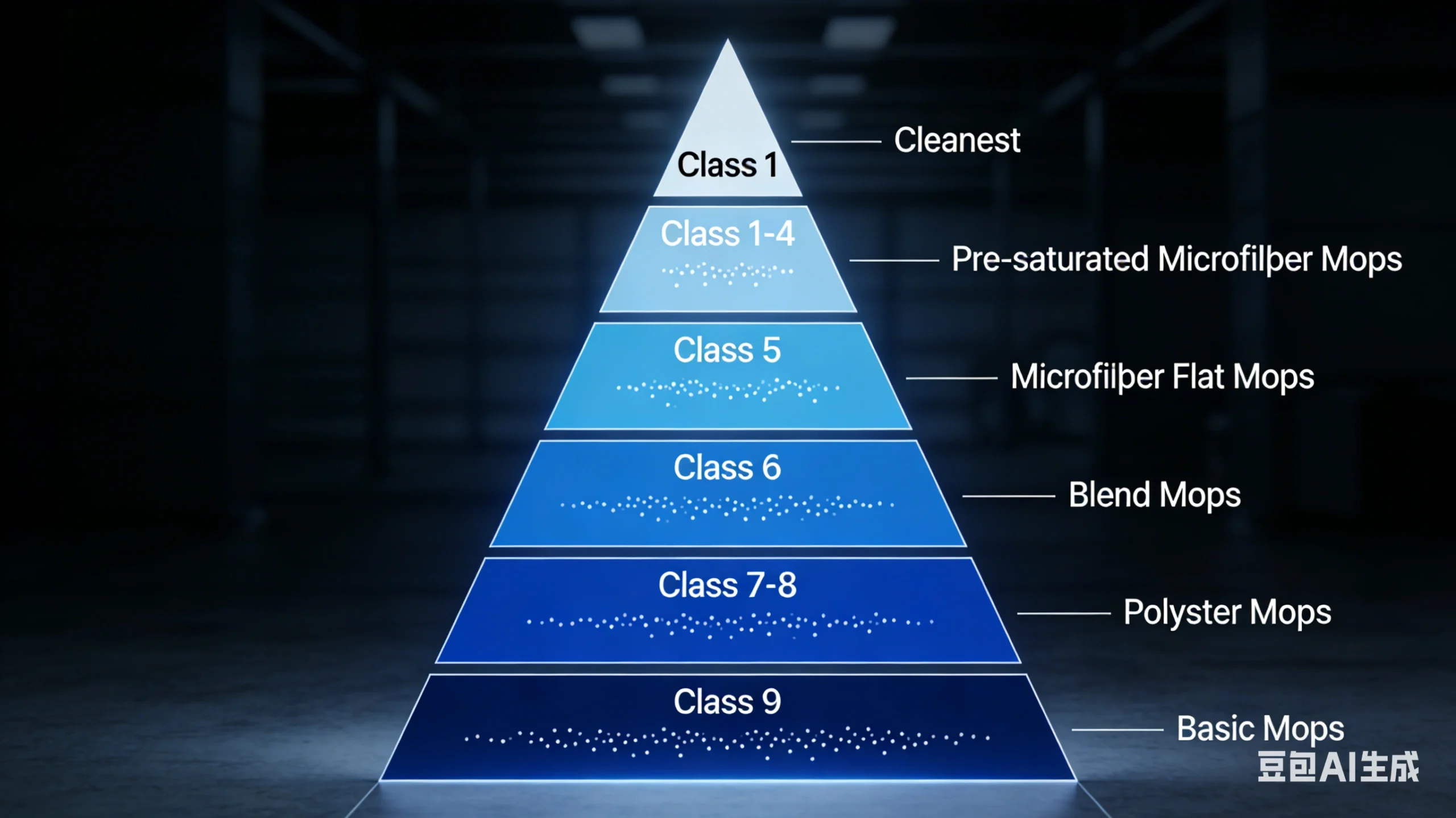
ISO 14644-1 classifies cleanrooms by the concentration of airborne particles of specified sizes. The lower the class number, the cleaner the environment.
In practical terms:
Lower ISO classes
- ISO 1–3: extremely clean environments
- Used in highly sensitive semiconductor and advanced technology processes
- Require strict airflow and particle control
Higher ISO classes
- ISO 5–8: common in pharma, medical device, and support zones
- Often mapped to GMP manufacturing environments
- Still require disciplined contamination control
ISO 14644 Classification Table
The table below shows common particle concentration limits used to understand the ISO class concept at a practical level.
| Класс ISO | Maximum particles ≥0.5 µm / m³ | Typical application |
|---|---|---|
| ISO 1 | 10 | Extreme precision environments |
| ISO 2 | 100 | Advanced semiconductor / nanotechnology |
| ISO 3 | 1,000 | Semiconductor critical areas |
| ISO 4 | 10,000 | High-performance controlled zones |
| ИСО 5 | 3,520 | Aseptic and high-control critical zones |
| ISO 6 | 35,200 | Supporting clean areas |
| ИСО 7 | 352,000 | Background cleanroom environments |
| ИСО 8 | 3,520,000 | General controlled manufacturing areas |
| ISO 9 | 35,200,000 | Comparable to typical room air |
ISO Class vs GMP Grades
One of the most common sources of confusion is mixing ISO classification with EU GMP grades. They are related, but they are not identical systems.
A practical mapping often used in pharmaceutical contexts is:
| EU GMP Grade | Common ISO equivalent | Typical context |
|---|---|---|
| Оценка отлично | ИСО 5 | Critical aseptic exposure |
| Оценка Б | ISO 5 at rest / ISO 7 in background use context | Background to Grade A |
| Оценка С | ИСО 7 | Less critical clean manufacturing |
| Оценка Д | ИСО 8 | Basic controlled support environment |
ISO classification describes airborne particle cleanliness. GMP grading adds broader operational expectations such as gowning, microbiological control, behavior, and contamination-control strategy.
How ISO Classification Is Measured
Classification is determined using calibrated particle counters and defined sampling logic under ISO 14644-1. The goal is to measure whether the number of airborne particles meets the allowable concentration for the class being claimed.
Key measurement elements
- Defined particle size channels
- Calculated sample volume
- Multiple sampling locations
- Calibrated and controlled instrument
What teams often miss
- Insufficient sample volume
- Too few locations
- No link to airflow conditions
- No follow-up after maintenance or changes
Why ISO Classification Matters
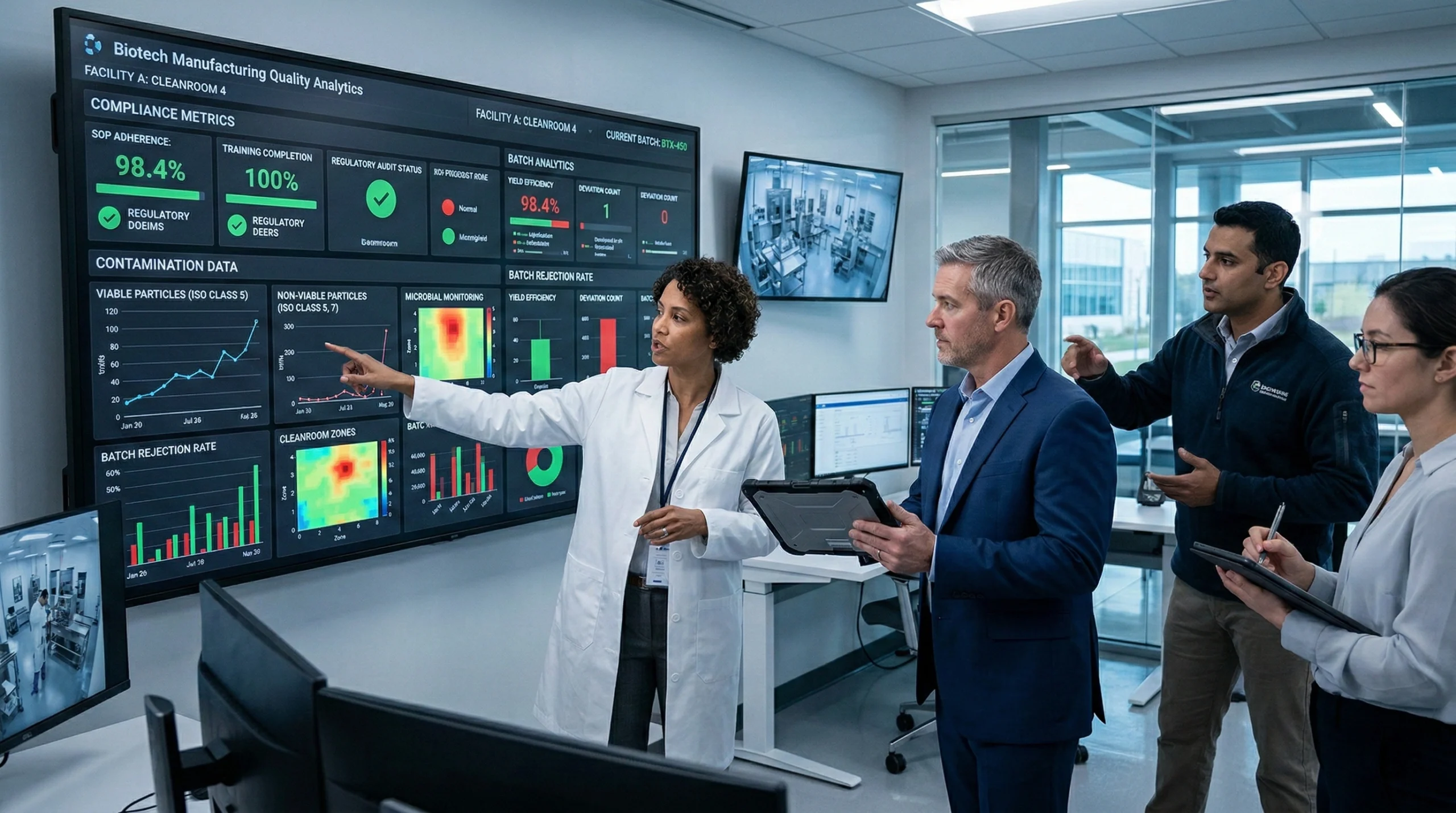
ISO classification matters because it defines the airborne cleanliness foundation for cleanroom design, qualification, monitoring, and contamination-control planning.
Design basis
HVAC, filtration, airflow rate, and room layout are often built around the class target.
Qualification support
ISO class is closely tied to qualification and requalification activities, especially during commissioning and lifecycle review.
Monitoring strategy
Environmental monitoring and particle trend review should reflect the class and criticality of the area.
Operational control
Cleaning, maintenance, gowning, and traffic patterns all influence whether the room can remain consistent with its intended class.
Common ISO Classification Mistakes
Many teams understand the class table but still make operational mistakes that weaken the value of classification.
| Mistake | Why it is a problem | Better approach |
|---|---|---|
| Treating classification as a one-time event | Rooms drift over time | Link class to requalification and maintenance review |
| Ignoring airflow and pressure stability | Particle counts alone do not explain root cause | Review airflow, pressure, and filter status too |
| No link to monitoring trends | Operational drift may be missed | Compare classification with ongoing EM and particle data |
| Incorrect sample logic | Weakens result credibility | Use proper ISO 14644-1 sample planning |
| Confusing ISO class with GMP grade | Can lead to wrong compliance assumptions | Use both systems correctly and in context |
Need Help Aligning ISO 14644 Classification with Real Operations?
Get practical guidance on classification logic, GMP mapping, monitoring linkage, and contamination-control workflows that are easier to operate and defend.
- ISO class to application mapping
- Monitoring and maintenance alignment
- Support for qualification and contamination-control planning
Часто задаваемые вопросы
What is ISO 14644?
ISO 14644 is the international standard used to classify cleanrooms based on airborne particle concentration.
What ISO class is Grade A?
Grade A is commonly associated with ISO 5 for critical aseptic exposure conditions.
Is ISO 14644 the same as GMP grading?
No. ISO classification focuses on airborne particles, while GMP grading includes broader operational and microbiological control expectations.
How often should ISO classification be checked?
Frequency depends on risk, industry, and quality system, but classification should be tied to qualification, requalification, maintenance, and major changes.
Why is ISO 5 so important in pharma?
ISO 5 is commonly required where product is exposed in critical aseptic operations, making particle control especially important.
Can a room pass classification and still have contamination risk?
Yes. A room can meet class limits during testing and still perform poorly in operation if airflow, maintenance, cleaning, or behavior control is weak.
Recommended Internal Links
- Объяснение квалификации IQ OQ PQ для чистых помещений — for linking class verification to broader qualification logic
- Места экологического мониторинга в чистых помещениях GMP — for operational monitoring after classification
- Cleanroom Maintenance Best Practices — for maintaining class stability over time
- Cleanroom Validation Lifecycle Management — for lifecycle control of classified environments
- Cleanroom Airflow Pattern Visualization and Verification — for understanding airflow effects on particle performance