سپورٽ آرٽيڪل · GMP / ضميمه 1
A technical supplement for QA, validation, and operations teams—focused on GMP expectations, Annex 1 interpretation, and practical supplier qualification checkpoints for cleanroom mops.
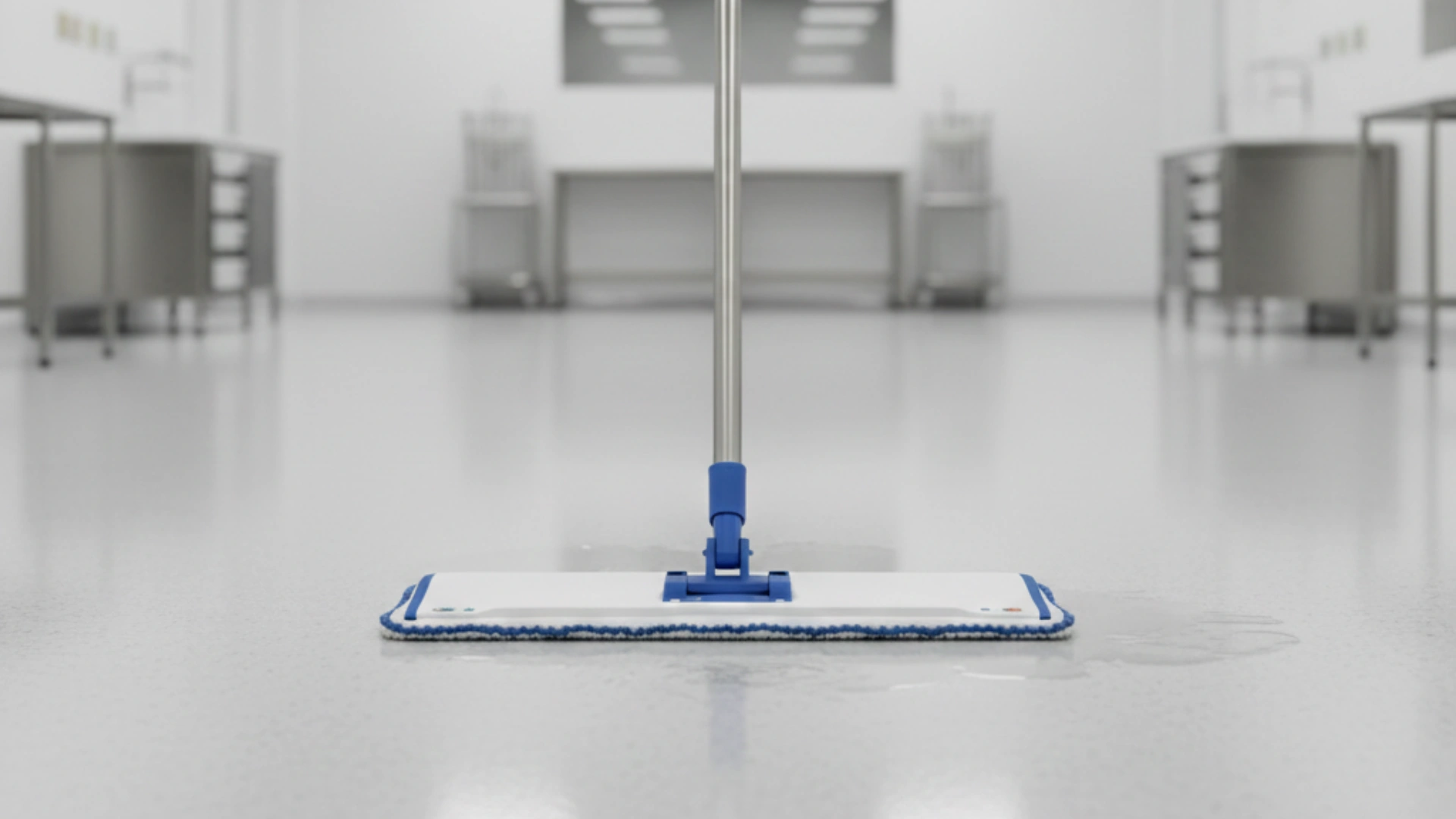
This article serves as a technical supplement to the primary pharmaceutical cleanroom mop supplier guide, focusing specifically on GMP and Annex 1 interpretation.
In pharmaceutical manufacturing, mop selection directly affects the robustness of the cleaning validation program. Under the revised EU GMP Annex 1, regulators place increased scrutiny on how disinfectants are applied and how residues are removed as part of routine and sporicidal cleaning.
جيڪڏهن ذيلي ذخيرا جراثيم ڪش عملن کي پابند / غير جانبدار ڪن ٿا، سطح جي ڪنسنٽريشن تصديق ٿيل لاگ-گهٽائي هدفن کان هيٺ ٿي سگهي ٿي.
فائبر شيڊنگ غير قابل عمل ذرات کي وڌائي ٿو، اي ايم سير جي خطري کي وڌائي ٿو ۽ تحقيقاتي بوجھ.
موپس لاءِ سراغ رسي يا نسبندي دستاويز غائب هجڻ آڊٽ جي نتيجن جو بار بار ذريعو آهي.
Although “mops” are not explicitly referenced in every clause, Annex 1 cleanroom cleaning requirements are inherently linked to the tools used to execute validated cleaning processes.
Annex 1 emphasizes that cleanroom design and equipment must facilitate effective cleaning. From a regulatory interpretation standpoint, this extends to tools that can access all relevant surfaces and are constructed from materials that do not harbor or generate contamination. In Grade A/B areas, contamination control principles require sterile tools introduced via a validated transfer process (e.g., double-bagged entry through an airlock). This places mop mechanical performance within the scope of cleaning process validation—not product selection alone.
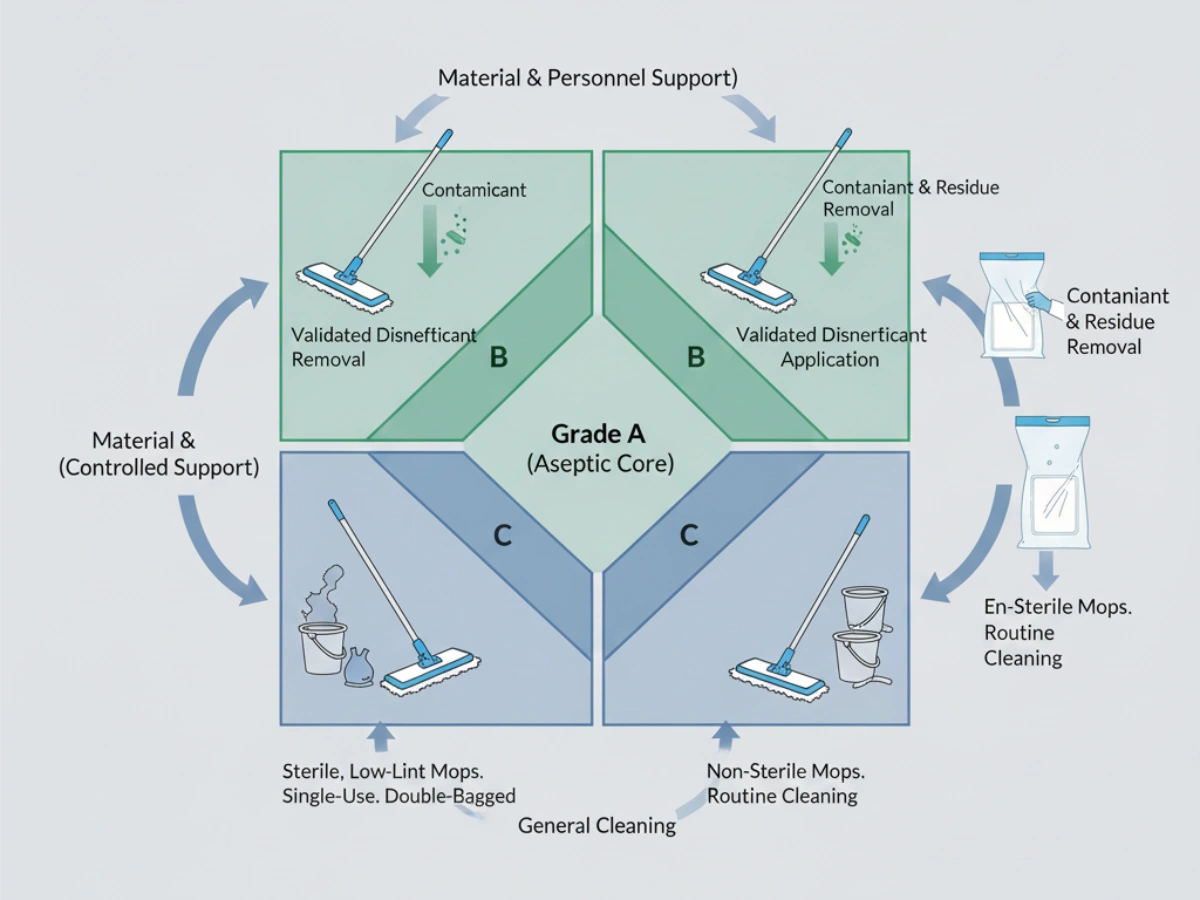
Under GMP expectations, pharmaceutical cleaning tools must be manufactured from chemically inert materials. Natural fibers/foams/cellulose may degrade or interact with aggressive sporicides and high-concentration alcohols. GMP-compliant mop systems typically use knitted polyester for chemical resistance and low particle generation.
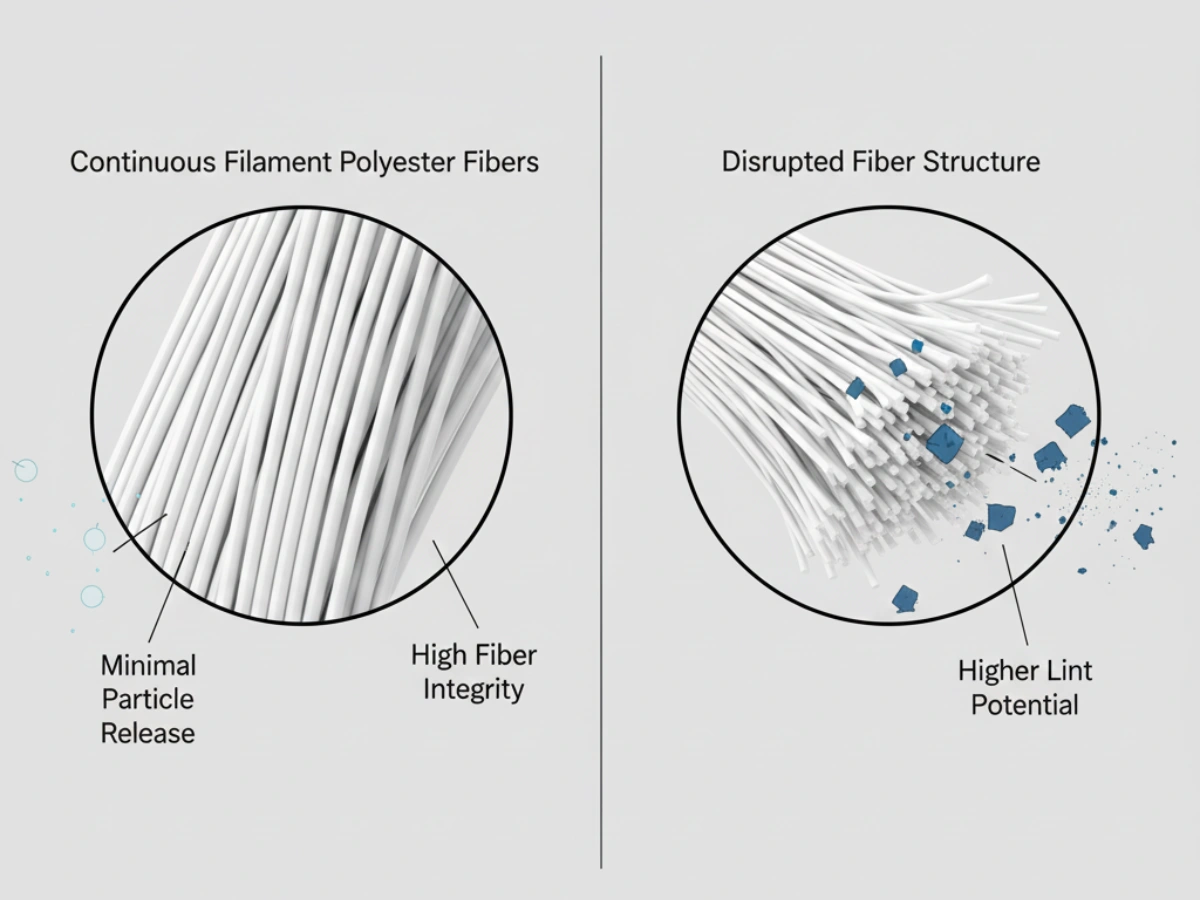
In Grade A/B cleanrooms, mops are expected to be sterile at the point of use. In Grade C/D, non-sterile but low-particulate mops may be acceptable when justified by risk assessment. For sterile applications, suppliers should provide sterilization validation—commonly gamma irradiation—demonstrating سال 10⁻⁶ and batch-specific Certificates of Irradiation.
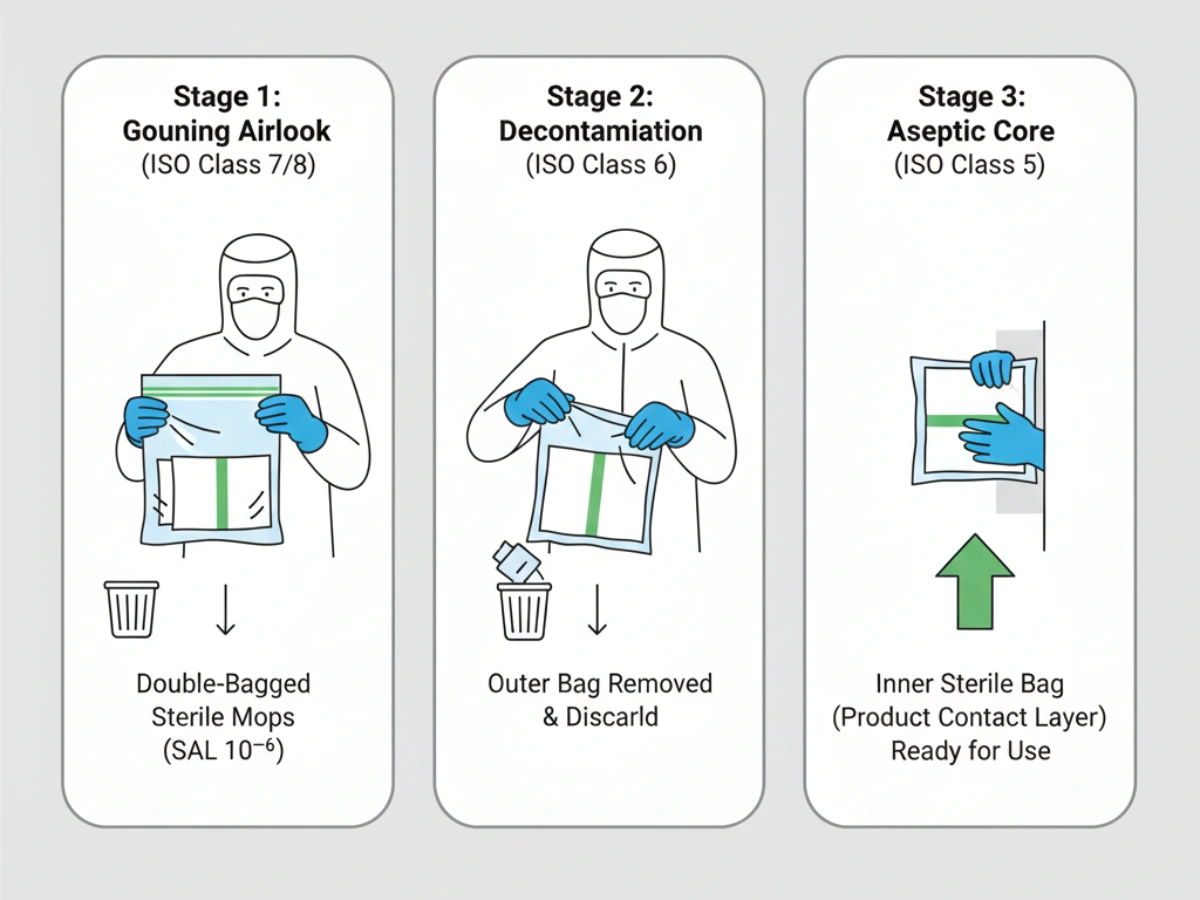
Double/triple bagging enables staged peel-and-transfer procedures; outer packaging is removed in lower grade areas and inner sterile bag opened only within Grade A/B. GMP also requires maintaining a defined “state of control”: mop heads delivered today must remain equivalent to those qualified during cleaning validation. Material/process/packaging changes should be governed under formal change control with advance notification.
فراهم ڪندڙ جي تشخيص تي وسيع فريم ورڪ لاءِ، ڏسو مکيه گائيڊ تي دواسازي صاف ڪرڻ وارو ڪمرو ايم پي سپلائر چونڊ.
آڊٽ-مرڪوز دستاويزن جي گهرج لاءِ، ڏسو صاف روم ايم او پي جي تصديق واري دستاويز ۽ COA معيار.
Supplier qualification under GMP and Annex 1 typically requires access to technical documentation and evaluation samples. You may request:
نوٽ: پنهنجي صفائي واري ڪمري جي گريڊ (A/B/C/D)، جراثيم ڪش گردش، جراثيم ڪشيءَ جي گهرج، ۽ پيڪنگ/منتقلي جي SOP رڪاوٽن کي درست دستاويزي پيڪ لاءِ مهيا ڪريو.