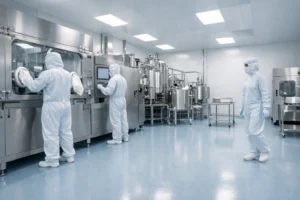
Yanlış paspas spesifikasyonu yalnızca bütçeyi boşa harcamaz; çevresel izleme başarısızlıklarını, denetim bulgularını ve pahalı araştırma döngülerini tetikler. Satıcınızın arama çubuğuna "temiz oda paspası" (iki kelime) yazın; parçacıkları ISO Sınıf 5 hava akışına tutan, kesik kenarlı, tüketici sınıfı bir mikrofiber paspas alabilirsiniz. "Temiz oda paspası" (tek kelime) diye arama yaptığınızda, GMP üretimi için onaylanmış, kapalı kenarlı, az tiftikli farmasötik sınıf aletler bulma olasılığınız artar. Bu satıcı tutarsızlığı değil; gerçek teknik ayrımlarla eşleşen dilsel ayrımdır. ISO 14644 ve EU GMP Annex 1, “temiz oda”yı kapalı bir bileşik teknik terim olarak kullanır; genel temizlik tedarikçileri ve sözlükler, düzenlemeye tabi olmayan alanlar için "temiz oda" kelimesini iki kelime olarak kullanıyor. Hangi terimin hangi ürün spesifikasyonunun işaret ettiğini anlamak, uyumluluk hatalarına yol açan satın alma hatalarını önler. Bu kılavuz, terminoloji ayrımının neden mevcut olduğunu açıklar, her bir terimin pratikte gerçekte ne anlama geldiğini tanımlar ve yalnızca temiz zeminleri değil, farmasötik düzeyde kontaminasyon kontrolü sağlayan spesifikasyonların yazılması için karar çerçevesini sağlar.
“Temiz Oda Mopu” ve “Temiz Oda Mopu” Neden Farklı Aranıyor?
Kısa Çizgi/Boşluk Arama Davranışını Nasıl Etkiler?
The terminology split isn’t arbitrary—it reflects how different user groups conceptualize “clean” spaces. Users searching “clean room mop” (two words) typically fall into three categories: facility managers in light industrial settings (packaging warehouses, electronics assembly), general janitorial purchasers seeking “cleaner than normal” floors, and first-time pharmaceutical procurement staff who haven’t yet learned the regulated terminology. These searches often surface consumer-grade microfiber mops, commercial janitorial supplies, and general-purpose cleaning equipment—products designed for visual cleanliness but not validated for particle control or disinfectant compatibility.
"Temiz oda paspası" (tek kelime) kullanan arama yapanlar, düzenlemeye tabi ortamlara aşina olduklarının sinyalini verir. Bu terim, ISO sınıflandırma sorguları ("ISO 5 temiz oda paspası", "Sınıf A paspaslama"), GMP uyumluluk aramaları ve ilaç satıcısı siteleriyle güçlü bir şekilde ilişkilidir. Kapalı bileşik "temiz oda" teknik bir filtre görevi görür: Bu yazımı kullanan kullanıcıların parçacık konsantrasyonu sınırlarını, çevresel izleme gerekliliklerini ve kapalı kenarlı yapı ihtiyacını anlama olasılıkları daha yüksektir. İlaç üreticilerine hizmet veren satıcı siteleri, kategori taksonomisi olarak ağırlıklı olarak "temiz oda"yı benimsiyor ve bu da terimin uyumluluk sınıfı ürünlerle olan ilişkisini güçlendiriyor.
Coğrafi Farklılıklar (ABD ve Avrupa)
European regulatory language standardizes on “cleanroom” as a single word. EU GMP Annex 1—the binding regulation for sterile medicinal product manufacture across the European Union—uses “cleanroom” throughout its text and explicitly references ISO 14644 for classification and qualification protocols. This regulatory consistency means European pharmaceutical procurement teams, QA specialists, and facility engineers default to “cleanroom” as the correct professional term. UK facilities post-Brexit continue this convention, as UK GMP guidance mirrors Annex 1 language.
US usage shows more variation. While ISO 14644 (titled “Cleanrooms and associated controlled environments”) is the technical standard worldwide, American general English dictionaries like Merriam-Webster maintain “clean room” as the headword entry. This creates linguistic friction: FDA guidance documents and CGMP regulations don’t explicitly mandate one spelling, leading to mixed usage across US pharmaceutical sites. However, US vendors serving regulated industries (pharmaceutical, medical device, aerospace) follow ISO terminology and market products as “cleanroom mops” to align with international standards. The practical takeaway: when writing specifications for FDA-inspected facilities, use “cleanroom” (one word) to match ISO 14644 and ensure vendor search results return compliance-grade products rather than janitorial supplies.

Sektör Jargonu Farklılıkları (Genel Temizlik ve Yüksek Sınıf Temiz Odalar)
Düzenlemeye tabi olmayan endüstrilerde (yemek servisi, konaklama, eğitim, hafif imalat) "temiz oda", normalden yüksek hijyen standartlarına göre tutulan ancak parçacık sayımı gereklilikleri olmayan alanları tanımlarken iki kelime olarak karşımıza çıkıyor. Bir hastane koridoru, temizlik SOP'lerinde "temiz oda" olarak adlandırılabilir, bu da onu hasta odalarından veya ameliyat odalarından ayırır, ancak bu kullanım ISO sınıflandırması veya GMP uyumluluğu anlamına gelmez. Bu pazarlara hizmet veren temizlik malzemeleri satıcıları, farmasötik sınıf olarak konumlandırmadan, hijyenik ortamlara uygun ürünleri belirtmek için "temiz oda paspası" kullanıyor.
İlaç ve biyoteknoloji profesyonelleri “temiz oda”yı özel düzenleyici anlamı olan bir sanat terimi olarak kullanıyor. Bir kontaminasyon kontrol uzmanı "temiz oda" derken, tanımlanmış parçacık konsantrasyonu limitlerine, doğrulanmış HVAC sistemlerine ve belgelenmiş çevresel izlemeye sahip, ISO 14644 onaylı bir alanı kastediyor demektir. Bu bağlamda "temiz oda paspası", bu düzenleyici çerçeve için tasarlanmış bir araca işaret eder: elyaf dökülmesini önlemek için sızdırmaz kenarlı yapı, farmasötik dezenfektanlarla uyumlu malzemeler (p IPA, hidrojen peroksit, dördüncül amonyum bileşikleri) ve genellikle A/B Sınıfı alanlarda kullanım için gama ışınlaması veya otoklav sterilizasyonu. Terminoloji, profesyonel kısa yol olarak işlev görür; "temiz oda paspasını" belirten tedarik spesifikasyonları, tüketici ürünlerini hemen hariç tutar ve satıcı yanıtlarını uyumluluk düzeyindeki araçlara odaklar.
“Temiz Oda Paspası” Genellikle Neyi İfade Ediyor?
Genel Temiz Ortamlar İçin (ISO Olmayan Alanlar)
"Temiz oda paspası" (iki kelime) genellikle temizliğin önemli olduğu ancak parçacık sayısının önemsiz olduğu alanlar için temizlik tedarik kanalları aracılığıyla satılan mikrofiber veya pamuklu paspasları tanımlar. Bunlar hastane koridorlarında, okul kafeteryalarında, hafif imalat paketleme odalarında ve ofis ortamlarında bulacağınız paspaslardır. Bu bağlamlarda "temiz oda" tanımı, "standart bir tesisten daha temiz" anlamına gelir - daha iyi hijyen, daha sık paspaslama, belki de dezenfektan kullanımı - ancak ISO 14644 yeterliliği veya GMP onayının titizliği olmadan.
Bu paspaslar genellikle standart son teknoloji yapıya sahiptir: açık, tamamlanmamış kenarlara sahip bir desteğe tutturulmuş kumaş şeritler veya mikrofiber halkalar. Kiri çıkarmak ve zemin yüzeylerine dezenfektan uygulamak için etkili olsa da, kullanım sırasında kesik kenarlar tüy ve elyaf döküyor; bu, ofis zeminleri için sorun değil ancak parçacık kontrollü ortamlarda bir kirlenme kaynağıdır. Malzemeler, düşük partikül performansından ziyade maliyet ve dayanıklılığa öncelik verir. Polyester-pamuk karışımlarını, standart ticari sınıf mikrofiber (temiz oda örgüsü değil) ve parçacık tuzakları oluşturan geleneksel dikişleri göreceksiniz.
Mikrofiber/Temizlik Temizlik Araçları
“Temiz oda” araçları (iki kelime) olarak pazarlanan mikrofiber paspaslar orta bir noktayı işgal ediyor: geleneksel ipli paspaslardan daha iyi ancak farmasötik düzeyde değil. Bunlar, yüzey temasını artırmak ve pamuğa kıyasla kir toplamayı iyileştirmek için bükülmüş mikrofiber halkalar veya düz mikrofiber pedler kullanır. Mikrofiber malzemenin kendisi pamuğa göre daha az parçacık üretir ve dezenfektanın daha iyi tutulmasını sağlar; bu da bu paspasları hijyenin önemli olduğu ancak ISO sınıflandırmasının gerekli olmadığı ortamlar için uygun hale getirir.
Bununla birlikte, inşaat ayrıntıları, düzenlemeye tabi kullanım açısından sınırlamalarını ortaya koymaktadır. Tüketici mikrofiber paspaslarının çoğu şunları kullanır:
- Kenarları kesin veya sınırlayın Kapalı kenarlar yerine elyaf uçlarının zamanla yıpranmasına ve dökülmesine izin verir
- Standart polyester karışımları (80/20 polyester-polyamide) optimized for cost, not low-lint performance
- Velcro or pocket attachments with hook-and-loop fasteners that trap particles and can’t withstand repeated autoclave cycles
- No particle generation testing—vendors provide no data on lint shedding or particle release rates
- Basic disinfectant compatibility—materials tolerate bleach and quaternary ammonium compounds but aren’t validated for pharmaceutical-grade disinfectant rotation (alcohols, peroxides, sporicidals) These mops excel in their intended application: high-traffic commercial floors where mechanical cleaning and visual results matter more than contamination control. They’re perfectly appropriate for packaging areas outside classified spaces, gowning room anterooms, or support corridors in pharmaceutical facilities—but not for the cleanrooms themselves.
Suitable for Labs, Schools, Offices, Packaging Rooms
The two-word “clean room mop” finds its proper niche in environments that need better-than-standard hygiene without regulatory oversight. University research labs preparing biological samples (but not manufacturing pharmaceuticals under GMP), food packaging facilities maintaining sanitary conditions (but not sterile processing), and electronics assembly areas protecting against static and gross contamination (but not meeting ISO Class limits) all benefit from upgraded janitorial tools without requiring pharmaceutical-grade specifications.
Cost drives adoption in these settings. A high-quality microfiber mop system costs $15–$30 per mop head versus $50–$150 for sealed-edge pharmaceutical cleanroom mops. For a 10,000 sq ft packaging facility mopping daily, the savings are substantial—and justified, since particle counts aren’t monitored and the space isn’t ISO-classified. The key is recognizing when this specification is sufficient versus when it creates compliance risk.
Not Designed for Particle-Sensitive Environments
The fundamental design disconnect: “clean room mops” (two words) optimize for mechanical cleaning efficiency and visual results, while “cleanroom mops” (one word) optimize for contamination control and regulatory compliance. Cut-edge construction that’s perfectly acceptable for removing soil from a hospital corridor becomes a particle generation source under laminar airflow. Microfiber blends that excel at trapping dirt fail when the cleanroom requires demonstrated <100 particles released per square meter of mopping.
Three technical gaps disqualify general “clean room mops” from pharmaceutical use:
- Uncontrolled particle generation: Without sealed edges and low-lint materials, these mops shed fibers that accumulate in unidirectional airflow, settle on product contact surfaces, and trigger environmental monitoring failures.
- Doğrulanmamış dezenfektan uyumluluğu: Pharmaceutical cleanrooms rotate disinfectants (alcohols Monday/Wednesday, peroxide Tuesday/Thursday, bleach Friday, sporicidal weekly) to prevent microbial resistance. General mops may degrade under this regimen, releasing particles or harboring bioburden in damaged fibers.
- Sterilizasyon yolu yok: Grade A/B pharmaceutical areas require sterile cleaning tools. General microfiber mops can’t withstand gamma irradiation (causes material breakdown) or repeated autoclave cycles (velcro attachments, pocket seams, and backing materials fail after 5–10 cycles).
If your environmental monitoring shows increasing particle counts correlated with mopping schedules, or if microbial surface sampling reveals post-cleaning contamination, the wrong mop specification is a likely cause—often traced back to purchasing “clean room” products when “cleanroom” tools were required.
What “Cleanroom Mop” Means in a GMP/ISO Context
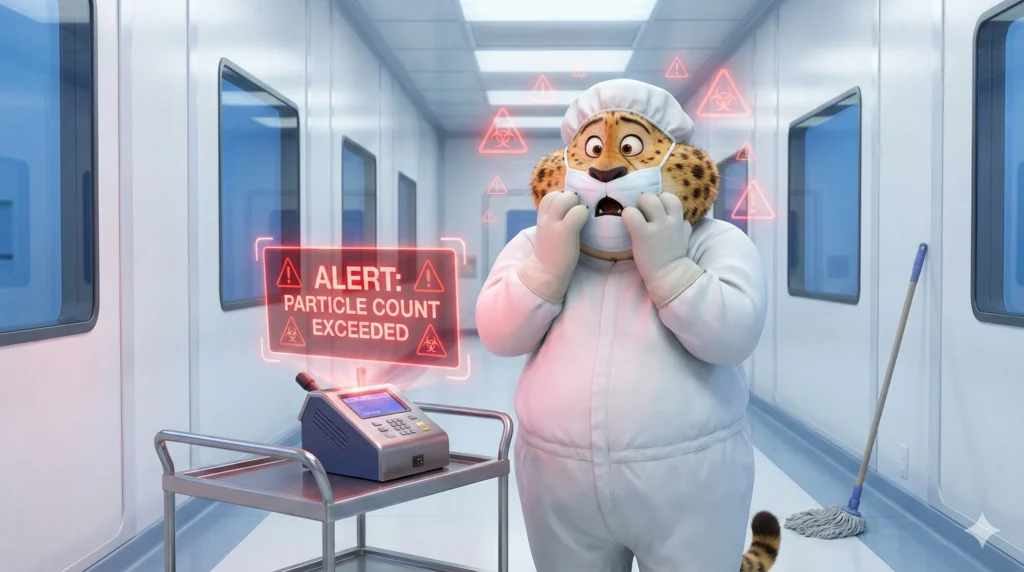
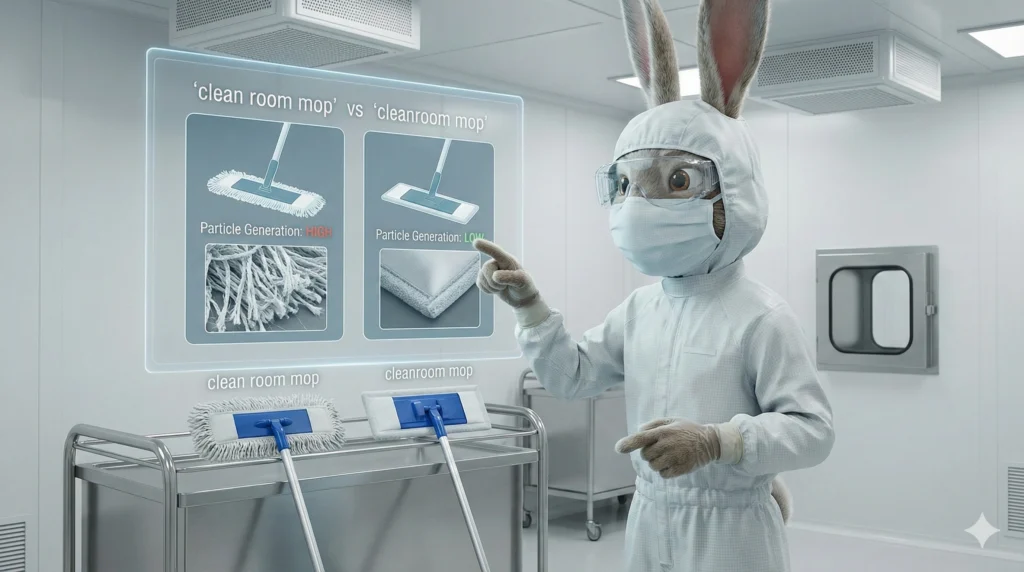
Figure 1: Material and construction comparison illustrating the fundamental difference between “clean room mop” and “cleanroom mop” products. Left: Consumer-grade microfiber mop with cut edges showing exposed fiber ends that shed particles during use—suitable for general janitorial applications but disqualified from pharmaceutical cleanrooms. Right: Pharmaceutical-grade cleanroom mop with sealed-edge polyester construction, heat-sealed perimeter encapsulating all fiber ends to prevent particle generation—validated for ISO Class 5–8 GMP manufacturing environments.
Defined by ISO 14644 & GMP Annex 1 Usage
ISO 14644-1 defines cleanrooms as controlled environments “in which the concentration of airborne particles is controlled, and which is constructed and used in a manner to minimize the introduction, generation, and retention of particles inside the room.” This three-part mandate—control airborne particles, prevent introduction, minimize generation—extends to every activity inside the cleanroom, including cleaning. The “cleanroom mop” (one word) exists specifically to meet this standard: it must not generate particles during use, must not introduce contamination from outside the space, and must support validated protocols that remove particles rather than redistribute them.
AB GMP Ek 1, farmasötik üretim için bu ilkeleri işler hale getirir. Yönetmelik, “A/B Sınıfı alanlarda kullanılan temizlik malzemelerinin steril olması” ve “dezenfektan ve deterjanların mikrobiyal kontaminasyon açısından izlenmesi” şartını koşuyor. Aseptik üretime yönelik temiz oda paspasları bu nedenle ön sterilizasyonu (gama ışınlaması, etilen oksit veya otoklav) desteklemeli, tekrarlanan dezenfektan maruziyetinden kaynaklanan bozulmaya karşı dirençli olmalı ve çevresel izleme uyumluluğunu koruyan doğrulanmış temizleme iş akışlarını mümkün kılmalıdır. Düzenleyici metinde "temiz oda" terimi sürekli olarak tek kelime olarak kullanılıyor ve bu da terimin teknik özelliğini güçlendiriyor.
Az Tüy Tüketen, Yalıtılmış Kenarlı Yapı
Sızdırmaz kenarlı yapı, farmasötik sınıf temiz oda paspaslarının tanımlayıcı fiziksel özelliğidir. Sızdırmaz kenarlı üretim, kumaşı kesmek ve elyaf uçlarını açığa çıkarmak yerine, tüm kumaş kenarlarını kapsüllemek için ısıyla yapıştırma, ultrasonik birleştirme veya sürekli kenarlı örgü kullanır. Bu, elyaf uçlarının yıpranmasını, pürüzlü zemin yüzeylerine takılmasını veya parçacıkların hava akışına salınmasını önler. Fark hemen görülebilir: Kesik kenarlı paspaslar gevşek iplikler ve bulanık kenarlar gösterirken, kapalı kenarlı paspaslar açıkta kalan elyaf uçları olmayan pürüzsüz, sürekli çevreler sunar.
Knit construction matters as much as edge treatment. Pharmaceutical cleanroom mops use closed-loop knit polyester or polyester-blend fabrics where the knitting process creates continuous loops without cutting. The fabric is knitted as tubes or sheets, then converted into mop heads with all edges sealed. This construction yields particle generation rates below 100 particles ≥0.5 µm per square meter of mopping—validated through IEST-RP-CC003 or equivalent testing. Compare this to cut-edge microfiber mops generating 1,000–10,000 particles per square meter, and the contamination control difference becomes quantifiable.
Mop head attachment systems also receive sealed-edge treatment. Pharmaceutical mops use pocket-style frames where the mop head slides into a continuous fabric pocket, or hook-and-release systems with sealed attachment strips. No exposed Velcro, no hook-and-loop fasteners that trap particles, no threaded connections that loosen under repeated autoclave cycles.
Non-Shedding Materials Used in Pharmaceutical Areas
Polyester dominates pharmaceutical cleanroom mop construction—typically 100% polyester knit or polyester-cellulose blends (for specific absorbency requirements). Polyester offers the best combination of low-lint performance, chemical resistance, autoclave durability, and mechanical strength. The polymer structure resists fiber breakage during wringing and floor contact, preventing the particle shedding that occurs with natural fibers (cotton) or lower-quality synthetics.
For critical Grade A/B applications, some manufacturers use continuous-filament polyester: ultra-long fibers knitted into fabric without cutting or splicing. This eliminates short fiber ends entirely, reducing particle generation to the absolute minimum. The material cost is higher ($80–$150 per mop head versus $40–$70 for standard polyester knit), but the contamination control benefit justifies the expense in aseptic filling suites and isolator environments where a single particle excursion can halt production.
Absorbency-enhancing materials must also meet low-lint standards. Some pharmaceutical mops incorporate microdenier polyester (fibers <1 denier) or controlled amounts of rayon/cellulose to increase fluid retention for larger mopping areas. These additives are knitted into the base polyester structure with sealed-edge construction maintained throughout, ensuring the absorbency benefit doesn’t compromise particle control.

Compatibility with Disinfectants (IPA, Quat, Bleach, H₂O₂)
Pharmaceutical cleanrooms rotate disinfectants to prevent microbial resistance, requiring mop materials to withstand sequential exposure to:
- p İzopropil Alkol (IPA): Daily use in Grade A/B areas; causes swelling and potential degradation in some polymers
- Quaternary Ammonium Compounds (Quats): General disinfection; relatively mild but requires rinsing to prevent residue buildup
- Sodyum Hipoklorit (Çamaşır Suyu, 500–5000 ppm): Broad-spectrum antimicrobial but oxidizes many materials
- Hidrojen Peroksit (%3-6): Sporicidal agent for periodic deep cleaning; degrades cellulose and some polyester blends
Cleanroom-grade polyester mops are validated for this rotation. Manufacturers conduct compatibility testing: soak mop heads in each disinfectant at validated concentrations for 2× typical contact time, perform particle generation testing post-exposure, measure mechanical strength retention, and verify no fiber breakage or material degradation. Specification sheets document pass/fail for each disinfectant class, enabling procurement teams to match mop selection to their facility’s disinfectant rotation protocol.
Material compatibility extends beyond chemical resistance to functional performance. Some disinfectants (high-concentration bleach, strong peroxides) cause temporary stiffening or texture changes in polyester. If these changes impair the mop’s ability to maintain floor contact or release trapped particles during wringing, the material is unsuitable despite passing basic chemical resistance tests. Pharmaceutical mop vendors provide application notes specifying maximum disinfectant concentrations, required rinse protocols, and recommended change-out frequencies to maintain validated performance.
Compatible with Autoclavable Buckets & Kollar
Cleanroom mops function as part of complete validated systems: mop heads + handles + buckets + carts, all qualified together. For Grade A/B use, every component must withstand 121°C steam autoclaving for 30 minutes without degradation. Polyester mop heads tolerate 50–100 autoclave cycles before material embrittlement requires replacement—dramatically better than microfiber mops (5–10 cycles) but still finite. Vendors specify autoclave service life in their qualification protocols.
Handle compatibility determines whether the complete mop system can be sterilized as a unit. Pharmaceutical mop handles use stainless steel (SS304 or SS316) or autoclave-grade polypropylene, with sealed construction that prevents water intrusion during steam cycles. Thread connections, if used, are sealed with autoclavable gaskets; most high-end handles eliminate threads entirely, using continuous-weld or friction-lock designs. The mop head attachment mechanism—typically a frame that clamps or slides onto the handle—must maintain secure connection through 50+ autoclave cycles without loosening or corroding.
For foundational contamination control principles and comprehensive cleaning tool selection, see the complete cleanroom mop guide covering materials, validation, and GMP workflows.
Technical Differences That Matter
Material selection determines particle generation, disinfectant compatibility, and service life—the three factors that drive total cost and compliance risk.
Material: Polyester vs Microfiber vs Foam
Polyester (100% or polyester-dominant blends): The pharmaceutical industry standard. Continuous-filament or knit polyester with sealed edges generates <100 particles ≥0.5 µm per m² of mopping when properly manufactured. Polyester resists alcohols, quats, and moderate-concentration bleach/peroxide, withstands 50–100 autoclave cycles, and maintains mechanical integrity across 200–300 uses with proper laundering. Cost: $40–$150 per mop head depending on construction quality (standard knit vs continuous-filament). Best for: ISO Class 5–8 pharmaceutical manufacturing, medical device cleanrooms, biotech aseptic areas.
Mikrofiber (polyester-polyamide blends, typically 80/20): Offers superior absorbency and soil pickup versus standard polyester but comes with trade-offs. Quality varies widely—pharmaceutical-grade microfiber uses sealed-edge construction and low-lint knitting, while commercial microfiber (the type marketed as “clean room” with two words) uses cut edges and sheds particles. Even sealed-edge microfiber generates 100–500 particles per m²—acceptable for ISO Class 7–8 but marginal for Class 5–6. Microfiber degrades faster under bleach and peroxide (30–50 autoclave cycles vs 50–100 for polyester) and requires more frequent replacement. Cost: $25–$80 per mop head. Best for: ISO Class 7–8 general manufacturing areas, gowning rooms, Grade C/D support spaces.
Köpük (poliüretan veya polivinil alkol): Yüksek saflıkta elektroniklerde (yarı iletken fabrikalar) ve ultra pürüzsüz yüzey teması gerektiren özel farmasötik uygulamalarda özel kullanım. Köpüklü paspaslar minimum partikül üretir (<Çünkü dökülecek lif yoktur ancak emicilik polyester/mikrofiberden daha düşüktür ve dezenfektan uyumluluğu daha sınırlıdır. PVA köpüğü sıcak suda çözülerek tek kullanımlık iş akışlarına olanak tanır; poliüretan köpük otoklavlanabilir ancak ağartıcı altında bozunur. Maliyet: Paspas kafası başına 15–40 ABD Doları (tek kullanımlık PVA) veya 60–120 ABD Doları (yeniden kullanılabilir poliüretan). En iyisi: ISO Sınıf 4-5 yarı iletken temiz odalar, izolatör bakımı, düşük partikül üretiminin maliyet/sınırlama dengesini haklı çıkardığı özel farmasötik uygulamalar.
Manufacturing: Sealed-Edge vs Cut-Edge
Edge treatment is the binary dividing line between pharmaceutical-grade and general cleaning products. The manufacturing process determines whether the mop will shed particles or maintain its low-lint performance across hundreds of uses.
Sealed-Edge Manufacturing: Kumaş kenarları ısıyla kapatılır (termoplastik eritme), ultrasonik olarak bağlanır (yüksek frekanslı titreşim kaynağı) veya örgü kapalıdır (kesik uçları olmayan sürekli döngü yapısı). Kapatma işlemi elyaf uçlarını kapsülleyerek yıpranmayı ve partikül salınımını önler. Yalıtılmış kenarlar, açılmadan veya bozulmadan, sıkma, zemin aşınması ve tekrarlanan yıkamadan kaynaklanan mekanik strese dayanır. Görsel inceleme düzgün, sürekli sınırları ortaya çıkarır; dokunsal muayenede gevşek iplik veya lif ucu görülmez. Maliyet artırıcı: Son teknoloji eşdeğerine kıyasla paspas kafası başına 10 ila 30 dolar. Performans avantajı: Parçacık oluşumunda 10–100 kat azalma. Farmasötik temiz odalar, ISO Sınıf 5-8 uyumluluğu için evrensel olarak sızdırmaz kenarlı yapıya ihtiyaç duyar.
Son Teknoloji Üretim: Fabric is cut to shape with scissors, rotary blades, or die-cutting, leaving exposed fiber ends. Edges may be overlock-stitched (serged) to slow fraying but fibers still protrude and shed. This is the standard manufacturing method for consumer and commercial janitorial mops because it’s fast, inexpensive, and adequate for non-particle-controlled environments. Cut-edge mops shed 1,000–10,000 particles per m² of mopping—two to three orders of magnitude worse than sealed-edge equivalents. These mops are disqualified from pharmaceutical use by their particle generation profile alone, regardless of material or disinfectant compatibility.
The cost difference ($10–$30 per mop head) is trivial compared to the operational cost of environmental monitoring failures, investigation cycles, and potential production holds triggered by particle excursions. Yet procurement errors persist—typically when buyers search “clean room mop” (two words) and receive cut-edge products that vendors market as “suitable for cleanrooms” without specifying ISO class limitations.
Cleanroom Classification: ISO 3–9
ISO 14644-1 classifies cleanrooms by airborne particle concentration limits. The classification you target determines which mop specification you need:
| ISO Sınıfı | Particles ≥0.5 µm/m³ (at rest) | Pharmaceutical GMP Grade | Mop Specification Required |
| ISO 3 | ≤35.2 | (special applications) | Foam or continuous-filament polyester; <50 particles/m² validated; gamma-sterilized |
| ISO 4 | ≤352 | (special applications) | Continuous-filament polyester; <50 particles/m² validated; gamma or autoclave sterilization |
| ISO 5 | Saha hazırlığının ve yardımcı program bağlantılarının doğrulanması | A notu | Sealed-edge polyester; <100 particles/m² validated; sterile (gamma or autoclave) |
| ISO 6 | ≤35,200 | B seviyesi | Sealed-edge polyester; <100 particles/m² validated; sterile (gamma or autoclave) |
| ISO7 | ≤352.000 | C sınıfı | Sealed-edge polyester or high-grade microfiber; <200 particles/m² validated |
| ISO 8 | ≤352.000 | D sınıfı | Sealed-edge polyester or high-grade microfiber; <500 particles/m² validated |
| ISO 9 | ≤35,200,000 | (unclassified support) | High-grade microfiber; general low-lint construction acceptable |
The tighter the particle limit, the more critical sealed-edge construction and material selection become. ISO Class 5 (Grade A) aseptic processing areas have zero tolerance for particle-generating cleaning tools—a single mop shedding 1,000 particles per pass will cause immediate environmental monitoring failures and investigation cycles. ISO Class 7–8 (Grade C/D) areas have more margin, but over-specification wastes budget while under-specification creates compliance risk.
Particle Release Test Data (Include MIDPOSI Data if Available)

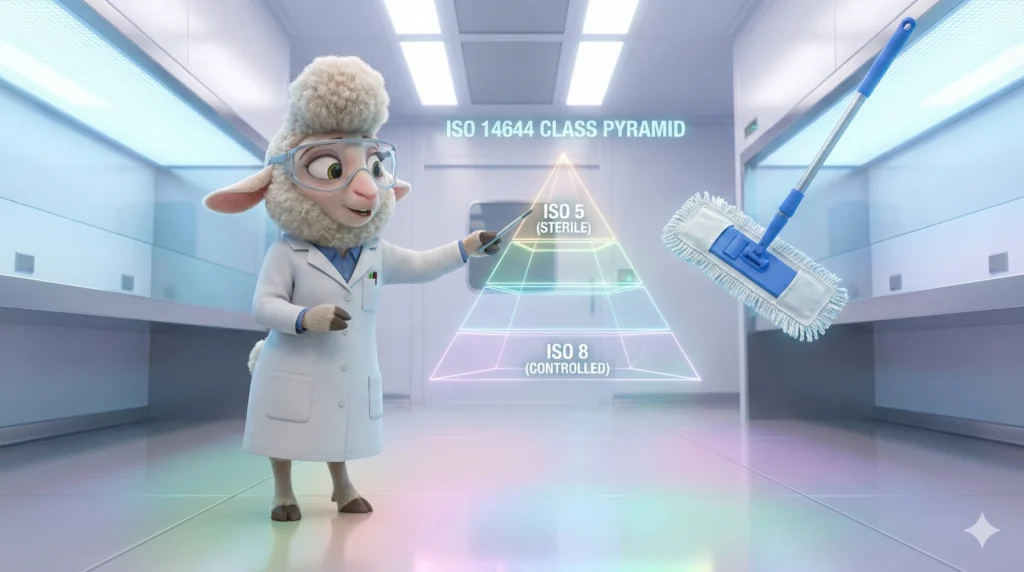
Şekil 2: ISO Sınıf 3'ten (en sıkı, ≤35,2 parçacıklar ≥0,5 µm/m³) ISO Sınıf 9'a (en az sıkı, ≤35,200,000 parçacık/m³) kadar parçacık konsantrasyonu gereksinimlerini, ilgili farmasötik GMP dereceleri (A/B/C/D) ve gerekli paspas spesifikasyonlarıyla birlikte gösteren ISO 14644 temiz oda sınıflandırma piramidi. Daha sıkı parçacık sınırları, daha sıkı paspas yapısı gerektirir: ISO 5 (Sınıf A), sızdırmaz kenarlı polyester üretimi gerektirir <Gama veya otoklav sterilizasyonuyla 100 parçacık/m², ISO 8 (Sınıf D) ise sızdırmaz kenarlı polyester veya yüksek dereceli mikrofiber kabul eder. <500 parçacık/m² doğrulaması.
Reputable pharmaceutical mop vendors provide particle generation test data conducted per IEST-RP-CC003.4 (“Garment System Considerations for Cleanrooms and Other Controlled Environments”) or equivalent protocols. Testing methodology: saturate the mop head with DI water or representative disinfectant, mop a controlled surface area (typically 1 m²) using standardized stroke pattern and pressure, measure airborne particle concentration using optical particle counter positioned downstream of the mopping operation, calculate particles released per square meter of mopping.
Typical results for pharmaceutical-grade mops:
- Sealed-edge knit polyester: 60–120 particles ≥0.5 µm per m²
- Sealed-edge continuous-filament polyester: 30–80 particles ≥0.5 µm per m²
- Sealed-edge knit polyester: 60–120 particles ≥0.5 µm per m²
- Sızdırmaz kenarlı mikrofiber (farmasötik sınıf): m² başına 100–300 parçacık ≥0,5 µm
- Son teknoloji ürünü mikrofiber (ticari): m² başına 1.000–10.000 parçacık ≥0,5 µm
MIDPOSI temiz oda paspaslama sistemleri, üretmek için onaylanmış, sızdırmaz kenarlı örgü polyester yapı kullanır <100 particles ≥0.5 µm per m² of mopping, meeting ISO Class 5–8 requirements. Mop heads undergo particle release testing at third-party cleanroom certification labs with results documented in product qualification protocols. The sealed-edge manufacturing process and polyester material selection ensure consistent low-lint performance across 200+ uses when mops are laundered per specification (neutral detergent, no fabric softener, validated rinse cycles) and autoclaved within service life limits (50–100 cycles depending on autoclave frequency and disinfectant exposure).
Sterilization Method Compatibility (Gamma, EO, Autoclave)
Grade A/B pharmaceutical areas require sterile cleaning tools. The sterilization method you specify determines which mop materials and construction types are compatible:
Gama Işınlaması: Exposes mops to 25–50 kGy ionizing radiation, achieving SAL 10⁻⁶ without heat or chemical residues. Polyester tolerates gamma well; microfiber shows some strength loss at >40 kGy; foam degrades significantly. Advantage: vendor can supply pre-sterilized mops in sealed packaging, eliminating in-house sterilization workload. Disadvantage: single-use workflow (re-sterilization requires returning mops to vendor) and higher cost ($8–$15 per mop head for gamma sterilization service). Best for: facilities without autoclave capacity, single-use mop protocols, or when contamination risk justifies disposable workflows.
Ethylene Oxide (EO): 50–60°C'de gaz sterilizasyonu, çoğu polimerle uyumludur ancak toksik kalıntıları ortadan kaldırmak için havalandırma süresi (12–24 saat) gerektirir. Otoklav daha hızlı olduğundan ve doğrulama gerektiren kimyasal kalıntılar bırakmadığından paspaslar için nadiren kullanılır (tıbbi cihazlar ve ısıya duyarlı ekipmanlar için daha yaygındır). Polyester ve mikrofiber EO'yu tolere eder; köpük uyumluluğu formülasyona göre değişir.
Otoklav (Buhar Sterilizasyonu): 121°C for 30 minutes (gravity cycle) or 15 minutes (pre-vacuum cycle), the most common in-house sterilization method for pharmaceutical cleanrooms. Polyester withstands 50–100 cycles; microfiber degrades faster (30–50 cycles); PVA foam dissolves (intentional for single-use protocols); polyurethane foam tolerates 20–30 cycles. Advantage: rapid turnaround (mops sterilized and ready for next shift), no vendor dependency, lowest cost per cycle ($0.50–$1.00 energy/labor cost). Disadvantage: requires validated autoclave, qualified cycles, biological indicator monitoring, and documented cycle records per 21 CFR 211.182. Best for: facilities with existing autoclave infrastructure, reusable mop protocols, and sufficient mop inventory to support laundering/sterilization rotation.
Paspas kafası malzemeleri ve kenar yapısıyla ilgili ayrıntılı özellikler için, polyester ve mikrofiber performans verilerini, kapalı kenarlı üretim süreçlerini ve ISO sınıfına göre seçim kriterlerini kapsayan paspas kafası türleri kılavuzuna bakın.
Paspasların Karşılaması Gereken Temiz Oda Standart Gereksinimleri
ISO 5–8 Kirlilik Kontrol Standartları
ISO 14644-1 establishes particle concentration limits that cleanroom mops must not compromise. The standard defines “at-rest” conditions (cleanroom operational with HVAC running but no personnel or processes active) and “operational” conditions (normal manufacturing activity). Mops are used during operational states, meaning their particle contribution adds to the existing background. For ISO Class 5 (≤3,520 particles ≥0.5 µm/m³), a mop generating 1,000 particles per m² of mopping can push localized particle counts above classification limits—especially in areas with reduced airflow velocity (floor-level dead zones, corners, behind equipment).
The standard also addresses microbial contamination, though particle limits are the primary classification criteria. ISO 14698 (“Cleanrooms and associated controlled environments — Biocontamination control”) provides bioburden control guidance, noting that viable particles (bacteria, fungi) adhere to non-viable particles and surfaces. A mop that sheds particles creates attachment sites for microorganisms, increasing both particle counts and microbial contamination risk. Pharmaceutical facilities typically set internal limits stricter than ISO minimums: a Grade A area (ISO 5 at rest) might require mop particle generation <50 per m² to maintain adequate contamination control margin.
GMP Annex 1 Environmental Cleaning Expectations
EU GMP Annex 1 (effective August 2023) tightened requirements for cleaning materials and disinfection validation. Key provisions:
- Sterility requirement: “Materials used for cleaning and disinfection in Grade A/B areas should be sterile. Where disinfection of materials is appropriate, the method, concentration, and contact time should be defined and validated.”
- Cleaning program validation: “Cleaning and disinfection should follow a written, validated program. Disinfectants and detergents should be monitored for microbial contamination; dilutions should be kept in previously cleaned containers and should only be stored for defined periods unless sterilized.”
- Disinfectant rotation: “More than one type of disinfectant should be employed. Monitoring should be undertaken regularly to detect the development of resistant strains.”
- Residue removal: “Cleaning procedures should be designed to effectively remove residues and should be validated. The use of detergents or other materials in the cleaning process requires particular care to prevent contamination.”
These requirements directly impact mop specification. “Sterile” means gamma-irradiated or autoclaved with documented SAL 10⁻⁶. “Validated” means documented testing proving the mop-bucket-disinfectant system achieves required bioburden reduction (typically >3-log) without generating particles or leaving residues. “Rotation” means the mop must tolerate alcohols, quats, bleach, and peroxides without degrading. Facilities must document mop sterilization methods, change-out frequencies, particle generation data, and disinfectant compatibility in their cleaning validation protocols.
Why Consumer-Grade Microfiber Fails Compliance
Consumer microfiber mops fail pharmaceutical qualification on multiple fronts:
- Parçacık üretimi diskalifiye: Cut-edge construction sheds 1,000–10,000 particles per m², exceeding acceptable limits by 10–100× for ISO Class 5–8 environments.
- Sterilizasyon yolu yok: Velcro attachments, foam backings, and polyamide blend fibers degrade after 5–10 autoclave cycles; gamma irradiation causes strength loss and material breakdown.
- Doğrulanmamış dezenfektan uyumluluğu: Materials may tolerate bleach or quats individually but fail under pharmaceutical rotation protocols (Monday alcohol, Tuesday peroxide, Friday bleach).
- Yeterlilik belgesi yok: Consumer vendors provide no particle generation test data, no sterilization validation, no chemical compatibility matrices—leaving pharmaceutical QA teams unable to complete IQ/OQ/PQ protocols.
- Material traceability gaps: Pharmaceutical regulations require material certifications, lot traceability, and change control for cleaning tools. Consumer mops lack these controls.
Denetçiler, tesis denetimleri sırasında tüketici sınıfı paspasları işaretler çünkü spesifikasyon boşluğu açıktır: Temizlik SOP'niz ISO 14644 ve GMP Ek 1'e referans veriyorsa ancak paspas tedarikçiniz partikül üretim verilerini veya sterilizasyon doğrulamasını sağlayamıyorsa, düzenleyici incelemelerden sağ çıkamayacak bir dokümantasyon boşluğunuz var demektir.
Temiz Oda Paspas Doğrulaması & Belgeler
Farmasötik temiz oda paspasları üç aşamalı yeterlilik gerektirir:
IQ (Kurulum Yeterliliği): Paspas özelliklerini (malzeme bileşimi, kapalı kenarlı yapı, boyutlar) belgeleyin, lot numaralarını ve uygunluk sertifikalarını doğrulayın, sterilizasyon yöntemini ve SAL belgelerini onaylayın, fiziksel kusurları (gevşek iplikler, hasarlı kenarlar, kirlenme) kontrol edin.
OQ (Operasyonel Yeterlilik): Demonstrate the mop functions as specified within the validated cleaning system. Test disinfectant compatibility (no degradation after 10 cycles of each disinfectant type), verify autoclave survivability (no performance loss after 20 cycles if applicable), measure particle generation per IEST-RP-CC003.4 (<100 particles per m² for ISO 5–8 use), confirm mechanical integrity (no fiber shedding during wringing, floor contact).
PQ (Performans Yeterliliği): Prove the complete mop system (mop + bucket + disinfectant + technique) achieves required contamination control in actual use. Conduct environmental monitoring pre- and post-cleaning (particle counts, microbial surface sampling), demonstrate >3-log bioburden reduction, verify disinfectant concentration stability throughout cleaning cycle, validate that mopping doesn’t elevate particle counts above ISO class limits.
Documentation packages include manufacturer’s specifications and test data, certificates of analysis and conformance for each lot, sterilization certificates (gamma dose records or autoclave cycle documentation), change control procedures (what happens if manufacturer changes materials or processes), and periodic requalification schedules (annual particle generation verification, quarterly visual inspections).
Which Term Should Pharmaceutical Companies Use?
Terminology Used by FDA & DSÖ
Aseptik işlemeye yönelik FDA kılavuz belgeleri (“Aseptik İşlemeyle Üretilen Steril İlaç Ürünleri - CGMP,” Eylül 2004), tek kelimeli veya iki kelimeli yazılışı belirtmeden “temiz odalara” atıfta bulunur, ancak kontaminasyon kontrol ortamlarını tartışırken sürekli olarak kapalı bileşik “temiz oda”yı kullanır. Kılavuz, ISO'nun tek kelimelik terminolojisini dolaylı olarak benimseyerek, sınıflandırma metodolojisi için ISO 14644'e saygı gösterir. FDA inceleme kılavuzları ve uyarı mektupları, temizodayla ilgili eksikliklerden bahsederken uluslararası düzenleyici dile uygun olarak "temizoda" ifadesini kullanır.
DSÖ Teknik Rapor Serisi 1044, Ek 2 (“Farmasötik ürünler için iyi üretim uygulamaları: ana ilkeler”) tamamında “temiz odalar”ı kullanır ve sınıflandırma için açıkça ISO 14644'e atıfta bulunur. Belgede şöyle deniyor: "Temiz odalar ve temiz hava cihazları kalifiye edilmeli ve performansları rutin olarak izlenmelidir. Kalifikasyon ve izleme, ISO 14644'te verilen esaslara uygun olarak yapılmalıdır." Bu, uluslararası ilaç üretiminde doğru terimin “temiz oda” olduğunu güçlendiriyor.
Tedarik için Önerilen Adlandırma
Tedarik spesifikasyonlarında aşağıdakiler için “temiz oda paspası” (tek kelime) kullanılmalıdır:
- Düzenleyici dili eşleştirin: Aligns with ISO 14644, EU GMP Annex 1, and WHO terminology, ensuring vendor responses meet pharmaceutical standards.
- Filter search results: Vendors serving regulated industries index products as “cleanroom mops”; searching “clean room mop” (two words) returns more janitorial supply results requiring manual filtering.
- Signal technical requirements: “Cleanroom mop” communicates to vendors that you need sealed-edge construction, particle generation data, sterilization compatibility, and qualification documentation—not just a “cleaner than normal” mop.
- Support audit defense: When inspectors review procurement records, specifications using regulatory-aligned terminology demonstrate technical competence and compliance intent.
Specification language template:
“Supplier shall provide cleanroom mops (sealed-edge polyester construction) validated for ISO Class [5/6/7/8] use. Required documentation: particle generation test data per IEST-RP-CC003.4 showing <[50/100/200/500] particles ≥0.5 µm per m² of mopping; chemical compatibility validation for 70% IPA, quaternary ammonium compounds, 3–6% H₂O₂, and 500–5000 ppm sodium hypochlorite; sterilization validation (gamma irradiation to SAL 10⁻⁶ or autoclave compatibility 121°C/30 min for minimum 50 cycles); material certificates of conformance and lot traceability.”
Preventing Purchase of Non-Compliant Supplies
Three procurement controls prevent wrong-specification mop purchases:
1. Approved Vendor List (AVL): Qualify vendors before purchase orders are issued. Qualification criteria: vendor provides pharmaceutical-grade cleanroom products (not general janitorial supplies), documentation packages include particle generation data and sterilization validation, vendor has traceability and change control systems, and vendor serves other pharmaceutical/medical device manufacturers (verifiable references). Purchasing systems should block POs to non-AVL vendors for cleanroom consumables.
2. Specification-Driven Purchasing: Link purchase requisitions to master specifications. When a user requests “mops for Grade B cleanroom,” the system auto-populates the specification (sealed-edge polyester, <100 parçacık/m², gama ile sterilize edilmiş, farmasötik dezenfektan rotasyonuyla uyumlu) ve bu spesifikasyonu karşılayan ön nitelikli ürünlere sahip AVL satıcılarına yönlendirir. Bu, kullanıcıların genel terimleri ("temiz oda paspası") aramasını ve uyumlu olmayan ürünleri seçmesini engeller.
3. Muayene Kabulü: Temiz oda kullanımına bırakmadan önce gelen paspasların teknik özelliklerle eşleştiğini doğrulayın. Sızdırmaz kenarlar için görsel inceleme (gevşek iplik yok, sürekli çevre), dokümantasyon incelemesi (analiz sertifikaları, sterilizasyon kayıtları, parti numaraları) ve periyodik üçüncü taraf testleri (bağımsız partikül üretimi doğrulaması için rastgele numuneler gönderin). Gerekli belgeler olmadan gelen veya kalite kusurları gösteren partileri reddedin.
Common procurement failure mode: Facilities specify “cleanroom mop” correctly in master specifications but then allow individual departments to make ad-hoc purchases through general suppliers (Amazon Business, Grainger, Uline) searching “clean room mop.” These orders bypass AVL controls and introduce non-compliant products that fail during use.
How MIDPOSI Cleanroom Mop Meets the Pharma-Grade Definition
MIDPOSI cleanroom mopping systems are engineered specifically for pharmaceutical GMP compliance:
- Sealed-edge polyester construction: Knit polyester fabric with heat-sealed edges encapsulating all fiber ends, validated to generate <100 particles ≥0.5 µm per m² of mopping (tested per IEST-RP-CC003.4).
- ISO Class 5–8 qualified: Particle generation performance meets requirements for pharmaceutical Grade A/B/C/D areas; test data available in product qualification documentation.
- Pharmaceutical disinfectant compatibility: Validated for 70% IPA, quaternary ammonium compounds, 3–6% hydrogen peroxide, and sodium hypochlorite (500–5000 ppm); withstands pharmaceutical rotation protocols without degradation.
- Autoclave-compatible: Mop heads tolerate 50–100 steam sterilization cycles at 121°C/30 min; compatible with stainless steel and polypropylene handles/frames that survive equivalent autoclave duty.
- Complete system qualification: Mops integrate with validated bucket systems (dual- and triple-bucket configurations), frames, and carts to deliver turnkey GMP cleaning workflows.
- Documentation packages: Each lot includes certificates of analysis, material certifications, sterilization compatibility data (autoclave cycle limits), particle generation test reports, and traceability records supporting IQ/OQ/PQ protocols.
For complete cleanroom mopping systems including buckets, frames, and validated workflows, see the integrated system guide.
Summary Table — Clean Room Mop vs Cleanroom Mop
| Kriter | Clean Room Mop (Two Words) | Cleanroom Mop (One Word) |
| Terminology Origin | General English (dictionary standard) | ISO 14644 / GMP Annex 1 technical term |
| Target Environment | Non-ISO areas: offices, schools, packaging, light manufacturing | Pharmaceutical ISO 5–8 cleanrooms (Grade A/B/C/D) |
| Yapı | Cut-edge fabric, exposed fiber ends | Sealed-edge polyester, encapsulated fiber ends |
| Malzeme | Cotton, standard microfiber, polyester blends | Knit polyester (100% or dominant blend), continuous-filament options |
| Parçacık Üretimi | 1,000–10,000 particles ≥0.5 µm/m² | <100 particles ≥0.5 µm/m² (ISO 5–8 validated) |
| Dezenfektan Uyumluluğu | Temel (çamaşır suyu, dörtlü); rotasyon doğrulaması yok | Validated for pharmaceutical rotation (IPA, quats, bleach, H₂O₂) |
| Sterilizasyon | Not autoclavable (5–10 cycles max); no gamma option | 50–100 autoclave cycles; gamma-sterilized options available |
| Regulatory Documentation | None (consumer product) | Particle data, chemical compatibility, sterilization validation, lot traceability |
| Cost per Mop Head | $15–$30 | $40–$150 |
| Service Life | 50–100 uses before visible degradation | 200–300 uses (with proper laundering/sterilization) |
| Uygun ISO Sınıfları | ISO 9 / yalnızca sınıflandırılmamış destek alanları | ISO 5–8 (ilaç üretimi, tıbbi cihaz, biyoteknoloji) |
| GMP Uyumluluğu | ❌ Ek 1 gerekliliklerini karşılamıyor | ✅ Ek 1'in steril temizleme aleti gerekliliklerini karşılar |
| Kanal Satın Alma | Temizlik malzemeleri, genel e-ticaret (Amazon, Grainger) | Farmasötik temiz oda tedarikçileri, uzman distribütörler |
| Yeterlilik Belgeleri | ❌ IQ/OQ/PQ desteği yok | ✅ Tam IQ/OQ/PQ belgeleme paketleri mevcuttur |
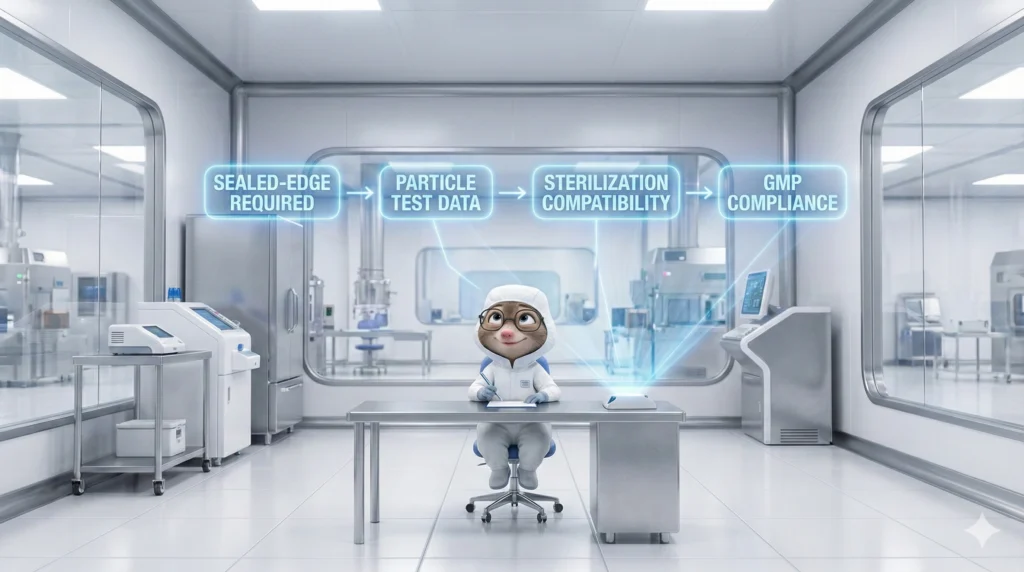
Figure 3: Pharmaceutical Grade B/C cleanroom showing proper GMP mopping operations with fully gowned operator using validated triple-bucket system, sealed-edge cleanroom mop, and controlled contamination control technique. This environment requires “cleanroom mop” (one word) specification—pharmaceutical-grade sealed-edge polyester tools validated for ISO 5–8 particle control, not general “clean room mops” (two words) designed for commercial janitorial use. Proper terminology ensures procurement delivers GMP-compliant tools that maintain environmental monitoring compliance and survive regulatory inspection.
Disposable Cleanroom Mop Pads
Şunun için en iyisi:: Single-use workflows, facilities without laundering infrastructure, high-contamination-risk areas requiring fresh tools per room.
Specifications: Pre-sterilized (gamma irradiation) sealed-edge polyester pads, individually packaged. Typical size 40–60 cm width, compatible with standard cleanroom mop frames. No laundering or re-sterilization required—use once and discard per pharmaceutical waste protocols.
Artıları: Zero cross-contamination risk between rooms/batches, no laundering/sterilization workload, guaranteed sterility (SAL 10⁻⁶ from vendor), consistent performance (no degradation from repeated autoclave cycles).
Eksileri: Higher cost per use ($8–$15 per pad vs $0.50–$1.50 per use for reusable), generates more waste (environmental impact, disposal cost), requires larger storage space for inventory.
Typical applications: Aseptic filling suites (Grade A/B) where contamination risk justifies single-use cost, multi-product facilities preventing cross-contamination between campaigns, facilities with limited autoclave capacity or no validated laundering process.
Autoclavable Mop Systems
Şunun için en iyisi:: Facilities with existing autoclave infrastructure, reusable mop protocols, cost-sensitive operations mopping large floor areas daily.
Specifications: Sealed-edge polyester mop heads with autoclave-compatible frames (stainless steel SS316 or high-temp polypropylene). Mop heads withstand 50–100 autoclave cycles at 121°C/30 min. Complete systems include mop heads, handles, frames, and often bucket carts—all sterilizable as a unit.
Artıları: Lowest cost per use ($0.50–$1.50 after amortizing mop head cost over 200–300 uses), rapid turnaround (mops sterilized overnight for next-day use), no vendor dependency for sterilization, reduced waste versus disposables.
Eksileri: Requires validated autoclave cycles and maintenance, finite service life (mop heads replaced after 50–100 autoclave cycles as material embrittles), laundering infrastructure needed (or outsourced laundering service), inventory management (sufficient mops to support rotation while batches are in laundering/sterilization).
Typical applications: ISO Class 6–8 manufacturing areas (Grade B/C/D), facilities with daily cleaning protocols covering 1,000+ m² floor area, operations with qualified autoclave already supporting equipment/material sterilization.
Gamma-Irradiated Cleanroom Wipe-Mop
Şunun için en iyisi:: Critical Grade A environments, facilities requiring highest contamination control assurance, operations where documentation burden justifies premium cost.
Specifications: Pre-sterilized sealed-edge polyester mops, gamma-irradiated to SAL 10⁻⁶, supplied in validated sterile packaging with irradiation dose certificates. Often sold as mop heads + pre-saturated disinfectant packs (sterile IPA or sporicidal solution) for complete validated workflows.
Artıları: Maximum sterility assurance (vendor-validated SAL 10⁻⁶, no in-house sterilization risk), complete documentation (irradiation certificates, certificates of analysis, lot traceability supporting regulatory audits), no autoclave workload.
Eksileri: Highest cost per use ($10–$20 per mop depending on size/configuration), single-use only (no re-sterilization option), longer lead times (gamma sterilization batching may extend order fulfillment to 2–4 weeks).
Typical applications: Isolator cleaning (aseptic filling, lyophilization), Grade A aseptic core areas, high-value product manufacturing where contamination event cost far exceeds consumable cost, facilities without autoclave capacity or seeking to eliminate in-house sterilization validation burden.
Triple-Bucket GMP Mopping System
Şunun için en iyisi:: Complete turnkey solution for facilities building or upgrading cleanroom cleaning programs, operations requiring validated bucket segregation (Annex 1 Grade A/B/C compliance).
Specifications: Sızdırmaz kenarlı polyester paspas kafaları, paslanmaz çelik veya polipropilen üçlü kova arabası (dezenfektan/durulama/atık ayrımı), pres tipi veya rulo sıkma makinesi, otoklavlanabilir çerçeveler ve tutacaklar içeren entegre sistem. Sistemler, IQ/OQ protokolleri sağlanan eksiksiz birimler olarak ön yeterliliklidir.
Artıları: Ek 1 uyumluluğu için tasarlanmış (sıvı ayrımı, dezenfektanın seyreltilmesini ve çapraz kontaminasyonu önler) tam doğrulanmış iş akışı (kovaları, paspasları, sıkma makinelerini ayrı ayrı nitelendirmeye gerek yoktur), genellikle eğitim ve SOP şablonlarını, tüm sistem için tek bir tedarikçiyi (basitleştirilmiş satın alma ve değişiklik kontrolü) içerir.
Eksileri: Higher upfront capital cost ($2,000–$5,000 per complete system vs $200–$500 for mops alone), requires floor space for triple-bucket cart, more complex operator training (validated sequence: disinfect → wring into waste → rinse → wring into waste → reload).
Typical applications: New pharmaceutical manufacturing facilities establishing GMP cleaning programs, existing facilities remediating environmental monitoring failures or audit findings related to cleaning validation, Grade A/B/C areas requiring Annex 1-compliant disinfectant segregation.
Explore MIDPOSI’s complete range of reusable cleanroom mopping systems including sealed-edge mop heads, autoclavable frames, and validated bucket configurations for ISO 5–8 pharmaceutical manufacturing.