Temiz Oda Paspas Kovası Sistem Kılavuzu - GMP Kurulumu, Malzemeler ve Seçim
Temiz oda paspas kovası bir temizlik malzemesi değildir. GMP veya ISO sınıflandırmalı bir ortamda kova sistemi, kontaminasyon kontrol stratejisinin bir parçası haline gelir. Dezenfektanı, durulama suyunu ve atık sıvıyı nasıl ayırdığı, dezenfektanın stabilitesini, biyolojik yük kontrolünü, operatörün tekrarlanabilirliğini ve denetim hazırlığını doğrudan etkiler.
Bu kılavuz tekli, ikili ve üçlü kova konfigürasyonlarının nasıl değerlendirileceğini, ne zaman paslanmaz çelik (SS304/SS316) veya temiz oda sınıfı polipropilenin seçileceğini, sıkma tasarımının parçacık kontrolünü nasıl etkilediğini ve kova sisteminin doğrulanmış bir GMP temizleme iş akışına nasıl entegre edileceğini açıklamaktadır.
Temiz Oda Paspas Kovasını Standart Ticari Kovalardan Farklı Kılan Nedir?
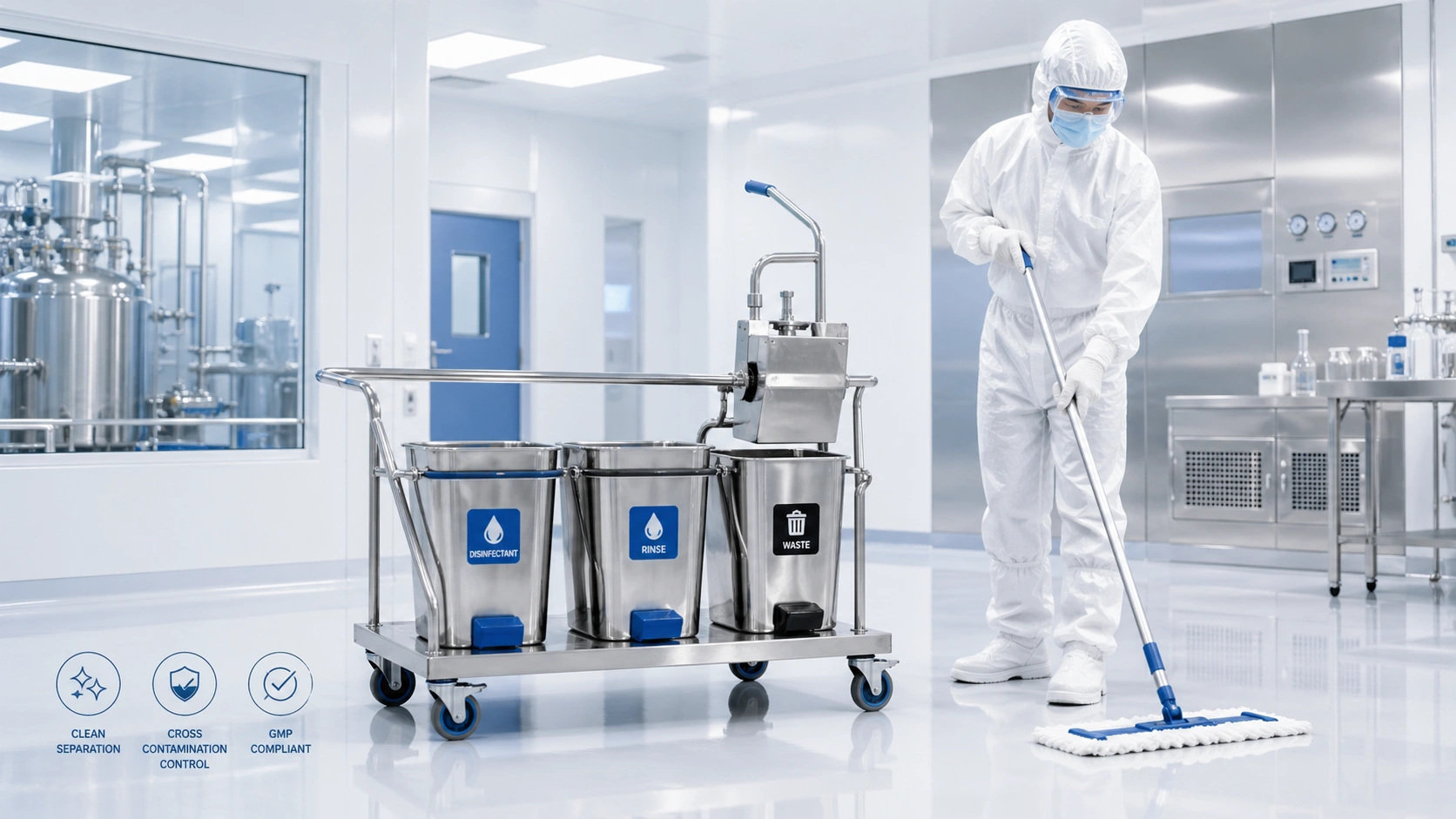
Standart bir temizlik paspası kovası hız ve rahatlık için tasarlanmıştır. Temiz oda paspas kovası sistemi, sınıflandırılmış veya GMP tarafından düzenlenen ortamlarda kontrollü temizlik, sıvı ayrımı ve tekrarlanabilir performans için tasarlanmıştır.
Yaygın ticari kovalar genellikle kaba plastik yüzeyler, açıkta kalan dikişler, açık bağlantılar, düşük dereceli tekerlekler veya kalıntıları tutan ve temizlenmesi zor olan sıkma düzeneklerini içerir. Bu ayrıntılar parçacıkların saçılmasına, kirlenmenin oluşmasına neden olabilir veya ekipmanın bir sonraki kullanıma hazır olduğunun doğrulanmasını imkansız hale getirebilir.
Temiz odada kovanın ek bir kirlilik kaynağı olmaktan ziyade temizleme sürecini desteklemesi gerekir. Temel tasarım gereksinimleri şunları içerir:
- Silinebilen ve incelenebilen pürüzsüz, çatlaksız yüzeyler
- Sürekli kaynaklar ve yuvarlatılmış iç köşeler (paslanmaz çelik sistemler için)
- Temizlenebilir kenarlı, pürüzsüz kalıplanmış yüzeyler (polipropilen sistemler için)
- Sıvının köşelerde veya sıkma bağlantılarının etrafında birikmemesi için uygun drenaj
- Tesisin dezenfektan rotasyonuna kimyasal uyumluluk
- Temizleme, kurutma ve depolamaya ilişkin yazılı SOP gereklilikleriyle uyumluluk
GMP ve ISO 14644 ortamları ayrıca temizleme araçlarının parçacık oluşumunu en aza indirmesini, belgelenmiş prosedürleri desteklemesini ve operatörlerin dezenfektan, durulama suyu ve atık sıvı arasında net bir ayrım sağlamasına yardımcı olmasını beklemektedir. İyi seçilmiş bir kova sistemi, bu beklentilerin karşılanmasını ve iç denetimler ve düzenleyici denetimler sırasında ortaya konulmasını kolaylaştırır.
Kova malzemelerini paspas başlıkları, çerçeveler ve kulplarla birlikte değerlendiriyorsanız, tümünü gözden geçirin. temiz oda paspas sistemine genel bakış Kontrollü bir temizleme iş akışında her bir bileşenin birlikte nasıl çalıştığını anlamak.
Temiz Oda Paspas Kovası Yapılandırmaları - Tekli, İkili ve Üçlü Kova Sistemleri
Tek Kovalı Sistem
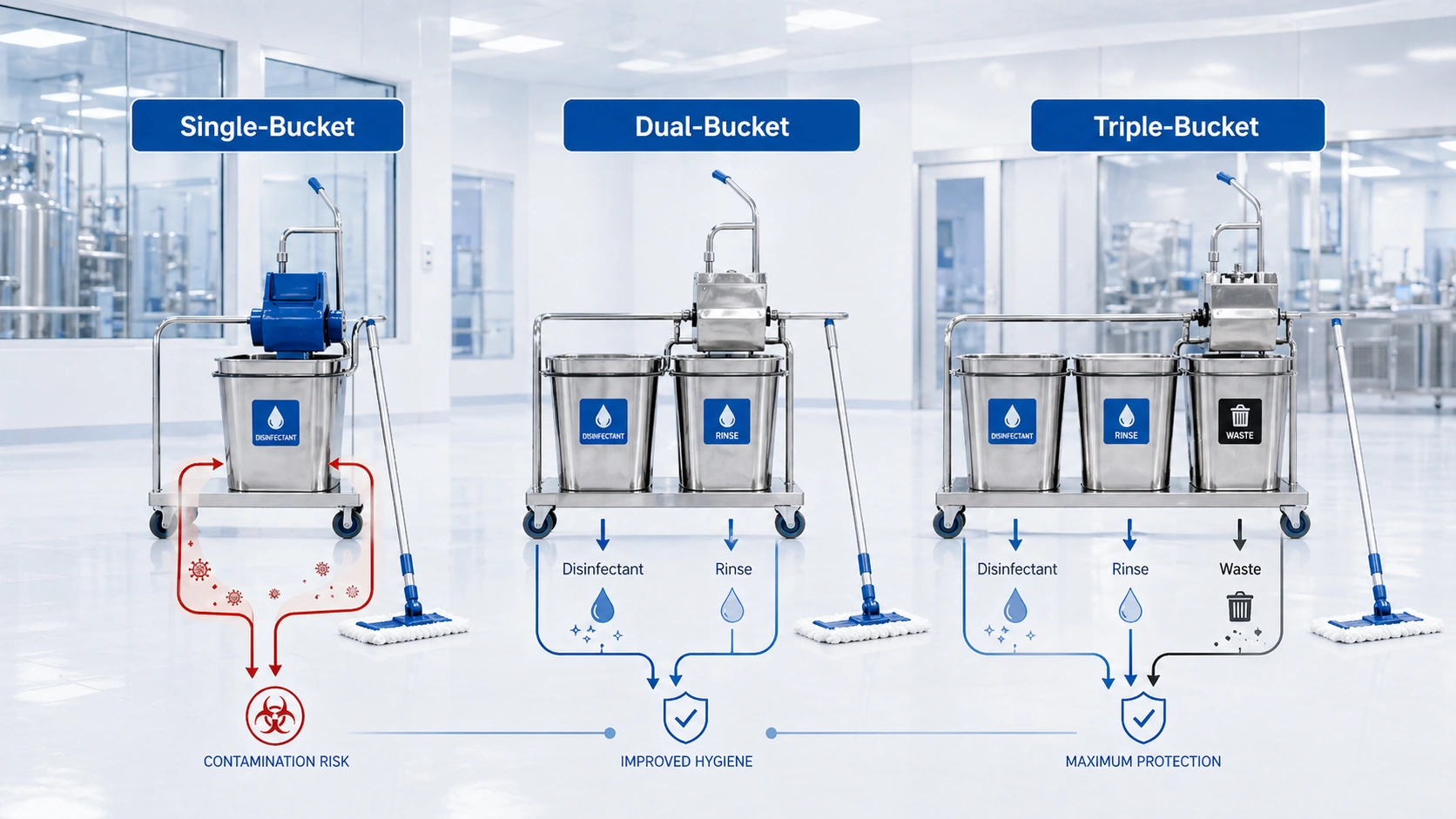
Tek kovalı sistem, temizleme veya dezenfektan solüsyonu için bir kap kullanır. Paspas batırılır, yüzeye uygulanır ve aynı kovaya geri konur. Bu en basit düzenlemedir ancak aynı zamanda kirlenme kontrolü açısından en zayıf düzenlemedir; toprak ve kaldırılan biyolojik yük doğrudan aktif çözeltiye geri akar.
Riskin düşük olduğu ve prosedürün açıkça tanımlandığı kritik olmayan destek alanları için tek kovalı sistemler kabul edilebilir. GMP temiz oda temizliği için tek kovalı yaklaşımın gerekçelendirilmesi zordur çünkü temiz çözelti ile kirli dönüş sıvısı arasında ayrım sağlamaz.
Çift Kovalı Sistem
Çift kovalı bir sistem, aktif temizleme veya dezenfektan solüsyonunu durulama suyundan ayırır. Operatörler temiz kovadaki solüsyonu uygular, ikinci kovadaki paspası durular, sıkar ve ardından temiz solüsyona geri döner. Bu, kirli sıvının doğrudan dezenfektan kovasına geri dönmesini önler.
Çift kovalı konfigürasyonlar, temizlik riskinin orta düzeyde olduğu ve tesisin durulama suyu ve paspas kafaları için tanımlı değiştirme kurallarının olduğu kontrollü alanlarda yaygın olarak kullanılır. Proses kontrolü ile operasyonel basitlik arasında pratik bir dengeyi temsil ederler.
Üçlü Kova Sistemi
Üçlü kova sistemi dezenfektanı, durulama suyunu ve atık sıvıyı ayırır. Atık kovası paspastan sıkılan tüm sıvıyı alır, bu da kirlenmiş sıvının dezenfektan veya durulama kovasına geri karışmasını önler.
Farmasötik, biyoteknoloji, aseptik destek ve daha yüksek dereceli GMP temizleme iş akışları için bu düzen, en güçlü süreç kontrolünü sağlar. Her kovanın net ve tek bir işlevi vardır: biri aktif solüsyon için, biri durulama için ve biri atık toplama için. Bu netlik, operatör eğitimini ve denetim dokümantasyonunu basitleştirir.
Tek Kovalı
En düşük karmaşıklık, en zayıf ayrım. Prosedürün sıvı ayrımını gerektirmediği düşük riskli veya kritik olmayan destek alanları için en iyi şekilde ayrılmıştır.
Çift Kovalı
Temiz solüsyonu ve durulama suyunu ayırır. Durulama suyu değişimi ve paspas kullanımı açıkça tanımlandığında kontrollü temizlik rutinleri için uygundur.
Üçlü Kova
Dezenfektanı, durulama suyunu ve atık sıvıyı ayırır. Kontaminasyon kontrolü, dezenfektan stabilitesi ve proses tekrarlanabilirliğinin öncelikli olduğu durumlarda tercih edilir.
Sıkma Makinası ve Pres Sistemleri — Tesisiniz İçin Hangi Mekanizma?
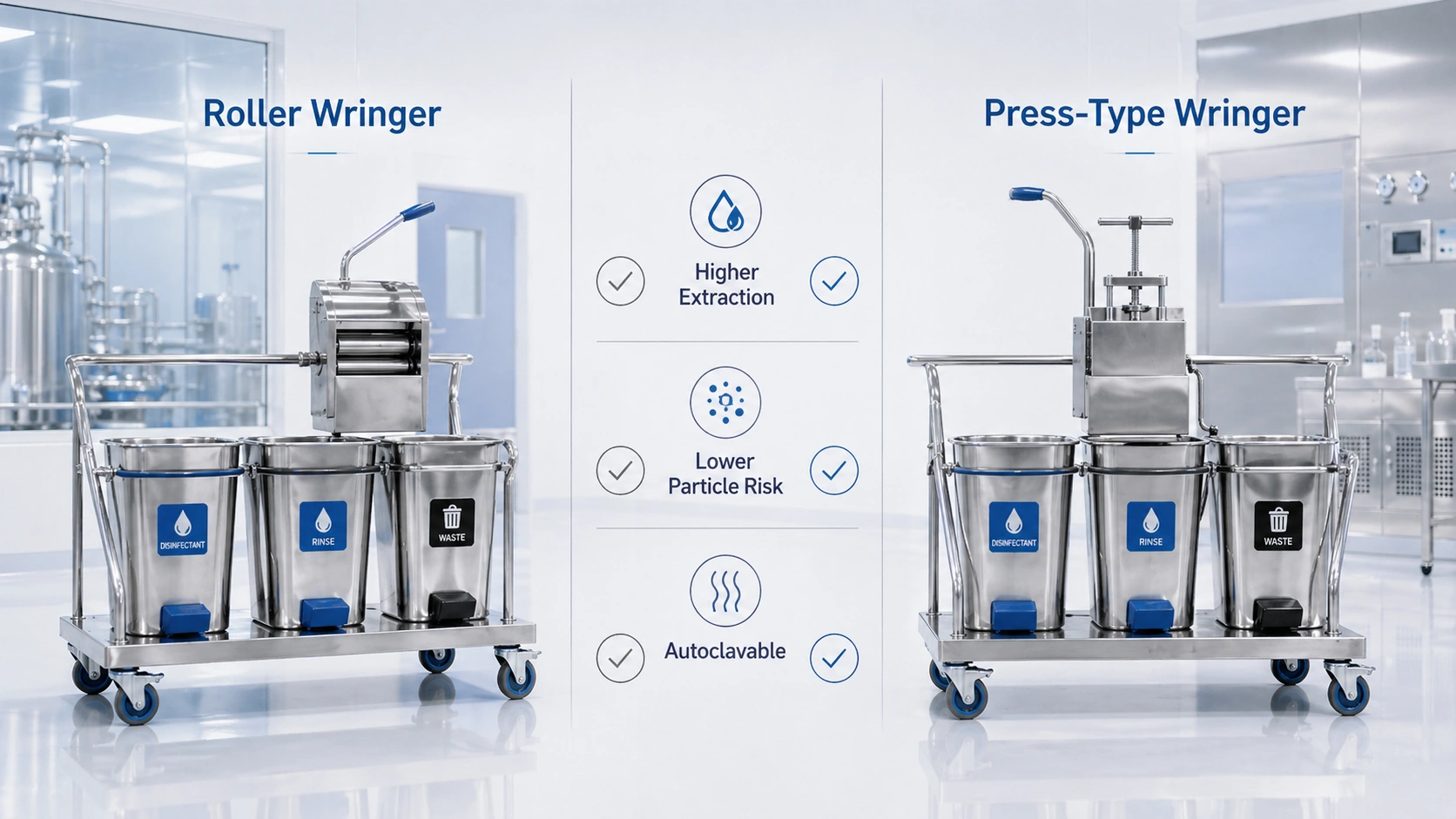
Rulo Sıkacağı
Silindir sıkma makineleri, paspas kafasından sıvıyı sıkmak için dönen silindirler kullanır. Etkili sıvı ekstraksiyonu sağlayabilirler ve operatörlerin daha geniş alan temizliği sırasında daha hızlı işlemeye ihtiyaç duyduğu durumlarda kullanışlıdırlar.
Takas mekanik karmaşıklıktır. Rulmanlar, miller, makaralar ve bağlantı noktaları temizlenebilirlik, korozyon direnci ve parçacık oluşumu riski açısından dikkatle incelenmelidir. Açıkta yağlama noktaları veya erişilemeyen bağlantı noktaları bulunan silindir sistemleri, yüksek dereceli temiz oda ortamları için uygun olmayabilir.
Pres Tipi Sıkma Makinası
Pres tipi sıkma makineleri, paspas kafasından sıvıyı çıkarmak için bir sepet, plaka veya sıkıştırma mekanizması kullanır. Genellikle daha az hareketli parçayla yapımları daha basittir; bu da onların temizlenmesini, incelenmesini ve doğrulanmasını kolaylaştırır.
A/B Sınıfı destek bölgeleri ve diğer hassas temiz oda iş akışları için, partikül dökülmesi ve temizlenebilirlik açısından değerlendirilmesi gereken bileşenlerin sayısını azalttığı için genellikle pres tipi bir sıkma makinesi tercih edilir. Nihai karar, paspas kafası tipine, temizleme alanının boyutuna, operatörün ergonomisine ve sterilizasyon gereksinimlerine göre verilmelidir.
| Faktör | Rulo Sıkacağı | Pres Tipi Sıkma Makinası |
|---|---|---|
| Sıvı ekstraksiyonu | Genel olarak daha güçlü, paspas başlığı boyunca tutarlı | Operatör basıncına ve paspas kafasının kalınlığına göre değişiklik gösterebilir |
| Mekanik karmaşıklık | Daha fazla hareketli parça (makaralar, rulmanlar, miller) | Daha az hareketli parça; daha basit inşaat |
| Temizlenebilirlik | Silindir boşluklarının ve yatak noktalarının incelenmesini gerektirir | Silmek daha kolay; erişilemeyen alanların daha az olması |
| Parçacık riski | Silindir aşınması zamanla parçacıklar oluşturabilir | Daha düşük hareketli parça riski; sıkıştırma yüzeylerini inceleyin |
| Otoklav uyumluluğu | Buhar için derecelendirilmiş tüm silindir bileşenlerinin doğrulanması gerekir | Buhar için derecelendirilmiş sepet/tabak malzemesi doğrulanmalıdır |
| Şunlar için en uygun: | Daha geniş alan temizliği; C/D sınıfı ortamlar | A/B sınıfı destek bölgeleri; hassas iş akışları |
Kova Yapılandırması Biyolojik Yük Kontrolünü ve Dezenfektan Kullanımını Nasıl Etkiler?
Kova konfigürasyonu, temizleme sıvısının kir, kalıntı ve uzaklaştırılan biyolojik yük ile ne kadar hızlı yükleneceğini doğrudan etkiler. Sistem ne kadar fazla ayırma sağlarsa, aktif çözeltiyi temizleme döngüsü boyunca etkili bir konsantrasyonda tutmak o kadar kolay olur.
Sıvı Ayırma ve Biyolojik Yük Yönetimi
Kirlenmiş sıvı, dezenfektanı tutan aynı kovaya geri döndüğünde, aktif çözelti aşamalı olarak seyreltilir ve organik maddeyle yüklenir. Bu, dezenfektanın etkinliğini azaltabilir ve kontaminasyonun temizlenmiş yüzeylerde yeniden birikmesi riskini artırabilir. Atık sıvıyı özel bir kovaya yönlendiren sistem, hem dezenfektanın hem de durulama suyunun bütünlüğünü korur.
Dezenfektan Seyrelmesinin Önlenmesi
Dezenfektan seyreltmesi, kullanılmış sıvının aktif solüsyona geri dönmesine izin veren herhangi bir iş akışında pratik bir risktir. Üçlü kova sisteminde atık sıvı, atık kovasına sıkılır, böylece dezenfektan daha uzun süre pratik olarak hazırlandığı seviyede konsantre kalır. Bu, tesislerin çözelti değişimi, atık işleme ve parti başına temizlik kapsamı için daha net kurallar tanımlamasına yardımcı olabilir.
Kalıntı Yeniden Biriktirme Kontrolü
Paspas başlığı toprağı taşıyıp dezenfektana geri gönderdiğinde, bir sonraki uygulama kalıntıyı önceden temizlenmiş yüzeylere geri aktarabilir. Dezenfektan, durulama ve atık arasındaki temiz sıvı ayrımı bu döngünün azaltılmasına yardımcı olur. Tanımlanmış paspas başlığı değiştirme kurallarıyla birleştirildiğinde, daha tutarlı bir temizlik sonucunu destekler.
Operatör Hareketi ve Parçacık Üretimi
Kova sistemi tasarımı aynı zamanda operatörün hareketini de etkiler. Dengesiz arabalar, garip sıkma pozisyonları veya itilmesi zor konfigürasyonlar, operatörleri aşırı hareketler yapmaya zorlayabilir. Temiz odalarda gereksiz hareket parçacık oluşumuna katkıda bulunur. Düzgün dönen tekerlekler, sabit çerçeveler, uygun sıkma yüksekliği ve net kova konumlandırması, özellikle operatörler tamamen giyinikken, kontrollü, düşük sürtünmeli temizleme operasyonlarını destekler.
Kova tasarımının eksiksiz bir temizleme programına nasıl uyduğunu değerlendirirken, bkz. Temiz Oda Paspas Sistemi Alıcı Değerlendirme Çerçevesi Ekipmanı malzeme, iş akışı ve doğrulama boyutlarına göre karşılaştırmaya yönelik yapılandırılmış bir yaklaşım için.
Önerilen Kova Malzemeleri — Paslanmaz Çelik (304/316) ve Polipropilen

SS304 ve SS316 Paslanmaz Çelik
Paslanmaz çelik kova sistemleri genellikle uzun servis ömrüne, tekrarlanan temizleme döngülerine ve güçlü mekanik dayanıklılığa ihtiyaç duyan tesisler için seçilir. Sistemin daha güçlü dezenfektanlarla temas edebileceği durumlarda veya korozyon direncinin arttırılması gerektiğinde (örneğin, klor bazlı dezenfektanlar veya agresif oksitleyiciler kullanan tesislerde) SS316 tercih edilir.
Paslanmaz çelik sistemleri değerlendirirken kaynak kalitesini, yüzey kaplamasını (temizlenebilirlik için cilalı yüzeyler tercih edilir), döküm tasarımını ve sıkma aleti ile çerçeve bileşenlerinin aynı zamanda uyumlu, temiz odaya uygun malzemelerden yapılıp yapılmadığını gözden geçirin.
Temiz Oda Sınıfında Polipropilen (PP)
Polipropilen kova sistemleri hafiftir, manevrası kolaydır ve uygun maliyetlidir. Birden fazla özel sete, alana özel tahsise veya daha düşük başlangıç sermayesi yatırımına ihtiyaç duyan tesisler için pratiktirler. PP aynı zamanda klorür bazlı dezenfektanlardan kaynaklanan çukurlaşma korozyonuna karşı da doğası gereği dirençlidir ve bu, belirli kimyasal ortamlarda bir avantaj olabilir.
Ana husus servis ömrüdür. PP kovalar çatlama, beyazlama, eğrilme, yüzey bozulması veya kapakların ve sıkma bileşenlerinin etrafındaki uyum kaybına karşı düzenli olarak incelenmelidir. Tesisler, görünür arızayı beklemek yerine gözlemlenen aşınmaya dayalı bir değiştirme programı tanımlamalıdır.
Kimyasal Uyumluluk Matrisi
| Dezenfektan veya Proses | SS316 Paslanmaz Çelik | Temiz Oda Sınıfında PP |
|---|---|---|
| p İzopropil Alkol (IPA) | Yüzeylere uygun şekilde bakım yapıldığında genel olarak uyumludur | Genellikle normal oda sıcaklığında uyumludur |
| Hidrojen Peroksit (H2O2) | Konsantrasyona ve maruz kalma süresine bağlı olarak iyi uyumluluk | Birçok kontrollü temizleme uygulaması için iyi uyumluluk |
| Sodyum Hipoklorit (NaOCl) | Dikkatli kontrol gerektirir; Klorür maruziyeti oyuklanma korozyonu riskini artırır | Çukurlaşma korozyonu yok; Oksitleyici maddeye tekrar tekrar maruz kalmak polimeri zamanla yaşlandırabilir |
| Kuaterner Amonyum Bileşikleri | Genel olarak uyumlu | Genel olarak uyumlu |
| Perasetik Asit | Uyumluluk konsantrasyona bağlıdır; üretici spesifikasyonlarına göre inceleme | Tipik kullanım konsantrasyonlarında genel olarak uyumludur |
| Otoklava Maruz Kalma (121°C / 134°C) | Tüm bileşenler buhara maruz kalacak şekilde tasarlandığında güçlü, uzun süreli dayanıklılık | Reçine kalitesine ve çevrim sıklığına bağlı olarak uygun olabilir; düzenli denetim gerektirir |
| Ağırlık ve Taşıma | Daha ağır, daha stabil, manevra yapmak için daha fazla operatör çabası | Daha hafif, taşınması daha kolay, operatörler üzerindeki fiziksel yük daha az |
| Tipik Seçim Mantığı | Uzun hizmet ömrü ve yüksek frekanslı GMP temizleme programları için en iyisi | Hafif kullanım, özel alan setleri veya daha düşük ilk yatırım için en iyisi |
Malzeme Seçimi Uzun Vadeli Maliyeti Nasıl Etkiler?
Paslanmaz çeliğin ilk satın alma maliyeti genellikle daha yüksektir ancak sistem sık kullanıldığında ve dayanıklı, uzun vadeli performansa ihtiyaç duyulduğunda daha iyi uzun vadeli değer sağlayabilir. PP, kullanım hacminin düşük olduğu, sistemin tek bir alana tahsis edildiği veya tesisin daha hafif elleçleme avantajına sahip olduğu durumlarda daha ekonomik olabilir.
En iyi finansal karar, satın alma fiyatından daha fazlasını içerir. Beklenen değiştirme sıklığı, temizleme yöntemi, dezenfektan maruziyeti, operatör ergonomisi ve ekipman değiştirildiğinde veya değiştirildiğinde yeniden kalifikasyonun işletme maliyetindeki faktör.
Tesis Tipine Göre İdeal Mop Kovası Kurulumu
Farklı tesis türleri, farklı temizlik risk profilleri, oda sınıflandırmaları ve düzenleyici beklentiler sunar. Aşağıdaki tablo, kova sistemi konfigürasyonlarını tesis türleriyle eşleştirmek için pratik bir başlangıç noktası sağlar.
| Tesis Türü | Tipik Sınıf / ISO Sınıfı | Önerilen Yapılandırma | Tercih Edilen Malzeme | Önemli Husus |
|---|---|---|---|---|
| İlaç Üretimi | A/B Sınıfı (ISO 5) — aseptik dolum | Üçlü kova | SS316 paslanmaz çelik | En güçlü sıvı ayrımı gerekli; agresif dezenfektan rotasyonuyla uyumlu; otoklava hazır bileşenler |
| İlaç Üretimi | C/D Sınıfı (ISO 7/8) — destek alanları | Üçlü kova veya çift kovalı | SS304 veya temiz oda sınıfı PP | Ayrıştırma ihtiyaçlarını operasyonel verimle dengeleyin; tanımlanmış değiştirme kuralları |
| Biyoteknoloji / Biyoloji | Derece A/B (ISO 5) — hücre tedavisi, aseptik işleme | Üçlü kova | SS316 paslanmaz çelik | Ürün alanı başına özel sistemler; Açık etiketleme ve renk kodlamasıyla güçlü görsel yönetim |
| Biyoteknoloji / Biyoloji | C/D Sınıfı (ISO 7/8) — süreç desteği | Minimum çift kova | SS304 veya PP | Dezenfektan rotasyon programını koordine edin; değiştirme sıklığını onaylayın |
| Tıbbi Cihaz İmalatı | ISO 7/8 (Sınıf 10.000/100.000) | Çift kovalı veya üçlü kova | Temiz oda sınıfı PP veya SS304 | Daha geniş zemin alanlarında daha hafif kullanım için PP'den yararlanabilir; temizlik maddeleriyle kimyasal uyumluluğunu doğrulayın |
| Bileşik Eczane (USP <797>/<800>) | ISO 5/7 (tampon ve ön alanlar) | Üçlü kova | SS304 veya temiz oda sınıfı PP | Tehlikeli ilaç bileşimleri için güçlü atık ayrımı; HD/HD olmayan alan başına özel sistemler |
SOP Entegrasyon Noktaları
Tesis türü ne olursa olsun, kova sistemi yazılı SOP'yi karmaşıklaştırmamalı, desteklemelidir. Temel entegrasyon noktaları şunları içerir:
- Çözüm hazırlığı: Hangi kova neyi tutar; hazırlama süresi ve son kullanma tarihi etiketlemesi
- Doldurma seviyeleri: Kova boyutu, kapsama alanını operatörün kullanımına göre dengelemelidir; Aşırı doldurulmuş kovaların taşınması daha zordur ve dökülme olasılığı daha yüksektir
- Paspas değişimi: Paspas kafaları değiştirildiğinde (alan başına, oda başına, görünür kirden sonra, parti başına)
- Atık işleme: Atık sıvı ne zaman ve nasıl boşaltılır, işlenir ve bertaraf edilir
- Kullanım sonrası temizlik: Bir sonraki kullanımdan önce kovanın temizlenmesi, durulanması, kurutulması, incelenmesi ve saklanması
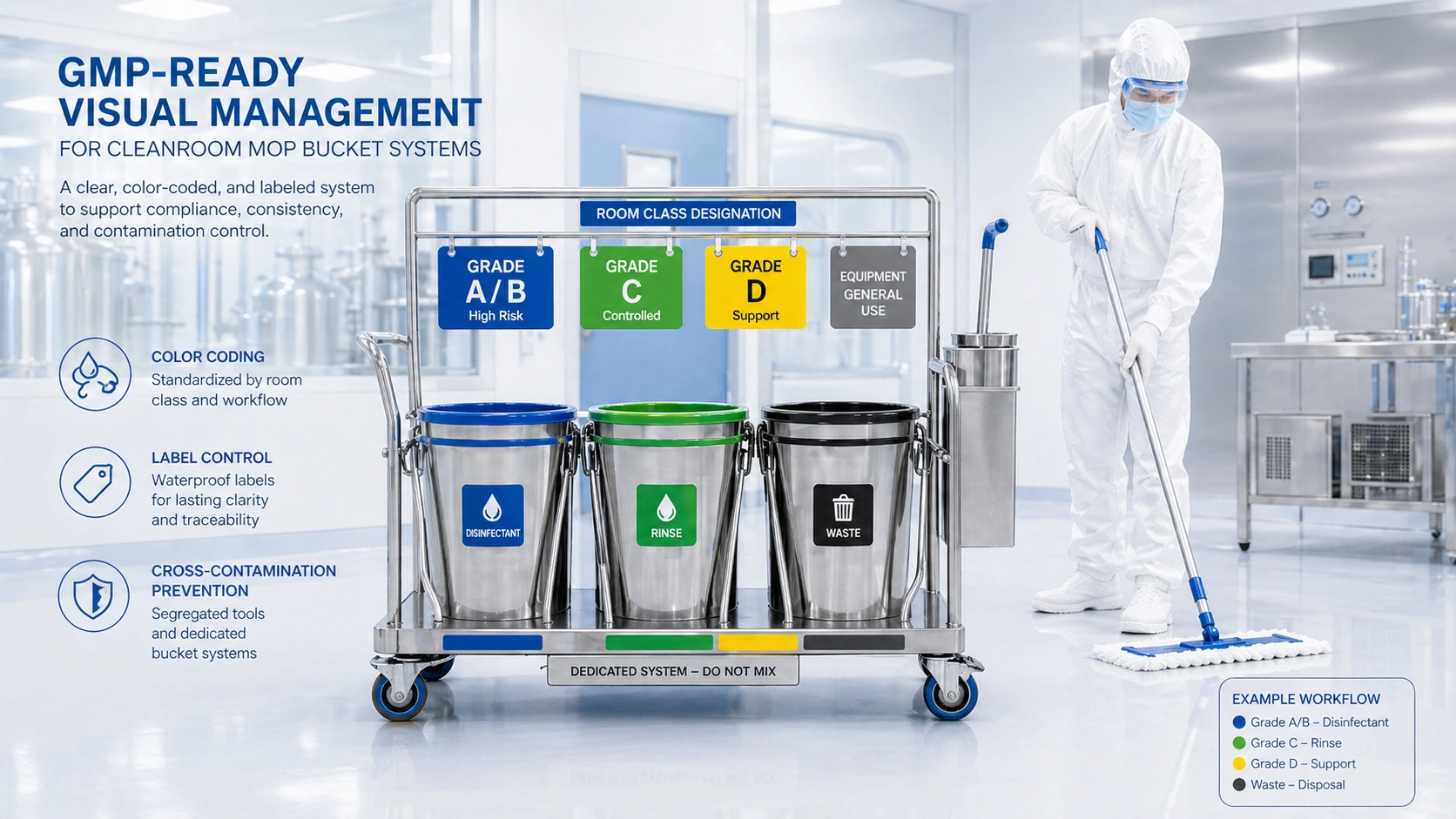
- Görsel yönetim: Operatörlerin hızlı ve güvenilir bir şekilde tanıyabileceği etiketler, renk kodları ve alan tahsisi
Temizleme araçlarının GMP sınıfı gerekliliklerle eşleştirilmesine ilişkin uygulamaya özel rehberlik için, GMP temiz oda paspas sınıfı seçim kılavuzu Ve GMP tesisleri için temiz oda paspas çözümleri.
Temiz Oda Paspas Kovası Seçimi Kontrol Listesi
GMP kontrollü temizlik için bir kova sistemini değerlendirirken veya tedarik ederken bu kontrol listesini kullanın. Her nokta kontaminasyon kontrolünü, operatörün iş akışını veya denetim hazırlığını etkileyen bir faktörü ele alır.
- Oda sınıflandırması ve risk düzeyi. Her alan için hedef ISO sınıfını, GMP derecesini ve temizlik riskini tanımlayın. Daha yüksek riskli alanlarda (Sınıf A/B, ISO 5) varsayılan olarak maksimum sıvı ayrımına sahip üçlü kova sistemleri kullanılmalıdır.
- Paket yapılandırma gereksinimi. Tekli, ikili veya üçlü kovanın temizlik riskine uygun olup olmadığını belirleyin. GMP temiz oda alanları için, tek kova varsayılan değil istisna olmalıdır.
- Malzeme seçimi: paslanmaz çelik veya PP. Malzemeyi dezenfektan kimyasına, sterilizasyon yöntemine, temizleme sıklığına ve beklenen hizmet ömrüne göre eşleştirin. Seçilen materyalin gerekçesini belgeleyin.
- Sıkma tipi. Parçacık oluşumu riski, temizlenebilirlik, otoklav uyumluluğu ve operatör kullanımına göre silindirli sıkma makinesi ile pres tipi sıkma makinesini değerlendirin. Sıkma aletinin tesisin kontaminasyon kontrolü veya doğrulama ekibi tarafından değerlendirilmesini sağlayın.
- Tekerlek ve hareketlilik değerlendirmesi. Tekerlek malzemesini, düzgünlüğünü, kilitleme mekanizmasını ve temiz oda zemin yüzeyiyle uyumluluğunu kontrol edin. Dengesiz veya kaba dönen arabalar operatörün hareketini ve parçacık oluşumunu artırır.
- Drenaj ve temizlenebilirlik. Kova şeklini, iç köşeleri, sıkma aleti montaj noktalarını ve drenajı kontrol edin. Sistem, karmaşık işlemlere gerek kalmadan tamamen boşaltma, durulama, kurutma ve görsel incelemeye olanak sağlamalıdır.
- Görsel yönetim kurulumu. Dağıtımdan önce etiketleri, renk kodlamasını ve alan belirlemeyi planlayın. Etiketlerin temizlik ve sterilizasyon sürecine dayanabilecek kadar dayanıklı olması gerekir.
- SOP uyumluluğu. Kova sisteminin, solüsyon hazırlama, paspas değiştirme, atık işleme ve kullanım sonrası temizlik için yazılı prosedürleri karmaşıklaştırmak yerine desteklediğini doğrulayın.
- Sterilizasyon yöntemi. Otoklavlama yapılıyorsa, tüm bileşenlerin buhara maruz kalma derecesine sahip olduğunu doğrulayın. Yükleme prosedürlerinin uygun buhar temasına ve drenaja izin verdiğini doğrulayın. Kimyasal sterilizasyon planlanıyorsa malzemenin tam uyumluluğunu doğrulayın.
- Yedek parçalar ve değiştirme programı. Aşınma parçalarını (tekerlekler, sıkma parçaları, contalar, etiketler) tanımlayın ve bir değiştirme programı oluşturun. Kritik yedek parçalar için tedarik süresini belgeleyin.
- Operatör eğitimi. Eğitimi tam iş akışına göre planlayın: paspasın nereye yerleştirileceği, nereye sıkılacağı, ne zaman durulanacağı, paspas kafasının ne zaman değiştirileceği ve atık kovasının ne zaman boşaltılacağı. Eğitim kayıtları SOP'ye göre tutulmalıdır.
- Doğrulama ve izleme entegrasyonu. Kova sisteminin çevresel izleme trendine nasıl uyduğunu tanımlayın. Uygulamadan sonra partikül veya mikrobiyal sonuçlar değişirse paspas başlığı ve operatör tekniğinin yanı sıra kova sistemi de araştırma kapsamının bir parçası olmalıdır.
Kova Sistemleriyle Doğrulama Dostu Temizlik İş Akışı
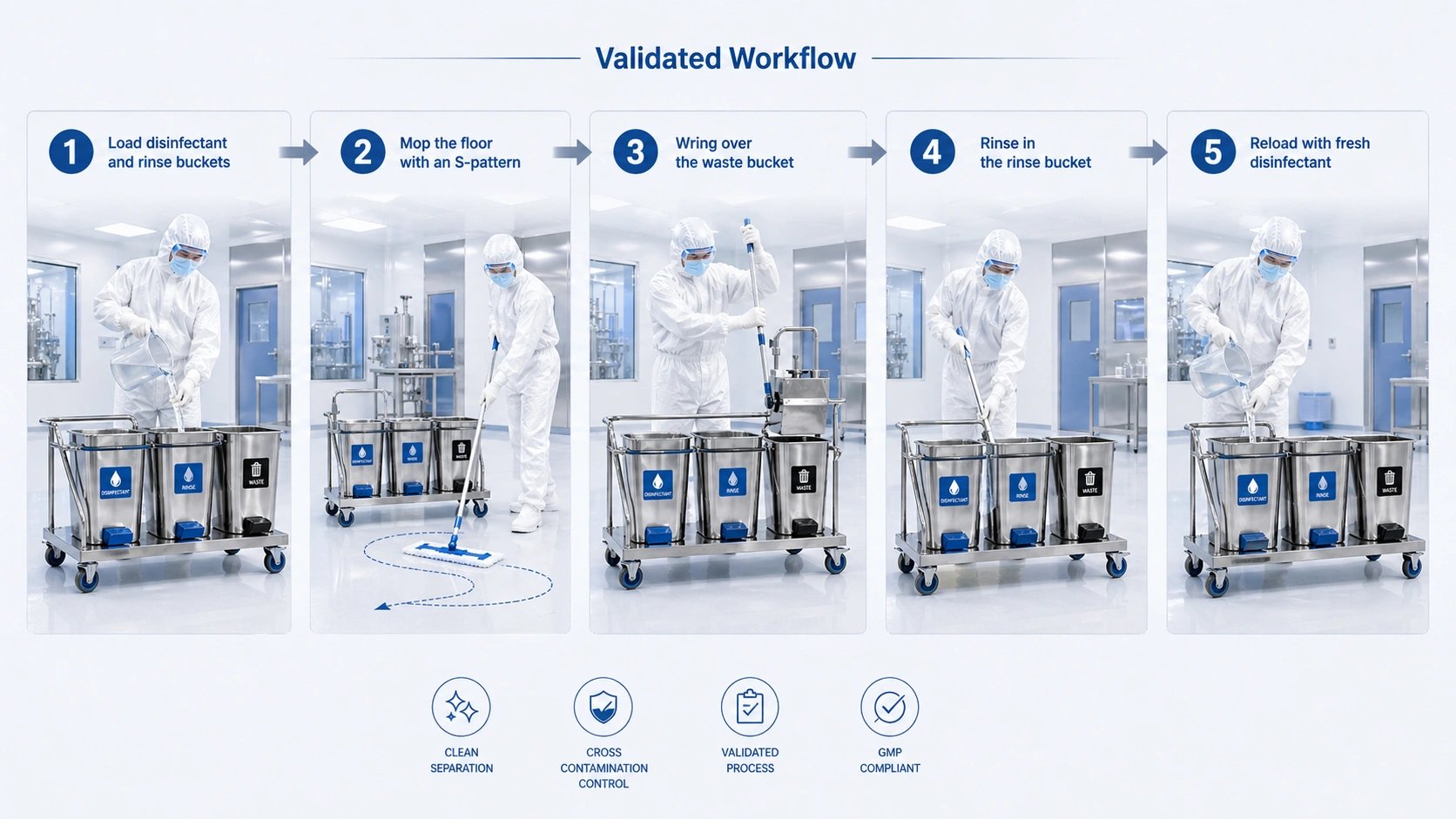
Doğrulama dostu bir iş akışı tekrarlanabilir, belgelenebilir ve her adımın net bir amacı olacak şekilde tasarlanmıştır. Aşağıdaki üçlü kova iş akışı, sıvı ayrımının ve operatör tutarlılığının öncelikli olduğu GMP ortamları için yapılandırılmıştır.
Kova Sistemini Hazırlayın
Kova etiketlerini doğrulayın ve hedef alanı onaylayın. Dezenfektanı ilk kovaya yükleyin, ikinci kovaya durulama suyunu (WFI veya arıtılmış su) koyun ve üçüncü kovayı atık toplama için hazır bırakın. Tesisin SOP'sine göre dezenfektan türünü, konsantrasyonunu, hazırlama süresini ve son kullanma süresini kaydedin.
Kontrollü Desenli Paspas
Temizleme solüsyonunu tutarlı, üst üste binen bir S-desen kullanarak uygulayın. Amaç, gözden kaçan alanları veya gereksiz operatör hareketlerini önleyerek tam yüzey kapsamı elde etmektir. Odanın en temiz alanlarından en az temiz alanlarına doğru çalışın.
Atık Kovasına Sıkıştırın
Paspas zemine temas ettikten sonra kirli sıvıyı atık kovasına sıkın. Dezenfektan kovasına geri koymayın. Bu, üçlü kova iş akışının merkezi kontrol avantajıdır.
Paspası Durulayın
Paspas başlığındaki kiri ve artık dezenfektanı çıkarmak için paspası durulama suyu kovasında durulayın. Duruladıktan sonra tekrar atık kovasına sıkın, durulama kovasına değil.
Taze Dezenfektanla Yeniden Doldurun
Sadece durulama ve atık adımları tamamlandıktan sonra paspası dezenfektan kovasına geri koyun. Bu sıra aktif solüsyonu temizleme döngüsü boyunca daha temiz ve daha stabil tutar.
Temizlik Sonrası: Boşalt, Temizle, İncele, Sakla
Temizlik tamamlandıktan sonra tüm kovaları tesisin atık işleme prosedürüne göre boşaltın. Kova sistemini temizleyin, durulayın, kurutun, inceleyin ve saklayın. Gözlemlerinizi SOP'ye göre belgeleyin ve bir sonraki kullanıma hazırlanın.
Operatör Tekniği: Yaygın Tuzaklar
- Durulama adımını atlamak. Kirli bir paspasın doğrudan dezenfektana geri gönderilmesi, aktif çözeltiyi seyreltir ve kirletir.
- Islak temizlenmiş yüzeyler üzerinde yürümek. Bu, temizlenen alanı yeniden kirletebilir ve parçacıkların ayakkabıdan zemine aktarılmasına neden olabilir.
- Zeminin aşırı ıslatılması. Fazla sıvı alçak alanlarda birikebilir ve yüzey izlemeyi zorlaştıran dezenfektan kalıntısı bırakabilir.
- Alanlar arasında araçları karıştırma. Dekontaminasyon olmadan bölgelerde aynı kova sisteminin kullanılması, alan ayrımının amacına aykırıdır.
- Gözle görülür şekilde kirli bir paspas kafasını kullanmaya devam etmek. Paspas kafaları, operatör kirli göründüğüne karar verdiğinde değil, belirlenen aralıkta değiştirilmelidir.
Temizleme prosedürü belgelerine yapısal bir yaklaşım için bkz. GMP uyumluluğu için temiz oda paspaslama SOP kılavuzu ve temiz oda paspası iş akışı doğrulama kontrol listesi.
Temiz Oda Paspas Kovası Sistemi — Sıkça Sorulan Sorular
Temiz oda paspas kovası sistemi nedir?
Temiz oda paspas kovası sistemi, temiz oda zemini ve yüzey temizliği sırasında dezenfektanı, durulama suyunu ve atık sıvıyı yönetmek için tasarlanmış kontrollü bir temizleme kurulumudur. Ticari temizlik kovalarının aksine, temizlenebilir yüzeyler, kimyasallara dayanıklı malzemeler ve sıvı ayırma özelliği ile GMP ve ISO sınıflandırmalı temizleme iş akışlarını destekleyecek şekilde üretilmiştir. Birincil rolü, tekrarlanabilir, belgelenmiş bir prosedürü takip ederken operatörlerin temiz-kirli ayrımını sürdürmelerine yardımcı olmaktır.
Üçlü kova sistemi her zaman ikili kovalı sistemden daha mı iyidir?
Üçlü kova sistemi, atık sıvıyı hem dezenfektandan hem de durulama suyundan ayrı tuttuğu için daha güçlü sıvı ayrımı sağlar. Bu genellikle Sınıf A/B, aseptik ve yüksek riskli GMP temizleme iş akışları için tercih edilir. Durulama suyu ve paspas kafaları için değiştirme kuralları açıkça tanımlanıp takip edildiğinde, C/D Sınıfı alanlar ve daha düşük risk kontrollü temizlik için çift kovalı bir sistem uygun olabilir. Nihai seçim, evrensel bir varsayılana değil, temizlik riskine uygun olmalıdır.
Temiz oda paspas kovalarım için paslanmaz çelik (SS316) mi yoksa polipropilen (PP) mi seçmeliyim?
SS316 paslanmaz çelik genellikle uzun servis ömrü, sık kullanım ve yüksek dayanıklılık GMP temizleme programları için seçilir. Güçlü korozyon direnci sunar ve tekrarlanan otoklav döngülerine dayanıklıdır. Temiz oda sınıfı polipropilen daha hafiftir, manevra yapması daha kolaydır ve uygun maliyetlidir; özel alan kullanımı, düşük hacimli temizlik veya operatörün fiziksel yükünün azaltılmasını tercih eden tesisler için uygundur. Seçim, dezenfektan kimyası uyumluluğu, sterilizasyon yöntemi, temizleme sıklığı ve bütçeye göre yapılmalıdır. Her iki materyal de evrensel olarak doğru değildir; her biri farklı operasyonel önceliklere hizmet eder.
Temiz oda temizliği için hangi sıkma tipi (rulo veya pres) daha iyidir?
Pres tipi sıkma makineleri genellikle daha basittir, daha az hareketli parça içerir, bu da onların temizlenmesini, incelenmesini ve doğrulanmasını kolaylaştırır. Genellikle A/B Sınıfı destek bölgeleri ve hassas iş akışları için tercih edilirler. Makaralı sıkma makineleri, paspas kafası boyunca daha tutarlı sıvı ekstraksiyonu sağlayabilir ancak parçacık oluşturma riski ve temizlenebilirlik açısından dikkatle incelenmesi gereken ek mekanik bileşenler (rulmanlar, miller, silindirler) içerir. Karar, temizlenebilirlik gerekliliklerini sıvı ekstraksiyon verimliliği, operatör ergonomisi ve sterilizasyon uyumluluğuna göre değerlendirmelidir.
Temiz oda paspas kovası sistemi GMP uyumluluğunu nasıl destekler?
Kontrollü ve tekrarlanabilir bir temizleme sürecini mümkün kılarak GMP uyumluluğunu destekler. Düzgün seçilmiş bir sistem, operatörlerin temiz ve kirli sıvıları ayırmasına, tanımlanmış değiştirme kurallarına uymasına, atığı yönetmesine ve iş akışını daha net bir şekilde belgelemesine yardımcı olur. Aynı zamanda çevresel izleme eğilimi için gereken yapısal tutarlılığı da sağlar; parçacık veya mikrobiyal sonuçlar değiştiğinde kova sistemi kontrolsüz bir değişken olmaktan ziyade tanımlanmış, gözden geçirilebilir bir değişkendir.
GMP temiz odasında tek kovalı bir sistem kullanabilir miyim?
Temiz dezenfektan ile kirli dönüş sıvısı arasında hiçbir ayrım sağlamadığından, GMP temiz oda alanlarında tek kovalı bir sistemi haklı çıkarmak zordur. Sınıflandırılmamış destek alanları, koridorlar veya temizleme riskinin açıkça düşük olduğu ve prosedürün açıkça tanımlandığı alanlar için kabul edilebilir. GMP temizlik gereksinimlerine tabi herhangi bir alan için, ikili kovalı veya üçlü kovalı konfigürasyon, daha güçlü süreç kontrolü sağlar ve denetimler sırasında savunulması daha kolaydır.
Temiz oda kova sistemlerinde görsel yönetimin rolü nedir?
Görsel yönetim (renk kodlaması, işlev etiketleri, alan ataması ve çözüm tanımlama) rutin temizlik sırasında operatörün kafa karışıklığını ve alet karışıklığını azaltır. Bir tesis oda sınıfına, ürün alanına, dezenfektan türüne veya temizlik sırasına göre kodlama yapabilir. Temel gereklilik tutarlılıktır: Operatörler doğru kepçeyi ve onun kullanım amacını hemen anlayabilmelidir. Etiketler ve renkli bantlar temizleme, dezenfeksiyon ve sterilizasyon döngüleri boyunca dayanıklı kalmalıdır.
Temiz oda paspas kovaları ne sıklıkla değiştirilmeli veya yeniden kalifiye edilmelidir?
Değiştirme sıklığı malzemeye, kullanım yoğunluğuna, temizleme kimyasına ve sterilizasyon yöntemine bağlıdır. SS316 sistemleri uygun bakım ve muayene ile yıllarca hizmet verebilir. PP sistemleri çatlama, eğrilme, yüzey bozulması veya bileşen uyumu kaybı açısından daha sık incelenmelidir. Görünür hasar, korozyon veya aşınmanın temizlenebilirliği veya yapısal bütünlüğü olumsuz etkilemesi durumunda herhangi bir kova sistemini değiştirin. Kova malzemesini, konfigürasyonunu veya tedarikçisini değiştirirken, değişiklik kontrol prosedürüne yeniden kalifikasyonu dahil edin.
GMP Tesisiniz için Temiz Oda Paspas Kovası Sistemine mi ihtiyacınız var?
MIDPOSI, paspas sistemleri, kova konfigürasyonları, tek kullanımlık paspas seçenekleri ve uygulamaya özel seçim rehberliği ile farmasötik, biyoteknoloji ve tıbbi cihaz temiz oda temizleme programlarını destekler. İster ilk kez bir satın almayı değerlendiriyor olun ister mevcut bir temizlik iş akışını yükseltiyor olun, tesisinizin temizlik gereksinimlerine yönelik konfigürasyon, malzeme ve uyumluluk seçeneklerini karşılaştırmak için bizimle konuşun.
Yapılandırılmış seçim kılavuzu ve uygulama belgeleriyle desteklenen, kontrollü ortamlar için profesyonel temiz oda temizleme araçları.