İlaç üretiminde temiz odaların silinmesi basit bir temizlik işi değildir. Temizleme SOP'si tesisin kontaminasyon kontrol sisteminin bir parçasıdır ve operatörlerin sınıflandırılmış alanları nasıl temizlediğini, dezenfektanla temas süresini nasıl doğruladığını, alet kontaminasyonunu nasıl kontrol ettiğini, belge yürütmeyi ve çevresel izleme hatalarına nasıl yanıt verdiğini göstermelidir.
Excelvision Fareva'ya gönderilen 2025 tarihli FDA uyarı mektubunda, aseptik koşullar oluşturmak amacıyla odaların ve ekipmanların temizlenmesi ve dezenfekte edilmesi için yeterli bir sistemin kurulmadığı belirtildi. Bu tür bir bulgu nadiren yalnızca paspasla ilgilidir. Çoğu zaman SOP, temizlik uygulamasını Kirlenme Kontrol Stratejisi, doğrulama kontrol noktaları, alet sterilizasyonu ve temizlik sonrası doğrulama ile bağlantılandırmada başarısız olur.
Bu kılavuz, ISO 14644, EU GMP Annex 1 ve FDA CGMP beklentilerini destekleyen bir temiz oda paspaslama SOP'sinin yazılması için pratik bir yapı sunmaktadır. ISO 5–8 farmasötik, biyoteknoloji ve tıbbi cihaz ortamlarında çalışan QA, doğrulama, üretim ve temiz oda operasyonları ekipleri için yazılmıştır.
Güçlü bir SOP, prosedürün nerede geçerli olduğunu, hangi araçların ve dezenfektanların onaylandığını, operatörlerin odayı nasıl hazırladığını, paspaslamanın nasıl yapıldığını, temas süresinin nasıl doğrulandığını, paspasların nasıl imha edildiğini veya yeniden işlendiğini ve temizliğin doğru şekilde tamamlandığını hangi kayıtların kanıtladığını tanımlamalıdır.
Farmasötik temiz odalarda temizlik prosedürleri, sıradan temizlik temizliğinden farklı bir yük altındadır. Bir ofiste “yeterince temiz” görsel olarak değerlendirilebilir. Bir GMP temiz odasında SOP, temizliğin üretim için gereken sınıflandırılmış durumun korunmasına yardımcı olduğuna dair objektif kanıt sağlamalıdır.
AB GMP Ek 1, temizlik ve dezenfeksiyonu daha geniş Kirlilik Kontrol Stratejisinin içine yerleştirir. Temizlik ve dezenfeksiyon programlarının riske göre doğrulanmasını, izlenmesini ve gerekçelendirilmesini bekler. ISO 14644-5:2025 ayrıca temizlik, personel hareketi, malzeme transferi, bakım ve izlemeyi resmi olmayan rutinler olarak değil, kontrollü operasyonel faaliyetler olarak ele alır.
FDA yetersiz temizlik doğrulaması için gözlemler yayınladığında veya denetçiler dezenfeksiyon programlarını sorguladığında, temel neden genellikle prosedürle ilgilidir. SOP, ISO sınıfı mantığını tanımlamayabilir, temas süresini atlayabilir, onaylanmış steril araçları tanımlamada başarısız olabilir veya temizlikten sonra herhangi bir doğrulama adımı sağlamayabilir.
Pratik nokta: Temiz oda paspası tek başına bir temizlik programını uyumlu hale getirmez. Uyumluluk sistemin tamamına bağlıdır: SOP, onaylı araçlar, dezenfektan doğrulaması, operatör eğitimi, dokümantasyon ve çevresel izleme geri bildirimi.
Araç seçimi için MIDPOSI'nin ayrı bir kılavuzu vardır. temiz oda düz paspas sistemleri, temiz oda paspas kolları, temiz oda paspas çerçeveleri Ve mikrofiber temiz oda paspasları.
Farmasötik bir temiz oda paspaslama SOP'si bir kontrol çerçevesi olarak yazılmalıdır. Operatörlere hazırlık, uygulama, doğrulama ve belgeleme aşamalarında rehberlik etmelidir. Aşağıdaki yapının denetlenmesi uzun bir anlatım prosedüründen daha kolaydır.
| SOP Bölümü | Neyi Tanımlamalı? | Neden Önemlidir? |
|---|---|---|
| Kapsam ve Alan Sınıflandırması | Odalar, ISO sınıfı, GMP derecesi, kaplanan yüzeyler, doluluk durumu ve istisnalar. | Alan sınıflandırması paspas tipini, dezenfektan gereksinimini ve doğrulama seviyesini belirler. |
| Sorumluluklar | Temizliği kim yapar, kayıtları kim inceler, sapmaları kim onaylar ve aletlerin bakımını kim yapar. | Açık sorumluluk, üretim, kalite güvence ve temizlik ekipleri arasındaki boşlukları önler. |
| Tanımlar ve Referanslar | Steril, az tiftik, temas süresi, sporisidal, yeniden işleme ve bekletme süresi gibi terimler. | Operatörlerin ve denetçilerin kritik terimlerin tutarlı yorumlanmasına ihtiyacı var. |
| Onaylanmış Araçlar ve Malzemeler | Paspas kafaları, paspas çerçeveleri, kulplar, kovalar, dezenfektanlar, konsantrasyonlar ve parti gereksinimleri. | SOP her alan sınıfında tam olarak nelerin kullanılabileceğini belirtmelidir. |
| Paspas Öncesi Hazırlık | Önlük, alet kontrolü, steril paket kontrolü, dezenfektan hazırlama ve malzeme transferi. | Birçok kirlenme riski, paspaslama başlamadan önce ortaya çıkar. |
| Adım Adım Prosedür | Oda sırası, silme yönü, örtüşme, temas süresi, imha ve yeniden işleme yolu. | Operatörlerin belirsiz temizleme talimatlarına değil, net yürütülebilir adımlara ihtiyacı vardır. |
| Doğrulama ve Dokümantasyon | Temizleme kayıtları, dezenfektan lotu, paspas lotu, temas süresi, EM bağlantısı ve sapma tetikleyicileri. | Bu, GMP savunması için gereken denetim izini yaratır. |

SOP'nin operasyonel özü, operatörlerin fiilen takip ettiği iş akışıdır. Sıra, yürütülecek kadar kısa ancak kontrolü kanıtlayacak kadar ayrıntılı olmalıdır.
Oda durumunu doğrulayın, önlükleri tamamlayın, paspas ambalajını inceleyin ve dezenfektan lotunu, konsantrasyonunu ve son kullanma tarihini doğrulayın. A/B Sınıfı alanlar için, temizleme araçlarının ve dezenfektanların gerekli steril veya sterilize durumunu karşıladığını doğrulayın.
Operatörler, ambalajı hasarlı, görünür elyaf hasarı olan, sterilite göstergesi eksik, son kullanma tarihi geçmiş parti veya izlenebilirliği net olmayan tüm paspasları reddetmelidir.
Temizlemeden önce odanın hazır olup olmadığını kontrol edin. Basınç farkını, varsa hava akışı durumunu, malzeme akış yolunu ve paspaslama yolunda gereksiz ekipmanların bulunmadığını doğrulayın.
Operatörlerin yeni temizlenmiş yüzeylerden geçmemeleri için paspaslama işlemi en temiz veya en uzak noktadan çıkışa doğru ilerlemelidir.
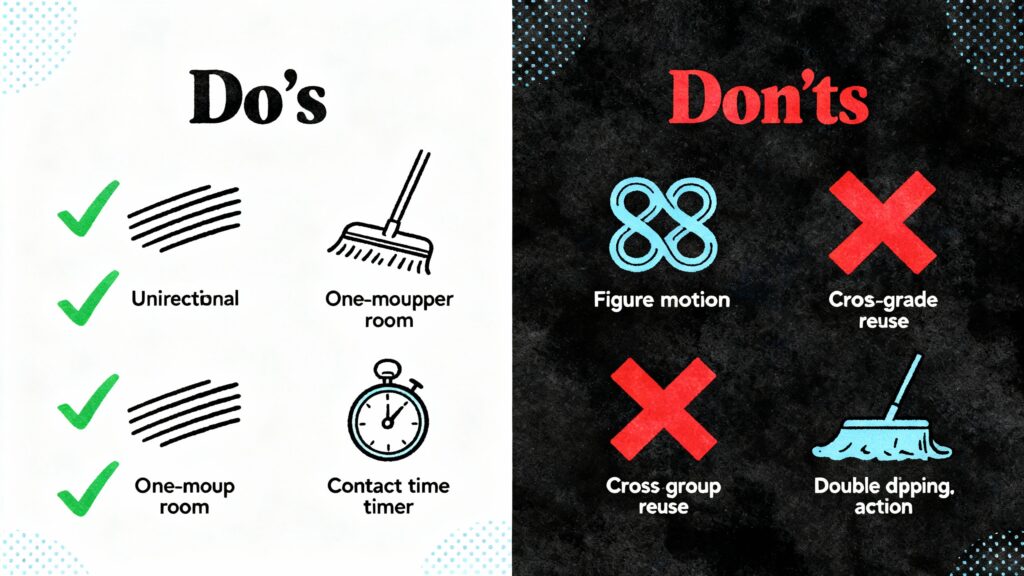
Tek yönlü, örtüşen vuruşlar kullanın. SOP bunu bir kalıntı giderme adımı için özel olarak tanımlamadığı sürece ileri geri fırçalamadan kaçının. Boşlukları önlemek için her vuruş bir önceki vuruşla hafifçe örtüşmelidir.
Sınıflandırılmış alanlar için SOP, oda başına, alan başına, yüzey başına veya tanımlanan metrekare başına bir paspasın kullanılıp kullanılmadığını belirtmelidir.
Doğrulanmış veya üreticinin tanımladığı temas süresi boyunca yüzey gözle görülür şekilde ıslak kalmalıdır. Yüzey çok erken kurursa SOP'nin yeniden uygulanması ve temas süresi zamanlayıcısının yeniden başlatılması gerekir.
Operatörler dezenfektan lotunu, gerekli temas süresini ve ıslak temasın sağlanıp sağlanmadığını kaydetmelidir.
Tek kullanımlık paspaslar kullanımdan sonra saha atık prosedürüne göre atılmalıdır. Yeniden kullanılabilen paspaslar, tanımlanmış bir kirli alet kabına aktarılmalı ve onaylanmış yıkama, sterilizasyon veya kontrollü yeniden işleme için gönderilmelidir.
SOP, yeniden kullanılabilir paspas sistemleri için maksimum kullanım döngülerini, reddetme kriterlerini, yeniden işleme kayıtlarını ve derece ayrımını tanımlamalıdır.

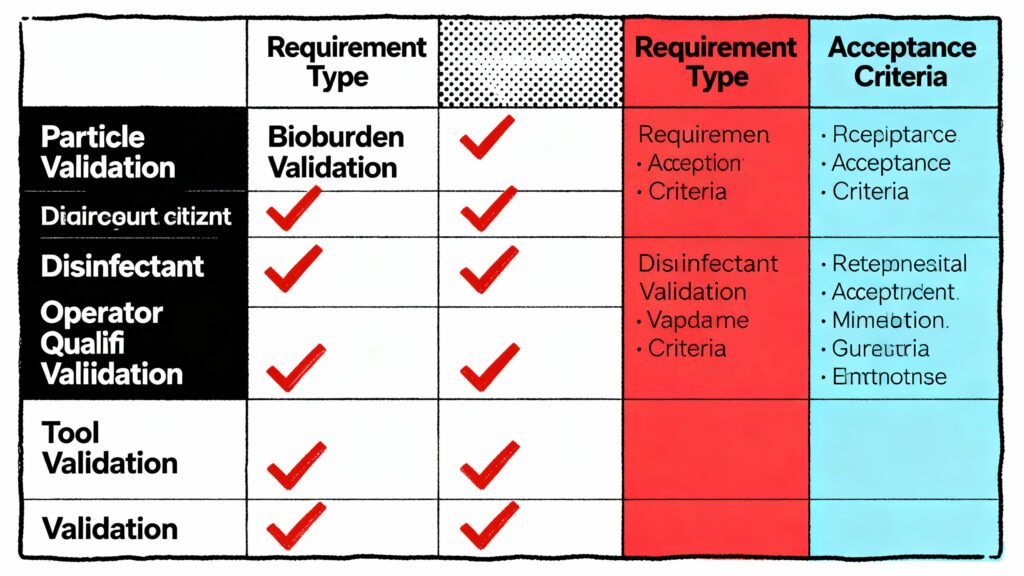
Doğrulanmamış bir temizleme SOP'sinin savunulması zordur. GMP'ye hazır bir prosedür, yazılı adımları ölçülebilir kanıtlarla birleştirmelidir: partikül geri kazanımı, biyolojik yük sonuçları, dezenfektan etkinliği, operatör yeterliliği ve alet doğrulaması.
| Doğrulama Alanı | Neyi Doğrulamalı? | Örnek Kanıt |
|---|---|---|
| Parçacık Kontrolü | Paspaslamak odanın gerekli ISO durumuna dönmesini engellemez. | Temsili temizlik öncesinde, sırasında ve sonrasında partikül izleme. |
| Biyolojik Yük Kontrolü | Temizleme ve dezenfeksiyon, canlı kontaminasyonu tanımlanmış sınırlara düşürür. | Temas plakaları, swablar, EM eğilim verileri ve araştırma kayıtları. |
| Dezenfektan Etkinliği | Dezenfektan, tanımlanmış temas süresiyle gerçek yüzeylerde etkilidir. | Temas süresi çalışması, yüzey uyumluluğu ve kurtarılan flora incelemesi. |
| Operatör Kalifikasyonu | Operatörler prosedürü tutarlı bir şekilde gerçekleştirebilir. | Eğitim kaydı, gözlemlenen yeterlilik kontrol listesi ve periyodik yeniden değerlendirme. |
| Araç Doğrulaması | Moplar, çerçeveler, kulplar ve kovalar kullanım amacına uygun niteliktedir. | CoA, parçacık verileri, sterilite kaydı, otoklav döngüsü verileri ve tedarikçi belgeleri. |
Tek kullanımlık ve yeniden kullanılabilir paspas sistemleri farklı doğrulama çalışmaları gerektirir. Tek kullanımlık steril paspaslar yeniden işleme doğrulamasını azaltır ancak tedarikçi kalifikasyonu, sterilite dokümantasyonu ve parti izlenebilirliği gerektirir. Yeniden kullanılabilen paspaslar uzun vadede maliyeti azaltabilir ancak onaylanmış yıkama, sterilizasyon, döngü sayımı kontrolü ve reddetme kriterleri gerektirir.
Daha fazla ayrıntı için MIDPOSI'nin kılavuzuna bakın. Gama ışınlanmış ve otoklavlanabilir temiz oda paspasları Ve çift torbalı steril temiz oda bezleri.
SOP'nin onaylı araçlar bölümü, oda sınıflandırması, temizleme yöntemi, dezenfektan rotasyonu ve doğrulama modeliyle eşleşen ürünlere referans vermelidir. Burası birçok prosedürün çok belirsiz hale geldiği yerdir. Operatörlerin belirli bir odada hangi paspas, sap, çerçeve veya dezenfektana izin verildiğini tahmin etmesi gerekmemelidir.
MIDPOSI ilaç, biyoteknoloji, tıbbi cihaz ve kontrollü üretim ortamları için temiz oda paspas sistemleri tedarik etmektedir. Portföyümüz şunları içerir: temiz oda düz paspas sistemleri, mikrofiber temiz oda paspaslarıilaç ve biyoteknoloji tesisleri için paspas çerçeveleri, paspas sapları ve uygulamaya özel paspas seçenekleri.
MIDPOSI, farmasötik temizlik programları için ürün önerileri, teknik belgeler, paspas sistemi konfigürasyonu ve tedarikçi yeterlilik materyalleri sağlayarak SOP gelişimini destekleyebilir. Alıcılar ayrıca inceleyebilir farmasötik temiz oda paspas çözümleri, GMP Ek 1 paspas kılavuzu Ve farmasötik temiz oda paspas temizleme SOP kılavuzu.
Ek 1'de farklı etki modlarına sahip birden fazla dezenfektan ve spor öldürücü bir maddenin periyodik kullanımı öngörülmektedir. SOP, rotasyon programını, sporisit sıklığını ve etkililiğin çevresel izleme eğilimleri yoluyla nasıl gözden geçirildiğini tanımlamalıdır.
Gerekli temas süresi ürün etiketine ve tesis doğrulamasına bağlıdır. IPA hızla buharlaştığı için SOP, operatörlerin ıslak teması nasıl doğrulayacağını ve gerekli temas süresine ulaşılmadan yüzey kurursa ne yapılacağını tanımlamalıdır.
Hayır. Tek kullanımlık paspaslar hâlâ tedarikçi kalifikasyonu, parti izlenebilirliği ve sterilite veya uygun olduğu durumlarda malzeme dokümantasyonu gerektirir, ancak aklama ve yeniden işleme doğrulamasını gerektirmezler. Yeniden kullanılabilen paspaslar, yıkama, sterilizasyon, döngü sayımı ve kullanımdan kaldırma için ek kontroller gerektirir.
Doğrulanmış yeniden işleme olmadan olmaz. Düşük dereceli bir alanda kullanılan paspas, parçacık ve biyolojik yük taşıyabileceğinden, daha yüksek dereceli bir alana taşınmamalıdır. SOP'lar oda başına bir paspas, sınıf başına bir paspas veya renk kodlu ayırma kurallarını tanımlamalıdır.
Alıcılar, uygulamaya bağlı olarak uygunluk sertifikaları, malzeme bilgileri, parti izlenebilirliği, sterilizasyon kayıtları, parçacık verileri, kimyasal uyumluluk bilgileri ve tedarikçi yeterlilik belgelerini talep edebilir.
MIDPOSI'ye ISO sınıfınızı, GMP derecesini, dezenfektan protokolünüzü, paspas tercihinizi ve sterilizasyon modelinizi gönderin. Ekibimiz paspas kafalarını, çerçeveleri, kulpları ve belgeleri temiz oda paspaslama SOP'nuzla eşleştirmenize yardımcı olabilir.