Aseptik Temiz Oda Operasyonları
ISO 5 Temiz Oda Temizleme Prosedürü: Farmasötik Aseptik Ortamlar için Adım Adım Kılavuz
ISO 5 cleanrooms require the strictest contamination control. This guide explains the correct cleaning sequence, unidirectional mopping technique, disinfectant strategy, environmental monitoring feedback, and documentation requirements used in pharmaceutical aseptic manufacturing.
ISO 5 Temiz Oda Temizliği Nedir?
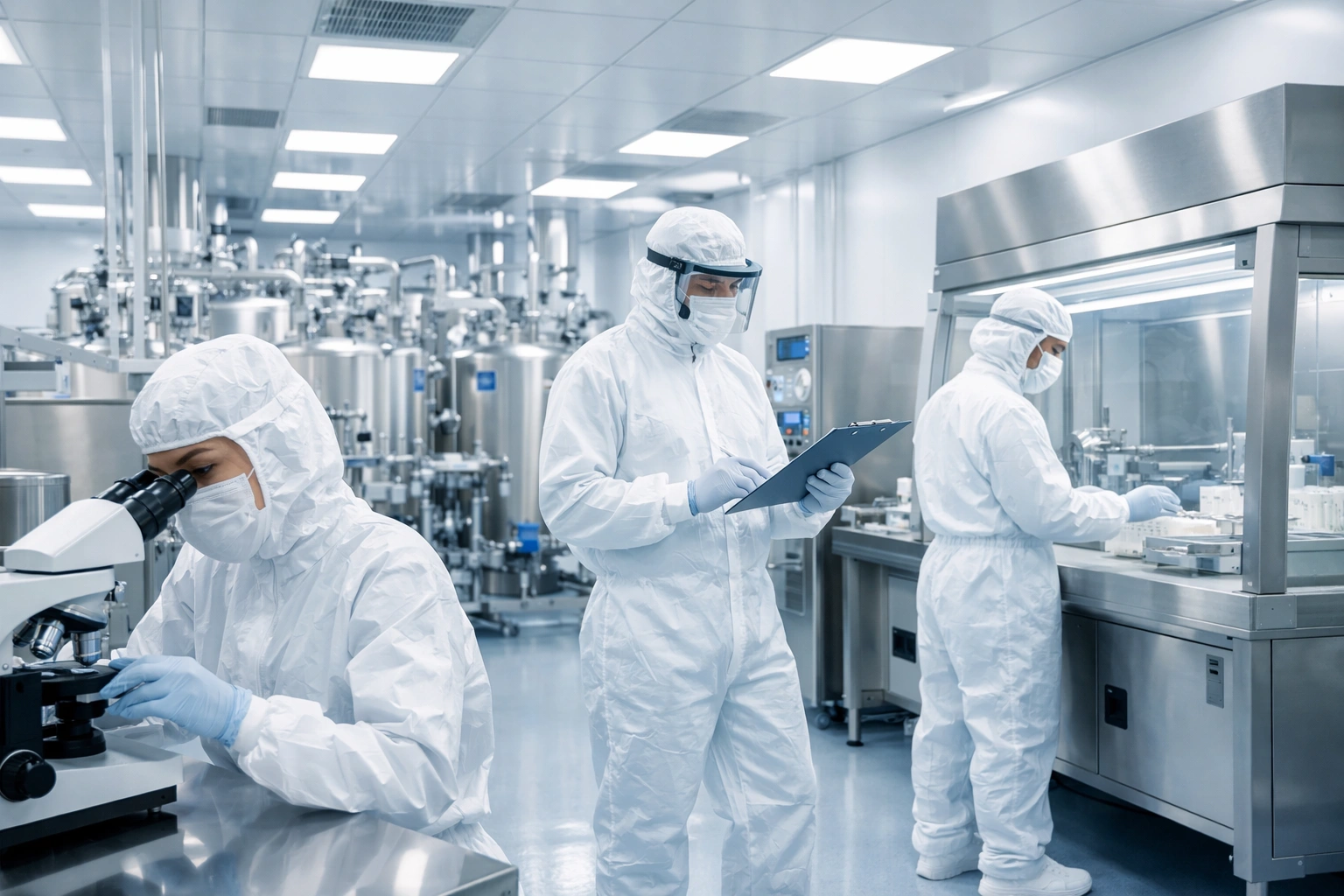
ISO 5 cleanroom cleaning refers to validated cleaning and disinfection procedures used in critical aseptic environments where airborne particle levels must remain below 3,520 particles per cubic meter according to ISO 14644-1. These procedures typically include sterile cleaning tools, unidirectional mopping techniques, validated disinfectants, and fully documented cleaning sequences to maintain pharmaceutical aseptic conditions.
ISO 5 Temizlik Prosedürleri Neden Kritiktir?
ISO 5 cleanrooms are typically used in the most critical pharmaceutical operations including aseptic filling, sterile compounding, vaccine manufacturing, and cell or gene therapy production.
According to EU GMP Annex 1 and ISO 14644 standards, these environments require extremely strict contamination control procedures to prevent microbial and particulate contamination during manufacturing.
Because these spaces operate at extremely low contamination thresholds, even small procedural mistakes during cleaning can introduce particles, microorganisms, or chemical residues that compromise sterility assurance.
Bu nedenle ISO 5 temizlik prosedürleri valide edilmiş standartlara göre yürütülmelidir. temiz oda temizliği SOP'ları, while the actual execution details must remain specific to critical-grade aseptic environments.
ISO 5 Temiz Oda Temizleme Prosedürü Adım Adım
1. Hazırlık ve Malzeme Kurulumu
Operators must first enter the cleanroom using validated gowning procedures appropriate for critical aseptic zones. Only approved cleaning tools and disinfectants should be introduced into the area. Common materials include sterile microfiber mop heads, low-lint cleanroom wipes, sterile buckets, and pharmaceutical-grade disinfectants.
All cleaning tools must be dedicated to ISO 5 areas to avoid cross-contamination from lower-grade cleanrooms or uncontrolled support spaces.
2. Yukarıdan Aşağıya Temizlik
Cleaning must follow a strict sequence beginning with ceilings, followed by walls, equipment contact surfaces, and finally floors. This top-to-bottom structure is essential because contaminants removed from upper surfaces should not fall onto already-cleaned lower areas.
3. Tek Yönlü Paspaslama
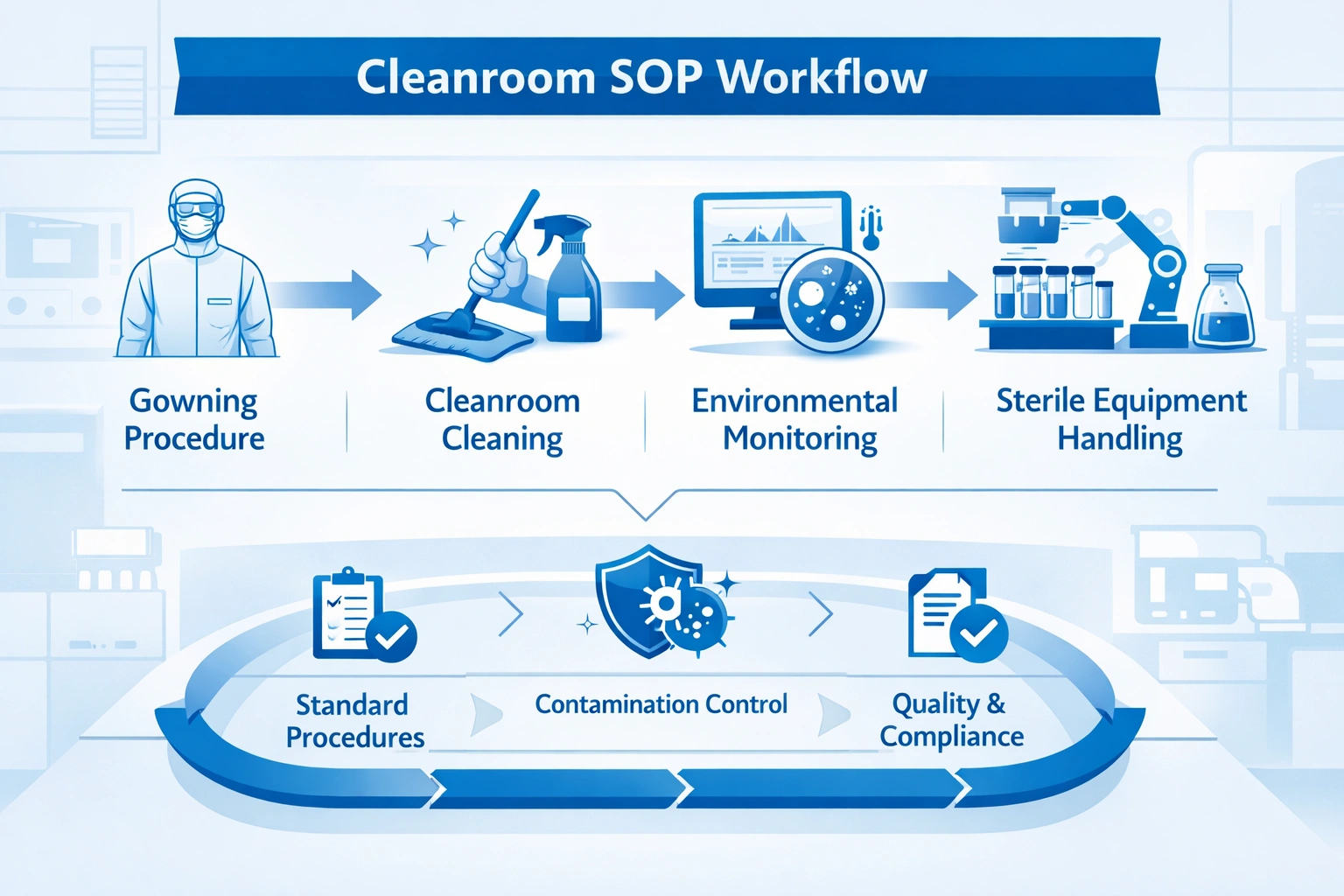
ISO 5 ortamlarında zemin temizliğinde her zaman doğrulanmış bir temizlik sonrasında tek yönlü vuruşlar kullanılmalıdır. temiz oda silme SOP. This approach prevents particle redistribution and helps move contamination toward the exit of the cleanroom.
Slight overlap between mop passes improves cleaning coverage and reduces the risk of leaving untreated zones in critical floor areas.
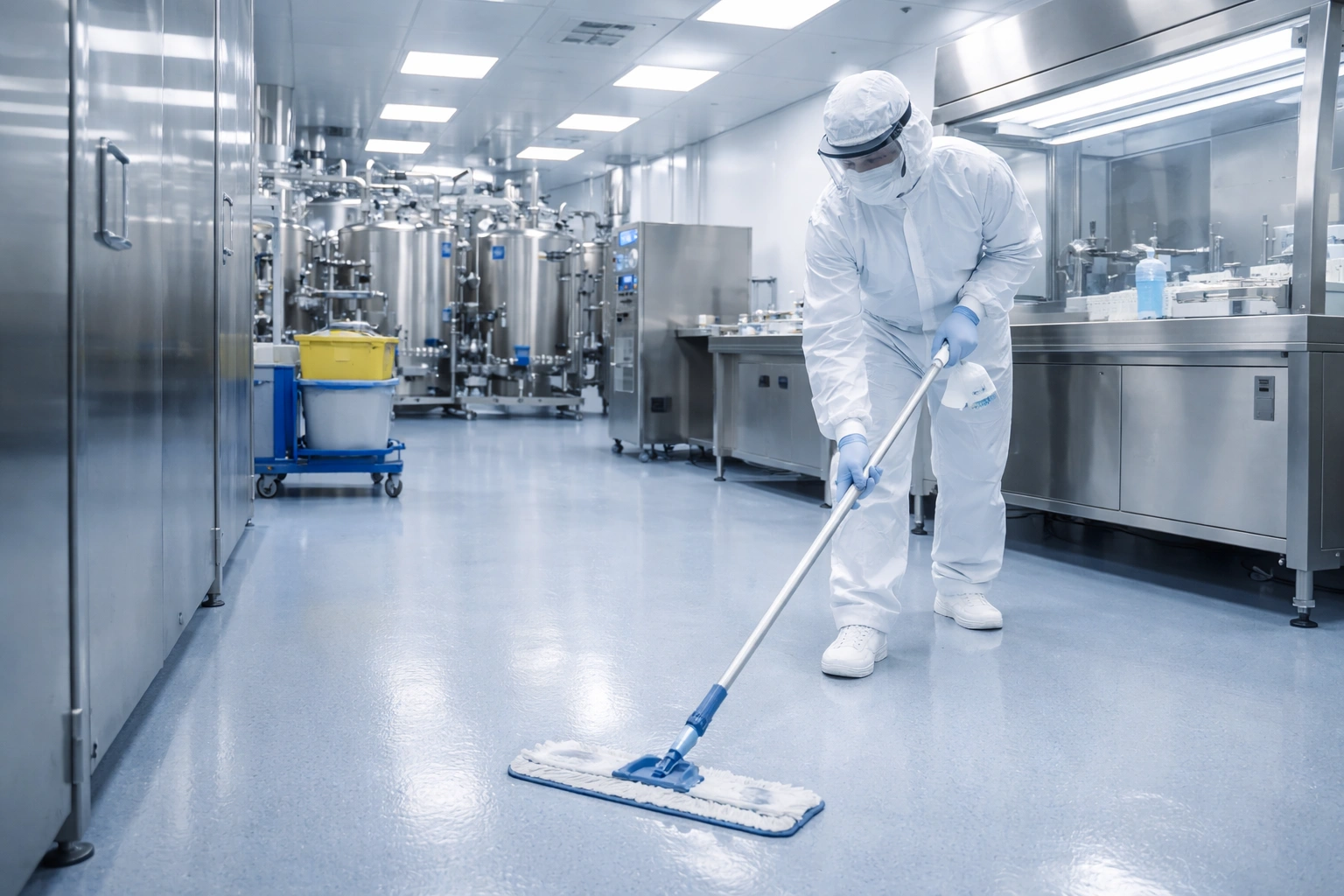
Parçacık dökülmesini en aza indirmek için tesisler genellikle doğrulanmış farmasötik temiz oda paspas sistemleri aseptik üretim ortamları için özel olarak tasarlanmıştır.
4. Dezenfektan Uygulaması
After physical cleaning, disinfectants are applied to reduce microbial contamination. Many pharmaceutical facilities rotate multiple disinfectants, including alcohol-based disinfectants, hydrogen peroxide solutions, and periodic sporicidal agents.
The cleaning procedure must define the minimum contact time required for each chemical agent, because insufficient wet contact time can reduce disinfection effectiveness in critical environments.
5. Çevresel İzleme Geri Bildirimi
ISO 5 cleaning programs should always be connected with environmental monitoring data. Surface monitoring, airborne particle counts, and microbial sampling results help confirm whether the cleaning procedure is working as intended.
If contamination trends begin to rise, facilities should review cleaning frequency, disinfectant rotation, operator technique, and tool suitability.
6. Dokümantasyon ve Doğrulama
Every cleaning activity should be documented, including the operator, time, disinfectant used, lot or batch details where required, and the exact area cleaned.
Documentation supports traceability, regulatory inspections, internal quality review, and ongoing improvement of contamination control performance.
Yaygın ISO 5 Temizleme Hataları
Yanlış temizleme yönü
İleri geri hareketler, kirliliği temiz odanın dışına taşımak yerine yeniden dağıtır.
Steril olmayan aletlerin kullanılması
Doğrulanmamış aletler, lifleri, parçacıkları veya kalıntıları kritik aseptik alanlara saçabilir.
Dezenfektanla temas süresinin atlanması
Kısa temas süresi, dezenfektanın onaylanmış mikrobiyal azalmaya ulaşmasını engeller.
Uygun olmayan paspas değiştirme sıklığı
Aşırı kullanılan paspas başlıkları, kirliliği etkili bir şekilde gidermek yerine yayabilir.
Zayıf dokümantasyon
Eksik kayıtlar denetim riskini artırır ve farmasötik operasyonlarda izlenebilirliği azaltır.
Yanlış dezenfektan rotasyonu
Using the same disinfectant repeatedly may allow resistant microorganisms to survive. Many facilities rotate alcohol, hydrogen peroxide, and periodic sporicidal agents.
Yanlış temizleme stratejisi kullanmak
Tesisler, tek kullanımlık ve yeniden kullanılabilir temiz oda paspasları kontaminasyon kontrol programına daha uygundurlar.
İzleme trendlerini göz ardı etmek
Mikrobiyal veya partikül izleme verileri kontaminasyon riskinin arttığını gösterdiğinde temizlik programları ayarlanmalıdır.
Sıkça Sorulan Sorular
ISO 5 temiz oda temizliği nedir?
ISO 5 cleanroom cleaning is a validated cleaning process used in critical pharmaceutical and aseptic environments where particle and microbial contamination must be tightly controlled.
ISO 5 temiz odayı hangi parçacık sınırı tanımlar?
According to ISO 14644-1, an ISO 5 cleanroom must maintain airborne particle concentrations below 3,520 particles greater than or equal to 0.5 micrometers per cubic meter.
ISO 5 temiz oda ne sıklıkla temizlenmelidir?
ISO 5 cleanrooms are typically cleaned before production, during operations as required by facility SOPs, and after batch completion. The exact frequency depends on process risk and contamination control strategy.
ISO 5 temiz odalarda tek yönlü paspaslama neden önemlidir?
Unidirectional mopping helps move contamination in a controlled direction and reduces the risk of redistributing particles across already-cleaned surfaces.
ISO 5 temiz odalarda yaygın olarak hangi dezenfektanlar kullanılır?
Common disinfectants include alcohol-based disinfectants, hydrogen peroxide solutions, and periodic sporicidal agents depending on the validated contamination control strategy.
ISO 5 temiz odalar için hangi dezenfektan rotasyonu önerilir?
Many pharmaceutical facilities use alcohol-based disinfectants for routine cleaning, hydrogen peroxide or other broad-spectrum agents for scheduled rotation, and sporicidal agents periodically to control resistant microorganisms.
ISO 5 temiz oda temizliği için hangi paspas sistemi önerilir?
ISO 5 cleanrooms typically use validated sterile mop systems designed to minimize particle shedding and support aseptic cleaning procedures.
ISO 5 Temizlik İçin Steril Mop Sistemi mi Arıyorsunuz?
Midposi, farmasötik ve biyoteknoloji kontaminasyon kontrolü için tasarlanmış steril temiz oda paspas sistemleri sağlar.