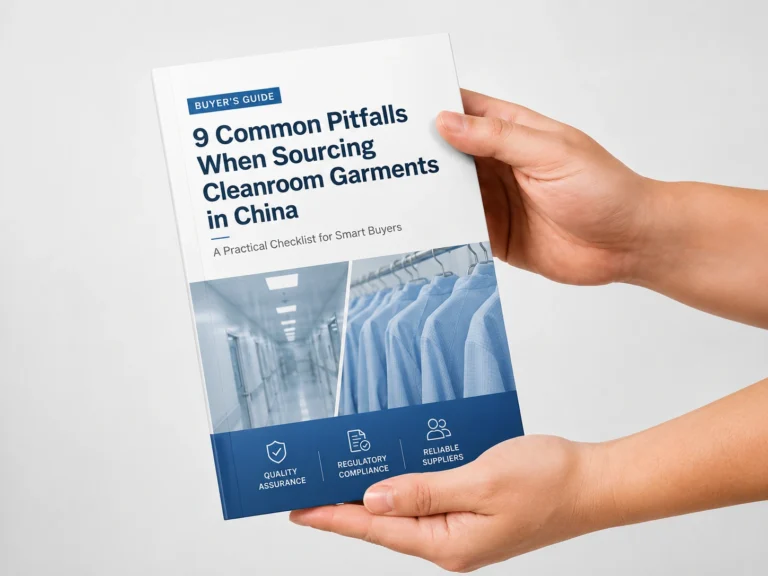
Temiz Oda Paspas Sistemi Nedir ve Neden Önemlidir?
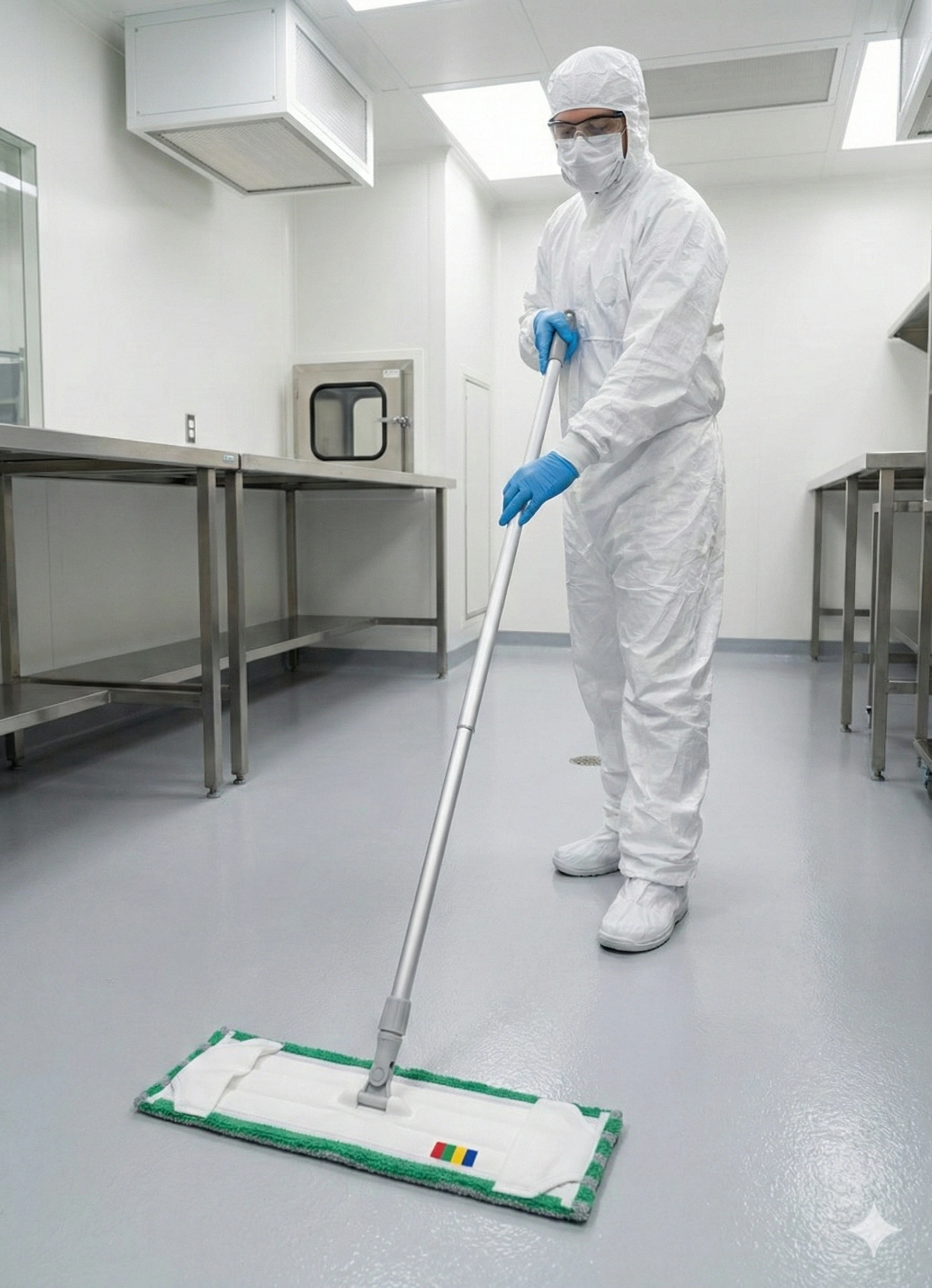
Temiz oda paspası satın aldığınız bir ürün değildir; sizin belirlediğiniz entegre bir temizleme sistemidir. Temiz oda paspas sisteminin nelerden oluştuğunu ve sistem konseptinin kontaminasyon kontrolü için neden kritik olduğunu anlamak, her alıcının herhangi bir temiz oda temizleme ekipmanını değerlendirmeden önce oluşturması gereken temeldir.
Temiz Oda Paspas Sistemi Nedir? — Açık Bir Tanım
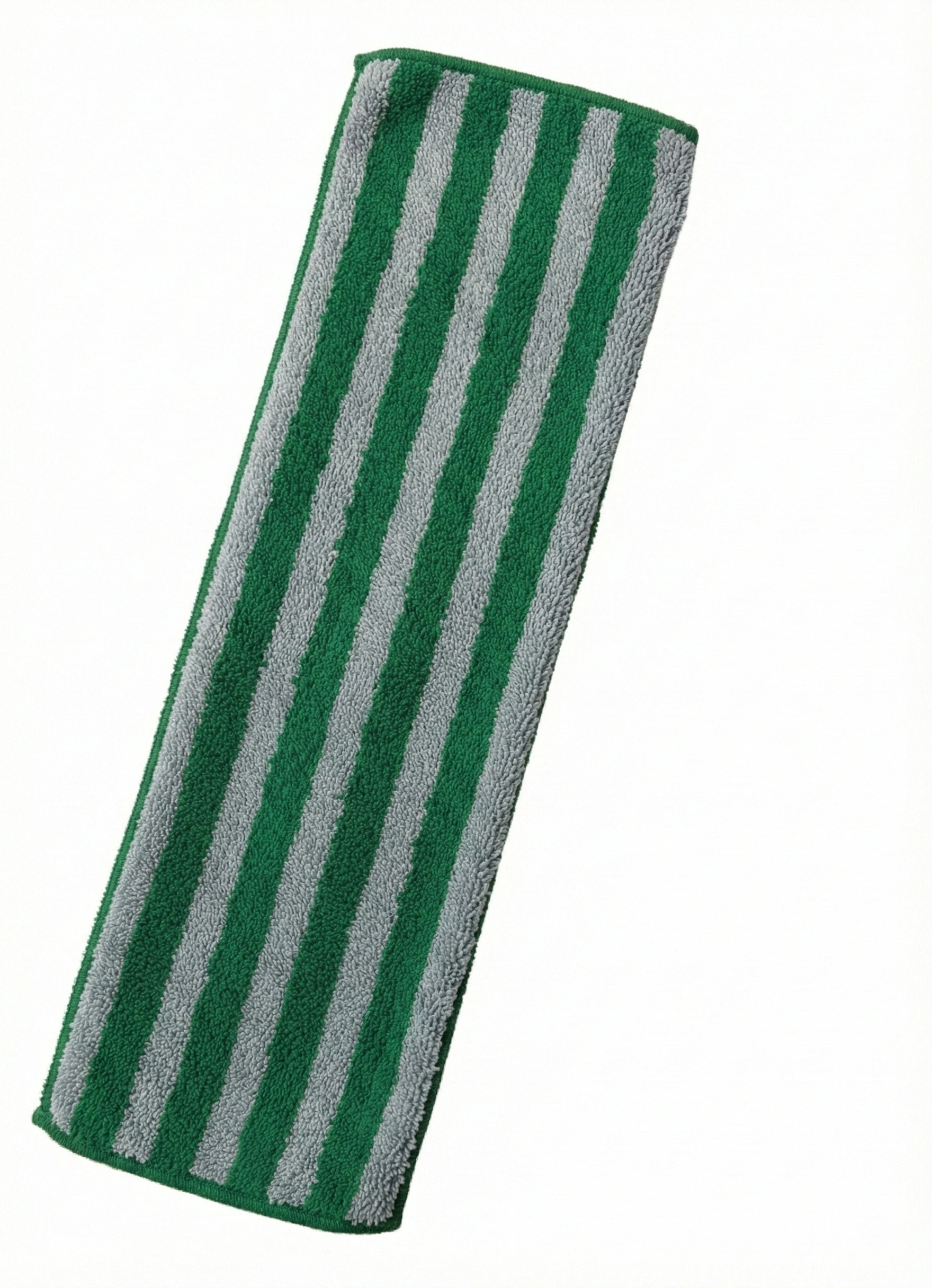
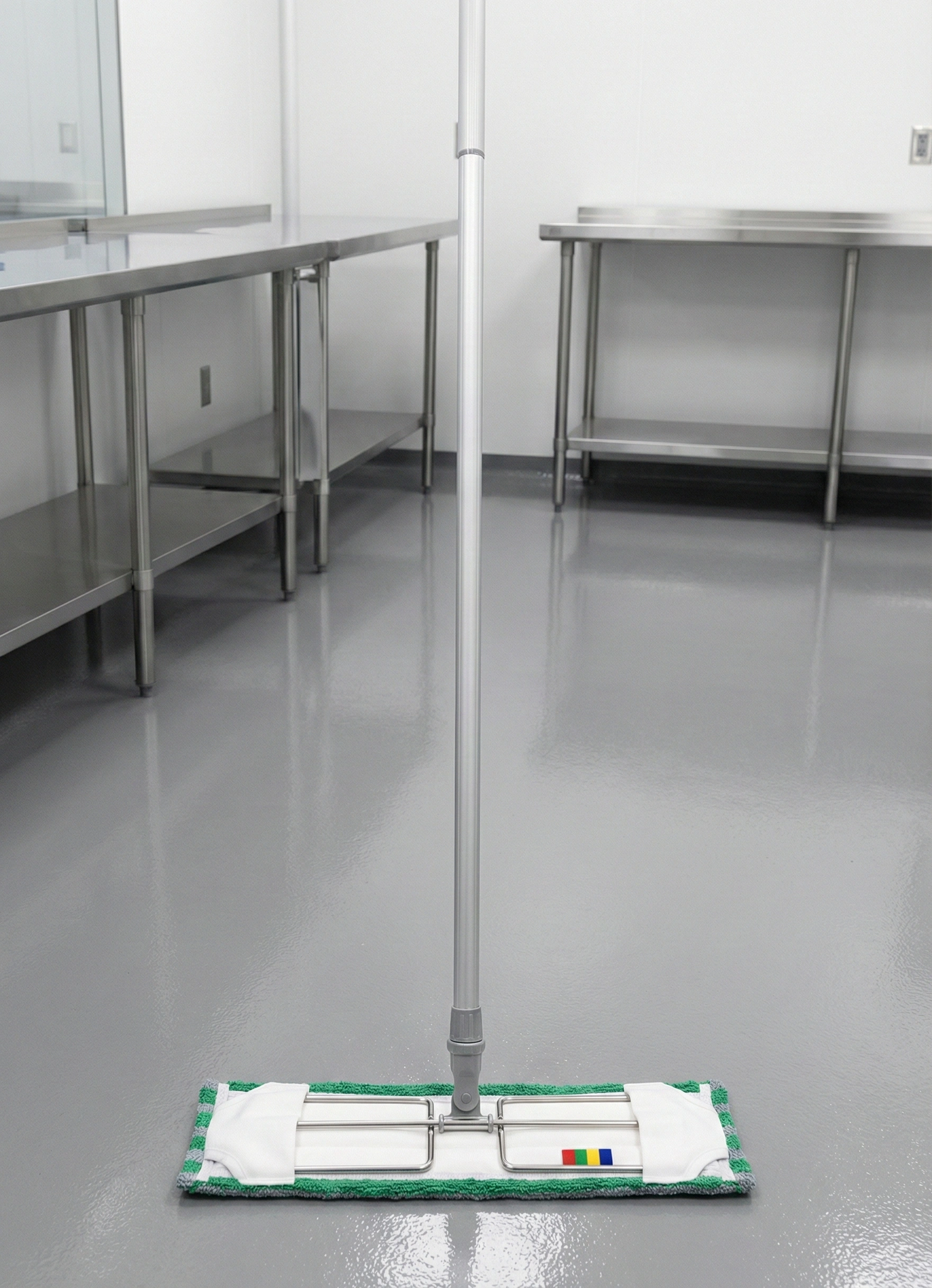
A temiz oda paspas sistemi temiz oda sınıfı paspas kafası, uyumlu bir çerçeve, amaca yönelik tasarlanmış bir sap ve (ıslak temizleme protokolleri için) bir kova/sıkma sisteminin entegre montajıdır; burada tüm bileşenler, tanımlanmış bir temiz oda sınıflandırması ve temizleme protokolü dahilinde birlikte çalışacak şekilde belirlenmiştir. Tek bir ürün değil; her bir öğenin diğer tüm öğelerin performansını doğrudan etkilediği, eşleşen bir bileşenler kümesidir.
Neden “Sistem” – Sadece “Paspas” Değil
“Temiz oda paspası” terimi yaygın olarak kullanılmaktadır ancak eksiktir. Paspas başlığı, onu tutacak bir çerçeve olmadan tek başına temizlik yapmaz. Çerçeve, onu kontrol edecek bir tutamak olmadan hiçbir şey başaramaz. Eğer kova/sıkma sistemi boyutsal ve materyal olarak paspas kafasına uygun değilse, sapın ıslak temizleme protokolleri açısından bir önemi yoktur. Temiz oda paspas sistemi bunların birleşimidir ve bu bileşenlerin etkileşim şekli, temizleme sonucunun tutarlı, tekrarlanabilir ve denetime hazır olup olmadığını belirler.
Bu Kavramı Kim Anlamak Gerekir?
Herhangi bir satın alma kararı vermeden önce temiz oda paspas sisteminin nelerden oluştuğunu anlaması gereken, kontrollü ortam operasyonlarına giren tedarik veya tesis ekipleri.
Standart üretimden kontrollü ortamlara geçiş yapan ve ekipman gereksinimlerinin haritasını çıkarması gereken ekipler.
Mevcut temizlik araçlarının denetim amacıyla "doğrulanmış sistem" tanımını karşılayıp karşılamadığını değerlendiren profesyoneller.
Son müşterileri gerçekte ne satın aldıkları konusunda eğitmek için açık ve güvenilir bir tanımsal kaynağa ihtiyaç duyan ekipler.
Temel içgörü: Temiz oda paspası satın almak, ticari bir temizlik aracı satın almaya benzemez. Parçacık sayımlarının ölçüldüğü, temizleme sonuçlarının belgelendiği ve düzenleyici denetçilerin her araç seçiminin ardındaki mantığı inceleyebildiği kontrollü bir ortamda öngörülebilir bir şekilde çalışması gereken entegre bir temizleme sistemini belirtmektedir.
Temiz Oda Paspas Sisteminin Dört Temel Bileşeni
Eksiksiz bir temiz oda paspas sistemi, birbirine bağlı dört bileşenden oluşur. Her biri aşağıda birincil işlevi, temel seçim hususları ve bileşen uyumsuzluğunun sonuçlarıyla birlikte analiz edilmektedir.
Paspas Kafası
Rol: Birincil temizleme temas yüzeyi — partikül yakalama, solüsyon uygulaması ve kontaminasyonun giderilmesinden sorumludur.
Önemli hususlar: Polyester örgü (düşük partikül dökülmesi için sürekli filament, dayanıklı) veya mikrofiber (yüksek emicilik, partikül yakalama için bölünmüş fiber). Tesisin derecesine bağlı olarak steril ve steril olmayan konfigürasyonlar mevcuttur.
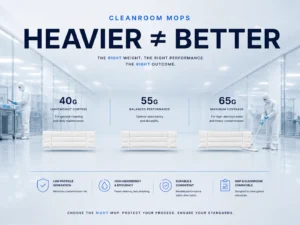
Ağırlık seçenekleri: Tipik olarak 40g, 55g veya 65g — emiciliği, operatörün kullanımını ve farklı zemin alanlarına uygunluğu etkiler. Ağırlık seçimi, bağlandığı çerçeve ve desteklediği temizlik protokolü bağlamında değerlendirilmelidir.
Kenar sızdırmazlık ve inşaat: Paspas kafasının kenar kaplaması, kapitone deseni ve bağlantı arayüzü (cep, cırt cırtlı) kullanım sırasında temizleme tutarlılığını ve parçacık dökülmesini doğrudan etkiler.
Uyumsuzluk uyarısı: Çerçeveye tam oturmayan bir paspas kafası (yanlış cep derinliği, uyumsuz bağlantı mekanizması) temizleme boşlukları, eşit olmayan basınç dağılımı ve kullanım sırasında olası ayrılmalara neden olur. Dünyanın en iyi paspas kafası yanlış çerçeve üzerinde kötü performans gösteriyor.
Paspas Çerçevesi
Rol: Paspas kafası ile sap arasındaki yapısal arayüz — paspas kafasını güvenli bir şekilde tutar ve temizleme basıncını zemin yüzeyine dağıtır.
Önemli hususlar: Paslanmaz çelik (GMP ortamları için, kimyasal uyumluluk, otoklavlanabilir), plastik/polimer (maliyete duyarlı uygulamalar, daha hafif), tel çerçeve (düz paspas sistemleri, esnek basınç dağıtımı).
Bağlantı mekanizması: Cep tipi (başlık çerçeve kollarına kayar), cırt cırtlı (yerine bastırılır) veya klipsli/mekanik sabitlemeli. Bağlantı mekanizması, kullanılan paspas kafası tipine göre özel olarak tasarlanmalıdır.
Sertlik ve ağırlık: Çerçeve sertliği, koldan zemine basınç aktarımını etkiler. Aşırı derecede esneyen bir çerçeve eşit olmayan temizleme basıncı oluşturur. Çerçeve ağırlığı, geniş alanlı veya çok vardiyalı temizlik operasyonları için geçerli olan toplam operatör taşıma yüküne katkıda bulunur.
Uyumsuzluk uyarısı: Paspas kafası için yanlış bağlantı mekanizmasına sahip bir çerçeve, güvenli olmayan bir sabitlemeye, eşit olmayan temizleme basıncına, başlığın daha hızlı aşınmasına veya - en kötü durumda - paspas kafasının sınıflandırılmış bir temiz oda içinde çalışmanın ortasında ayrılmasına neden olur.
Paspas Kolu
Rol: Operatör arayüzü — operatörler ve vardiyalar genelinde paspaslama hareketini, basınç uygulamasını, erişimi ve temizleme tutarlılığını kontrol eder.
Önemli hususlar: Paslanmaz çelik (dayanıklı, kimyasallara dayanıklı, otoklavlanabilir) veya alüminyum (hafif, uygun maliyetli). Malzeme seçimi temiz oda kimyasallarına maruz kalma ve temizleme sıklığına uygun olmalıdır.
Teleskopik ve sabit uzunluk: Teleskopik kollar, tek bir kolun farklı yükseklikteki birden fazla operatöre hizmet etmesine olanak tanıyarak SKU sayısını azaltır. Sabit uzunluktaki tutacaklar daha basittir ancak farklı operatörler için birden fazla boyut gerektirebilir.
Kavrama tasarımı: Çerçeveye güvenli bağlantı mekanizmalı ergonomik kavrama. Rahatsız edici veya kavraması zor bir sap, operatörün yorulmasına neden olur ve bu da çok vardiyalı temiz oda operasyonlarında temizlik tutarlılığını doğrudan etkiler.
Bağlantı mekanizması: Kol-çerçeve bağlantısı güvenli bir şekilde kilitlenmelidir. Gevşek bir bağlantı, tutarsız paspaslama basıncına neden olur ve bağlantı yerinde bir kirlenme riski noktası oluşturur.
Uyumsuzluk uyarısı: Çerçeveye güvenli bir şekilde kilitlenmeyen bir tutamak, tutarsız temizleme basıncına ve gevşek arayüzde potansiyel bir parçacık oluşumu noktasına neden olur. Operatörler, tekniklerini ayarlayarak ve kontrolsüz değişkenleri temizleme sürecine dahil ederek zayıf bağlantıyı telafi ederler.
Kova / Sıkma Sistemi
Rol: Çözüm yönetimi — temiz ve kullanılmış temizleme solüsyonunu tutar ve ayırır, paspas başlığının nem içeriğini yönetmek için sıkmayı kontrol eder ve temiz oda dezenfektanlarıyla kimyasal uyumluluğu korur.
Oda tasarımı: Single-chamber (one solution compartment) or dual-chamber (clean and dirty solution separation). Dual-chamber is preferred in GMP environments where cross-contamination risk must be minimized — the clean solution is never contaminated by the used solution.
Wringer mechanism: The wringer must be dimensionally matched to the mop head size and weight. A wringer designed for a larger mop head will under-squeeze a smaller one; a wringer designed for a smaller head may damage the fibers of a larger one.
Material chemical compatibility: Kova ve sıkma malzemeleri yaygın olarak kullanılan temiz oda dezenfektanlarıyla (hidrojen peroksit, izopropil alkol, kuaterner amonyum bileşikleri, perasetik asit) uyumlu olmalıdır. Kimyasal uyumsuzluktan kaynaklanan malzeme bozulması, temizleme işlemine kalıntı ve parçacıklar katar.
Uyumsuzluk uyarısı: Uyumsuz malzemeler içeren bir kova, temiz oda dezenfektanlarına maruz kaldığında bozulabilir ve temizleme solüsyonuna kimyasal kalıntılar veya parçacıklar bırakabilir. Paspas kafasına uygun olmayan bir sıkma aleti aşırı sıkabilir (liflere zarar verebilir) veya az sıkabilir (etkili temizlik için kafayı fazla ıslak bırakabilir).
Bir Bakışta Temiz Oda Paspas Sistemi Bileşenleri
| Bileşen | Birincil İşlev | Temel Malzeme / Tasarım Hususları | Ortak Alıcı Soruları |
|---|---|---|---|
| Paspas Kafası | Cleaning contact surface — particle capture, solution application, contamination removal | Polyester knit vs microfiber; weight (40g/55g/65g); sterile vs non-sterile; edge sealing; attachment interface | What weight do I need? Sterile or non-sterile? |
| Paspas Çerçevesi | Structural interface — holds the mop head and connects to handle | Stainless steel vs plastic vs wire frame; pocket vs hook-and-loop attachment; rigidity and weight | Will this frame fit my mop heads? Is stainless steel required? |
| Paspas Kolu | Operator interface — controls mopping motion, pressure, and reach | Stainless steel vs aluminum; telescopic vs fixed; grip design; frame connection mechanism | Does the handle lock securely? Is it autoclave-compatible? |
| Bucket / Wringer | Çözüm yönetimi — temiz/kirli ayırma, sıkma, kimyasal uyumluluk | Tek ve çift odacıklı; sıkma tipi; malzemenin kimyasal direnci; paspas kafası boyutu uyumluluğu | Sıkma aparatı paspas başlığına zarar verir mi? Kova dezenfektanımla uyumlu mu? |
Sistem Neden Önemlidir — Sadece Parçalardan Oluşan Bir Koleksiyon Değildir
The four components described above each have individual specifications. But the cleanroom mop system concept exists because the interaction between components herhangi bir parçanın özelliklerini değil, temizleme sonuçlarını belirler. Aşağıda sistem düzeyinde düşünmenin neden gerekli olduğunun beş nedeni ve bileşenler ayrı ayrı seçildiğinde ne olacağı açıklanmaktadır.
1. Uyumluluk Riski: Her Bağlantı Noktası Potansiyel Bir Arıza Noktasıdır
Bir temiz oda paspas sisteminde üç kritik arayüz vardır: (1) kafa-çerçeve arayüzü, (2) çerçeve-sap arayüzü ve (3) kafa-kova/sıkma aparatı arayüzü. Bu üç bağlantıdan herhangi biri belirtilmemiş veya doğrulanmamışsa sistemde bir boşluk var demektir. Çerçeveye tam oturmayan paspas kafası temizleme boşlukları oluşturur. Çerçeveye düzgün şekilde kilitlenmeyen bir tutamak tutarsız basınca neden olur. Paspas kafasına uygun boyutta olmayan bir kova, temizleme solüsyonunun uygun şekilde yönetilemeyeceği anlamına gelir. Bileşenler tek bir üreticiden temin edildiğinde bu arayüzler birlikte tasarlanır, test edilir ve belgelenir. Farklı tedarikçilerden gelen bileşenler karıştırıldığında uyumluluk bilinmemektedir.
2. Temizleme Performansının Tahmin Edilebilirliği Sistem Entegrasyonuna Bağlıdır
Entegre paspas sistemi öngörülebilir, tekrarlanabilir temizleme performansı sağlar çünkü her bileşenin davranışı diğer bileşenlere göre bilinir. Karışık ve eşleştirilmiş bileşenler kümesi, bilinmeyen değişkenleri ortaya çıkarır. Yüksek özellikli bir paspas kafası, uyumsuz bir çerçeveyle birleştiğinde, doğru şekilde eşleştirilmiş bir orta sınıf sistemden daha kötü performans gösterebilir. Hiçbir bileşenin spesifikasyon sayfası sistem düzeyindeki performansı tahmin edemez; yalnızca sistem düzeyindeki doğrulama bunu doğrulayabilir.
3. Mevzuata Uygunluk: Temizleme Sisteminiz Sistem Olarak Onaylandı mı?
Bir GMP denetiminde denetçi şunu sorabilir: "Bu temizleme sistemi bir sistem olarak doğrulandı mı?" Bileşenler, sistem düzeyinde doğrulama olmadan birden fazla tedarikçiden temin edildiyse yanıt "hayır" olur ve bu bir tehlike işareti oluşturur. Doğrulanmış bir sistem, tüm bileşenlerin tanımlanmış temizleme protokolleri altında belirtildiği şekilde birlikte çalıştığını gösterir. Bireysel bileşen sertifikaları (kafa için COA, çerçeve için malzeme sertifikası) sistem düzeyinde doğrulamaya katkıda bulunmaz. Dokümantasyon, bileşenlerin birleşik bir ünite olarak nasıl performans gösterdiğini kapsamalıdır.
4. Tek Kaynaktan Sorumluluk Yoluyla Tedarik Verimliliği
Buying a complete system from one supplier simplifies procurement: fewer SKUs to manage, one supplier for reorders, one quality agreement, one documentation package per shipment. When a discrepancy arises — a batch issue, a documentation question, a performance question — there is a single point of accountability. With multi-supplier procurement, investigating a performance issue requires coordinating across suppliers who each produce only one component, making root-cause analysis significantly more complex.
5. Total Cost of Ownership: Hidden Costs of Component Mismatch
Component mismatch leads to accelerated wear: a frame that is slightly too rigid damages mop head fibers, requiring more frequent head replacement. A bucket not chemically compatible with your disinfectant degrades, requiring bucket replacement. A handle connection that loosens over time requires re-tightening or replacement. These costs accumulate beyond the initial purchase price. A validated system with documented compatibility avoids these hidden replacement and rework costs over the facility’s operating lifetime.
5 Signs You Are Buying a System, Not Just Parts
Single-source sourcing is the strongest indicator that the components are designed to work together.
A pocket-depth, hook-and-loop dimension, or clip spacing that matches by design, not by coincidence.
Purpose-built connections minimize looseness, particle generation at the joint, and operator inconsistency.
A correctly matched wringer removes the right amount of solution — neither over-squeezing nor under-squeezing.
System-level documentation confirms that the components function as a combined unit under defined protocols.

GMP and ISO Relevance — Where the System Meets Compliance
The cleanroom mop system concept is not an academic distinction — it has direct implications for GMP and ISO compliance. Different cleanroom grades impose different requirements on the mop system, and understanding these requirements is essential before purchasing.
System Requirements by Cleanroom Grade
| GMP Notu | ISO Class (Approx.) | Sterilite Gereksinimi | Mop Head Material Recommendation | Packaging / Transfer | Documentation Level |
|---|---|---|---|---|---|
| A notu | ISO 5 | Sterile (gamma or autoclave) | Polyester knit, continuous filament, low-particle | Double-bagged, validated aseptic transfer | Full: COA, sterility cert, particle data, material cert |
| B seviyesi | ISO 5-7 | Steril | Polyester knit or microfiber, low-particle | Double-bagged for transfer into Grade A background | Full: COA, sterility cert, particle data |
| C sınıfı | ISO 7-8 | Non-sterile acceptable (sterile optional) | Polyester knit or microfiber | Standart temiz oda ambalajı | Standard: COA, particle data, material cert |
| D sınıfı | ISO 8-9 | Steril olmayan | Polyester knit or microfiber | Standart temiz oda ambalajı | Standard: COA, material cert |
Bu tablo, paspas sistemi özelliklerini temiz oda dereceleriyle eşleştirmek için bir referans çerçevesi sağlar. Özel dokümantasyon ve sterilite gereklilikleri uygulamaya göre değişir ve tesisinizin kalite sistemi ve risk değerlendirmesi yoluyla onaylanmalıdır. Sınıf seçimi, ürün türü, süreç adımı ve düzenleyici yargı yetkisi dahil olmak üzere birçok ortak faktöre bağlıdır.
ISO 14644 ve Parçacık Üretimi
ISO 14644-1 classifies cleanrooms by maximum allowable airborne particle concentrations. Every tool that enters the cleanroom — including the mop system — can contribute to the particle count. Component material choices directly affect particle compliance: the mop head fabric type and edge finishing determine fiber shedding during use; the frame surface finish affects particle release from metal-on-metal contact; the handle grip material can degrade and release particles over time. An integrated system where all material choices have been evaluated for particle performance under defined cleaning conditions provides more predictable ISO 14644 compliance than individually selected components.
Documentation Expectations in a GMP Environment
A validated cleanroom mop system should be accompanied by documentation that supports the system as a whole: Certificate of Analysis (COA) confirming material and construction specifications, material certifications for all components, particulate test data (per IEST or ISO standards), sterility certificates with sterility assurance level and sterilization method (for sterile systems), packaging integrity validation (for aseptic transfer), and batch traceability records. These documents should cover the system — not only individual components. During a regulatory inspection, the ability to produce system-level documentation for the cleaning tools in use is a stronger position than producing separate documents for each component from different suppliers.
EU GMP Annex 1 and Sterile Manufacturing
EU GMP Annex 1 (effective August 2023) emphasizes contamination control strategy (CCS) as a holistic framework. Mop systems entering Grade A/B zones through aseptic transfer must have validated packaging integrity, documented sterility assurance, and compatibility with facility transfer procedures. The system concept is directly relevant: a pre-sterilized mop head with validated packaging is only one part of the picture. The frame and handle that receive the sterile head inside the cleanroom, and the bucket used for wet cleaning, must also be compatible with the sterile workflow. Annex 1 compliance requires evaluating the cleaning system end-to-end, not just the consumable component.
Denetime Hazırlık
A documented, single-source mop system is easier to defend in an audit than a collection of individually sourced components. When an auditor reviews cleaning tools, the questions are: What is the system? Is it validated? Where is the documentation? With a single-source system, the answers are contained in one documentation package. With multi-source components, the auditor may need to review separate documentation sets from multiple suppliers, and the absence of system-level validation may itself be noted as a finding.
For a deeper exploration of how cleanroom mop systems support GMP facility cleaning protocols, see: GMP tesisi için temiz oda paspası.
How Component Selection Affects Cleaning Performance
Understanding what each component does is the first step. The next step is understanding how component choices translate into cleaning performance outcomes. Below are the key selection dimensions that most directly affect the cleaning result.
Mop Head Weight and Absorbency
Mop head weight — commonly 40g, 55g, or 65g — is not a performance rating. It is a material mass specification that correlates with absorbency and influences handling characteristics. A 40g head may be appropriate for light-duty applications where low moisture is preferred and operator handling over large areas is a consideration. A 55g head provides a balanced absorbency-to-weight profile for general-purpose cleanroom cleaning. A 65g head offers higher absorbency for heavy-duty or high-moisture cleaning protocols. However, weight selection only has meaning in the context of a specific frame, handle, and cleaning protocol — the performance of a 55g head on an incompatible frame may be worse than a 40g head on a well-matched frame. Selection should be verified through in-facility trial under actual cleaning conditions.
Frame Material and Attachment Security
Stainless steel frames are the standard for GMP environments due to chemical compatibility, cleanability, and the ability to be autoclaved. Plastic/polymer frames may be considered for cost-sensitive applications where chemical exposure is limited. Wire frames are typical for flat mop systems, providing flexible pressure distribution across the floor surface. The frame material choice affects not just durability but also the security of the head attachment — a polymer frame may warp slightly under repeated use, loosening the attachment, while a stainless steel frame maintains its dimensional stability. The frame surface finish (electropolished vs standard) also affects particle retention and cleanability. Frame material and finish should be evaluated in the context of your cleanroom grade, cleaning chemicals, and cleaning frequency.
Handle Ergonomics and Cleaning Consistency
Operator fatigue directly affects cleaning consistency. In multi-shift cleanroom operations, the same floor area may be cleaned by different operators using the same protocol — but if the handle is uncomfortable or the connection to the frame is loose, each operator will compensate differently, creating inconsistent cleaning pressure and coverage. Telescopic handles allow one handle to be adjusted for different operators, reducing SKU count and ensuring each operator can set the handle to their optimal working height. The connection mechanism (mechanical lock, thread, quick-release) should be evaluated for reliability over repeated use — a mechanism that loosens over time introduces particle generation and pressure inconsistency.
Bucket / Wringer Design and Chemical Compatibility
A dual-chamber bucket separates clean solution from used solution — a feature that is recommended for GMP environments where cross-contamination risk must be addressed in the cleaning protocol. The wringer mechanism must be specifically matched to the mop head dimensions: a wringer that is too narrow for the head will require the operator to force the head through, potentially damaging fibers; a wringer that is too wide will not remove enough solution, leaving the head over-saturated. The bucket material must be compatible with the specific disinfectants used in your facility — hydrogen peroxide, quaternary ammonium compounds, and peracetic acid each have different material compatibility profiles. Chemical-induced degradation of bucket material introduces particles and chemical residues into the cleaning process, directly undermining the purpose of using a cleanroom-grade mop system.
Compatibility Verification: What to Ask Suppliers
When evaluating a cleanroom mop system, ask the supplier these specific questions: (1) Are the mop head, frame, handle, and bucket designed as a matched system, or are they separately sourced components bundled together? (2) Can you provide system-level documentation — not just individual component specs? (3) Can you demonstrate that a specific mop head weight and frame combination has been tested together under cleaning-relevant conditions? (4) What is the documented chemical compatibility of the bucket/wringer materials with our specific disinfectants? (5) If we change one component (e.g., switch from 55g to 65g head), do we need to change the frame, wringer, or protocol? A supplier who can answer these questions with system-level data is providing a validated system. A supplier who cannot is providing individual parts.
Common Buyer Misconceptions About Cleanroom Mop Systems
Buyers encountering the cleanroom mop system concept for the first time often carry assumptions from general procurement or janitorial cleaning experience that do not hold true in a controlled-environment context. Five common misconceptions are addressed below.
“Any mop head works with any frame.”
The assumption: Mop heads and frames are interchangeable — just buy the cheapest head and attach it to whatever frame you already have.
The reality: Frame attachment mechanisms — pocket depth, hook-and-loop dimensions, clip spacing — are not universal. A mop head designed for a specific frame pocket depth may not fit securely on a different frame. A loose attachment causes uneven cleaning pressure, potential head detachment during use, and accelerated wear on both the head and the frame. The attachment is an engineered interface, not a generic connection.
What this means: Evaluate the head and frame as a matched pair. If you are evaluating heads from one supplier and frames from another, the compatibility is unverified until tested.
“The bucket does not matter — just use whatever is available.”
The assumption: Any bucket and wringer can hold and dispense cleaning solution. The bucket is just a container.
The reality: A bucket not designed for cleanroom mops may have materials incompatible with cleanroom disinfectants, leading to chemical degradation and residue release into the solution. It may lack clean/dirty solution separation, meaning the used (potentially contaminated) solution mixes with the clean solution. The wringer mechanism may not be dimensionally matched to the mop head, causing fiber damage or incomplete moisture removal. The bucket is not a generic container — it is part of the contamination control chain.
What this means: The bucket/wringer should be evaluated as carefully as the mop head. A validated system includes all four components — cutting corners on the bucket undermines the entire cleaning process.
“One mop system works for all cleanroom grades.”
The assumption: A “cleanroom mop system” is a universal product category — buy one type, use it everywhere.
The reality: Grade A sterile filling zones require pre-sterilized, double-bagged mop systems with validated packaging integrity for aseptic transfer. Grade D support areas may use non-sterile systems with standard cleanroom packaging. Using a Grade D-configured system in a Grade B zone is a compliance failure — the sterility, packaging, and documentation levels are not matched to the zone’s requirements. Different cleanroom grades impose different requirements on the same four-component system.
What this means: Start by identifying your cleanroom grade, then specify the system configuration (sterility, packaging, documentation) that matches that grade. A supplier should be able to provide the same mop head model in both sterile and non-sterile configurations, supporting consistent cleaning protocols across different facility zones.
“Price per mop head is the main decision factor.”
The assumption: The mop head is the consumable — focus on getting the lowest price per unit and treat the other components as secondary.
The reality: The mop head is one component of a system. A low-cost head that does not fit the frame securely will wear faster, require more frequent replacement, and produce inconsistent cleaning results. A frame that is slightly incompatible with the head will damage each head faster, increasing total replacement volume. The total cost of the system includes component interaction costs — cheaper heads replaced more frequently, due to poor frame fit, can cost more than properly matched heads with longer service life.
What this means: Evaluate total system cost, not unit cost. A system where all four components are designed to work together may have a higher per-head price but a lower total cost of ownership over the replacement cycle.
“Her bileşenin kendi sertifikası varsa sistem doğrulanır.”
The assumption: Her bileşen için COA'ları, malzeme sertifikalarını ve sterilite sertifikalarını ayrı ayrı toplayın; sistem doğrulanır.
The reality: Bireysel bileşen sertifikaları, her parçanın kendi özelliklerini karşıladığını belgelemektedir. Tanımlanmış temizleme koşulları altında parçaların birleşik bir ünite olarak birlikte çalıştığını belgelemezler. Sistem düzeyinde doğrulama, kovayı kullanarak tutamağa bağlanan çerçeve üzerindeki başlığın (tam bir montaj olarak) tanımlanmış bir standartta performans gösterdiğini doğrular. Bu doğrulama, bireysel bileşen testinden ayrı bir faaliyettir ve tedarikçi düzeyinde bir taahhüttür; alıcının bireysel sertifikalar toplayarak oluşturabileceği bir şey değildir.
What this means: Ask for system-level validation documentation, not only component-level documentation. A supplier who can provide both is demonstrating a higher level of quality assurance maturity than a supplier who can only provide component certificates.
Sıkça Sorulan Sorular
Temiz oda paspas sistemi nedir?
A cleanroom mop system is the integrated assembly of a cleanroom-grade mop head, a compatible frame, a purpose-designed handle, and a bucket/wringer system — all engineered to work together within a defined cleanroom classification and cleaning protocol. It is not a single product; it is a matched set of components where each element directly affects the performance of every other element.
Why is a cleanroom mop considered a “system” rather than just a mop?
Çünkü paspas kafası, çerçeve, sap ve solüsyon yönetim sistemi olmadan tek başına temizlik gerçekleştiremez. Her bileşen diğerlerinin performansını etkiler. Yanlış eşleşme (yanlış çerçeveye yanlış kafa, paspas için yanlış kova) temizlik tutarlılığını, parçacık kontrolünü ve mevzuat uyumluluğunu tehlikeye atar. "Sistem" terimi, bu dört bileşenin işlevsel olarak birbirine bağımlı olduğunu, bağımsız olarak seçilemeyeceğini yansıtmaktadır.
Temiz oda paspas sisteminin dört ana bileşeni nedir?
Dört temel bileşen şunlardır: (1) paspas kafası (temizleme temas yüzeyi - parçacıkları yakalar ve solüsyonu uygular), (2) paspas çerçevesi (kafayı tutan ve tutamağa bağlanan yapısal arayüz), (3) paspas sapı (hareket, basınç ve erişimi kontrol eden operatör arayüzü) ve (4) kova/sıkma sistemi (çözelti yönetimi - ıslak protokoller için temizleme solüsyonunu tutma, ayırma ve sıkma).
Farklı üreticilerin bileşenlerini karıştırabilir miyim?
Tavsiye edilmez. Farklı üreticilerin bileşenlerinin karıştırılması, bilinmeyen uyumluluk değişkenlerini beraberinde getirir; çerçeve bağlantı mekanizmaları, tutamak bağlantıları ve kova boyutları tedarikçiler arasında eşleşmeyebilir. Birleşik montajı kapsayan sistem düzeyinde doğrulama olmadığından bu, temizleme boşluklarına, erken aşınmaya ve denetim komplikasyonlarına neden olabilir. Tedarik kısıtlamaları nedeniyle bileşenlerin karıştırılması gerekiyorsa, uyumluluk, operasyonel kullanımdan önce tesis içi testlerle doğrulanmalıdır.
Temiz oda uyumluluğu açısından paspas kovası ve sıkma aleti gerçekten önemli mi?
Yes. A bucket not designed for cleanroom use may have materials incompatible with cleanroom disinfectants (leading to chemical degradation or residue release into the solution), lack clean/dirty solution separation (creating cross-contamination risk), or use wringer mechanisms that damage mop head fibers (increasing particle shedding). The bucket is part of the contamination control chain — it should be evaluated as carefully as the mop head itself.
How do I know which cleanroom mop system is right for my facility grade?
Temiz oda derecenizi (GMP A/B/C/D veya ISO 5-9) tanımlayarak başlayın. A/B Sınıfı, aseptik aktarım için ambalaj bütünlüğü belgelenmiş, steril, doğrulanmış paspas sistemleri gerektirir. C/D Sınıfı, steril olmayan sistemler kullanabilir ancak yine de belgelenmiş parçacık performansı ve malzeme sertifikaları gerektirir. Ardından paspas kafasının ağırlığını temizlik protokolünüzle eşleştirin (hafif işler için 40 g, genel amaçlı için 55 g, ağır işler için 65 g) ve çerçevenin, kolun ve kovanın seçilen kafayla özel olarak eşleştiğinden emin olun. Sistem düzeyinde belgeler sağlayabilecek ve uyumluluk sorularını yanıtlayabilecek bir tedarikçiye danışın.
Eksiksiz bir temiz oda paspas sistemiyle birlikte hangi belgeler gelmelidir?
Doğrulanmış bir temiz oda paspas sistemi şunları içermelidir: Malzeme ve yapı özelliklerini doğrulayan Analiz Sertifikası (COA), tüm bileşenler için malzeme sertifikaları, partikül test verileri (IEST tarafından tanınan veya ISO uyumlu test standartlarına göre), sterilite güvence seviyesi ve sterilizasyon yöntemi içeren sterilite sertifikaları (steril sistemler için), ambalaj bütünlüğü doğrulaması (aseptik transfer için) ve seri izlenebilirlik kayıtları. Bu dokümanlar sistemi tek tek bileşenlerden ziyade bir bütün olarak kapsamalıdır.
Bir temiz oda paspas sistemi tedarikçisini değerlendirirken nelere dikkat etmeliyim?
Three key indicators: (1) The supplier provides batch-level documentation — COA, material certifications, and particle test data — as standard practice, not only when requested. (2) The supplier offers a complete system with mop heads, frames, handles, and bucket/wringer solutions that are demonstrably designed to work together. (3) The supplier can answer technical questions about material specifications, component compatibility, and suitability for your specific cleanroom classification and cleaning protocol. A supplier who meets all three criteria is positioned to provide a validated system rather than just components.
Bundan Sonra Nereye Gidilmeli: Tanımdan Karara
Now that you understand what a cleanroom mop system is and why the system concept matters, the following resources help you move from category understanding to specific evaluation and selection:
- Temiz oda paspas sistemine genel bakış: A comprehensive guide covering system components, material options, application-fit assessment, and GMP/ISO cleaning requirements. Temiz Oda Paspas Sistemine Genel Bakış'ı okuyun
- How to choose a cleanroom mop system: A practical selection framework covering facility grade, cleaning zone, material choice, and supplier evaluation. Read the Mop System Selection Guide
- Temiz Oda Paspas Sistemi Alıcı Değerlendirme Çerçevesi: A structured approach to evaluating and comparing cleanroom mop systems across suppliers, with criteria for documentation, component compatibility, and application fit. Alıcı Değerlendirme Çerçevesini Okuyun
- Cleanroom mop vs regular mop: A side-by-side comparison establishing why regular mops cannot be used in controlled environments and what distinguishes cleanroom-grade cleaning tools. cleanroom mop vs regular mop differences
Ready to Evaluate a Complete Cleanroom Mop System for Your Facility?
MIDPOSI provides integrated cleanroom mop systems — mop heads (40g/55g/65g, sterile and non-sterile), stainless steel frames, ergonomic handles, and bucket/wringer solutions — engineered as a complete system for GMP and ISO cleanroom compliance, with full documentation support. Whether you are procuring your first cleanroom cleaning system or upgrading an existing one, our team can help you identify the right system configuration for your facility grade and cleaning protocol.
Tüm MIDPOSI temiz oda paspas sistemleri, toplu düzeyde COA belgelerini içerir. Steril ürünler Sterilite Sertifikasını içerir. Tesise özel sistem konfigürasyonu için teknik danışmanlık mevcuttur.