
...

Batch Traceability for Pharmaceutical Cleanroom Mops: Ensuring Long-Term Supply Stability and Audit Readiness

A technical reference for QA managers and validation engineers on the integration of consumable traceability into the site Contamination Control Strategy (CCS).

سراغ لگانا End-to-End
تعمیل GMP/Annex 1
خطرہ Mitigated
Batch traceability system for pharmaceutical cleanroom mops showing lot-level control, GMP documentation, and audit-ready records.
Batch traceability transforms cleanroom mops from generic consumables into fully controlled GMP inputs.

1. Executive Summary

In a GMP-regulated environment, the cleanroom mop is no longer viewed as a generic utility but as a critical controlled input. Batch traceability cleanroom mop systems serve three primary functions:

  • Risk Mitigation: Enables precise isolation of non-conforming materials during deviation investigations.
  • Regulatory Defense: Provides the data trail required by auditors to prove that consumables used in Grade A/B zones are validated and controlled.
  • Supply Continuity: Ensures that long-term OEM manufacturing remains consistent through rigid change control and lot-to-lot monitoring.

2. What Batch Traceability Means for Cleanroom Mops

Product-level traceability identifies a SKU; batch-level traceability identifies the specific manufacturing event. For cleanroom mops, this requires a "genealogy" that links the finished product back to the specific lot of polyester yarn or microfiber fabric used, the cleanroom laundry shift, and the specific sterilization cycle.

When mops are treated as controlled inputs, every individual package is a data point. This data allows QA teams to verify that the product in their hand is identical in performance and purity to the product validated during the initial facility startup or PQ (Performance Qualification).
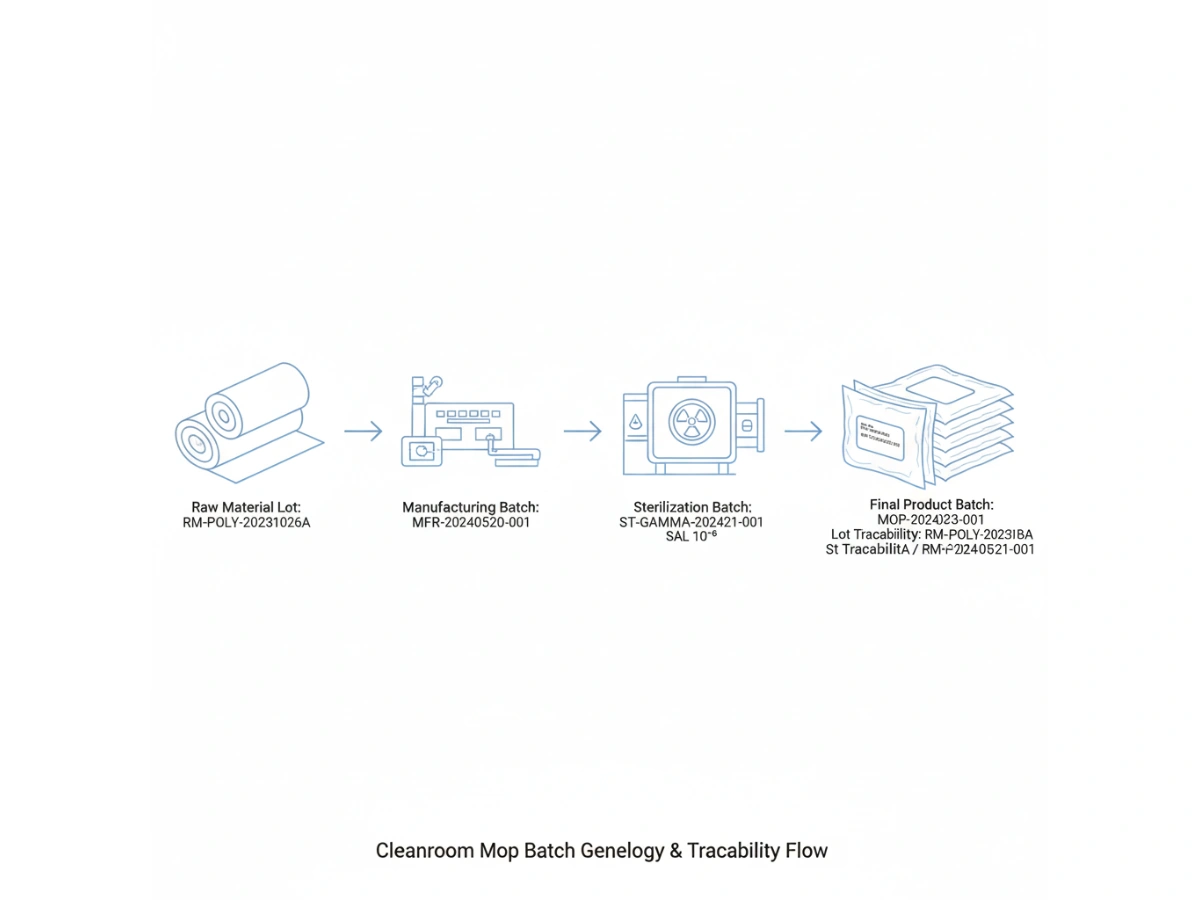
Genealogy diagram illustrating batch traceability of pharmaceutical cleanroom mops from raw material lots to sterilization cycles.
Batch genealogy links raw materials, manufacturing steps, and sterilization cycles into a single traceable record.

3. Regulatory & Audit Expectations

Modern GMP principles require that all materials coming into contact with sensitive surfaces be fully accounted for. During an inspection, an auditor may select a date of production and ask for the lot traceability of the cleaning materials used on that day.

Expectations focus on the "Linkage of Records." An auditor will look for a seamless transition from the facility's cleaning logs to the batch-level documentation provided by the supplier. If a mop batch cannot be linked to a Certificate of Analysis (COA) or a sterilization record, the sterility and cleanliness of the entire cleanroom suite may be called into question.
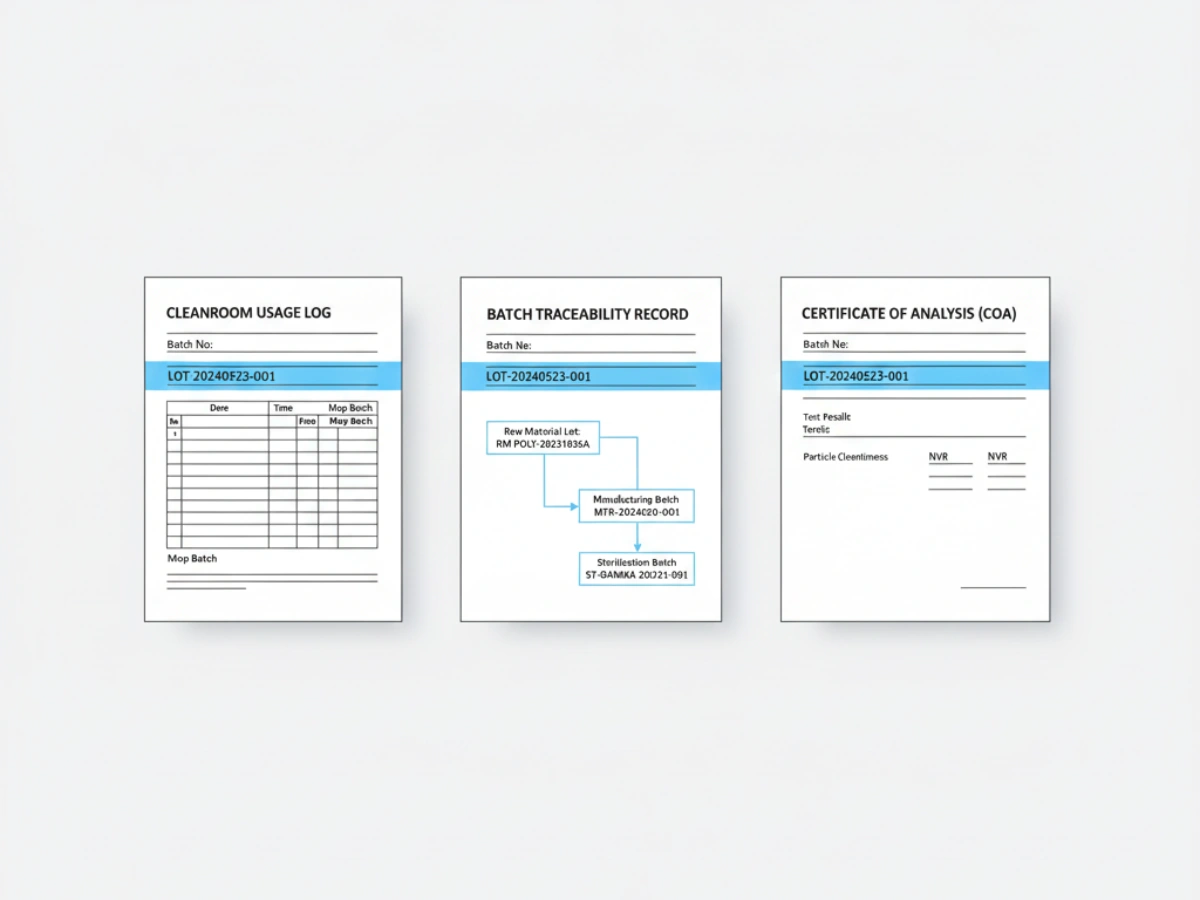
GMP audit review of batch traceability records for pharmaceutical cleanroom mops, including COA and sterilization documentation.
Auditors focus on record linkage between cleaning logs, batch numbers, and supplier documentation.

4. Elements of an Effective Batch Traceability System

A robust traceability system for cleanroom consumables GMP compliance must include:
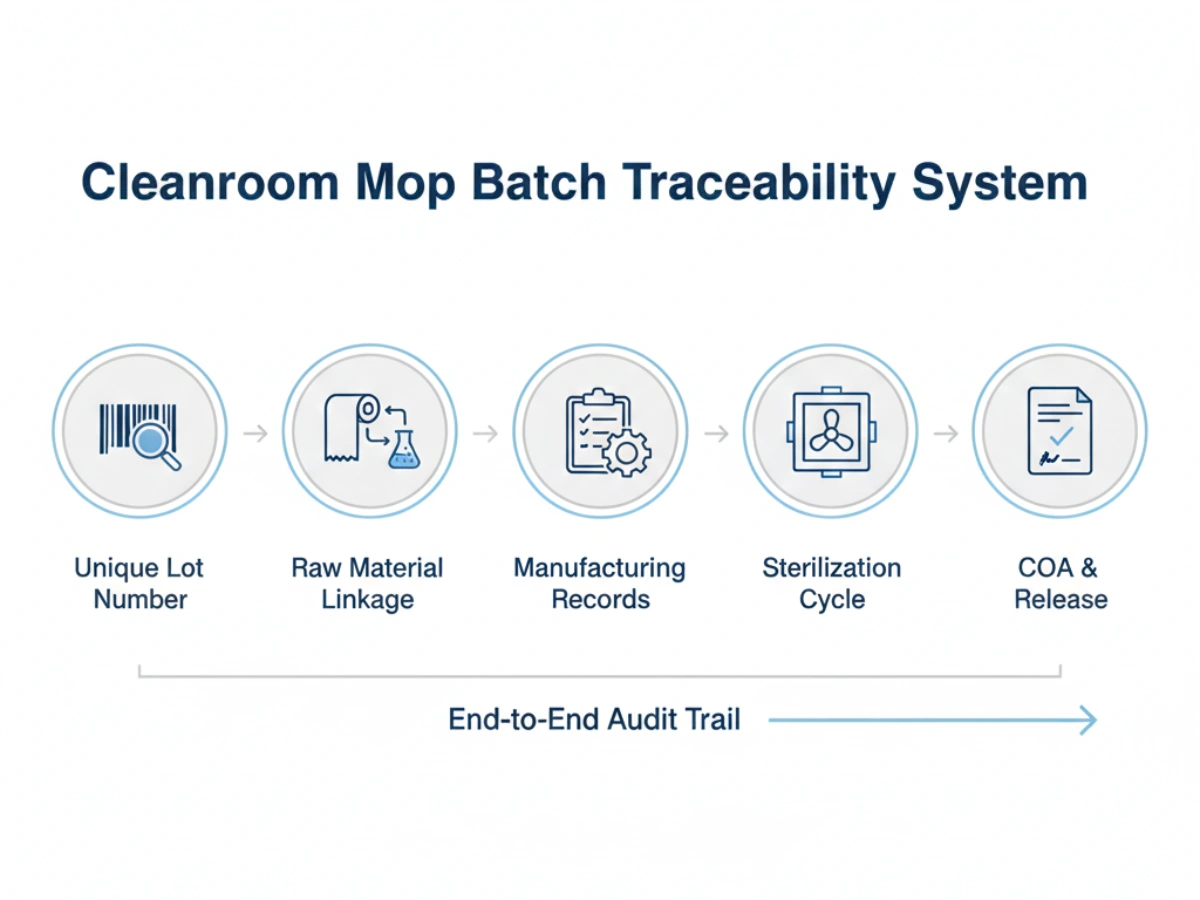
  • Unique Lot Numbering: A non-repeating identifier printed on every primary and secondary package.
  • Raw Material Linkage: Documentation connecting the batch number to the specific shipment of raw textiles and chemicals.
  • Manufacturing Records: Time-stamped logs of knitting, cutting, and laser-sealing processes.
  • Sterilization Reference: A direct link to the Gamma irradiation or Autoclave batch record, typically validated via a dose-audit or indicator.
  • COA Alignment: A Certificate of Analysis that mirrors the batch number and provides specific test results for that lot’s particle counts and NVR levels.
Core components of a cleanroom mop batch traceability system including lot numbering, raw material linkage, manufacturing records, and COA alignment.
An effective traceability system integrates manufacturing, sterilization, and analytical records at batch level.

5. Long-Term Supply Stability & Risk Control

Supply stability is often threatened by "drift"—small, undocumented changes in manufacturing that accumulate over years. Batch traceability prevents this by establishing a baseline for lot-to-lot consistency.

In the event of a CAPA (Corrective and Preventive Action) involving environmental monitoring (EM) spikes, traceability allows QA to determine if a specific batch of mops contributed to the event. Without this, the facility may be forced to discard all inventory and halt production, posing a massive operational risk. Traceability transforms a potential facility-wide crisis into a localized material quarantine.
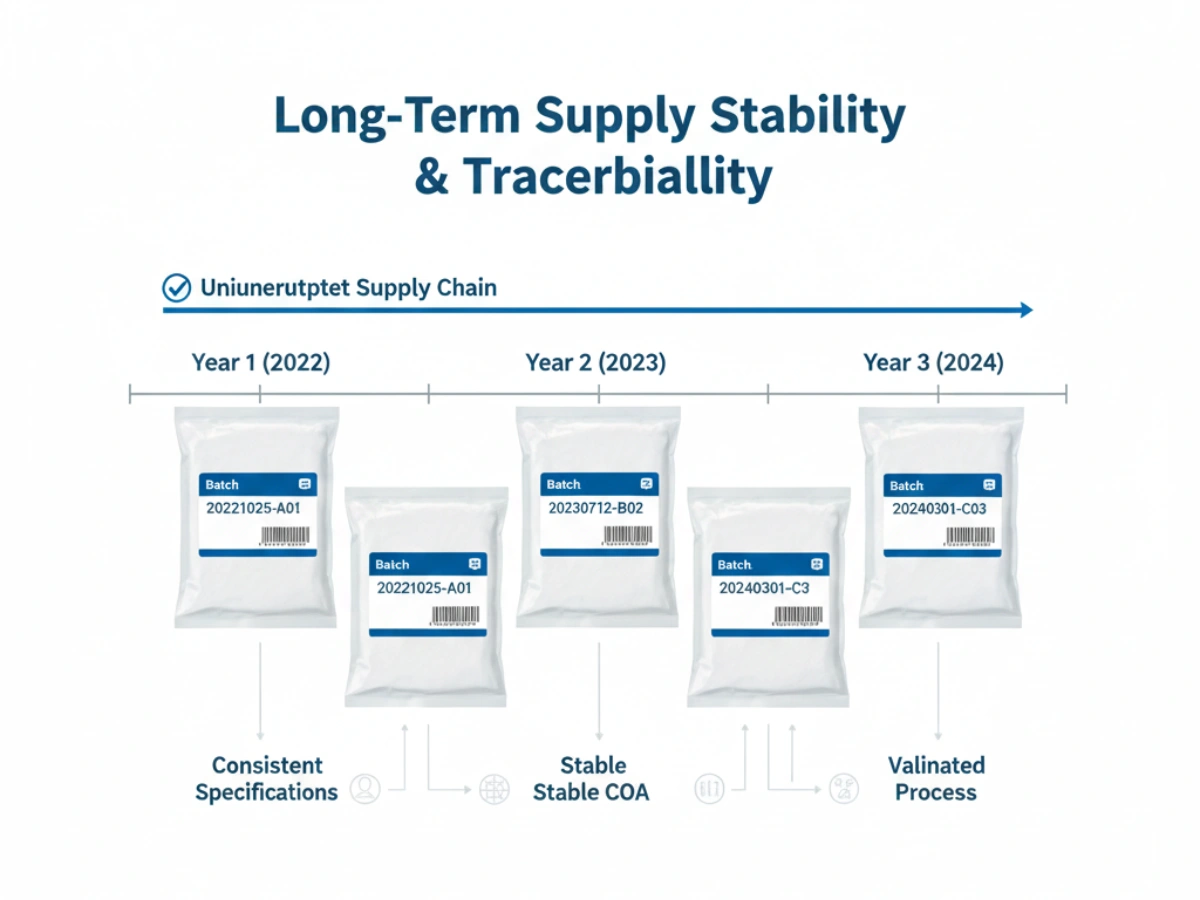
Long-term supply stability supported by batch traceability for pharmaceutical cleanroom mops, enabling lot-to-lot consistency monitoring and targeted quarantine.
Traceability limits operational impact by enabling targeted quarantine instead of facility-wide inventory disposal.

6. Manufacturer & OEM Responsibilities

A pharmaceutical mop manufacturer / OEM acts as an extension of the pharma site’s quality system. Their responsibilities include:

  • Supplier Change Control: Notifying the client before changing raw material sources or manufacturing locations.
  • Record Retention: Maintaining batch records for at least five years (or as defined by the quality agreement).
  • Re-validation Triggers: Proactively re-validating processes when equipment or environmental conditions change.

For a qualified manufacturer, the ability to produce these records on demand is the hallmark of GMP maturity.
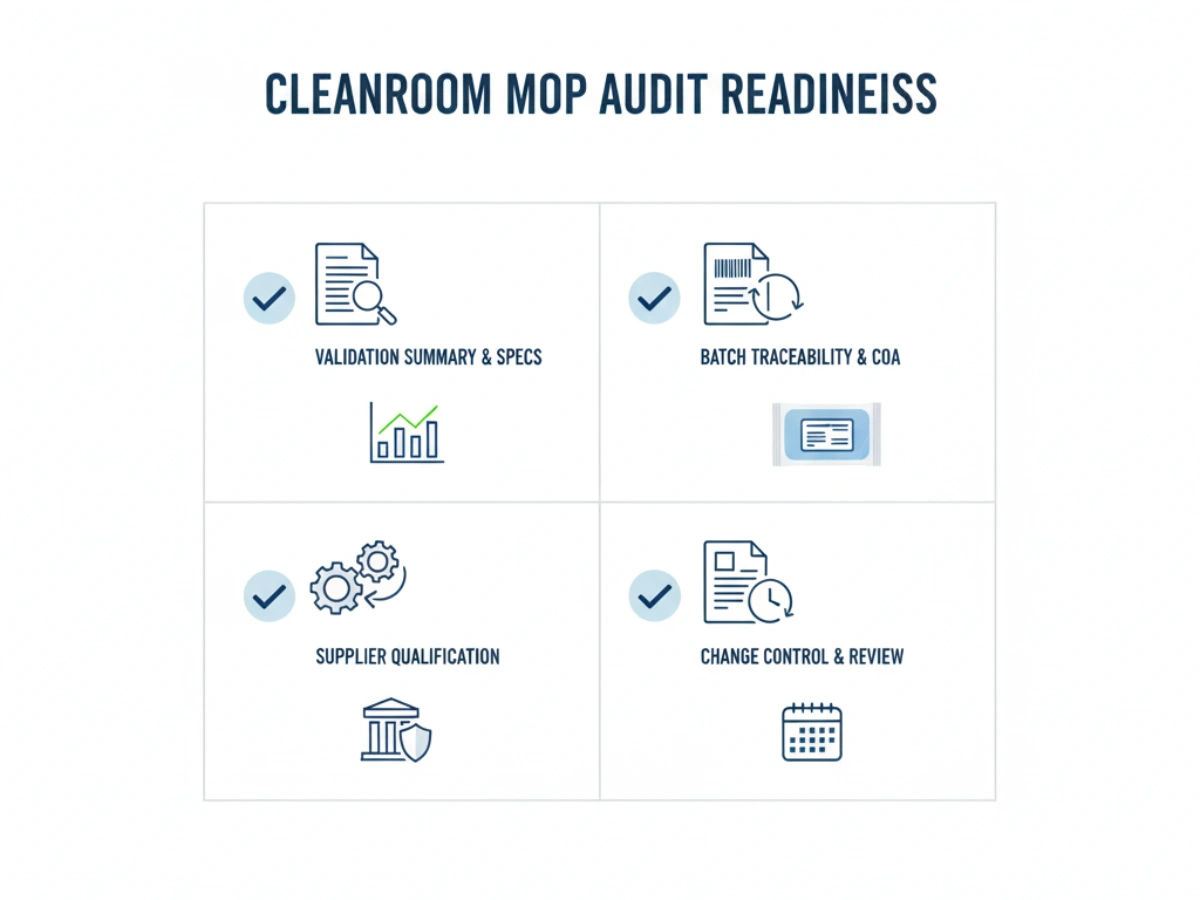
Pharmaceutical cleanroom mop OEM responsibilities for batch control, including change control, record retention, and re-validation triggers.
OEM maturity is demonstrated by proactive change control, documented records, and rapid retrieval of batch genealogy.

7. Common Traceability Gaps Found in Audits

  • عام COAS: Providing a "typical" analysis rather than batch-specific data.
  • Labeling Discrepancies: Batch numbers on the box that do not match the individual bags inside.
  • Broken Sterilization Trails: Inability to prove that Batch X was inside Sterilization Load Y.
  • Informal Change Control: Changing the edge-sealing method or fabric weight without a formal notification to the customer.

8. How Buyers Should Evaluate Batch Traceability

During OEM supplier qualification, QA teams should utilize the following checklist:

Checkpoint ضرورت
Batch Definition Is the batch size clearly defined and manageable?
Sample Retention Does the supplier keep retain samples for every lot?
Audit Access Can the supplier provide full raw material logs within 48 hours?
Physical Labeling Is the batch number resistant to cleanroom disinfectants (IPA)?

Related Compliance Resources

For a deeper dive into material specifications, refer to our technical pillar on cleanroom textile engineering.

To understand the requirements for vendor approval, see our guide on OEM supplier qualification and quality agreements.

10. Conclusion

Batch traceability is not merely a documentation exercise; it is the backbone of a defensible quality system. In the context of Grade A and B environments, the ability to track every fiber and sterilization cycle ensures that the cleaning process remains a controlled variable rather than an unknown risk.

Mature pharmaceutical QA teams prioritize suppliers who demonstrate total transparency in their batch records, viewing them as long-term partners in patient safety and regulatory compliance.

Request Batch-Traceable Mop Documentation

Ask for lot genealogy, batch-specific COAs, sterilization linkage, and change-control readiness to strengthen your audit narrative.

Request Documentation Package


فوری اقتباس کے لیے پوچھیں۔

ہم 1 کام کے دن کے اندر آپ سے رابطہ کریں گے، براہ کرم لاحقہ کے ساتھ ای میل پر توجہ دیں۔ "@midposi.com".

یہ مفت ہے!

چین میں کلین روم گارمنٹس کی فراہمی کے 9 مہلک نقصانات

ای کتاب 400
22

فوری اقتباس کے لیے پوچھیں۔

ہم 1 کام کے دن کے اندر آپ سے رابطہ کریں گے، براہ کرم لاحقہ کے ساتھ ای میل پر توجہ دیں۔ "*@midposi.com".

Seraphinite AcceleratorOptimized by Seraphinite Accelerator
Turns on site high speed to be attractive for people and search engines.