

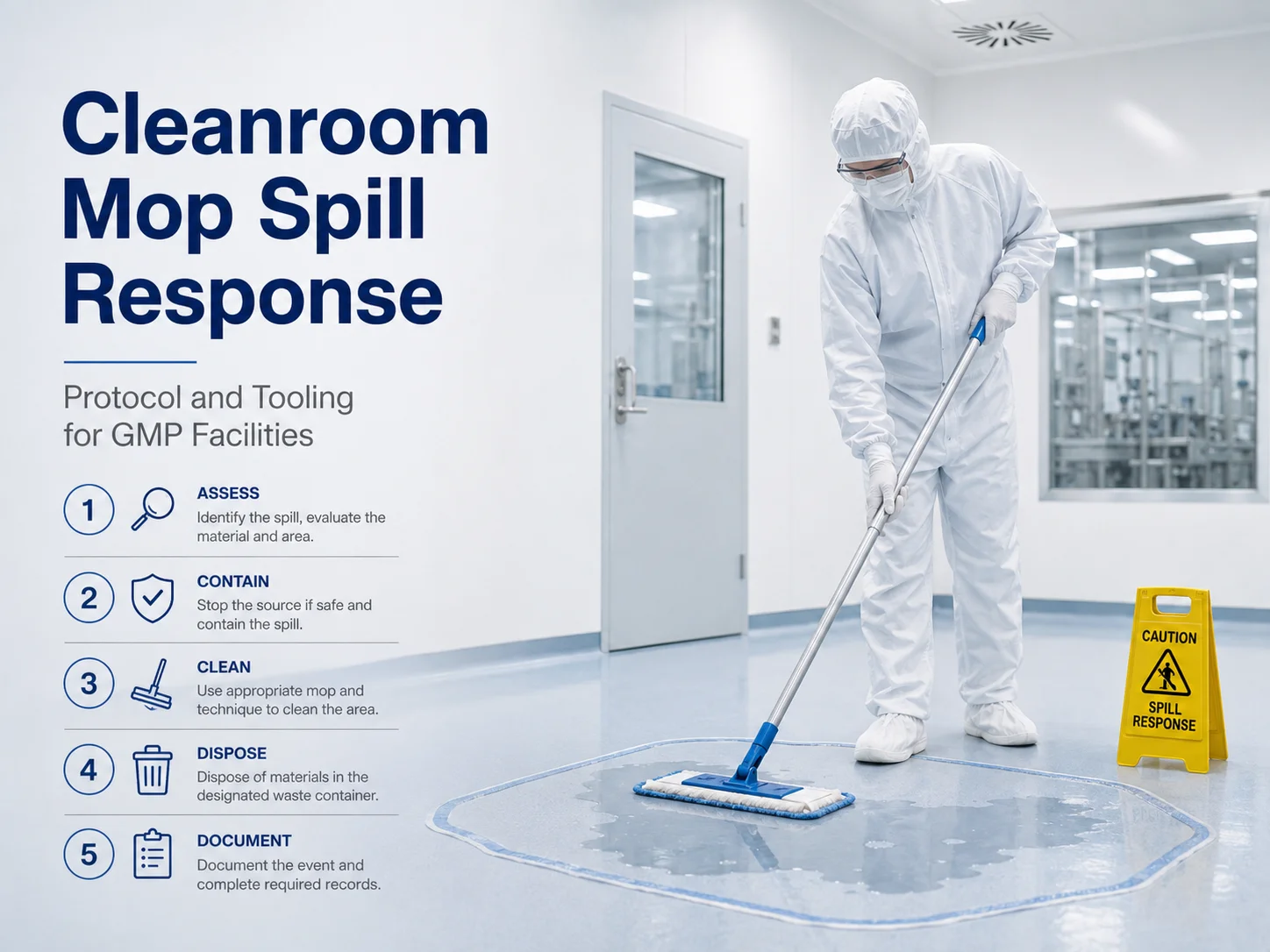
Environmental considerations in cleanroom consumable procurement have shifted from a niche concern to a mainstream governance issue. Pharmaceutical and biotech companies listed in the EU or filing with the SEC now face regulatory disclosure requirements under CSRD and proposed SEC climate rules — and cleanroom consumables, including mops, wipes, and garments, fall within Scope 3 (indirect emissions) reporting boundaries. For procurement managers and QA leads, the question is no longer whether sustainability matters, but how to assess it without compromising contamination control or GMP compliance.
Three converging pressures make this topic urgent for cleanroom operations teams:
This article does not claim that one type of cleanroom mop is universally “greener” than another. The environmental profile of a cleanroom mop program depends on facility-specific variables: consumption volume, contamination profile, laundry infrastructure, local waste regulations, and the cleanroom grades being served. What follows is a framework for making an informed assessment — not a pre-packaged conclusion. For a comprehensive overview of the product category, see the کلین روم ایم او پی سسٹم کا جائزہ.
The most common question sustainability managers ask about cleanroom mops is: “Which is better for the environment — disposable or reusable?” The honest answer is that neither is categorically better. Each option shifts the environmental burden to a different stage of the lifecycle. Disposable mops concentrate impact in raw material consumption and solid waste generation. Reusable mops concentrate impact in water use, laundry chemicals, and sterilization energy. A facility-by-facility assessment is the only valid approach.
The table below provides a factor-by-factor comparison. This is not a scorecard that produces a single “winner” — it is a tool for identifying which factors matter most in your facility’s specific context. For operational factors beyond environmental impact, see the ڈسپوزایبل بمقابلہ دوبارہ قابل استعمال کلین روم ایم او پی فیصلہ گائیڈ.
| Environmental Factor | ڈسپوزایبل کلین روم موپس | دوبارہ قابل استعمال کلین روم موپس | Key Context (Neither Is Inherently Better) |
|---|---|---|---|
| Raw material consumption per use cycle | Relatively higher — new materials consumed with each use; a facility discarding 500 mop heads per week consumes 500 units of raw material per week. | Relatively lower per use cycle — a reusable mop head used 75 times amortizes its raw material input across 75 cleaning events. | Depends on reuse cycle count. A reusable mop that fails after 10 cycles has a poor amortization ratio. A reusable mop that achieves 75-100 cycles spreads material input effectively. |
| Manufacturing energy per use cycle | Lower per unit; relatively higher when aggregated over total consumption. Each unit requires cutting, sewing, edge-sealing, and packaging. | Higher per unit; relatively lower when amortized over multiple cycles. More robust construction may require additional energy per unit manufactured. | Amortization is the critical variable. If a reusable mop achieves enough cycles, the per-cycle manufacturing energy can be substantially lower than single-use. |
| Water consumption | Minimal — no post-use laundering. Water use is limited to manufacturing processes. | Significant — industrial laundering requires water for washing, rinsing, and sanitizing. A commercial laundry may use 15-30 liters of water per kilogram of textile processed. | Water scarcity is region-specific. A facility in a water-abundant region faces a different calculus than one in a water-stressed region. Laundry water can be partially recycled in closed-loop systems. |
| Chemical use (detergents, disinfectants in laundry) | Minimal — no laundry chemicals involved. Only the disinfectant used during the actual cleaning procedure. | Significant — industrial laundry detergents, pH adjusters, and sometimes disinfectants. These chemicals enter wastewater streams and may require treatment before discharge. | Laundry chemical selection matters. Biodegradable detergents reduce aquatic toxicity burden. Facilities using on-site laundry should verify wastewater treatment capability for laundry effluent. |
| Solid waste volume | Relatively higher — each cleaning event generates one discarded mop head. Weekly volume can reach several hundred units for a multi-room facility. | Relatively lower while in service — but reusable mops eventually reach end-of-life and enter the waste stream. The waste is deferred, not avoided. | Disposable waste is continuous and predictable. Reusable end-of-life waste is intermittent and less predictable — which can complicate waste management planning and contracts. |
| Sterilization footprint | Gamma irradiation or ethylene oxide (EtO) sterilization at the manufacturing stage — energy-intensive per unit, particularly for gamma. EtO involves emissions control considerations. | Autoclaving at the facility or laundry — steam sterilization energy per cycle. The cumulative energy across 75 autoclave cycles can be substantial. | Different sterilization methods, different environmental profiles. Gamma irradiation may have a lower per-unit carbon footprint than repeated autoclaving — but this depends on the gamma facility energy source and autoclave efficiency. Direct comparison requires facility-specific data that is typically not publicly available. |
| Transportation emissions | Relatively higher — more frequent shipments to replenish consumed stock. Weekly or bi-weekly deliveries for a high-consumption facility. | Relatively lower per use cycle — shipments are less frequent; the reusable mop head is delivered once and remains in circulation. However, laundry transport (if off-site) adds a recurring transport loop. | Shipping frequency and distance are the dominant variables. A facility receiving weekly disposable mop shipments from a distant manufacturer has a higher transport footprint than one using locally laundered reusable mops. Reverse logistics for laundry must be counted. |
| Hazardous waste potential | Same risk profile — if contaminated with potent compounds, cytotoxic residues, or biohazard materials, the mop becomes hazardous waste regardless of whether it started as disposable or reusable. | Same risk profile — contamination classification depends on what the mop was exposed to during use, not on the mop type. | This factor is contamination-dependent, not mop-type-dependent. Facilities handling potent compounds should assess waste classification for all mop types equally. |
| End-of-life pathway | Typically incineration or landfill. Energy-from-waste incineration can recover some energy value. Landfill contributes to long-term solid waste accumulation. | After the final use cycle, the same pathways apply — incineration or landfill. The material has degraded through repeated laundering, potentially reducing any remaining recyclability. | Neither pathway offers a clear environmental advantage. Incineration with energy recovery may have a lower net impact than landfill, but this depends on the specific incineration facility and its energy recovery efficiency. |
| Practical recyclability | Very limited. Mixed materials (polyester knit, binding tape, stitching thread, labeling) and potential contamination make post-use recycling technically challenging and economically unviable in most regions. | Equally limited. Repeated laundering degrades fiber integrity. By end-of-life, the material quality is insufficient for fiber-to-fiber recycling. Downcycling (e.g., industrial rags, insulation fill) may be possible if the material is uncontaminated. | True closed-loop recycling for used cleanroom mops is rare across the industry. Claims of “recyclable cleanroom mops” should be scrutinized: ask what recycling infrastructure exists, where, and whether contaminated material is accepted. Currently, most cleanroom mops — disposable and reusable alike — ultimately follow incineration or landfill pathways. |
The comparisons above identify directions of environmental impact — not quantitative lifecycle assessment (LCA) results. A rigorous LCA requires facility-specific primary data (consumption volumes, laundry energy source, transport distances, waste treatment method) that is not publicly available. This table is a decision-structuring tool, not a verified environmental product declaration. Facilities undertaking formal ESG reporting should request supplier-specific data and consider commissioning a third-party LCA if cleanroom consumables are a material portion of their environmental footprint.
A cleanroom mop’s environmental impact is distributed across five distinct lifecycle stages. Each stage involves different types of environmental burden — carbon emissions, water consumption, chemical release, solid waste — and different degrees of data availability. Below is a stage-by-stage breakdown, with honest acknowledgment of where data is scarce.
The majority of cleanroom mop heads are constructed from polyester — either continuous-filament polyester knit or microfiber (split polyester/polyamide fibers). Polyester is a petrochemical-derived synthetic polymer. Its production involves crude oil or natural gas extraction, refining into purified terephthalic acid (PTA) and monoethylene glycol (MEG), and polymerization into polyethylene terephthalate (PET) resin.
The carbon footprint of virgin polyester fiber is estimated in published literature at approximately 5-7 kg CO2-equivalent per kilogram of fiber, though this varies with the energy source used in the production facility. Microfiber mops, which contain a polyamide component (typically nylon 6 or nylon 6,6), carry an additional raw material burden — polyamide production has a higher carbon intensity per kilogram than polyester.
Data gap: The specific carbon footprint of the polyester grades used in cleanroom mop manufacturing is not publicly available from mop manufacturers. The figures cited above are generic industry estimates for polyester fiber production and should not be treated as product-specific verified data. Buyers evaluating supplier environmental claims should request the supplier’s raw material sourcing documentation, including country of origin and fiber supplier identity.
Cleanroom mop manufacturing involves knitting or quilting the fabric, cutting to size, sewing edges, attaching binding tape or pocket sleeves, inserting labels, and packaging. The manufacturing energy footprint is dominated by knitting machinery and, where applicable, the thermal energy used in edge-sealing processes. For sterile mops, gamma irradiation or EtO sterilization adds a significant energy increment at this stage.
Manufacturing waste includes fabric offcuts from cutting operations, rejected units that fail visual or dimensional inspection, and packaging materials. The proportion of manufacturing scrap varies by production efficiency. Cleanroom-grade manufacturing, with its requirement for controlled environments and documented quality processes, may generate more rejected units than general textile manufacturing — but this is an assumption, not a confirmed data point.
Data gap: Energy consumption per mop head manufactured, manufacturing scrap rates, and sterilization energy intensity are not publicly disclosed by most cleanroom mop manufacturers. Buyers should request this data as part of supplier environmental questionnaires, recognizing that many suppliers may not yet have it available.
Cleanroom mops are manufactured predominantly in Asia and shipped globally to pharmaceutical and biotech facilities in North America, Europe, and other regions. Transportation emissions depend on shipping mode (sea freight vs air freight), distance, and shipment frequency.
For disposable mops, the transportation loop is continuous: new stock is shipped at the rate of consumption. For reusable mops, the transportation loop has two components — the initial product shipment (less frequent) and the laundry transport loop (recurring, if using an off-site laundry). If the laundry facility is closer to the end-user than the manufacturing facility, the recurring transport impact for reusable mops may be lower than the recurring shipment impact for disposables.
The use phase is where the environmental profiles of disposable and reusable mops diverge most sharply.
Disposable mop use phase: The mop is removed from packaging, used for one cleaning session or zone, and discarded. The in-use environmental impact is limited to the disinfectant or cleaning solution applied to the mop during cleaning — which is the same regardless of mop type. Sterile disposable mops have already been sterilized at the manufacturing stage; no additional sterilization energy is consumed at the facility.
Reusable mop use phase: After each use (or after a defined number of uses, per facility SOP), the mop head is sent to laundry. Industrial laundering for cleanroom textiles involves multiple wash cycles at elevated temperatures (typically 60-90 degrees Celsius for cleanroom-grade laundering), rinsing, and drying — all of which consume water, energy, and detergents. If the mop requires re-sterilization before the next use, an autoclave cycle adds further energy and water consumption.
Data gap: The per-cycle energy and water consumption of cleanroom-grade industrial laundering is facility-specific and depends on laundry equipment efficiency, load size, water recycling systems, and the energy source for water heating. A facility using an on-site laundry powered by renewable electricity with water recycling has a fundamentally different use-phase footprint from a facility sending mops to an off-site laundry using natural gas heating and municipal water without recycling.
This stage is covered in detail in the Disposal Considerations section below. In summary: most cleanroom mops — disposable and reusable alike — are ultimately incinerated or landfilled. True material recycling of used cleanroom mops is rare. The environmental difference between end-of-life pathways (incineration with energy recovery vs landfill) is real but modest relative to the differences in the use phase.
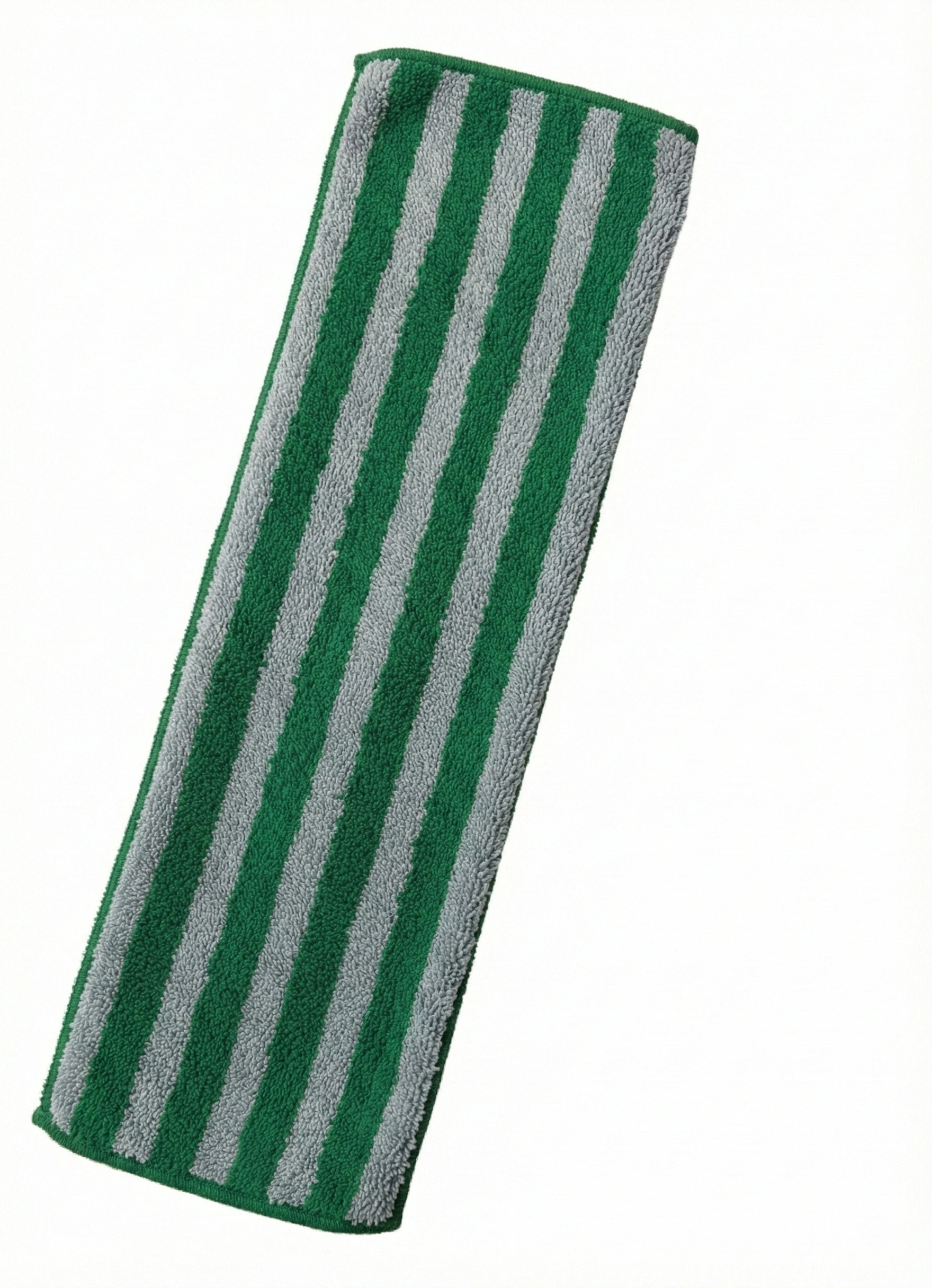
Waste classification — not mop type — is the single most important variable in the environmental impact of cleanroom mop disposal. A mop contaminated with a potent compound follows a fundamentally different disposal pathway than one used with routine disinfectants, regardless of whether it was designed as disposable or reusable.
The boundary between non-hazardous and hazardous waste for cleanroom mops depends on what the mop was exposed to during use:
| Waste Classification | Typical Contamination Scenario | Disposal Pathway | Cost Implication |
|---|---|---|---|
| Non-hazardous solid waste | Mops used with routine disinfectants (quaternary ammonium compounds, hydrogen peroxide, isopropyl alcohol) in standard cleanroom cleaning operations. No exposure to active pharmaceutical ingredients, potent compounds, or biohazard materials. | Standard waste to landfill or municipal waste-to-energy incineration. Follows local municipal solid waste regulations. | Lowest disposal cost. Often managed within the facility’s general waste contract. |
| Regulated medical waste | Mops exposed to biological agents, blood products, or used in biocontainment areas (BSL-2 or higher). Also applies to mops from vaccine manufacturing or cell therapy suites where biological contamination is present. | Autoclave treatment followed by landfill, or dedicated medical waste incineration. Must follow regulated medical waste handling, packaging, and manifest requirements. | Higher — medical waste disposal is typically 3-5 times more expensive per kilogram than non-hazardous solid waste disposal, depending on regional pricing. |
| Hazardous waste | Mops exposed to potent compounds, cytotoxic drugs, genotoxic materials, or solvents classified as hazardous under local regulations (e.g., RCRA in the US, Hazardous Waste Directive in the EU). Applies to mops used in areas where active pharmaceutical ingredients with occupational exposure limits (OELs) below a defined threshold are handled. | Hazardous waste incineration at a licensed facility. Requires hazardous waste manifest, licensed transporter, and documented chain of custody. May be subject to transboundary movement restrictions. | Highest — hazardous waste incineration costs are typically 5-10 times higher than non-hazardous waste disposal per kilogram. Transport, manifesting, and compliance documentation add further cost. |
Procurement insight: For facilities where a meaningful proportion of used mops fall into the hazardous or regulated medical waste categories, waste disposal cost becomes a significant total-cost-of-ownership driver. In these scenarios, any strategy that reduces the total mass of mop waste — including extending reusable mop life or optimizing change-out frequency — delivers a direct operational cost benefit alongside the environmental benefit.
Incineration with energy recovery (waste-to-energy): The most common disposal pathway for cleanroom mop waste in regions with developed waste-to-energy infrastructure (much of Western Europe, Japan, parts of North America). The polyester material in mop heads has a moderately high calorific value — approximately 20-25 MJ/kg, comparable to coal — meaning it can contribute to energy recovery in a well-operated incineration facility. However, the environmental benefit of energy recovery must be weighed against the CO2 emissions from combusting a fossil-fuel-derived material.
Landfill: The default pathway in regions without waste-to-energy infrastructure. Polyester is not biodegradable in landfill conditions — it will persist effectively indefinitely. Landfill also carries risks of leachate generation and methane emissions from the organic fraction of the waste stream (though the polyester mop material itself does not generate methane). From a climate perspective, landfill of polyester mops is generally considered a worse outcome than incineration with energy recovery, but the difference depends on the specific landfill’s gas capture system and the incinerator’s energy recovery efficiency.
Regulated medical waste incineration: Required for mops classified as regulated medical or hazardous waste. These incinerators operate at higher temperatures (typically above 1,000 degrees Celsius) than municipal waste incinerators and are subject to more stringent emissions controls. The higher temperature ensures destruction of organic contaminants but increases energy consumption per kilogram of waste processed.
The single most effective waste reduction strategy for a reusable cleanroom mop program is extending the number of validated use cycles per mop head. If a facility’s current practice achieves approximately 50 cycles per mop head and can be extended to 75 cycles through better maintenance, the annual consumption of mop heads — and the associated raw material, manufacturing, and disposal burden — decreases by one-third. This is a more immediate and demonstrable environmental gain than switching mop types or pursuing unproven recycling claims.
Key practices that support extended service life include:
For a comprehensive guide to mop maintenance practices, inspection criteria, and validated cycle management, see the کلین روم ایم او پی کی بحالی اور لمبی عمر کا رہنما.
The following framework is designed for procurement managers, facility managers, and sustainability leads who need actionable steps — not theoretical models. Each step is independent; a facility can implement the steps in any order based on what is achievable within its current operational constraints.
Before making any changes, measure what you currently use. For a defined period (e.g., one calendar quarter), record: total mop heads consumed (by type — disposable vs reusable, by cleanroom grade), average cycles per reusable mop head, disposal volume by waste classification (non-hazardous, medical, hazardous), and total disposal cost. This baseline makes improvement measurable.
Send a structured data request to your current cleanroom mop supplier(s) covering: raw material composition (fiber type, weight, any recycled content), manufacturing location and energy source, available end-of-life guidance, and any third-party environmental certifications (e.g., OEKO-TEX, bluesign, GRS for recycled content). Be prepared that many suppliers — including large ones — may not yet have comprehensive environmental data. This request itself signals to the supply chain that environmental transparency is becoming a procurement criterion.
The lowest-impact mop is the one you do not use. Before debating disposable vs reusable, examine whether current consumption volume is justified. Are mop heads being changed more frequently than the validated SOP requires? Are serviceable reusable heads being retired early due to cosmetic staining rather than functional degradation? A 10-15% reduction in unnecessary consumption delivers an immediate environmental benefit regardless of mop type.
Ensure that used mops are classified and segregated into the correct waste stream at the point of disposal — not retrospectively. Co-mingling non-hazardous mops with hazardous waste unnecessarily increases hazardous waste volume and cost. Clear labeling, color-coded disposal containers, and operator training on waste segregation criteria are low-cost, high-impact interventions.
If you use reusable mops with on-site or contracted laundry, commission an audit of the laundry process from an environmental perspective. Document: water consumption per kilogram of textiles laundered, energy source for water heating, detergent type and biodegradability, and wastewater treatment pathway. Optimize laundry parameters (load size, temperature, cycle duration) for the minimum conditions required to achieve the validated cleanliness standard — avoiding over-processing that wastes energy and degrades mop material.
If your facility is certified to ISO 14001 or preparing for certification, mop waste reduction should be documented as an environmental aspect with defined objectives and targets. For example: “Reduce cleanroom mop head consumption by 15% (measured in units per square meter of cleanroom area cleaned) within 12 months.” This creates organizational accountability beyond the individual procurement or facility manager.
When the next mop supply contract comes up for review or tender, add environmental criteria to the buyer evaluation framework. Weight environmental criteria appropriately — they should influence the decision but not override contamination control requirements. Suggested criteria: supplier has documented environmental policy (pass/fail), supplier provides material composition and origin data (scored), supplier provides end-of-life disposal guidance (scored), supplier has third-party environmental certification for raw materials (bonus).
Mop program environmental performance is not solely a procurement issue, a facility issue, or a QA issue — it is all three. Schedule a brief quarterly review involving procurement, facility operations, QA, and the sustainability/EHS lead to review the baseline metrics established in Step 1, track progress, and identify new improvement opportunities. This institutionalizes the sustainability discussion and prevents it from being deprioritized when operational pressures increase.
EU GMP Annex 1 (Manufacture of Sterile Medicinal Products) does not directly regulate the environmental impact of cleanroom consumables. Its focus is contamination control. However, Annex 1’s emphasis on validated, documented, and risk-based cleaning processes has an indirect environmental implication: a well-validated cleaning program generates fewer cleaning failures, fewer re-clean events, and less wasted consumable material. Conversely, an Annex 1 remediation response to a contamination event can consume a disproportionate volume of mops, wipes, and disinfectants in a short period — a spike in environmental impact that a well-designed preventive cleaning program helps avoid.
Additionally, Annex 1’s requirements for documented contamination control strategy (CCS) provide a natural structure within which environmental aspects of cleaning consumables can be recorded. Facilities that already maintain a CCS document can add an environmental considerations section without creating a new governance framework. For grade-specific mop selection that supports Annex 1 compliance, see the جی ایم پی کلین روم ایم او پی گریڈ سلیکشن گائیڈ.
ISO 14001 is the international standard for environmental management systems. It requires organizations to identify their environmental aspects and impacts, establish objectives and targets for improvement, and demonstrate continual improvement. Cleanroom mop programs can be identified as an environmental aspect under ISO 14001 — specifically under the categories of “waste generation” and “resource consumption.”
For a pharmaceutical facility certified to ISO 14001, the following mop-related environmental aspects may be relevant:
ISO 14001 certification auditors may ask to see evidence that these aspects have been identified, evaluated, and where significant, addressed through objectives and action plans. The practical steps framework in the previous section provides a ready structure for ISO 14001 documentation.
For pharmaceutical companies subject to mandatory ESG reporting — particularly under the EU Corporate Sustainability Reporting Directive (CSRD) or proposed SEC climate disclosure rules — cleanroom consumables fall within Scope 3 (Category 1: Purchased Goods and Services) emissions. Scope 3 reporting requires companies to estimate the upstream carbon footprint of purchased products.
In practice, the contribution of cleanroom mops to a large pharmaceutical company’s total Scope 3 emissions is likely to be small relative to categories such as purchased raw materials, capital goods, or business travel. However, two factors make mop-related ESG reporting relevant:
There is no universal answer. Disposable mops have a higher raw material consumption and solid waste impact per use. Reusable mops have higher water, detergent, and laundry energy consumption per use. The overall environmental outcome depends on facility-specific variables: how many cycles the reusable mop achieves, the laundry energy source, water scarcity in the region, and whether used mops are incinerated or landfilled. A facility-level assessment considering all these variables is the only valid approach. Claims that one type is categorically “greener” should be treated with skepticism.
In practice, very rarely. Most used cleanroom mops cannot be recycled through standard textile recycling streams for three reasons: (1) they are constructed from mixed materials (polyester fabric, binding tape, stitching thread) that are difficult to separate mechanically; (2) post-use chemical or biological contamination makes the material unacceptable to recyclers; and (3) even if uncontaminated, the small volumes involved (relative to consumer textile waste) make dedicated collection and recycling infrastructure economically unviable. If a supplier claims their mops are “recyclable,” ask them to specify: what recycling infrastructure exists, where it is located, whether contaminated material is accepted, and what the recycled output is used for. In most cases, the practical end-of-life pathway for cleanroom mops — disposable and reusable alike — is incineration or landfill.
Classification depends on what the mop was exposed to during use, not on the mop type. Mops used only with routine disinfectants (quaternary ammonium compounds, hydrogen peroxide, isopropyl alcohol) in standard cleanroom cleaning are generally classified as non-hazardous solid waste. Mops exposed to biological agents or used in biocontainment areas are regulated medical waste. Mops exposed to potent compounds, cytotoxic drugs, or hazardous solvents are hazardous waste and must be managed under applicable hazardous waste regulations. Facilities should have a documented waste classification procedure that covers all cleaning consumables, including mops. When in doubt, consult your facility’s EHS officer or waste management contractor.
No. EU GMP Annex 1 regulates contamination control for sterile medicinal product manufacturing. It does not contain requirements or guidance on the environmental impact of cleaning consumables. However, Annex 1’s emphasis on validated, documented, and risk-based cleaning processes has an indirect environmental benefit: a well-validated program generates fewer cleaning failures and less wasted material. Facilities can incorporate environmental considerations into their contamination control strategy (CCS) documentation if they choose to do so, but this is not an Annex 1 requirement.
At minimum, request: (1) raw material composition — fiber type(s), weight, any recycled content; (2) country of manufacture and, if available, the primary energy source used in the manufacturing facility; (3) packaging composition and recyclability; (4) end-of-life disposal recommendations; and (5) any third-party environmental certifications held by the product or manufacturing facility. Be prepared that many suppliers — including large ones — may not yet have comprehensive environmental data for cleanroom consumables. Start with what is available and document data gaps transparently in your ESG reporting.
As of 2026, no published, peer-reviewed lifecycle assessment specifically for cleanroom mops has been identified. Generic LCA data for polyester textiles exists in academic and industry databases, but this data does not account for cleanroom-specific factors: controlled manufacturing environments, sterilization processes (gamma, EtO, autoclave), cleanroom-grade laundering requirements, or hazardous waste disposal pathways. A facility that needs LCA data for ESG reporting should consider two approaches: (1) request product-specific environmental data from the supplier, acknowledging that comprehensive LCA data may not exist yet; or (2) commission a simplified screening LCA using generic textile data with conservative assumptions about cleanroom-specific adders. In either case, document the limitations of the data transparently.
For reusable mop programs: extend validated cycle counts through better maintenance (visual inspection, laundry process optimization, segregation by contamination level), audit consumption against SOP requirements to identify unnecessary change-outs, and verify that mop heads are retired based on functional condition rather than cosmetic staining or calendar age. For disposable mop programs: right-size packaging and order quantities to avoid expiry-related waste, audit whether mop heads are being changed more frequently than the validated cleaning protocol requires, and ensure correct waste segregation so that non-hazardous mops are not unnecessarily routed to hazardous waste disposal. In both cases, a baseline consumption audit is the necessary first step.
Sustainability should be a weighted criterion in procurement decisions — not the dominant criterion, but not ignored either. The hierarchy of procurement criteria for a GMP cleanroom mop remains: (1) contamination control performance — does the mop meet the technical requirements for the cleanroom grades being served?; (2) supply reliability and quality consistency — can the supplier deliver consistent product on a reliable schedule?; (3) total cost of ownership, including purchase price, disposal cost, and laundry cost; and (4) environmental performance, including supplier environmental data availability, material composition transparency, and waste reduction potential. Sustainability can serve as a tiebreaker between two technically equivalent options and should be incorporated into the supplier evaluation scorecard with a reasonable weighting (e.g., 10-15% of the total evaluation score).
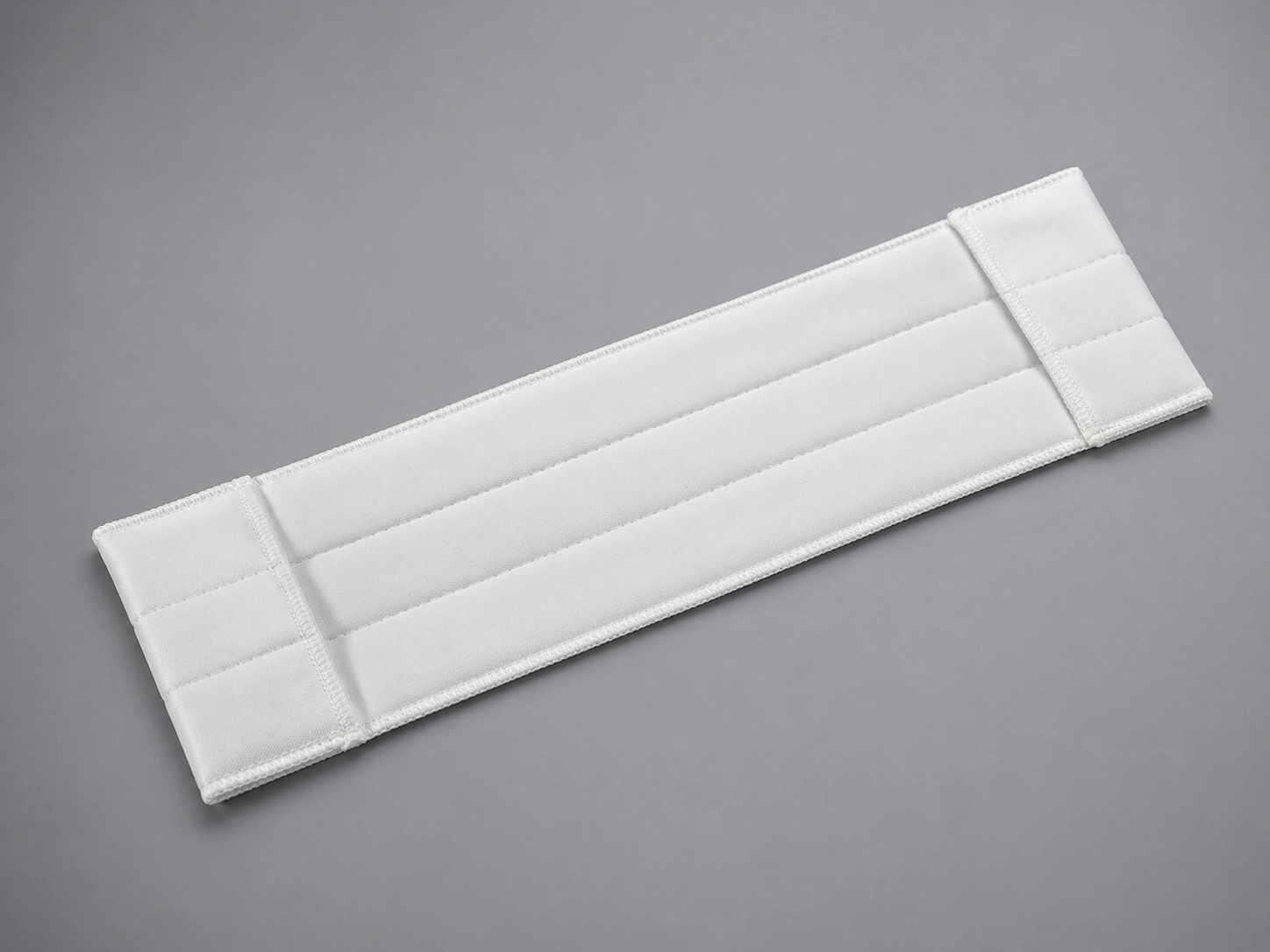
MIDPOSI’s white cleanroom mop series is available in both sterile and non-sterile configurations, in 40g, 55g, and 65g weights. Whether your facility uses a disposable, reusable, or mixed mop strategy, our products are designed for structured contamination-control cleaning programs in pharmaceutical, biotech, and medical device cleanrooms. We provide material composition data to support your procurement evaluation and sustainability documentation.
Built for structured cleanroom cleaning programs in pharmaceutical, biotech, and medical device facilities.


 Optimized by Seraphinite Accelerator