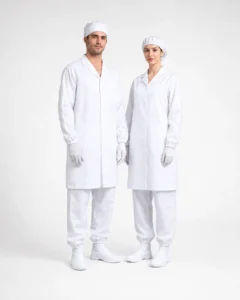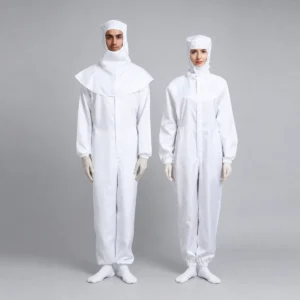
A sterile cleanroom suit is the outer garment system that operators wear in EU GMP Grade B areas and for access or interventions into Grade A. Buyers searching for “sterile suit”, “sterile coverall” or “sterile garments” usually need two answers at once: what Annex 1 actually requires, and what to check before they commit to a supplier. This guide covers both, using the wording of EU GMP Annex 1 (2022) and a practical checklist for QA and procurement teams.
Quick answer: a sterile suit is a low-shedding cleanroom coverall (with sterile hood, mask, eye coverings, gloves and over-boots) that has been through a validated sterilization process and is packed so that it stays sterile until it is donned. Annex 1 requires sterilized protective garments at every entry into Grade B or Grade A. Reusable suits must be laundered in a qualified process and replaced at a maximum number of laundry and sterilization cycles set during garment qualification.
What makes a cleanroom suit “sterile”
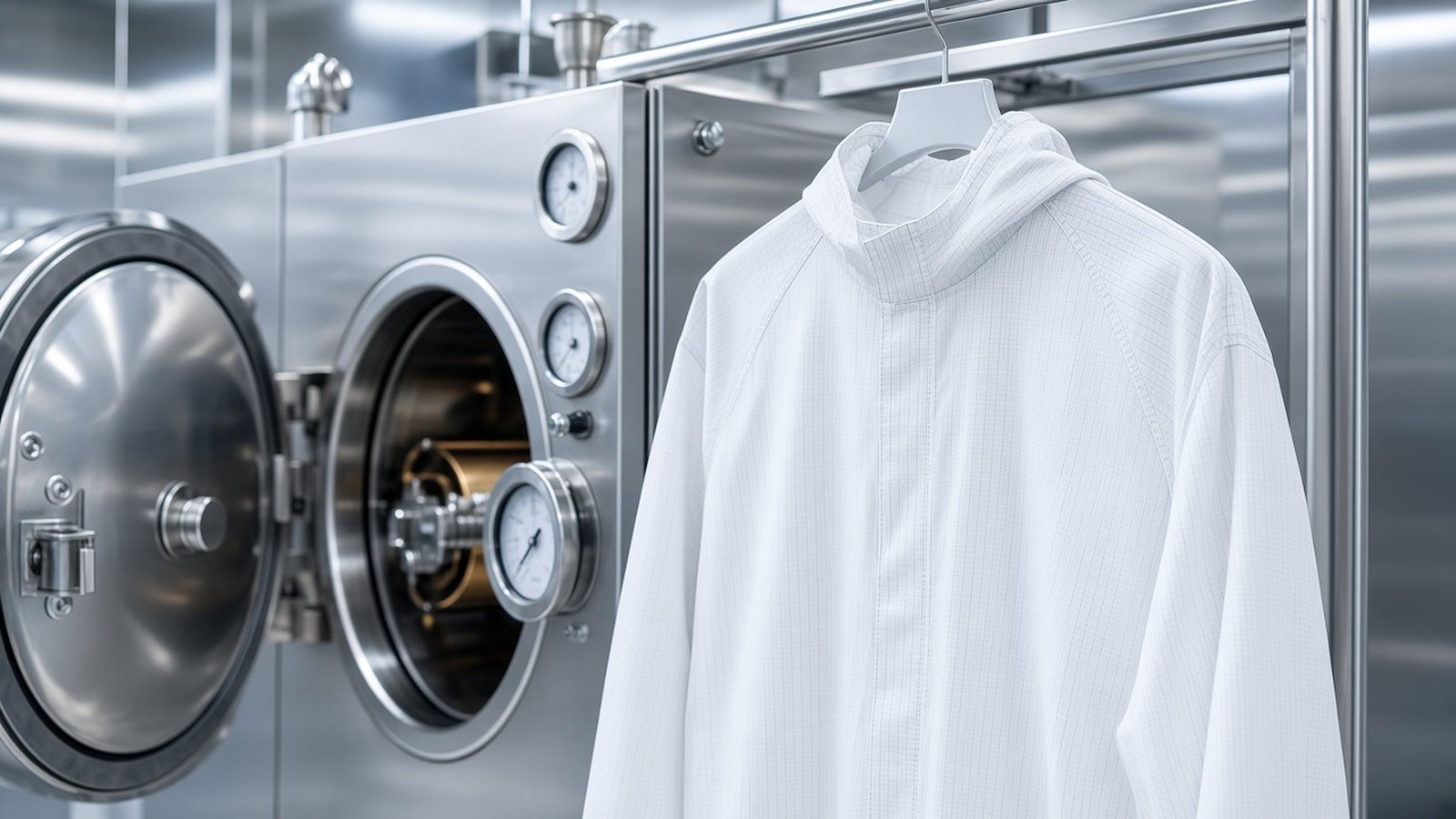
Every cleanroom suit is designed to limit particles from the wearer. A sterile suit adds a second requirement: it must also be free of viable microorganisms when the operator puts it on. That depends on three things working together:
- The garment: low-linting fabric, sealed or covered seams, protected closures, and cuffs and ankles that close tightly so that skin and inner clothing are fully enclosed.
- The process: a validated sterilization method, usually steam autoclaving for reusable garments or irradiation for single-use garments, with defined loads, cycle parameters and records.
- The packaging and handling: folding and packing that let the operator don the suit without touching its outer surface, and packaging that is checked as intact and within its hold time before use.
A suit that is low-linting but not sterilized is a cleanroom suit, not a sterile suit. A sterilized suit that sheds fibers or has open seams does not meet Annex 1 either. Buyers need both.
What EU GMP Annex 1 requires
Annex 1 section 7 sets out the clothing expectations for each grade. For Grade B, including access and interventions into Grade A, it says (paragraph 7.13 i) that operators should wear:
- garments dedicated for use under the sterilized suit, put on before gowning;
- sterilized, non-powdered rubber or plastic gloves while donning the sterile garments, and a second pair of sterile gloves over the sleeves;
- sterile headgear that encloses all hair, including facial hair, tucked into the neck of the suit when it is separate;
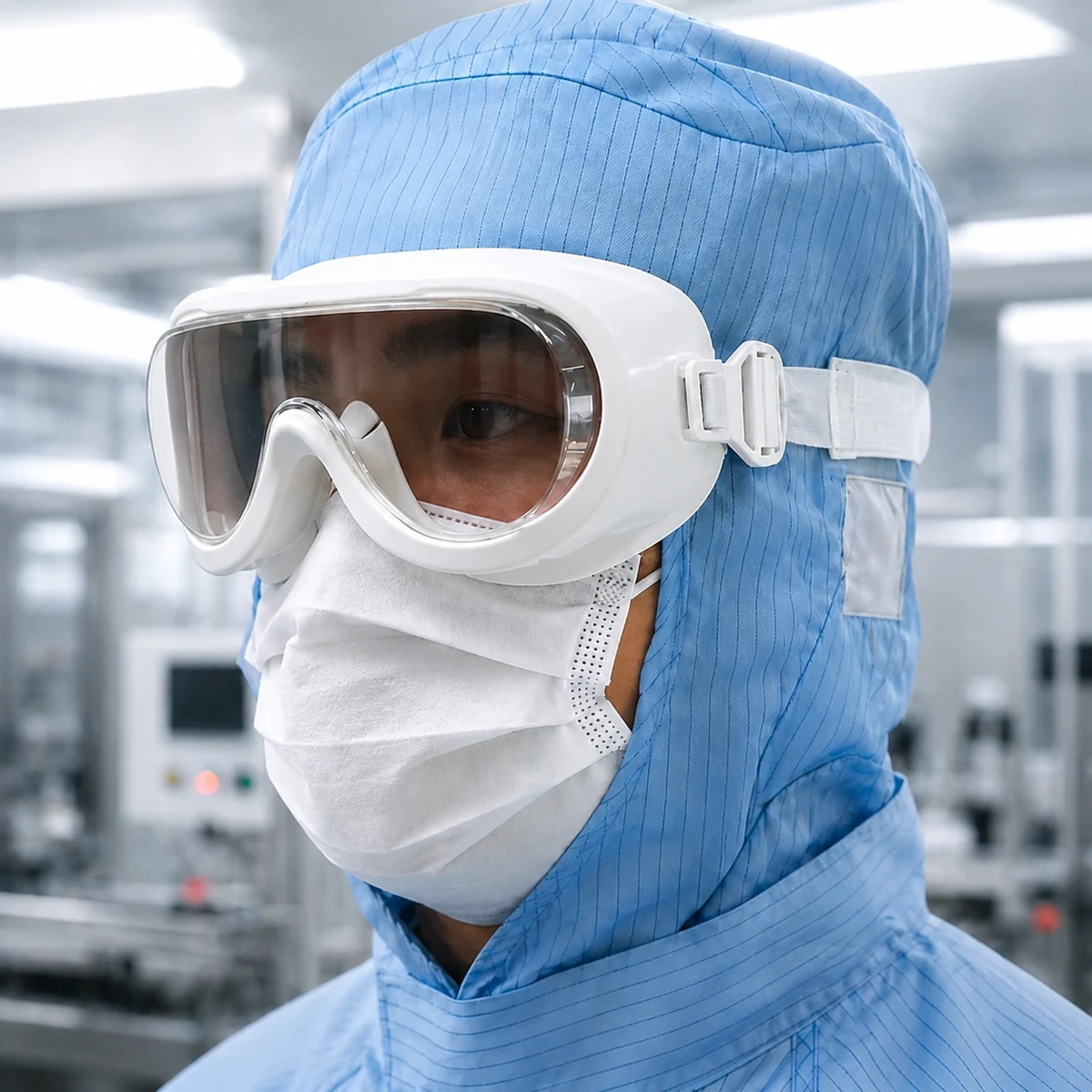
- a sterile face mask and sterile eye coverings, such as goggles, so that all facial skin is covered;
- sterilized footwear, such as over-boots, with the trouser legs tucked inside.
Annex 1 also states that “the protective clothing should minimize shedding of fibres or particles and retain particles shed by the body”, and that particle shedding and particle retention efficiencies should be assessed during garment qualification.
Other clauses that shape a sterile suit program:
- Every entry (7.15): operators entering Grade B or A gown into clean, sterilized protective garments of an appropriate size at each entry. The maximum time a sterile gown may be worn during a shift is defined during garment qualification.
- Before use (7.11): garments are visually checked for cleanliness and integrity before and after gowning. For sterilized garments, staff confirm that they went through sterilization, are within their hold time and that the packaging is intact.
- Replacement (7.11): reusable garments are replaced if damage is found, or at a set frequency determined during qualification.
- Laundry (7.17): reusable clothing is cleaned in a segregated laundry using a qualified process, inspected after washing, and managed against a maximum number of laundry and sterilization cycles.
Sterile suit requirements by cleanroom grade
| Grade | Typical outer garment in Annex 1 | Sterile? |
|---|---|---|
| Grade A/B | Coverall with sterile hood, mask, eye coverings, two pairs of sterile gloves and sterile over-boots | Yes, at every entry |
| Grade C | Single or two-piece trouser suit gathered at the wrists, high neck, hair covered, disinfected shoes or overshoes | Not required by default |
| Grade D | General protective suit, hair covered, disinfected shoes or overshoes | Not required by default |
In Grade C and D, gloves and a face mask may still be required when the Contamination Control Strategy (CCS) identifies a risk. For details on those grades, see our guide to Grade C cleanroom requirements. For Grade B gowning steps, see proper gowning for Grade B areas and the Annex 1 gowning procedures guide.
Reusable autoclavable vs single-use sterile suits
| Option | Works well when | Points to check |
|---|---|---|
| Reusable autoclavable suit | Daily aseptic work with a qualified cleanroom laundry and steam sterilization | Maximum cycle count, inspection criteria, hold time after sterilization, laundry partner qualification |
| Single-use pre-sterilized suit | Low or irregular use, visitors, campaigns, or sites without access to a cleanroom laundry | Sterility documentation per lot, shelf life, waste volume, cost per entry at your usage rate |
Many pharmaceutical sites use reusable suits for routine shifts because the cost per entry falls as garments are reused. The trade-off is that the laundry and sterilization process becomes part of the garment’s qualification. For a fuller comparison, read autoclavable vs disposable cleanroom garments and how many times cleanroom garments can be autoclaved.
Design features to check on a sterile coverall
When you compare sterile suits, look past the product photo and check how each design detail supports Annex 1:
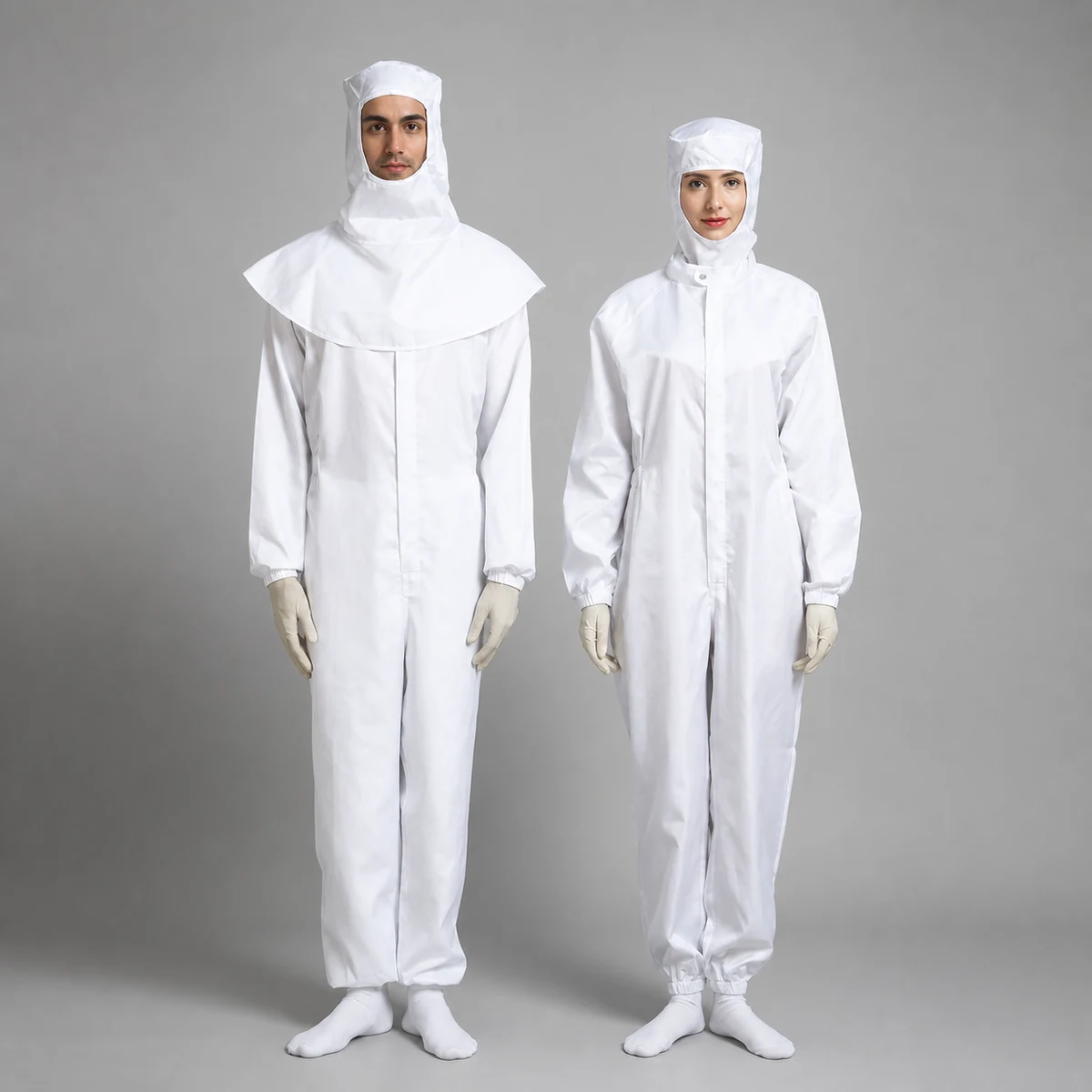
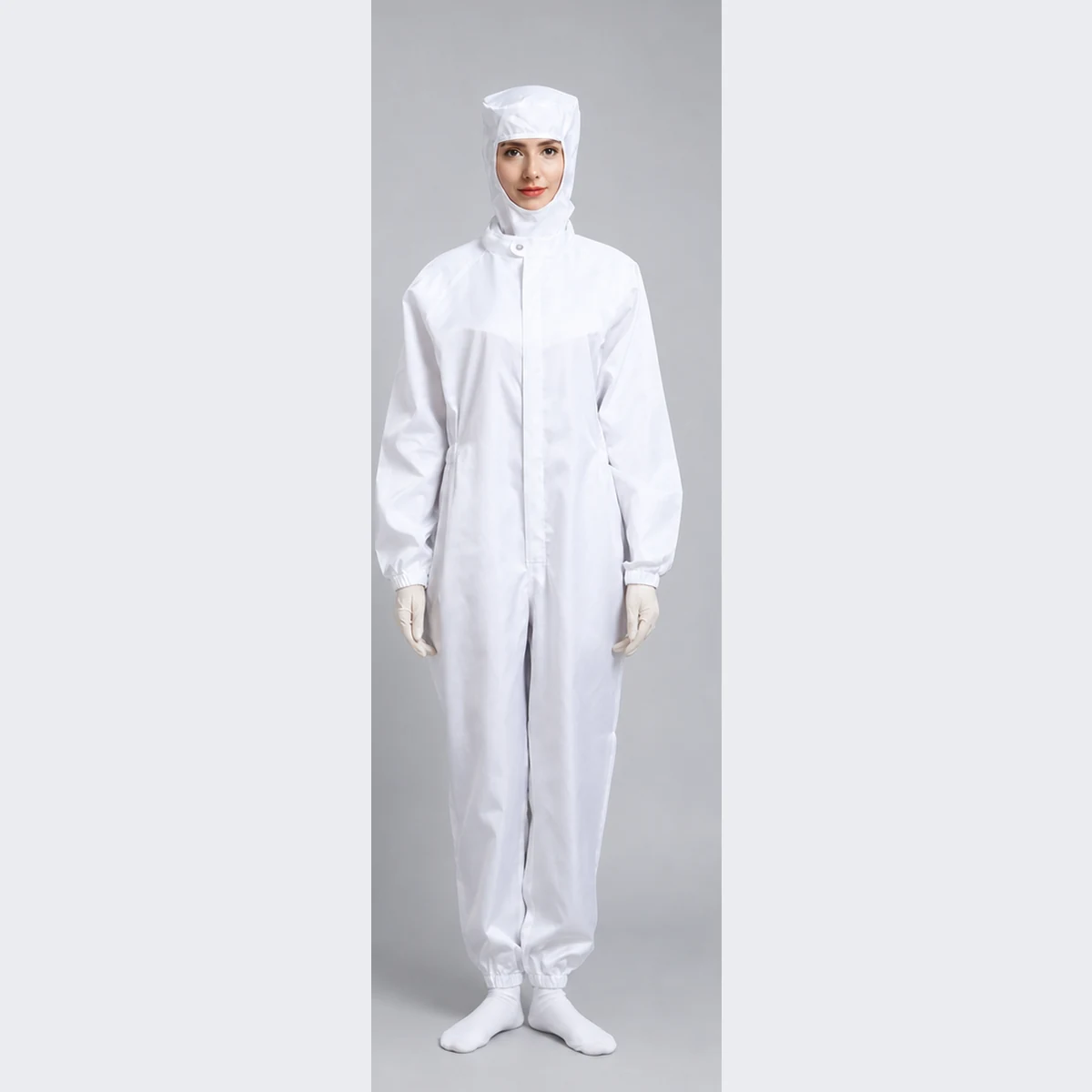
- Hood interface: an attached hood, or a separate hood with a long cape that tucks into the neck of the coverall. The hood must work with the mask and goggles so that no facial skin is exposed.
- Front closure: a zipper or snap placket covered by a fabric flap, so the closure itself does not shed or snag.
- Cuffs and ankles: elastic or knitted cuffs that sit cleanly under the second glove, and leg openings that tuck into over-boots or connect to socks.
- Seams: construction that limits fiber release from cut edges.
- Fabric: continuous filament polyester is common for reusable suits; a conductive grid or stripe is used where static control matters. Ask for fabric and finished garment test reports rather than relying on marketing claims.
- Size range and fit: Annex 1 asks for garments “of an appropriate size”. A suit that is too tight strains seams; a suit that is too loose pumps particles. See the cleanroom garment sizing and fit guide.
- Folding and packing: garments should be folded so that operators can don them without touching the outer surface or letting them touch the floor.
What to qualify before you switch suppliers
A sterile suit is only as good as the evidence behind it. Before approving a new supplier or a new garment style, most QA teams build a short qualification package:
- Fabric and finished garment test reports, such as particle, filtration and ESD tests where relevant.
- A defined laundry and sterilization process (in-house or through a cleanroom laundry partner) and the maximum number of cycles for each garment.
- Visual inspection criteria for damage, stains and closure function after each cycle.
- Hold time after sterilization and the maximum wear time per shift.
- A size matrix and stock plan so that each operator gets an appropriate size at every entry.
- Gowning qualification for operators using the new suit, as described in Annex 1.
Garment changes affect the CCS, so plan a trial period with samples before switching a full gowning program.
How MIDPOSI supports sterile gowning programs
MIDPOSI has manufactured cleanroom garments since 2004. The company is ISO 13485 certified, holds a CE certificate, and supplies reusable garments suitable for EU GMP Grade A/B, C and D. Our garments are rated for up to 100 autoclave cycles, and test reports (particle, filtration and ESD) are available on request. See quality and certifications for details.
You can build a complete Grade B set from one supplier:
- Autoclavable cleanroom coveralls, including the autoclavable cleanroom suits and coveralls range
- Autoclavable hoods and autoclavable cleanroom goggles
- Autoclavable cleanroom shoes and socks
- Under-layers worn beneath the sterile suit, as Annex 1 describes for Grade B
Production orders start at 50 pieces per style, samples and trial orders start at 10 pieces, and lead time is about 25 days. OEM and private label orders follow the same terms. To plan a set, try the cleanroom garment selector, then use the cleanroom quote estimator to estimate quantities before you request a quote.
FAQ
What is the difference between a cleanroom suit and a sterile suit?
A cleanroom suit limits particles from the wearer. A sterile suit does the same job and has also been through a validated sterilization process, with packaging that keeps it sterile until use. Annex 1 requires sterilized garments in Grade B and for access to Grade A.
Do sterile suits need to be changed at every entry?
Yes for Grade B and A. Annex 1 paragraph 7.15 says operators should gown into clean, sterilized protective garments at each entry, and the maximum wear time during a shift is set during garment qualification.
How many times can a reusable sterile suit be autoclaved?
No single number applies to all garments. Annex 1 asks each site to set a maximum number of laundry and sterilization cycles during qualification. MIDPOSI garments are rated for up to 100 autoclave cycles; your own validation confirms the limit you use.
Is a sterile suit required in Grade C?
Not by default. Annex 1 describes a single or two-piece trouser suit for Grade C. Some sites choose sterilized garments in Grade C for specific high-risk tasks identified in their CCS.
Get samples or a quote
Tell us your cleanroom grades, the suit style you use today and your expected monthly quantities. We will suggest a matching coverall, hood, goggle and footwear set and send samples from 10 pieces. Send an inquiry through our contact form or message us on WhatsApp.