عمليات غرف الأبحاث المعقمة
إجراءات تنظيف غرف الأبحاث ISO 5: دليل خطوة بخطوة للبيئات الدوائية المعقمة
ISO 5 cleanrooms require the strictest contamination control. This guide explains the correct cleaning sequence, unidirectional mopping technique, disinfectant strategy, environmental monitoring feedback, and documentation requirements used in pharmaceutical aseptic manufacturing.
ما هو تنظيف غرف الأبحاث ISO 5؟
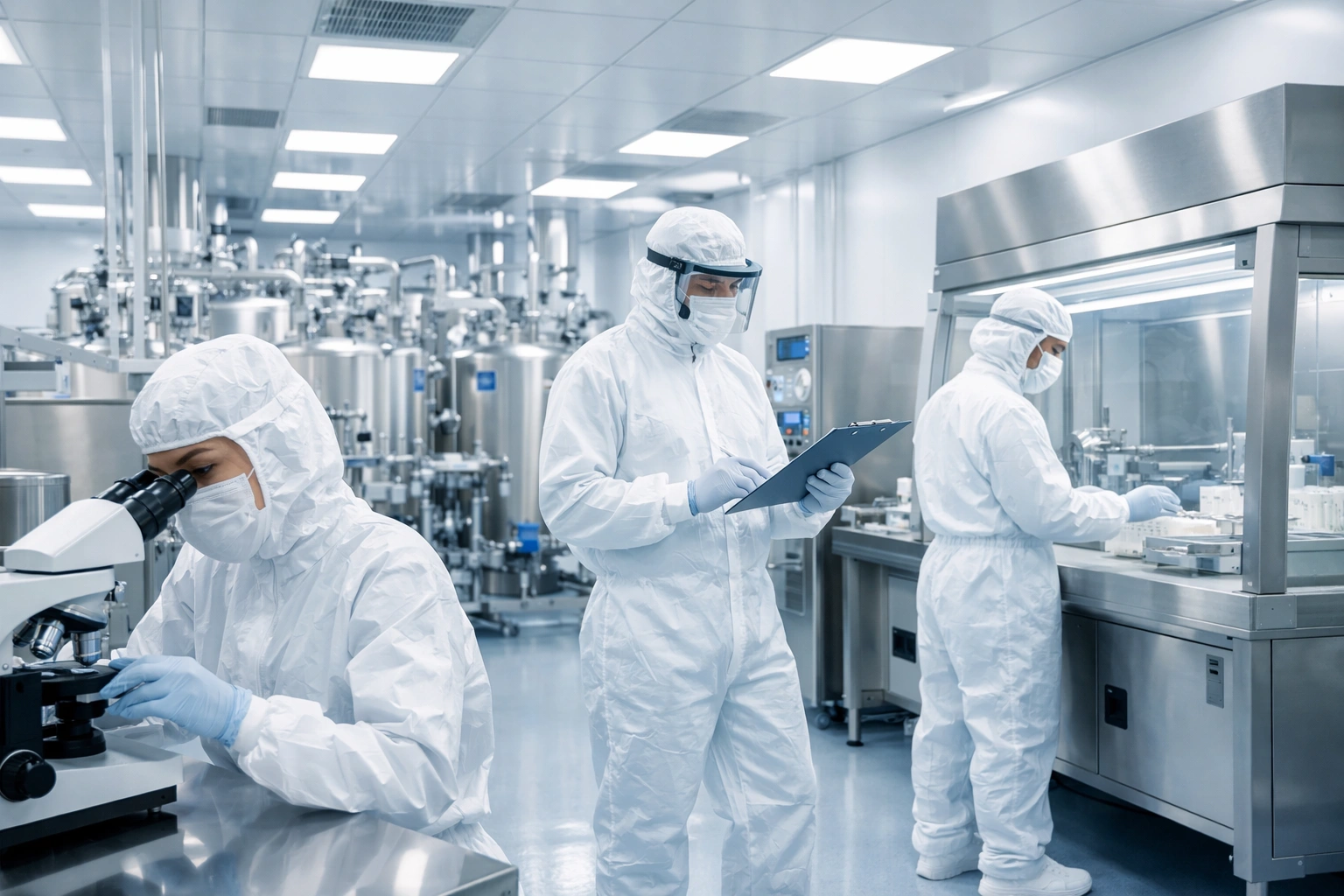
ISO 5 cleanroom cleaning refers to validated cleaning and disinfection procedures used in critical aseptic environments where airborne particle levels must remain below 3,520 particles per cubic meter according to ISO 14644-1. These procedures typically include sterile cleaning tools, unidirectional mopping techniques, validated disinfectants, and fully documented cleaning sequences to maintain pharmaceutical aseptic conditions.
لماذا تعد إجراءات التنظيف وفقًا لمعايير ISO 5 أمرًا بالغ الأهمية
ISO 5 cleanrooms are typically used in the most critical pharmaceutical operations including aseptic filling, sterile compounding, vaccine manufacturing, and cell or gene therapy production.
According to EU GMP Annex 1 and ISO 14644 standards, these environments require extremely strict contamination control procedures to prevent microbial and particulate contamination during manufacturing.
Because these spaces operate at extremely low contamination thresholds, even small procedural mistakes during cleaning can introduce particles, microorganisms, or chemical residues that compromise sterility assurance.
ولهذا السبب، يجب تنفيذ إجراءات التنظيف ISO 5 وفقًا لما تم التحقق منه إجراءات التشغيل القياسية الخاصة بتنظيف غرف الأبحاث, while the actual execution details must remain specific to critical-grade aseptic environments.
إجراءات تنظيف غرف الأبحاث ISO 5 خطوة بخطوة
1. إعداد وإعداد المواد
Operators must first enter the cleanroom using validated gowning procedures appropriate for critical aseptic zones. Only approved cleaning tools and disinfectants should be introduced into the area. Common materials include sterile microfiber mop heads, low-lint cleanroom wipes, sterile buckets, and pharmaceutical-grade disinfectants.
All cleaning tools must be dedicated to ISO 5 areas to avoid cross-contamination from lower-grade cleanrooms or uncontrolled support spaces.
2. التنظيف من الأعلى إلى الأسفل
Cleaning must follow a strict sequence beginning with ceilings, followed by walls, equipment contact surfaces, and finally floors. This top-to-bottom structure is essential because contaminants removed from upper surfaces should not fall onto already-cleaned lower areas.
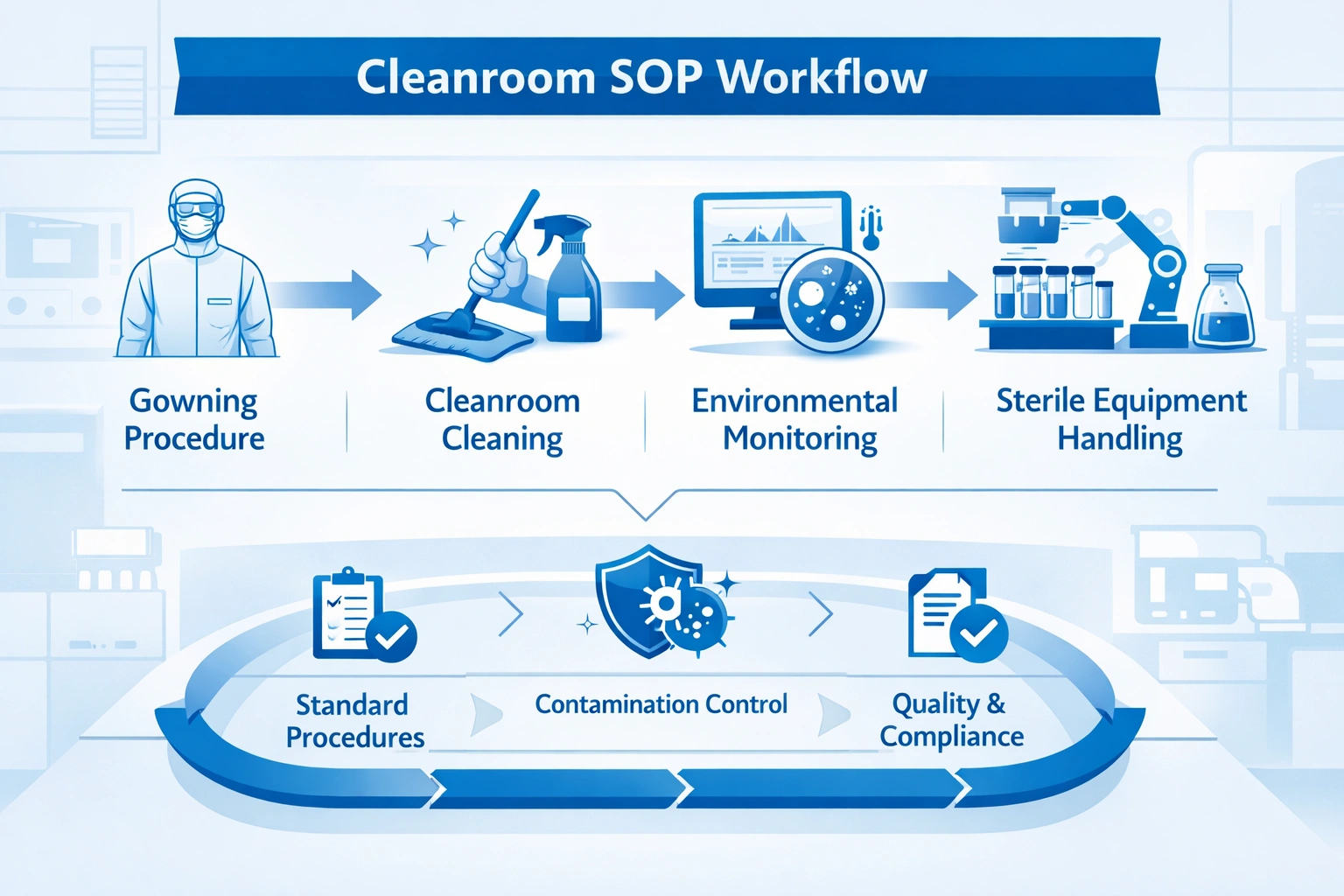
3. التطهير أحادي الاتجاه
يجب أن يستخدم تنظيف الأرضيات في بيئات ISO 5 دائمًا ضربات أحادية الاتجاه بعد التحقق من صحتها تنظيف غرف الأبحاث SOP. This approach prevents particle redistribution and helps move contamination toward the exit of the cleanroom.
Slight overlap between mop passes improves cleaning coverage and reduces the risk of leaving untreated zones in critical floor areas.
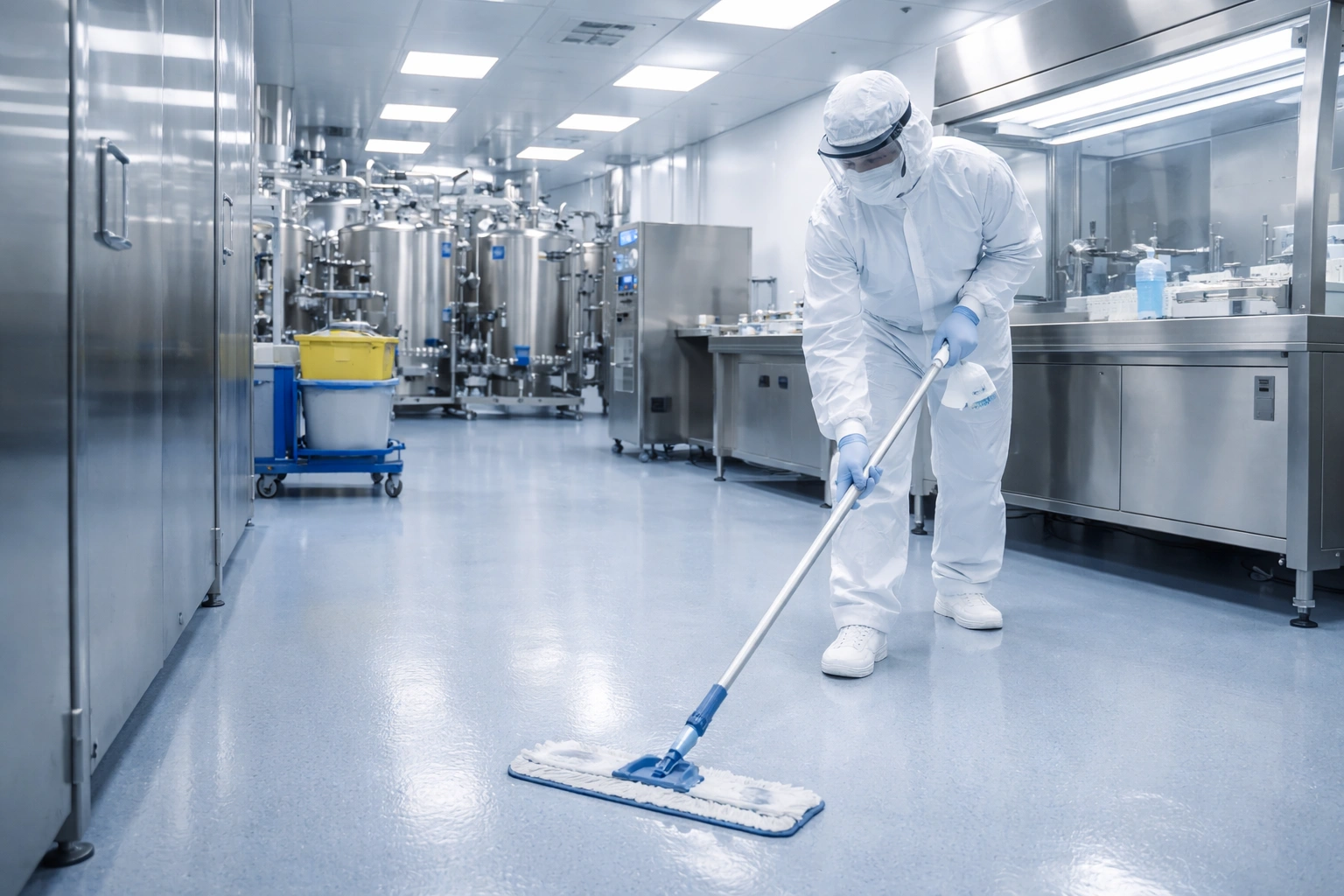
لتقليل تساقط الجسيمات، تستخدم المرافق عادة التحقق من صحتها أنظمة ممسحة غرف الأبحاث الصيدلانية مصممة خصيصًا لبيئات التصنيع المعقمة.
4. تطبيق المطهر
After physical cleaning, disinfectants are applied to reduce microbial contamination. Many pharmaceutical facilities rotate multiple disinfectants, including alcohol-based disinfectants, hydrogen peroxide solutions, and periodic sporicidal agents.
The cleaning procedure must define the minimum contact time required for each chemical agent, because insufficient wet contact time can reduce disinfection effectiveness in critical environments.
5. ملاحظات الرصد البيئي
ISO 5 cleaning programs should always be connected with environmental monitoring data. Surface monitoring, airborne particle counts, and microbial sampling results help confirm whether the cleaning procedure is working as intended.
If contamination trends begin to rise, facilities should review cleaning frequency, disinfectant rotation, operator technique, and tool suitability.
6. التوثيق والتحقق
Every cleaning activity should be documented, including the operator, time, disinfectant used, lot or batch details where required, and the exact area cleaned.
Documentation supports traceability, regulatory inspections, internal quality review, and ongoing improvement of contamination control performance.
أخطاء التنظيف الشائعة في ISO 5
اتجاه التنظيف غير صحيح
تعمل الحركات ذهابًا وإيابًا على إعادة توزيع التلوث بدلاً من إخراجه من غرفة الأبحاث.
استخدام أدوات غير معقمة
قد تؤدي الأدوات غير المعتمدة إلى إلقاء ألياف أو جزيئات أو بقايا في مناطق معقمة حرجة.
تخطي وقت الاتصال بالمطهر
يمنع وقت التلامس القصير المطهر من تحقيق الحد من الميكروبات الذي تم التحقق منه.
تردد استبدال الممسحة غير مناسب
يمكن لرؤوس الممسحة المفرطة الاستخدام أن تنشر التلوث بدلاً من إزالته بشكل فعال.
توثيق ضعيف
تزيد السجلات غير المكتملة من مخاطر التدقيق وتقلل من إمكانية التتبع في العمليات الصيدلانية.
دوران المطهر غير صحيح
Using the same disinfectant repeatedly may allow resistant microorganisms to survive. Many facilities rotate alcohol, hydrogen peroxide, and periodic sporicidal agents.
استخدام استراتيجية التنظيف الخاطئة
يجب على المرافق تقييم ما إذا كان يمكن التخلص منها مقابل ممسحات غرف الأبحاث القابلة لإعادة الاستخدام أكثر ملاءمة لبرنامج مكافحة التلوث الخاص بهم.
تجاهل اتجاهات الرصد
يجب تعديل برامج التنظيف عندما تشير بيانات مراقبة الميكروبات أو الجسيمات إلى ارتفاع خطر التلوث.
أسئلة مكررة
ما هو تنظيف غرف الأبحاث ISO 5؟
ISO 5 cleanroom cleaning is a validated cleaning process used in critical pharmaceutical and aseptic environments where particle and microbial contamination must be tightly controlled.
ما هو حد الجسيمات الذي يحدد غرفة الأبحاث ISO 5؟
According to ISO 14644-1, an ISO 5 cleanroom must maintain airborne particle concentrations below 3,520 particles greater than or equal to 0.5 micrometers per cubic meter.
كم مرة يجب تنظيف غرفة الأبحاث ISO 5؟
ISO 5 cleanrooms are typically cleaned before production, during operations as required by facility SOPs, and after batch completion. The exact frequency depends on process risk and contamination control strategy.
ما سبب أهمية التطهير أحادي الاتجاه في غرف الأبحاث وفقًا لمعايير ISO 5؟
Unidirectional mopping helps move contamination in a controlled direction and reduces the risk of redistributing particles across already-cleaned surfaces.
ما هي المطهرات شائعة الاستخدام في غرف الأبحاث ISO 5؟
Common disinfectants include alcohol-based disinfectants, hydrogen peroxide solutions, and periodic sporicidal agents depending on the validated contamination control strategy.
ما هي دورات التطهير الموصى بها لغرف الأبحاث ISO 5؟
Many pharmaceutical facilities use alcohol-based disinfectants for routine cleaning, hydrogen peroxide or other broad-spectrum agents for scheduled rotation, and sporicidal agents periodically to control resistant microorganisms.
ما هو نظام الممسحة الموصى به لتنظيف غرف الأبحاث وفقًا لمعايير ISO 5؟
ISO 5 cleanrooms typically use validated sterile mop systems designed to minimize particle shedding and support aseptic cleaning procedures.
هل تبحث عن نظام ممسحة معقمة للتنظيف وفقًا لمعايير ISO 5؟
توفر شركة Midposi أنظمة ممسحة معقمة لغرف الأبحاث مصممة للتحكم في تلوث الأدوية والتكنولوجيا الحيوية.