Essential Techniques for Cleanroom Hygiene
Cleanroom hygiene is a controlled system of personnel behavior, gowning discipline, cleaning SOPs, low-lint mop selection, disinfectant application, environmental monitoring, and documentation. In GMP and ISO-controlled facilities, hygiene must be repeatable, traceable, and audit-ready.
Hurtigt svar
The essential techniques for cleanroom hygiene include trained personnel movement, correct gowning, controlled material transfer, validated cleaning SOPs, low-lint cleanroom mops, sterile or non-sterile tool selection by risk level, environmental monitoring, and complete cleaning documentation.
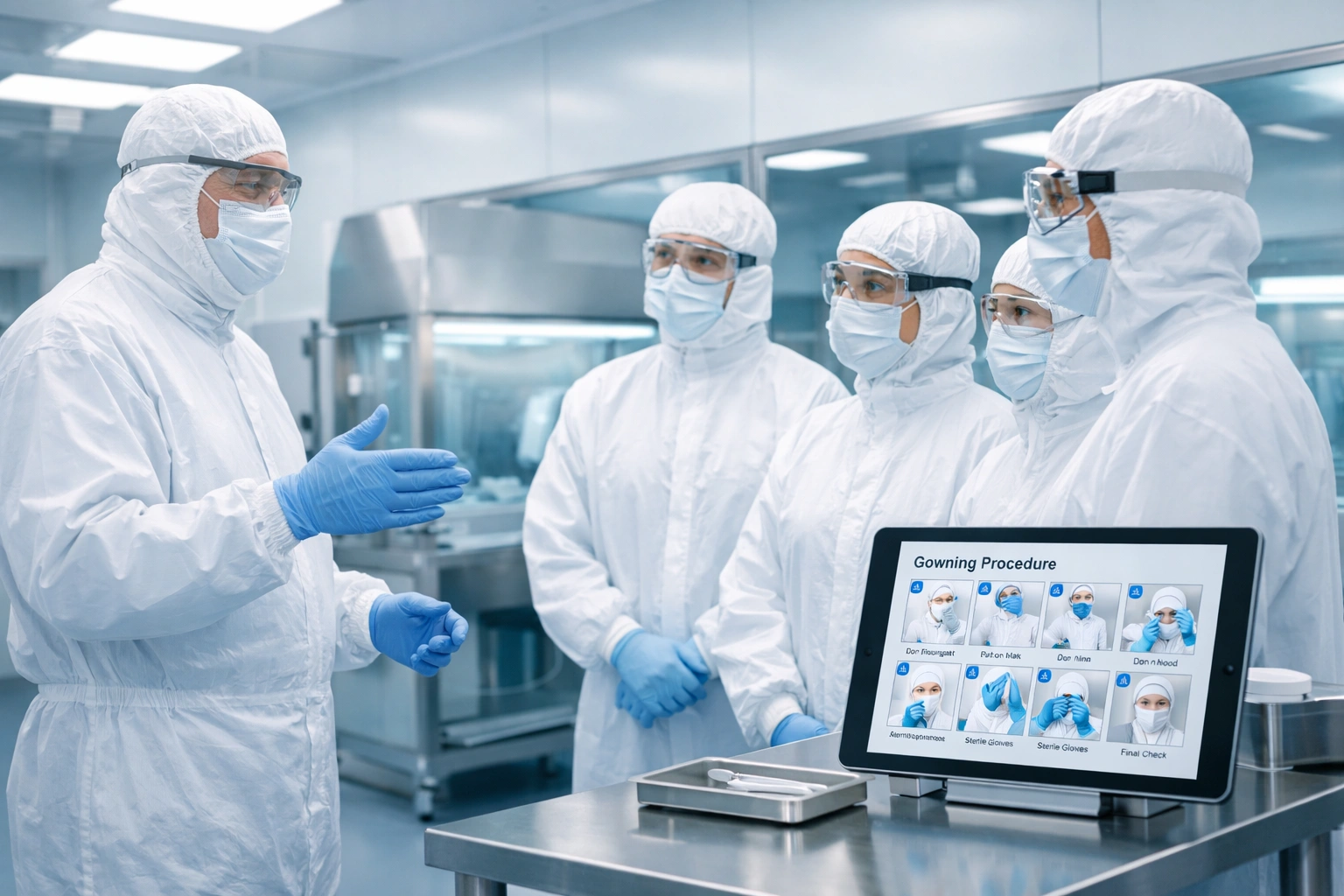
1. Control Personnel Hygiene Before Cleaning Begins
People are one of the most important contamination sources in cleanrooms. Even when air filtration, room pressure, and surface cleaning are well controlled, poor operator behavior can introduce particles, microorganisms, fibers, skin flakes, and residue into the controlled area.
Cleanroom hygiene therefore starts before a mop, wipe, disinfectant, or garment is used. The facility must define how personnel enter, move, touch surfaces, handle tools, change gloves, and respond to contamination events.
Movement
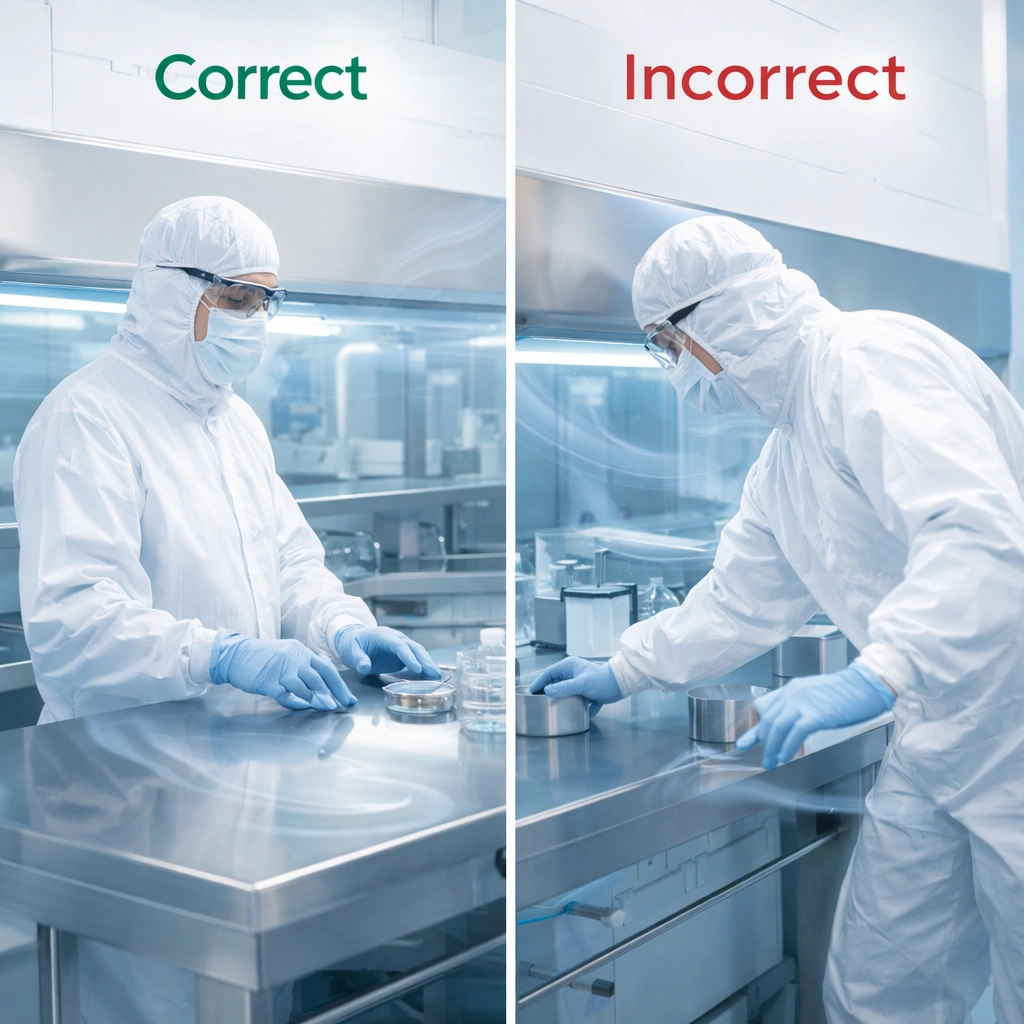
Operators should move slowly and deliberately. Fast movement can disturb airflow patterns, increase particle release, and make controlled cleaning less effective.
Touch Control
Unnecessary contact with walls, equipment, packaging, and garments should be avoided. Glove contact should follow facility SOPs.
Uddannelse
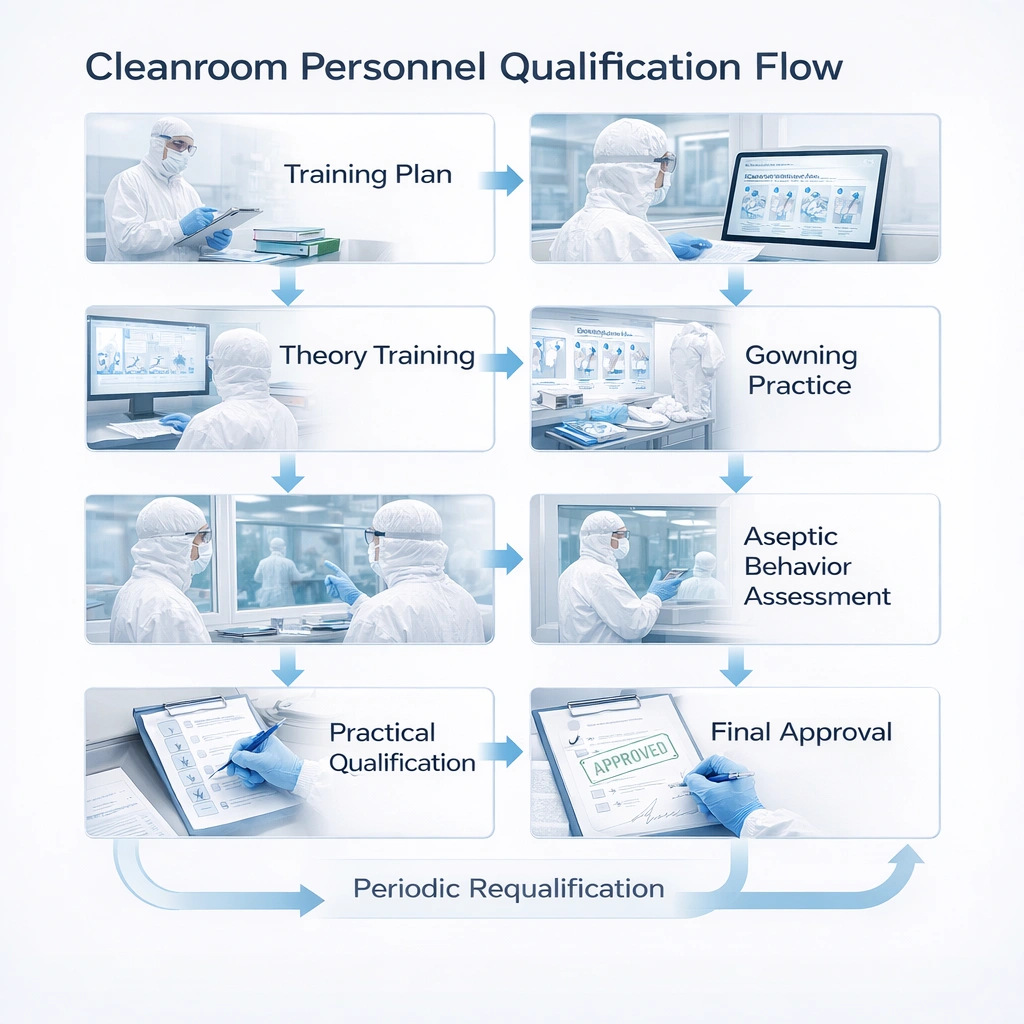
Personnel should be trained, observed, and periodically re-qualified for cleanroom behavior, gowning, cleaning, and material handling.
2. Treat Gowning as a Hygiene Barrier, Not Just a Uniform
Cleanroom garments are part of the contamination-control barrier. The purpose of gowning is not only to protect the operator, but also to reduce contamination released from the operator into the cleanroom. Incorrect gowning can compromise the hygiene program even when cleaning tools and disinfectants are properly selected.
Essential gowning controls
- Defined gowning sequence: follow the same entry sequence every time to reduce uncontrolled contact.
- Garment integrity: inspect garments for damage, linting, or improper fit before entry.
- Glove discipline: define when gloves are sanitized, changed, or replaced.
- Area-specific rules: gowning levels should match the room grade and process risk.
- Training records: keep gowning qualification and requalification records for audit review.
For more detailed entry and garment discipline, connect this topic with Cleanroom Gowning Procedures and Annex 1 Compliance.
3. Build a Cleanroom Cleaning SOP That Operators Can Repeat
A cleanroom cleaning SOP should be easy to follow and strong enough for QA review. It must clearly define room zoning, cleaning sequence, mop system, disinfectant or detergent, contact time, mop head replacement, waste handling, and documentation requirements.
| SOP element | Hvorfor det betyder noget | Best-Practice Direction |
|---|---|---|
| Cleaning sequence | Prevents moving contamination from less clean to cleaner areas | Clean from cleaner to less clean zones and from high surfaces to lower surfaces where applicable. |
| Moppe mønster | Reduces missed areas and inconsistent surface contact | Use controlled overlapping passes, not random back-and-forth movement. |
| Mop change frequency | Prevents contaminated tool reuse | Define replacement rules by room, surface area, visible soil, and risk level. |
| Desinfektionsmiddelkompatibilitet | Protects material performance and cleaning effectiveness | Confirm chemical compatibility with mop head, handle, frame, bucket, and floor material. |
| Record keeping | Supports GMP audit readiness | Document area, operator, date, chemical, tool, batch/lot if required, and reviewer. |
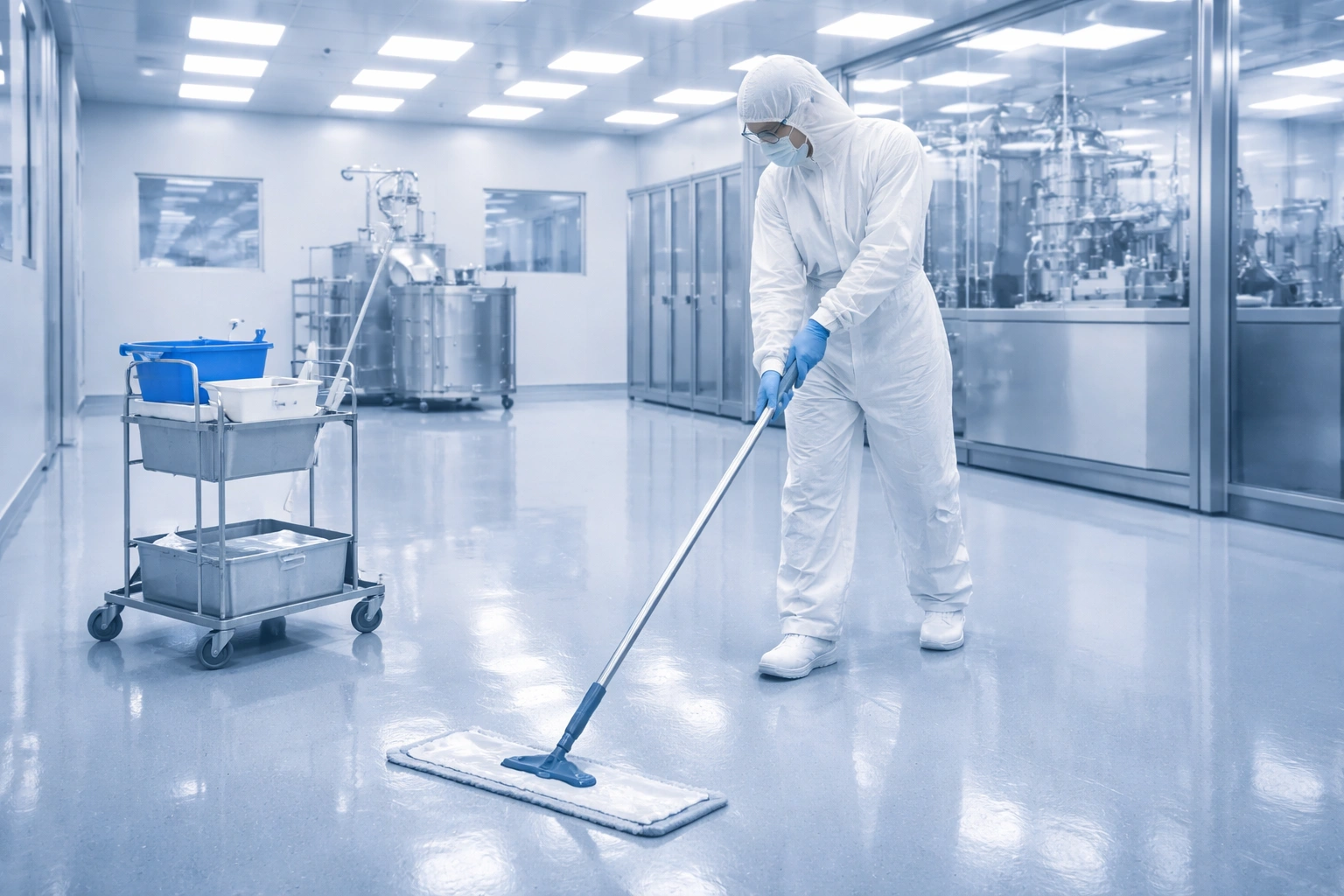
4. Use Low-Lint Cleanroom Mops for Controlled Hygiene
Cleanroom hygiene depends heavily on the tools used to clean floors, walls, ceilings, and large surfaces. A regular mop can release fibers, hold residues, or create uncontrolled wetting patterns. In contrast, a cleanroom mop system should be selected for low-lint performance, cleanroom compatibility, packaging, ergonomic handling, and documentation support.
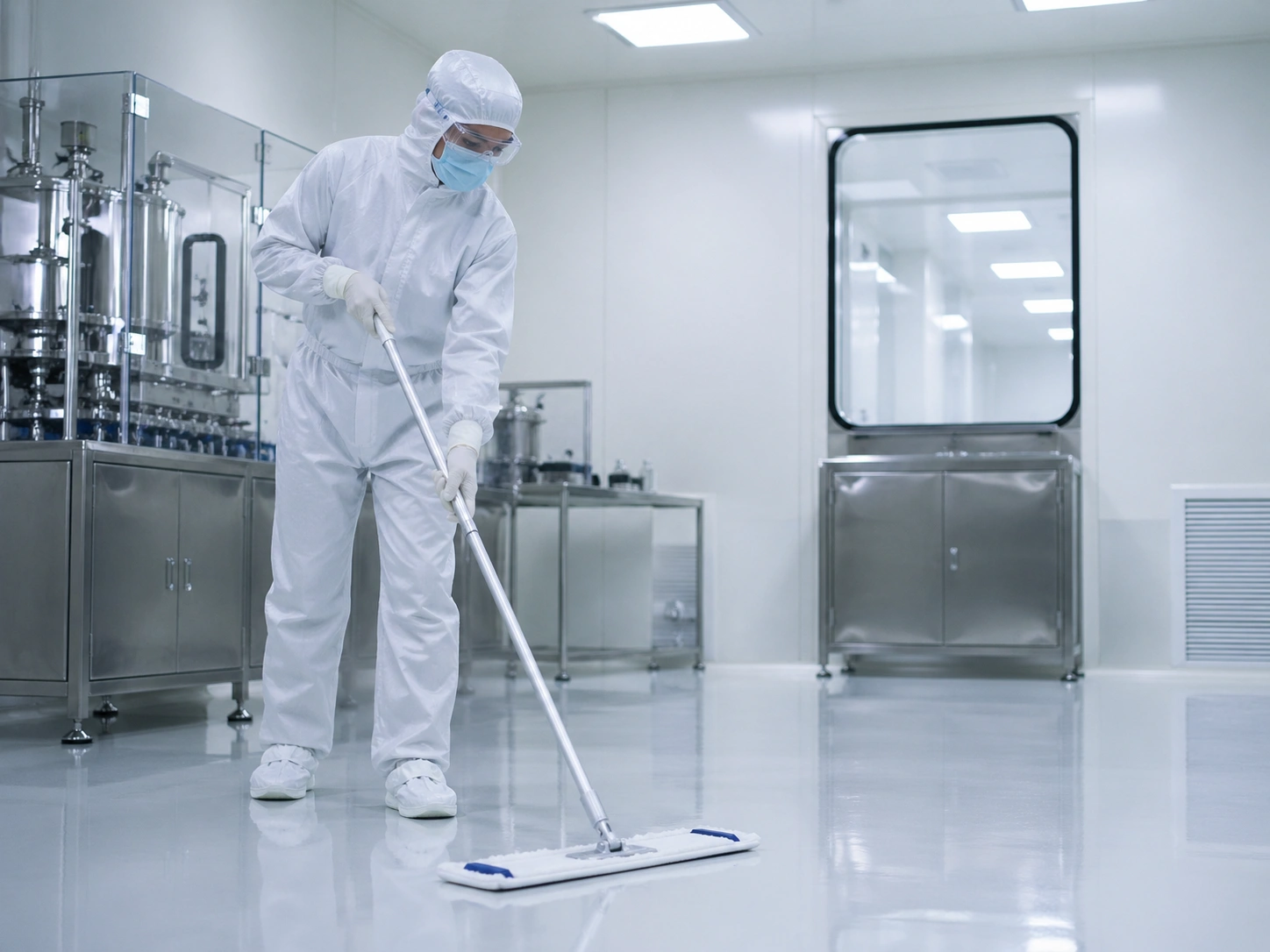
Cleanroom mop selection should consider:
- Room classification: ISO 5–8 or GMP Grade A/B/C/D application requirements.
- Material type: polyester or microfiber depending on contact surface and cleaning task.
- Sterile requirement: sterile mop options for higher-risk areas and non-sterile options for lower-risk workflows.
- Absorbency and weight: match mop weight to floor area, chemical volume, and operator handling.
- Packaging and traceability: use packaging and records that support cleanroom transfer and QA documentation.
Sterile mop hygiene use
Sterile mop options are typically considered for aseptic support areas or workflows where microbial introduction must be minimized.
Reusable vs disposable control
Disposable mop systems can simplify replacement control, while reusable systems require validated cleaning, handling, and lifecycle controls.
5. Separate Floor, Wall, Ceiling, and Equipment Hygiene Workflows
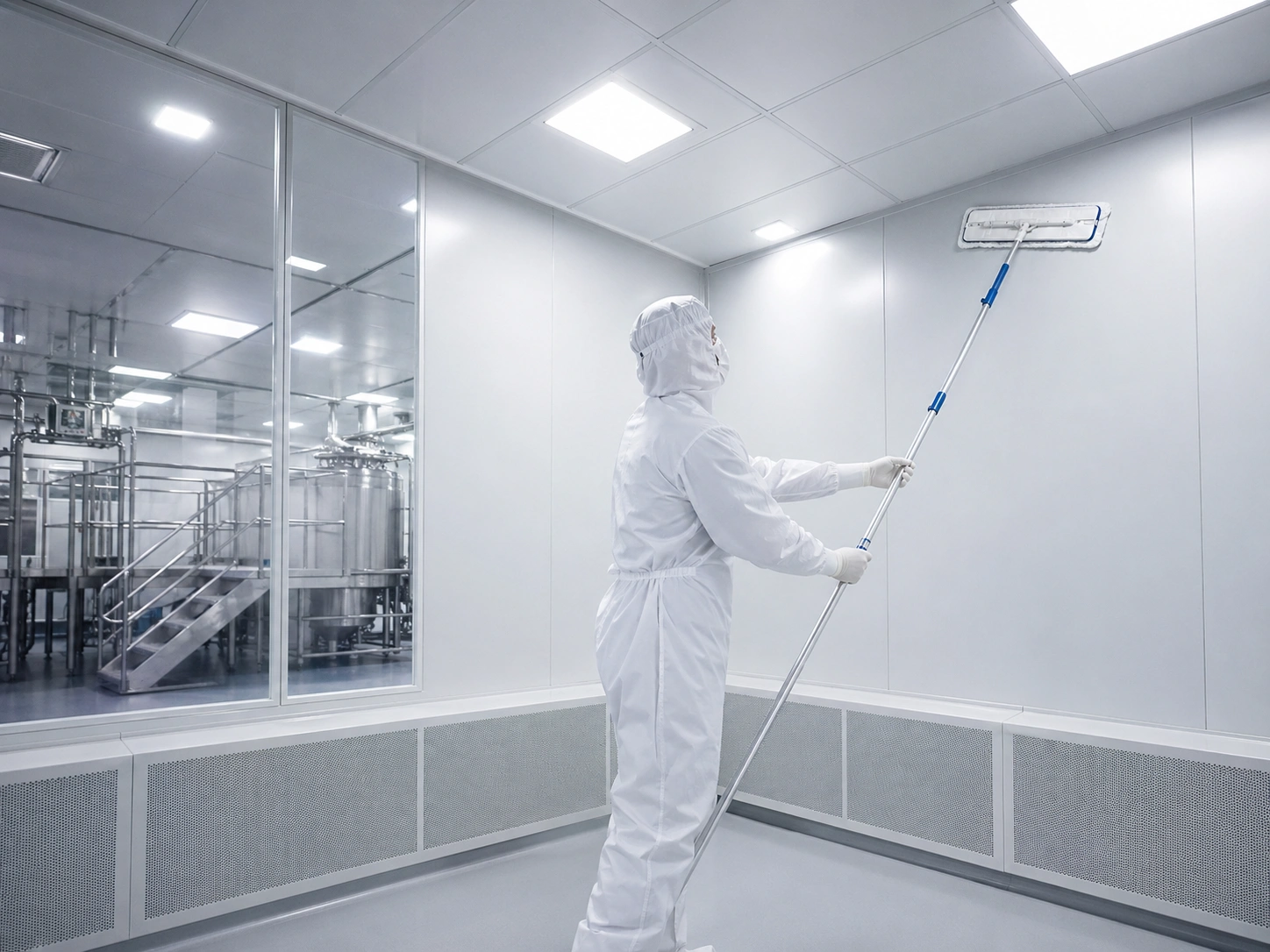
A strong cleanroom hygiene program does not treat every surface the same. Floors, walls, ceilings, carts, equipment exteriors, and high-touch surfaces each require different cleaning tools and techniques. Cross-use of tools across incompatible areas should be avoided unless specifically validated in the facility SOP.
| Surface Type | Hygiene Risk | Technique | Related Resource |
|---|---|---|---|
| Floors | Traffic particles, wheel transfer, residues | Zone-based mopping with controlled overlap and mop head replacement rules | Renrumsmoppesystem |
| Vægge og lofter | Hidden particles, hard-to-reach surfaces, uncontrolled contact | Use compatible frame and handle systems with defined movement patterns | Renrumsmoppestel |
| High-touch areas | Glove contact, transfer contamination | Clean with approved wipes or smaller tools based on SOP | Cleanroom Mop vs Wipes |
| Material transfer points | Packaging contamination and pass-through risk | Use defined wipe-down and transfer controls before entry | Batch Traceability Cleanroom Consumables |
6. Use Environmental Monitoring to Verify Hygiene Performance
Cleanroom hygiene should be verified, not assumed. Environmental monitoring helps show whether personnel behavior, cleaning frequency, mopping workflow, and material controls are working as intended. Monitoring results should be reviewed together with cleaning records, deviations, and CAPA trends.
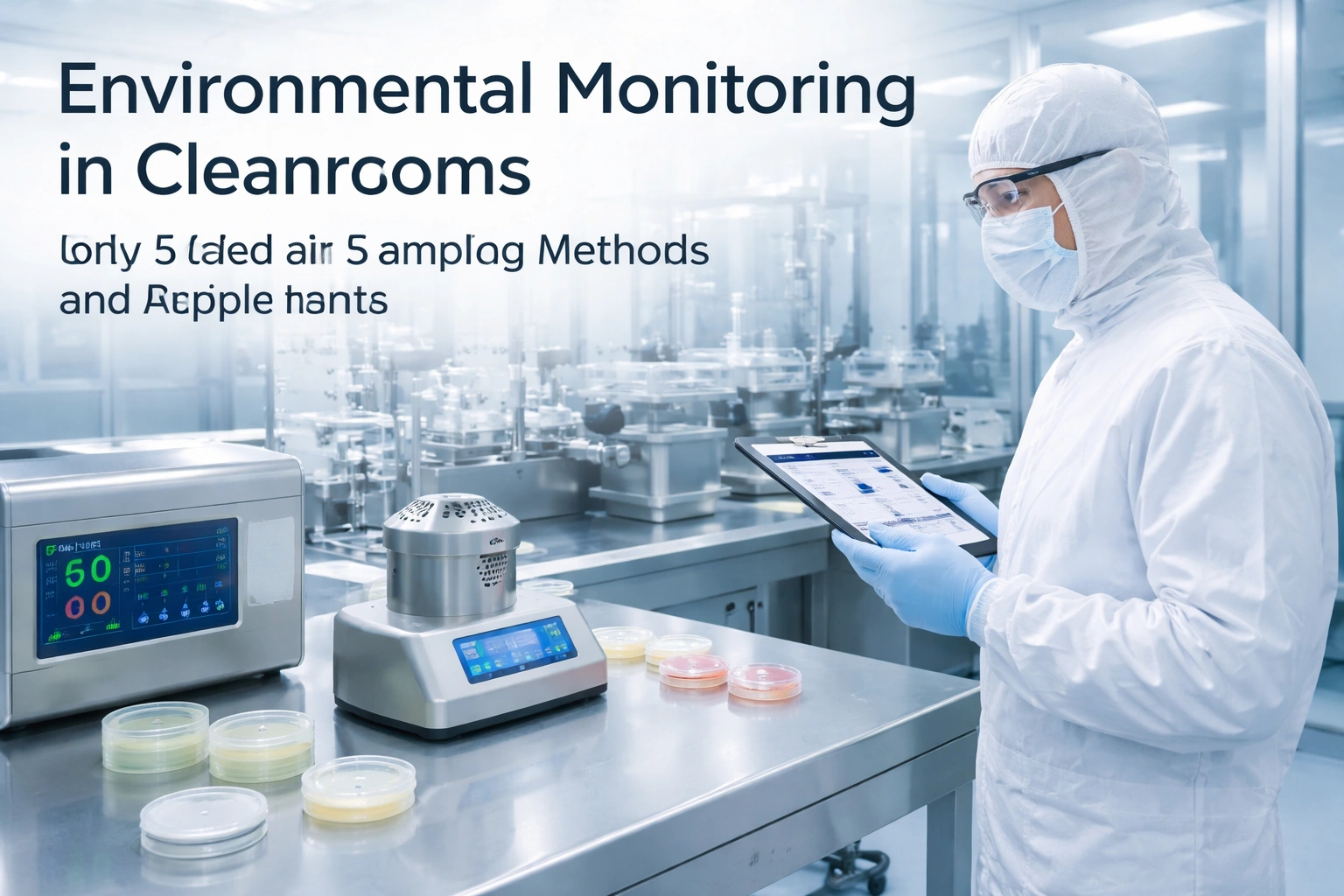
Monitoring should support:
- Airborne particle trend review
- Microbial monitoring and surface sampling
- Cleaning frequency adjustment
- Deviation investigation and CAPA
- Training effectiveness review
- Supplier and material qualification decisions
7. Keep Hygiene Documentation Audit-Ready
In GMP facilities, cleanroom hygiene is only defensible when it is documented. A facility should be able to show what was cleaned, when it was cleaned, who performed the activity, which tools and chemicals were used, and whether the results were acceptable.
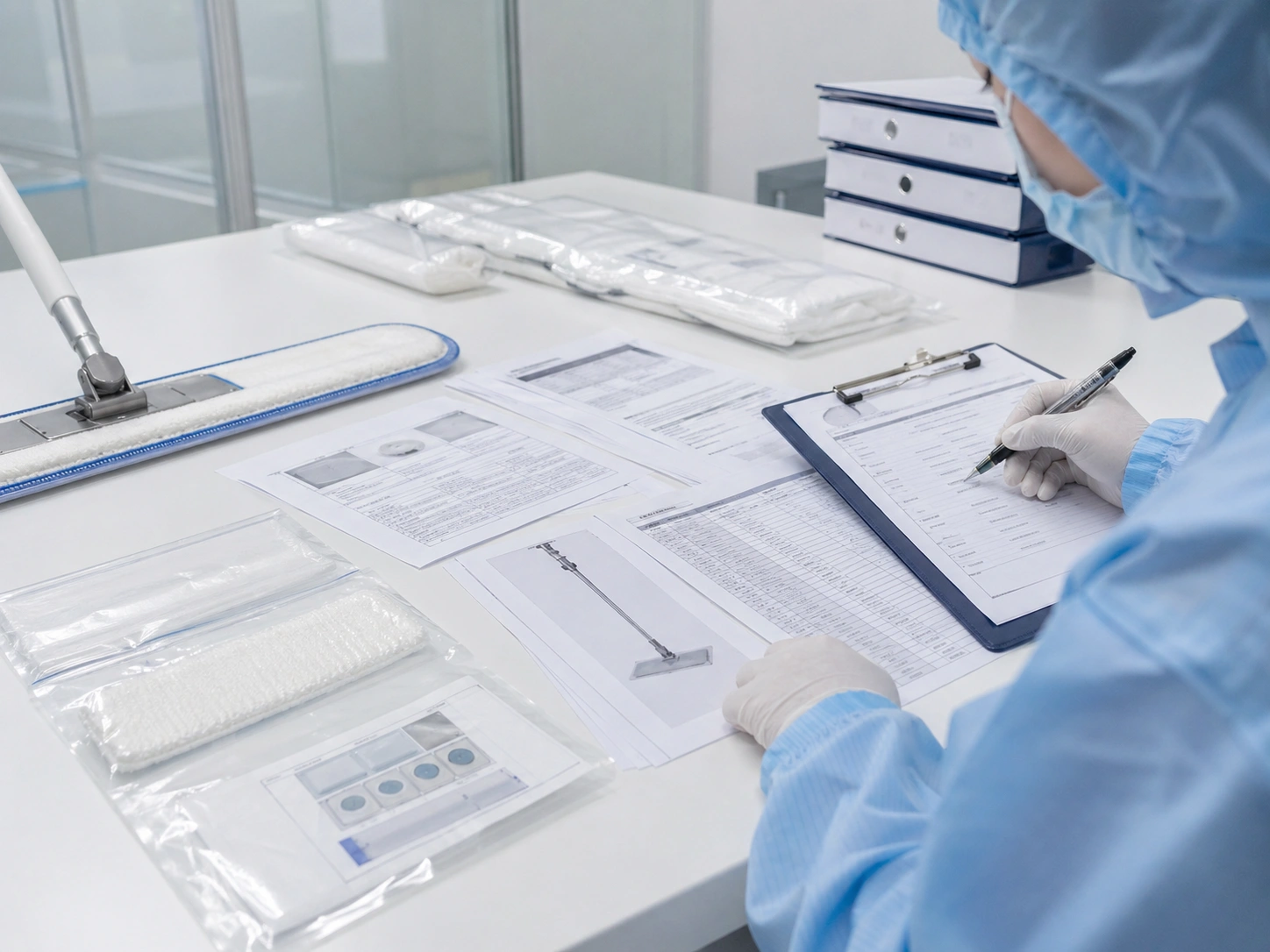
Recommended documentation set
- Cleanroom cleaning SOP and mopping SOP
- Personnel training and gowning qualification records
- Cleaning log and supervisor review record
- Mop system specifications and material information
- Sterile mop documentation when applicable
- COA or batch-related release documents according to selected model or sample batch
- Environmental monitoring trend reports
- Deviation and CAPA records related to hygiene failures
Useful supporting resources include Cleanroom Mop Validation Documents & COA, How to Prepare for GMP Cleanroom Audit, og Sådan kvalificerer du en farmaceutisk renrumsmoppeleverandør.
8. Create a Practical Hygiene Checklist for Daily Use
The best cleanroom hygiene program is one that operators can follow every day. A practical checklist helps reduce variation and gives QA a consistent review structure.
| Checklist Area | Daily Verification Question | Record Needed |
|---|---|---|
| Personale | Were operators trained, gowned correctly, and following behavior rules? | Training / gowning record |
| Værktøjer | Were approved cleanroom mops, frames, handles, and buckets used? | Tool specification / area assignment |
| Cleaning workflow | Was the correct zone sequence and mopping pattern followed? | Cleaning log / SOP checklist |
| Sterile control | Were sterile mop products handled according to packaging and transfer rules? | Lot / batch documentation if required |
| Overvågning | Were environmental monitoring results reviewed for hygiene trends? | EM trend report / deviation record |
Cleanroom hygiene is not a single action. It is a controlled routine that connects people, procedures, products, monitoring, and proof.
Conclusion: Cleanroom Hygiene Must Be Controlled, Repeatable, and Documented
Essential cleanroom hygiene techniques include personnel discipline, gowning control, validated SOPs, low-lint cleanroom mop systems, sterile or non-sterile tool selection, environmental monitoring, and audit-ready documentation. Each element supports the same goal: reducing contamination risk while making the process repeatable and reviewable.
For GMP and ISO-controlled environments, hygiene should never depend on informal habits. It should be built into a documented system that operators can follow, QA can verify, and auditors can understand.
FAQ: Cleanroom Hygiene Techniques
What is cleanroom hygiene?
Cleanroom hygiene is the controlled management of personnel behavior, gowning, cleaning tools, surface cleaning, material transfer, monitoring, and documentation to reduce contamination risk in ISO or GMP-controlled environments.
Why are low-lint mops important for cleanroom hygiene?
Low-lint cleanroom mops help reduce fiber shedding and particle release during floor, wall, and ceiling cleaning. They also support consistent surface contact and documentation when selected as part of a controlled mop system.
When should sterile cleanroom mops be used?
Sterile cleanroom mops are typically used in higher-risk GMP-controlled areas, aseptic support workflows, or applications where microbial introduction must be minimized and batch-related documentation is required.
How does personnel training affect cleanroom hygiene?
Personnel training reduces uncontrolled movement, incorrect gowning, poor glove discipline, and tool misuse. Training records also help support QA review and audit readiness.
What documents support cleanroom hygiene audit readiness?
Key documents include cleaning SOPs, mopping SOPs, personnel training records, gowning qualification records, cleaning logs, product specifications, batch or lot traceability, COA references, and environmental monitoring trend reports.
Need Cleanroom Mop Support for GMP Hygiene Programs?
MIDPOSI can help you review low-lint cleanroom mop systems, sterile and non-sterile configurations, documentation support, and sample options for pharmaceutical, biotech, medical device, semiconductor, and laboratory cleanrooms.