A cleanroom flat mop system supports controlled cleaning of floors, walls, ceilings, and large surfaces in pharmaceutical, laboratory, electronics, and contamination-sensitive environments. Compared with traditional mops, flat mop systems provide broader surface contact, cleaner workflow control, and better suitability for cleanroom SOPs.
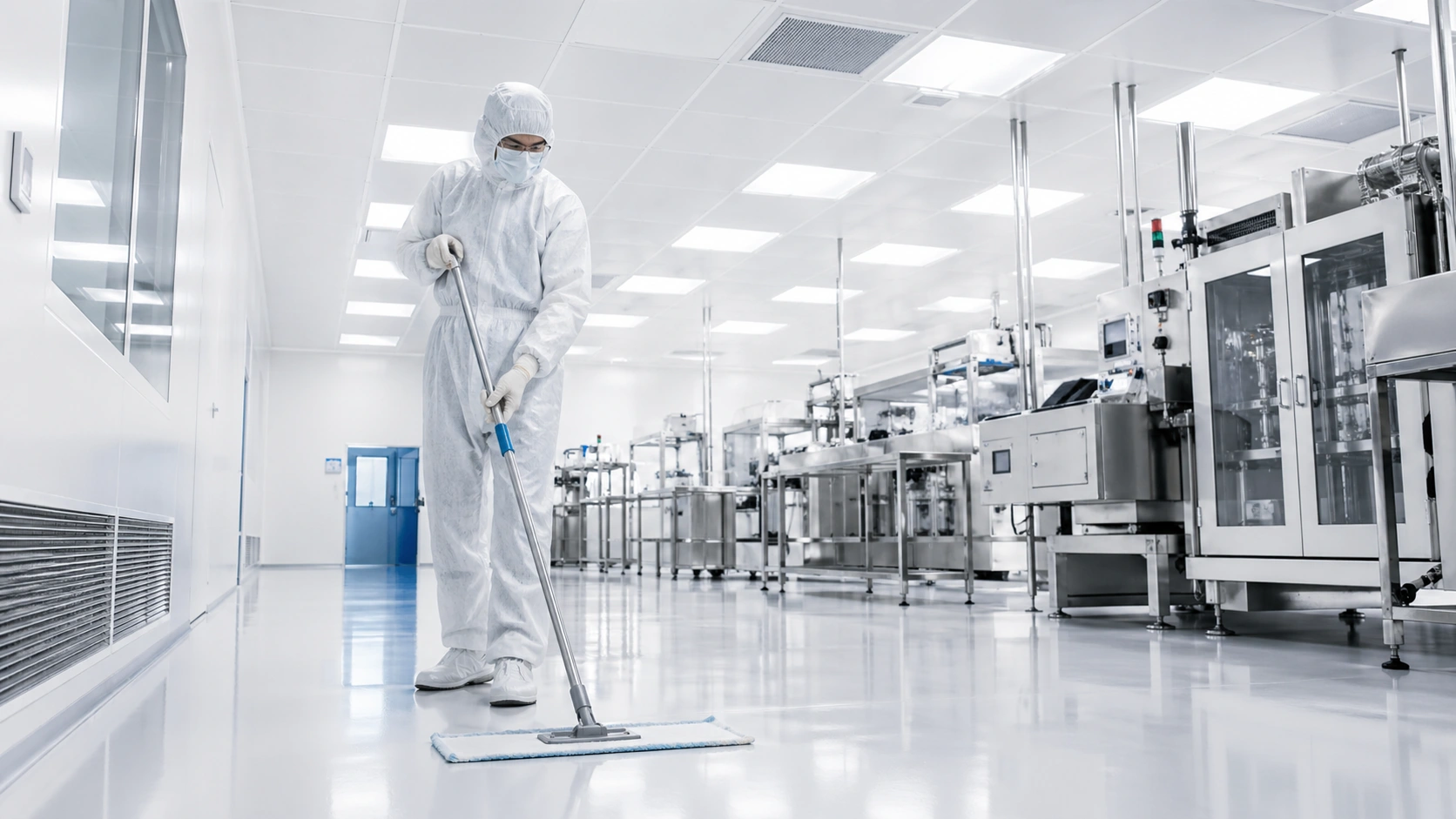
A cleanroom flat mop system is a coordinated cleaning solution that uses a flat mop pad attached to a compatible frame and handle for controlled surface cleaning in cleanrooms and other critical environments.
Unlike traditional mop styles, a flat mop system creates broad and relatively even contact across the target surface. This makes it suitable for cleanroom cleaning where buyers need better reach, controlled liquid application, and improved consistency during floor, wall, and ceiling cleaning.
In controlled environments, the system should be considered as a whole. The mop pad, frame, handle, and bucket or wringer method all influence cleaning performance, operator workflow, residue control, and contamination risk.
Flat mop systems are widely preferred in controlled environments because they support consistent movement, stable surface coverage, and cleaner workflow control compared with traditional mopping methods.
A flat mop pad can maintain broad contact across smooth floors, walls, and ceilings. This supports more even cleaning and more predictable wetting of the target surface.
Flat mop systems are easier to integrate into structured cleanroom cleaning SOPs, including one-direction mopping, area zoning, and fresh-to-dirty cleaning logic.
With the right frame and handle length, flat mop systems can be used on floors, walls, ceilings, and hard-to-reach large surfaces in controlled spaces.
A reliable cleanroom flat mop system should be selected based on how well the components work together in real cleaning conditions.
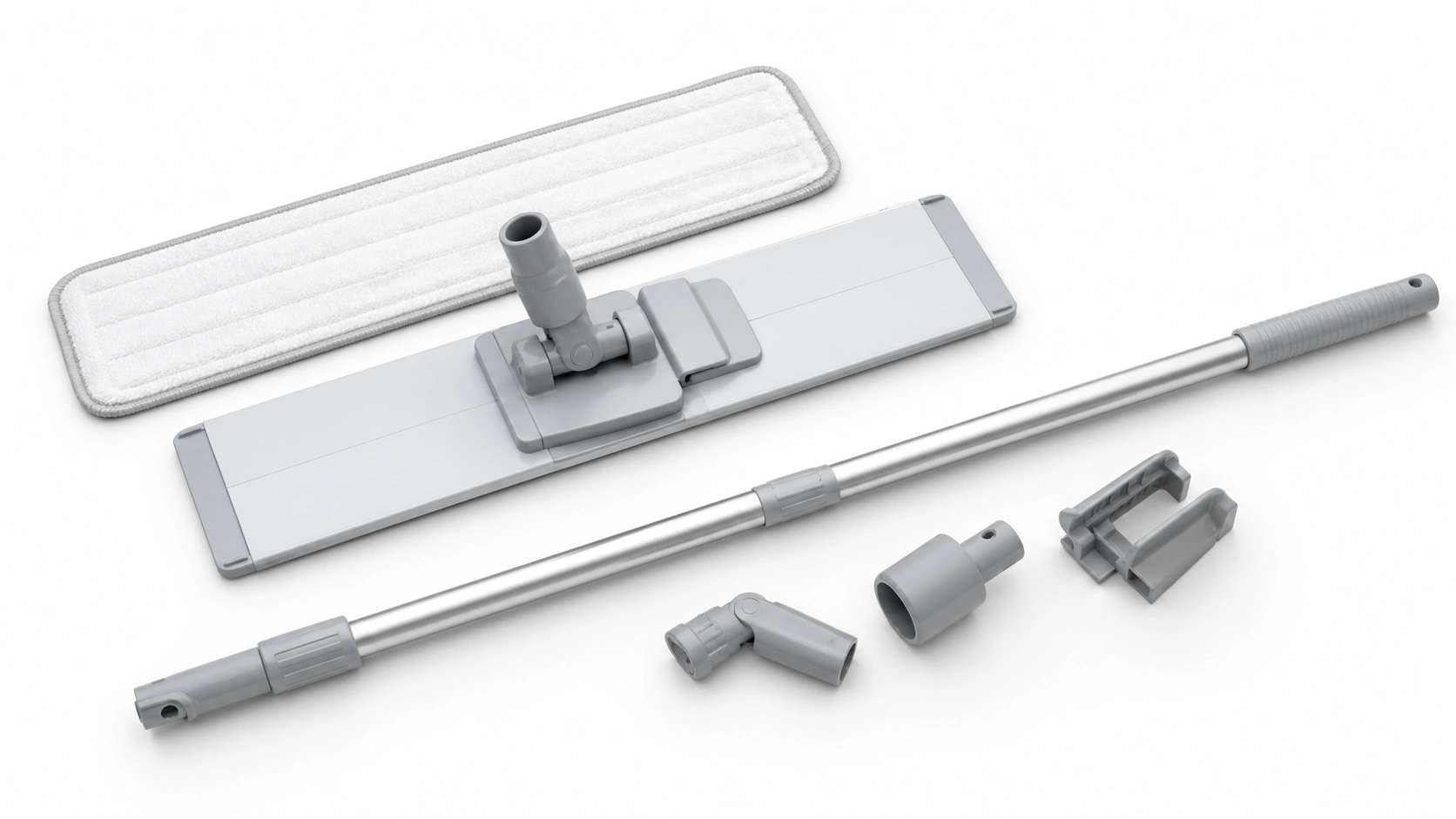
Flaches Wischpad aus Mikrofaser oder Polyester für kontrollierte Reinigung.
Stabiler Flachmopprahmen für breiten und gleichmäßigen Flächenkontakt.
Reinraumtauglicher Griff für Reichweite, Kontrolle und sichere Bedienung.
Eimer- oder Auswringsystem zur Sättigung des Mopps und zur Flüssigkeitsverwaltung.
For cleanroom and GMP buyers, flat mop systems are often easier to standardize than traditional string or sponge mop designs.
| Attribut | Flachmopp-System | Schnurwischer | Schwammmopp |
|---|---|---|---|
| Oberflächenkontakt | Breit und stabil | Weniger einheitlich | Engere Kontaktfläche |
| Reinraumtauglichkeit | Besser geeignet für kontrollierte Arbeitsabläufe | Normalerweise weniger geeignet | Hängt vom Design ab |
| Wand-/Deckenanwendung | Gut mit dem richtigen Griff | Beschränkt | Beschränkt |
| SOP-Standardisierung | Einfacher zu standardisieren | Weniger konsistent | Mäßig |
| Typische Verwendung | GMP, ISO, Labor, Kontrollbereiche | Allgemeine gewerbliche Reinigung | Kleinflächenreinigung |
A cleanroom flat mop system can be used across multiple controlled cleaning tasks, depending on pad material, frame design, handle length, and workflow requirements.
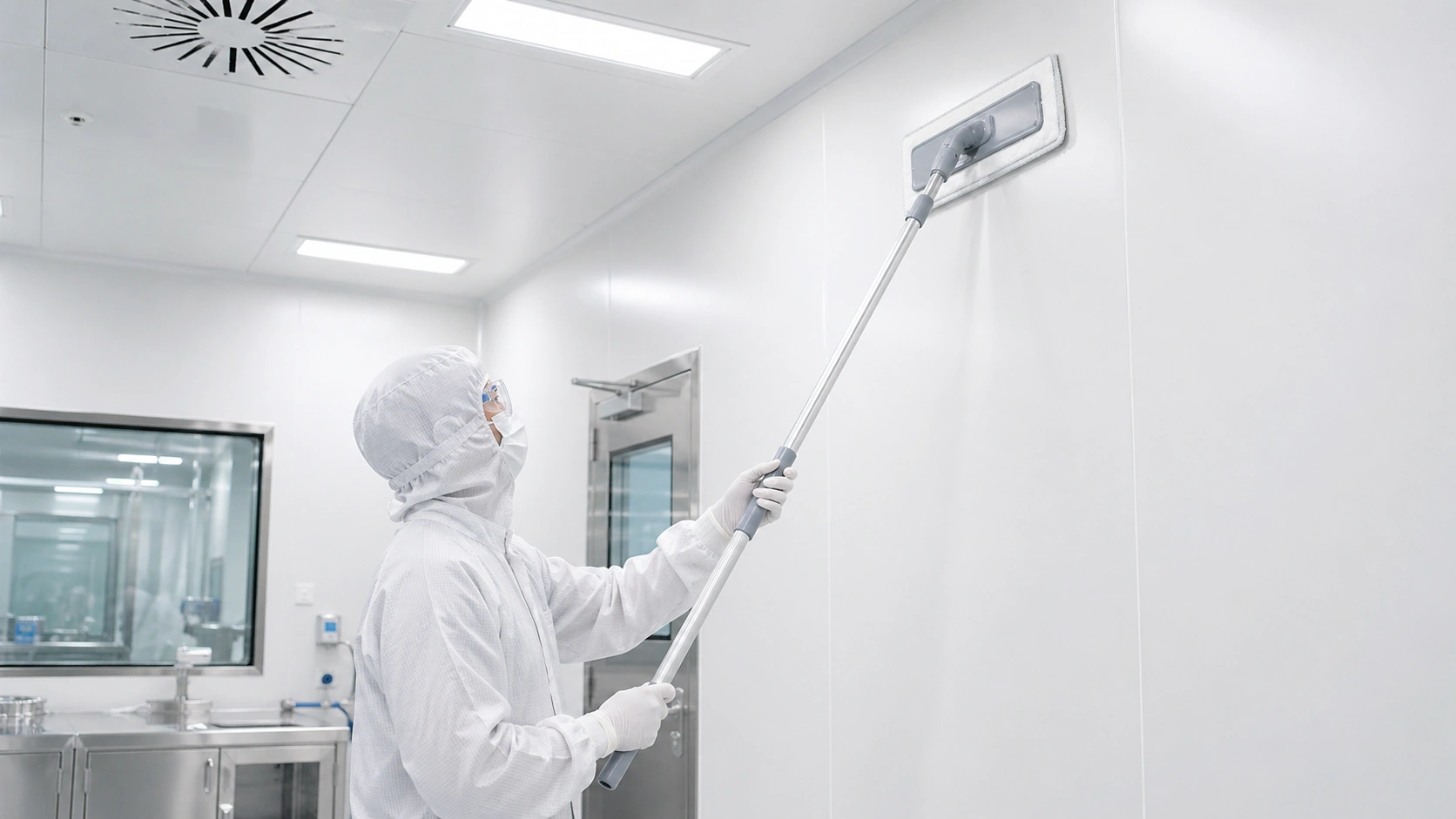
Flachwischsysteme decken größere Flächen effizient ab und unterstützen gleichzeitig eine strukturierte Bewegung und einen kontrollierten Flüssigkeitsauftrag.
Mit dem richtigen Rahmen und Griff helfen Flachmoppsysteme dem Bediener dabei, Wandflächen gleichmäßiger zu reinigen.
Flachwischsysteme können die Deckenreinigung dort unterstützen, wo große glatte Oberflächen einen kontrollierten Kontakt und eine geringere Belastung des Bedieners erfordern.
In GMP-Umgebungen können Flachwischsysteme in dokumentierte Reinigungsverfahren und Zoneneinteilungsabläufe integriert werden.
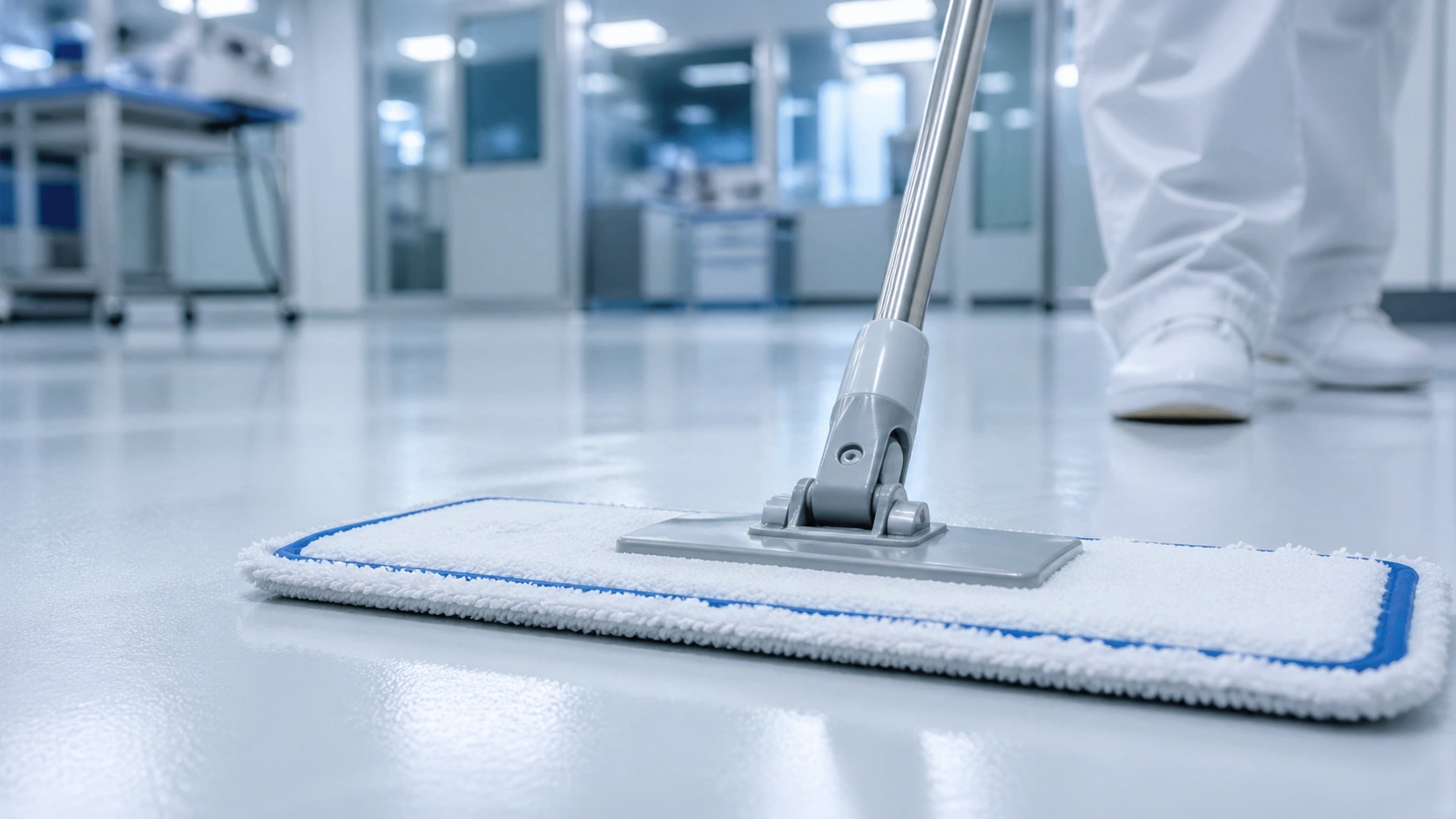
The choice between microfiber and polyester flat mop pads depends on the balance a facility needs between surface pickup, lint control, chemical compatibility, and cleaning workflow.
| Attribut | Flaches Wischpad aus Mikrofaser | Flaches Wischpad aus Polyester |
|---|---|---|
| Typische Stärke | Hoher Oberflächenkontakt und Rückstandsaufnahme | Fusselarme Leistung und chemische Beständigkeit |
| Allgemeiner Gebrauch | Routinemäßige Reinraumreinigung | Pharmazeutische und kontrollierte Anwendungen |
| Oberflächenabdeckung | Starker Kontakt auf glatten Oberflächen | Geeignet für die kontrollierte Nassreinigung |
| Sterilisationsoption | Hängt von der Produktkonstruktion ab | Hängt vom Produktdesign ab |
| Überlegung des Käufers | Pickup-Leistung | Flusenkontrolle und Kompatibilität |
Professional buyers should choose a cleanroom flat mop system by comparing the cleaning area, material preference, bucket workflow, and contamination-control expectations of the facility.
| Erfordernis | Empfohlene Richtung | Warum es wichtig ist |
|---|---|---|
| GMP- oder Pharma-Einrichtung | Fusselarmes Flachwischsystem mit dokumentierten Materialinformationen | Unterstützt kontrollierte Reinigung und Qualitätssicherungsprüfung |
| Routinemäßige ISO-Reinraumreinigung | Flachmoppsystem aus Mikrofaser oder Polyester | Unterstützt großflächige Reinigung |
| Wand- und Deckenreinigung | Flacher Mopphalter mit entsprechender Stiellänge | Verbessert Reichweite und Abdeckung |
| Bessere Flüssigkeitskontrolle | Flaches Moppsystem mit Eimer- oder Wringer-Arbeitsablauf | Hilft bei der Verwaltung der Moppsättigung |
| Reduzierte Bedenken hinsichtlich der Wiederverwendung | Option als Einweg-Flachmopp-Pad | Kann den Arbeitsablauf zur Kontaminationskontrolle vereinfachen |
| Kostenbilanz | Wiederverwendbarer Rahmen und Griff mit austauschbaren Wischpads | Unterstützt die langfristige Betriebseffizienz |
A cleanroom flat mop should be selected together with its frame, handle, and workflow method. This helps buyers build a more consistent and auditable cleaning process.
MIDPOSI can help recommend flat mop system configurations based on cleaning area, material preference, and controlled-environment requirements.
Tell us your cleanroom class, application area, material preference, mop pad size, workflow needs, and whether you are evaluating disposable or reusable options. MIDPOSI can help recommend a suitable flat mop system for your controlled environment.
Explore related MIDPOSI resources for cleanroom mop systems, flat mop pads, mop heads, mop frames, mop handles, bucket workflows, sterile mop options, disposable mop covers, microfiber materials, GMP cleaning applications, and buyer guidance.
These answers are designed for cleanroom buyers, QA teams, contamination-control specialists, and facility managers.
A cleanroom flat mop system is a cleaning solution that includes a flat mop pad, frame, handle, and sometimes a bucket or wringer workflow, designed for controlled cleaning in cleanrooms and other sensitive environments.
Flat mops are commonly used in cleanrooms because they provide broad surface contact, support structured cleaning movement, and work well on floors, walls, and ceilings.
Yes. With the correct frame and handle length, a cleanroom flat mop system can be used for wall and ceiling cleaning as well as routine floor cleaning.
Microfiber flat mops are often selected for strong surface contact and residue pickup, while polyester flat mops are often selected for low-lint performance and compatibility with controlled cleaning environments.
Some cleanroom flat mop systems are paired with bucket or wringer workflows to help control mop saturation, liquid separation, and process consistency.
Buyers should evaluate the cleaning area, cleanroom class, mop pad material, reusable or disposable preference, liquid-control workflow, and whether documentation is needed for internal review.
If you are sourcing cleanroom flat mop systems for pharmaceutical manufacturing, laboratories, medical device production, electronics facilities, or ISO cleanrooms, MIDPOSI can help you compare flat mop pad materials, frame and handle options, and bucket-based workflow configurations.