Sterile cleanroom mop systems are designed for Grade A/B pharmaceutical and aseptic support areas where viable contamination control, sterile transfer, particle reduction, and documentation are critical. MIDPOSI supports sterile mop cover selection for GMP cleaning workflows, including gamma-sterilized options, sterile packaging, lot traceability, and documentation support for QA review.
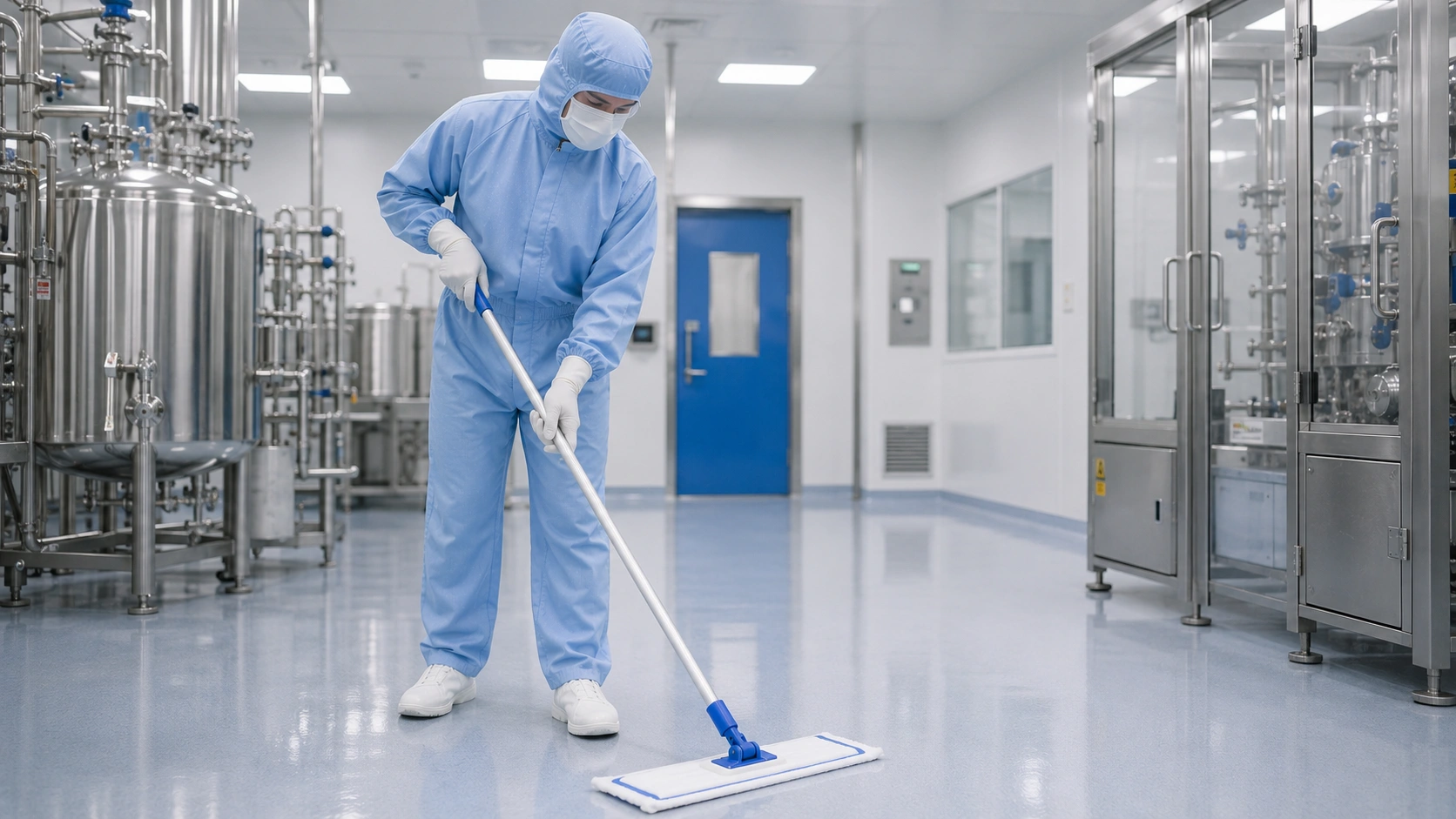
In aseptic and high-control pharmaceutical environments, cleaning tools can become a source of viable contamination if they are not selected, packaged, transferred, and documented correctly.
Non-sterile cleaning tools may introduce microbial contamination into sensitive cleanroom areas, especially where aseptic support workflows are involved.
Grade A/B areas often require stricter control over cleaning material transfer, handling, packaging integrity, and disposal.
QA teams may require sterility information, lot traceability, material data, packaging details, and product compatibility information before approval.
A sterile cleanroom mop is a low-lint mop cover or mop system supplied for controlled environments where sterility, particle control, and contamination prevention are required.
In GMP and pharmaceutical facilities, a sterile mop should not be evaluated only by the mop cover. Buyers should also review packaging, lot traceability, transfer procedure, compatible frame and handle, disinfectant compatibility, and available QA documentation.
Sterile mop covers may be used as single-use sterile mops, sterile-compatible flat mop systems, or part of a broader cleanroom mopping workflow depending on the facility’s SOP, cleanroom grade, and contamination-control strategy.
Sterile and non-sterile cleanroom mops serve different risk levels. The right choice depends on the cleanroom classification, facility SOP, product risk, and whether sterile supply is required.
| Attribut | Steriler Reinraummopp | Unsteriler Reinraummopp |
|---|---|---|
| Sterilitätssicherung | Sterilversorgung, oft unterstützt durch Sterilisationsdokumentation | Keine Sterilitätsgarantie |
| Gängige Sterilisationsmethode | Je nach Produkttyp Gammabestrahlung oder validierte Sterilverarbeitung | Nicht sterilisiert |
| Eignung der Klasse A/B | Bevorzugt für aseptische Unterstützungsbereiche mit höherer Kontrolle | Normalerweise nicht bevorzugt für sterile Bereiche mit hohem Risiko |
| Verpackung | Sterile oder kontrollierte Verpackung, oft mit Chargenrückverfolgbarkeit | Standardmäßige Reinraumverpackung |
| Allgemeiner Gebrauch | GMP, aseptische Unterstützung, pharmazeutische und biotechnologische Arbeitsabläufe | Routinemäßige ISO-Reinraumreinigung |
| Bedenken des Käufers | Sterilität, Transferprozess, Dokumentation und Kontaminationsrisiko | Partikelkontrolle, Kosten und routinemäßige Reinigungsleistung |
For sterile mop covers, buyers should understand the basic sterile supply chain from production and packaging to sterilization, shipment, cleanroom transfer, and use.
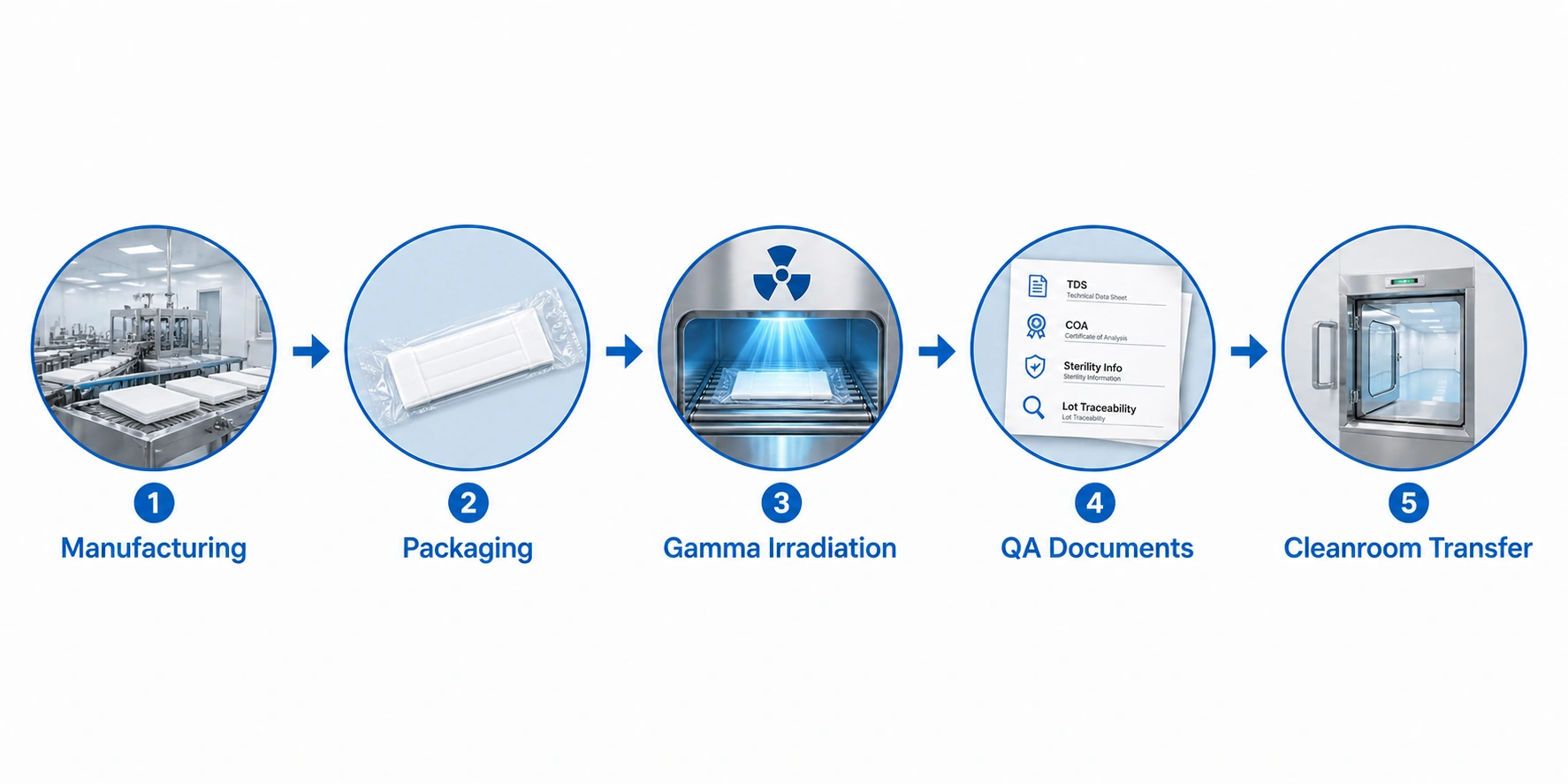
Vor dem Verpacken werden das Material des Moppbezugs, die Kantenkonstruktion, die Größe und die Reinraumtauglichkeit bestätigt.
Die Verpackung sollte den Reinraumtransfer, die Rückverfolgbarkeit von Chargen und die interne Eingangskontrolle unterstützen.
Gamma-sterilisierte Produkte können mit sterilisationsbezogener Dokumentation zur Qualitätssicherungsprüfung geliefert werden.
Einrichtungen sollten ihre SOP für den sterilen Transfer, das Auspacken, die Verwendung, die Entsorgung oder die Wiederaufbereitung befolgen.
Sterile cleanroom mops are most relevant where microbial control, aseptic handling, or sterile cleaning materials are required by facility procedures.
| Bereich / Anwendung | Empfehlung für sterile Wischmopps | Grund |
|---|---|---|
| Aseptische Unterstützung der Klasse A | Wird dringend empfohlen, wenn die SOP dies erfordert | Höheres Risiko lebensfähiger Kontaminationen und strengere Kontrolle des sterilen Arbeitsablaufs |
| Hintergrundbereich der Klasse B | Empfohlen für Arbeitsabläufe mit hoher Kontrolle | Unterstützt den Umgang mit sterilem Material und die Überprüfung der Kontaminationskontrolle |
| Isolator-/RABS-Unterstützungsbereich | Empfohlen, wenn sterile Reinigungswerkzeuge vorgeschrieben sind | Unterstützt aseptische Interventionskontrolle und sterile Transferverfahren |
| Fertigungsbereich der Klassen C/D | Von Fall zu Fall | Je nach Produktrisiko und SOP können sterile oder unsterile Mopps verwendet werden |
| Lager oder unkritischer Supportbereich | Normalerweise optional | Für die routinemäßige kontrollierte Reinigung können unsterile Reinraumwischtücher ausreichend sein |
Für GMP-Reinigungsprogramme, bei denen Umweltkontrolle und Kontaminationsverhinderung wichtig sind.
Für Unterstützungszonen rund um aseptische Operationen, in denen sterilkompatible Werkzeuge bevorzugt werden können.
Zur kontrollierten Oberflächenreinigung in Produktions- und Laborhilfsbereichen.
Für Reinraumbereiche, die wiederholbare Arbeitsabläufe, fusselarme Materialien und Dokumentation erfordern.
Polyester and microfiber sterile mop covers serve different cleaning priorities. Buyers should compare lint control, residue pickup, absorption, chemical compatibility, and SOP fit before selection.
| Attribut | Steriler Wischbezug aus Polyester | Steriler Wischbezug aus Mikrofaser |
|---|---|---|
| Hauptvorteil | Fusselarme Leistung und chemische Beständigkeit | Oberflächenkontakt und Rückstandsaufnahme |
| Typische Verwendung | Pharma- und GMP-kontrollierte Bereiche | Routinemäßige Reinigung von Reinraumoberflächen |
| Partikelkontrolle | Stark, wenn es richtig spezifiziert wird | Hängt von der Konstruktion ab |
| Flüssigkeitsaufnahme | Mäßig bis gut | Stark |
| Bedenken des Käufers | Flusen, chemische Verträglichkeit, sterile Verpackung | Tonabnehmer, Sättigungskontrolle, Materialkompatibilität |
Sterile cleaning programs may use single-use sterile mop covers, reusable autoclavable systems, or hybrid configurations depending on risk level, cleaning frequency, and cost-control requirements.
| Option | Am besten für | Entscheidender Vorteil | Überlegung des Käufers |
|---|---|---|---|
| Steriler Einmalmopp | Grade A/B oder Bereiche mit hoher Kontrolle | Reduziert Bedenken hinsichtlich der Wiederverwendung von Kontaminationen | Höhere Kosten pro Nutzung und höhere Abfallentsorgung |
| Wiederverwendbarer autoklavierbarer Mopp | Einrichtungen mit validiertem Sterilisationsprozess | Niedrigere langfristige Betriebskosten | Erfordert Lebenszyklus- und Wiederaufbereitungskontrolle |
| Hybridsystem | Wiederverwendbarer Rahmen mit Einweg-Moppbezug | Gleicht Kosten und Kontaminationskontrolle aus | Die Kompatibilität muss bestätigt werden |
Sterile mop sourcing often requires more than price and product photos. QA and sourcing teams may need documents that support material review, traceability, sterility review, and internal qualification.
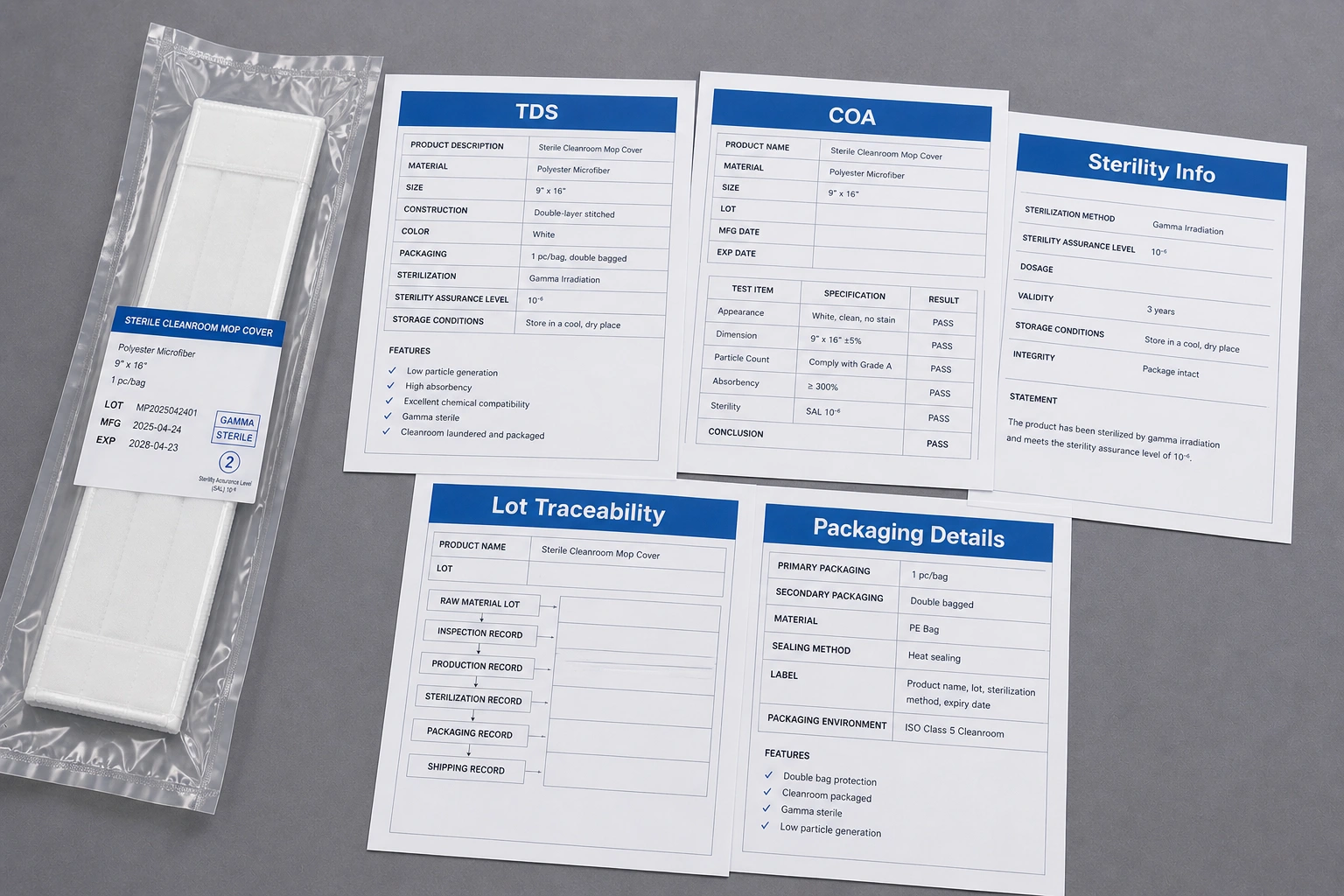
Technisches Datenblatt zu Material, Struktur, Größe, Anwendungsbereich und empfohlener Verwendung.
Für sterile oder gammasterilisierte Moppoptionen können Informationen zur Sterilisation angefordert werden.
Die Rückverfolgbarkeit von Chargen hilft QA-Teams dabei, Produktchargen mit Eingangskontrollen und internen Aufzeichnungen zu verknüpfen.
Materialinformationen helfen bei der Beurteilung der Flusenkontrolle, der chemischen Kompatibilität und der SOP-Passform.
Verpackungsinformationen helfen bei der Bewertung des Reinraumtransfers, der Anforderungen an die Doppelverpackung und des Handhabungsablaufs.
Je nach Produkt- und Bestellbedarf kann ein Analysezertifikat oder ein Konformitätszertifikat besprochen werden.
Tell us which sterile mop option you are evaluating and whether you need TDS, material data, sterility information, lot traceability, packaging details, or sample support.
A sterile mop should not be evaluated only as a mop cover. Buyers should also confirm whether the frame, handle, and bucket workflow are compatible with their cleaning SOP and cleanroom requirements.
Flusenarmer, steriler Moppbezug, ausgewählt nach Risikostufe, Materialpräferenz und Reinigungsbereich.
Kompatibler Rahmen für stabilen Boden-, Wand- oder Deckenkontakt während der kontrollierten Reinigung.
Glatter, reinraumtauglicher Griff für Reichweite, Kontrolle und wiederholbare Bedienerbewegungen.
Eimer- oder Wringer-Arbeitsablauf zur Unterstützung der Sättigungskontrolle und Trennung von frischer und verbrauchter Flüssigkeit.
Sterile cleanroom mops can support GMP cleaning SOPs by improving traceability, workflow consistency, surface contact, saturation control, and documentation review.
Bestätigen Sie Material, Größe, Verpackung, Rückverfolgbarkeit der Charge und Kompatibilität mit dem Rahmen und Griff der Einrichtung.
Verwenden Sie zugelassene Desinfektionsmittel und Zubereitungsmethoden, die im Reinigungsverfahren der Einrichtung festgelegt sind.
Tragen Sie eine gleichmäßige Benetzung auf, um eine reproduzierbare Oberflächenabdeckung und Kontaktzeit zu gewährleisten.
Befolgen Sie eine definierte Reinigungsrichtung und ein Zoneneinteilungsverfahren, um das Risiko einer Kreuzkontamination zu verringern.
Sterile Einwegmopps sollten entsprechend den Anforderungen der Einrichtung entsorgt werden; Mehrwegsysteme erfordern eine validierte Wiederaufbereitung.
Buyers should choose sterile cleanroom mops by comparing cleanroom grade, sterile requirement, mop material, workflow design, chemical compatibility, and documentation needs.
Sterile cleanroom mops should be selected according to the facility’s contamination-control risk, surface type, operator workflow, and documentation requirements.
MIDPOSI can help B2B buyers compare sterile mop cover options, flat mop systems, bucket workflows, and disposable or reusable configurations.
| Erfordernis | Empfohlene Richtung |
|---|---|
| Klasse A/B oder aseptischer Unterstützungsbereich | Steriler Wischbezug mit Dokumentationsübersicht |
| Steriler Transfer erforderlich | Sterile Verpackung, Chargenrückverfolgbarkeit und Verpackungsbewertung |
| Gammasterilisierte Option erforderlich | Fordern Sie sterilisationsbezogene Informationen und Zertifikatsdetails an |
| Routinemäßiger ISO-Reinraum | Ein nicht steriler Reinraummopp kann ausreichend sein |
| Priorität „Linsenarm“. | Option mit Polyestermopp |
| Starke Rückstandsaufnahme | Option mit Mikrofasermopp |
| Boden-/Wand-/Deckenreinigung | Flachwischsystem mit kompatiblem Stiel |
Tell us your cleanroom class, application area, sterile requirement, mop material preference, and workflow needs. MIDPOSI can help recommend a suitable sterile cleanroom mop system for your facility.
Explore related MIDPOSI resources for cleanroom mop systems, flat mop systems, disposable mop covers, microfiber mop materials, bucket workflows, and buyer guidance.
These answers are designed for cleanroom buyers, QA teams, contamination-control specialists, pharmaceutical sourcing teams, and facility managers.
A sterile cleanroom mop is a low-lint mop cover or mop system used in controlled environments where sterility, particle control, and contamination prevention are required.
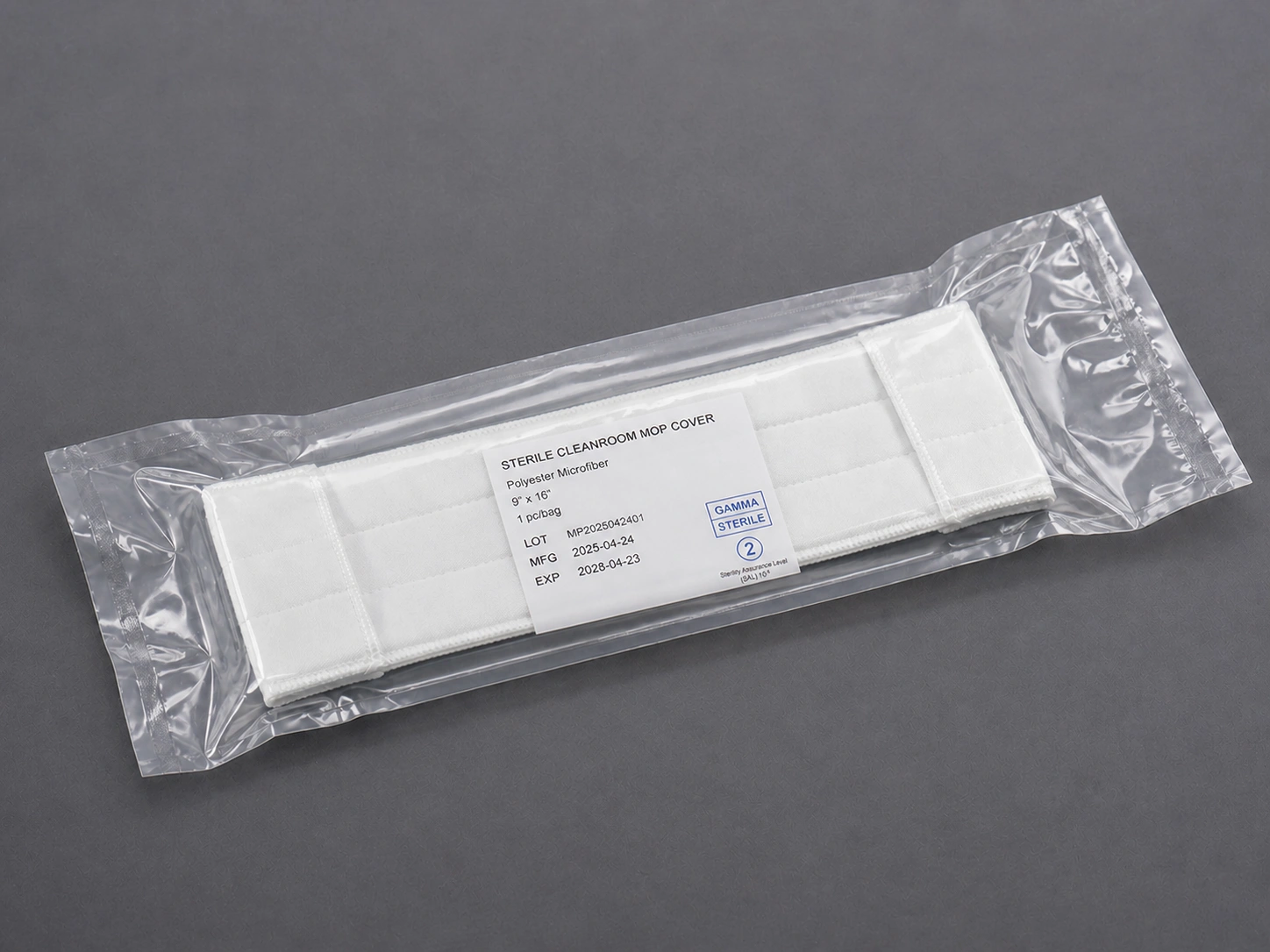
SAL 10⁻⁶ refers to a sterility assurance level where the probability of a viable microorganism remaining is extremely low. If a sterile mop is supplied with SAL-related documentation, buyers should confirm the sterilization method, lot information, and certificate details with the supplier.
Gamma-sterilized mop covers are commonly considered for Grade A/B support areas when sterile cleaning materials are required by facility SOP. Final approval should always be based on the pharmaceutical facility’s internal QA review.
Buyers should check whether the mop is supplied in sterile packaging, whether double-bagging is available, whether lot traceability is provided, and whether the packaging supports cleanroom transfer procedures.
Common documents may include TDS, material information, lot traceability, sterility-related documentation, packaging details, and product compatibility information for internal QA review.
Many sterile cleanroom mop covers are single-use, but some facilities use reusable autoclavable systems or hybrid configurations depending on SOP and contamination-control requirements.
Yes. Sterile mop covers can be used with compatible flat mop frames when the size, attachment method, and cleaning workflow are suitable for the facility’s SOP.
Polyester is often selected for low-lint performance and chemical compatibility, while microfiber is often selected for stronger surface contact and residue pickup.
If you are sourcing sterile cleanroom mops for pharmaceutical manufacturing, biotechnology facilities, laboratories, medical device production, or ISO cleanrooms, MIDPOSI can help you compare sterile mop covers, flat mop systems, disposable options, microfiber and polyester materials, and bucket-based workflows.