Reinraum-Reinigungsmopp • Wahl der Moppstruktur • GMP-orientiert
Flachmopp vs. Schnurmopp in der Reinraumreinigung: Anwendungsszenarien im Vergleich
Ein technischer Vergleich für Beschaffungs-, Qualitätssicherungs-/Validierungs- und Produktionsteams bei der Auswahl des Richtigen Reinraum-Reinigungsmopp basierend auf Kontaminationsrisiko, SOP-Wiederholbarkeit und Skalierbarkeit der Versorgung.
Bevorzugen Sie eine vollständige Übersicht über die Beschaffung von Reinraummopps? Beginnen Sie hier: Großhandel für Reinraummopps – Vollständiger Leitfaden.
In kontrollierten Umgebungen ist die Reinraum-Reinigungsmopp ist mehr als ein Haushaltsgerät. Sein strukturelles Design hat direkten Einfluss auf die Kontaminationskontrolle, die Wiederholbarkeit der Reinigung und die Einhaltung der GMP- und ISO 14644-Anforderungen. Eine der häufigsten Beschaffungsfragen, mit denen Beschaffungsmanager und QA-Teams konfrontiert sind, ist, ob a Flachmopp oder Schnurmopp ist besser für ihren Reinraumbetrieb geeignet.
Dieser Artikel bietet einen anbieterseitigen, anwendungsorientierten Vergleich von Flachmopps und Schnurmopps für die Reinraumreinigung. Die Analyse richtet sich an Pharmahersteller, Krankenhäuser, Einrichtungen für medizinische Geräte und Elektronik-Reinräume, in denen die Moppauswahl mit SOPs, Validierungsprotokollen und Auditerwartungen übereinstimmen muss.
Eine saubere Definition und Klassifizierung von Reinraummopps finden Sie unter: Was ist ein Reinraummopp?.
1. Warum die Moppstruktur bei der Reinraumreinigung wichtig ist
In GMP-Umgebungen müssen Reinigungsprozesse wiederholbar, dokumentiert und validiert sein. Die Moppstruktur bestimmt, wie gleichmäßig Reinigungslösungen aufgetragen werden, wie Verunreinigungen entfernt werden und wie viel Variabilität bei der routinemäßigen Reinigung entsteht.
Aus Sicht des Risikomanagements beeinflusst das Moppdesign Folgendes:
- Konsistenz des Oberflächenkontakts
- Kontrolle der Flüssigkeitsretention und -abgabe
- Gefahr des Partikel- und Faserabwurfs
- Betreiberabhängige Variabilität
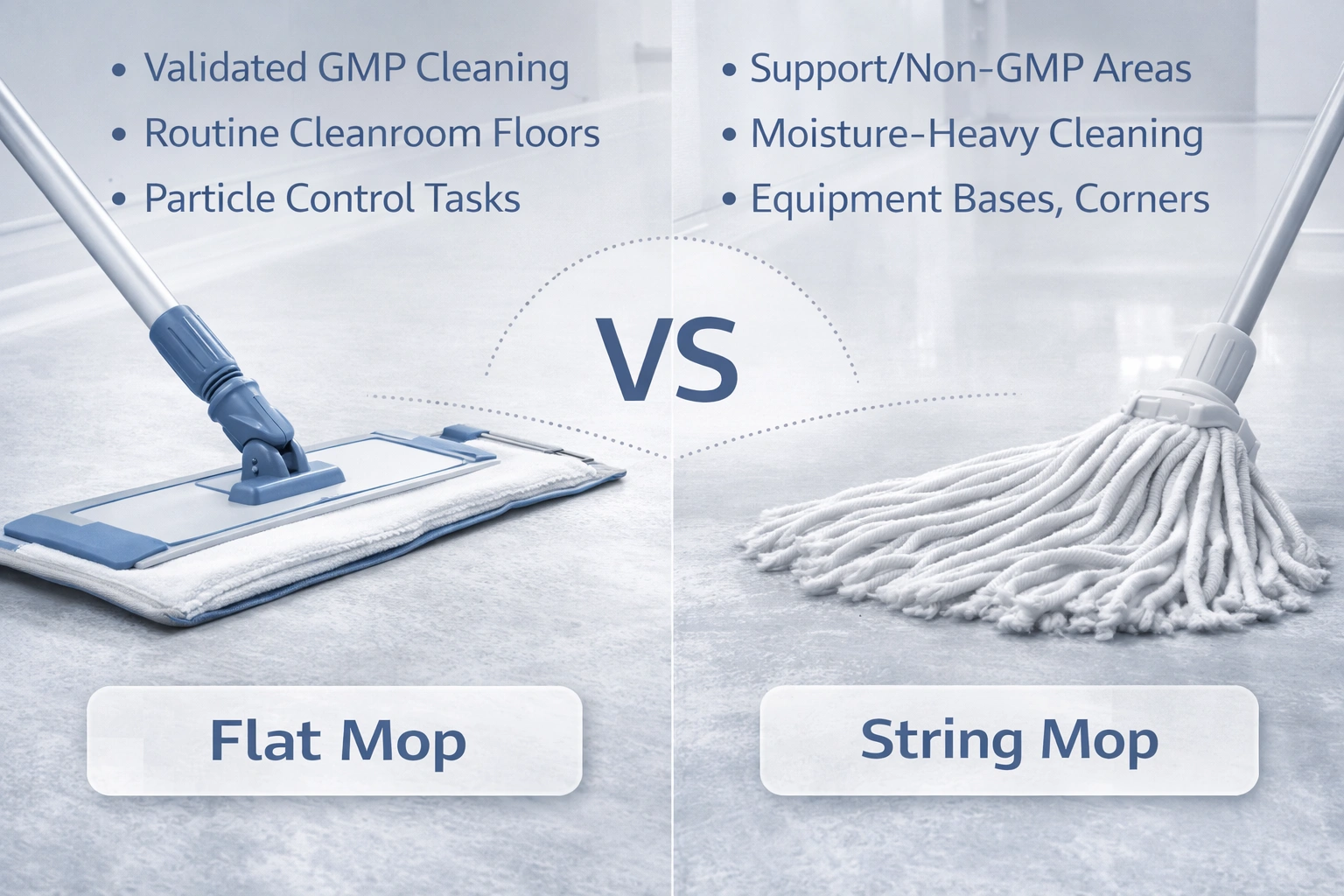
Diese Faktoren erklären, warum Flachmopps und Schnurmopps häufig unterschiedlichen Reinraumzonen zugeordnet und nicht austauschbar verwendet werden.
Wenn Ihre SOPs auf der Einwegkontrolle basieren, vergleichen Sie hier die Systemansätze: Einweg- oder wiederverwendbare Reinraummopps.
2. Was ist ein Reinraum-Reinigungsmopp?
Ein Reinraum-Reinigungsmopp ist ein kontrolliertes Reinigungsgerät, das für den Einsatz in klassifizierten Umgebungen entwickelt wurde. Im Gegensatz zu herkömmlichen Mopps werden Reinraummopps aus fusselarmen Materialien hergestellt, unter kontrollierten Bedingungen verarbeitet und mit Dokumentation zur Unterstützung der GMP- und ISO 14644-Konformität geliefert.
Zu den gemeinsamen Merkmalen gehören:
- Technische Stoffe (Polyester oder Mikrofaser)
- Kontrollierte Partikel- und Faserfreisetzung
- Kompatibilität mit Reinraum-Desinfektionsmitteln
- Rückverfolgbarkeit und Chargenkonsistenz
Auch die Wahl des Materials spielt eine Rolle. Verwandter technischer Vergleich: Reinraummopps aus Polyester vs. Mikrofaser.
3. Flachmopps: Design, Stärken und Grenzen
Flachmopps zeichnen sich durch eine rechteckige, ebene Reinigungsfläche aus, die an einem starren oder halbstarren Rahmen befestigt ist. Das Wischpad sorgt für einen gleichmäßigen Kontakt mit dem Boden oder der Oberfläche und ist daher in vielen GMP-regulierten Umgebungen eine bevorzugte Option.
Die wichtigsten Stärken flacher Reinraummopps
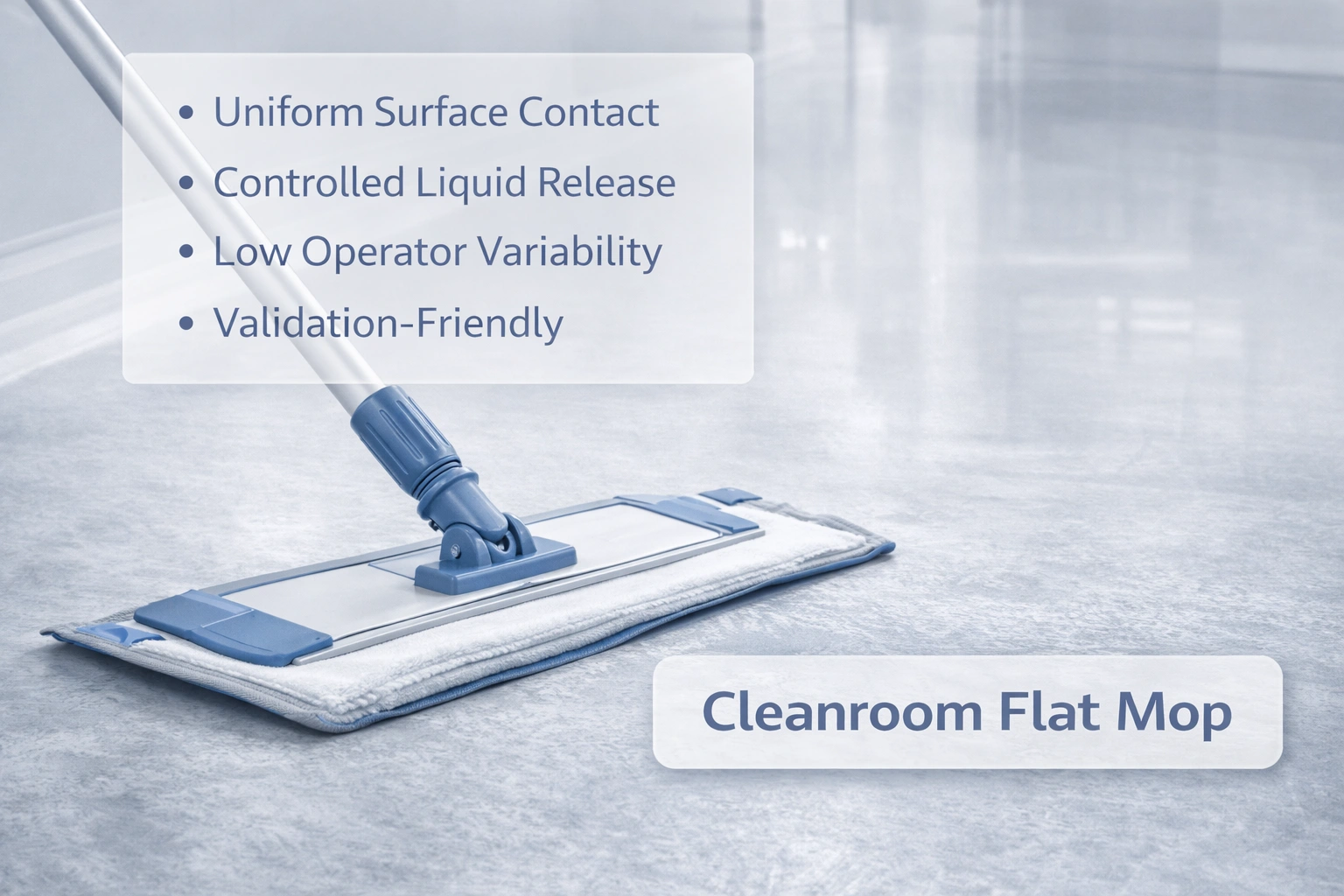
- Gleichmäßiger Oberflächenkontakt: Eine gleichmäßige Druckverteilung unterstützt wiederholbare Reinigungsergebnisse
- Kontrollierte Flüssigkeitsabgabe: einfachere Standardisierung der Benetzungsgrade in SOPs
- Geringere Bedienervariabilität: geringere Abhängigkeit von der individuellen Technik
- Validierungsfreundlich: vorhersehbares Verhalten über Reinigungszyklen hinweg
Typische Einschränkungen
- Weniger effektiv auf unebenen Oberflächen oder Ecken
- Erfordert eine ordnungsgemäße Rahmen- und Polsterkompatibilität
Flache Wischmopps werden häufig in pharmazeutischen Reinräumen, aseptischen Korridoren und kontrollierten Produktionszonen verwendet, wo die Reinigungskonsistenz von entscheidender Bedeutung ist.
GMP-Anwendungserwartungen und Käuferkriterien: Anforderungen an Wischmopps für pharmazeutische Reinräume.

4. String Mops: Design, Stärken und Grenzen
Schnurmopps bestehen aus mehreren Strängen, die an einem zentralen Kopf befestigt sind. Durch die flexible Struktur passt sich der Mopp an unregelmäßige Oberflächen, Kanten und Geräteuntergründe an.
Die wichtigsten Stärken von Saiten-Reinraummopps
- Hohe Flüssigkeitsretention: geeignet für Nassreinigungs- und Spülschritte
- Oberflächenanpassungsfähigkeit: Effektiv um Gerätebeine und -ecken herum
- Mechanische Bewegung: hilfreich bei der Entfernung schwererer Rückstände
Typische Einschränkungen
- Höhere betreiberabhängige Variabilität
- Schwieriger ist es, den Anpressdruck zu standardisieren
- Potenziell höhere Anforderungen an die Faserkontrolle
In Reinräumen sind Schnurmopps häufig auf minderwertige Bereiche oder bestimmte Reinigungsschritte und nicht auf kritische GMP-Zonen beschränkt.
5. Flachmopp vs. Fadenmopp: Reinraum-Vergleichstabelle
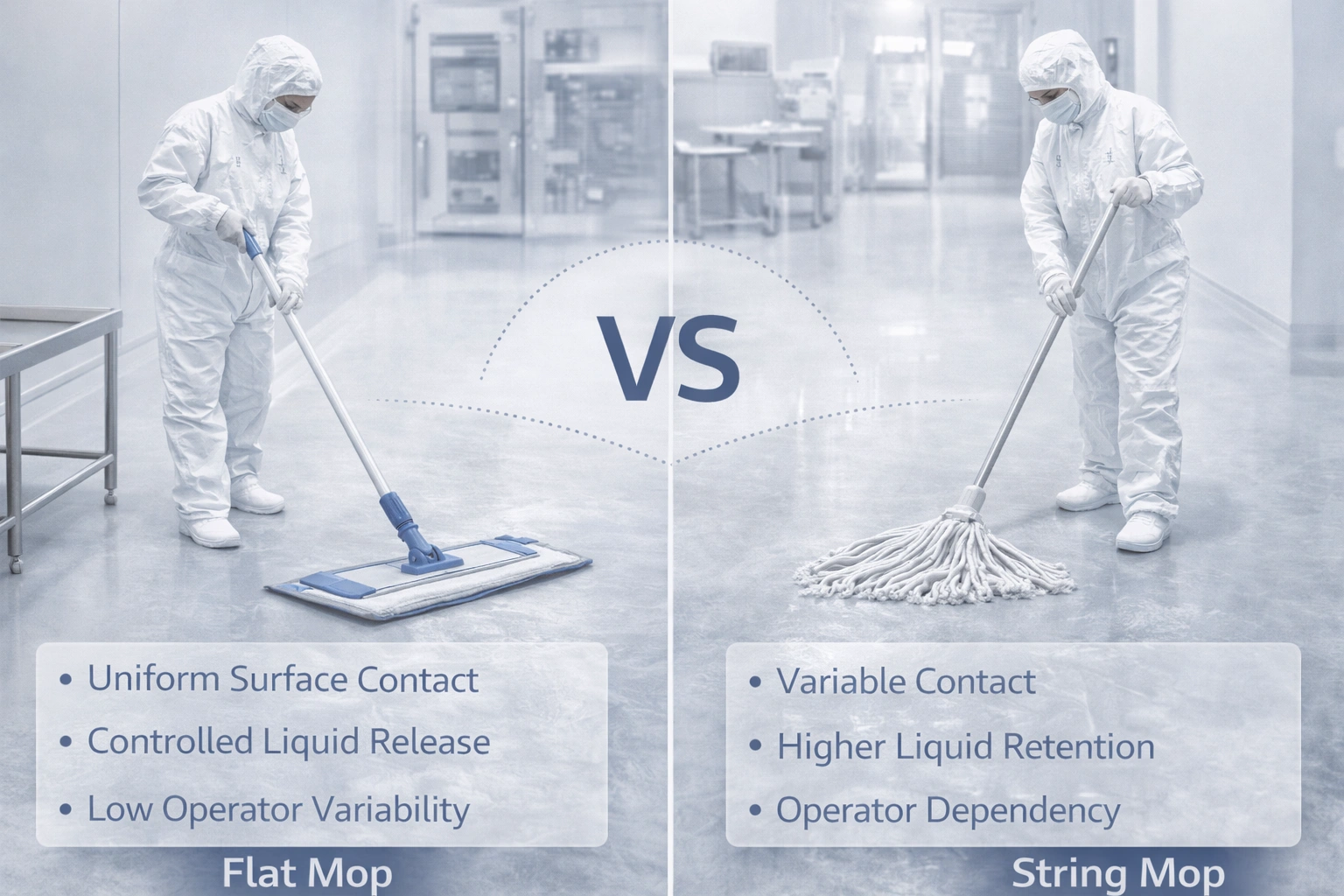
| Kriterien | Flachmopp | Schnurwischer |
|---|---|---|
| Konsistenz des Oberflächenkontakts | Hoch und gleichmäßig | Variable |
| Flüssigkeitskontrolle | Kontrolliert und wiederholbar | Hohe Retention, weniger kontrolliert |
| Bedienervariabilität | Niedrig | Höher |
| Validierungseignung | Hoch | Mäßig |
| Typische GMP-Verwendung | Routinemäßige validierte Reinigung | Unkritische oder unterstützende Bereiche |
Compliance-Mapping und ISO/GMP-Referenzen: ISO 14644 & GMP-Reinraummopps.
6. Anwendungsszenarien nach Branchen
Pharmazeutisch & GMP-Reinräume
Flachmopps werden im Allgemeinen aufgrund der vorhersehbaren Leistung und der einfacheren Validierung bevorzugt. Fadenwischer werden häufiger in unkritischen Zonen eingesetzt oder dort, wo SOPs eine höhere Variabilität ermöglichen.
Krankenhäuser & Saubere Bereiche im Gesundheitswesen
Je nach Risikogebiet können beide Mopptypen verwendet werden. Flache Wischmopps sind in kontrollierten Zonen üblich; Schnurmopps können in Versorgungs- oder Übergangsbereichen verwendet werden.
Herstellung medizinischer Geräte
Flachmopps werden häufig ausgewählt, um das Faserrisiko zu reduzieren und konsistente Reinigungsergebnisse zu erzielen, insbesondere dort, wo Rückstände die Produktleistung beeinträchtigen können.
Elektronik & Halbleiter
Flache Wischmopps unterstützen die Partikelkontrolle und steigern so die Produktionsausbeute. Fadenmopps werden im Allgemeinen außerhalb kritischer Produktionszonen für schwerere Nassreinigungsaufgaben eingesetzt.
7. Überlegungen zur Compliance und Validierung
Unabhängig vom Mopptyp sollten GMP-Käufer Folgendes bewerten:
- Materialzusammensetzung und Faserkontrolle
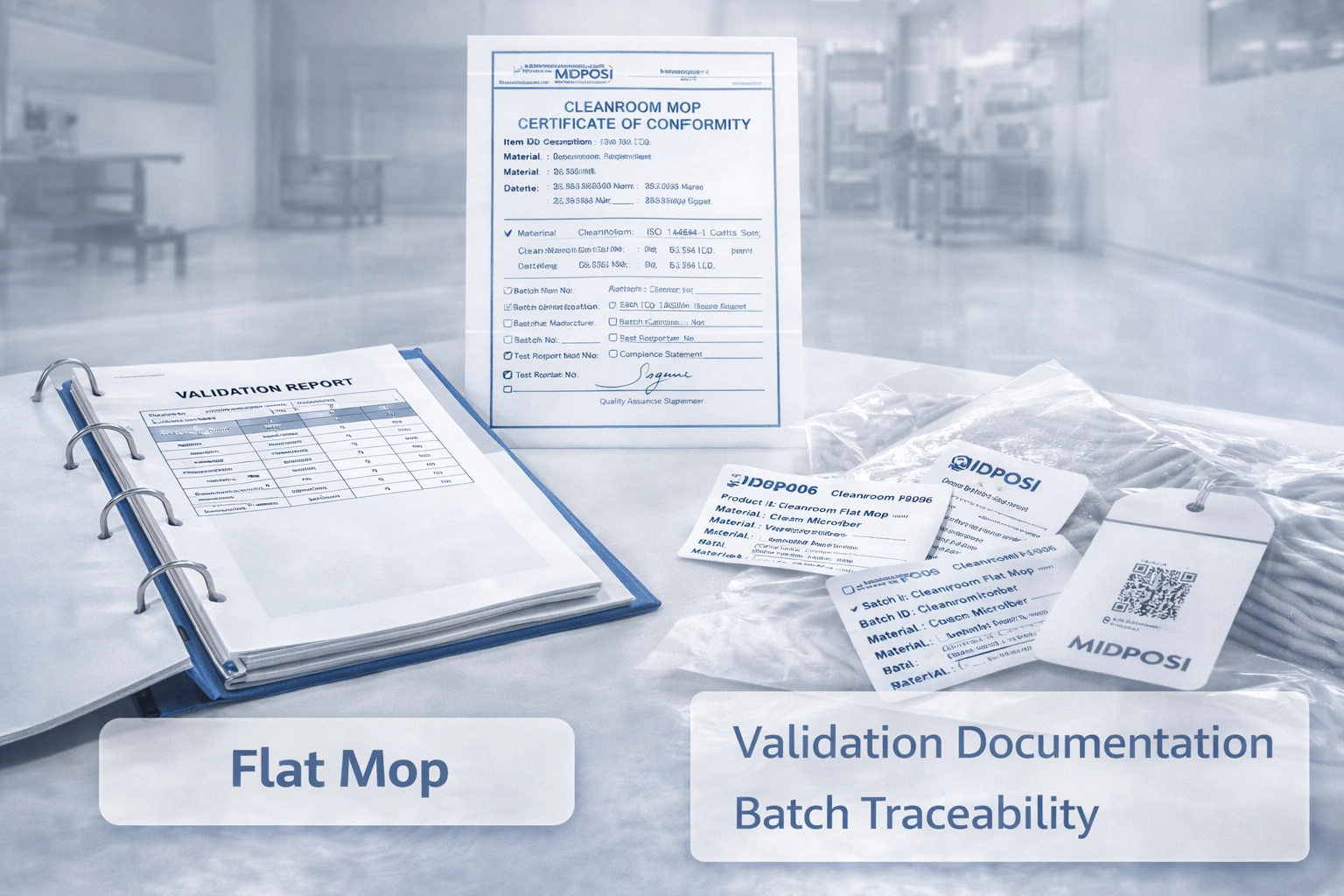
- Dokumentation und Chargenrückverfolgbarkeit
- Lieferantenänderungsmanagement
Zur Lieferantenauswahlmethodik: So wählen Sie einen Großhandelslieferanten für Reinraummopps aus.
Checkliste für die Beschaffung (Reinraum-Reinigungsmopp)
- Zonenrisiko definieren: Passen Sie den Mopptyp an die Reinraumklassifizierung und das Kontaminationsrisiko an.
- Bestätigen Sie die SOP-Passform: Benetzungsmethode, Desinfektionsmittel, Kontaktzeit und Akzeptanzkriterien.
- Kontrollvariabilität: Priorisieren Sie die Wiederholbarkeit für GMP-kritische Zonen.
- Dokumentation überprüfen: Rückverfolgbarkeit und Qualitätskontrollen für die Auditbereitschaft.
- Planskalierbarkeit: stabile Versorgung, Durchlaufzeit und Chargenkonsistenz.
Zurück zum Sourcing-Hub: Großhandel für Reinraummopps – Vollständiger Leitfaden.