Pharmazeutik • GMP • Validierung • Kontaminationskontrolle
Reinraum-Moppanforderungen für die pharmazeutische Herstellung (GMP & Validierung)
Ein GMP-orientierter Leitfaden zur Auswahl eines Pharmazeutischer Reinraummopp based on contamination risk, SOP repeatability, validation, and audit readiness—written for procurement and QA teams.
Beginnen Sie im Sourcing-Hub: Großhandel für Reinraummopps – Vollständiger Leitfaden.
In der pharmazeutischen Herstellung gelten Reinigungswerkzeuge nicht als Hilfsgeräte. A Pharmazeutischer Reinraummopp ist Teil der Kontaminationskontrollstrategie und hat direkten Einfluss auf die GMP-Konformität, die Produktsicherheit und die Inspektionsergebnisse. Für Beschaffungsmanager, QA-/Validierungsteams und Facility Manager muss die Auswahl eines Mopps den gesetzlichen Erwartungen entsprechen und nicht nur der Bequemlichkeit oder den Kosten.
Dieser Artikel beschreibt den Schlüssel Anforderungen an Reinraummopps für die pharmazeutische Herstellung, mit Schwerpunkt auf GMP-Prinzipien, Validierungslogik und Audit-Bereitschaft. Es ist aus technischer Perspektive der Anbieterseite geschrieben, um eine risikobasierte Entscheidungsfindung zu unterstützen.
Sind Sie mit den Grundlagen des Wischsystems noch nicht vertraut? Lesen: Was ist ein Reinraummopp?.
1. Warum Reinraummopps in pharmazeutischen GMP-Umgebungen wichtig sind
In GMP-regulierten Anlagen ist die Reinigung ein validierter Prozess, der darauf abzielt, Rückstände zu entfernen, mikrobielle Kontamination zu kontrollieren und Kreuzkontaminationen zwischen Produkten zu verhindern. Der Reinraummopp ist dabei ein Direktkontaktwerkzeug.
Eine unsachgemäße Wahl des Mopps kann folgende Risiken mit sich bringen:
- Unkontrollierter Partikel- oder Faserabwurf
- Uneinheitliche Anwendung von Desinfektionsmitteln
- Unterschiedliche Reinigungsergebnisse zwischen den Bedienern
- Lücken in der Rückverfolgbarkeit und Dokumentation
Aus diesen Gründen bewerten Aufsichtsinspektoren Reinigungswerkzeuge häufig als Teil der Gesamtstrategie zur Kontaminationskontrolle, insbesondere in pharmazeutischen Reinräumen der Klassen A–D.
Entscheidungspunkt auf Systemebene: Einweg- oder wiederverwendbare Reinraummopps.
2. Überblick über die Reinigungsanforderungen für pharmazeutische Reinräume
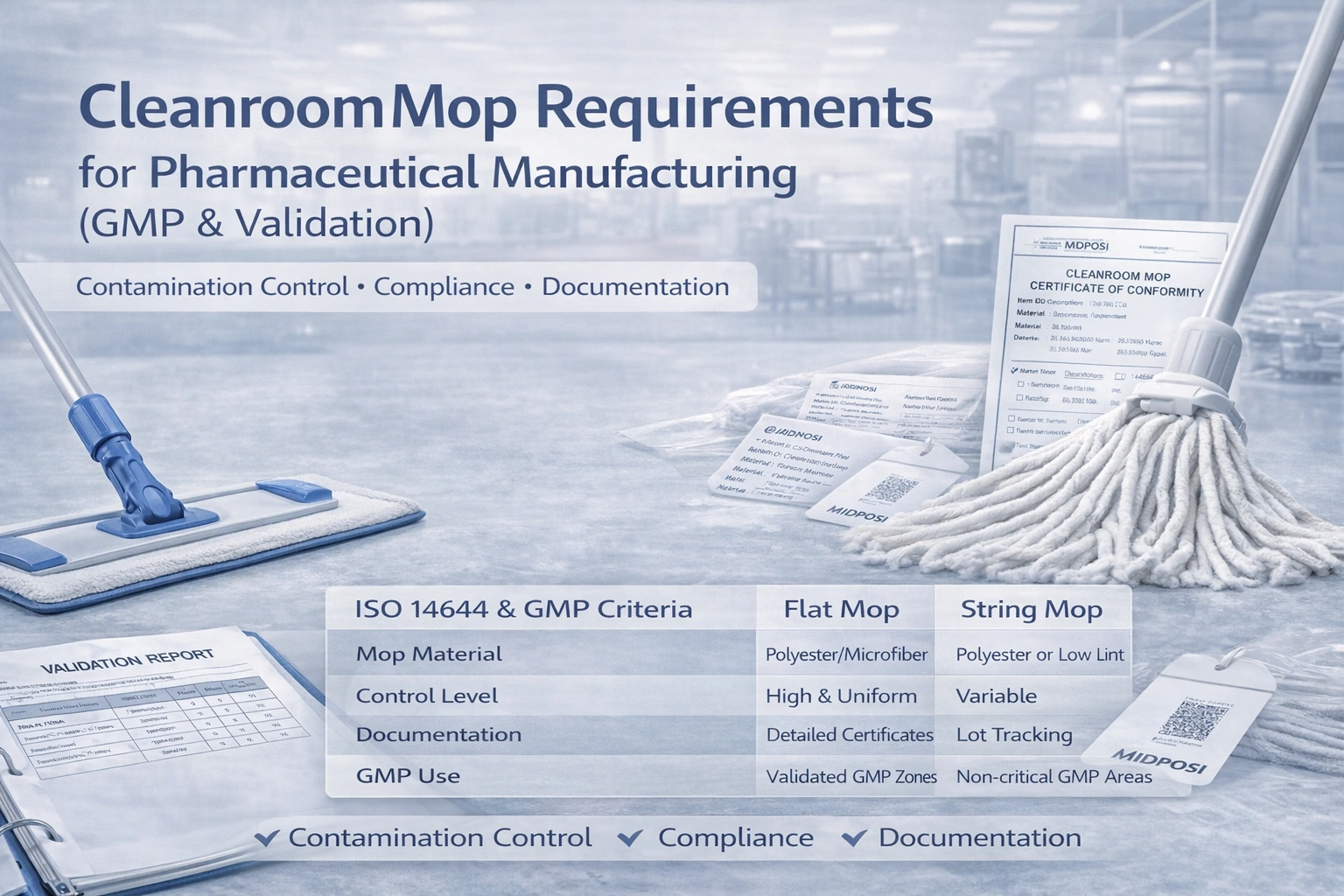
Reinigungsprogramme für pharmazeutische Reinräume unterliegen einer Kombination aus GMP-Grundsätzen, internen SOPs und internationalen Standards wie ISO 14644. Reinigungswerkzeuge müssen Folgendes unterstützen:
- Entfernung sichtbarer und unsichtbarer Rückstände
- Kontrolle der Partikel- und Mikrobenkontamination
- Wiederholbarkeit validierter Reinigungsprozesse
- Dokumentierte Nachweise für Audits und Inspektionen
Im Gegensatz zur allgemeinen industriellen Reinigung liegt bei der pharmazeutischen Reinraumreinigung der Schwerpunkt auf der Prozesskontrolle über Reinigungskraft oder -geschwindigkeit.
Standards-Mapping: ISO 14644 & GMP-Reinraummopps.
3. GMP-Grundsätze, die sich auf die Auswahl von Reinraum-Mopps auswirken
Risikobasierte Kontaminationskontrolle
Die Auswahl des Mopps sollte das Risikoprofil der Reinraumzone widerspiegeln. In höherwertigen Bereichen ist eine strengere Kontrolle von Fasern, Partikeln und mikrobieller Belastung erforderlich.
Prozesswiederholbarkeit
Die Reinigungsergebnisse müssen unabhängig vom Bediener konsistent sein. Design und Material des Mopps spielen eine entscheidende Rolle bei der Minimierung der Variabilität.
Rückverfolgbarkeit und Änderungskontrolle
Jede Änderung des Moppmaterials, des Lieferanten oder des Herstellungsprozesses kann eine erneute Validierung auslösen. Stabilität und Konsistenz sind daher unerlässlich.
Wenn Ihr Risikoschwerpunkt auf der Partikel-/Faserkontrolle liegt, lesen Sie: Teilchen & Kontrolle von Faserrückständen.
4. Anforderungen an Moppmaterial in pharmazeutischen Reinräumen
Reinraummopps aus Polyester
Aus Endlosfilamentgarnen hergestellte Polyestermopps werden aufgrund ihrer geringen und vorhersehbaren Partikelabgabe häufig in pharmazeutischen Umgebungen eingesetzt.
- Starke chemische Beständigkeit gegenüber Desinfektions- und Lösungsmitteln
- Stabile Leistung über Chargen hinweg
- Einfachere Integration in validierte Prozesse
Mikrofaser-Reinraummopps
Mikrofasermopps sorgen aufgrund ihrer feinen Faserstruktur für eine verbesserte mechanische Partikelerfassung. Sie erfordern jedoch strengere Herstellungs- und Prozesskontrollen.
- Höhere Rückstands- und Partikelentfernungseffizienz
- Größere Abhängigkeit von Faserqualität und -verarbeitung
- Möglicherweise höhere Validierungskomplexität
Tiefgehender Materialvergleich: Reinraummopps aus Polyester vs. Mikrofaser.

5. Anforderungen an Mop-Struktur und -Format
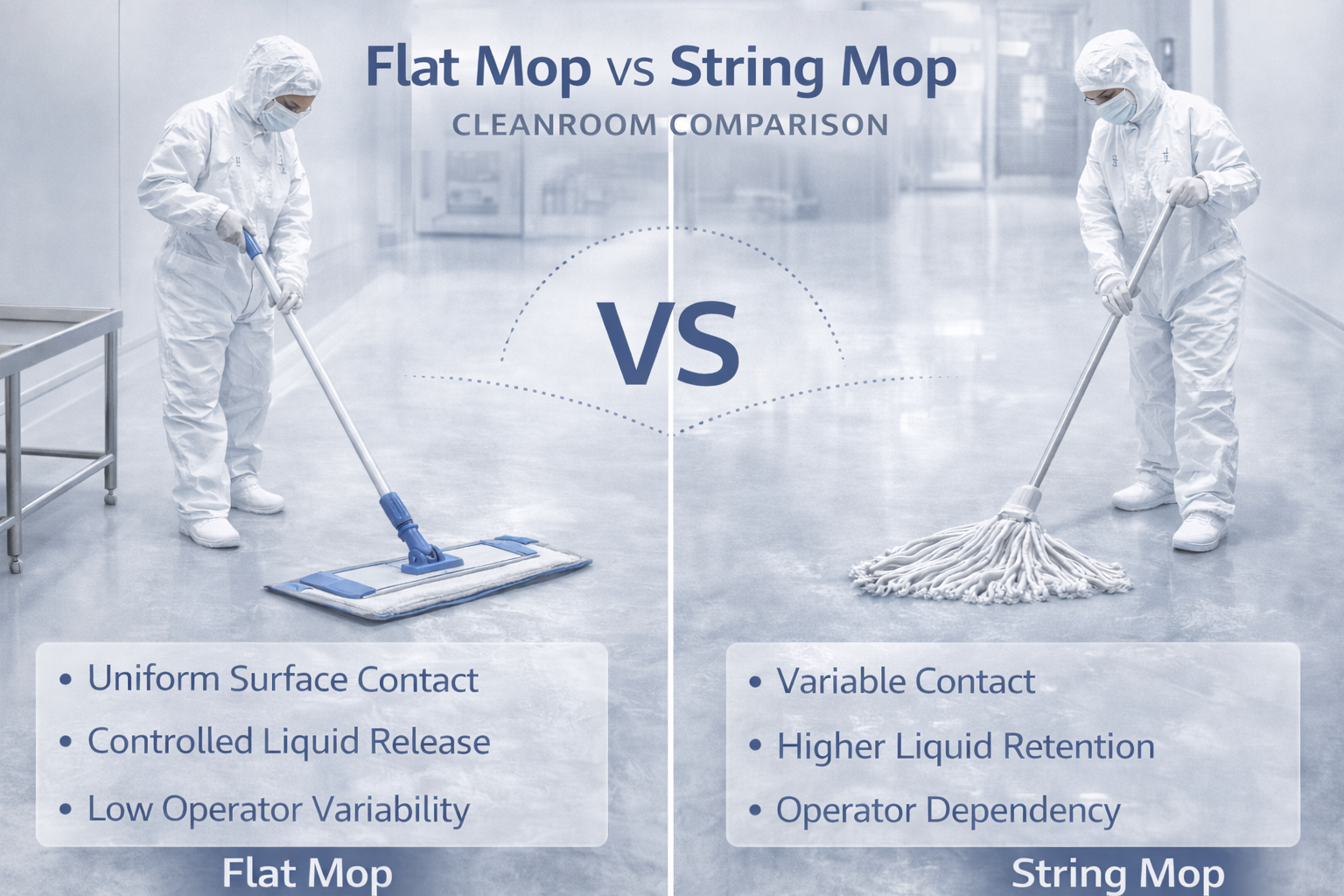
Flache Mopps
Flache Mopps bieten einen gleichmäßigen Oberflächenkontakt und eine kontrollierte Flüssigkeitsabgabe und eignen sich daher für validierte pharmazeutische Reinigungsverfahren.
Fadenwischer
Schnurmopps bieten eine höhere Flüssigkeitsretention und Flexibilität, führen jedoch zu einer größeren bedienerabhängigen Variabilität.
Leitfaden zur Strukturauswahl: Flachmopp vs. Schnurmopp in der Reinraumreinigung.
Einweg- oder Mehrwegmopps
In pharmazeutischen Zonen mit höherem Risiko werden oft Einweg-Mopps bevorzugt, um Kreuzkontaminationen und Waschvariablen zu reduzieren, während in kontrollierten Unterstützungsbereichen wiederverwendbare Mops verwendet werden können.
Systemansatz: Einweg- oder wiederverwendbare Reinraummopps.
6. Erwartungen an die Partikel-, Faser- und Rückstandskontrolle
Pharmazeutische Reinraummopps müssen strenge Anforderungen an die Partikel- und Faserkontrolle erfüllen.
- Geringe Flusen- und Faserabgabe unter nassen und trockenen Bedingungen
- Minimale Rückstandsbildung während des Gebrauchs
- Kompatibilität mit Umweltüberwachungsprogrammen
Wenn diese Faktoren nicht kontrolliert werden, kann dies zu einer erhöhten Partikelzahl oder zu ungünstigen Inspektionsergebnissen führen.
Detaillierte Risikokontrolle: Teilchen & Kontrolle von Faserrückständen.
7. Reinigungsvalidierungs- und Dokumentationsanforderungen
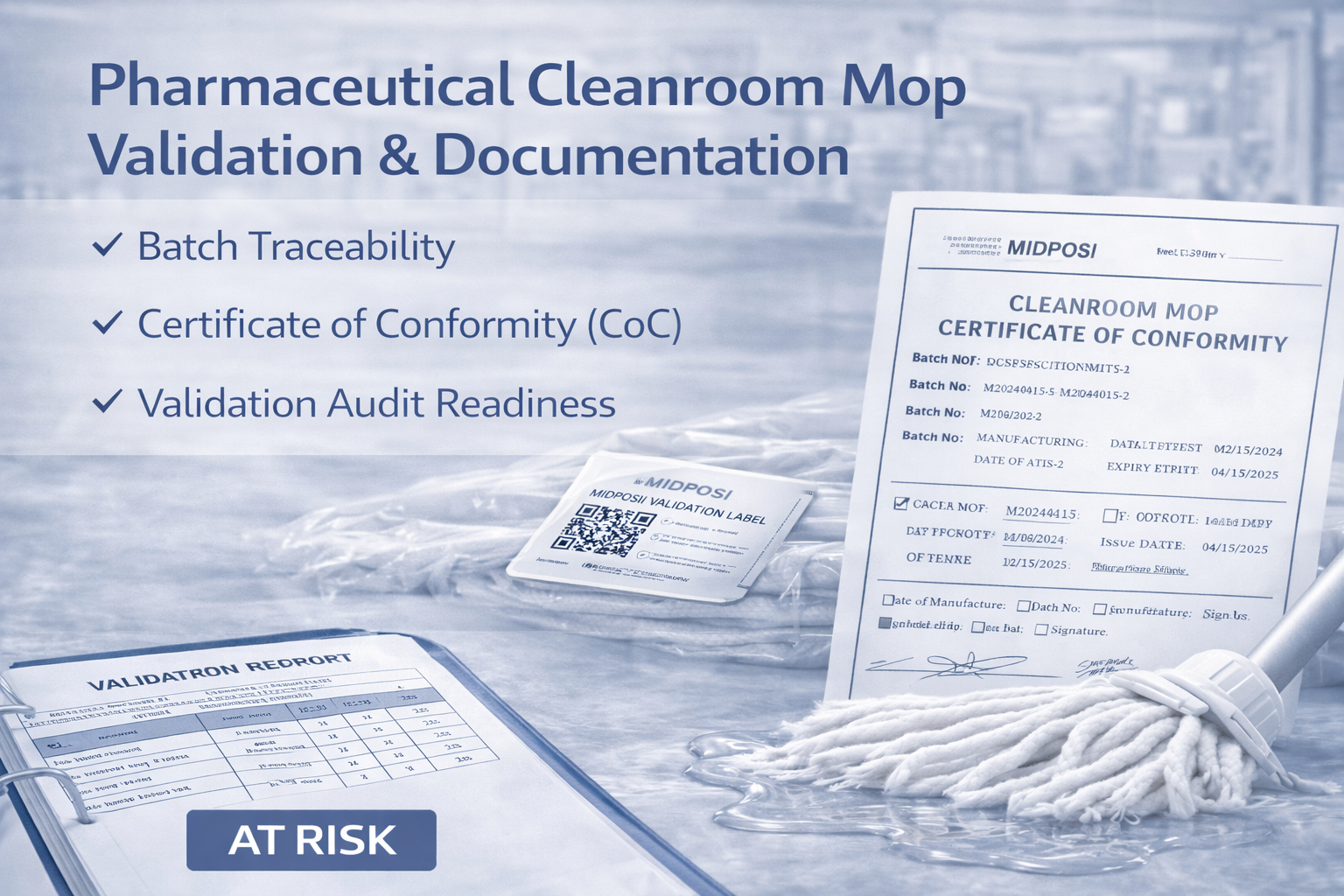
Für die Reinigungsvalidierung in pharmazeutischen Umgebungen ist ein dokumentierter Nachweis erforderlich, dass der Reinigungsprozess durchweg vordefinierte Akzeptanzkriterien erfüllt.
Bei Reinraum-Mopps umfasst dies typischerweise:
- Materialspezifikationen und Konformitätsbescheinigungen
- Rückverfolgbarkeit von Chargen und Chargen
- Dokumentation des Änderungsmanagements
- Unterstützung für Reinigungsvalidierungsprotokolle
Details zur Validierungsdokumentation: Dokumentation zur Validierung von Reinraum-Mopps.
8. Überlegungen zu Audits und behördlichen Inspektionen
Bei GMP-Inspektionen können Aufsichtsbehörden Folgendes überprüfen:
- Abstimmung zwischen SOPs und verwendeten Reinigungswerkzeugen
- Konsistenz der Moppmaterialien über Chargen hinweg
- Aufzeichnungen zur Lieferantenqualifikation
- Nachweis der Änderungskontrolle
Eine klare Dokumentation und Lieferantentransparenz tragen dazu bei, das Inspektionsrisiko zu reduzieren.
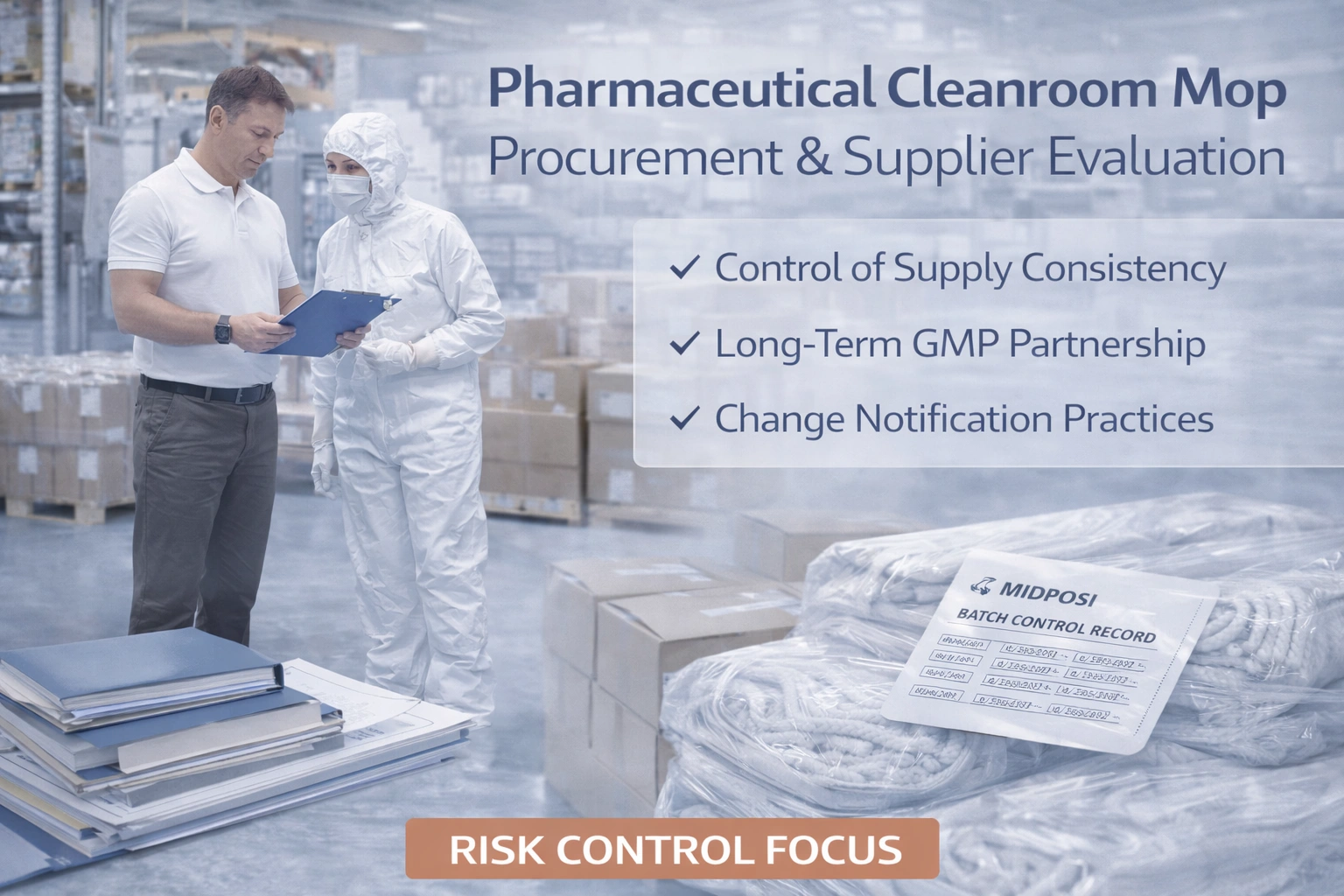
9. Wie Beschaffungs- und Qualitätssicherungsteams Mopplieferanten bewerten sollten
Die Lieferantenbewertung sollte über den Stückpreis und die Verfügbarkeit hinausgehen.
- Fertigungskontrollen und Chargenkonsistenz
- Dokumentationsunterstützung für die GMP-Validierung
- Benachrichtigungspraktiken ändern
- Skalierbarkeit für langfristige Versorgung
Lieferantenbewertungsrahmen: So wählen Sie einen Großhandelslieferanten für Reinraummopps aus.
Wenn Sie einen tieferen Einblick in die Stabilitätskontrollen benötigen: Qualitätskonsistenz & Chargenkontrolle.
10. Häufige Beschaffungsfehler bei pharmazeutischen Reinraum-Mopps
- Auswahl von Mopps auf Kostenbasis ohne Validierungs-Folgenabschätzung
- Lieferantenwechsel ohne formelle Änderungskontrolle
- Ignorieren der Variabilität von Charge zu Charge
- Dokumentationspflichten außer Acht gelassen
Die Vermeidung dieser Fehler trägt dazu bei, die GMP-Konformität und Inspektionsbereitschaft aufrechtzuerhalten.
11. Warum MIDPOSI pharmazeutische GMP-Reinigungsprogramme unterstützt
MIDPOSI liefert Reinraummopps für pharmazeutische Umgebungen mit Schwerpunkt auf Chargenkonsistenz, Dokumentationsunterstützung und langfristiger Lieferstabilität. Ziel ist die Unterstützung konformer Reinigungsprogramme und nicht die Förderung eines einzelnen Produkttyps.
Praktische Beschaffungsvariablen wie Mindestbestellmenge und Vorlaufzeit: MOQ, Vorlaufzeit & Preise.
GMP-orientierte Beschaffungscheckliste
- Reinraumqualität definieren: Passen Sie die Wahl des Mopps an die Risikozone und die Reinigungsabsicht an.
- Bestätigen Sie die SOP-Passform: Benetzungsmethode, Desinfektionsmittelverträglichkeit, Kontaktzeit, Akzeptanzkriterien.
- Kontrollvariabilität: Reduzierung der Bedienerabhängigkeit in GMP-kritischen Bereichen.
- Dokumentation überprüfen: Chargenrückverfolgbarkeit, CoC, Änderungskontrolle, Validierungsunterstützung.
- Planskalierbarkeit: Stabile Vorlaufzeit und konsistente Leistung von Charge zu Charge.
Zurück zur Säulennabe: Großhandel für Reinraummopps – Vollständiger Leitfaden.