Aseptischer Reinraumbetrieb
ISO 5-Reinraumreinigungsverfahren: Schritt-für-Schritt-Anleitung für pharmazeutische aseptische Umgebungen
ISO 5 cleanrooms require the strictest contamination control. This guide explains the correct cleaning sequence, unidirectional mopping technique, disinfectant strategy, environmental monitoring feedback, and documentation requirements used in pharmaceutical aseptic manufacturing.
Was ist ISO 5-Reinraumreinigung?
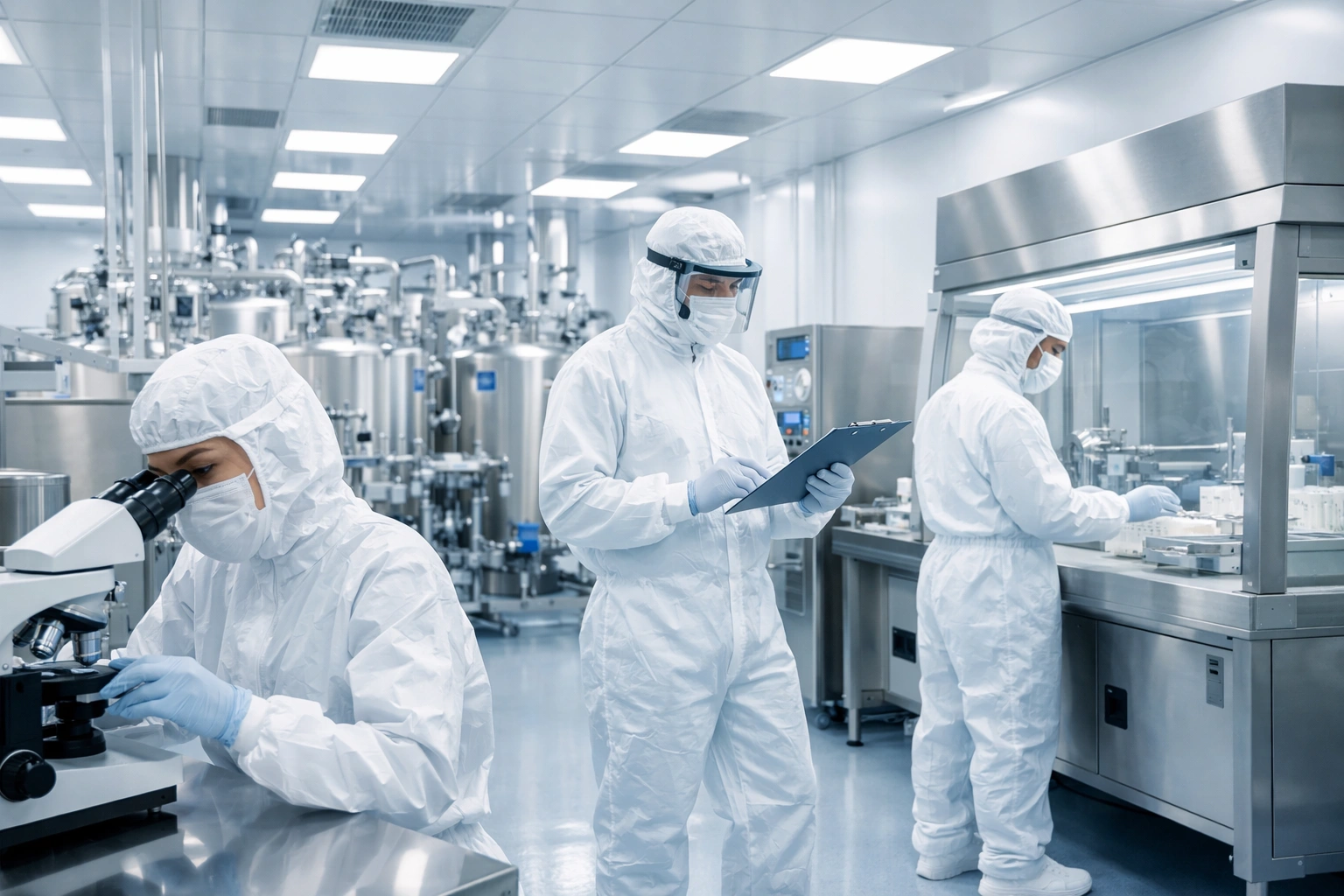
ISO 5 cleanroom cleaning refers to validated cleaning and disinfection procedures used in critical aseptic environments where airborne particle levels must remain below 3,520 particles per cubic meter according to ISO 14644-1. These procedures typically include sterile cleaning tools, unidirectional mopping techniques, validated disinfectants, and fully documented cleaning sequences to maintain pharmaceutical aseptic conditions.
Warum ISO 5-Reinigungsverfahren von entscheidender Bedeutung sind
ISO 5 cleanrooms are typically used in the most critical pharmaceutical operations including aseptic filling, sterile compounding, vaccine manufacturing, and cell or gene therapy production.
According to EU GMP Annex 1 and ISO 14644 standards, these environments require extremely strict contamination control procedures to prevent microbial and particulate contamination during manufacturing.
Because these spaces operate at extremely low contamination thresholds, even small procedural mistakes during cleaning can introduce particles, microorganisms, or chemical residues that compromise sterility assurance.
Aus diesem Grund sollten ISO 5-Reinigungsverfahren nach validierten Standards durchgeführt werden SOPs für die Reinraumreinigung, while the actual execution details must remain specific to critical-grade aseptic environments.
ISO 5-Reinraumreinigungsverfahren Schritt für Schritt
1. Vorbereitung und Materialeinrichtung
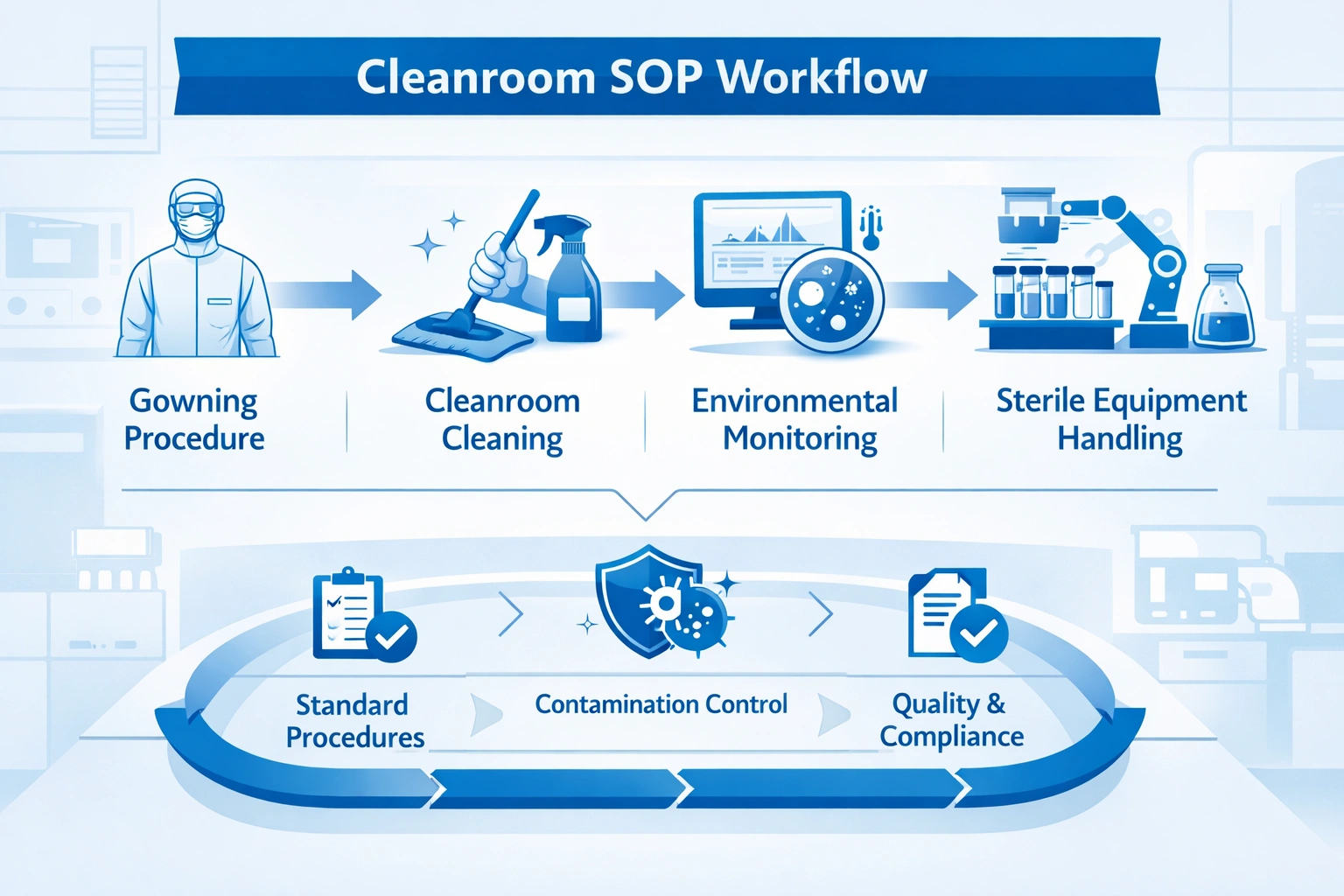
Operators must first enter the cleanroom using validated gowning procedures appropriate for critical aseptic zones. Only approved cleaning tools and disinfectants should be introduced into the area. Common materials include sterile microfiber mop heads, low-lint cleanroom wipes, sterile buckets, and pharmaceutical-grade disinfectants.
All cleaning tools must be dedicated to ISO 5 areas to avoid cross-contamination from lower-grade cleanrooms or uncontrolled support spaces.
2. Reinigung von oben nach unten
Cleaning must follow a strict sequence beginning with ceilings, followed by walls, equipment contact surfaces, and finally floors. This top-to-bottom structure is essential because contaminants removed from upper surfaces should not fall onto already-cleaned lower areas.
3. Unidirektionales Wischen
Bei der Bodenreinigung in ISO-5-Umgebungen sollten immer unidirektionale Striche nach einer validierten Methode verwendet werden Reinraum-Wisch-SOP. This approach prevents particle redistribution and helps move contamination toward the exit of the cleanroom.
Slight overlap between mop passes improves cleaning coverage and reduces the risk of leaving untreated zones in critical floor areas.
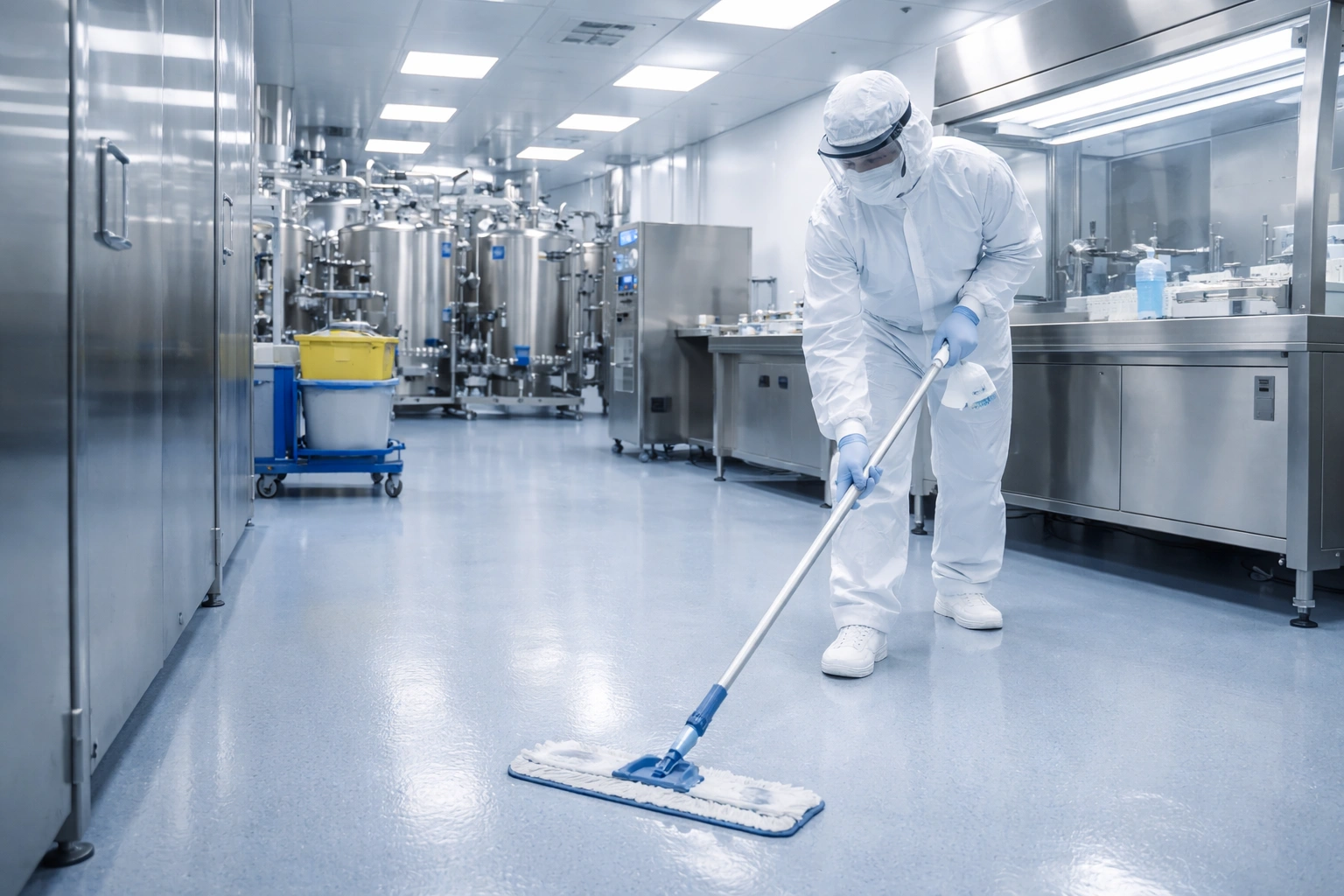
Um die Partikelabgabe zu minimieren, verwenden Einrichtungen in der Regel validierte Pharmazeutische Reinraum-Moppsysteme speziell für aseptische Produktionsumgebungen entwickelt.
4. Desinfektionsmittelanwendung
After physical cleaning, disinfectants are applied to reduce microbial contamination. Many pharmaceutical facilities rotate multiple disinfectants, including alcohol-based disinfectants, hydrogen peroxide solutions, and periodic sporicidal agents.
The cleaning procedure must define the minimum contact time required for each chemical agent, because insufficient wet contact time can reduce disinfection effectiveness in critical environments.
5. Feedback zur Umweltüberwachung
ISO 5 cleaning programs should always be connected with environmental monitoring data. Surface monitoring, airborne particle counts, and microbial sampling results help confirm whether the cleaning procedure is working as intended.
If contamination trends begin to rise, facilities should review cleaning frequency, disinfectant rotation, operator technique, and tool suitability.
6. Dokumentation und Überprüfung
Every cleaning activity should be documented, including the operator, time, disinfectant used, lot or batch details where required, and the exact area cleaned.
Documentation supports traceability, regulatory inspections, internal quality review, and ongoing improvement of contamination control performance.
Häufige ISO 5-Reinigungsfehler
Falsche Reinigungsrichtung
Hin- und Herbewegungen verteilen die Kontamination neu, anstatt sie aus dem Reinraum zu befördern.
Verwendung nicht steriler Werkzeuge
Nicht validierte Werkzeuge können Fasern, Partikel oder Rückstände in kritische aseptische Bereiche abgeben.
Überspringen der Einwirkzeit des Desinfektionsmittels
Eine kurze Kontaktzeit verhindert, dass das Desinfektionsmittel eine validierte mikrobielle Reduktion erreicht.
Falsche Häufigkeit des Moppwechsels
Überbeanspruchte Moppköpfe können die Verschmutzung verbreiten, anstatt sie effektiv zu entfernen.
Schwache Dokumentation
Unvollständige Aufzeichnungen erhöhen das Auditrisiko und verringern die Rückverfolgbarkeit in pharmazeutischen Betrieben.
Falsche Desinfektionsmittelrotation
Using the same disinfectant repeatedly may allow resistant microorganisms to survive. Many facilities rotate alcohol, hydrogen peroxide, and periodic sporicidal agents.
Verwendung der falschen Reinigungsstrategie
Die Einrichtungen sollten beurteilen, ob Einweg-Reinraum-Mopps vs. wiederverwendbare Reinraum-Mopps sind für ihr Kontaminationskontrollprogramm besser geeignet.
Ignorieren von Überwachungstrends
Reinigungsprogramme sollten angepasst werden, wenn Mikroben- oder Partikelüberwachungsdaten auf ein steigendes Kontaminationsrisiko hinweisen.
Häufig gestellte Fragen
Was ist eine Reinraumreinigung nach ISO 5?
ISO 5 cleanroom cleaning is a validated cleaning process used in critical pharmaceutical and aseptic environments where particle and microbial contamination must be tightly controlled.
Welcher Partikelgrenzwert definiert einen ISO 5-Reinraum?
According to ISO 14644-1, an ISO 5 cleanroom must maintain airborne particle concentrations below 3,520 particles greater than or equal to 0.5 micrometers per cubic meter.
Wie oft sollte ein ISO 5-Reinraum gereinigt werden?
ISO 5 cleanrooms are typically cleaned before production, during operations as required by facility SOPs, and after batch completion. The exact frequency depends on process risk and contamination control strategy.
Warum ist unidirektionales Wischen in ISO-5-Reinräumen wichtig?
Unidirectional mopping helps move contamination in a controlled direction and reduces the risk of redistributing particles across already-cleaned surfaces.
Welche Desinfektionsmittel werden üblicherweise in ISO 5-Reinräumen verwendet?
Common disinfectants include alcohol-based disinfectants, hydrogen peroxide solutions, and periodic sporicidal agents depending on the validated contamination control strategy.
Welche Desinfektionsmittelrotation wird für ISO 5-Reinräume empfohlen?
Many pharmaceutical facilities use alcohol-based disinfectants for routine cleaning, hydrogen peroxide or other broad-spectrum agents for scheduled rotation, and sporicidal agents periodically to control resistant microorganisms.
Welches Wischsystem wird für die Reinraumreinigung ISO 5 empfohlen?
ISO 5 cleanrooms typically use validated sterile mop systems designed to minimize particle shedding and support aseptic cleaning procedures.
Suchen Sie ein steriles Moppsystem für die ISO 5-Reinigung?
Midposi bietet sterile Reinraum-Moppsysteme für die Kontaminationskontrolle in der Pharma- und Biotechnologiebranche.