Mejores prácticas para el control de la contaminación en salas limpias
Cleanroom contamination control is not only a cleaning task. It is a risk-based system that connects cleanroom classification, operator behavior, validated cleaning workflows, low-lint mop selection, environmental monitoring, and audit-ready documentation.
Respuesta rápida
The best way to control cleanroom contamination is to combine a documented cleaning SOP, zone-based mopping workflow, trained personnel, low-lint cleanroom mops, sterile or non-sterile mop selection by risk level, and routine monitoring records that support audit review.
1. Comience por identificar las fuentes reales de contaminación
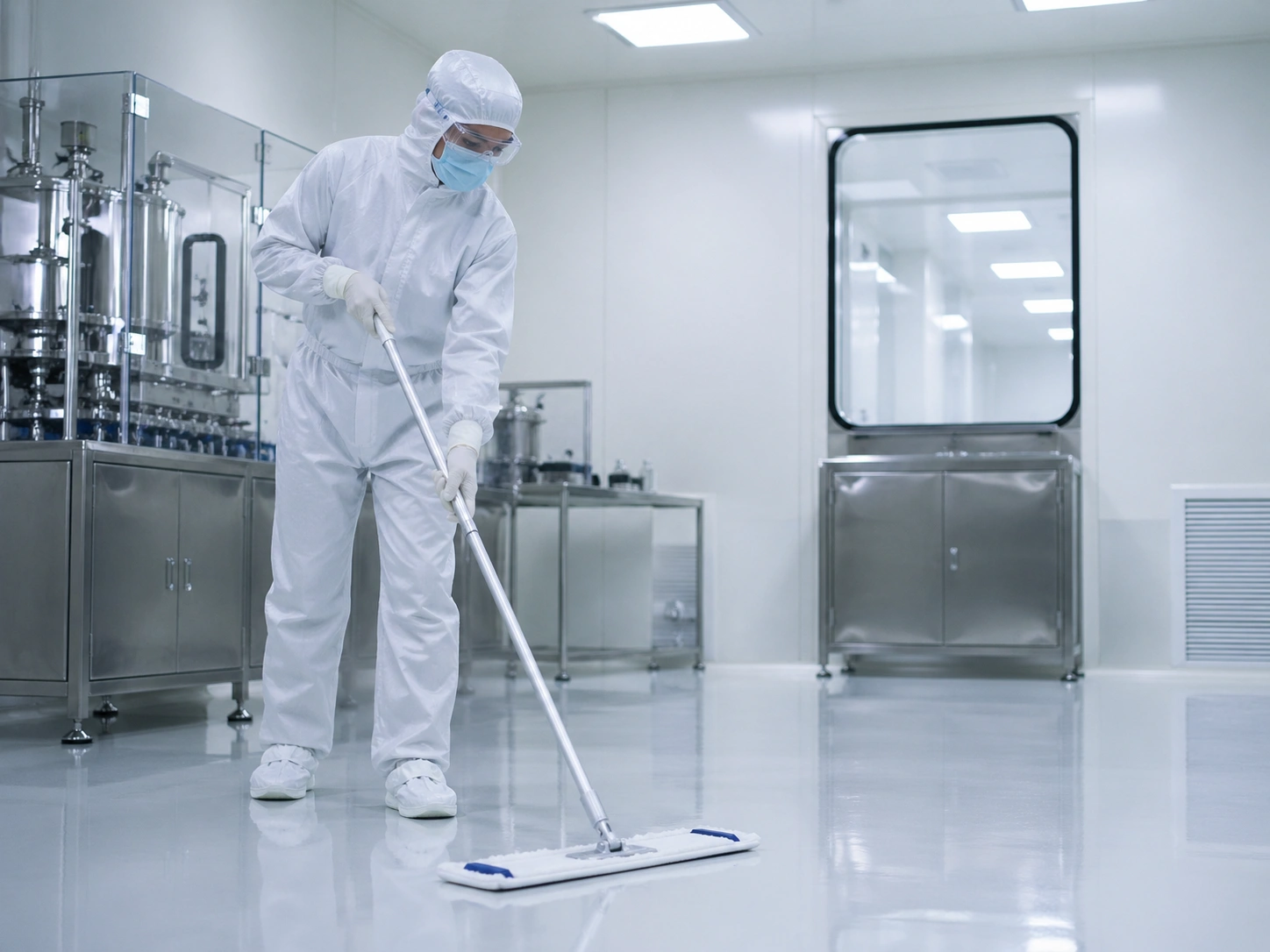
Effective cleanroom contamination control begins with understanding where particles and microorganisms enter the process. In pharmaceutical, biotech, medical device, semiconductor, and laboratory cleanrooms, contamination usually comes from personnel, materials, air movement, equipment surfaces, packaging, and cleaning tools that are not appropriate for controlled environments.
A cleanroom mop system should therefore be evaluated not only as a cleaning tool, but as part of the contamination control strategy. A mop that releases fibers, retains residues, or cannot be documented properly can create risk instead of reducing it.
Fuentes de contaminación comunes
- Movimiento de personal, errores de vestimenta y contacto con guantes.
- Materiales entrantes, cajas, bolsas y artículos de transferencia.
- Tráfico en el suelo, ruedas de equipos y superficies de paredes/techos.
- Selección inadecuada del cabezal del trapeador o reutilización incontrolada
- Registros de limpieza y desinfección mal documentados
Objetivo de control
The goal is to reduce particle shedding, prevent residue transfer, support consistent wet contact, and make the cleaning activity traceable for QA, validation, and audit review.
2. Hacer coincidir los controles de limpieza con la clasificación de salas blancas y el riesgo de GMP
Cleanroom cleaning requirements should match the process risk. A Grade A/B aseptic support area, ISO Class 5–7 pharmaceutical cleanroom, or sterile transfer zone usually requires stricter controls than a general controlled storage or lower-risk support area. The mop system, cleaning frequency, packaging format, and documentation package should all reflect that risk level.
| Área de sala limpia | Prioridad de control de contaminación | Consideración del sistema de trapeador | Evidencia a conservar |
|---|---|---|---|
| Zonas de soporte GMP Grado A/B | Control microbiano y de partículas, soporte de transferencia aséptica | Cabezales de trapeador estériles con poca pelusa, empaque controlado, lógica de transferencia definida | COA, documentos de soporte de esterilización, trazabilidad de lotes, registros de limpieza |
| Áreas GMP Grado C / ISO 7 | Reducción rutinaria de la contaminación y control de residuos. | Sistema de trapeador de poliéster o microfibra con poca pelusa adaptado al flujo de trabajo de pisos, paredes y techos | POE, especificación de materiales, trazabilidad de lotes, tendencia de monitoreo ambiental |
| Áreas de soporte GMP Grado D / ISO 8 | Higiene general de salas blancas y reducción del riesgo de tráfico controlado. | Opciones de trapeador desechables o no esterilizados según la frecuencia de limpieza y el control de costos | Registro de limpieza, registro de capacitación del operador, especificación del proveedor. |
If your facility is still reviewing room classification or cleaning requirements, connect this article with your internal page on Clasificación ISO 14644 y tu Documentación de salas limpias Anexo 1 de GMP de la UE contenido.
3. Cree un POE de limpieza de salas limpias que el control de calidad realmente pueda auditar
A cleanroom cleaning SOP should be practical enough for operators and detailed enough for QA review. It should define what is cleaned, which mop system is used, which direction is followed, what disinfectant or detergent is applied, how often the area is cleaned, and how completion is recorded.
Un POE de limpieza exhaustiva de salas blancas debe definir:
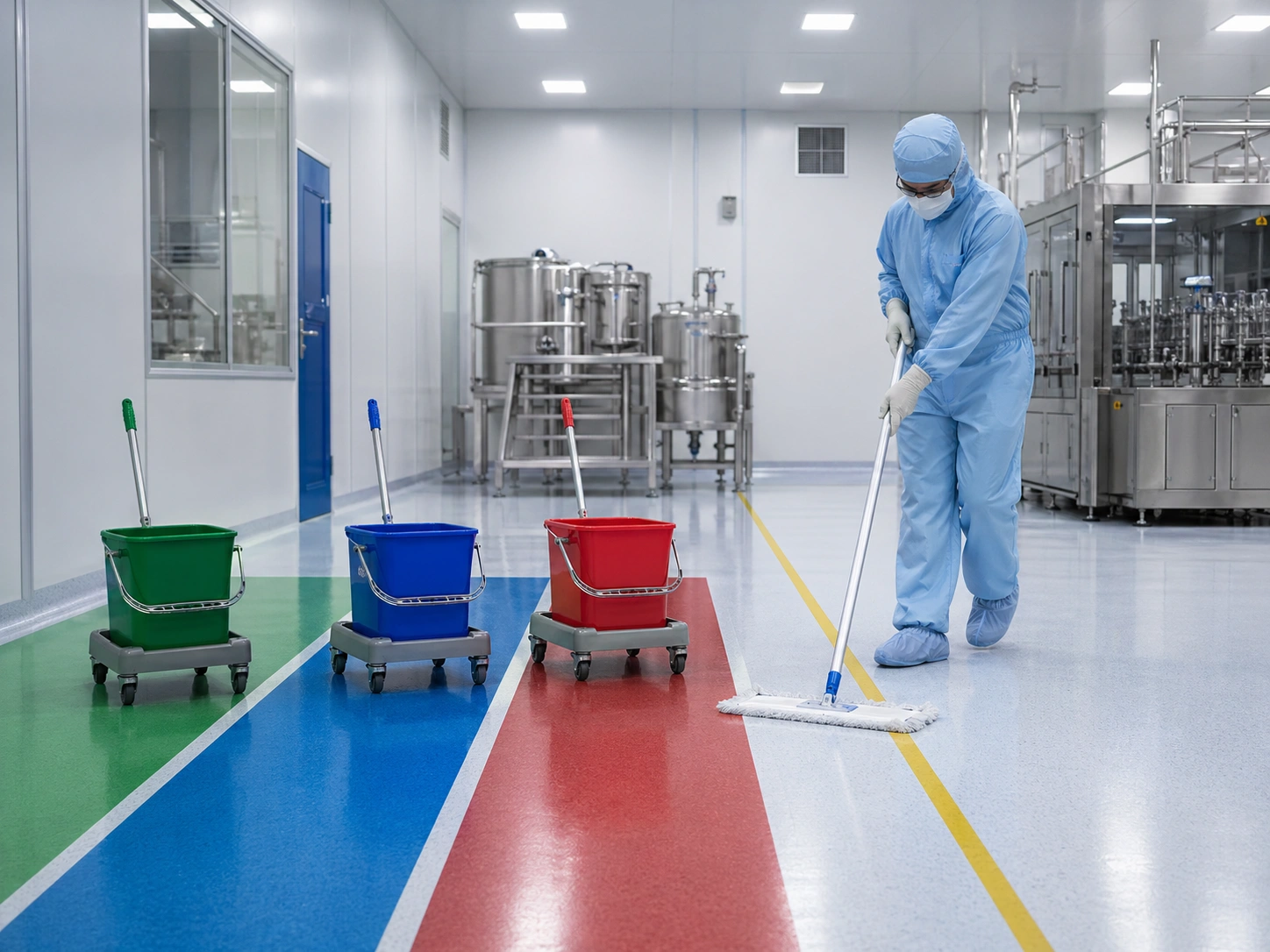
- Secuencia de limpieza: limpie desde áreas más limpias a menos limpias y desde superficies altas a superficies bajas cuando corresponda.
- Patrón de trapeado: Utilice pases superpuestos controlados en lugar de movimientos aleatorios.
- Separación de zonas: asigne herramientas o cabezales de trapeador por área para reducir el riesgo de transferencia.
- Frecuencia de cambio de fregona: definir cuándo se debe reemplazar o desechar el cabezal de un trapeador.
- Compatibilidad desinfectante: Confirme la compatibilidad del material con el cabezal del trapeador, el marco, el mango y el sistema de cubeta.
- Formato de registro: incluya fecha, área, operador, producto químico, número de lote y revisión del supervisor, si es necesario.
4. Seleccione un sistema de trapeador para sala limpia con poca pelusa, no un trapeador normal
Regular mops are not designed for controlled environments. They may shed fibers, retain contaminants, spread residues, or lack traceable material documentation. A cleanroom mop system should be selected based on material, linting risk, absorbency, surface compatibility, sterile requirement, and documentation support.
| Factor de selección | Por qué es importante | Dirección de mejores prácticas |
|---|---|---|
| Estructura de materiales | Controla el desprendimiento de fibras y el contacto con la superficie. | Utilice poliéster con poca pelusa o microfibra calificada según la tarea de limpieza y el grado de la habitación. |
| Estéril vs no estéril | Impacta el riesgo microbiano en áreas de mayor control | Utilice opciones de trapeador estériles para flujos de trabajo de limpieza asépticos o de mayor riesgo controlados por GMP. |
| Peso / absorbencia | Afecta la distribución y cobertura de líquidos. | Seleccione opciones de trapeador más pesado, mediano o liviano según el área del piso, la carga de residuos y el manejo del operador. |
| Embalaje y traslado | Admite la introducción controlada en zonas de sala blanca | Utilice embalaje adecuado, trazabilidad de lotes y registros relacionados con los lotes cuando sea necesario. |
| Documentación | Admite control de calidad, CQV y calificación de proveedores | Mantenga disponibles las especificaciones, referencias de COA, documentos de prueba y registros de trazabilidad de lotes. |
Para la selección de materiales, conecte este tema con Trapeador para sala limpia con poca pelusa, Trapeador de microfibra para sala limpia, y Trapeador para sala limpia estéril versus no estéril.
5. Utilice un flujo de trabajo de trapeado controlado para pisos, paredes y techos
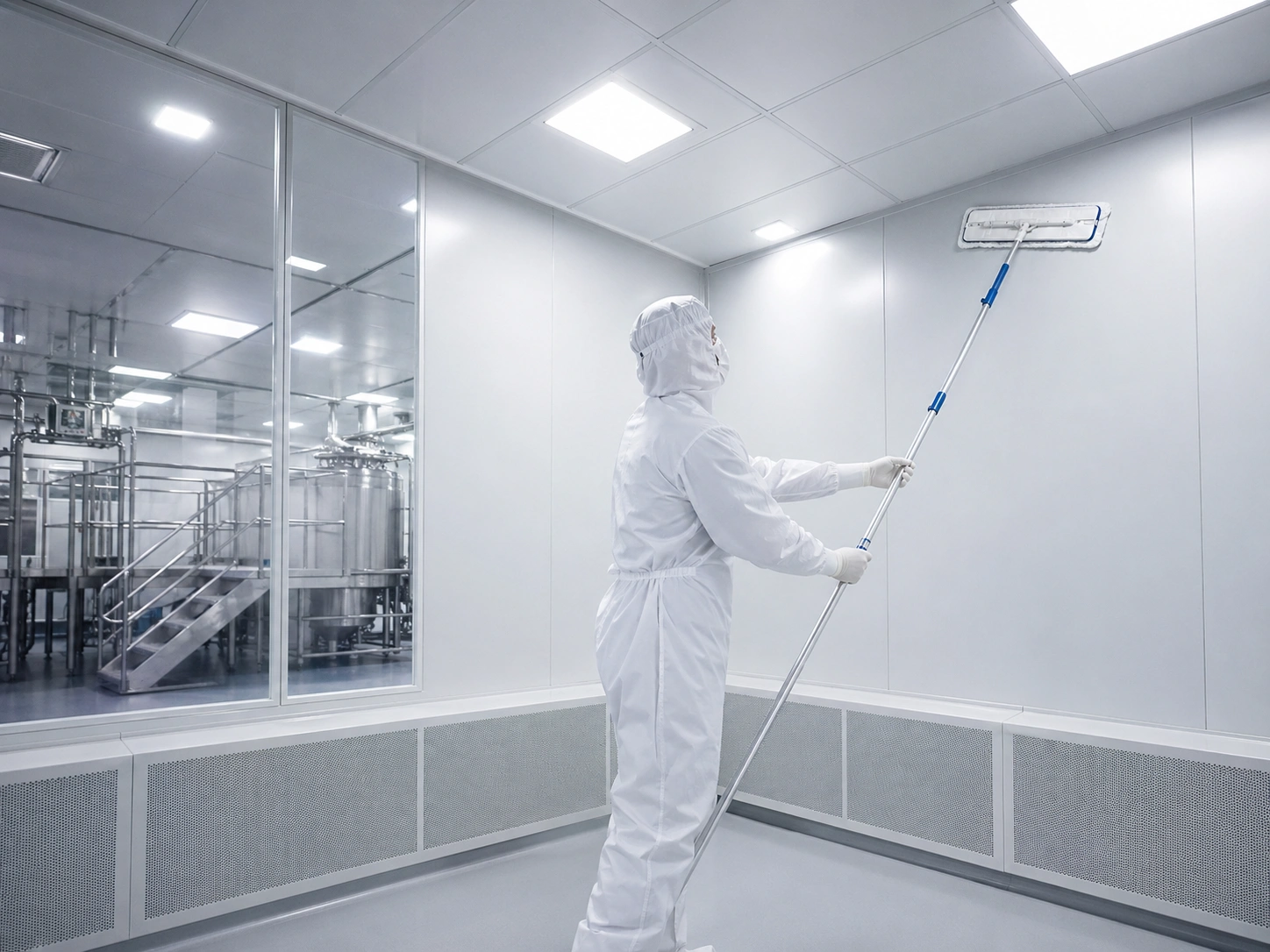
A cleanroom mop system is most effective when it is used within a repeatable workflow. Random cleaning patterns may leave missed areas, move residues into cleaner zones, or make operator performance difficult to verify during audits.
Principios de flujo de trabajo de mejores prácticas
- Prepare el área: verificar el estado de la habitación, eliminar materiales innecesarios y verificar las herramientas de limpieza.
- Utilice zonas definidas: Divida grandes superficies en secciones manejables.
- Sigue una dirección: Evite moverse hacia adelante y hacia atrás entre secciones limpias y menos limpias.
- Utilice pases superpuestos: Mantenga un contacto constante y minimice los puntos perdidos.
- Reemplace los cabezales de los trapeadores por regla: No confíe únicamente en el juicio visual.
- Finalización del documento: registre la configuración del área, el operador, el producto químico y la herramienta.
6. Conectar la actividad de limpieza con los registros de auditoría y monitoreo ambiental
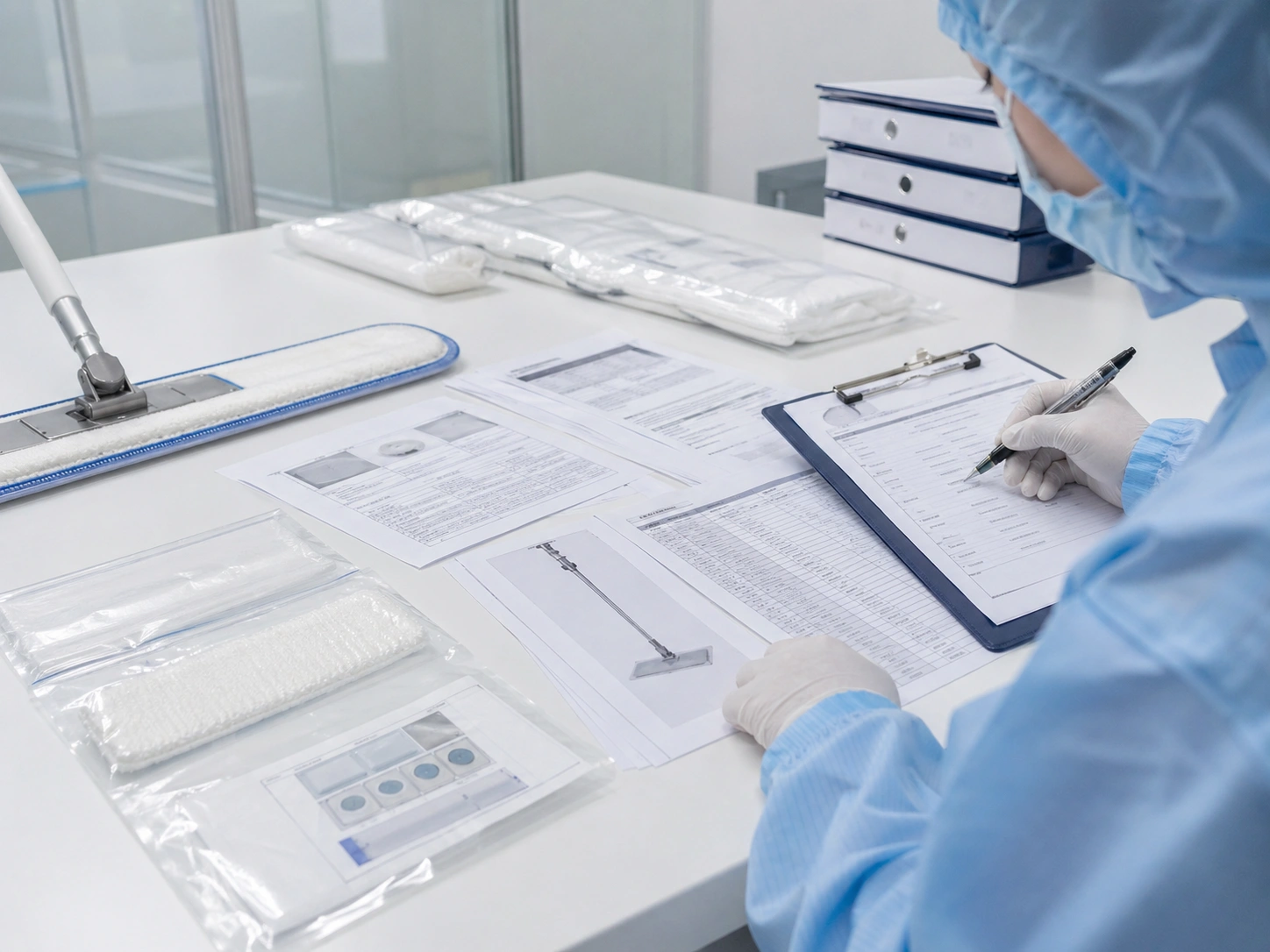
Cleanroom contamination control must be measurable. Environmental monitoring, cleaning logs, deviation records, and supplier documentation help show whether the cleaning process is working and whether the selected mop system is suitable for the cleanroom grade.
Documentos que fortalecen E-E-A-T y la confianza del comprador
- Hoja de especificaciones del producto para el modelo de fregona para sala blanca seleccionado
- COA o referencia COA según lote o lote de muestra seleccionado
- Documentos relacionados con la esterilización para opciones de trapeadores estériles cuando corresponda
- Información sobre materiales y embalaje.
- SOP de limpieza y registro de capacitación del operador
- Revisión de tendencias de monitoreo ambiental y seguimiento de desviaciones.
- Registros de calificación de proveedores y preparación de auditorías.
Las páginas de apoyo útiles incluyen Monitoreo ambiental en salas blancas, Cómo prepararse para la auditoría de sala limpia GMP, y Documentos de validación de trapeadores para salas blancas & COA.
7. Cree una matriz de selección de trapeadores basada en riesgos
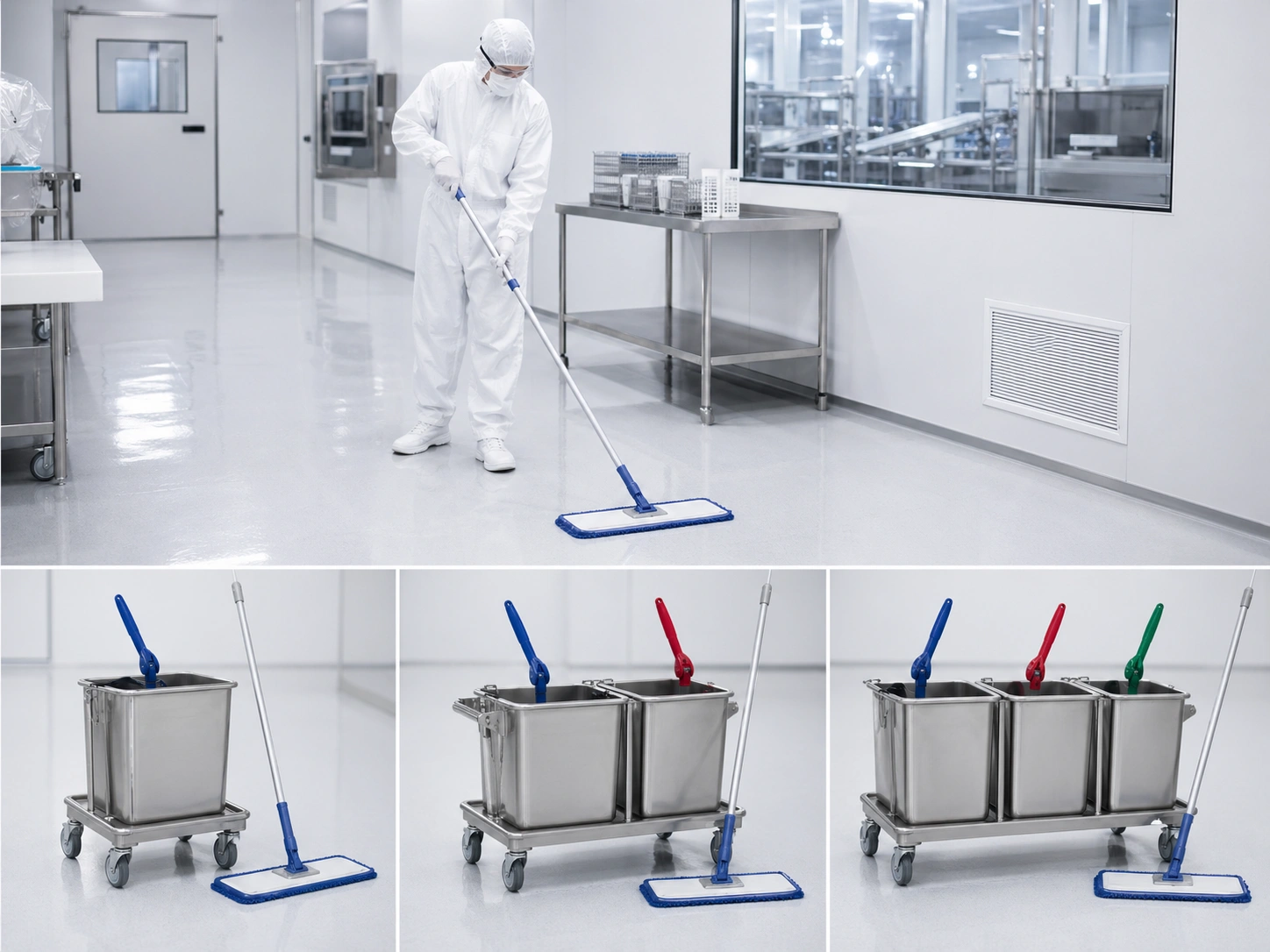
For procurement, QA, and validation teams, a selection matrix is often more useful than a simple product list. It helps teams choose the right mop by cleanroom grade, cleaning surface, sterile requirement, and documentation level.
| Solicitud | Dirección recomendada del trapeador | Recurso MIDPOSI relevante |
|---|---|---|
| Salas blancas farmacéuticas GMP | Sistema de trapeador con bajo contenido de pelusa con SOP definido y soporte de documentación | Trapeador para sala limpia farmacéutica |
| Flujos de trabajo estériles o de alto control | Opción de trapeador estéril para sala blanca con empaque adecuado y registros de lotes | Trapeador estéril para sala limpia |
| Limpieza rutinaria de pisos GMP C/D | Selección de trapeador desechable o reutilizable según la frecuencia de limpieza y el control de costos | Trapeadores desechables para salas blancas |
| Limpieza de paredes y techos | Sistema de marco y mango compatible con accesorio de cabezal de trapeador estable | Marcos para fregonas para salas blancas |
| Programas de limpieza validados | Sistema de trapeador documentado, SOP, calificación de proveedores y soporte COA | Cómo calificar a un proveedor de trapeadores para salas blancas farmacéuticas |
In a cleanroom, the mop is not just a cleaning tool. It is part of the contamination-control system, the cleaning SOP, the validation discussion, and the audit trail.
Opciones relacionadas de trapeador para sala limpia MIDPOSI
For facilities building or reviewing a cleanroom contamination-control program, MIDPOSI provides low-lint cleanroom mop options with sterile and non-sterile configurations. Product selection should be based on room grade, surface type, cleaning frequency, documentation needs, and contamination-control risk.
Serie de fregonas blancas para salas blancas
A cleanroom mop series designed for controlled cleaning workflows, with heavy, medium, and light options for different cleanroom cleaning needs.
Trapeador estéril para sala blanca de 65 g
Suitable for higher-risk cleanroom cleaning where sterile packaging and batch-related documentation may be required by QA or validation teams.
Trapeador estéril para sala blanca de 55 g
Una opción de trapeador para salas blancas estéril de peso medio para una absorbencia, manipulación y limpieza controladas equilibradas.
Trapeador estéril para sala blanca de 40 g
A lighter sterile option for selected cleanroom cleaning applications where handling and controlled replacement are important.
Conclusión: el control de la contaminación requiere procedimiento, producto y pruebas
Best practices for cleanroom contamination control require more than frequent cleaning. The strongest programs combine room classification, risk-based SOPs, low-lint mop systems, controlled workflow, trained personnel, environmental monitoring, and audit-ready documentation.
For GMP-controlled environments, a cleanroom mop system should be selected as part of the contamination-control strategy. When material choice, sterile status, packaging, and documentation are aligned with the room risk level, the cleaning program becomes easier to train, easier to verify, and easier to defend during audits.
Preguntas frecuentes: sistemas de trapeador y control de contaminación en salas limpias
¿Cuál es el factor más importante en el control de la contaminación de las salas blancas?
The most important factor is consistency. A cleanroom must use a documented SOP, trained operators, approved materials, defined cleaning frequency, proper mop selection, and monitoring records that verify the process over time.
¿Por qué las salas blancas deberían utilizar trapeadores con poca pelusa en lugar de trapeadores normales?
Low-lint cleanroom mops are designed to reduce fiber and particle shedding. Regular mops may release fibers, retain residues, or introduce uncontrolled contamination into GMP or ISO-classified environments.
¿Cuándo se debe utilizar un trapeador esterilizado para salas blancas?
Sterile cleanroom mops are typically considered for aseptic, higher-risk, or GMP-controlled areas where microbial introduction must be minimized and batch-related documentation may be required.
¿Cómo apoya un sistema de trapeador la preparación para la auditoría?
A mop system supports audit readiness when it is linked to specifications, SOPs, lot traceability, COA references, training records, and cleaning logs that show the tool was selected and used under control.
¿Qué páginas internas deberían respaldar este artículo?
This article should link to cleanroom cleaning SOPs, cleanroom mop system pages, sterile vs non-sterile mop guidance, ISO 14644 content, GMP audit preparation, and environmental monitoring resources.
¿Necesita un sistema de trapeador para salas limpias para áreas controladas por GMP?
MIDPOSI can help you review cleanroom mop options, sterile vs non-sterile configurations, documentation support, and sample options for pharmaceutical, biotech, medical device, semiconductor, and laboratory cleanrooms.