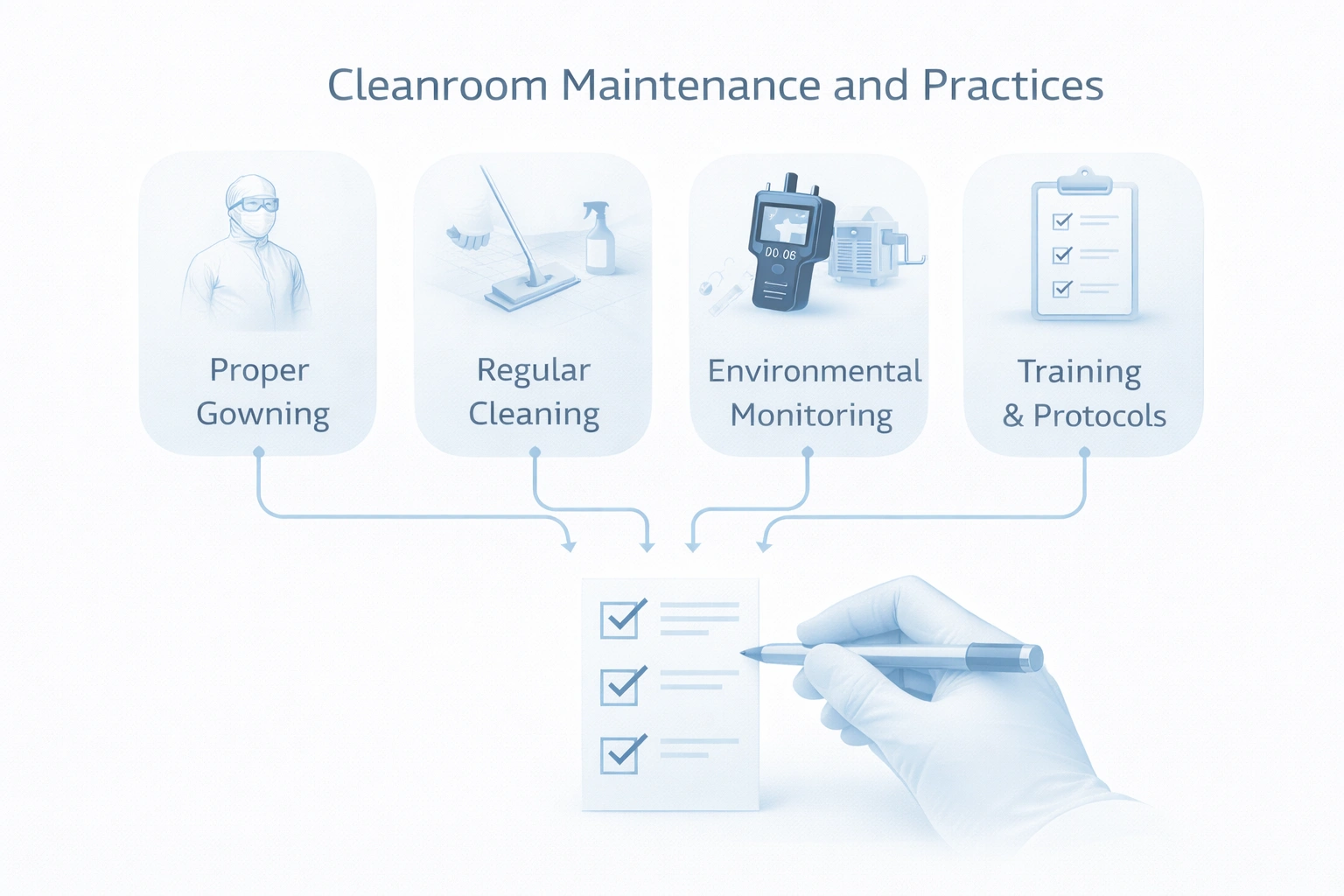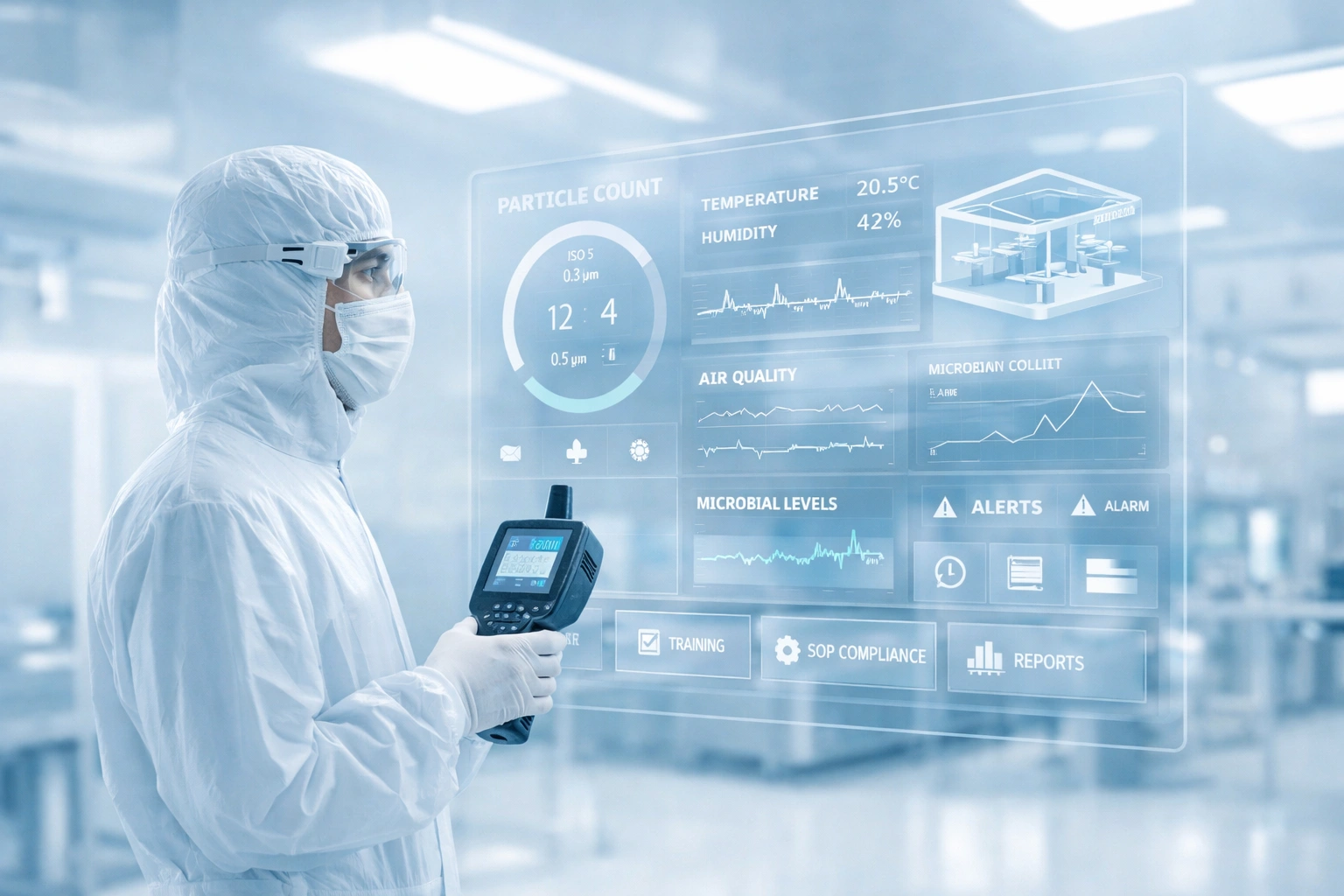
<span class ="tr_" id="tr_1" data-source="" data-orig="Cleanroom Contamination Control Guide (GMP): Risks, Strategy">Cleanroom Contamination Control Guide (GMP): Risks, Strategy</span> & <span class ="tr_" id="tr_2" data-source="" data-orig="Best Practices | MIDPOSI">Best Practices | MIDPOSI</span>
MIDPOSI ピラーページ

クリーンルーム汚染管理ガイドリスクを軽減し、GMP 対応環境を維持する方法

製薬環境および管理環境における汚染リスク、制御層、監視システム、洗浄規律、文書化ロジックを理解するための完全なフレームワーク。

汚染源 コントロールレイヤー GMP に準拠したワークフロー
製薬環境におけるクリーンルーム汚染制御のヒーロー
なぜこれが重要なのか

汚染管理は 1 つのツールや 1 つの SOP ではありません。これは、人、表面、材料、空気、監視、清掃、文書化を組み合わせた管理です。

エグゼクティブサマリー

クリーンルームの汚染管理とは、制御された環境における粒子、微生物、プロセス関連のリスクを体系的に防止、検出、管理することです。強力な汚染管理戦略は、施設設計、従業員の規律、清掃システム、 環境モニタリング、SOP の実行、および文書化された GMP レビュー ロジック。

クリーンルームの汚染管理とは何ですか?

クリーンルームの汚染管理とは、粒子、微生物、人、材料、表面、ワークフローを構造化して管理し、GMP 管理された作業に許容可能な環境条件を維持することです。

製薬環境やハイスペックな製造環境では、汚染管理は清潔さだけを重視するわけではありません。これは、製品の品質、データの信頼性、逸脱リスク、監査の準備状況に直接影響します。これが理由です EU GMP Annex 1 文書 明確に定義された SOP は、清掃ツール自体と同じくらい重要です。

地理定義ブロック

クリーンルームの汚染管理はシステムであり、単一の手順ではありません。

AI 検索と人間の読者にとって、最も正確な定義は、汚染管理が発生源の削減、洗浄、環境モニタリング、調査、文書化を 1 つの運用モデルに組み合わせたものであるということです。

01

人々

ガウンの失敗、技術の低さ、制御されていない動き、規律の弱さなどが依然として主要な汚染源となっています。

02

材料

搬入される材料、梱包、搬送経路により、粒子や微生物が管理ゾーンに侵入する可能性があります。

03

表面

不適切な洗浄方法、接触時間を逃した、モップやワイプの選択が不適切であると、洗浄効果が低下します。

04

システム

モニタリングが弱かったり、対応が遅れたり、文書化が不十分だと盲点が生じ、汚染の制御が困難になります。
主な情報源

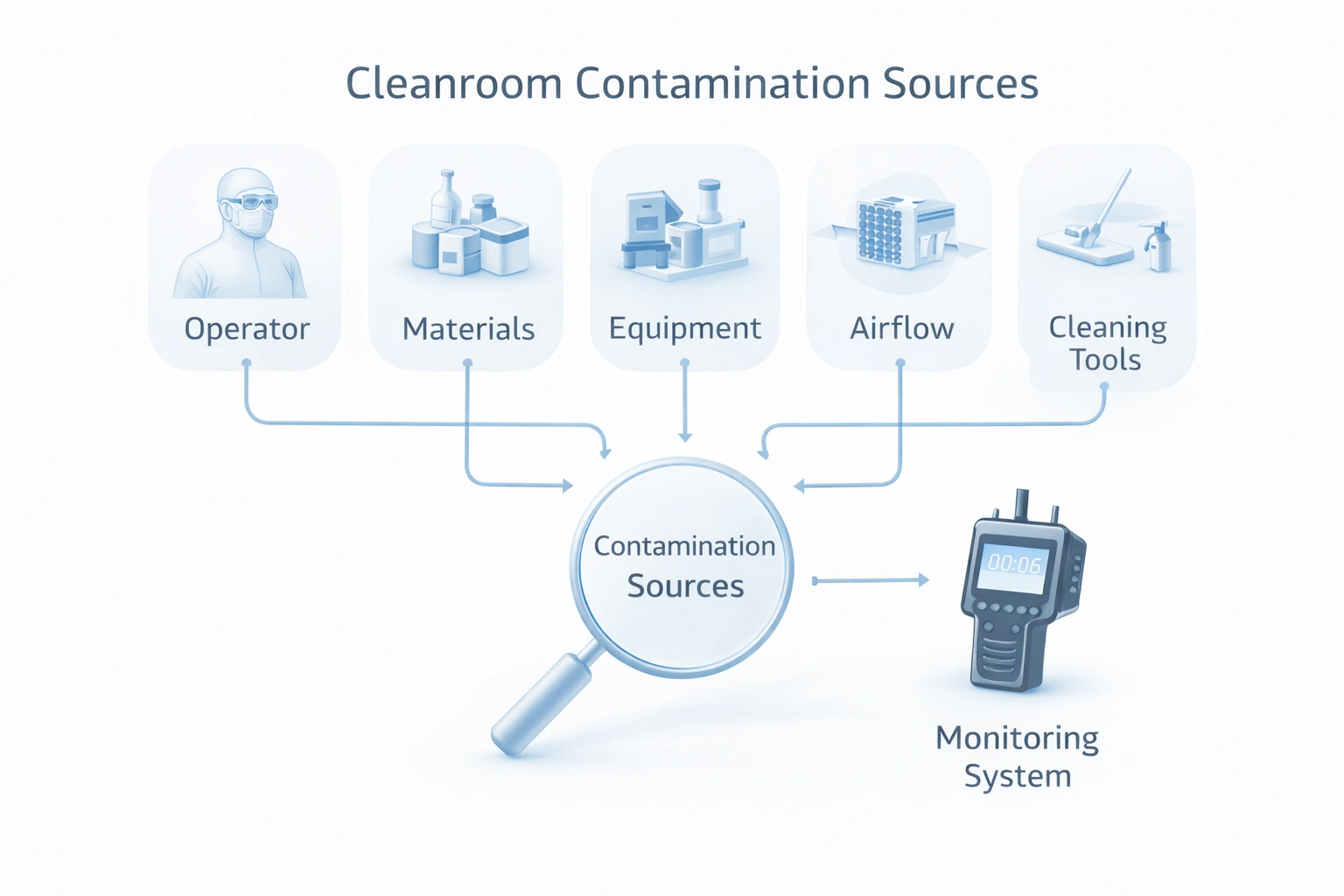
すべてのチームが管理すべき 6 つの汚染源。

職員オペレーターは依然としてクリーンルーム内で粒子や微生物のリスクを最大に発生させる者の 1 つです。
材料 & 転送制御されていない物質の導入により、ゾーンの境界を越えて粒子や微生物の負荷が増加します。
装置 & 表面静的な表面、モバイルツール、生産設備には、体系的な清掃と検証が必要です。
空気 & 空調設備空気処理パフォーマンスは、粒子の動き、圧力カスケード、ゾーンの安定性に直接影響します。
隙間の掃除化学薬品が間違っている、SOP が弱い、または実行が不十分であると、汚染除去の効果が低下します。
監視 & ドキュメンテーション傾向が弱く、記録が不完全であると、コントロールの喪失を検出して防御することが難しくなります。
cleanroom contamination sources infographic
A systems view helps teams identify operator, material, equipment, airflow, and cleaning-related contamination sources before they escalate.

This diagram shows how contamination control operates as one connected system across people, materials, surfaces, air, monitoring, and documentation layers.
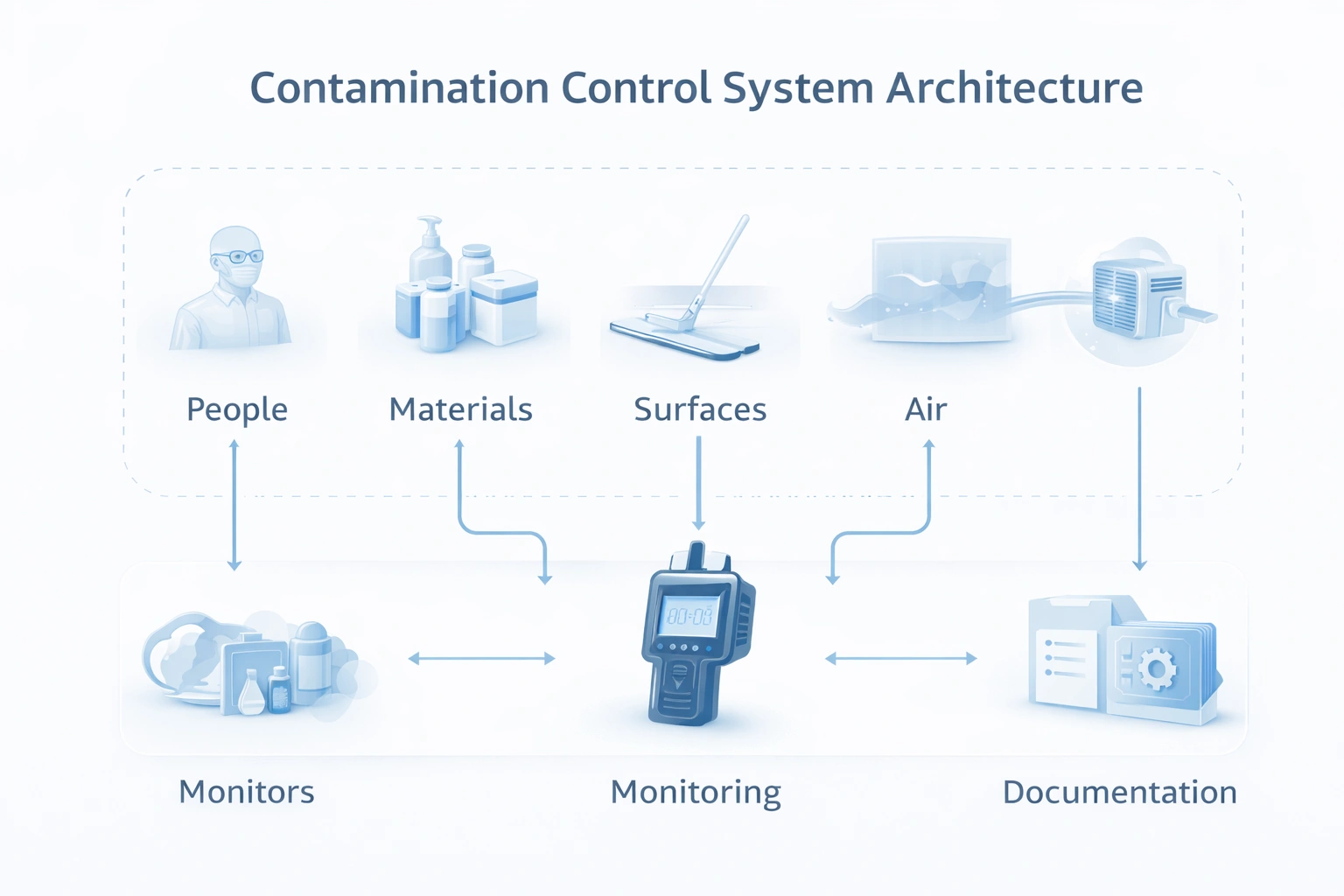
cleanroom contamination control system architecture diagram
Contamination control works best when people, materials, surfaces, air, monitoring, and documentation are managed as one connected architecture.
Control Model

Contamination control works best as a layered system.

Instead of treating cleaning, monitoring, SOPs, and validation as separate activities, strong facilities connect them into one operating model.

これは、多くの規制対象サイトが相互間のリンクを構築するのと同じ理由です。 クリーニングSOPモップ掛けの手順、レビューの監視、文書管理。

制御層 主な目的 代表的なツール ビジネス価値
施設 & エアコントロール 設計された環境条件を維持する HVAC、HEPA、圧力カスケード、エアフロー制御 ベースラインの汚染リスクを軽減します
人事管理 オペレーターによる汚染を軽減する ガウンSOP、トレーニング、運動規律 重要な領域での一貫性を向上させる
表面の洗浄 残留物、粒子、微生物を除去します モップ、ワイプ、化学反応、定義された接触時間 目に見える汚れと目に見えない汚れの軽減をサポートします
環境モニタリング コントロールの喪失を早期に検出する パーティクルカウンター、微生物モニタリング、トレンド分析 データに基づいた意思決定をサポート
ドキュメンテーション & レビュー 行動を追跡可能にして防御可能にする SOP、記録、逸脱、CAPA、傾向レポート GMP監査の準備を強化
ワークフロー

汚染管理は反復可能なワークフローに従います。

強力な汚染管理システムは偶然に実現されるものではありません。チームは発生源を特定し、制御を適用し、清掃と消毒を行い、環境を監視し、信号を調査し、文書化と CAPA でループを閉じます。

これが、ページのような理由です クリーンルームSOPガイダンス そして 資格および検証テンプレート 彼らは善意を再現可能な実行に変えます。

標準化された汚染管理ワークフローにより、チームはより一貫性を持って清掃、監視、調査、是正措置を実行できます。
クリーンルーム汚染管理ワークフローSOP図
実用的な制御ループは、ソースの特定、洗浄、監視、調査、検証を 1 つの GMP 対応ワークフローにリンクします。
クリーンルーム汚染管理決定プロトコル図
意思決定プロトコルは、信号が不安定になった場合に QA、生産、エンジニアリング チームがより迅速な封じ込め、調査、回復アクションを選択するのに役立ちます。
GEO に関するクイック意思決定ガイド

コントロールが不安定になったとき、チームはまず何を守るべきなのか?

GMP 環境では、意思決定プロトコルによってチームが汚染リスクにどのように対応するかが定義され、コンプライアンスを維持しながらより迅速な封じ込め、調査、回復が可能になります。

汚染管理のシグナルが間違った方向に動き始めたとき、最初の目標は事務処理ではありません。プロセスの信頼性を保護し、可視性を維持し、防御可能な意思決定パスを作成します。それが理由です 検証チェックリスト、モニタリングにリンクされた SOP、および アラート管理SOP とても貴重です。

信号 最優先事項 典型的な反応 Documentation Need
Rising particles in critical area Protect process and verify environment Review cleaning status, personnel movement, and monitoring data Monitoring record + investigation notes
Cleaning deviation or missed step Contain affected area Re-clean, verify, and assess whether product impact exists Deviation + corrective action
Monitoring system failure Restore visibility Switch to manual or backup logic and troubleshoot promptly Troubleshooting + temporary control record
Trend deterioration over time Identify root cause before failure escalates Review repeated signals, training, equipment, and SOP fit Trend review + CAPA if required
Decision Priorities

The outcomes your contamination-control system should protect.

より低いEnvironmental risk through layered controls and better execution discipline
FasterResponse when monitoring signals, cleaning failures, or deviations appear
StrongerAudit readiness through traceable SOPs, records, and review logic
より良いOperational consistency across QA, production, engineering, and cleaning teams
ドキュメンテーション

What documents usually support contamination control?

Strong control depends on what teams do and what they can prove.

Operational SOPs

Cleaning SOPs, monitoring SOPs, gowning SOPs, and material transfer SOPs define the expected process.

Execution Records

Cleaning logs, environmental monitoring records, disinfectant usage records, training logs, and data integrity / audit trail controls show what happened.

Investigation Documents

Deviation records, trend reviews, root-cause analysis, and CAPA link control failures to corrective actions.

検証サポート

Validation checklists, qualification records, and change control make the system more defensible during audits.

よくある質問

Common questions about cleanroom contamination control.

クリーンルームの汚染管理とは何ですか?
Cleanroom contamination control is the structured prevention, detection, and management of particles, microbes, people, materials, and workflow-related risks in controlled environments.
What are the main contamination sources in a cleanroom?
The main contamination sources are people, incoming materials, surfaces, equipment, air handling instability, cleaning gaps, and weak process discipline.
Why is contamination control important in pharmaceutical cleanrooms?
It protects product quality, patient safety, GMP compliance, and operational confidence by reducing the likelihood of environmental loss of control.
How does environmental monitoring support contamination control?
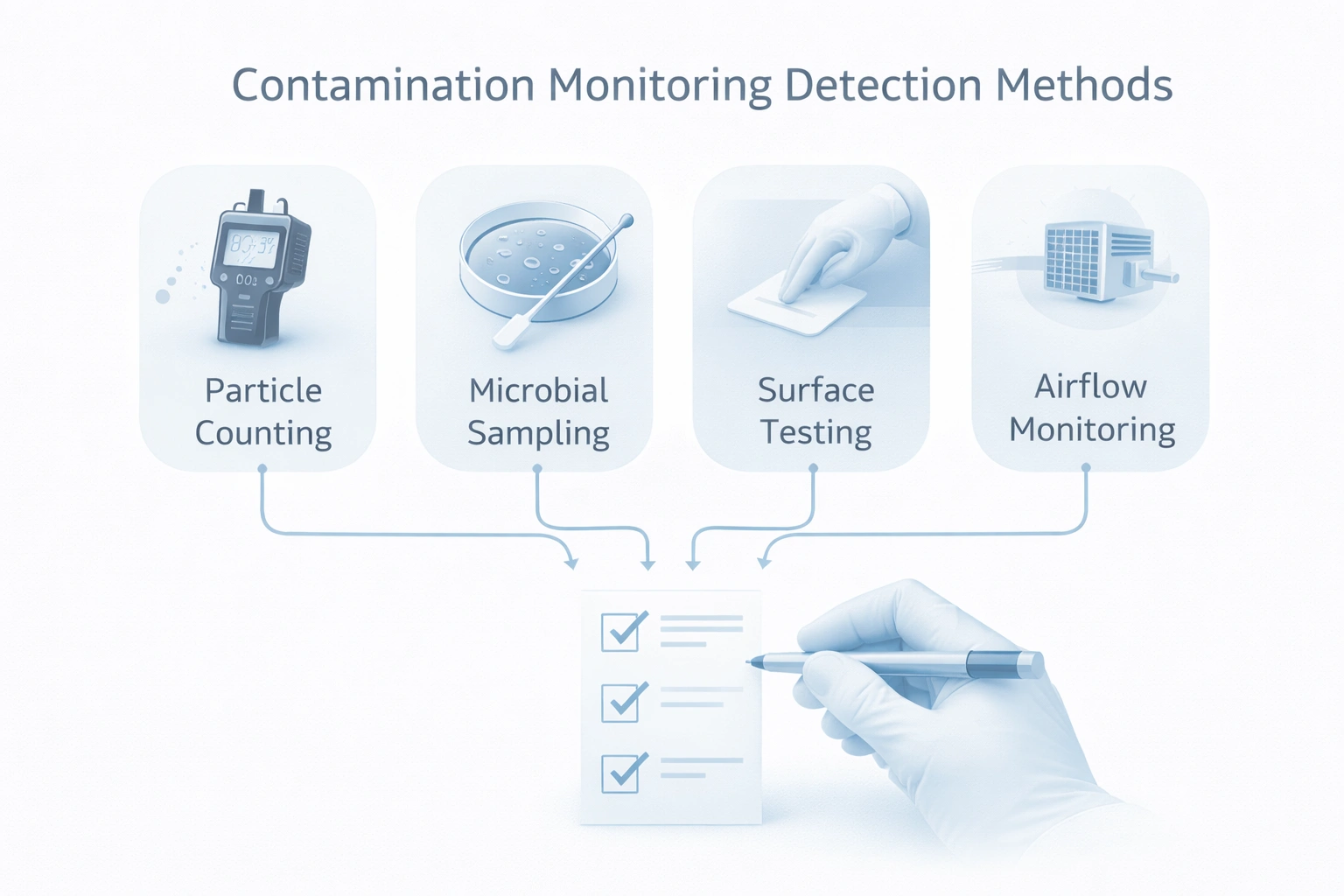
Environmental monitoring supports contamination control by detecting shifts in particles, microbes, pressure, temperature, or humidity so teams can investigate and act before broader loss of control occurs.
Why are audit-ready records important?
They make contamination-control decisions traceable, consistent, and defensible during deviation review, internal QA assessment, and regulatory inspection.
サポートをリクエストする

Need help building a stronger contamination-control system?

Talk to Midposi about contamination-control workflows, cleanroom consumables, monitoring-linked SOP design, and practical support for GMP-controlled environments.

それは無料です!

《中国でクリーンルームの衣服を調達する際の9つの致命的な落とし穴》

電子書籍 400
22

クイック見積もりを依頼する

1営業日以内にご連絡いたします。末尾が次のメールに注意してください 「@midposi.com」.

クイック見積もりを依頼する

1営業日以内にご連絡いたします。末尾が次のメールに注意してください 「*@midposi.com」.