典型的な SOP カテゴリ
- ガウンと職員入場
- 洗浄と消毒
- 環境モニタリング
- 資材と設備の移動
- バッチエリアのクリアランス
- 逸脱とインシデント対応

製薬クリーンルーム SOP ガイド
A practical guide to cleanroom standard operating procedures, contamination control, sterile cleaning workflows, environmental monitoring, GMP documentation, and future AI-driven quality systems.
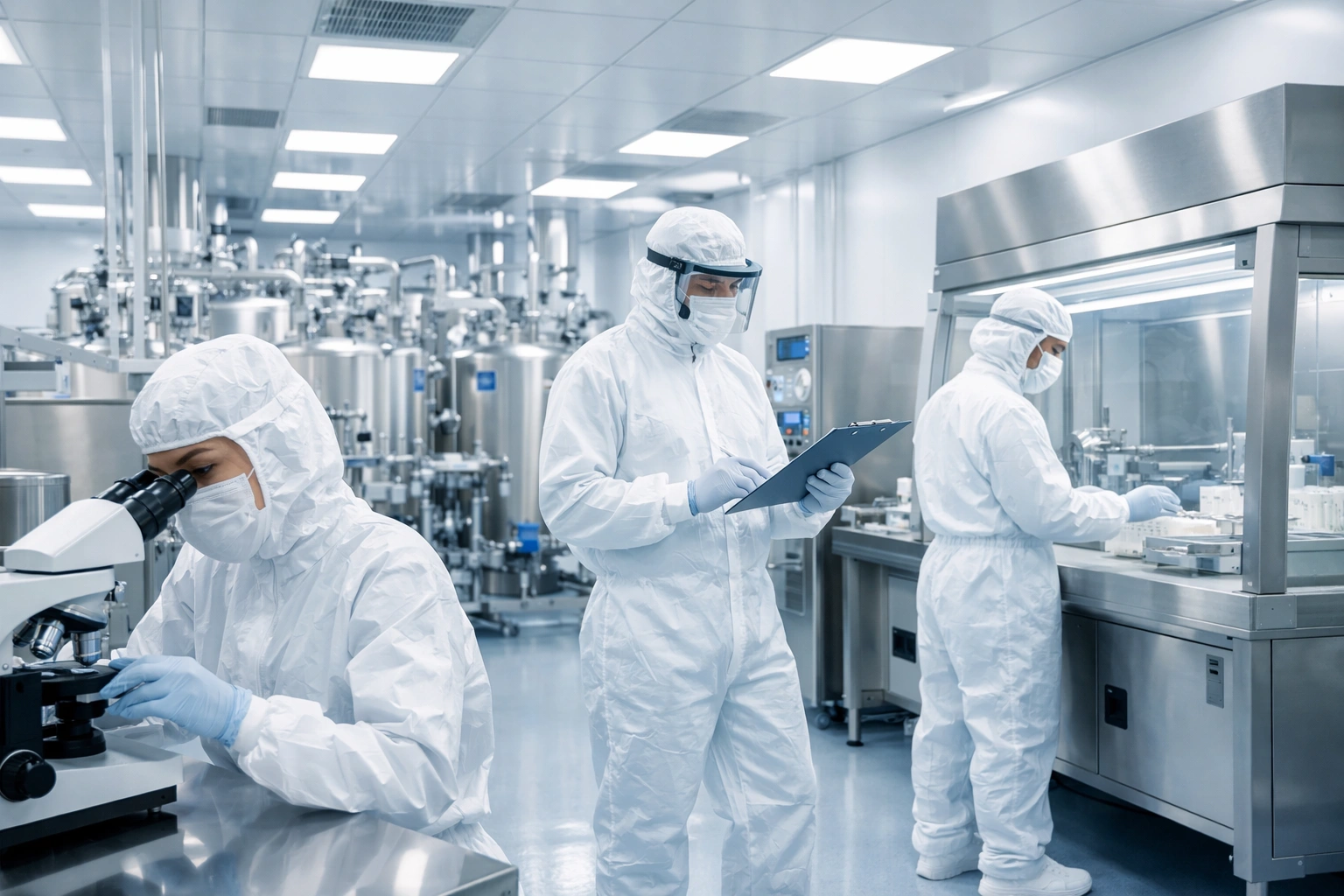
In pharmaceutical and biotechnology manufacturing, cleanroom standard operating procedures are not just compliance documents. They are the operational backbone for contamination control, sterile behavior, validated cleaning, material transfer, and environmental consistency.
The strongest cleanroom SOP systems help manufacturers reduce deviation risk, improve audit readiness, standardize operator behavior, and protect product quality in ISO 5, ISO 7, and GMP-controlled spaces.
If you are building or upgrading a pharmaceutical cleaning program, it is also useful to review related guidance on クリーンルームモップ掛けSOP、 製薬用クリーンルームモップ洗浄SOP, and EU GMP Annex 1 クリーンルーム SOP 文書.
A cleanroom SOP is a documented procedure that defines how a specific activity must be performed inside a controlled environment. These activities usually include gowning, room entry, equipment handling, cleaning and disinfection, material transfer, line clearance, and environmental monitoring.
In pharmaceutical manufacturing, a well-written SOP does more than describe a task. It defines sequence, frequency, materials, approved tools, operator responsibilities, escalation rules, and documentation requirements.
まだドキュメントのフレームワークを構築しているチームも、レビューすることが役に立つかもしれません。 クリーンルーム認定および検証 SOP テンプレート、 FDA cGMP クリーンルーム検証チェックリスト, and リスクベースのクリーンルーム環境モニタリング SOP ガイダンス.
Most contamination issues do not begin with dramatic equipment failure. They begin with inconsistency: an incomplete wipe-down, an incorrect mop path, poor gown discipline, unverified transfer steps, or environmental data that was not acted on in time.
だからこそ、クリーンルーム SOP が重要なのです。これらは、汚染管理を個人の習慣から再現可能なシステム動作に変えます。
Annex 1 への対応状況、無菌ゾーン、文書管理に重点を置いているチームの場合、関連する資料には以下が含まれます。 アイソレーターシステムのクリーンルーム微生物汚染制御、 クリーンルームアイソレータシステムにおける微生物汚染制御, and バッチ処理用のクリーンルーム除染および滅菌 SOP.
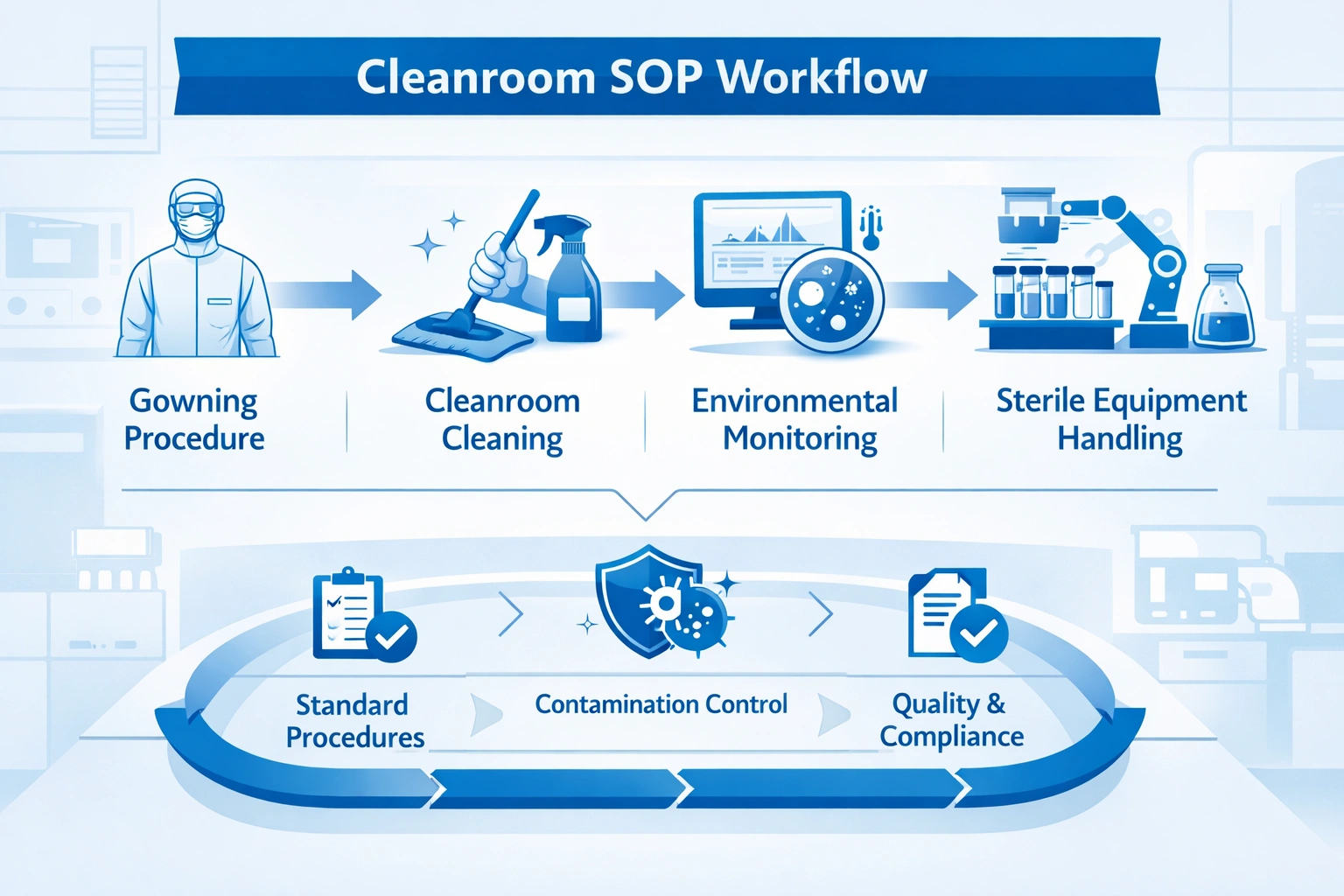
A practical cleanroom SOP framework usually follows a defined operational chain. Although every facility has its own validation requirements, the core structure is often similar.
This workflow becomes much stronger when paired with a validated product system. For example, many pharmaceutical teams compare 使い捨てと再利用可能なクリーンルームモップ, evaluate ガンマ線照射対オートクレーブ可能なクリーンルームモップ, and study 糸くずの出にくいクリーンルーム用モップの素材比較 SOP 承認ツールを完成させる前に。
Cleaning is one of the most critical parts of any cleanroom SOP program. The procedure must specify not only what to clean, but how to clean it, with what material, at what frequency, and with what documented method.
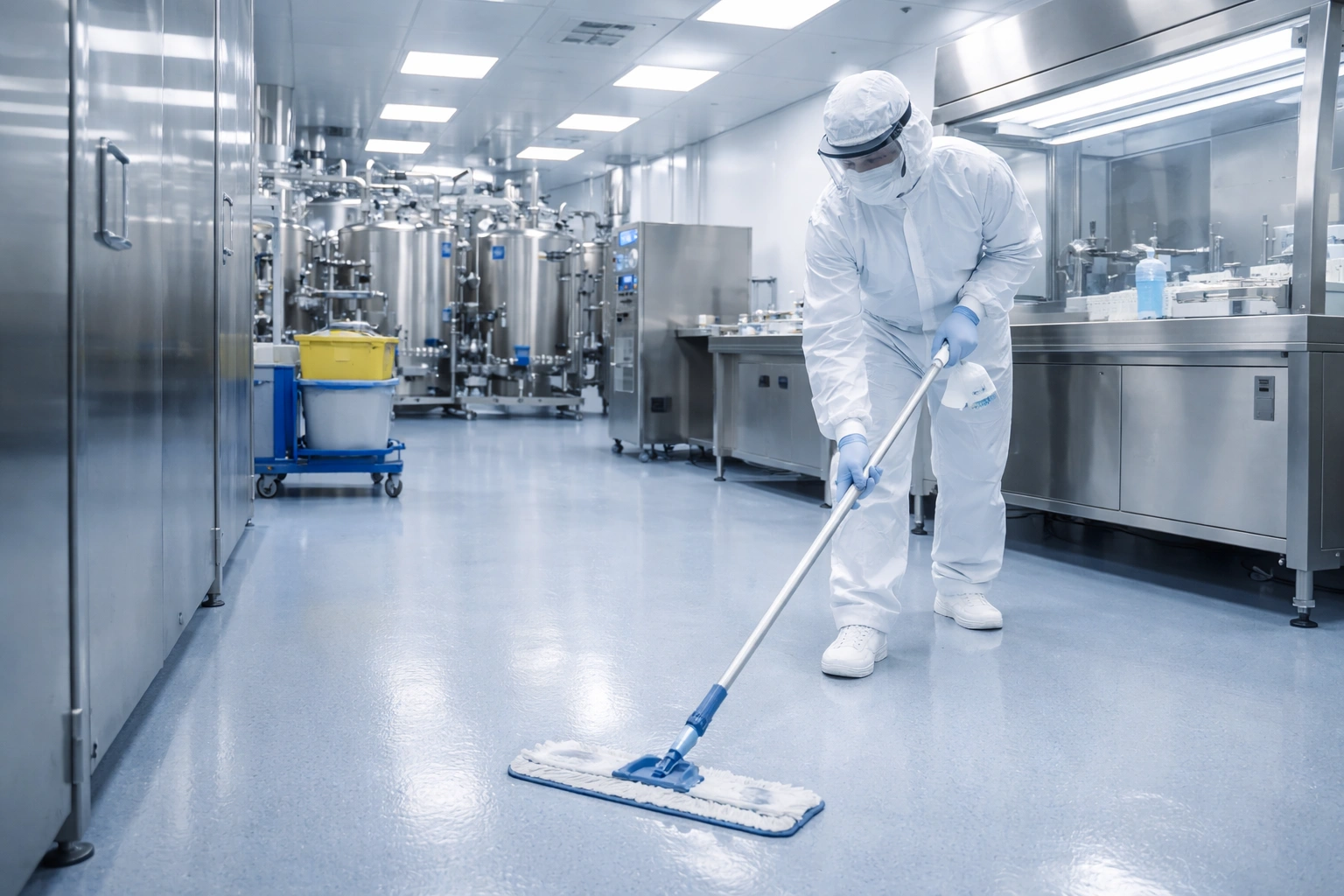
検証された拭き取り、定義された拭き取りパターン、および適切な消毒剤の接触時間が必要です。
制御されたモップ経路、承認されたモップヘッド、およびダーティからクリーンへの明確な方向ロジックが必要です。
滅菌モップ、糸くずの出にくいワイプ、および互換性のあるバケット システムにより、再現可能な汚染制御がサポートされます。
チームが清掃ツールを選択またはアップグレードしている場合、役立つ内部参照として次のものが挙げられます。 製薬用クリーンルームモップの要件、 クリーンルームモップ導入ガイド、 クリーンルームモップバケットシステム, and GMP Annex 1 環境用の製薬用クリーンルームモップ.
サプライヤーの資格も重要です。見る 製薬用クリーンルームモップのサプライヤーを認定する方法、 クリーンルームモップの検証文書とCOA, and 製薬用クリーンルームモップのバッチトレーサビリティ.
Contamination does not come from one single source. It usually develops through an interaction between personnel, surfaces, airflow, tools, transferred materials, and incomplete execution.
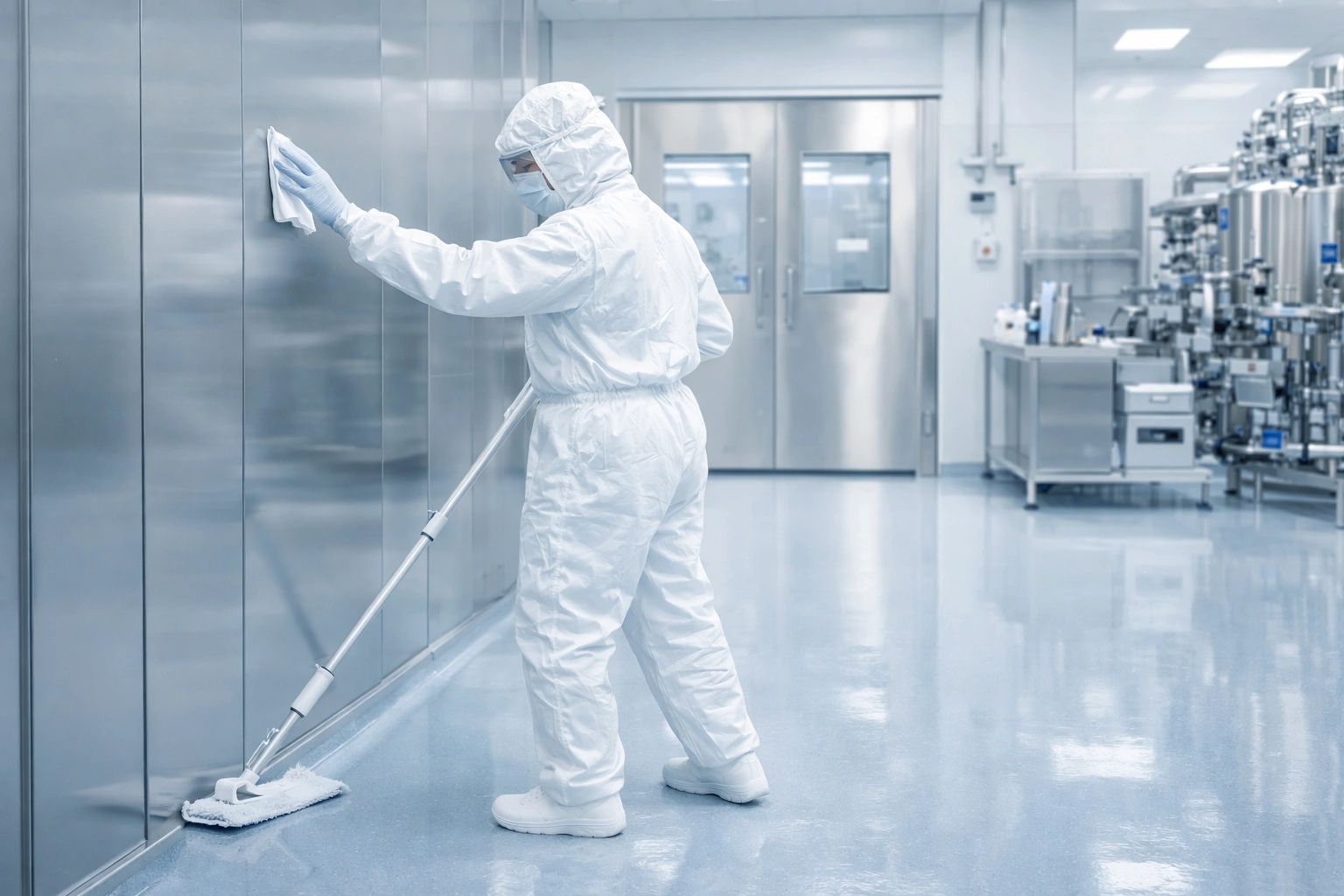
施設の汚染管理戦略も見直す必要がある クリーンルーム汚染リスクの防止、 クリティカルゾーンの清掃用の糸くずの出ないクリーンルーム用ワイプ, and バイオテクノロジーのクリーンルームモップの用途.
The next stage of cleanroom SOP development is not less documentation. It is smarter control. More pharmaceutical manufacturers are now exploring digital tools that connect SOP execution with real-time data, contamination analytics, and predictive monitoring.
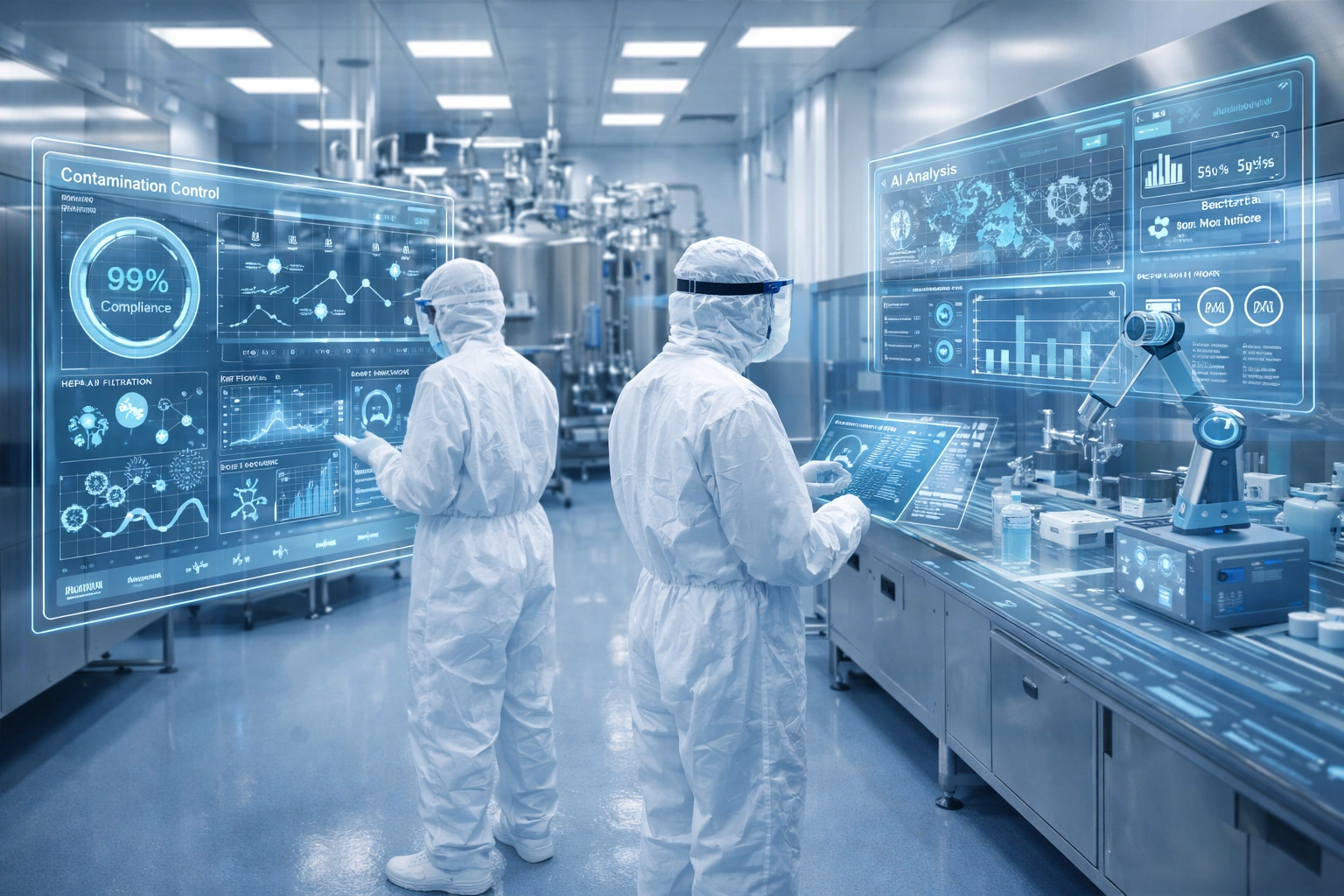
Even in advanced facilities, the foundation still remains the same: a clear SOP, trained personnel, validated materials, and a repeatable contamination control method.
クリーンルーム SOP は、曖昧または一般的なものではなく、運用上正確である必要があります。
検証済みのワイプ、滅菌モップ、再現性をサポートする互換性のあるシステムを使用してください。
環境に関する結果は、単に記録を残すだけでなく、行動を起こすきっかけとなるものでなければなりません。
オペレーターの一貫性は、最も強力な汚染制御変数の 1 つです。
クリーンルーム SOP は、一貫性を維持し、汚染リスクを軽減し、製薬またはバイオテクノロジーの生産におけるコンプライアンスをサポートするために、管理されたタスクをどのように実行する必要があるかを定義します。
それには、承認された材料、洗浄順序、エリアの頻度、消毒剤の種類、接触時間、ツールの選択、文書化の手順、責任が含まれている必要があります。
滅菌モップは、検証済みの洗浄方法と一貫した低リント性能をサポートすることで、重要な洗浄プロセスにおける汚染リスクを軽減します。
SOP は定期的にレビューする必要があり、また、プロセスの変更、逸脱、監査結果、または新たな汚染リスクにより改訂が必要になった場合には常に更新する必要があります。
いいえ、AI は監視と意思決定のサポートを改善できますが、明確に書面化された手順、検証済みの資料、訓練された人間による実行の必要性に取って代わるものではありません。
Midposi supports pharmaceutical and cleanroom teams with sterile mops, low-lint wipes, and contamination control consumables designed for controlled environments.