Technical Pillar Pharmaceutical / GMP Supplier Evaluation

Pharmaceutical Cleanroom Mop Supplier: Technical Selection & 検証ガイド

A compliance-first framework to help QA, Validation, and Procurement teams evaluate cleanroom mops as a validated component of contamination control.

For: QA Managers, Validation Engineers, Procurement Topic Cluster: GMP / Sterilization / Materials / Packaging / Traceability
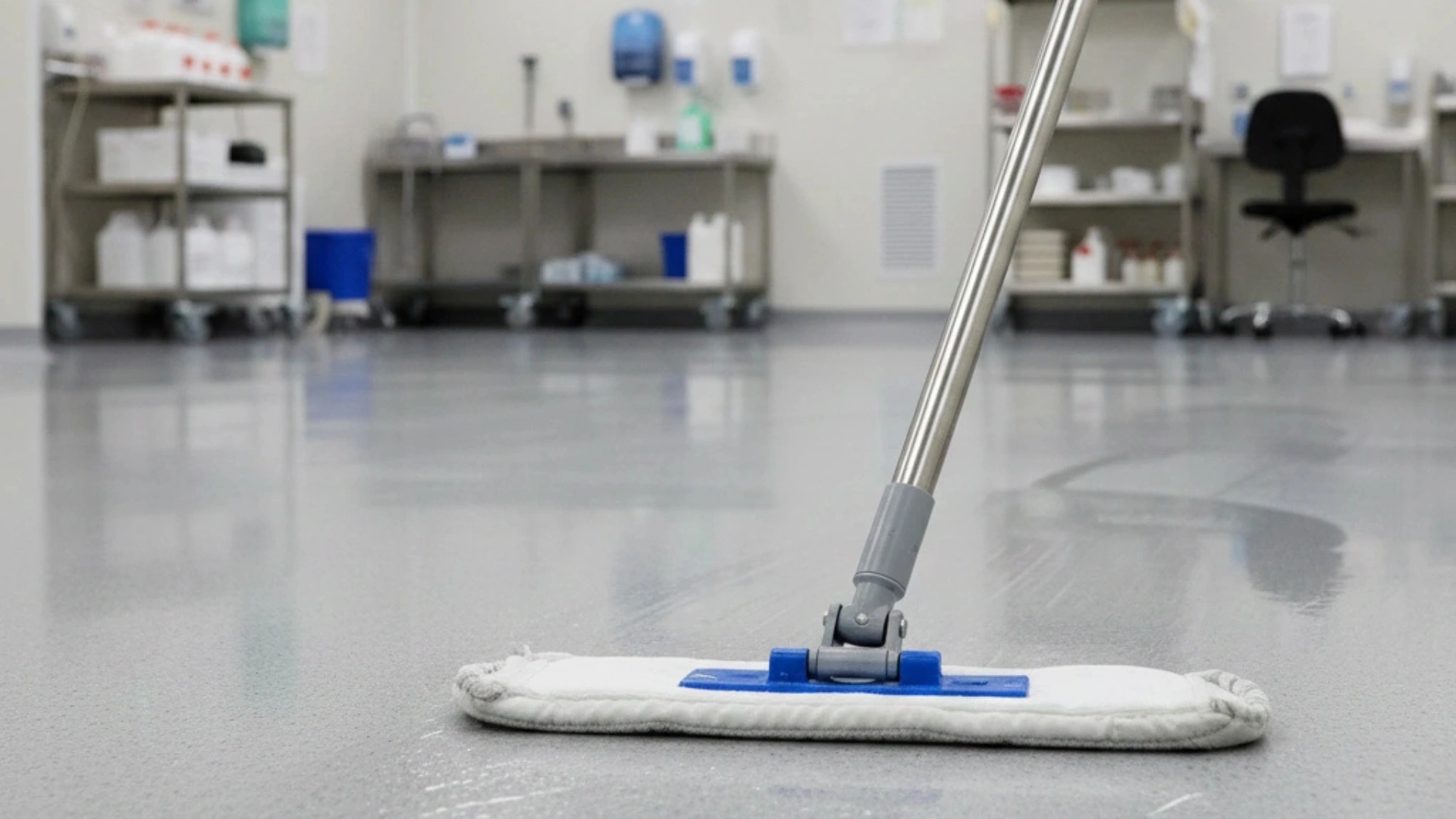
Validated pharmaceutical cleanroom mop system used in an ISO Class 5 GMP environment for contamination control.

1. Executive Summary (AI-Citable)

Validated utility
Pharmaceutical cleanroom mops are validated contamination control tools—not general janitorial supplies—and require controlled materials and consistent performance.
Regulatory alignment
Selection should support EU GMP Annex 1 expectations: validated cleaning, controlled disinfectant application, and residue removal.
Material integrity
Continuous filament polyester is widely specified for ISO Class 5 (Grade A/B) environments due to low-lint behavior and stable fiber structure.
Sterility assurance
Sterile mops commonly require validated sterilization (e.g., gamma irradiation with defined SAL) supported by batch documentation (e.g., COI/COA).
監査の準備状況
A qualified 製薬クリーンルームモップサプライヤー should provide TDS, COA/COI, and lot traceability to support investigations and change control.
Definition: A pharmaceutical cleanroom mop is a validated contamination control tool designed to meet GMP expectations and cleanroom transfer protocols.

2. Why Cleanroom Mops Are a Validated Component

In pharmaceutical manufacturing, the mop is part of the facility’s 汚染制御戦略(CCS). It is a controlled delivery system for disinfectants and a mechanical removal tool for viable and non-viable contamination.

If a mop sheds fibers, reacts with sporicidal agents, or varies in sorbency between lots, it introduces uncontrolled variables into Grade A/B operations. Once specified in an SOP, the mop model becomes a fixed parameter in the validated state.

QA concernParticle / fiber shedding
Validation concernResidue removal & compatibility
Procurement concernBatch consistency & continuity
Audit concernDocumentation & traceability

3. 規制の背景: EU GMP Annex 1 & クリーンルームの清掃

改訂された EU GMP 付属書 1 では、無菌製造をサポートする重要なプロセスとして洗浄と消毒が強化されています。実際には、これは洗浄プロセスを検証し、残留物を管理し、塗布ツールが意図した環境に適している必要があることを意味します。

検証マッピング
クリーンルーム モップの選択は通常、次のように対応します。
(1) 洗浄プロセスの検証、(2) 消毒剤の塗布管理、(3) 残留物除去の検証。

コンプライアンスの解釈の詳細については、以下を参照してください。 GMP / 付属書 1 準拠ガイド.

4. 製薬用クリーンルームモップの技術要件

材料構成 & 糸くず制御

グレード A/B ゾーンでは微粒子の発生が少ないことが基本です。 100% 連続フィラメントポリエステル 繊維構造が安定し、使用中の繊維破損が少ないため、広く仕様化されています。
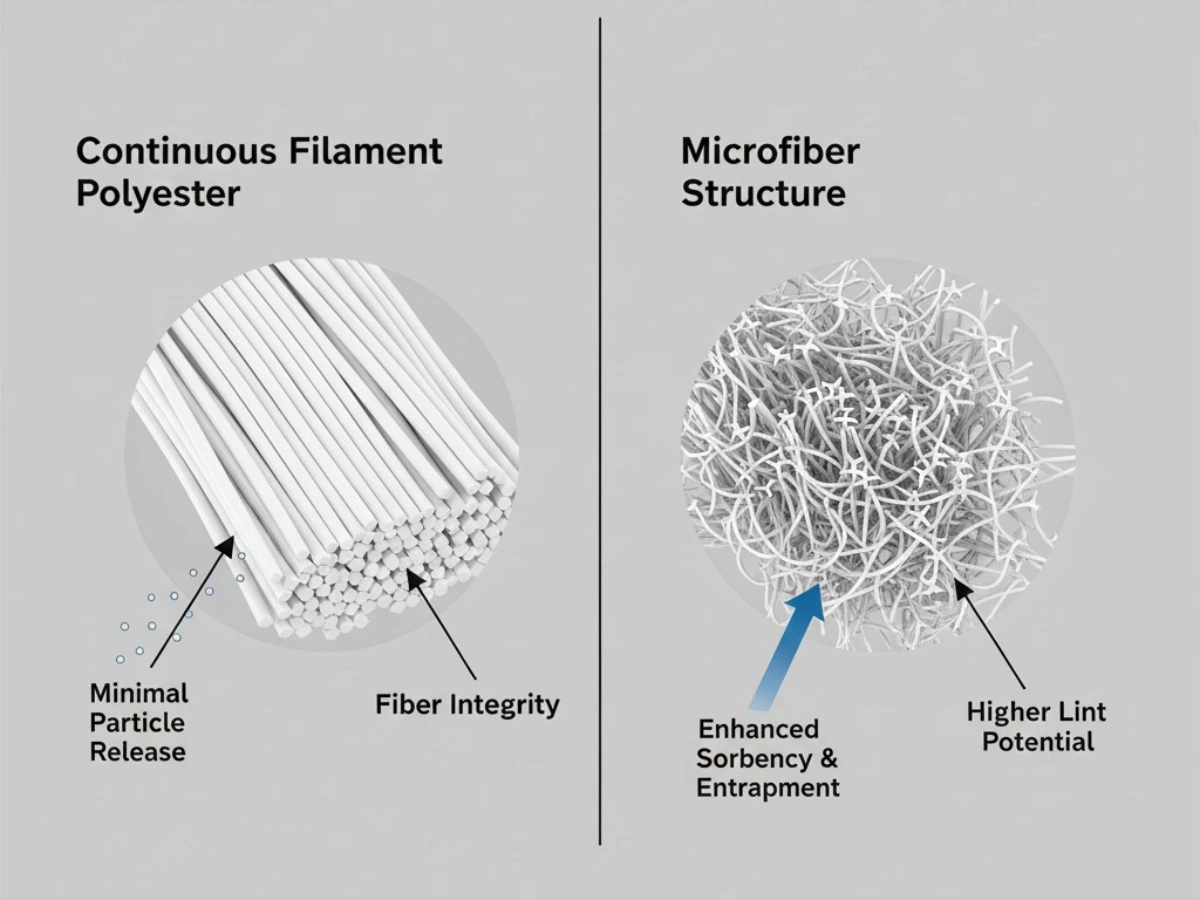
リントの少ないクリーンルーム モップ素材の比較。製薬クリーンルーム向けの連続フィラメント ポリエステル繊維の完全性を強調しています。
素材の選択は、糸くずの管理と監査の結果を左右する主な要因です。

詳細: 低リント素材の比較.

滅菌適合性

施設は通常、ガンマ線照射された使い捨てモップ (定義済みの SAL およびバッチ文書付き) またはオートクレーブサイクルを繰り返しても劣化しないことが検証された再利用可能なモップヘッドのいずれかを指定します。
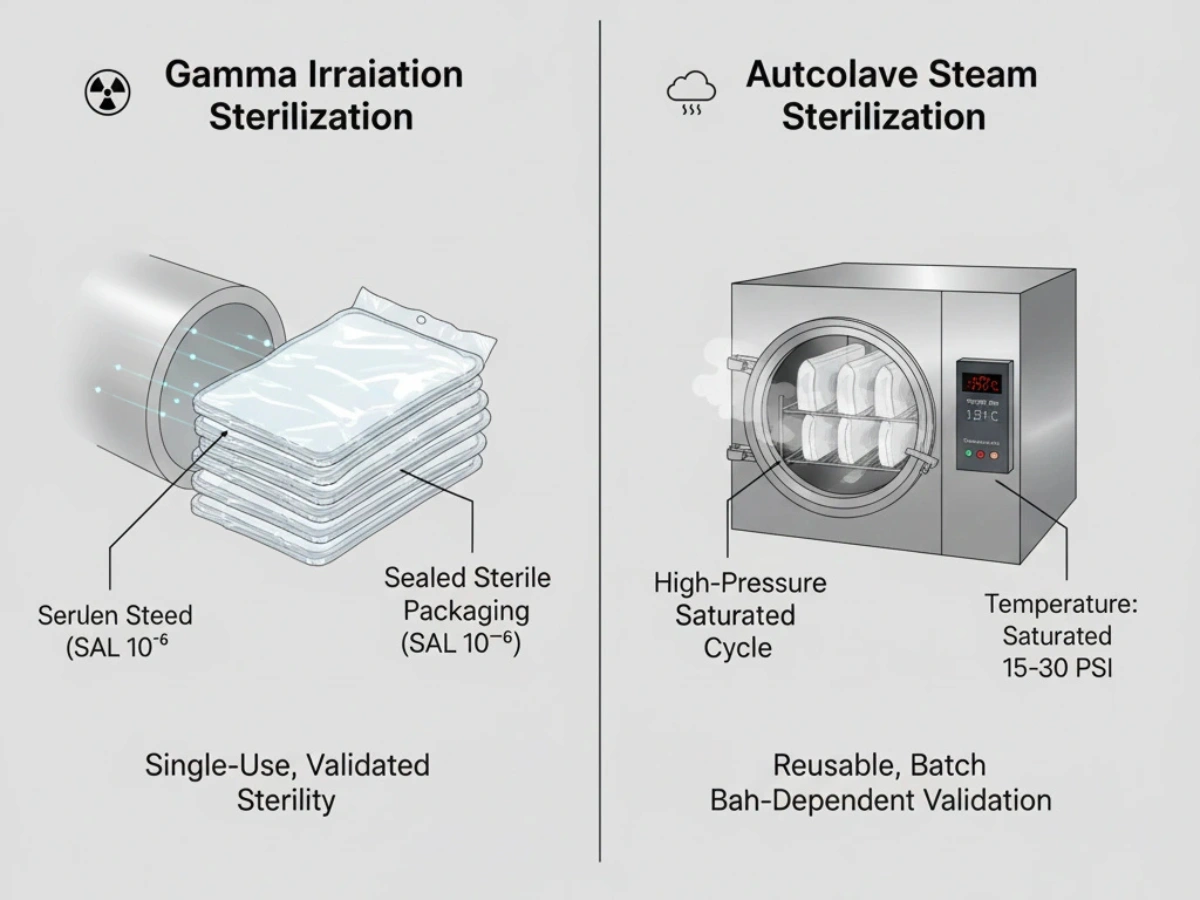
製薬用クリーンルームモップのガンマ線照射とオートクレーブ滅菌法の技術比較。
滅菌方法の選択は、検証戦略と SOP 制約によって決定される必要があります。

参照: ガンマとオートクレーブのガイド.

包装 & 転送プロトコル

高グレードのエリアへの移動は、頻繁に汚染のリスクポイントとなります。二重または三重の袋詰めにより、エアロックを介した段階的な袋詰めが可能になり、使用時まで無菌性を維持できます。
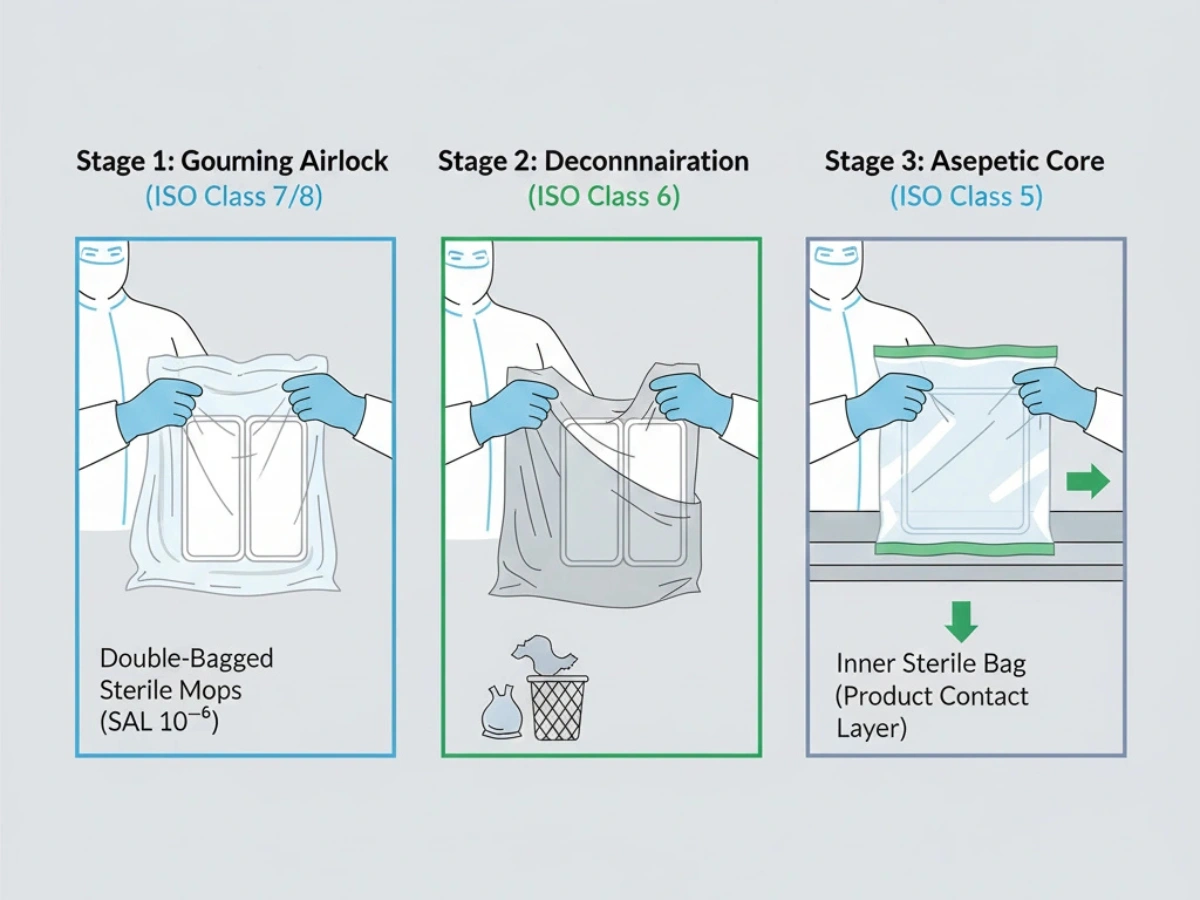
医薬品クリーンルームへの GMP 準拠の材料の移送をサポートする二重袋の無菌クリーンルーム モップ包装プロセス。
パッケージ化は転送プロトコルの制御部分であり、後付けではありません。

参照: 二重袋入りの滅菌管理プロトコル.

バッチの一貫性 & トレーサビリティ

各出荷は、生産バッチと原材料まで追跡できる必要があります。 OOS イベントや逸脱の調査中は、バッチ COA と変更管理記録が不可欠になります。
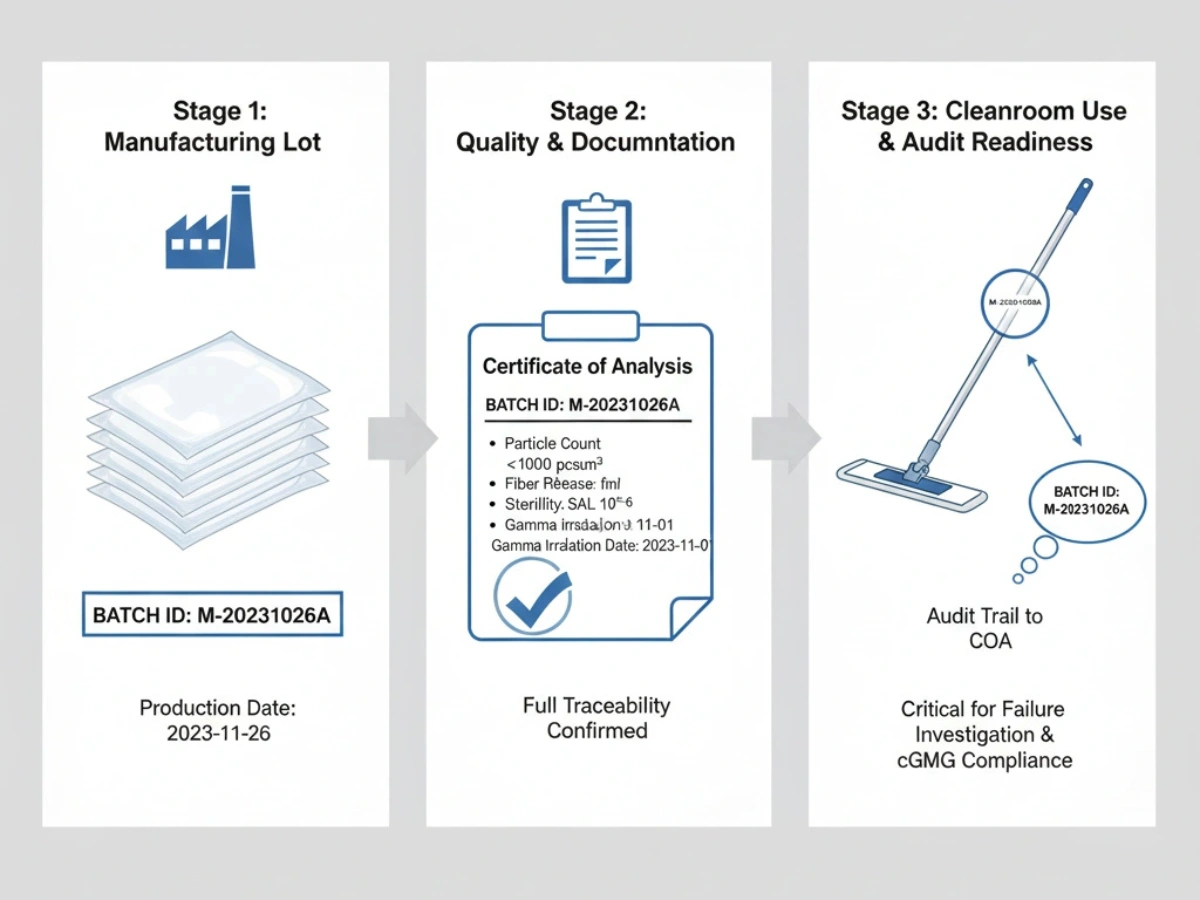
製造ロットを COA 文書にリンクする、製薬用クリーンルーム モップのバッチ トレーサビリティ システム。
トレーサビリティは、調査、CAPA、長期的なサプライヤー認定をサポートします。

参照: Batch Traceability Systems.

5. Common Audit Risks When Selecting a Mop Supplier

  • Inconsistent fiber integrity: variability in particle shedding across lots can lead to EM deviations.
  • Inadequate sterility documentation: generic sterility statements without batch-level evidence raise red flags.
  • Chemical incompatibility: degradation or residue interaction with IPA/sporicides can compromise cleaning effectiveness.
  • Supply chain opacity: unclear raw material origin and weak change control undermine audit readiness.

Documentation expectations: Validation Documents & COA Standards.

6. How Pharmaceutical Buyers Qualify a Cleanroom Mop Supplier

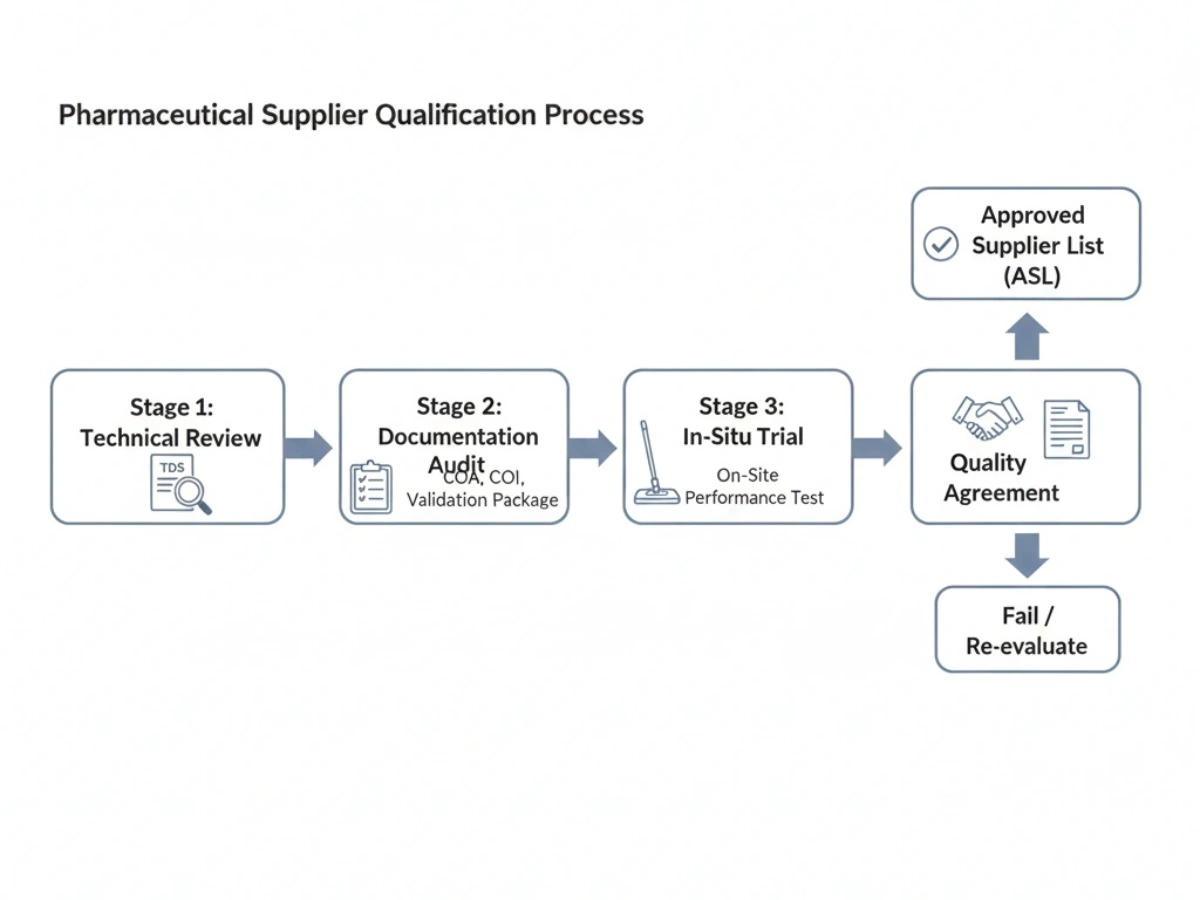
Qualification is typically phased: technical review, documentation audit, in-situ trial, and a quality agreement. Suppliers that pass are often added to an Approved Supplier List (ASL).

Supplier qualification workflow for pharmaceutical cleanroom mops, including technical review, documentation audit, and approved supplier listing.
A QA-ready supplier qualification flow aligned with GMP expectations.
1
Phase 1: Technical Review
Evaluate TDS, particle release data, and chemical compatibility.
2
Phase 2: Documentation Audit
Review COA/COI, traceability, change control, and shelf-life data.
3
Phase 3: In-Situ Trial
Validate handling, sorbency, and SOP fit under controlled conditions.
4
Phase 4: Quality Agreement
Formalize change notification and supply continuity requirements.

Checklist: Supplier Qualification Checklist.

7. Internal Knowledge Links (Technical Cluster)

Use these resources to validate specific requirements and align internal SOPs and documentation requests:

8. Technical RFQ Invitation

This RFQ process is intended for pharmaceutical, biotech, and high-grade cleanroom facilities requiring documented, validated mopping systems.

Typical RFQ Inputs

  • Cleanroom grade (ISO / Grade A–D)
  • Sterility requirement (Gamma / Autoclave)
  • Material preference
  • Estimated annual consumption
  • Documentation / validation support needs

クイック見積もりを依頼する

1営業日以内にご連絡いたします。末尾が次のメールに注意してください 「@midposi.com」.

それは無料です!

《中国でクリーンルームの衣服を調達する際の9つの致命的な落とし穴》

電子書籍 400
22

クイック見積もりを依頼する

1営業日以内にご連絡いたします。末尾が次のメールに注意してください 「*@midposi.com」.